 By Kelvin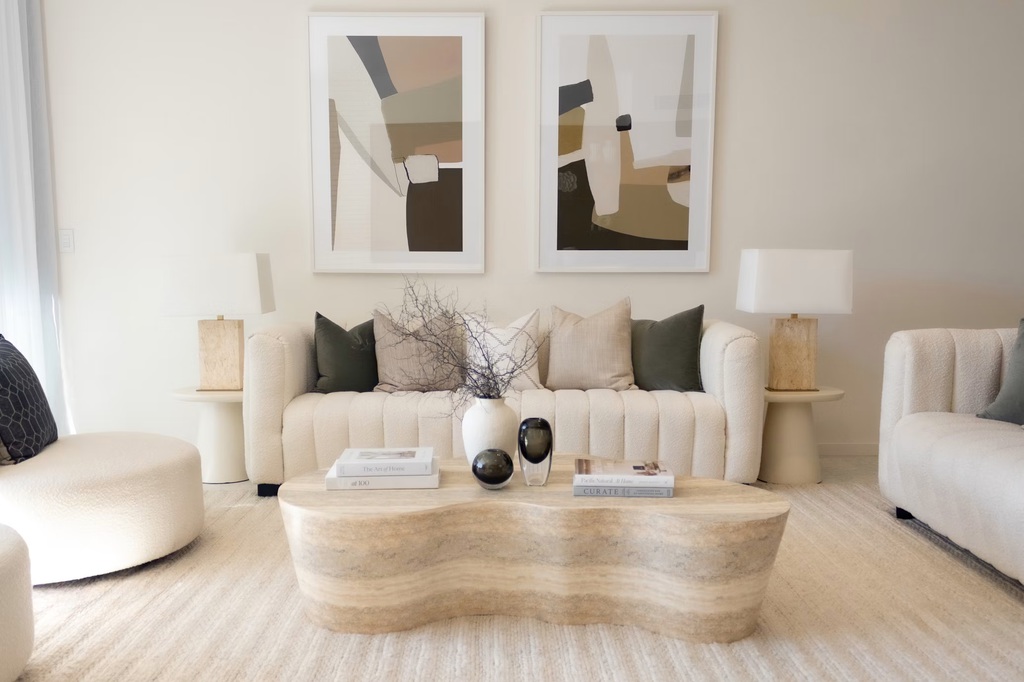
Introduction
If you are searching what is transitional interior design, you probably like the warmth of classic homes but do not want your space to feel heavy, formal, or outdated. Transitional design helps solve that exact problem. It blends traditional comfort with cleaner modern lines, creating rooms that feel polished but still easy to live in. This guide explains what the style means, how it differs from traditional, modern, and contemporary interiors, and how to use furniture, color, texture, and storage to make the look work in a real home.
Table of Contents
What Is Transitional Interior Design?
Transitional interior design is a home style that combines traditional warmth with modern simplicity. It keeps the comfort, symmetry, and timeless materials often found in traditional rooms, but removes the heavier details, ornate carving, and overly formal feel. The result is calm, balanced, and practical.
A transitional room uses neutral colors, clean-lined furniture, soft upholstery, mixed materials, and restrained classic details. It is not random mixing; the goal is controlled balance, such as a warm wood TV stand softening a clean white wall or a traditional rug grounding a modern dining table.
The easiest way to understand it is this: transitional design feels classic without being old-fashioned and modern without being cold.
| Traditional Element | Modern Element | Transitional Result |
| Warm wood tones | Simple furniture lines | Comfortable but updated |
| Symmetry | Less ornamentation | Balanced and cleaner |
| Soft upholstery | Open visual space | Elegant but livable |
| Classic lighting | Sleeker finishes | Familiar but fresh |
| Rich texture | Neutral palette | Calm but layered |
This is why transitional style interior design works especially well for people who do not want to commit fully to one narrow look. It gives the home enough structure to feel intentional, but enough flexibility to change over time.
How Is Transitional Design Different From Traditional, Modern, and Contemporary?
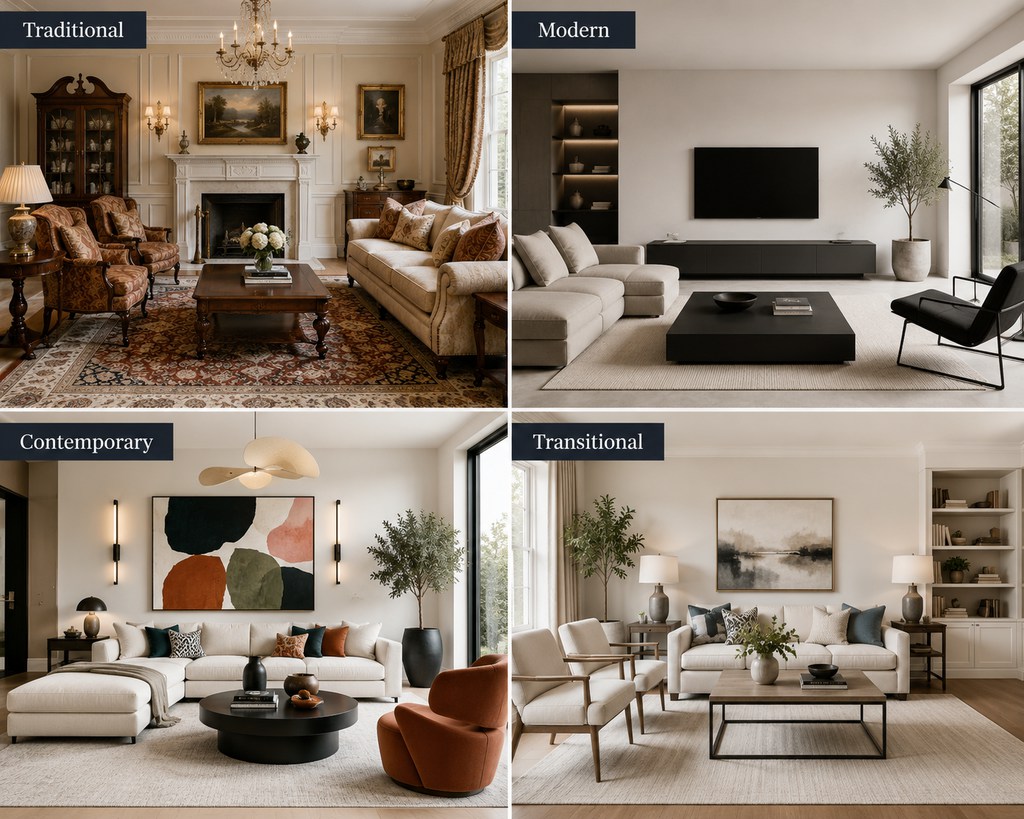
| Style | Main Look | Common Risk | How Transitional Design Relates |
| Traditional | Formal, detailed, classic | Can feel heavy or dated | Keeps warmth, symmetry, and comfort while removing excess ornament |
| Modern | Clean, minimal, functional | Can feel cold or too plain | Borrows clean lines but adds softness, texture, and warmer materials |
| Contemporary | Current and trend-aware | Can date faster | Feels less trend-driven and more timeless |
| Transitional | Balanced, warm, edited | Can look bland if under-layered | Needs contrast, texture, and strong anchor furniture to feel complete |
Why Does Transitional Interior Design Work So Well in Real Homes?
Transitional design works well because it solves a common real-life problem: most homes are not built from one perfectly matched design plan. People often have a mix of older furniture, new furniture, practical storage needs, and different style preferences within the same household.
This style gives those pieces a clear direction. It helps a traditional wood cabinet feel current beside a cleaner sofa. It helps a modern media wall feel warmer with a wood console, soft rug, and layered lighting. It also helps open living-dining spaces feel connected without forcing every piece of furniture to match.
The main value of transitional interior design is flexibility with control:
- For mixed furniture: it creates a shared language between old and new pieces.
- For family rooms: it allows comfort, storage, and easy-care materials without looking casual or unfinished.
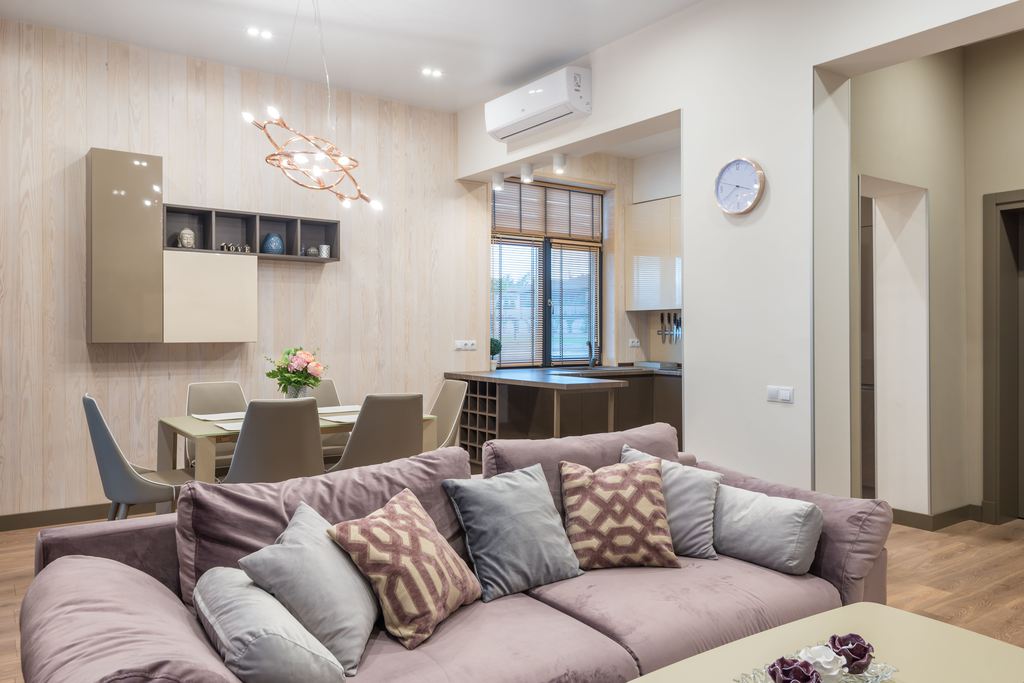
- For open layouts: it connects living, dining, and media areas through repeated tones and materials.
- For long-term use: it avoids extreme trends, so small updates can refresh the room later.
- For couples or families with different tastes: it balances classic warmth with cleaner modern simplicity.
A living room used for TV, guests, pets, and everyday storage can still look calm if the largest furniture pieces have simple lines, the colors stay connected, and clutter is hidden behind closed storage. That is where transitional style becomes more than a look. It becomes a practical way to organize the home.
What Are the Key Elements of a Transitional Room?
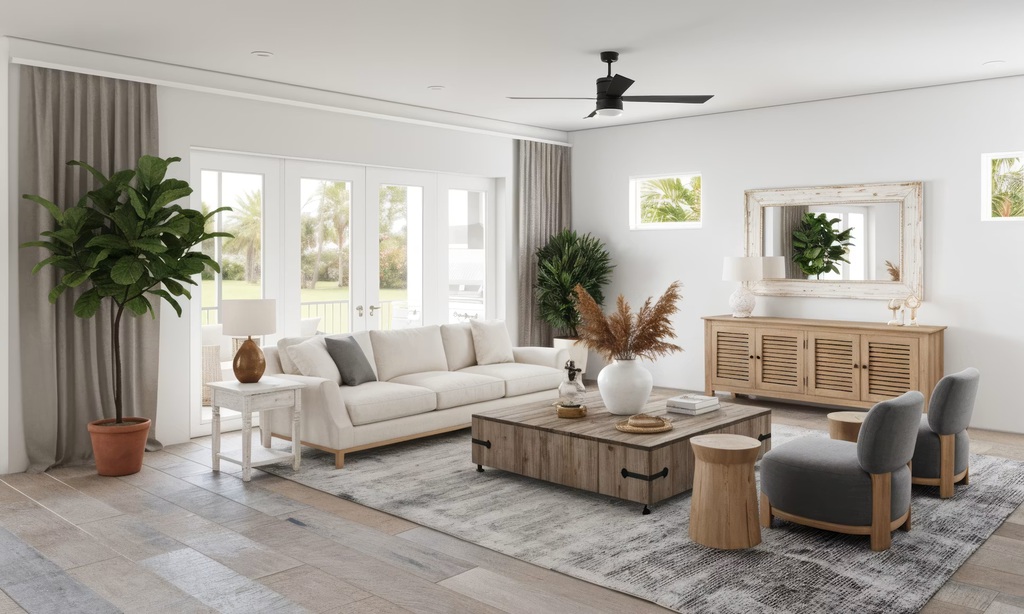
A good transitional room is not built by copying one image. It comes from several choices working together. The most important elements are color, furniture shape, texture, material mix, lighting, and storage. Each one should reduce extremes: not too ornate, not too stark, not too empty, and not too crowded.
Neutral Colors With Real Contrast
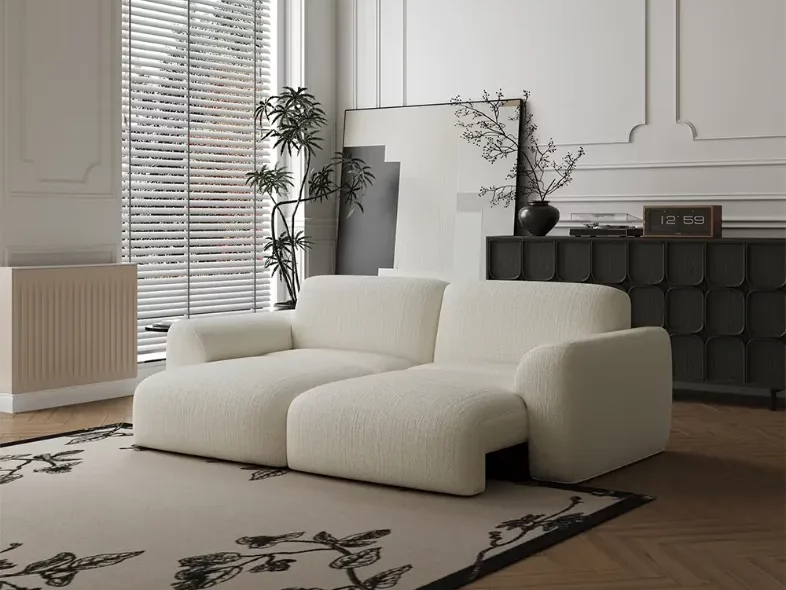
Neutral colors are central to transitional interior design, but neutral does not mean flat. Use warm white, cream, beige, greige, taupe, brown, soft gray, or charcoal as the base. Then add contrast through darker wood, black metal, deep brown leather, navy pillows, olive accents, or framed artwork.
A beige sofa against beige walls can disappear. A beige sofa with a dark wood table, textured rug, and black-framed art feels more intentional.
Clean-Lined Furniture With Soft Comfort
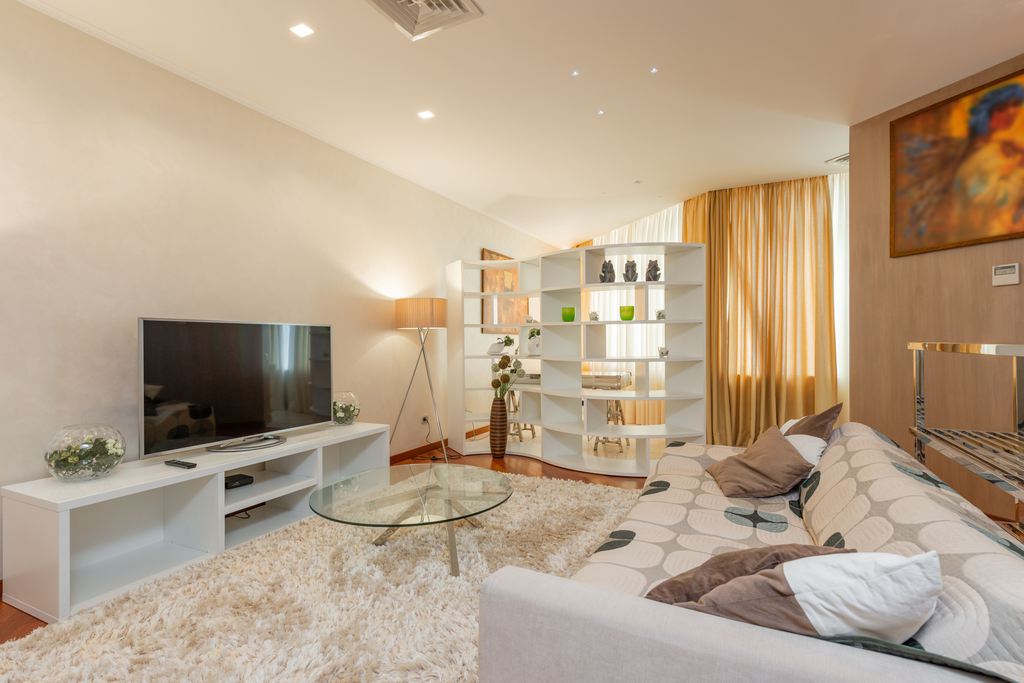
Transitional furniture should look edited, but not severe. Look for sofas with simple arms, generous cushions, and balanced proportions. Avoid pieces that are extremely ornate, overly tufted, or too angular for everyday comfort.
The best pieces usually sit in the middle: clean enough for a modern home, soft enough for long conversations, movie nights, and casual weekends.
Texture Instead of Heavy Pattern
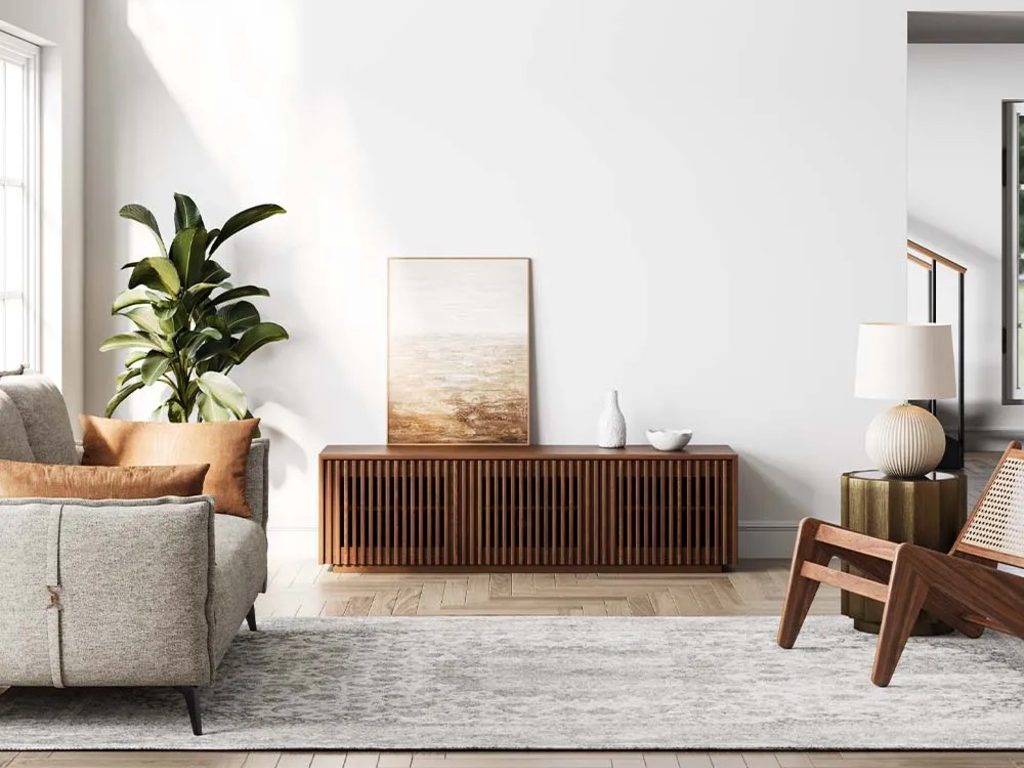
Traditional rooms often rely on strong patterns. Transitional rooms use texture more carefully. Linen, boucle, leather, velvet, woven rugs, stone, wood grain, and brushed metal can add depth without making the room busy.
A living room with a smooth leather chair, soft fabric sofa, wood media console, and low-pile rug often feels more layered than a room filled with many printed pillows.
Mixed Materials That Still Feel Connected
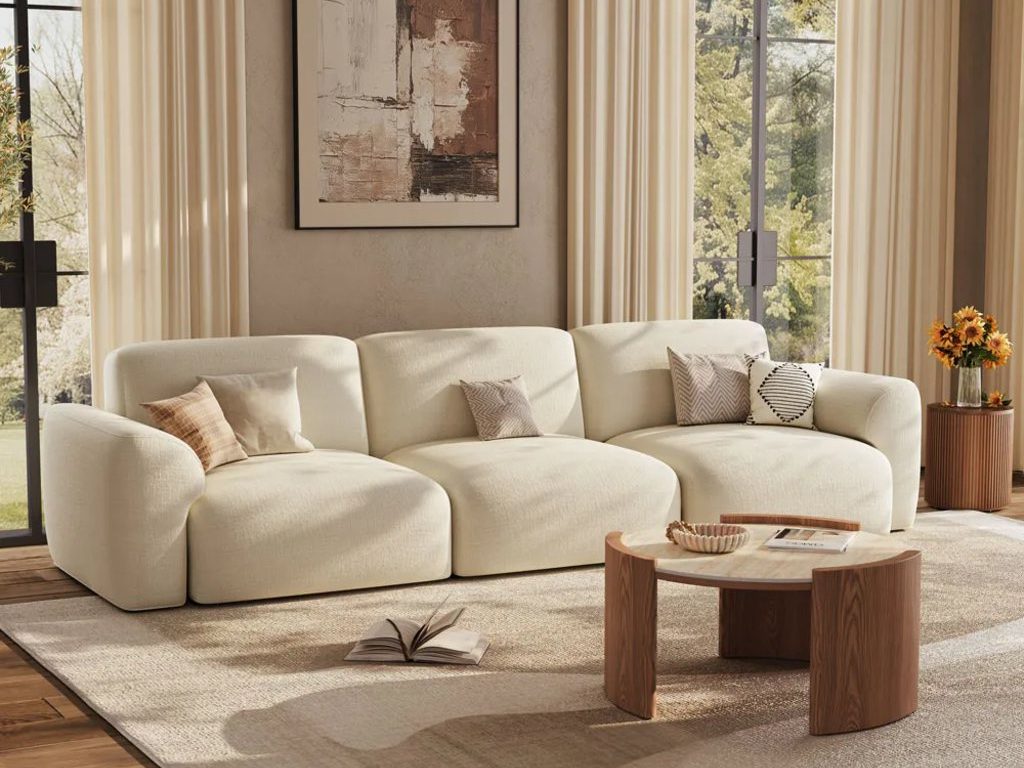
Wood, stone, metal, glass, leather, and fabric can all work in transitional style. The key is to repeat tones. Warm brass can connect with walnut. Black metal can connect with a dark TV frame. A stone coffee table can balance a soft sofa.
Do not mix materials randomly. Choose two or three dominant finishes and repeat them lightly across the room.
Lighting That Adds Shape
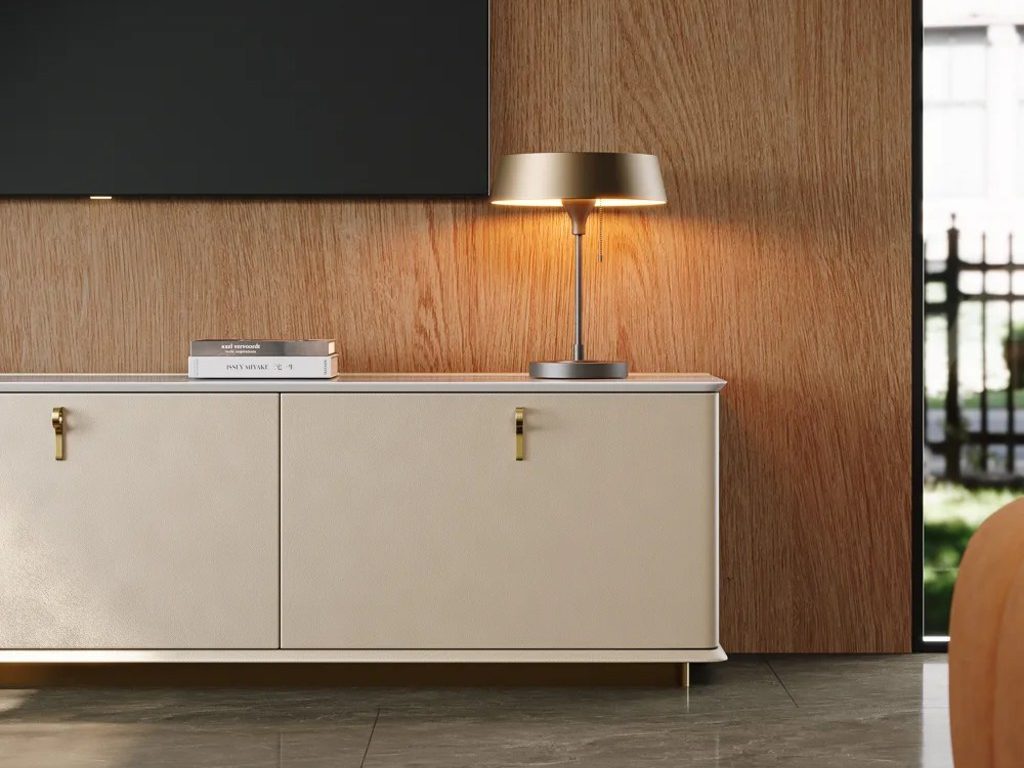
Lighting is often where transitional rooms become more personal. A simple room can handle a sculptural chandelier, a warm floor lamp, or a pair of classic table lamps. The fixture can lean slightly traditional or modern as long as the rest of the room balances it.
For example, a clean-lined sofa and media console can feel warmer with a shaded floor lamp beside the reading chair. A dining room with a simple table can take a more decorative pendant above it. Practical living room lighting ideas can help keep the style useful at night, not just attractive in photos.
How Do You Choose Transitional Furniture for Your Room?
Furniture decides whether the room actually reads as transitional. Paint and pillows help, but the sofa, TV stand, dining table, and storage pieces set the main tone. A strong transitional furniture style should balance comfort, clean lines, material warmth, and daily function in each room.
Use these buying checks before choosing major pieces:
- Anchor the room with the largest daily-use piece. In a living room, that may be the sofa or media console. In a dining room, it is usually the table. Large furniture controls the room’s visual direction.
- Choose clean lines with comfort built in. A transitional sofa should not feel stiff just because it looks simple. Cushion depth, arm height, and upholstery texture still matter.
- Use storage as part of the style. Closed media consoles, sideboards, and coffee tables with drawers help keep remotes, chargers, games, and table linens out of sight.
- Coordinate instead of matching. Repeat a wood tone, metal finish, or color family, but avoid making every piece look like it came from one set.
- Check scale before style details. A beautiful coffee table will still feel wrong if it blocks movement. A TV stand that is too small for the screen can make the wall feel unbalanced.
- Balance old and new pieces. If the room already has a traditional cabinet or classic rug, use cleaner furniture nearby. If the room feels too modern, add warm wood, fabric, or softer curves.
What Mistakes Make Transitional Interiors Look Bland?
Transitional style can go wrong when people make every decision too safe. A room filled with beige walls, beige furniture, beige pillows, and pale wood may feel calm at first, but it can quickly look unfinished. The solution is not loud color. It is better contrast, better texture, and stronger furniture choices.
Common mistakes include:
- Using all light neutrals with no dark accent
- Buying a complete matching furniture set
- Choosing furniture that is too plain to anchor the room
- Mixing many small decor items instead of fewer stronger pieces
- Forgetting storage in TV areas and family rooms
- Using only smooth surfaces with no woven, wood, leather, or fabric texture
- Adding too many traditional pieces, making the room feel heavy
- Adding too many modern pieces, making the room feel cold
A good test is simple: if the room feels calm but has no focal point, it needs contrast. If it feels elegant but uncomfortable, it needs softness. If it feels stylish but hard to live in, it needs better storage and more practical furniture.
Conclusion
So, what is transitional interior design in practical terms? It is a balanced way to make a home feel classic, comfortable, and updated at the same time. The style works best when traditional warmth is softened by modern simplicity, and modern lines are warmed with texture, wood, fabric, and thoughtful lighting. Prioritize the largest furniture pieces, keep storage practical, avoid full matching sets, and add enough contrast so the room feels layered rather than bland. Done well, transitional design feels polished without becoming hard to live in.
FAQ
What is the easiest room to try transitional style in first?
The living room is usually the easiest place to try transitional style because the sofa, coffee table, rug, and TV stand quickly set the tone. Keep the largest piece simple and comfortable, then add warmth with wood, fabric, lighting, or a textured rug instead of changing the whole home at once.
Can dark wood furniture work in a transitional interior?
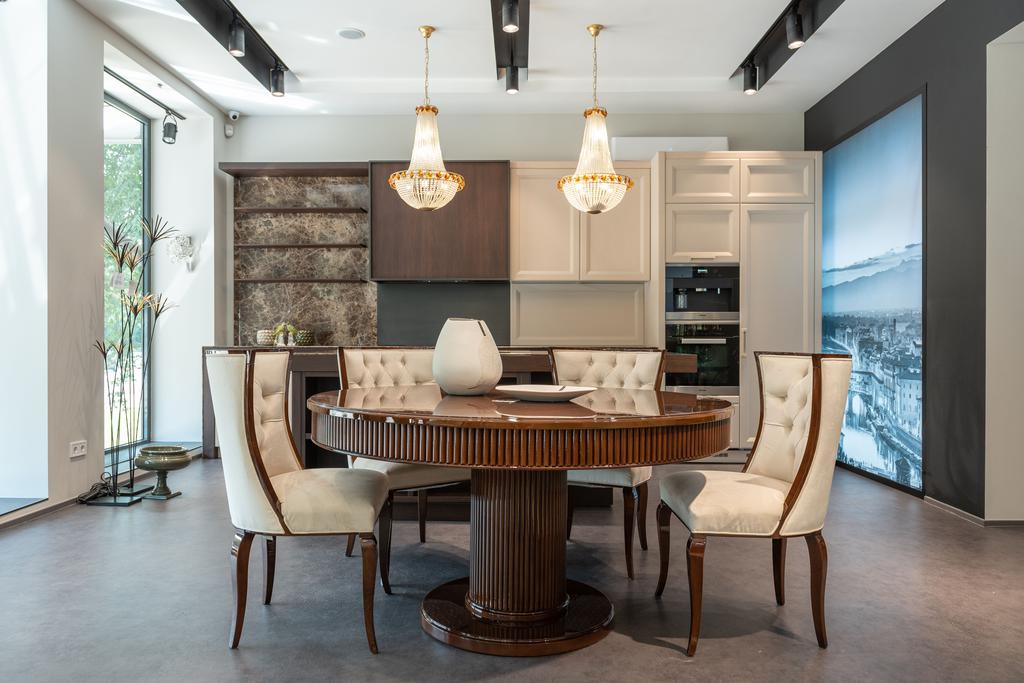
Yes, dark wood can work in a transitional interior if the room also has lighter surfaces and softer textures. Pair a dark cabinet, dining table, or media console with cream upholstery, warm lighting, simple wall colors, and fewer heavy patterns so the room feels grounded instead of old-fashioned.
Can renters use transitional interior design without changing walls or flooring?
Yes, renters can use transitional interior design through furniture, rugs, lighting, curtains, and removable decor. Keep the color palette calm, choose clean-lined furniture, and use texture to soften plain walls or basic flooring. A warm wood console, upholstered chair, and layered rug can change the room without renovation.
How do I know if transitional furniture will look dated later?
Transitional furniture is less likely to look dated when it avoids extreme shapes, trendy colors, and overly decorative details. Look for balanced proportions, comfortable upholstery, warm materials, and simple silhouettes. If a piece can work with both classic and modern decor, it usually has stronger long-term flexibility.
How can I make a new-build home feel more transitional?
A new-build home can feel more transitional by adding warmth, texture, and classic shapes to clean architecture. Use wood furniture, upholstered seating, soft window treatments, layered rugs, and warmer lighting. If the space has plain white walls and hard flooring, avoid choosing only sleek modern furniture.
Can transitional style mix with coastal, farmhouse, or mid-century pieces?
Yes, transitional style can mix with coastal, farmhouse, or mid-century pieces if one style remains dominant. Use transitional as the base, then add a few supporting details. Coastal may bring light wood and blue-gray accents. Mid-century may add slim legs and walnut tones. Farmhouse should be edited to avoid looking too rustic.


[…] more guidance on combining classic and contemporary elements, a balanced approach similar to transitional interior design ideas can help create a cohesive […]