 By Kate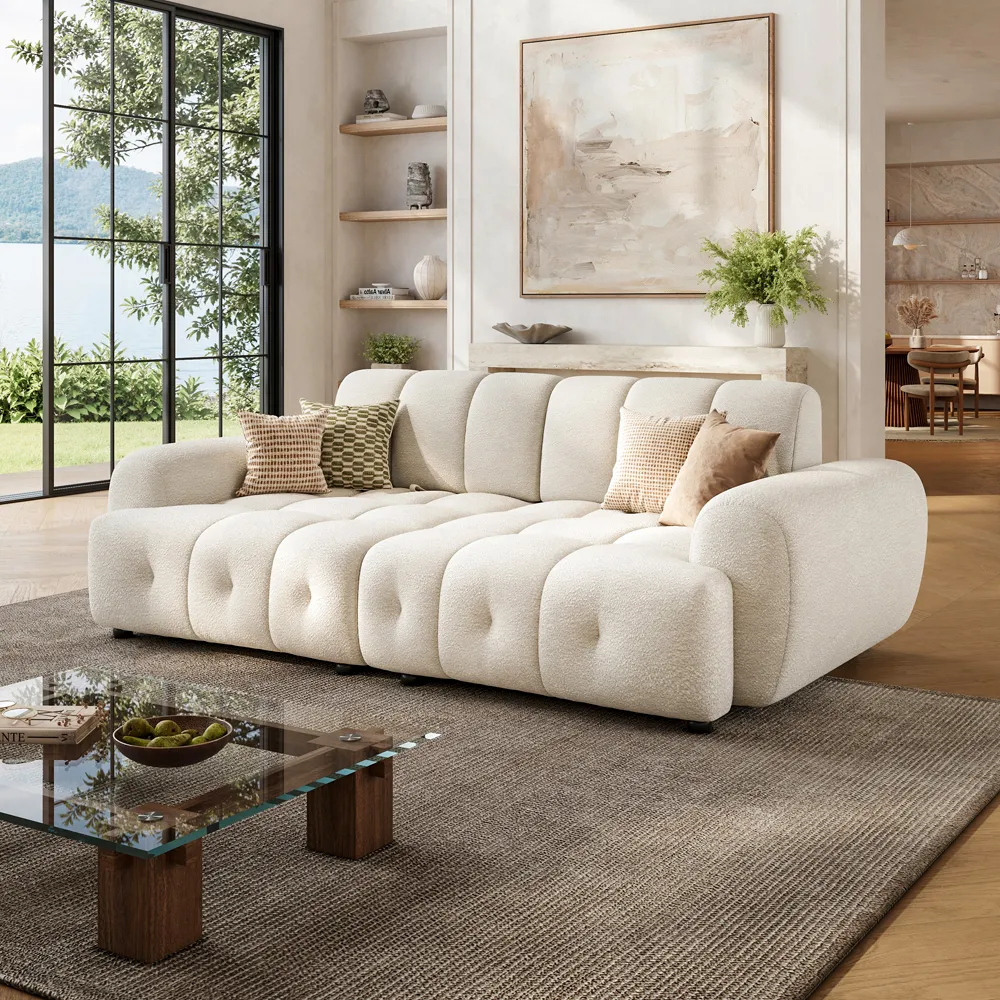
Introduction
Throw pillows can make a sofa feel finished, layered, and more inviting. But learning how to decorate sofas with pillows is not just about choosing pretty covers. The real trick is matching the number, size, shape, color, and layout to the sofa you actually have. This guide gives you simple formulas for everyday sofas, loveseats, sectionals, deep sofas, and reclining sofas, so the final look feels styled—not crowded.
Table of Contents
How Many Pillows Should You Put on a Sofa?
Before choosing colors or patterns, start with quantity. Too few pillows can make a sofa feel bare, while too many can turn it into a seat no one wants to use. The best number depends on the sofa length, depth, back height, and how the room is used every day.
Start With the Sofa Size
A standard three-seat sofa usually looks best with 3 to 5 pillows. A loveseat works better with 2 to 3 pillows, because it needs enough open space for two people to sit. A large sofa or sectional can handle 5 to 7 pillows, especially when there are corners or a chaise to anchor.
Use the Comfort Test
The easiest test is simple: can someone sit down without moving half the pillows? If the answer is no, there are too many. A sofa should still feel like a place to relax, not a display shelf.
Keep at least two-thirds of the seat depth open. A comfortable sofa seat depth changes how many pillows the sofa can carry, especially when the seat is already shallow. Deep sofas can handle more layering, while upright sofas need fewer pillows.
Match Pillow Count to Lifestyle
A formal living room can hold a more styled pillow arrangement. A family room needs a lighter setup. If the sofa is used for movie nights, pets, kids, or daily naps, choose fewer pillows with better inserts.
On a quiet evening, a sofa with three soft pillows and one folded throw feels calm and usable. During a busy weekend, the same sofa still works because no one has to clear away a pile of decorative cushions before sitting down.
What Pillow Sizes and Shapes Work Best?
Once the count feels right, scale comes next. This is where many sofas go wrong. Small pillows can look weak on a big sofa, while oversized pillows can hide the sofa’s shape. The goal is to create support, height, and softness without making the sofa look heavy.
Choose the Right Square Pillow Size
For a large sofa, start with 22-inch to 24-inch square pillows as the back layer. They create structure and fill the corners well. For a standard sofa, 20-inch to 22-inch pillows are usually the safest choice. For a loveseat, 18-inch to 20-inch pillows keep the layout balanced.
Avoid using only small pillows. They can make the sofa look unfinished and less expensive. One larger pillow in each corner often looks cleaner than four small ones scattered across the seat.
Add Lumbar and Bolster Pillows for Shape
A lumbar pillow works well when the sofa needs a center accent. It also helps break up too many square shapes. A bolster pillow is useful on low-back, curved, or armless sofas because it gives the layout direction without adding too much height.
A good shape mix might look like this:
- 2 large square pillows
- 1 medium square pillow
- 1 lumbar pillow
- Optional small round or bolster pillow
This gives the sofa rhythm without making it busy.
Follow the Sofa Silhouette Rule
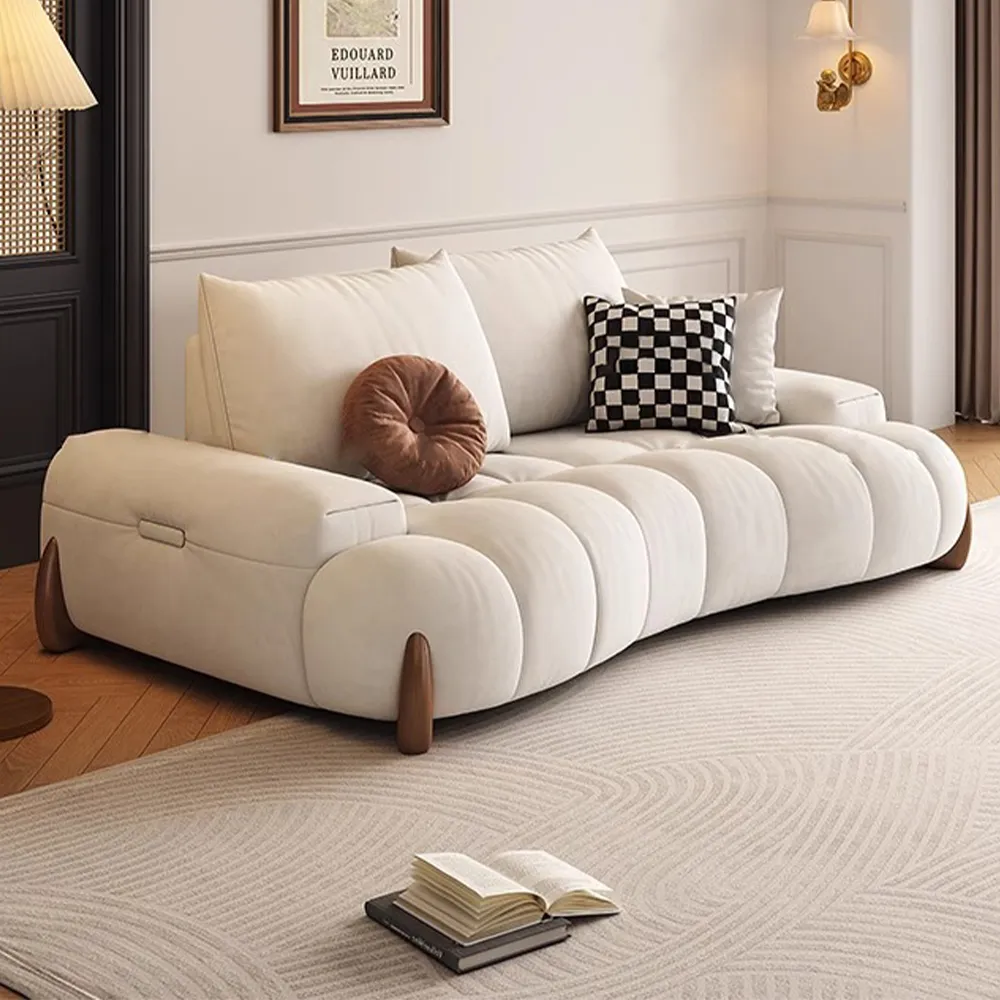
The pillow shape should respect the sofa silhouette. A low-back sofa needs lower pillows, so the back line stays visible. A curved sofa looks better with soft, rounded pillows or a single lumbar. A thick reclining sofa needs fewer pillows because the shape already has visual weight.
The Beige deep sofa has adjustable cushions and a deep, rounded profile, so it works best with larger back pillows and one lower lumbar instead of many small accents. The extra depth lets pillows add comfort without stealing usable seat space.
How Do You Choose Pillow Colors, Patterns, and Textures?
Color is often the most tempting part, but it should come after scale. A beautiful pillow can still look wrong if it has no relationship to the sofa, rug, wall color, or nearby furniture. Think of pillows as connectors that repeat the room’s best colors and soften the sofa material.
Pick Colors From the Room Palette
Choose 2 to 3 colors from the room instead of inventing a new palette. Use one main color, one neutral, and one accent color. The main color can come from the rug, curtains, artwork, or sofa fabric. The accent color should appear somewhere else in the room, even in a small object.
This is the safest formula:
- One neutral: ivory, beige, gray, taupe, black, brown
- One room color: blue, green, rust, olive, terracotta
- One soft bridge color: cream, oatmeal, sand, warm white
Use One Solid, One Small Pattern, and One Hero Pattern
A simple pattern formula keeps the sofa from looking random. Start with one solid pillow, add one small pattern, then finish with one larger “hero” pattern. The hero pillow should feel special, but it should not fight with the rug or wall art.
This approach also helps when learning how to style a sofa with pillows because it gives every pillow a job. The solid calms the setup. The small pattern adds movement. The hero pattern gives the eye a focal point.
Choose Texture by Sofa Material
A leather sofa needs warmth. Linen, wool, knit, or bouclé pillows can soften the surface and make it feel more relaxed. A fabric sofa often needs contrast. If the sofa is smooth, add nubby or woven texture. If the sofa is already textured, use smoother pillows to avoid a heavy look.
The goal is not only how to mix and match pillows on a sofa, but how to choose materials that fit the sofa’s surface. For how to decorate sofas with pillows, texture often matters as much as color.
How Should You Arrange Pillows by Sofa Type?
Now bring the pieces together. The best pillow arrangement depends on where the visual weight should sit. Corners usually need structure. The center often needs breathing room. A chaise needs softness without blocking the lounge area. This section shows how to arrange pillows on a sofa by type.
| Sofa Type | Pillow Count | Best Layout | Avoid |
|---|---|---|---|
| Standard sofa | 3–5 | Corners first, lumbar in center | Tiny pillows only |
| Loveseat | 2–3 | Two corners + one small lumbar | Over-layering |
| Sectional | 5–7 | Main corner, chaise, open middle | Filling every seat |
| Deep sofa | 4–6 | Back layer for support, front accent | Flat inserts |
| Reclining sofa | 2–3 | One pillow per side, low profile | Blocking controls |
What Layout Works for a Standard Sofa?
For a standard sofa, start with two large pillows at the corners. Add one lumbar or one hero pillow near the center. This creates a clear, simple layout that works in most living rooms.
Try this formula:
- Left corner: 1 large square + 1 smaller accent
- Right corner: 1 large square
- Center: 1 lumbar or hero pillow
This is also a helpful starting point for arranging pillows on a couch because it gives structure without making the sofa feel staged.
How Should You Style a Loveseat?
A loveseat needs restraint. Two matching pillows can frame the sofa, while one small lumbar adds softness. If the loveseat is in a bedroom, office, or reading corner, keep the arrangement slim so the seat still feels open.
A 2-1 layout works best:
- 2 square pillows in the corners
- 1 small lumbar in the middle or slightly off-center
In a small apartment, this setup feels polished without making the loveseat look crowded.
How Do Sectional Pillow Layouts Work?
For a sectional, style the corners first. The main corner needs the most support because it anchors the whole piece. The chaise side should feel relaxed, so use fewer pillows there. Keep the middle area open so the sectional does not look blocked.
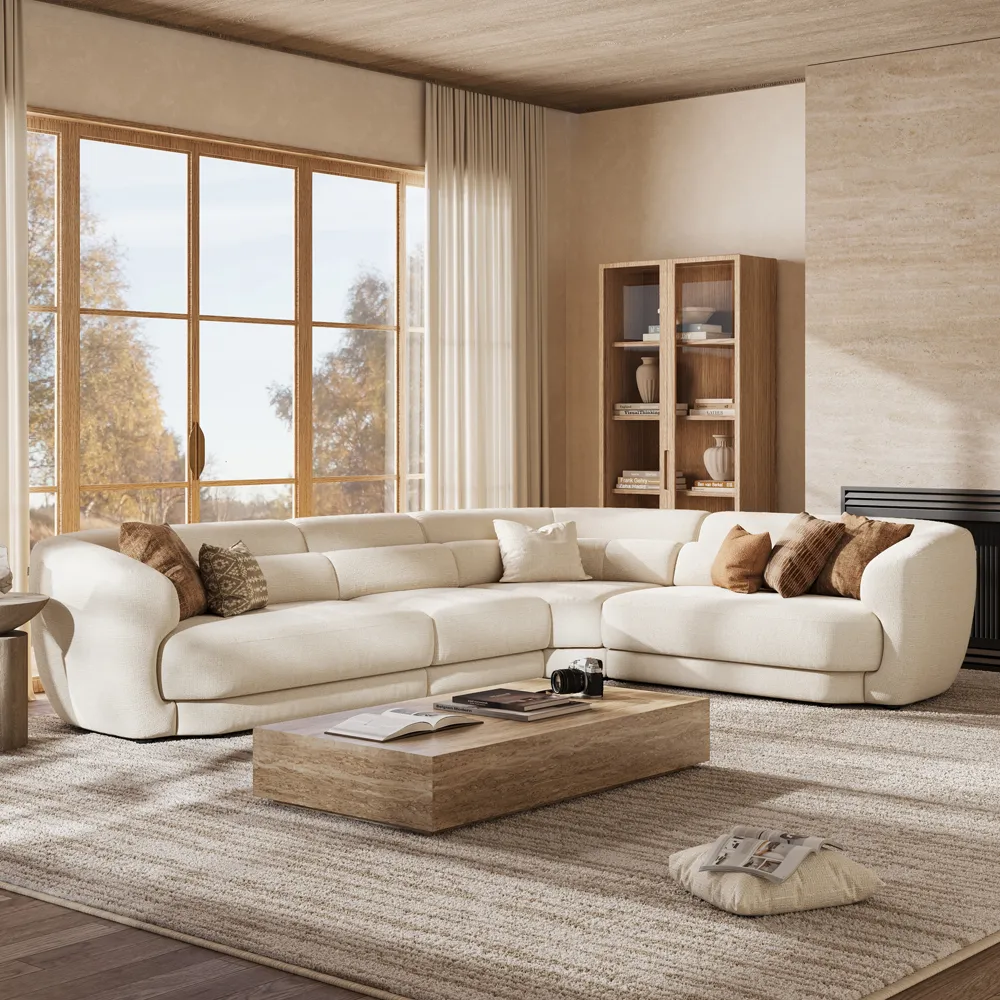
A wide L-shaped sofa such as the beige chenille sectional can support a larger pillow story. Place bigger pillows in the corner, repeat one color on the chaise, and leave the center open so the sectional feels spacious.
What About Deep and Reclining Sofas?
A deep sofa can use pillows for both comfort and style. Place larger pillows in the back, then add one smaller layer in front. This helps shorter users sit comfortably without sinking too far back.
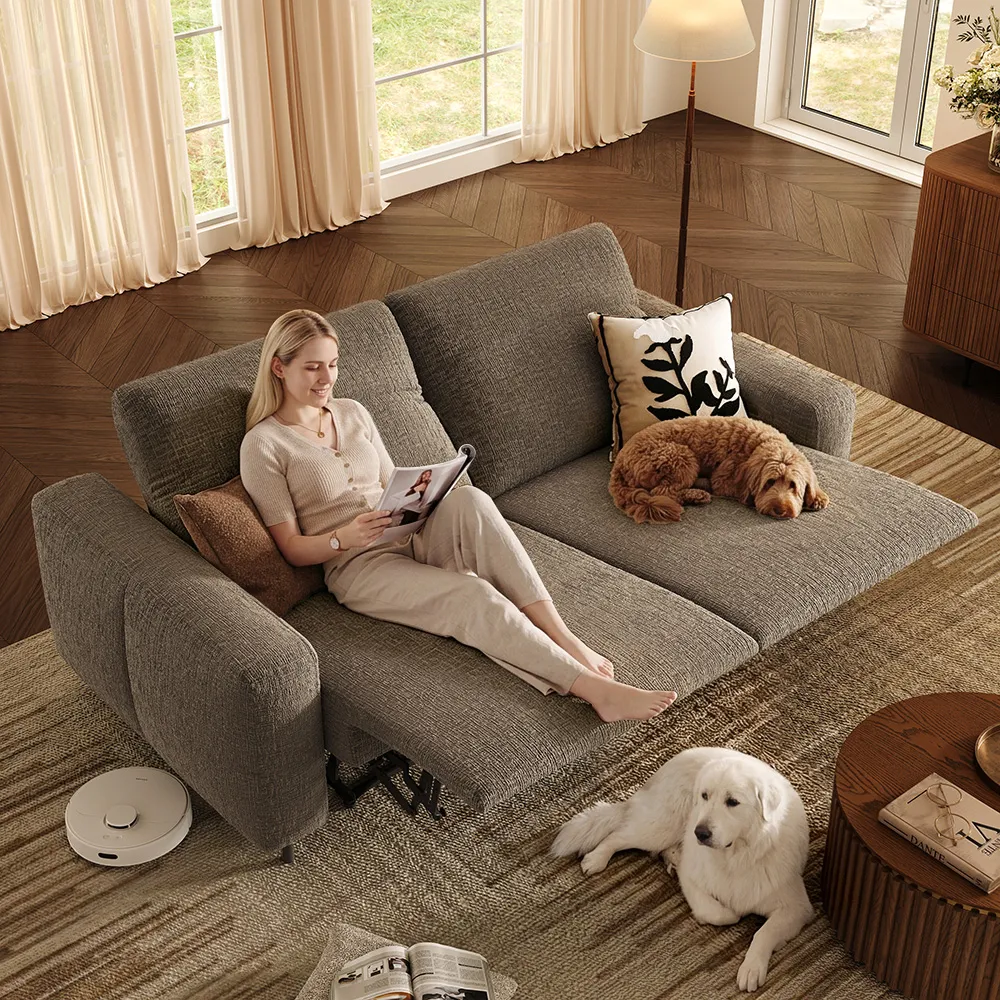
A reclining sofa needs the opposite approach. Use fewer pillows and keep them away from the footrest, headrest, and side controls. The pillows should support the body, not interrupt the reclining function.
The Elara reclining loveseat has independent headrest and footrest movement, so low-profile pillows are the better choice. Two soft side pillows can add color while keeping the reclining path and arm controls clear.
What Pillow Mistakes Make a Sofa Look Cluttered?
A sofa usually looks cluttered for one of two reasons: the pillows do not fit the sofa, or they do not fit the room. A quick edit can make the whole living area feel cleaner. Use these mistakes as a final checklist before you buy or style anything.
Forgetting the sit-down test: Pillows should not block your arms, neck, seat depth, or reclining function. A sofa should look styled, but it still needs to feel comfortable at the end of the day.
Using pillows that are too small: Small pillows can disappear on a wide or deep sofa. Start with larger back pillows, then layer smaller accents in front.
Choosing every pillow in the same size: A sofa needs height and shape variation. Mix large squares, medium pillows, and one lumbar or round pillow for a more relaxed look.
Keeping only the original sofa pillows: Matching sofa pillows can make the whole piece look flat. Keep them only if they add texture or comfort. Otherwise, add contrast through color, fabric, or pattern. Balanced living room color ideas with beige couch often start with contrast, not more of the same tone.
Letting patterns fight each other: Too many bold patterns can feel noisy. Use one main pattern, one smaller pattern, and at least one solid pillow to calm the look.
FAQ
How do you decorate a sofa with pillows simply?
Start with two large pillows in the corners, then add one smaller lumbar or accent pillow. Repeat one color from the room and use one texture for depth. This creates a finished look without making the sofa feel crowded.
Should sofa pillows match the couch?
They do not need to match exactly. In fact, slight contrast usually looks better. Choose pillows that connect to the room through color, texture, or pattern while still standing out enough to add visual interest.
What size pillows look best on a sofa?
Most standard sofas look best with 20-inch to 22-inch pillows. Larger sofas can use 22-inch to 24-inch pillows. Loveseats usually work better with 18-inch to 20-inch pillows plus one lumbar pillow.
How many pillows are too many on a couch?
There are too many pillows when guests must remove several before sitting down. Keep enough open seat depth for comfort. For most sofas, 3 to 5 pillows are enough; sectionals can handle more if the middle stays open.
How do you style pillows on a sectional sofa?
Start with the main corner, then add pillows to the chaise or end seats. Use larger pillows in the corner and smaller accents on the front layer. Leave the middle open so the sectional still feels comfortable and usable.
Conclusion
Start with the sofa size, choose the right pillow scale, repeat room colors, mix one texture and one pattern, then remove anything that makes sitting uncomfortable. That is the simplest way to remember how to decorate sofas with pillows without overthinking every detail. When the sofa shape, pillow size, and layout work together, the room feels finished, comfortable, and ready for everyday living.


