 By Kelvin
Introduction
If you are asking what colors go with grey, you probably do not need a long color theory lesson. You need to know which shades will make a grey room feel warmer, brighter, calmer, or more finished. Grey can work as a wall color, sofa color, rug color, cabinet finish, or background neutral, but it changes quickly depending on light, undertone, and nearby furniture. This guide shows how to choose grey color schemes by shade, room, material, and daily use, so the space feels intentional instead of cold or flat.
Table of Contents
What Colors Go With Grey? Choose by Shade and Undertone
Grey works with many colors, but the best pairing depends on the type of grey you are starting with. A cool light grey, a warm greige, and a deep charcoal will not need the same support. Use this table as a quick decision guide before choosing walls, furniture, rugs, curtains, or accent colors.
| Grey Type | Color Scheme | Best For | Avoid |
| Cool light grey | Grey + white + black | Modern rooms, clean contrast | Too much cool lighting |
| Grey + sage + oak | Calm living rooms, natural interiors | Flat grey-on-grey styling | |
| Grey + soft blue + ivory | Airy bedrooms, small rooms | Too many cold surfaces | |
| Warm grey / greige | Grey + cream + walnut | Cozy living rooms | Yellow beige that clashes with the undertone |
| Grey + taupe + brass | Warm neutral bedrooms | Too many similar muddy tones | |
| Grey + camel + ivory | Soft modern homes | Strong cool accents with no bridge color | |
| Dark grey / charcoal | Charcoal + cream + brass | Formal living rooms, feature walls | Dark furniture and low lighting together |
| Charcoal + tan + light wood | Large sofas, media rooms | Heavy rugs in another dark tone | |
| Charcoal + navy + ivory | Polished, classic rooms | Too many deep colors without contrast | |
| Medium neutral grey | Grey + brown + black | Open living spaces | Too much black in a small room |
| Grey + sage + beige | Family rooms, relaxed spaces | Unrelated accent colors | |
| Grey + rust + cream | Cool grey rooms that need warmth | Large areas of strong orange or red | |
| Grey furniture | Grey + warm wood + cream | Sofas, chairs, TV areas | Matching every nearby piece in grey |
| Grey + black + ivory | Modern seating areas | Cold lighting and shiny surfaces | |
| Grey + olive + oak | Organic modern rooms | Too many green accents at once | |
| Grey walls | Grey + wood furniture + soft white | Apartments, open-plan homes | Cool grey walls with no texture |
| Grey + camel + black | Warm modern living rooms | Yellow-toned beige without balance | |
| Grey + blue + cream | Calm bedrooms or lounge spaces | Blue accents that make the room too cold |
A quick way to judge grey is to place it next to pure white. If it looks slightly blue, green, or silver, it is likely cool grey. If it looks beige, taupe, brown, or soft purple, it is warmer. This matters because the answer to what colors go good with grey changes once the undertone changes.
For example, light grey walls in a north-facing room may feel chilly with white curtains and silver lamps. The same walls can feel softer with oak furniture, ivory curtains, and a sage rug. A dark charcoal sofa, on the other hand, usually needs cream, tan, brass, or light wood nearby so the seating area does not feel too heavy.
What Colors Go With Grey by Room?
Different rooms use grey in different ways. A bedroom needs quiet contrast. A living room needs warmth and balance. A dining room often needs stronger structure because wood, stone, chairs, lighting, and flooring all meet in one view.
Living Room: Cream, Wood, Sage, or Camel
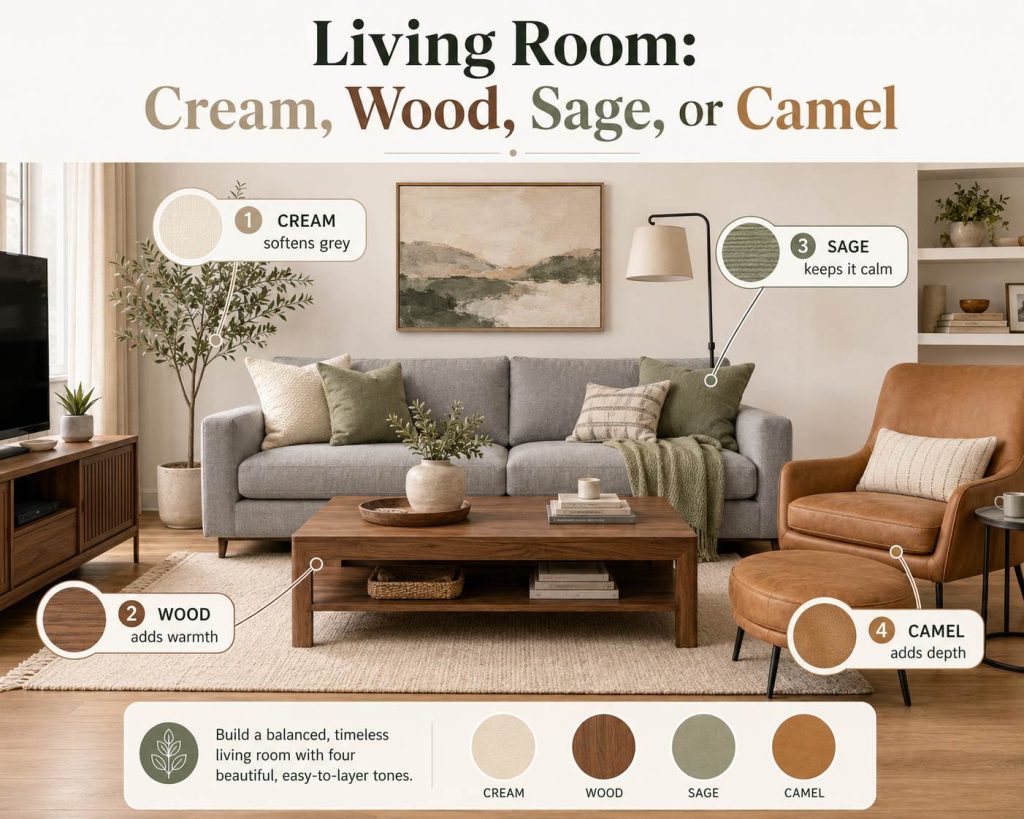
In a living room, grey works best when it has at least one warm anchor. Cream softens grey walls. Wood adds natural depth. Sage brings a calm, organic feel. Camel or tan can make a grey sofa feel less cold without making the room look busy.
A reliable living room palette is grey + cream + warm wood. Use grey as the base, cream for the rug or curtains, and walnut or oak for the TV stand or coffee table. If the room already has a grey sofa, a deeper look at what colours go with grey sofa can help narrow the palette by accent color and furniture finish.
In a family room with a grey sectional, for example, a cream rug, black floor lamp, warm wood console, and two olive pillows can feel more finished than adding five unrelated colors. The goal is not to hide the grey. It is to give it support.
Bedroom: Ivory, Taupe, Blush, or Dusty Blue
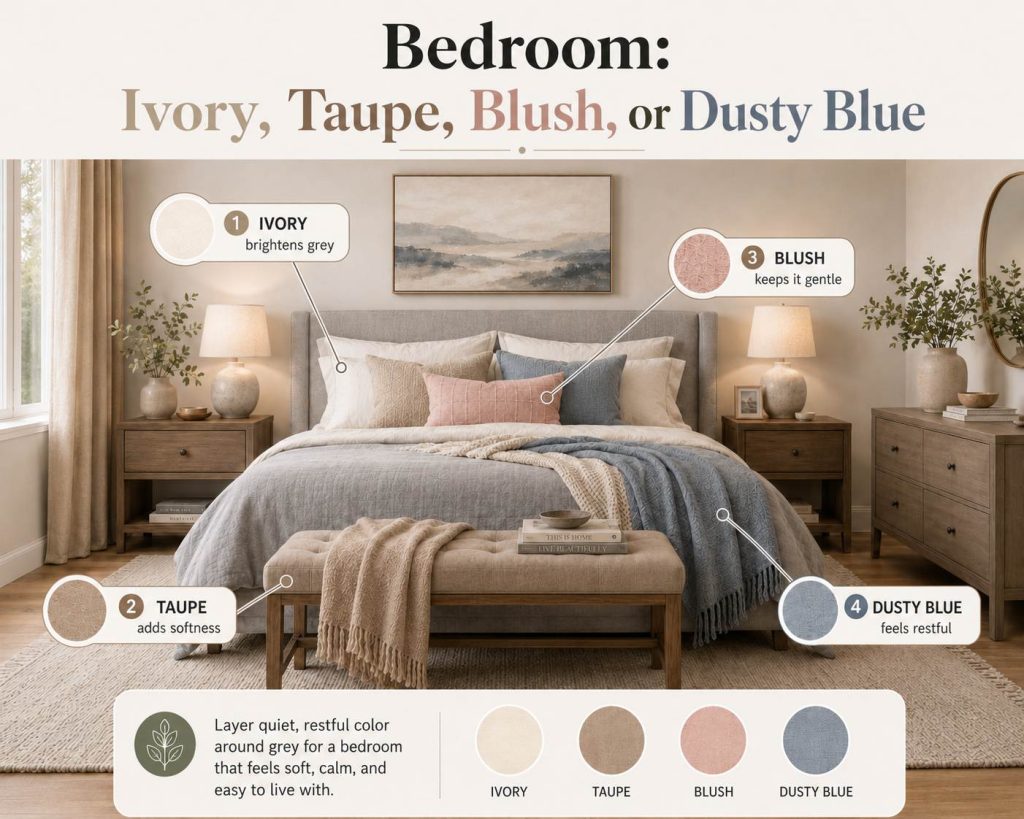
Bedrooms usually look better with softer contrast. Ivory, taupe, blush, dusty blue, and muted sage pair well with grey because they keep the mood quiet. This is especially helpful if the grey appears on a headboard, rug, bedding, or wall.
If you are wondering what colors go with light grey in a bedroom, start with ivory, warm white, pale wood, and one muted accent. Light grey and blush can feel gentle, but too much pink may look overly sweet. Light grey and dusty blue feel calm, but they need cream or wood to avoid looking cold.
Keep strong colors small in the bedroom. A navy throw, brass lamp, or mauve pillow can add depth without changing the relaxed mood.
Dining Room: Walnut, Stone, Black, or Warm Beige
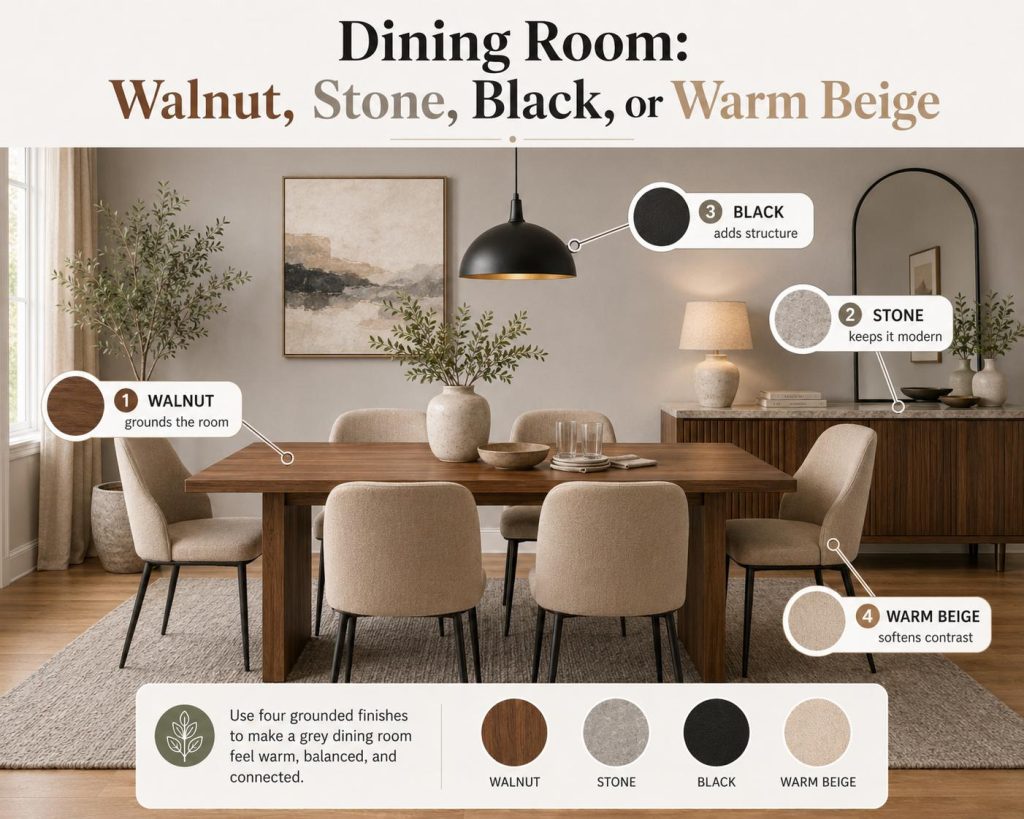
Grey in a dining room often appears through a nearby sofa, wall color, rug, or open-plan living area. The dining table should not fight with that base. Walnut, warm beige, black, stone, and soft white usually work well because they create structure without adding visual noise.
If a grey couch sits near the dining area, the table color should repeat or balance something already visible. A black dining table can echo black lighting or chair legs. A walnut table can warm up cool grey upholstery. A stone table can work in a modern grey room, but it may need wood chairs or a textured rug to keep the space from feeling hard.
Entryway or Home Office: Black, White, Navy, or Oak
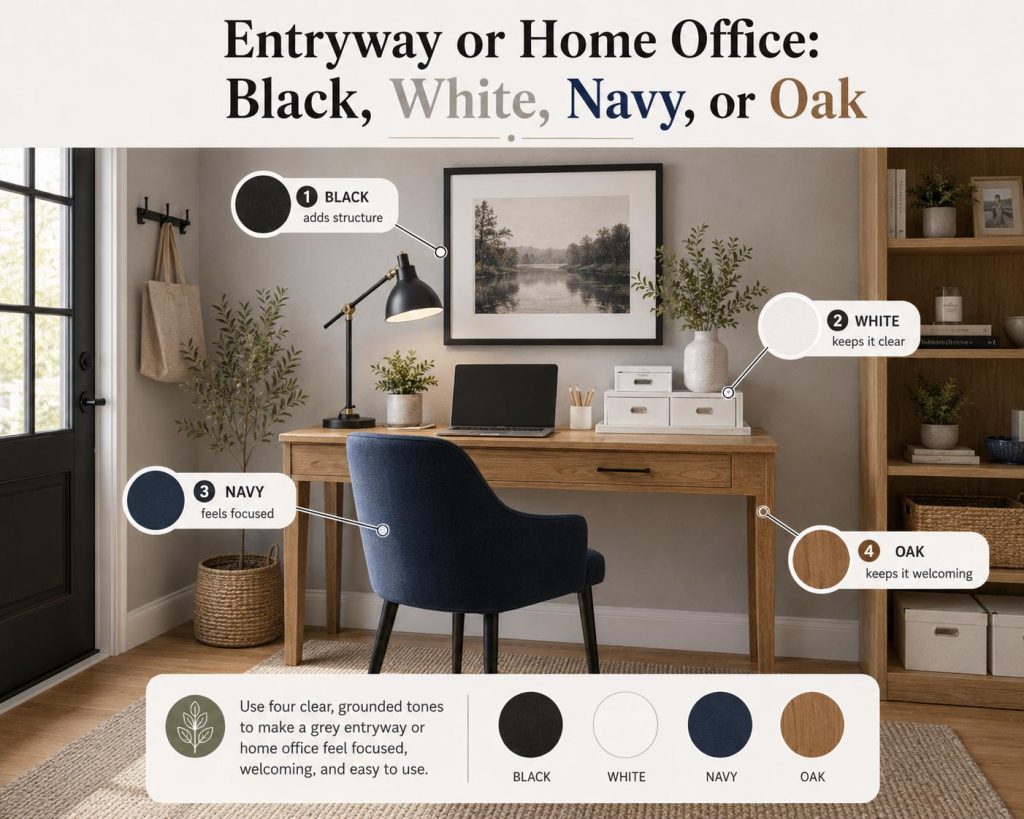
Entryways and home offices can handle cleaner contrast than bedrooms. Grey with white and black feels orderly. Grey with navy feels focused and mature. Grey with oak feels lighter and more welcoming.
For a small home office, grey walls with a white desk, black task lamp, and oak shelving can feel sharp without becoming dark. If the room has little natural light, avoid using charcoal furniture, dark curtains, and a dark rug together.
How Do Furniture Materials Change a Grey Palette?
Color is not the only factor in a grey room. Materials affect whether grey feels cold, warm, flat, soft, modern, or grounded. After choosing the main color scheme, use furniture finishes and textures to adjust the mood.
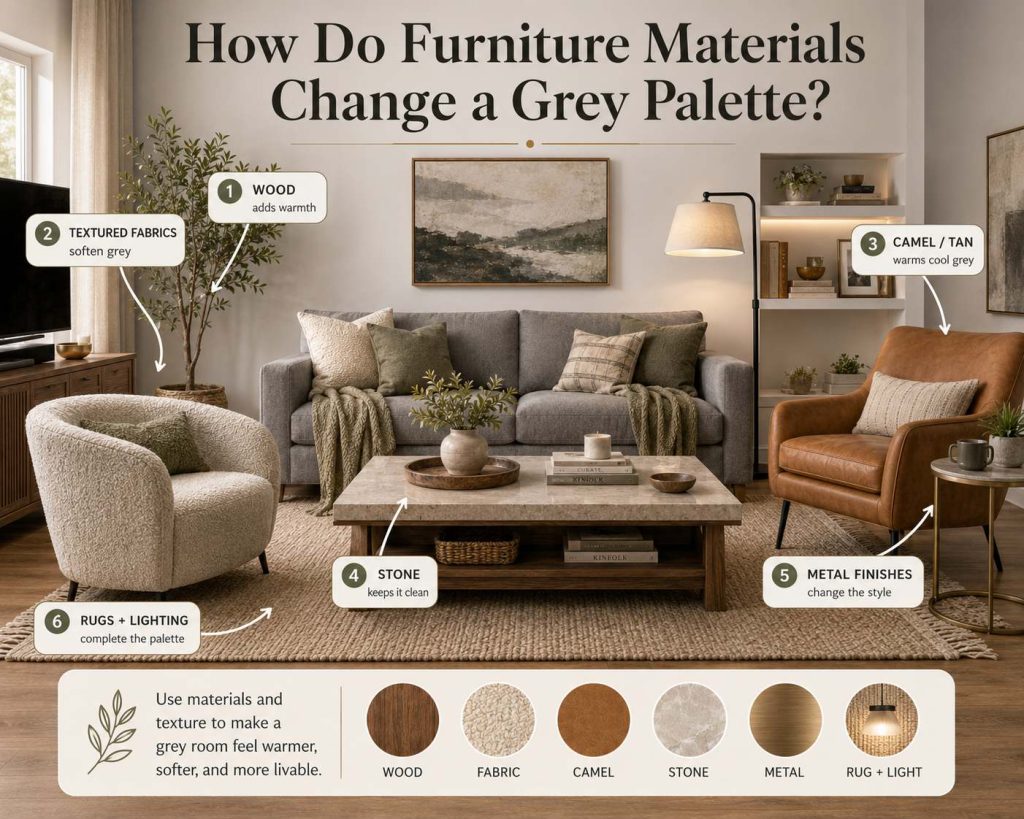
- Wood tones add warmth.
Oak keeps light grey rooms airy, while walnut or medium brown wood makes grey feel warmer and more grounded. - Textured fabrics soften grey.
Chenille, bouclé, velvet, linen-look fabric, and woven upholstery help prevent grey rooms from feeling flat or too smooth. - Camel or tan accents warm cool grey.
Leather, faux leather, or warm brown accent chairs can make a grey living room feel less cold without adding a bright color. - Stone creates a cleaner modern look.
Stone or sintered stone pairs well with grey, but it needs wood, fabric, or a soft rug nearby to avoid a hard feeling. - Metal finishes change the style.
Black metal adds structure, brass or gold adds warmth, and chrome or silver makes grey feel cooler and more minimal. - Rugs and lighting complete the palette.
Cream rugs, jute textures, warm bulbs, and layered lighting can make a grey room feel more comfortable without repainting.
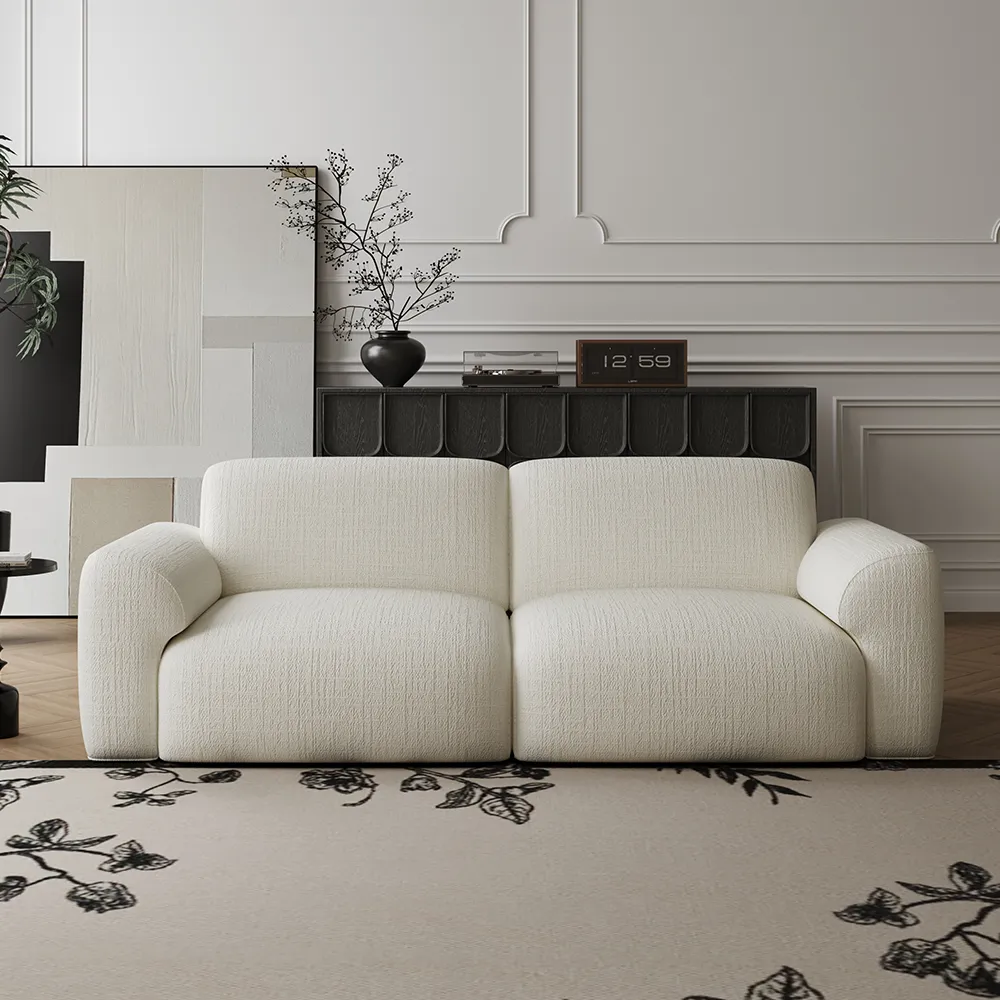
For a grey living room that needs both softness and flexible seating, the Aurora-Power Sofa Bed works well with cream, oak, sage, or camel accents. Its textured chenille fabric softens the grey palette, while the power retractable design adds a lounge-ready function without changing the room’s calm neutral base.
When Should You Use Bold Colors With Grey?
Bold colors work with grey, but they need control. Since grey is a neutral base, strong colors stand out quickly. A little mustard, rust, teal, navy, or red can make a grey space more personal. Too much can make the room feel scattered.
Use bold colors in one of three ways:
- Small accents: pillows, artwork, vases, lamps, or a patterned rug.
- One statement piece: an accent chair, ottoman, or painted cabinet.
- Repeated details: one bold color repeated in two or three places.
Mustard, rust, and terracotta are useful when a grey room feels too cool. They work especially well with cream, camel, walnut, and brass. Teal and navy feel more structured, so they suit modern living rooms, home offices, or darker grey schemes. Blush and mauve are softer choices for bedrooms and light grey spaces.
Red can work with grey, but it is usually better in small doses. A red art print, patterned rug, or single accent chair feels more controlled than a large red wall in a room that already has charcoal furniture. The stronger the accent color, the more important it is to keep the large furniture simple.
Dos and Don’ts for Decorating With Grey
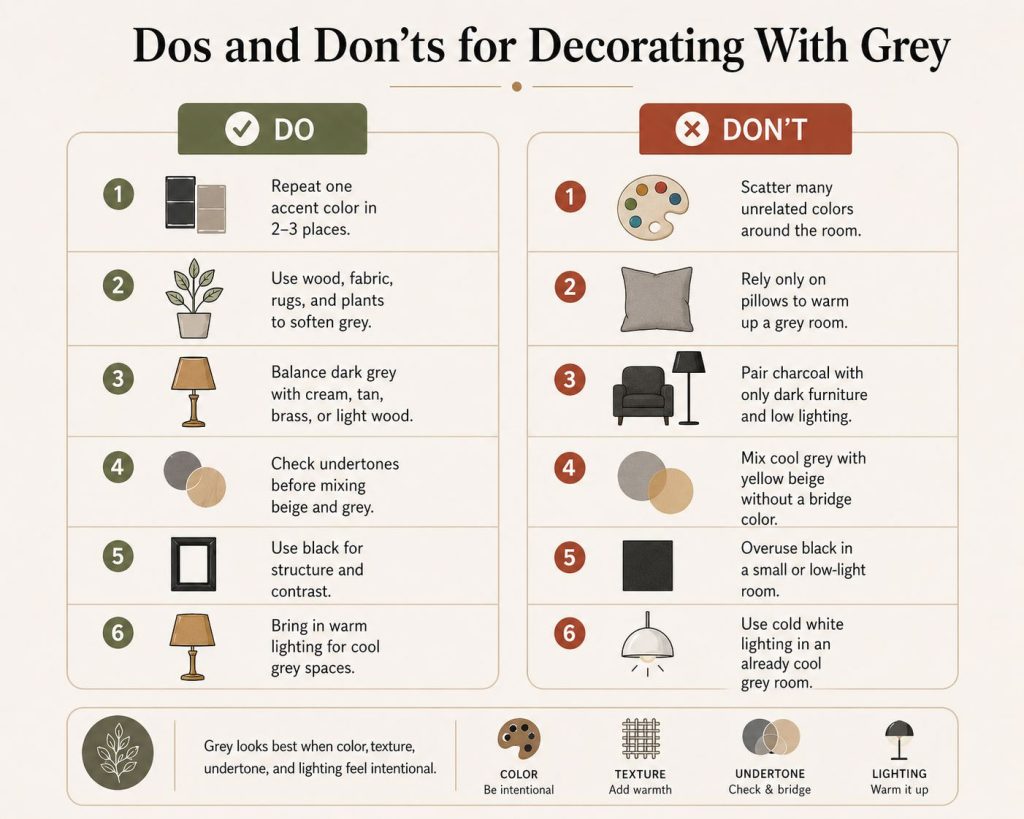
Grey rooms usually go wrong for one of two reasons: everything is too similar, or the accent colors are not connected. These dos and don’ts help keep the room balanced.
| Do | Don’t |
| Repeat one accent color in two or three places. | Scatter many unrelated colors around the room. |
| Use wood, fabric, rugs, and plants to soften grey. | Rely only on pillows to warm up a grey room. |
| Balance dark grey with cream, tan, brass, or light wood. | Pair charcoal with only dark furniture and low lighting. |
| Check undertones before mixing beige and grey. | Mix cool grey with yellow beige without a bridge color. |
| Use black for structure and contrast. | Overuse black in a small or low-light room. |
| Bring in warm lighting for cool grey spaces. | Use cold white lighting in an already cool grey room. |
If you already have grey walls, start with the largest fixed pieces: sofa, dining table, TV stand, rug, and curtains. These pieces influence the room more than small accessories. A related question such as what color furniture goes with grey walls is useful when the wall color is staying and the furniture still needs to be chosen.
Conclusion
The best answer to what colors go with grey depends on shade, undertone, room function, and material. Cream, white, wood tones, sage, blue, black, camel, brass, rust, and terracotta can all work, but they should be used with a clear purpose. Light grey often needs contrast. Dark grey needs lift. Cool grey needs warmth. Warm grey needs harmony. Start with the largest furniture and surfaces first, then use smaller accents to repeat the palette and make the room feel complete.
Q&A
What should I choose first in a grey room: the sofa, rug, or wall color?
Choose the largest fixed element first. If the walls are already grey, select the sofa and rug around that undertone. If you are starting from scratch, pick the sofa first because it affects comfort, layout, and daily use. Rugs, curtains, and accent colors are easier to adjust later.
How do I know if a grey room is becoming too dark?
A grey room is too dark if furniture edges disappear, the floor and sofa blend together, or the room needs lights on during the day. Balance dark grey with a pale rug, ivory curtains, light wood furniture, and warm lighting. Avoid adding more charcoal pieces unless the room has strong natural light.
What furniture finish works best if I want a warmer grey living room?
Warm wood is usually the safest furniture finish for a warmer grey living room. Oak keeps the room light, while walnut or medium brown wood adds depth. If the room feels too cool, choose wood, brass, tan leather, or cream fabric before adding bright colors. These materials warm up grey without making the palette busy.
How do I make a grey sofa look less plain before buying new furniture?
Start with the pieces around the sofa before replacing it. A cream rug, warm wood coffee table, black floor lamp, and one repeated accent color can make a grey sofa feel more intentional. If the room still feels flat, use grey sofa living room ideas to compare wall color, rug, pillow, and layout options before buying larger furniture.
How many accent colors should a grey room have?
Most grey rooms look best with one main accent color and one supporting neutral. For example, grey, cream, walnut, and sage feels calm and connected. Grey, ivory, black, and brass feels more modern. Too many strong accents can make grey lose its role as the stabilizing base.
How do I make a grey room look warmer without repainting?
You can warm up a grey room with wood furniture, cream textiles, tan leather, brass lamps, jute rugs, plants, and warm light bulbs. Start with the biggest visible surfaces, such as the rug, curtains, TV stand, or coffee table. Small decor helps, but large textures change the mood faster.
How do I keep an open living and dining area from looking mismatched with grey?
Repeat two or three colors across both zones. For example, use a grey sofa, cream rug, walnut dining table, and black lighting so the living and dining areas share the same palette. Avoid choosing a sofa, TV stand, dining table, and chairs in unrelated finishes, because grey needs repetition to feel connected.


