 By Kelvin
Introduction
If you are searching for how to care for leather furniture, you probably want a simple routine that keeps sofas, recliners, and chairs from cracking, fading, or feeling dry over time. The good news is that leather furniture does not need heavy weekly cleaning. It needs gentle habits, the right level of moisture control, quick spill response, and occasional conditioning when the leather type allows it. This guide focuses on long-term leather furniture care, not just stain removal, so you can build a routine that fits real daily use.
What Is the Best Way to Care for Leather Furniture?
The best way to care for leather furniture is to keep it clean, dry, conditioned when needed, and protected from direct heat and sunlight. A good routine is simple: dust weekly, blot spills right away, avoid harsh cleaners, and condition real leather every 6 to 12 months depending on use and climate.
Think of care as prevention. Most leather damage does not happen from one missed cleaning. It happens when dust, body oils, sun exposure, dry air, and wrong products build up slowly.
A basic leather furniture care routine should include:
- Dust with a soft, dry microfiber cloth once a week.
- Vacuum seams and cushion gaps with a soft brush attachment.
- Blot spills immediately instead of rubbing.
- Keep leather away from strong sunlight, radiators, heating vents, and fireplaces.
- Use a leather-safe cleaner only when a dry or slightly damp cloth is not enough.
- Condition real leather when it starts to feel dry, stiff, or dull.
- Always test new products on a hidden area first.
This answers the common question: how do you care for leather furniture without overcomplicating it? You care for it by doing small, low-risk steps consistently, rather than waiting until the surface looks worn.
What Leather Furniture Care Routine Should You Follow?
A useful leather furniture care routine should match how often the furniture is used. A formal leather accent chair does not need the same attention as a family-room sofa used every night for TV, snacks, pets, and naps. Use the table below to decide what your furniture actually needs.
| Use Case | Weekly Care | Monthly Care | Long-Term Care |
| Low-use leather chair | Light dusting | Check for dry spots | Condition every 9–12 months if real leather |
| Family leather sofa | Dust and vacuum seams | Wipe high-touch areas | Condition every 6–9 months if needed |
| Daily-use recliner | Dust, vacuum folds, wipe armrests | Check headrest, footrest, and seat creases | Condition more often if real leather feels dry |
| Sunny living room | Dust weekly | Look for fading or stiffness | Use curtains, rotate cushions, condition as needed |
| Pet household | Remove hair from seams | Check scratches and nail marks | Keep nails trimmed; avoid rough play on leather |
| Performance or faux leather | Dry wipe or damp wipe as label allows | Check for residue or peeling | Usually does not need traditional leather conditioner |
For everyday homes, the most important areas are armrests, headrests, seat fronts, and cushion seams. These spots collect body oils and friction faster than the rest of the piece. If your leather sofa is where the family gathers every evening, a quick weekly wipe can do more than a deep clean twice a year.
When the issue moves from light upkeep to stain removal, a detailed routine for how to clean a leather couch without damaging it is more useful than repeating every cleaning step here.
How Much Cleaning Does Leather Furniture Really Need?
Leather care is not the same as scrubbing. In most cases, leather furniture needs less moisture and less product than people expect. Over-cleaning can strip finishes, leave residue, or make the surface feel sticky.
For routine cleaning, start with the lowest-risk method:
- Remove loose dust with a dry microfiber cloth.
- Vacuum seams using a soft brush attachment.
- Use a barely damp cloth only when dry dusting is not enough.
- Dry the surface right away with a clean cloth.
- Use leather cleaner only when the care label allows it.
Do not soak leather, spray cleaner directly onto the surface, or scrub stains aggressively. If you are dealing with ink, grease, dye transfer, pet accidents, or an unknown leather finish, use a more specific method to clean leather couch safely at home instead of experimenting.
The goal of basic cleaning is not to make leather look brand new every time. It is to remove dust, grit, and surface oils before they wear down the finish.
How Often Should You Condition Leather Furniture?
Conditioning helps real leather stay flexible, but it is not something to do every week. For most real leather furniture, conditioning every 6 to 12 months is enough. In dry homes, sunny rooms, or high-use seating areas, you may need to check the leather more often.
Before conditioning, ask these questions:
- Does the leather feel dry, stiff, or rough?
- Do creases look pale or stressed?
- Has the surface lost softness in high-contact areas?
- Is the furniture exposed to direct sun or dry indoor heat?
- Does the care label say the leather can be conditioned?
Apply conditioner sparingly. Too much can leave a sticky film or darken the surface unevenly. Put the product on a soft cloth, not directly on the sofa, and work in small sections. Let it absorb, then buff away any excess.
Do not use shoe polish, cooking oils, body lotion, or random household oils on leather furniture. Upholstery leather needs products made for furniture, not footwear or skin.
How Do You Protect Leather Furniture from Sun, Heat, and Daily Wear?
Long-term leather furniture maintenance depends heavily on where the furniture sits and how people use it. A leather sofa beside a bright window or heating vent ages differently from one in a shaded room. Protection is less about covering the furniture all day and more about reducing the conditions that dry it out.
Keep Leather Away from Harsh Light and Heat
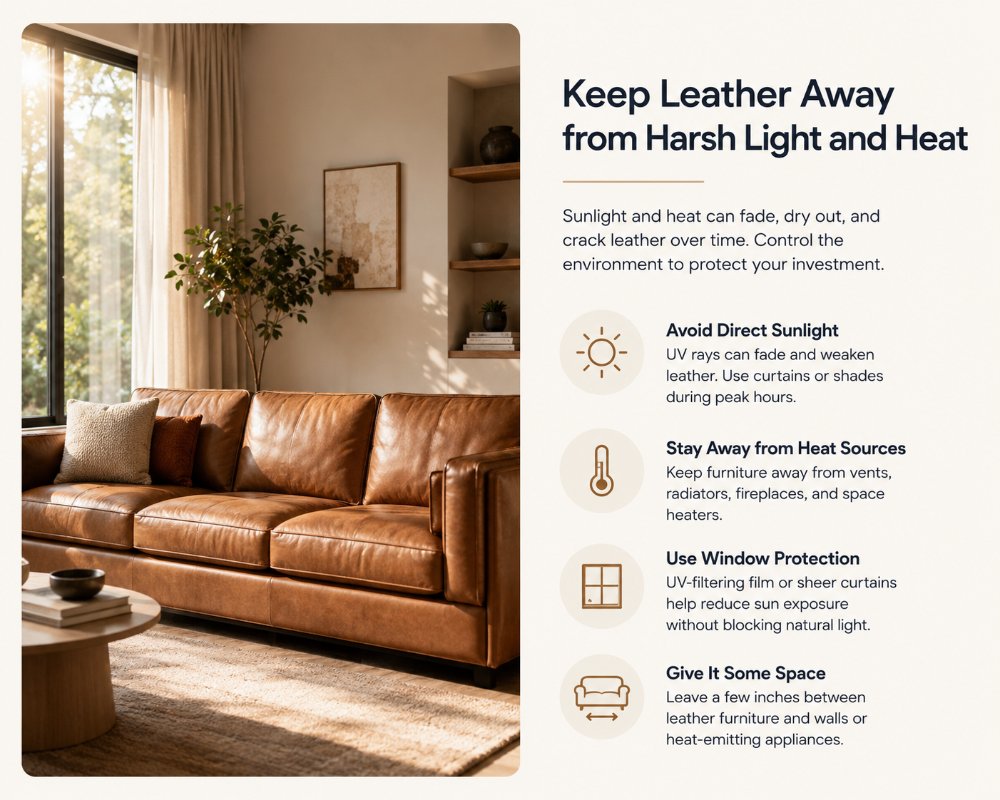
Direct sunlight can fade leather, especially darker colors and more natural finishes. Heat can also dry the material and make it less flexible. Try to place leather furniture a few feet away from heating vents, fireplaces, radiators, and large sunny windows.
If the layout cannot change, use practical protection:
- Close curtains during peak afternoon sun.
- Use UV-filtering window film in very bright rooms.
- Rotate removable cushions when possible.
- Check sunny-facing areas more often for dryness.
Pay Attention to Pets and Kids

Leather can work in homes with pets and kids, but it needs small rules. Keep pet nails trimmed, remove hair from seams, and wipe food spills quickly. For kids’ snacks, use trays or washable throws in the busiest seat without leaving damp fabrics on the leather.
If your pet tends to dig before lying down, choose protected leather or performance leather instead of delicate aniline leather.
Reduce Friction in High-Use Seats

Leather often wears first where people sit, lean, and rest their arms. In a family room, the most used seat may show soft creases faster than the rest of the sofa. That is normal, but deep friction marks can be reduced.
Avoid sitting on leather with wet clothes, sharp hardware, or rough denim every day in the same spot. Keep blankets soft and breathable if you use them. Do not leave plastic covers on leather for long periods, because trapped moisture can create new problems.
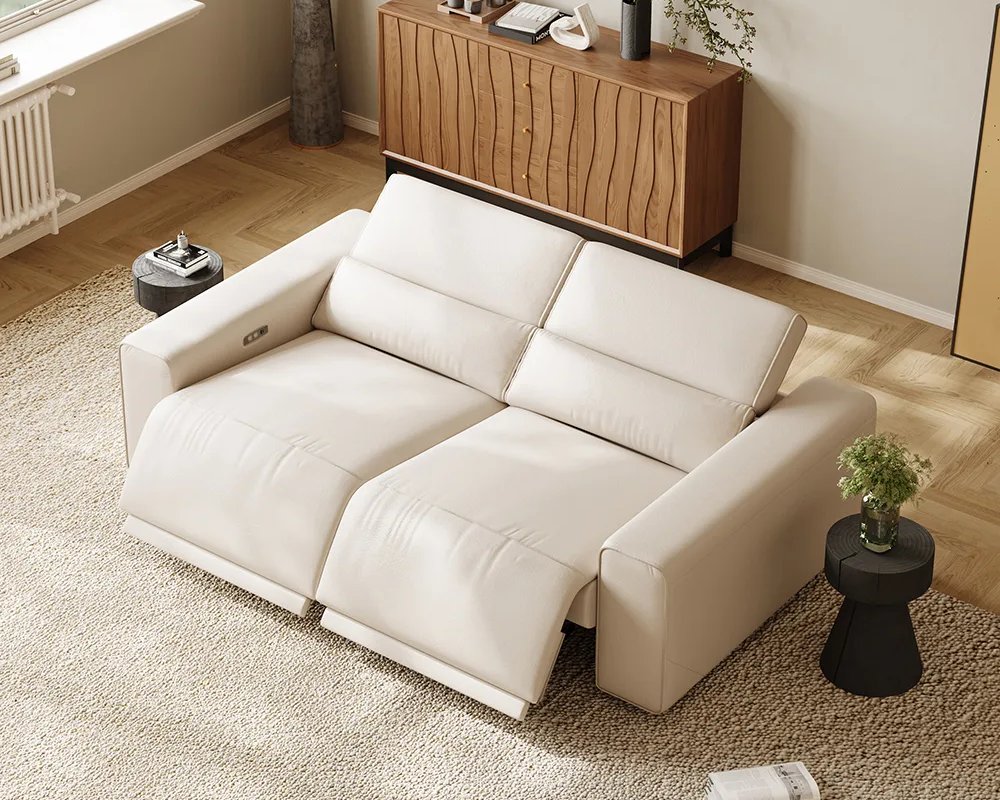
The Benjamin-Power Reclining Loveseat works well for high-use TV rooms because its eco-friendly performance leather is water-resistant and easy to wipe. The adjustable headrest, USB/Type-C charging, and power reclining function also mean people are likely to use the same seat often, so regular wiping around armrests, headrests, and recliner seams matters.
Does Leather Type Change How You Care for It?
Yes. The right way to how to maintain leather furniture depends on the material. Some leather has a protective finish that makes it easier to wipe. Some natural leather absorbs moisture and oils more quickly. Faux and performance leather may look like leather but usually should not be treated with traditional leather conditioner.
| Leather Type | Care Focus | What to Avoid |
| Top-grain leather | Dust regularly, blot spills, condition when dry | Harsh cleaners, too much water, direct sun |
| Full-grain leather | Protect natural patina, condition carefully | Over-cleaning or trying to remove all aging |
| Aniline leather | Use minimal moisture and professional care for stains | DIY stain treatments and oily products |
| Protected leather | Wipe gently and maintain finish | Abrasive pads and alcohol-heavy sprays |
| Faux or performance leather | Follow the product label; wipe as directed | Real leather conditioner unless label allows it |
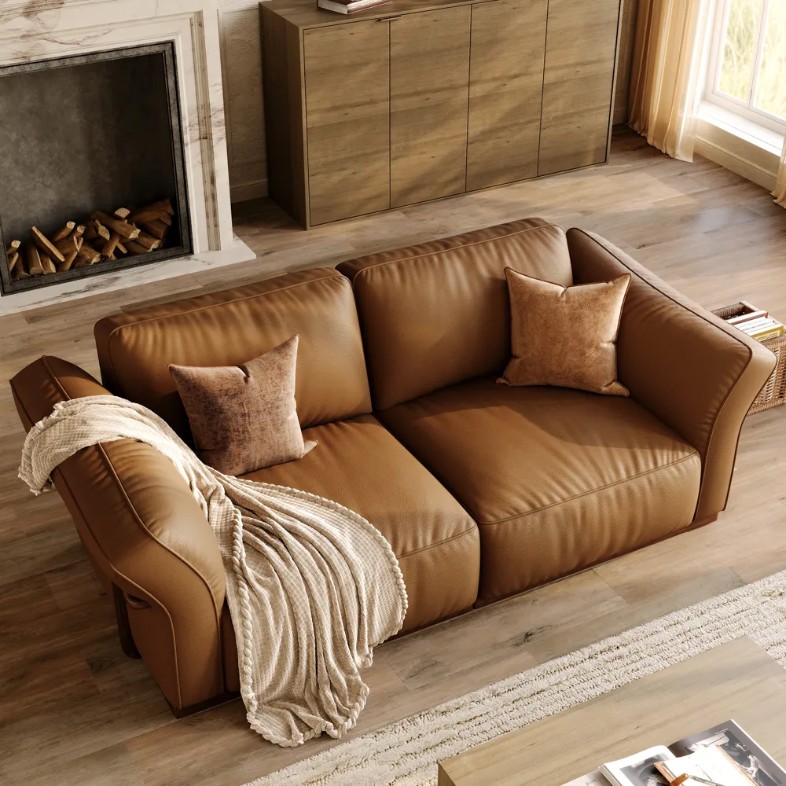
For homes that want natural leather with a softer look over time, the Cronus-Brown Genuine Leather Modular Sofa fits the care logic of real top-grain leather. Its pebble-grain matte surface and 26-inch seat depth suit relaxed living rooms, while the care routine stays straightforward: dust regularly, dab spills quickly, and avoid direct sunlight, heat, and chemicals.
What Are the Most Common Leather Furniture Care Mistakes?
Many leather problems come from doing too much, not too little. Strong cleaners, heavy moisture, and over-conditioning can damage the finish faster than normal use.
Avoid these common mistakes:
- Using bleach, ammonia, acetone, or window cleaner.
- Cleaning leather with baby wipes or alcohol-heavy wipes.
- Spraying cleaner directly onto the furniture.
- Scrubbing stains with rough sponges.
- Using shoe polish to “restore” color.
- Applying conditioner before removing dust.
- Conditioning faux or performance leather as if it were real leather.
- Placing leather against a sunny window without protection.
- Letting spills sit overnight.
- Trying to erase every sign of patina.
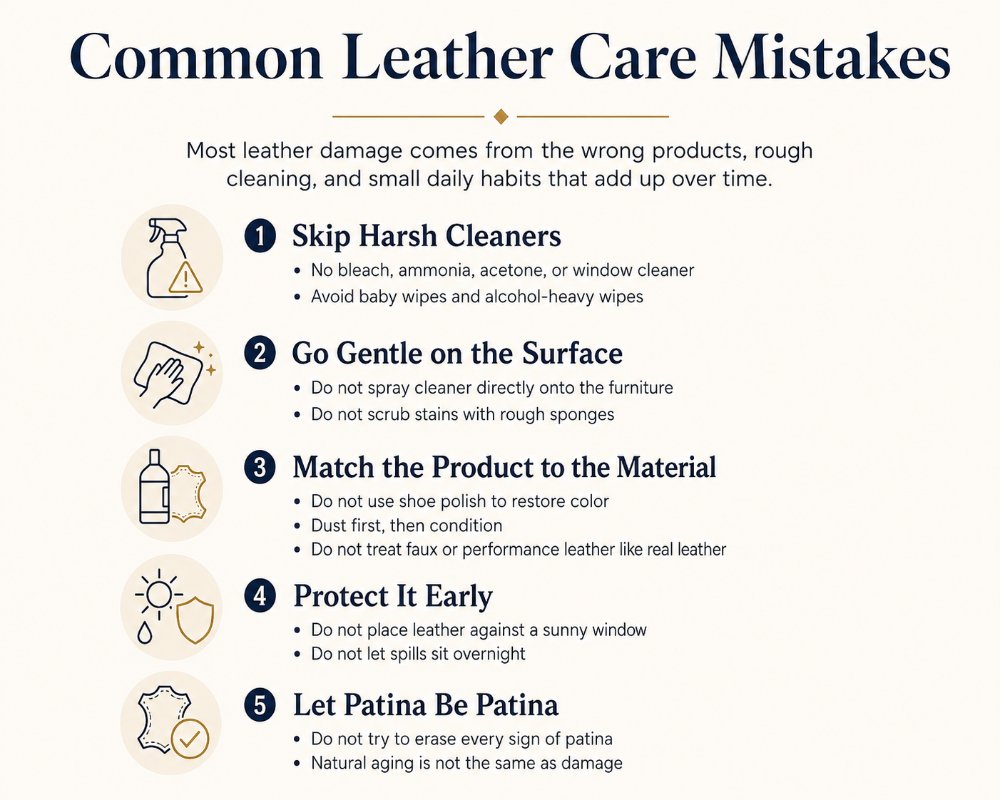
Patina is not always damage. On real leather, soft creasing and a gentle change in tone can be part of normal aging. Damage looks more like cracking, peeling, sticky residue, severe fading, or rough patches that feel dry to the touch.
If your leather seating includes moving parts, folds, or footrests, a more specific approach to leather reclining sofa care can help you maintain areas that collect crumbs, dust, and friction.
Conclusion
Learning how to care for leather furniture is mostly about building steady habits, not doing complicated cleaning. Dust it weekly, keep moisture low, respond to spills quickly, condition real leather only when needed, and protect the surface from sun, heat, friction, and harsh products. The exact routine should depend on leather type, room conditions, and how often the piece is used. With the right approach, leather furniture can stay comfortable, flexible, and easier to live with for years without turning care into a major chore.


[…] For more detailed material-specific cleaning guidance, see POVISON’s guide to caring for leather furniture. […]
[…] the surface can soften, and scratches or color variation can develop depending on the finish and care routine. Those changes are different from a bonded layer separating from its […]