 By Charles
A large sectional couch is one of the most-used pieces of furniture in any household — and one of the most stressful to get wrong. I’ve watched friends spend $2,400 on a sectional that wouldn’t make it through their stairwell, and a neighbor live with a U-shape that ate his entire walking path for four months before he finally swapped it out. Both did the same thing: they shopped for the sofa first, the room second.
This guide flips that order. If you’ve got a big family, kids, a dog who thinks the chaise is hers, or a movie-night-every-Friday rhythm — a large sectional is probably the right call. But “right call” only counts if the room can hold it, the doorway can pass it, and the configuration matches how your household actually moves. Let’s get the numbers right before you click order.
When a Large Sectional Couch Makes Sense
The honest test I run: how many people sit in your living room at once on an average Tuesday night, not on Thanksgiving? If the answer is 4 or more, a large sectional starts earning its footprint. According to the American Time Use Survey from the U.S. Bureau of Labor Statistics, watching TV is the largest leisure activity in American households — averaging close to three hours a day. Multiple people physically occupying seats, every single day. A sectional that fits six bodies comfortably is doing real work that an 84-inch standard sofa just isn’t.
A large sectional makes sense when you’ve got:
- Three or more regular sitters — kids, partners, frequent guests, the in-laws every other weekend
- Movie-night rituals where everyone wants to lie down, not perch
- An open-plan room that needs an anchor piece to define the seating zone
- Pets that share the couch — a chaise gives the dog her territory, the humans theirs
- A household that doesn’t reconfigure furniture often — once a sectional is placed, you’re committing
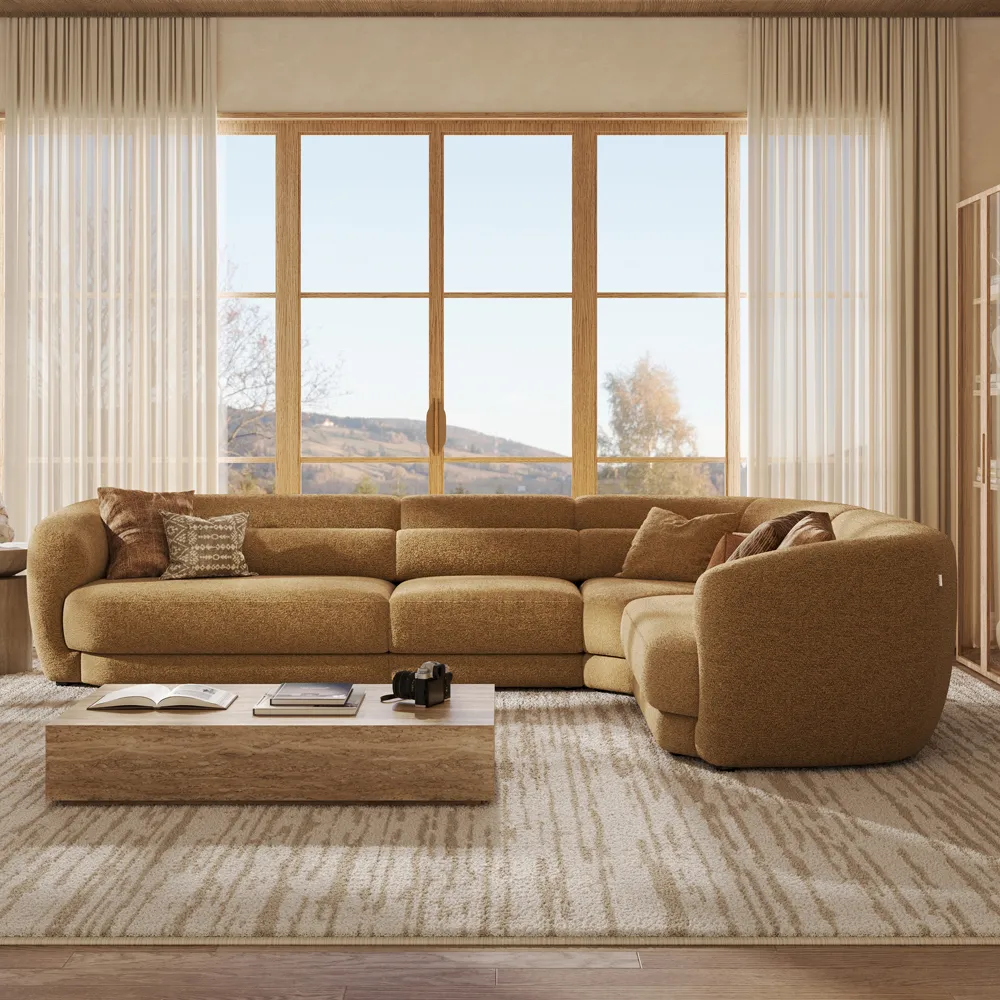
A large sectional does not make sense if your living room is the main walking corridor between kitchen and bedrooms, if you rent and move every two years, or if your room is under 11 feet wide. A pair of standard sofas or a sofa + accent chair will serve you better. I’d rather you walk away from a sectional than wedge one into the wrong room.
Best Rooms for Large Sectionals
Sectional length doesn’t matter in isolation — it only matters in relation to the room. Industry data from Dimensions’ sectional reference puts standard L-shapes around 95–115 inches on the long side, with large U-shapes climbing to 120–160 inches. Those are big numbers. They need rooms that can absorb them without choking the walking paths.
Open-Plan Family Rooms
If your living room flows into the kitchen, dining, or play area without a dividing wall, a large sectional becomes one of the best spatial tools you have. Instead of feeling like furniture pushed against a wall, it acts as a soft room divider — the back of the sofa marks where “living room” ends and “kitchen” begins.
For open-plan layouts, U-shapes (or L-shapes with an extended chaise) work especially well. They define the zone and maximize seating in one move. The minimum room footprint I’d recommend for a U-shape is roughly 16′ × 16′ — enough to leave 36 inches of walking clearance on at least two sides.
That 36-inch clearance isn’t a casual number. The NKBA planning guidelines for residential walkways list 36 inches as the minimum for any walking path traffic flows through. Less than that and you’ll feel it every time you carry laundry past the couch.
Larger Living Rooms With TV Walls
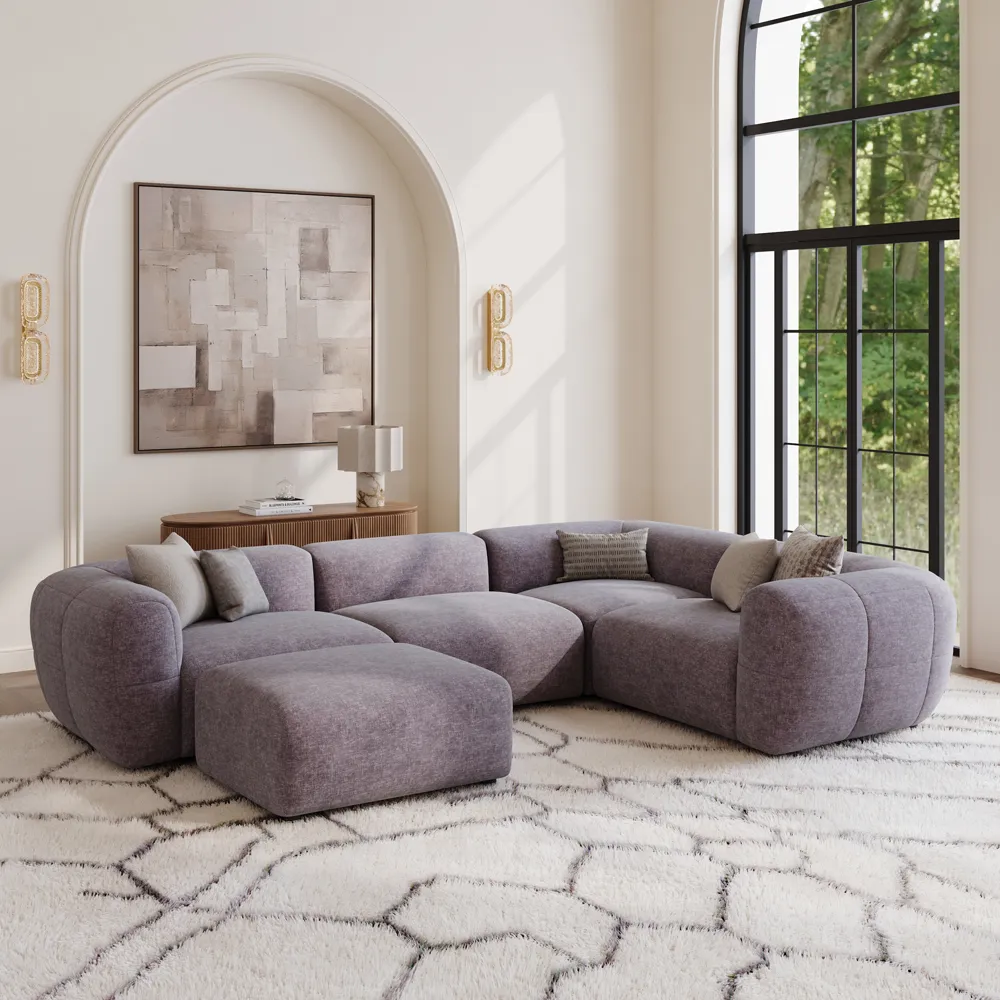
If your living room has a clear focal wall — TV, fireplace, big window — and at least 14 feet of width, an L-shape is usually the strongest fit. The long side anchors against one wall, the chaise extends into the room, and the entire shape orients toward the focal point.
The math I use: take your TV wall length, multiply by two-thirds, and that’s your maximum long-side sectional length. So a 16-foot TV wall comfortably holds a sectional with a long side around 128 inches. A 12-foot wall caps you closer to 96 inches.
One mistake I see constantly: people pick the chaise side based on how it looks in a showroom photo. Don’t. The chaise should extend into the room, not block your main walking path. If you walk into your living room from the left, you want a right-facing chaise (chaise on your right when facing the sofa). Reverse it if your entry is on the right. Get this backwards and you’ll be walking around your own couch for the next decade.
L-Shaped vs U-Shaped vs Sleeper Sectionals
Three core configurations cover most of the market. Here’s how they compare for family use:
| Configuration | Typical Long Side | Min. Room Size | Seats | Best For |
| L-shape with chaise | 95–130″ | 12′ × 14′ | 4–5 | TV walls, defined seating zones, mid-size families |
| U-shape | 120–160″+ | 16′ × 16′ | 6–8 | Open-plan rooms, large families, regular hosting |
| Sleeper sectional | 95–120″ | 12′ × 14′ + bed clearance | 4 + 1–2 sleepers | Frequent overnight guests, no spare room |
| Modular L or U | Varies | Configurable | 4–8 | Households that move, change layouts, or expand later |
L-shapes give you the best seats-per-square-foot ratio. The downside: someone always ends up on the chaise, which means it functions as a 3-seat sofa + 1 lounger, not 4 equal seats.
U-shapes seat the most people but at a real spatial cost. They wrap into the room and leave fewer arrangement options. They also create one persistent problem: nobody wants the middle seats, because there’s no armrest.
Sleeper sectionals sound great on paper. Reality: most pull-out mechanisms add 30–40 inches of depth when extended, which means 4–5 feet of clearance in front of the sofa. Buy one only if you’ll actually pull it out at least monthly.
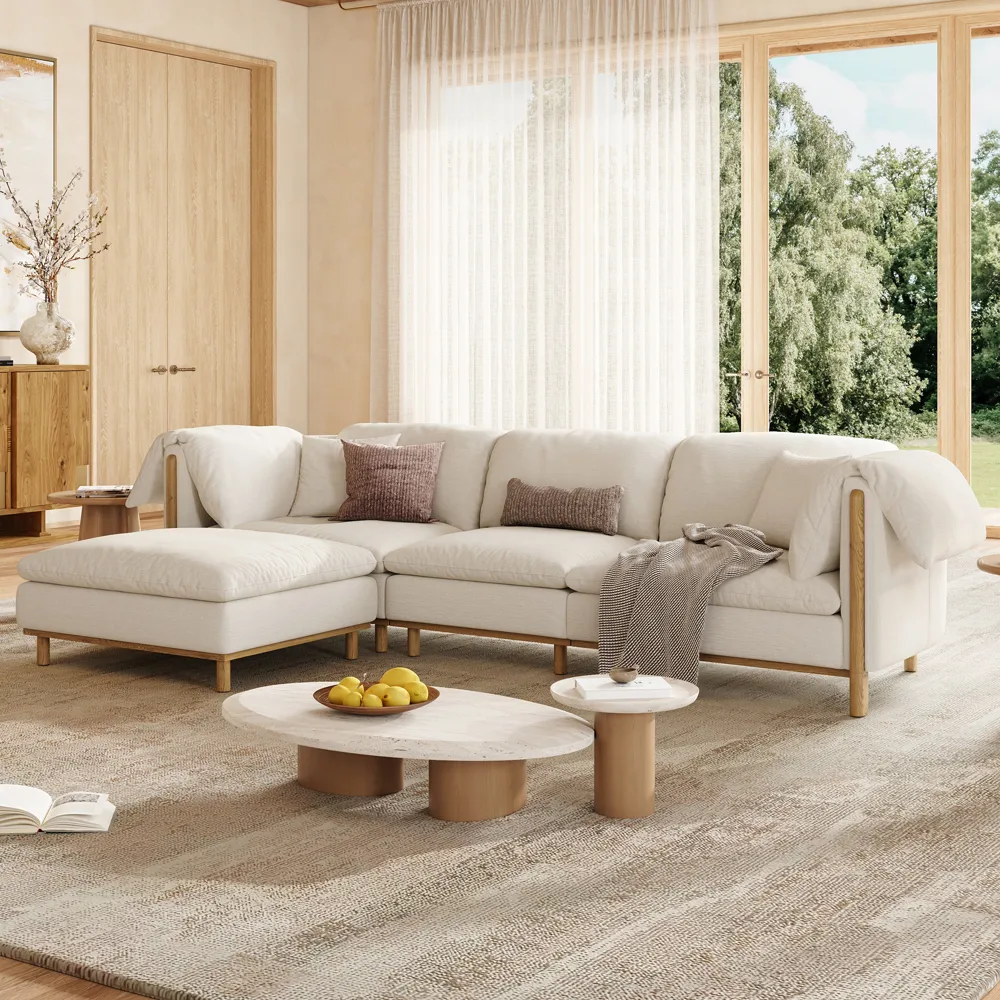
Modular sectionals are my honest pick for most growing families. The pieces ship and pass through doorways individually, you can reconfigure if you move, and you can add modules later. POVISON’s modular sectional sofa collection is built around exactly this logic — each module ships pre-assembled, connects with simple hardware, and rearranges when your household changes. When 8 boxes show up, you’re not assembling a sectional from raw lumber. You’re connecting finished modules.
What to Measure Before Ordering
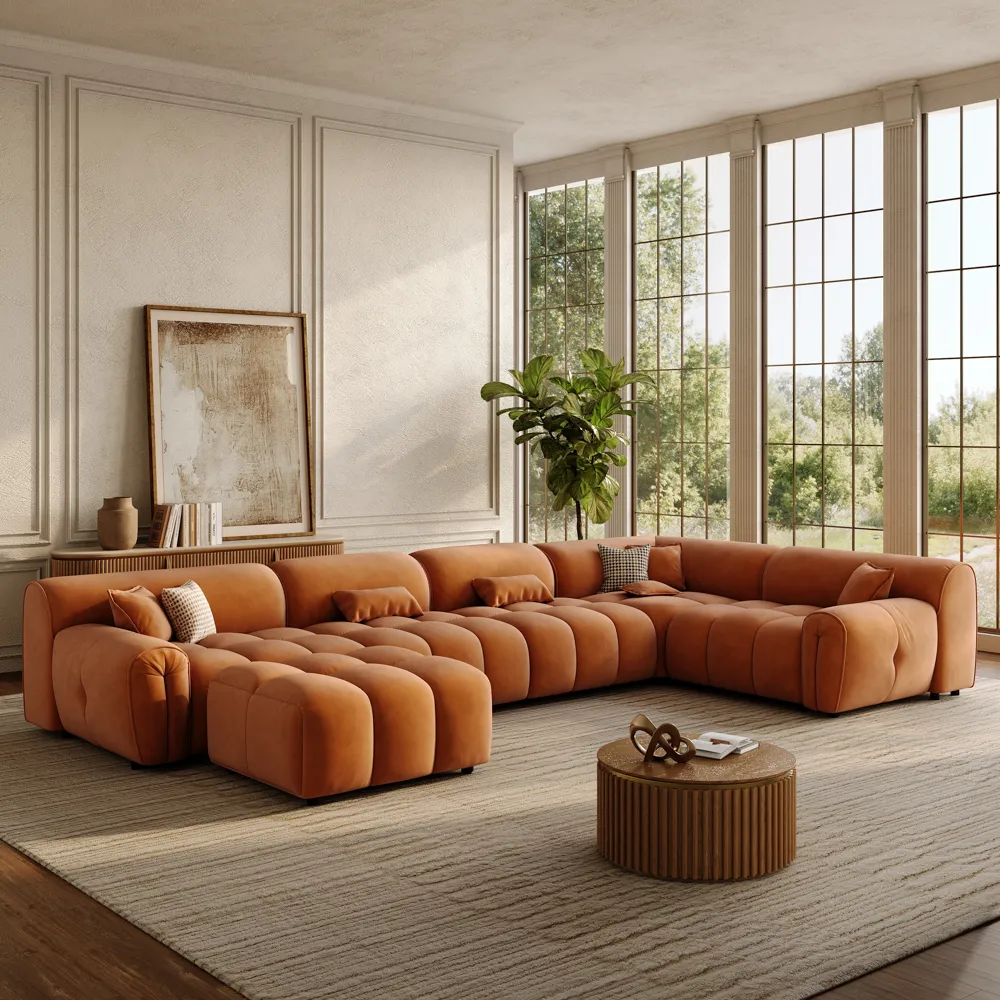
This is the section most buyers skip and most regret skipping. Five numbers, written down, and your odds of getting this right go up by an order of magnitude.
- Room dimensions — length and width in inches. Sketch the room with windows, doors, and outlets marked.
- Walkways — the clear paths you walk through the room daily. Each one needs at least 36 inches of clearance after the sectional is placed.
- Doorway and hallway widths — the front door, any interior doors, the hallway, and any turns. Most modular pieces need 30–32 inches of doorway clearance to angle through. Measure the narrowest point of the entire delivery path.
- Stairwell geometry — width, ceiling height, and the diagonal across landings. This is where most large sectional deliveries fail. A 36-inch stairwell looks fine until the diagonal turn at the landing is only 28 inches. Modular pieces save the day; one-piece sectionals don’t.
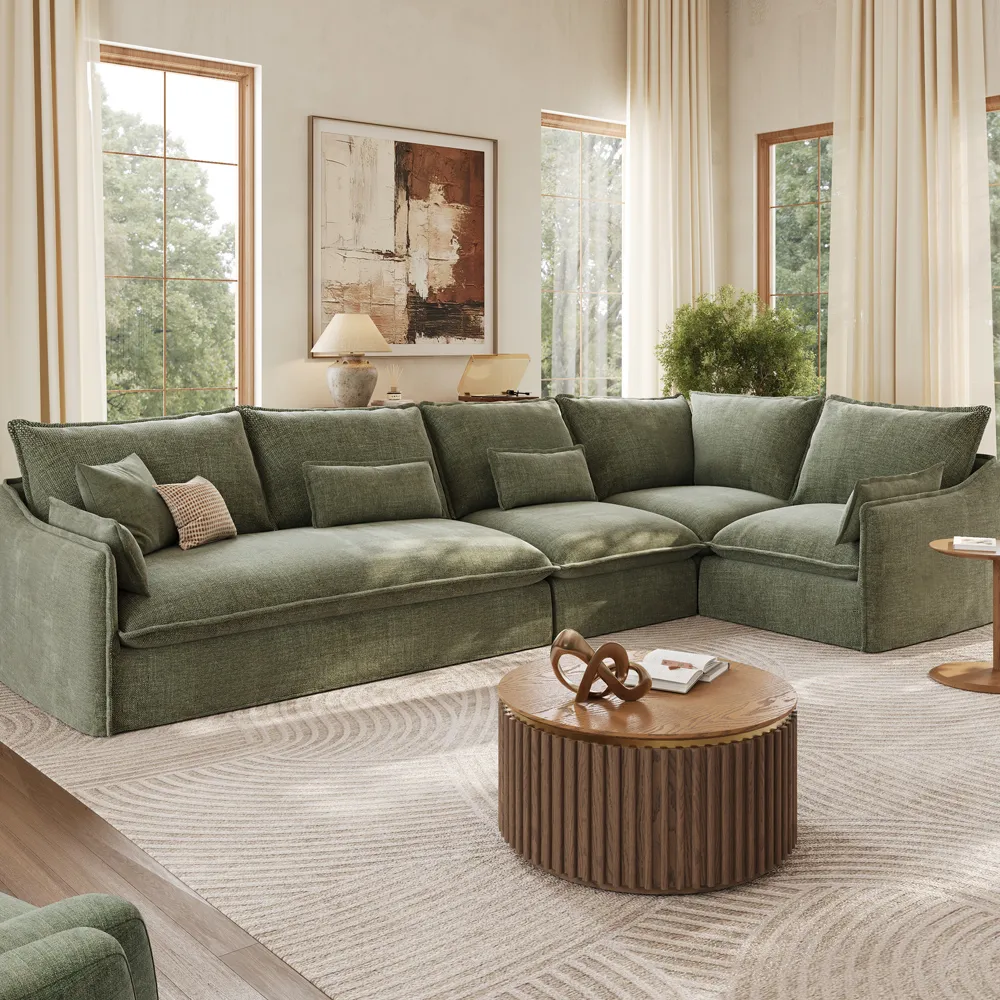
- Tape outline before you click order — the single most useful thing you can do. Use blue painter’s tape to mark the full footprint on your floor — long side, chaise, corner. Live with it for 24 hours. Walk around it carrying a laundry basket. Sit in the dining chairs that face it. If you bump into the tape more than twice, the sectional is too big or oriented wrong.
Common Trade-Offs Buyers Miss
Beyond the sizing math, here are the trade-offs that catch buyers after the truck shows up.
Delivery and door clearance. A large sectional in a single shipping box can weigh 200–400 pounds, and the carton itself can be wider than your front door. This is where modular construction matters most: pieces ship in separate cartons, each manageable for two people, and pass through normal doorways without removing trim. Always confirm the largest single piece’s box dimensions before ordering.
White-glove vs threshold delivery. Standard freight drops boxes at your curb. White-glove brings pieces into your room, unpacks them, and removes the packaging. The difference is real — both in cost ($150–$300 typical upgrade) and in physical labor on your end. POVISON includes white-glove options at checkout for sectional orders, and given the weight, treat that upgrade as part of the budget, not a luxury add-on.
Frame durability. Family rooms are abusive environments. Kids jump on cushions, dogs claw at fabric, adults sit on the same spot every night for years. The frame underneath determines whether the sectional lasts 5 years or 15. The industry benchmark is the ANSI/BIFMA X5.4 lounge seating standard, which tests structural integrity for an estimated 10 years of continuous use. Solid hardwood or kiln-dried hardwood frames pass; particleboard often doesn’t. “Engineered wood” is a hedge term — push for specifics.
Material safety for households with kids and pets. Couches off-gas. Foam padding, fabric finishes, and adhesives can release VOCs into the room for weeks after delivery. If anyone has asthma, allergies, or sensitivities, this matters. Look for OEKO-TEX certified fabrics and CARB Phase 2 compliance for any wood components. POVISON publishes its FSC-certified wood program for responsible forest management — the kind of transparency I’d ask any furniture brand for.
Return policy reality check. Returning a 400-pound sectional is not like returning a coffee table. Most brands charge restocking fees, return shipping, or both. Read the return policy before you order — the return window, who pays for shipping, and whether the sofa needs original packaging.
Coffee table compatibility. A sectional changes the coffee table math. The chaise sticks out at a different depth than the main sofa, which means a single rectangular table won’t reach all seating positions. Plan the coffee table at the same time.
FAQ
How much space do you need for a large sectional couch?
A large sectional needs at least a 14′ × 16′ room as a working minimum, with 36 inches of walking clearance on every accessible side after placement. For a U-shape, you’re looking at roughly 16′ × 16′ or larger. The math: take the long side in inches, divide by 12, add 6 feet of clearance, and that’s your minimum room dimension. A 130-inch L-shape needs about 17 feet of room length to feel right.
Is a large sectional good for a family room?
Yes — if the household has 3+ regular sitters, the room can absorb the footprint, and you’re not planning to reconfigure often. Large sectionals seat more people per square foot than a sofa-and-chair setup, define open-plan zones effectively, and handle movie-night seating better than any other format. They’re a poor fit for narrow rooms, frequent renters, or households that rearrange seasonally.
Should I buy an L-shaped or U-shaped sectional?
Buy an L-shape if your room has a clear TV wall, your household is 4–5 people, and you want maximum versatility per square foot. Buy a U-shape if you regularly seat 6–8 people, your room is at least 16′ × 16′, and your living room is open-plan rather than wall-anchored. L-shapes are the more forgiving choice for most families.
What should I check before ordering a large sectional online?
Confirm five things: (1) the largest single shipping box’s dimensions vs. your narrowest doorway, hallway, and stairwell point; (2) frame material — solid hardwood or kiln-dried hardwood, not unspecified “engineered wood”; (3) the return policy, including who pays for return shipping; (4) whether white-glove delivery is available and what it includes; (5) the tape outline of the full sectional footprint, on your floor for 24 hours before purchase. Skipping the tape outline is the single most common buyer regret.
Conclusion
A large sectional couch is the best piece of family-room furniture money can buy — when the room can hold it, the doorways can pass it, and the configuration matches how your household actually moves. It’s also the worst purchase you can make if you skip the measuring, ignore the delivery path, or pick the chaise side based on a showroom photo.
Getting it right isn’t hard. Measure the room, measure the doorways, tape out the footprint, choose the configuration based on real seating habits, and confirm the delivery includes the level of service this furniture requires. Modular construction and white-glove delivery solve most of the failure modes that ruin large sectional purchases — which is why I lean toward modular pieces for any household making this decision online without seeing the sofa first.
When you’re ready to look at specific options, POVISON’s fully assembled sectional sofas ship modular, with white-glove delivery available, so the version that arrives is the version you can sit on within minutes of opening the boxes — not a flat-pack project for your weekend. Ready To Live In, in the way that actually matters when six people are arriving for movie night and the couch needs to already be a couch.
Do the tape outline. Measure the doorways. Pick the chaise side based on your actual walking path. The sectional you get right will quietly run your family’s living room for the next decade.
Related Reading:


[…] grandparents and children every weekend, extra backed seating usually delivers more value. When choosing a large sectional couch for a family room, prioritize real seating capacity over an impressive overall […]