 By Charles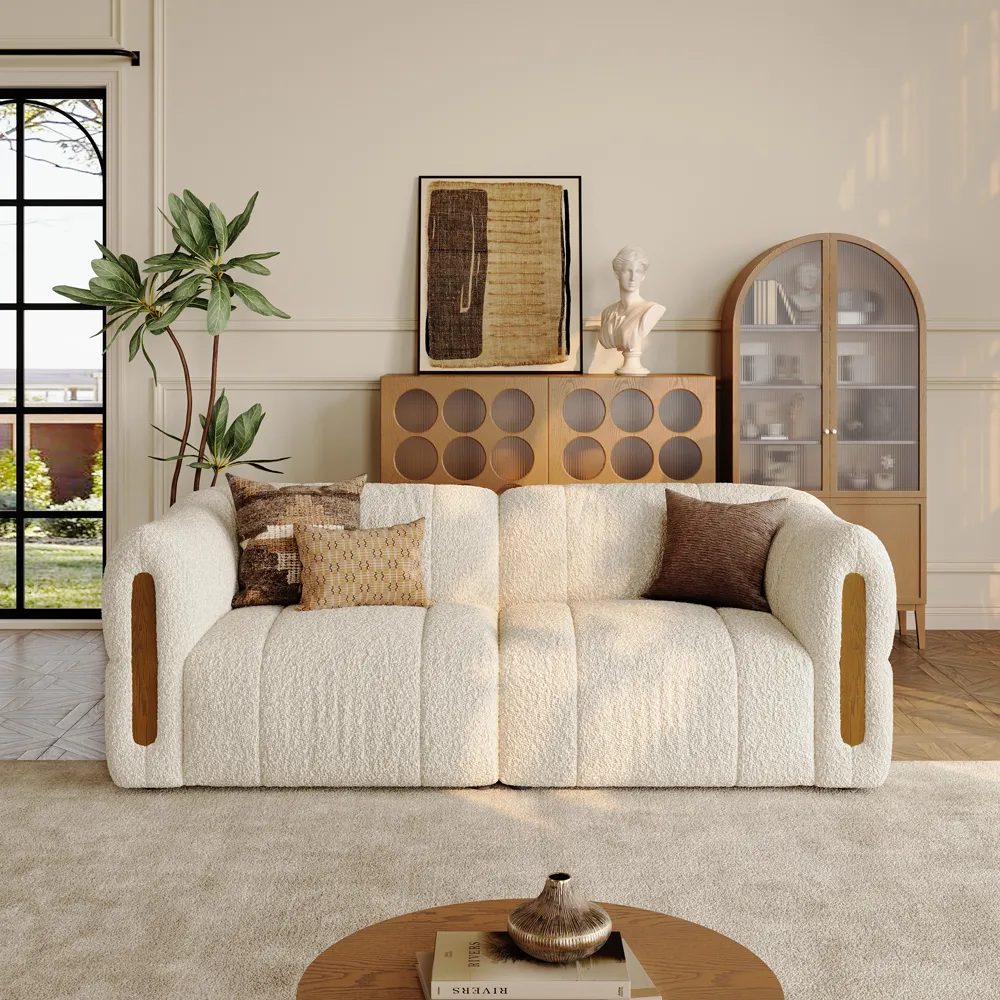
Three years ago I bought a beautiful slate-blue velvet sofa. Three months later my golden retriever, Murphy, had effectively re-textured the entire left armrest. Pulled threads. Visible claw paths. A permanent damp patch where he liked to rest his chin. I’d spent $1,400 on what turned out to be a very expensive dog blanket.
That mistake started me down a rabbit hole. I’ve now spent close to two years comparing couch materials specifically through a “will my pet destroy this” lens — testing fabric swatches in my own home, talking to upholsterers, and reading way more material spec sheets than any normal person should.
Here’s what I wish someone had told me before I bought that velvet sofa.
A quick note before we get into it: this article is about material types, not specific products. If you’re shopping for a sofa, you’ll see the same fabric called fifteen different things across brands. Understanding the material category matters more than chasing a brand name. So that’s what we’re going to break down.
How to Compare Couch Materials for Pets
Most “pet-friendly” sofa marketing focuses on one thing — usually stain resistance. But pets create at least four distinct problems for upholstery: shedding, scratching, accidents, and odor. A material that handles one of these well might fail at another.
Here’s the comparison framework I now use. I’d recommend you do the same before you buy anything.
| Material | Shedding (hair release) | Scratch resistance | Liquid/stain resistance | Odor retention | Maintenance effort |
| Leather (full-grain) | Excellent — wipes clean | Low — claws leave marks | Excellent | Low (doesn’t absorb) | Low to moderate |
| Performance microfiber | Very good | Moderate to good | Very good | Low to moderate | Low |
| Tight-weave polyester | Good | Moderate | Good (with treatment) | Moderate | Low |
| Crypton/performance weave | Very good | Moderate to good | Excellent | Low | Low |
| Linen | Poor (hair clings) | Low (snags easily) | Poor without treatment | High | High |
| Velvet | Poor (hair embeds) | Very low | Moderate | High | High |
| Chenille | Poor (hair clings) | Very low (loops snag) | Moderate | High | Moderate |
| Cotton (untreated) | Moderate | Low to moderate | Poor | High | High |
A few things worth understanding before we look at specific pet problems:
Weave density matters more than fiber type. A tightly woven polyester will outperform a loose-weave “performance” fabric every time. When you handle a swatch, hold it up to the light. If you can see through it, your pet’s claws will find a way through it.
Pile direction is the enemy of dog hair. Anything with a long pile, loops, or texture variation traps hair at the fiber base. Short, smooth, dense surfaces release hair when you vacuum or brush. This is physics, not marketing.
No material is “claw-proof.” I want to be honest here — anyone selling you a 100% scratch-proof sofa is misleading you. The right question is: how visible is the damage, and how forgiving is the surface? The American Kennel Club’s guidance on dog-friendly fabrics aligns with what I’ve seen in my own home — texture choice and weave density matter more than any “pet-proof” label.
Best Materials by Pet Problem
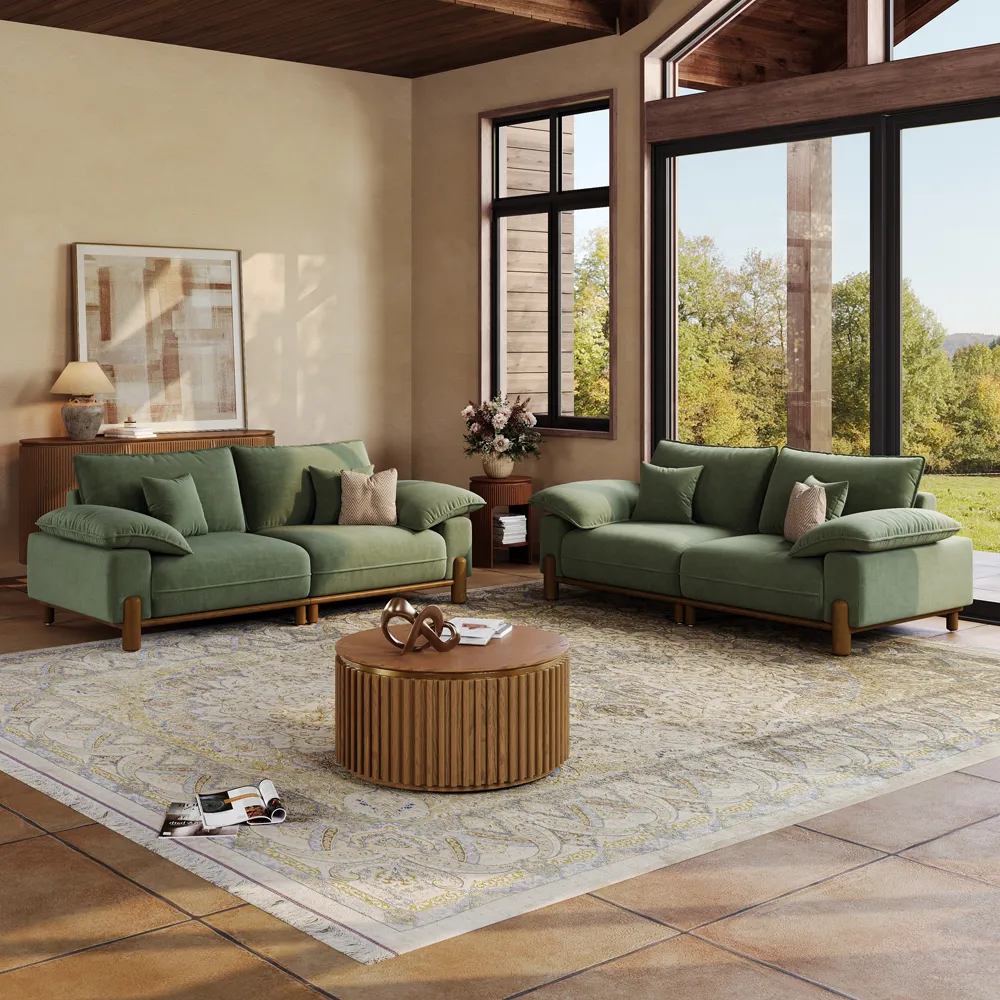
Different pets create different problems. Pick your war.
Best for Dog Shedding
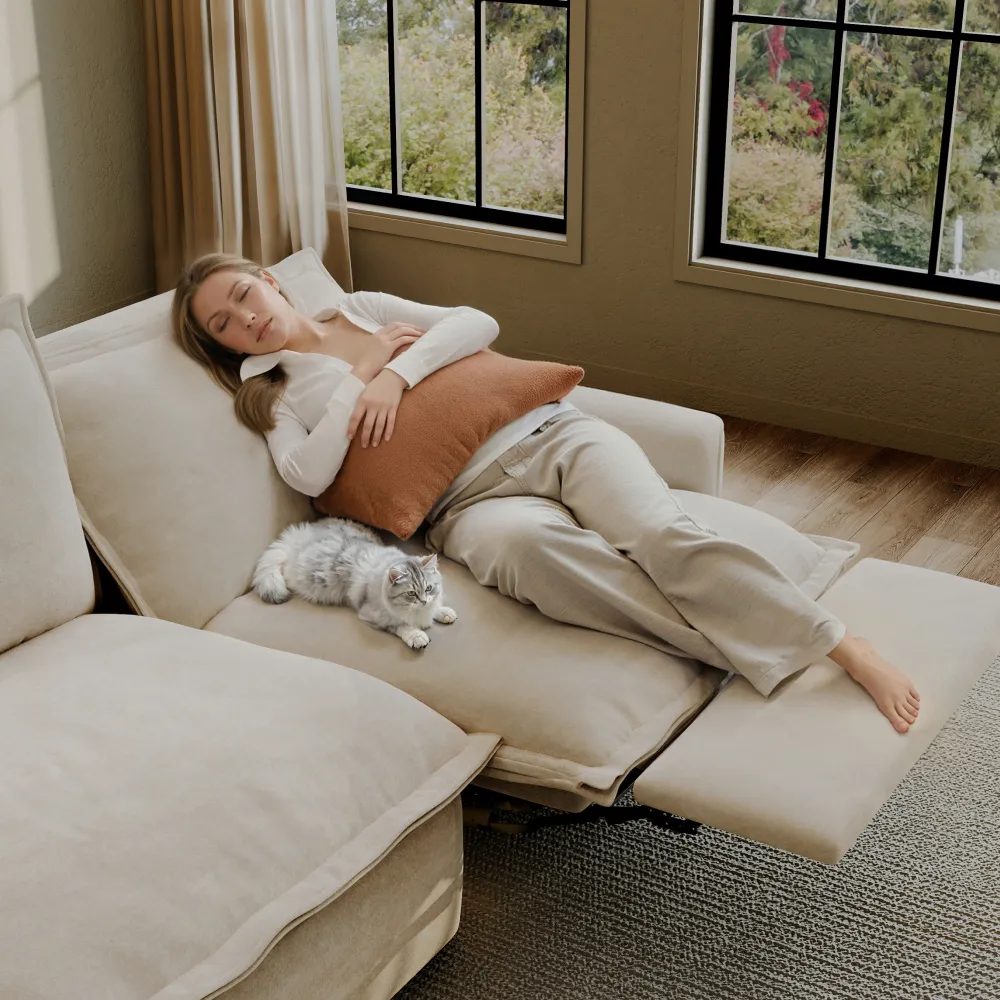
If you live with a heavy shedder — and I do; Murphy sheds like he’s got a deadline — your priority is hair release, not hair prevention. Hair is going to land on the couch. The question is whether it stays there forever or comes off with a quick swipe.
Top performers:
- Full-grain leather — Hair sits on the surface. A 30-second wipe with a damp microfiber cloth removes everything. After 60 days of testing a leather chair next to a fabric one in my living room, the leather took about one-tenth of the cleaning time.
- Performance microfiber — The synthetic fibers are smooth enough that hair doesn’t embed. A vacuum brush attachment lifts shedded hair in one or two passes.
- Tight-weave polyester (with smooth finish) — Slightly more effort than microfiber, but still releases hair cleanly with regular brushing.
Skip if you have a heavy shedder:
- Velvet, chenille, anything with looped pile, untreated linen. The fibers grab hair and don’t let go. I’ve seen people use rubber gloves, lint rollers, and squeegees on velvet — none of it scales when your dog blows coat twice a year.
Best for Cat Scratch Concerns
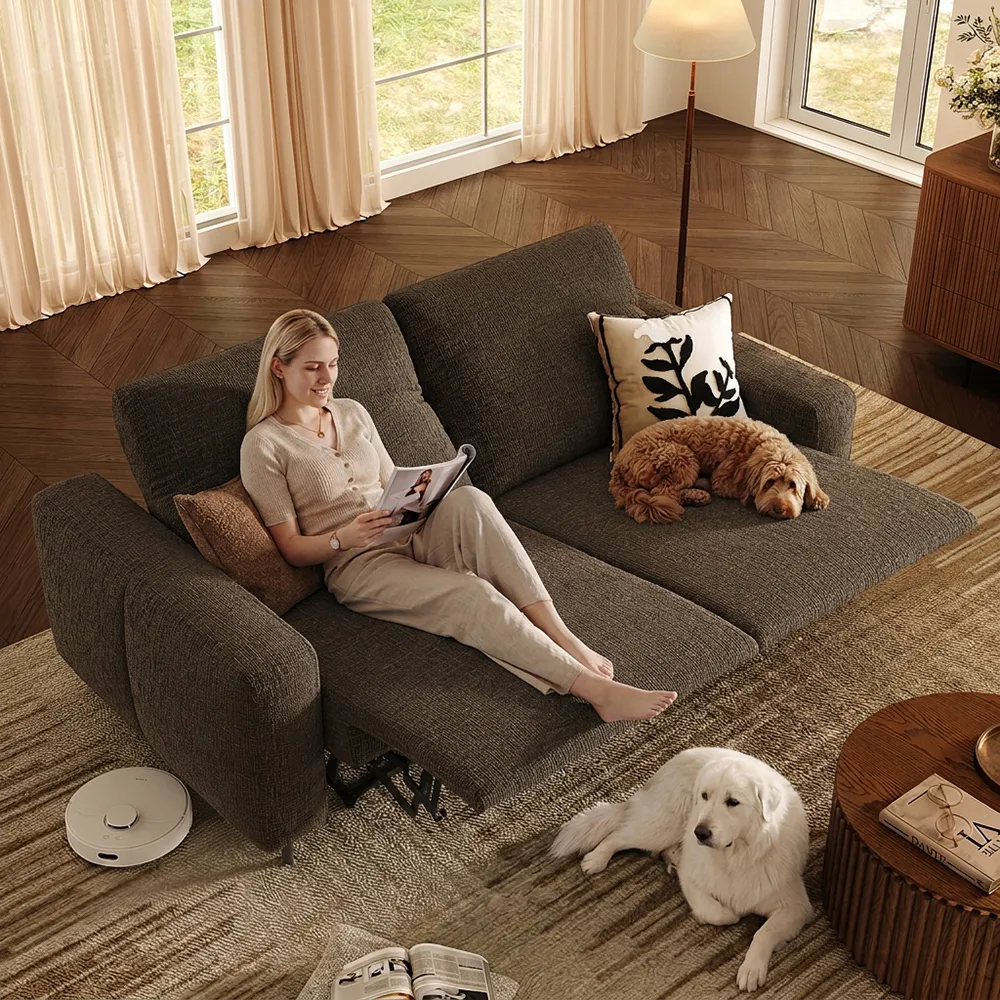
Here’s the truth no one wants to print: if your cat is determined to scratch your couch, no material will fully stop them. What you can do is choose a material where claws don’t easily find purchase, and pair that with behavior redirection (good scratching posts, placement, deterrent sprays).
Better-than-average performers:
- Tight-weave performance fabrics (microfiber, Crypton) — Cats prefer materials they can hook into. Smooth, dense weaves give claws nothing to grab. My neighbor switched from a linen sofa to a performance microfiber — her cat lost interest within about two weeks because she just couldn’t get traction.
- Leather — Counterintuitive, but many cats lose interest in leather because it doesn’t shred satisfyingly. The trade-off is that determined cats can leave puncture marks that don’t heal. If your cat is a confirmed scratcher, leather might give you visible damage even if it’s not technically “shredded.”
Materials cats love to destroy:
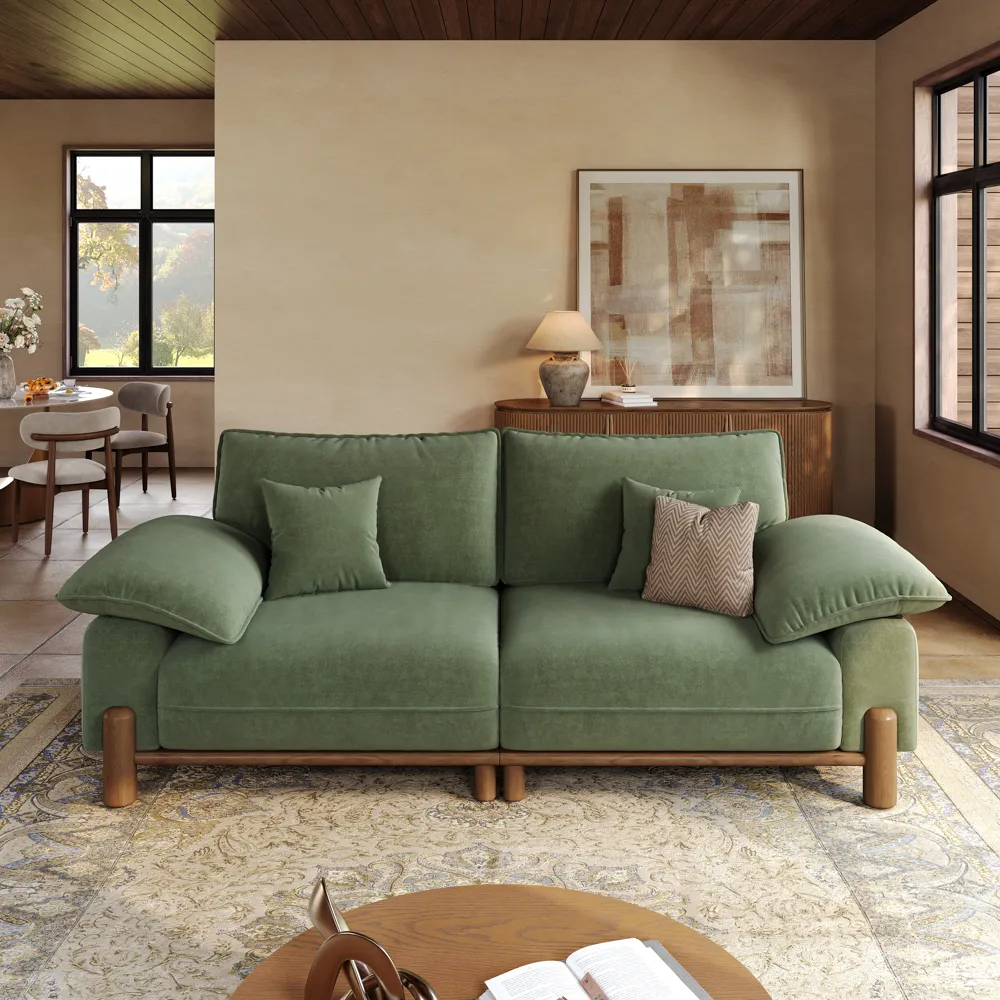
- Linen, raw cotton, chenille, velvet, anything with a loose weave or visible texture. These are basically scratching posts that cost $1,500.
Best for Easy Cleaning
This is the category most pet owners actually care about most — the muddy paws, the hairball, the accidental water bowl spill, the senior dog moment.
Top performers:
- Crypton and similar performance weaves — Engineered with a moisture barrier woven into the fabric itself. Liquids bead on the surface long enough to blot up. I tested a Crypton swatch with red wine, coffee, and (sorry) actual dog vomit for science. All three came out clean with water and mild soap.
- Full-grain leather — Almost everything wipes off. The exception is sharp claw punctures, which can absorb liquids into the underlayer.
- Performance microfiber — Most are treated with stain-resistant finishes that handle 90% of pet accidents if you blot quickly.
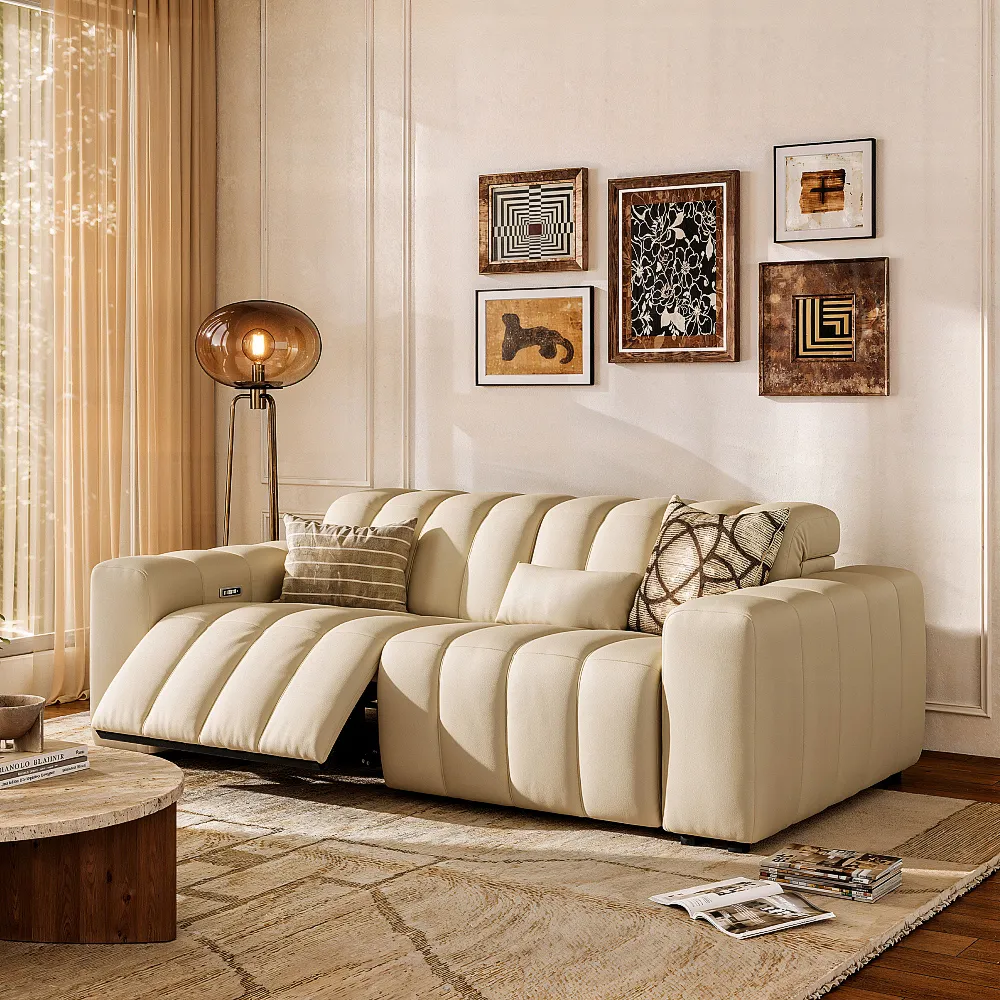
If you’re working through your sofa shortlist with cleaning as your top concern, POVISON’s sofa collection lists the specific upholstery type for every model — which makes filtering by performance fabric versus traditional weave a lot easier than guessing from photos.
Materials Pet Owners Should Be Careful With
This section isn’t about durability — it’s about your pet’s health. Pets lick furniture. They breathe with their noses pressed into cushions. They’re more vulnerable than humans to certain chemical exposures, partly because they’re smaller and partly because they spend so much more time in direct contact with surfaces.
A few things I now check before buying any upholstered furniture:
Foam fill standards. Cheap polyurethane foam can off-gas volatile organic compounds for weeks or months. Look for CertiPUR-US certified foam, which sets limits on heavy metals, formaldehyde, and several phthalates. If a manufacturer can’t tell you what foam they use, that’s a yellow flag.
Flame retardants. Older sofas — and some new ones from cost-cutting brands — use chemical flame retardants like PBDEs or chlorinated tris. the U.S. Consumer Product Safety Commission’s official guidance documents the regulatory concern around this chemical class. California changed its flammability standard (TB117-2013) specifically so manufacturers could meet fire safety without these chemicals — and California’s California’s Proposition 65 furniture fact sheet. But not all brands outside California updated their materials, so check the labels.
PFAS in stain-resistant treatments. “Stain-proof” finishes have historically relied on per- and polyfluoroalkyl substances. Many manufacturers have phased these out, but ask. the EPA’s published research on PFAS health and environmental risks documents links between certain PFAS exposures and developmental, immune, and reproductive effects — and pets, with their faster metabolisms and constant cushion contact, sit even closer to whatever’s in the fabric than you do.
What to ask before you buy: Is the foam CertiPUR-US certified? What flame retardant approach does the manufacturer use? Is the stain-resistant treatment PFAS-free? If the answer to any of these is “I don’t know” or vague marketing language, keep shopping.

Comfort, Style, and Maintenance Trade-Offs
Here’s where I’ll be honest with you: every material I’ve recommended above involves a trade-off.
Leather looks great and cleans easily, but it’s cold in winter, hot in summer, and visible scratches don’t heal. It also costs more upfront (though it often lasts 15–20 years versus 5–7 for fabric).
Performance microfiber and Crypton handle pets brilliantly but tend to look more casual — they’re rarely the most beautiful fabrics in the showroom. If your aesthetic goal is “elegant European linen sofa,” performance fabric will feel like a compromise.
Tight-weave polyester is the middle ground — durable, affordable, decent-looking — but it’s also the category with the widest quality range. A $400 polyester sofa and a $2,000 polyester sofa can look identical and perform completely differently in year three.
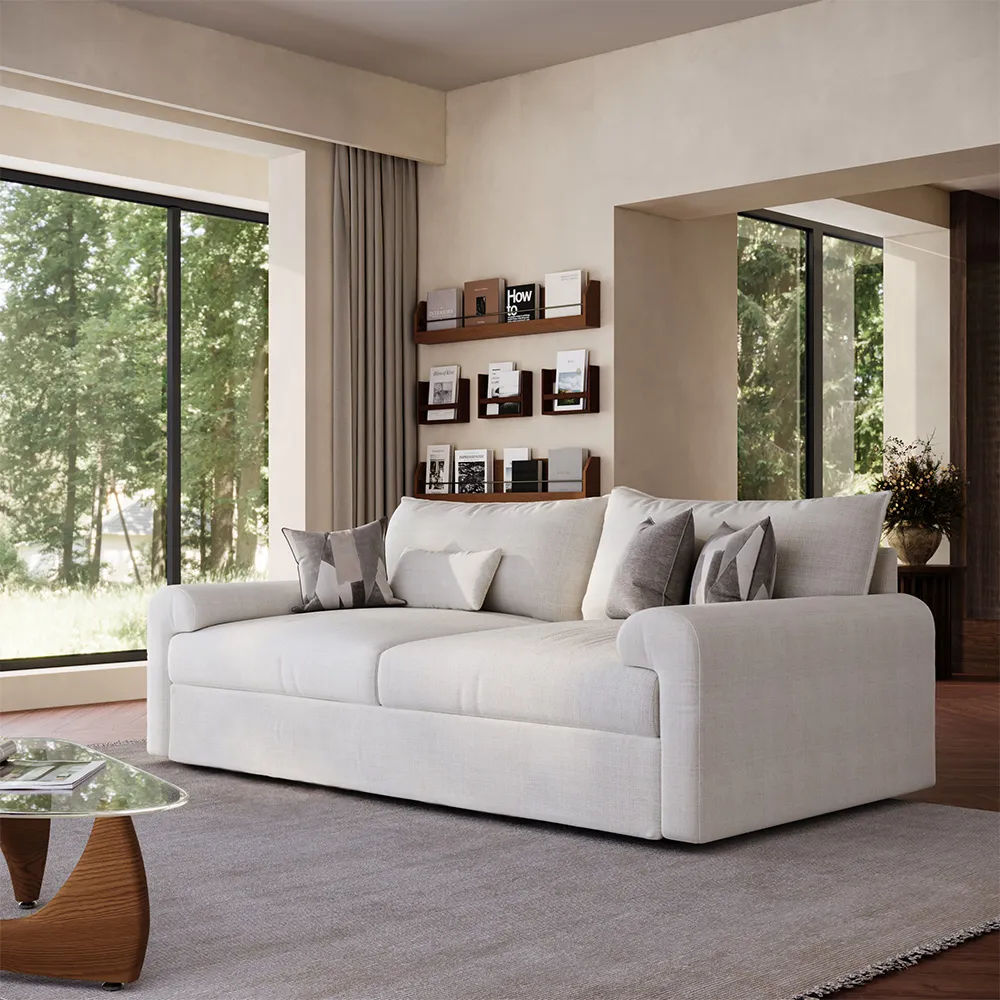
One more practical note: when your sofa arrives fully assembled, you don’t have to crate your dog or shut your cat in another room for two hours of construction chaos. With a flat-pack sofa, the assembly process itself is stressful for pets — strange smells, tools on the floor, you swearing at instructions. A pre-assembled sofa shows up, gets placed, and your pet investigates it on their own terms. It’s a small thing, but if you have an anxious rescue or a senior pet, it’s not nothing.
If you want a curated starting point that filters out the materials I’d avoid for pet households, POVISON’s living room collection is organized by material type — which makes the comparison framework above much easier to apply in real shopping.
FAQ
What is the best couch material for dog owners who deal with shedding?
The best couch material for dog owners dealing with heavy shedding is full-grain leather or performance microfiber, in that order. Leather doesn’t trap hair at all — it sits on the surface and wipes off in under a minute. Performance microfiber is the best fabric option because its tight, smooth weave releases hair with a single vacuum pass. Avoid velvet, chenille, and looped pile fabrics, which embed hair at the fiber base and require lint rollers or rubber gloves to clean.
What sofa fabric works best for households with scratching cats?
For households with scratching cats, tight-weave performance fabrics like microfiber and Crypton generally work best because their dense, smooth surfaces give claws very little to grab onto. Cats often lose interest within a few weeks because they can’t achieve the satisfying “hook” they get from looser weaves. No material is fully scratch-proof — pair the right fabric with proper scratching posts and behavioral redirection for the best outcome. Avoid linen, raw cotton, chenille, and velvet, which cats can shred easily.
Is leather or fabric better overall for pet owners?
Leather is generally better for cleaning and shedding; performance fabric is generally better for scratch concerns and budget. Leather wipes clean in seconds, doesn’t trap hair, and lasts 15–20 years — but visible claw marks don’t heal, and it costs more upfront. Performance fabrics like microfiber and Crypton handle scratches and stains well at lower price points but typically last 5–10 years and can look more casual. The right choice depends on whether your bigger problem is hair (leather wins) or claws (performance fabric wins).
Which couch fabrics make pet hair easiest to remove?
The couch fabrics that make pet hair easiest to remove are leather, performance microfiber, and tight-weave polyester — in that order. These materials share two key properties: smooth surface texture and dense fiber structure, both of which prevent hair from working its way into the weave. A vacuum brush attachment or damp microfiber cloth removes hair in one or two passes. Fabrics with long pile, loops, or visible texture variation (velvet, chenille, boucle) trap hair at the base and require significantly more effort to clean.
Conclusion
If I had to summarize two years of testing into one practical rule: for pet households, pick your material based on your biggest pet problem, then check the safety credentials, then worry about aesthetics.
If shedding is your war, lean leather or performance microfiber. If scratching is your war, tight-weave performance fabric beats almost everything else. If accidents are your war, Crypton and similar engineered weaves are worth the premium. And whatever you choose, ask about CertiPUR-US foam and PFAS-free treatments — your pet’s nose is going to live on this thing.
Skip the velvet. I know it’s gorgeous. I learned that lesson at the cost of one sofa, my dignity, and three months of pretending the claw marks were “character.”
Related Reading:


