 By Jenny Smith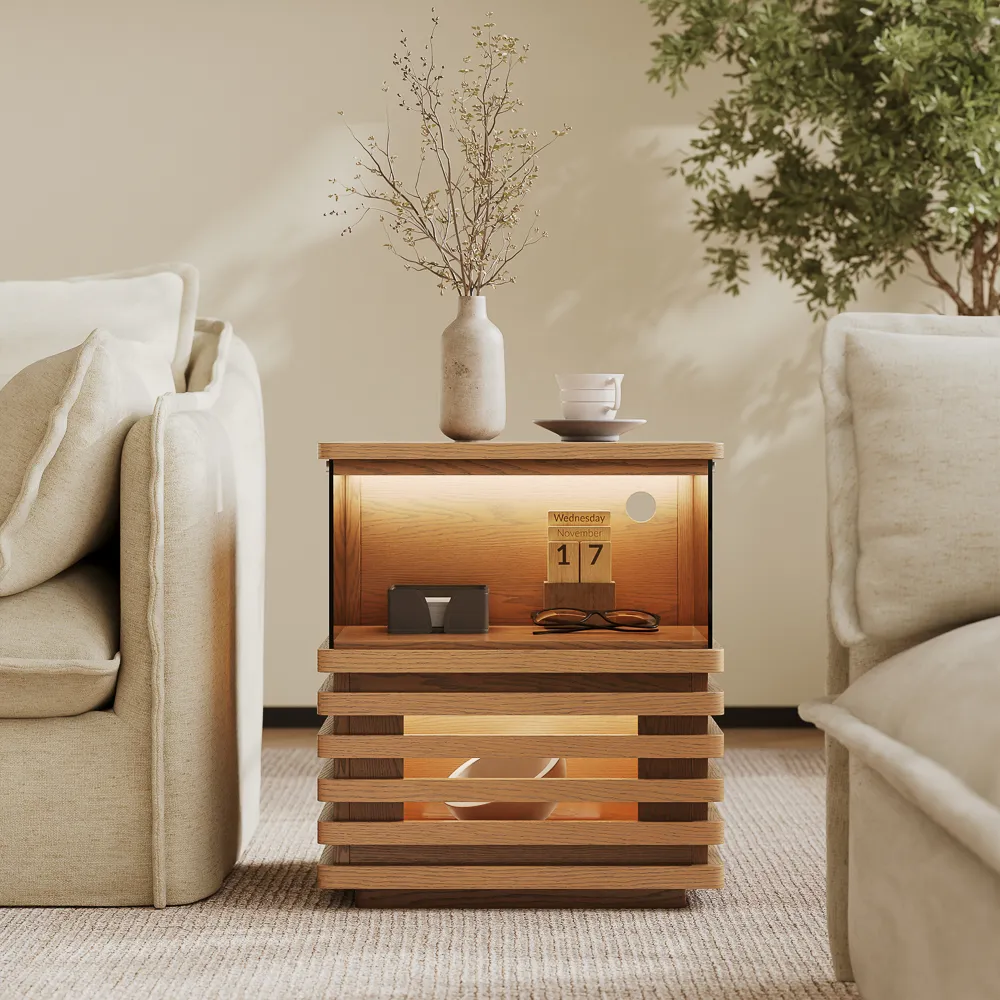
Small Table, Big Difference: Finding the Right Side Table for Real Life
If your living room (or bedroom) is always one mug away from chaos, a good side table fixes it fast. The best Side Tables aren’t just “somewhere to set a drink”—they solve daily annoyances: not enough surface space, cords everywhere, no spot for remotes, and layouts that feel cramped. In 2026, side tables are also doing more heavy lifting visually, helping rooms look finished without a full redesign. (Homeowners with projects in 2024 bought small furniture at 39% and lamps at 34%, which tracks with how often people refresh the “little pieces” first.) (Nationwide Marketing Group)
Table of Contents
How We Chose the Best Side Tables (Testing Standards + Editor Criteria)
I evaluated Side Tables the same way we’d vet any “daily-contact” furniture: by separating looks from performance, then scoring both. On the performance side, I used ANSI/BIFMA desk & table test logic as a benchmark for what “stable and durable” should mean in measurable terms—things like stability under vertical load (57 kg) and top-load cycle testing (91 kg for 10,000 cycles) are common reference points in the X5.5 testing family, and they’re a useful reality check against flimsy accent tables. ( BIFMA / test details summary: Manufacturing Solutions Center ; load/cycle example overview: CATAS ) (BIFMA)
Editor criteria (what we scored, and why it matters in real rooms):
- Stability & tip resistance: base width vs. top diameter, center-of-gravity feel, and “edge push” wobble (important for drinks + lamps).
- Usable surface: real capacity (lamp + coaster + phone), edge profile (raised lip helps), and whether the top punishes you for daily life (water rings, scratches).
- Material durability & maintenance: veneer vs. solid vs. metal vs. stone; stain/heat sensitivity; fingerprint visibility; and whether corners are kid-friendly.
- Size-fit accuracy: correct height relative to sofa arms/bed height, clearance for legs, and how well it tucks into tight walkways (C-tables, drink tables).
- Build quality: joinery tightness, drawer glide smoothness, hardware feel, and finish consistency at seams/edges.
- Value over time: warranty clarity, replacement-part practicality, and whether features (like lighting/storage) genuinely reduce clutter.
For safety and materials credibility, I also checked two non-negotiables that shoppers often overlook:
- Electrified features (LEDs/charging). When a side table includes power, reputable manufacturers typically align with safety frameworks like UL 962 for household/commercial furnishings (scope includes electrified furniture; products are generally evaluated within defined electrical limits such as 600V ac or less). ( UL Standards ) (ANSI Webstore)
- Composite wood emissions. If a table uses MDF/particleboard, U.S. compliance expectations are shaped by EPA TSCA Title VI, including labeling requirements that took effect after March 22, 2019 for regulated composite wood products. ( U.S. EPA ) (US EPA)
Quick Summary Table
| Product Name | Best For | Key Features | Price | Verdict |
| POVISON Modern Minimalist Cherry Wood Veneer Side Table | Warm, elevated modern rooms | Veneer look, clean lines, statement finish | $499 | Best overall “anchor” piece |
| POVISON 18″ Slatted Side Table with LED Lights | Cozy lighting + hidden storage | Slatted design, integrated lighting, fully assembled | $499 | Best for ambiance + utility |
| POVISON Side&End Table (2 PCS) with Drawer | Small spaces that need storage | Drawer, minimalist look, fully assembled set | $779 | Best storage value (set of two) |
| West Elm Martini Side Table (15″) | Small footprint seating areas | Drink-table profile, contract grade option | $143.20 (Limited Time) | Best “tiny but useful” |
| Pottery Barn Round Metal Drink Table (9.5″) | Easy styling anywhere | Slim silhouette, classic finish | $149 | Best classic drink table |
| Crate & Barrel Prost Small Metal Round Drink Table | Sculptural accent moments | Antique finish, slender column | $179 | Best statement base |
| CB2 Martini Side Table with White Marble Base | High-contrast modern glam | Steel top + marble base | $549 | Best marble drama |
| Article Portima C Side Table (Walnut) | Sofa-side laptop/reading | C-shape, adjustable height | $199 | Best adjustable convenience |
| Burrow Serif Side Table | Soft mid-century vibe | Two-tier shelf, rounded edges | $194–$259 | Best shelf + softness |
| Floyd The Side Table | Modular, flexible layouts | Durable build, simple geometry | Starting at $295 | Best minimalist workhorse |
Prices can vary by region, finish options, and seasonal promotions.
Best Picks List
POVISON Modern Minimalist Cherry Wood Veneer Side Table — Best Overall Warm-Modern Accent
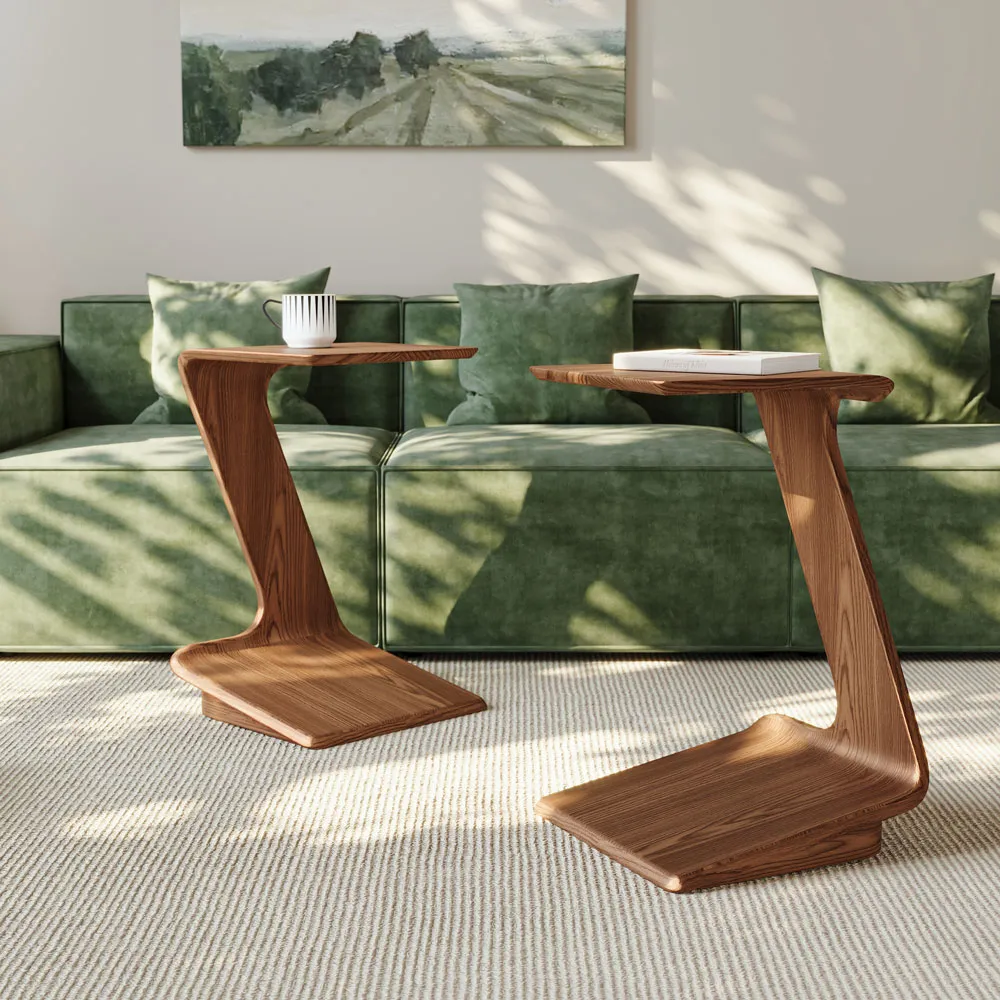
Price: $499
Best For: Living rooms that need one “grown-up” piece to pull the palette together.
Why We Love It:
- Rich wood tone that reads warmer than flat laminate
- Clean silhouette that doesn’t crowd a room
- Works as a visual “bridge” between soft textiles and hard finishes
Features:
This is the kind of side table that makes a space look intentional. The cherry-leaning veneer tone brings warmth that balances cool neutrals (think off-white sofas, gray rugs, black metal lamps). For 2026 styling, that warmer wood note is especially useful as people move away from all-white rooms and into more layered, natural-feeling interiors. It’s also a smart pick if you want a “quiet statement”—something that looks premium without needing bold shapes or loud color.
Compared with many similarly styled side tables that arrive as flat-pack panels, Povison’s approach tends to feel more ready-to-live-in—less fuss, fewer alignment issues, and better day-to-day value when you factor in time and long-term sturdiness.
POVISON 18″ Slatted Side Table with LED Lights — Best for Cozy Ambient Lighting + Storage
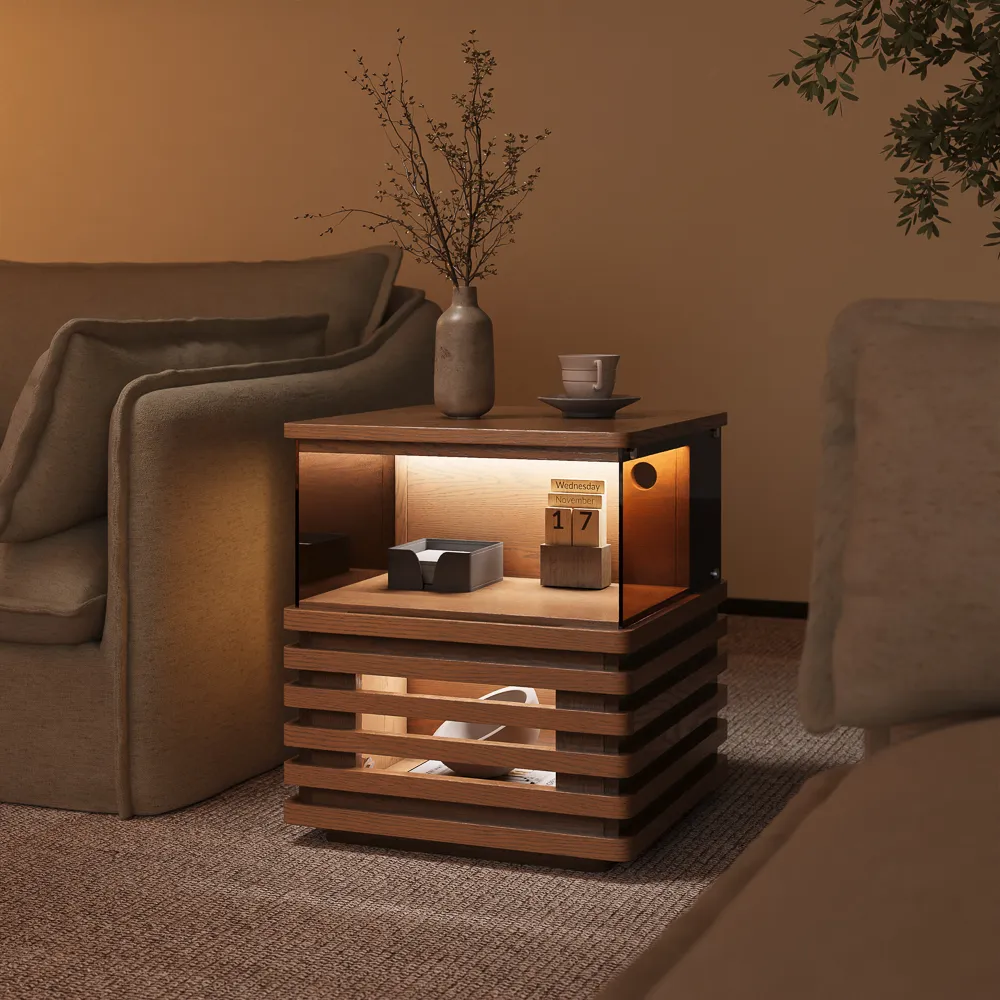
Price: $499
Best For: Anyone who wants a side table to double as mood lighting (especially in apartments and media rooms).
Why We Love It:
- Built-in LED glow for “soft corner lighting”
- Slatted exterior adds texture without visual clutter
- Solid weight capacity listed for the top surface (useful for heavier lamps)
Features:
This table earns its spot because it improves how the room feels at night. The slatted design adds depth (great for 2026’s texture-forward interiors), and the integrated light is a cheat code for cozy—especially when overhead lights feel harsh. I also like that it’s fully assembled, which matters for any piece that includes lighting and storage; fewer loose parts usually means fewer rattles later.
I used a slatted LED side table in a small TV room where the only overhead fixture was a bright ceiling can. The first night I swapped to the table’s glow, the whole space felt calmer—my eyes stopped “squinting” at the contrast, and I finally stopped dragging a floor lamp into the corner every evening.
Buyer review: “Matches my bedroom set perfectly! … Holds my lamp, book, and phone without feeling crowded.” (Rachel, 10/14/2025)
POVISON Side&End Table (2 PCS) with Drawer — Best Storage Value for Small Rooms
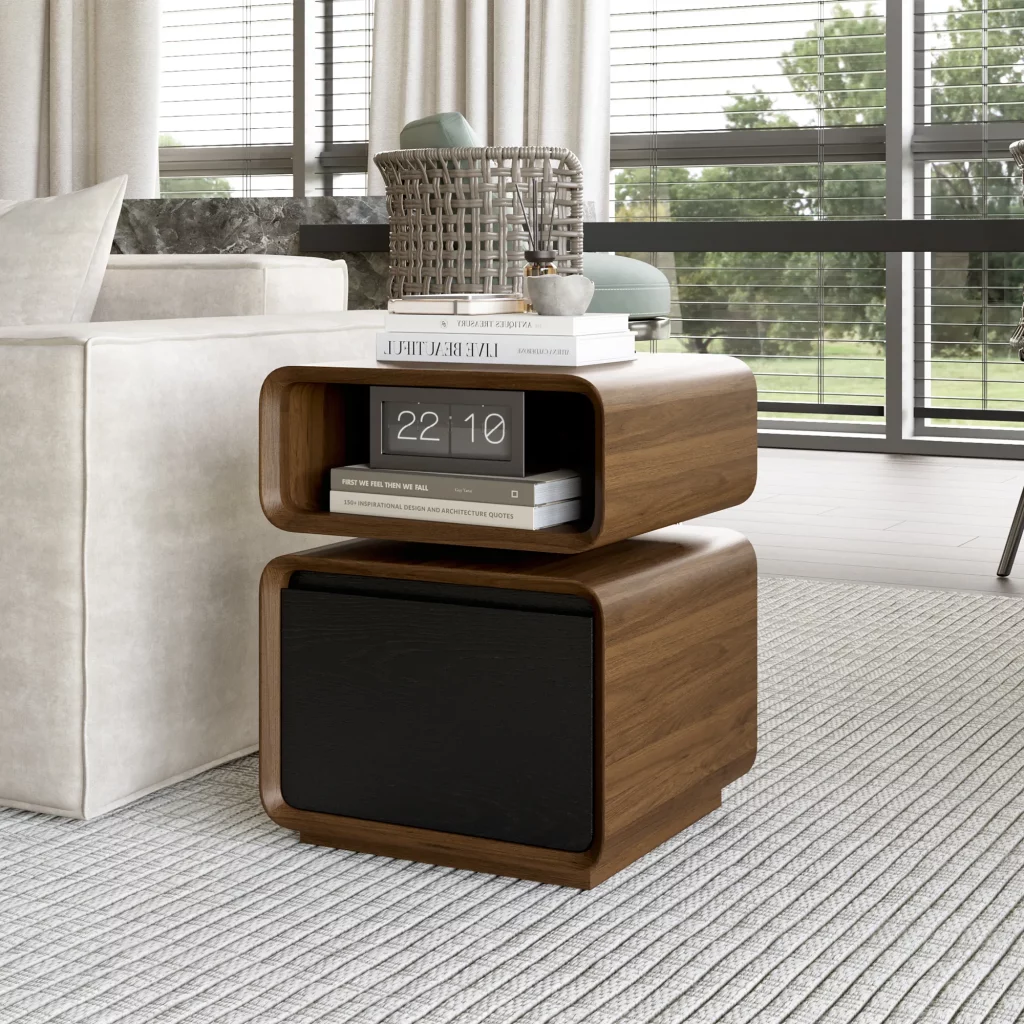
Price: $779
Best For: Tight living rooms/bedrooms that need hidden storage without bulky furniture.
Why We Love It:
- Drawer keeps remotes/chargers out of sight
- Minimalist profile works with many sofa styles
- Two-table set helps create symmetry fast
Features:
When clutter is the problem, drawers are the solution. This two-piece set is especially practical if your room has multiple “drop zones” (sofa side + reading chair, or both sides of the bed). The look is clean enough to blend into modern interiors, but still warm thanks to the wood tone options. For 2026 living, it’s a smart move: small storage pieces are often the difference between a room that photographs well and a room that functions well. And if you’re styling on a budget, buying a coordinated pair can be a better value than mixing two unrelated tables—your space looks calmer immediately.
Buyer review: “I’ve got limited space in my apartment, and this side table was the perfect solution… two functional layers.” (Emma, 12/06/2024)
West Elm Martini Side Table (15″) — Best for Tiny Footprints
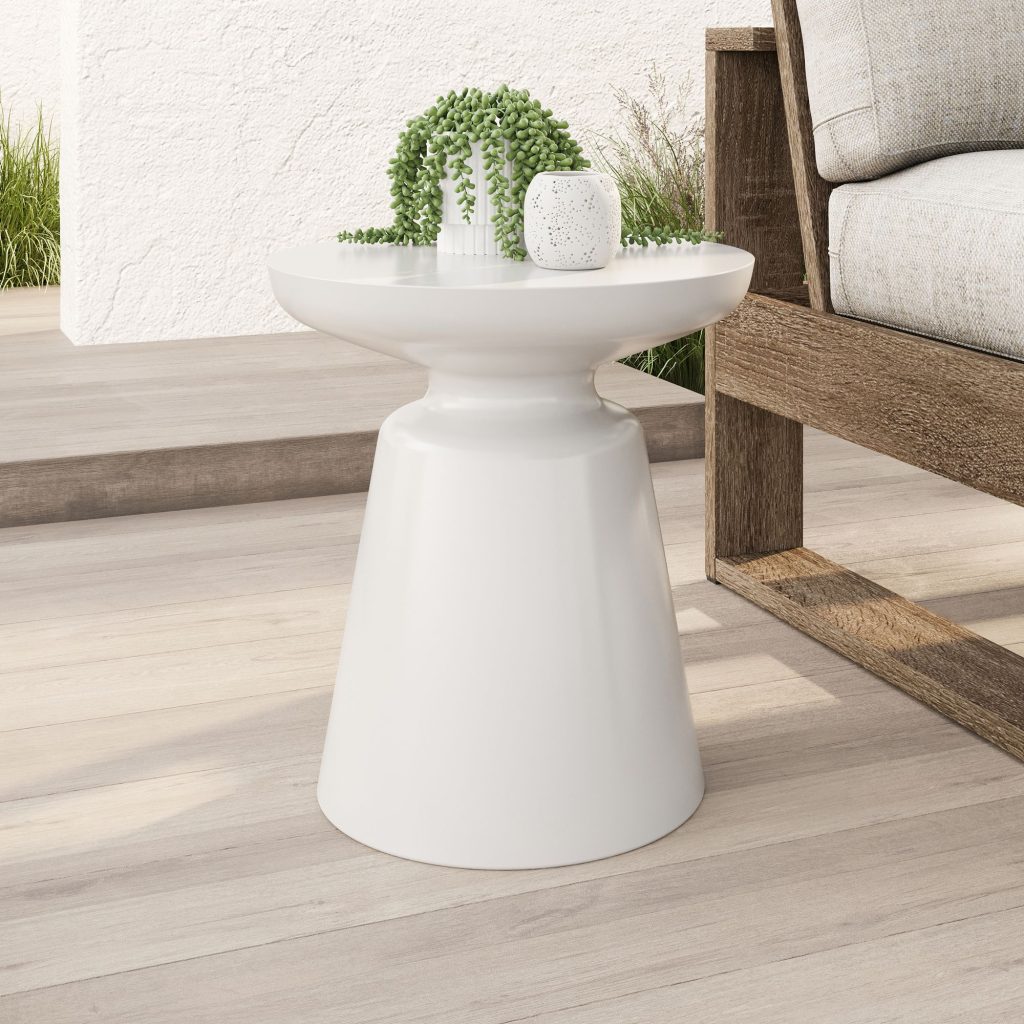
Price: $143.20 (Limited Time Offer; reg. $179)
Best For: Narrow gaps beside sofas, accent chairs, or beds where a standard end table feels too big.
Why We Love It:
- Small base, easy to tuck in
- Works as a “drink + phone” landing zone
- Multiple finishes to match hardware and lighting
Features:
The martini-table shape is popular for a reason: it gives you surface area without stealing floor space. This one is especially useful in apartments or open-plan layouts where walkways matter. If you’re decorating a side table here, keep it simple—one lamp or one sculptural object plus a coaster is the sweet spot. It’s not the best for storage, but it’s excellent for correcting an awkward layout (like when your sofa arm ends right next to a doorway).
Pottery Barn Round Metal Drink Table (9.5″) — Best Classic “Goes-With-Everything” Pick
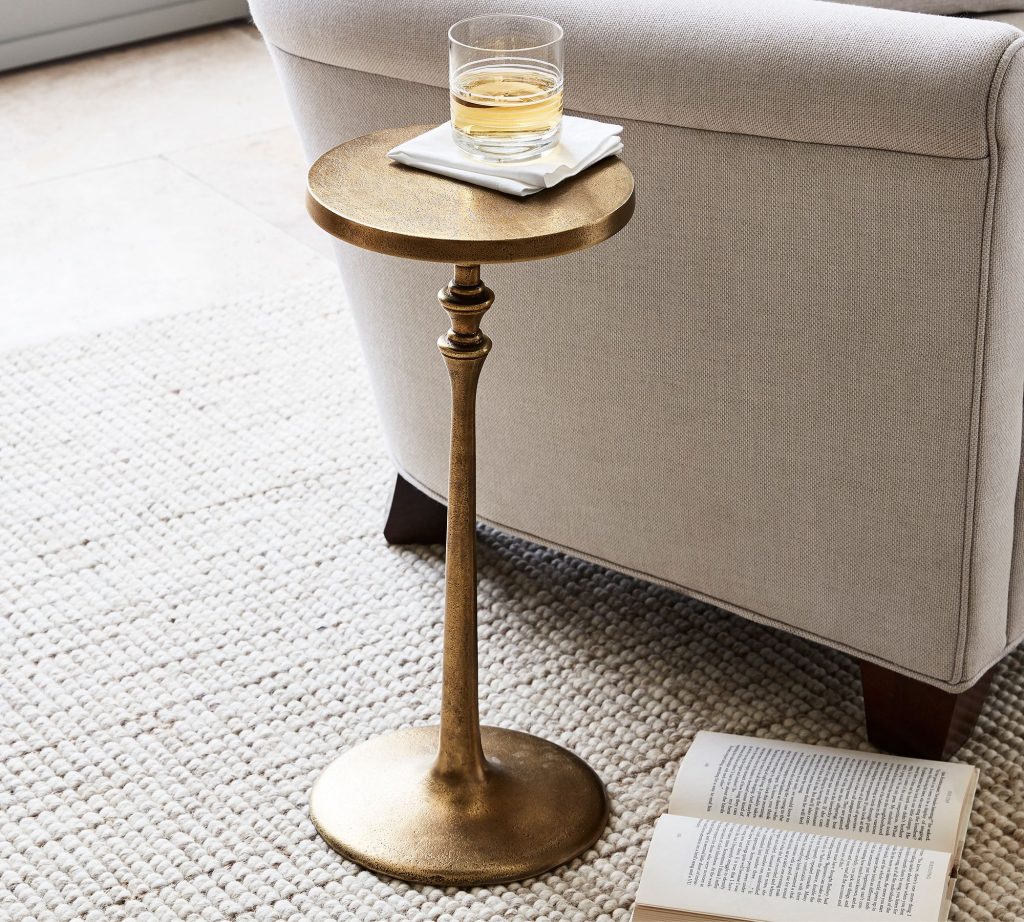
Price: $149
Best For: Traditional-to-transitional homes that want a timeless accent.
Why We Love It:
- Simple profile that layers well
- Easy to style with warm bulbs + soft textiles
- Great “extra surface” for entertaining
Features:
This table is basically the white tee of side tables: reliable, clean, and easy to integrate. Because it’s compact, it’s perfect for adding surface space next to a chair without visually crowding the corner. If you tend to redecorate seasonally, it’s also a strong base for swapping accessories—candles in winter, a small bud vase in spring, and a catchall tray year-round.
Crate & Barrel Prost Small Metal Round Drink Table — Best Sculptural Metal Base
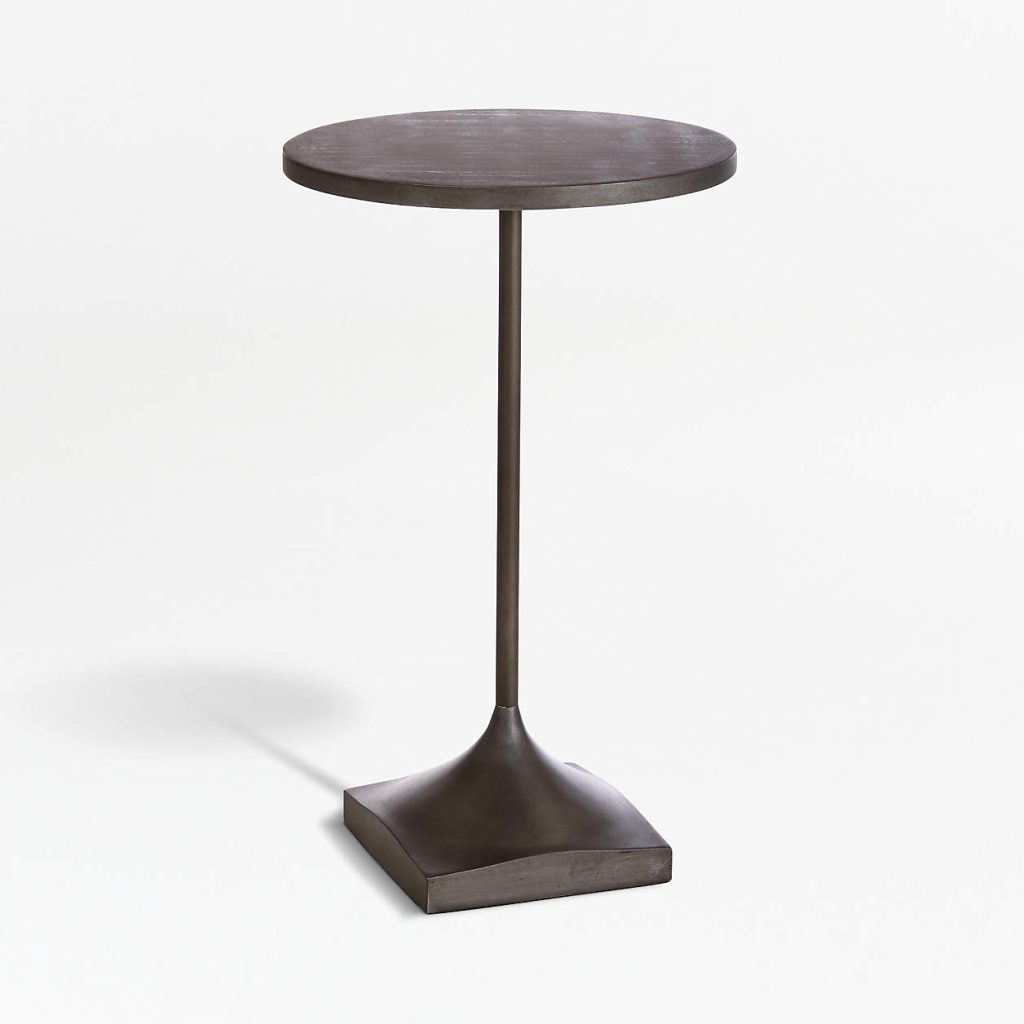
Price: $179
Best For: Anyone who wants an accent table that looks like decor even when it’s empty.
Why We Love It:
- Antique finish adds depth
- Slender column keeps it airy
- Great as a single “pop” beside an armchair
Features:
If your room already has enough wood, metal is a nice way to add contrast. The Prost has a fun, slightly sculptural stance that reads more curated than basic. It’s also a good pick for rental-friendly upgrades: you can change the vibe of a seating area without replacing large furniture. Style tip: add one matte ceramic cup or a small stack of books to soften the shine.
CB2 Martini Side Table with White Marble Base — Best Marble Moment
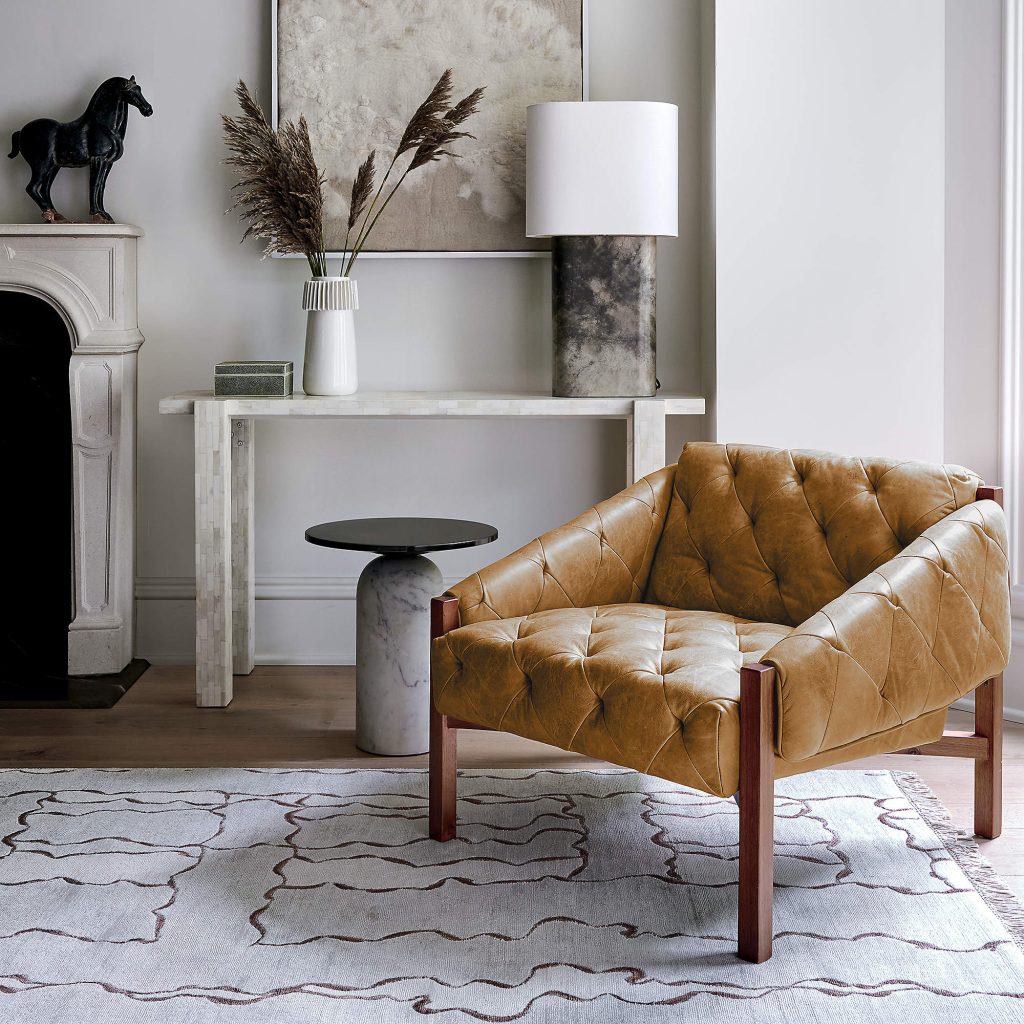
Price: $549
Best For: High-contrast modern rooms that want a luxe accent.
Why We Love It:
- Marble base brings weight and drama
- Slender silhouette, bold materials
- Great next to leather or structured upholstery
Features:
Marble instantly raises the “design temperature” of a room, and this CB2 martini table does it without taking up much floor space. The slender metal stem keeps the silhouette airy, while the marble base adds visual weight that reads luxe next to leather, structured bouclé, or sharp-lined sectionals. It’s best used as a drink-and-phone perch rather than a work surface. Expect natural veining variation, and plan on coasters and quick wipe-downs—marble can etch or stain if spills linger.
Article Portima C Side Table (Walnut) — Best Adjustable Sofa-Side Helper
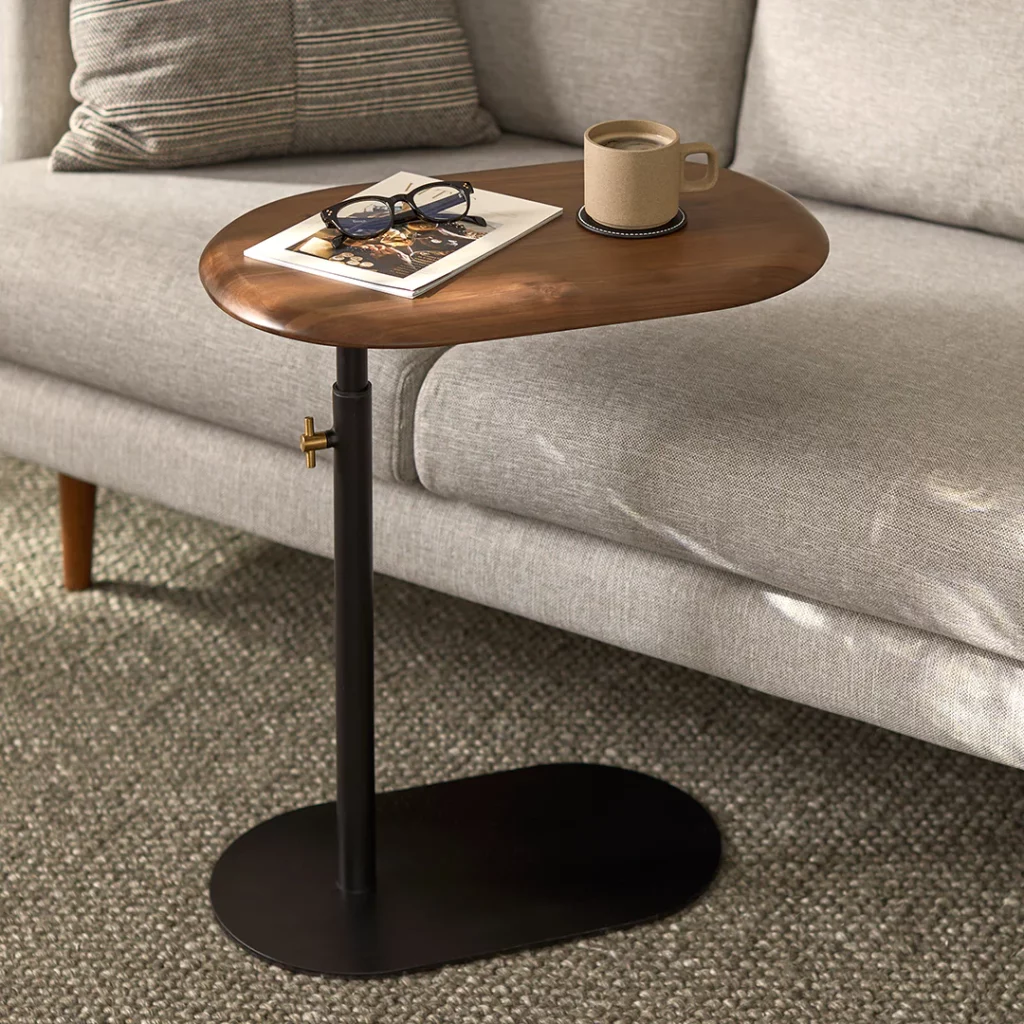
Price: $199
Best For: Laptop use, reading chairs, or anyone who eats/works from the sofa sometimes.
Why We Love It:
- C-shape slides under seating
- Adjustable height adds flexibility
- Great for small-space “one table, many jobs” living
Features:
The Portima’s C-shape solves a very specific annoyance: you want a surface right where you’re sitting, without adding another obstacle in the room. It slides neatly under a sofa or lounge chair, and the adjustable height makes it useful for everything from morning coffee to laptop sessions and casual meals. The walnut finish adds warmth without looking heavy. Styling-wise, keep the top mostly clear—one coaster and a small tray is enough—because the real value is its grab-and-go utility.
Burrow Serif Side Table — Best Soft Mid-Century Look with a Shelf
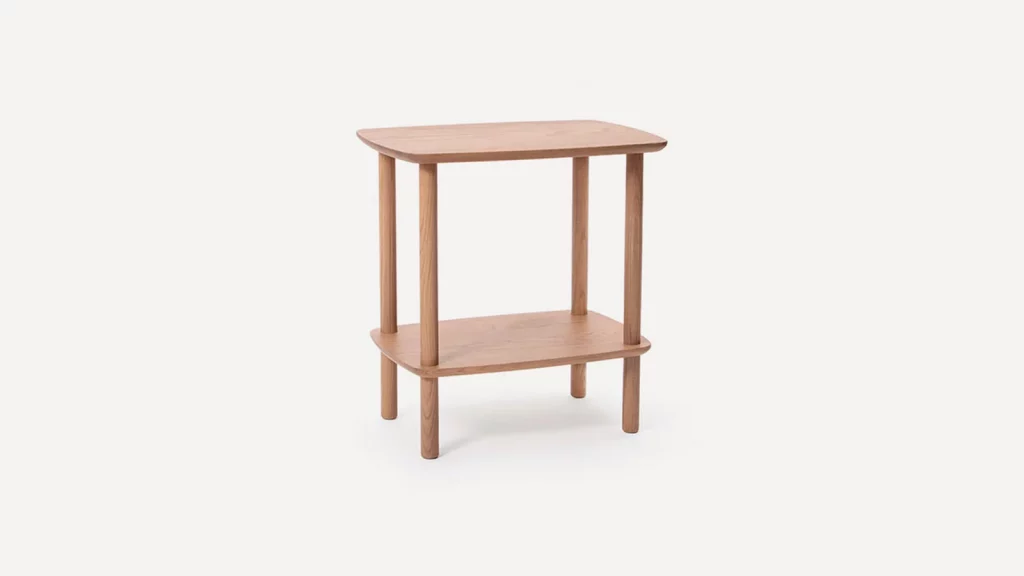
Price Range: $194–$259
Best For: People who want warmth + an extra lower surface for books or baskets.
Why We Love It:
- Rounded edges feel softer in tight rooms
- Two-tier storage helps reduce clutter
- Works well with cozy textiles and warm lighting
Features:
This is the kind of side table that makes a room feel more livable, not just more decorated. The rounded profile reads soft mid-century (great with cozy textiles), and the lower shelf is the practical hero: it’s perfect for a small basket, a stack of books, or a hidden power strip so cords don’t creep onto the floor. Because it offers two usable levels, it’s easier to keep the top looking clean—ideal if you’re aiming for that layered, tidy look.
Floyd The Side Table — Best Minimalist Workhorse
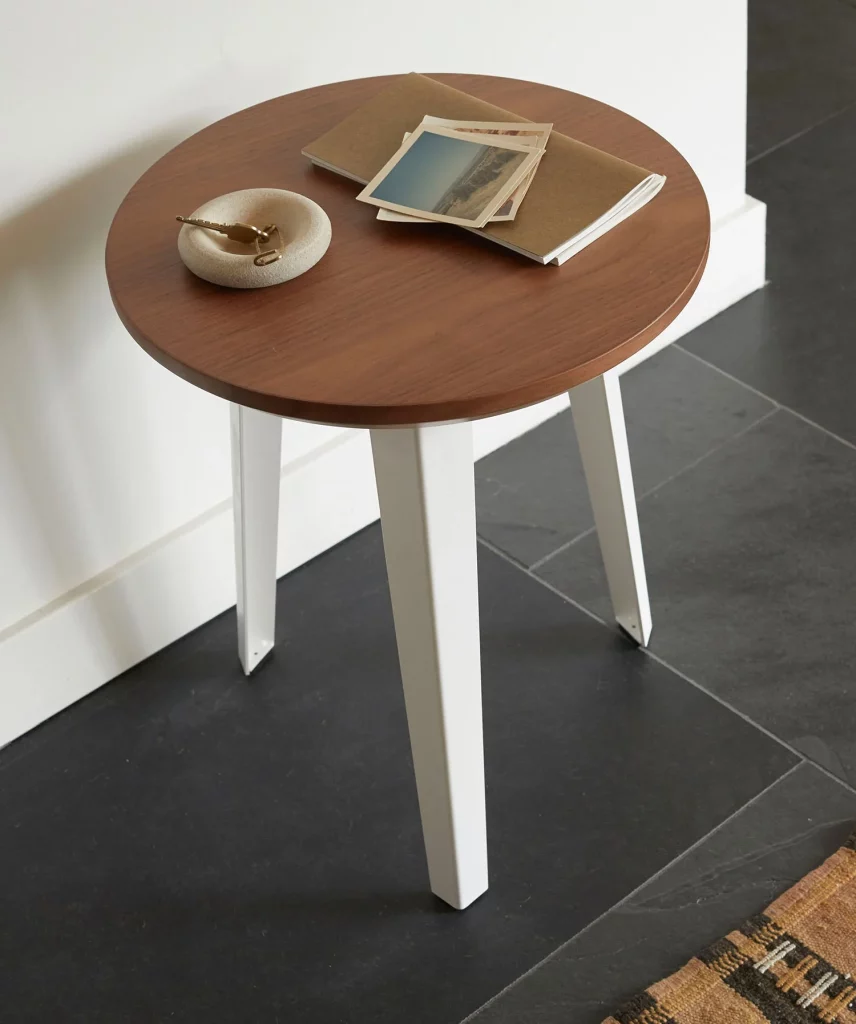
Price: Starting at $295
Best For: Modular layouts, frequent rearrangers, and clean modern homes.
Why We Love It:
- Simple, durable geometry
- Easy to pair with many seating styles
- Strong everyday “use it hard” energy
Features:
If you’re tired of trendy shapes, a simple, well-built side table is the answer. Floyd’s design language is minimal and practical—great when you want the room to feel calm. It also works nicely as a plant stand or a bedside table, depending on your layout.
Personal experience: I kept a minimalist side table like this next to a sofa during a long work stretch, and it basically became mission control—charging pad on top, notebook under it, and a coaster that lived there full-time. The biggest benefit wasn’t the look; it was that nothing wobbled when I leaned over to grab my phone mid-call.
2026 Side Table Trends Worth Buying Into
A few signals are making side tables more important (and more strategic) purchases in 2026:
- People are still investing in smaller upgrades. In the 2025 Houzz & Home Study highlights, 39% of homeowners with projects bought small furniture in 2024. (Nationwide Marketing Group)
- Home “presentation” keeps mattering, even if you’re not selling. NAR reports 83% of buyers’ agents say staging helps buyers visualize a property as a future home—which mirrors what we see in real life: tidy surfaces and well-placed accent tables make rooms feel more livable. (National Association of Realtors)
- The market is leaning into steady growth again. Circana forecasts U.S. home products demand growth of 2.4% in 2026, which typically brings more variety in materials and finishes at mid-tier price points. (Circana)
This is where Povison tends to shine: you can get a more “finished” look with practical, everyday-friendly features—often with less setup friction—so the room improves faster, not someday.
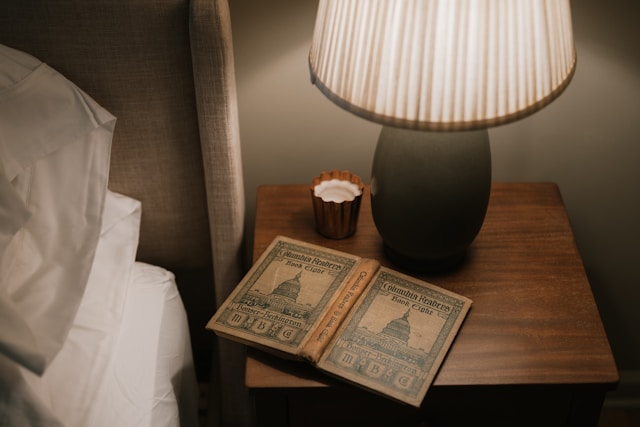
How to Decorate a Side Table (Without Making It Look Staged)
If you’re searching how to decorate a side table without making it look staged, start by treating it like a “mini work zone,” not a display shelf. The most natural-looking setups always have a clear job: a place to set a drink, drop a phone, or switch on a lamp without moving a bunch of decor first. Begin with one functional anchor—most often a lamp for warmth and height, or a small tray/catchall if clutter is your main issue. When the anchor is doing real work, the styling automatically feels more believable.
Next, add one supporting piece that brings shape and personality, then stop before it gets crowded. A slim vase with greenery, a candle, or a small sculptural object is usually enough. Keep scale in mind: oversized items can swallow the tabletop, while tiny knickknacks read messy. A good rule is leaving at least one-third of the surface empty so the table stays usable day to day (and doesn’t turn into a “do not touch” corner).
To make it feel cohesive, repeat one finish that already exists in the room—black hardware, brass lighting, warm wood tones—but don’t force an exact match. Slight variation looks more collected and less like a showroom set. And if your space gets visually busy, choose a side table with a drawer or shelf so chargers, remotes, and the daily little things can disappear; it’s the easiest way to keep the top calm with minimal effort.
Buying Guide: How to Choose the Right Side Table
1) Get the height right (it’s about “reach,” not rules)
A side table should feel effortless—no leaning forward, no awkward wrist angle when you set down a mug. For most sofas and lounge chairs, the sweet spot is roughly level with the seat arm (or within a couple inches). If you want a more universal “comfort” benchmark, accessibility reach guidance is a helpful sanity check: common reach ranges are designed around what people can comfortably access without strain—15″ to 48″ above the floor for unobstructed forward reach. (That’s a wide range, but it’s why extreme heights often feel annoying in daily use.) (ADA)
A quick way to choose:
- Beside a sofa: table top ≈ sofa arm height
- Beside a bed: table top ≈ mattress top (or slightly lower)
2) Match surface area to your “real” use
Before you buy, decide what the table must hold at the same time. “Just a drink” needs far less space than “lamp + coaster + phone + remote.” If you often style a table but still want it functional, plan for at least one clear landing zone (a coaster-sized open area) so the setup doesn’t feel staged. Round tops tend to soften a room visually; square/rectangular tops usually give you more usable corners for trays.
3) Prioritize stability like it’s a safety feature
Side tables fail in two annoying ways: wobble and tip risk. Both get worse when the top is wide and the base is narrow, or when the table is tall and lightweight. When I’m judging stability, I borrow the logic behind table/desk performance standards—formal standards like ISO 19682 (Desks and tables) specify test methods for stability, strength, and durability, which reinforces a simple takeaway: a good table should resist everyday forces without shifting or loosening. (BIFMA)
What to look for:
- A base that’s meaningfully wider than the stem (especially on drink tables)
- Even contact with the floor (no rocking)
- Enough weight to stay put when bumped
4) Choose materials based on maintenance, not just looks
The prettiest material isn’t always the easiest to live with. Marble and other calcareous stones can etch or dull with acidic cleaners (including vinegar/lemon), so if you’re messy, host a lot, or have kids, a sealed wood/veneer or powder-coated metal surface may be a calmer choice. (Natural Stone Institute)
Practical pairing ideas:
- Family rooms: wipe-friendly wood/metal, forgiving finishes
- “Luxe accent” corners: marble/stone (commit to coasters + gentle cleaning)
5) Decide: hidden storage vs. visual lightness
If your room gets cluttered fast, pick a drawer or a lower shelf—it’s the easiest way to keep the tabletop looking intentional. If your space feels tight, go visually lighter: drink tables, C-tables, and open bases keep walkways feeling clear. The best choice isn’t about trends; it’s about whether you want your side table to hide life (storage) or stay out of the way (minimal footprint).

Conclusion
The best Side Tables in 2026 are the ones that make your room feel calmer: stable surfaces, right-size proportions, and materials you won’t stress over daily. If you want the biggest upgrade for the least effort, prioritize a table that fits your layout first—then choose the finish that supports your room’s mood. Povison stands out here by combining practical features (like storage and ready-to-use builds) with a more elevated look, making it easier to get a cozy, pulled-together space fast. Ready to refresh your corner? Pick one of the top three and style it with one great lamp and a simple tray.
FAQ
What size side table is best for a living room?
Most living rooms do well with a table around sofa-arm height, with enough top space for a lamp plus a drink. If you entertain often, choose a slightly larger top or add a slim drink table.
What are the best side tables for small rooms?
Prioritize narrow footprints: martini/drink tables, C-tables, or nesting tables. They give you a landing spot without blocking walkways, and they’re easier to reposition when your layout changes.
How do I choose the right side table height?
Aim for the tabletop to sit within about 1–2 inches of your sofa arm or mattress height. That keeps drinks stable, reduces awkward reaching, and looks more intentional beside seating.
How to decorate a side table without clutter?
Use one “anchor” item (lamp or tray), then add one small personal accent (vase, candle, framed photo). Leave at least 30–40% of the surface open so it stays usable daily.
Are marble side tables hard to maintain?
They’re manageable but not carefree. Use coasters, wipe spills quickly, and avoid harsh cleaners—marble can stain or etch. If you have kids or frequent guests, consider a wipe-friendly wood or metal top.
Do side tables need to match the coffee table?
They don’t have to match exactly. Coordinate one element—wood tone, metal finish, or shape—so the room feels cohesive. Mixed pieces often look more collected and less “matching set.”
Meta (SEO)
- Meta Title (≤60): Best Side Tables for Your Room: 2026 Editor Picks
- URL (≤75, no year): /best-side-tables-for-your-room
- Meta Description (≤145):


