 By Stephanie
Table of Contents
Finding the right subwoofer placement means more than putting the speaker wherever there is open floor space. You need a location that delivers balanced bass from the seats you actually use without blocking a walkway, crowding furniture, or creating awkward cable runs. Start with a few realistic positions near the front of the room, compare how each one sounds, and then eliminate locations that do not work with the room. The goal is not one theoretically ideal point—it is the strongest practical position your living room can support.
Where Should You Place a Subwoofer First?
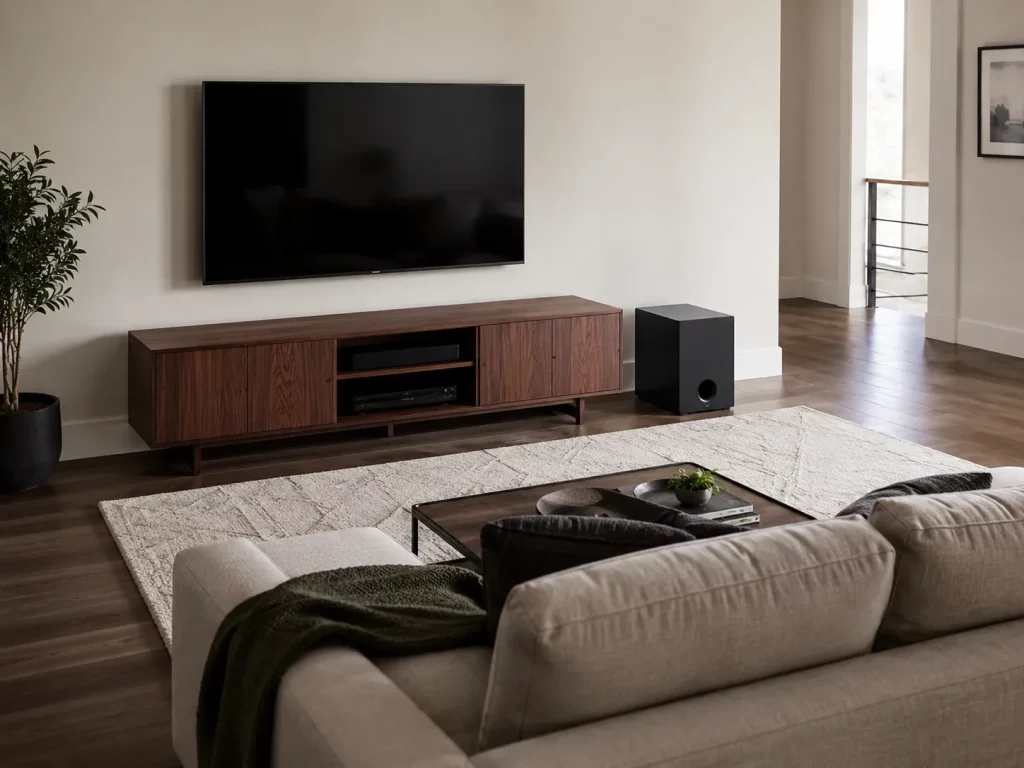
If you are deciding where to place a subwoofer, start near the front of the room. Beside the TV wall, beside the media console, or near a front corner are practical first candidates because they keep the subwoofer close to the main system and usually avoid running a long cable through the seating area.
For subwoofer placement in a living room, use this order:
- Start beside the TV wall or near a front corner.
- Listen from your primary sofa seat.
- Compare at least one other realistic location.
- Keep the position that sounds balanced, not simply the loudest.
A corner can increase bass output, but it is not automatically better. In some rooms, that extra boundary reinforcement makes bass sound heavy or one-note. Treat every starting position as a test location rather than a rule.
Why Does Moving a Subwoofer Change the Bass?
Low frequencies interact with the boundaries of the room. Reflected waves can reinforce one another at some locations and cancel at others, creating peaks where bass becomes unusually strong and nulls where it seems to disappear.
That is why moving a subwoofer a relatively short distance can change what you hear from the sofa. The listening position matters too: a subwoofer can work well from the middle cushion and sound noticeably weaker from a seat a few feet away.
You do not need to calculate room modes for a typical living room. The useful takeaway is simpler: when bass changes significantly from one position to another, the room is part of the problem—not just the subwoofer itself.
How Do You Find the Best Spot in Your Room?
Start with three or four meaningfully different locations where the subwoofer could realistically stay. Keep the TV and sofa in place so you are comparing subwoofer positions rather than changing the whole room at once. In a living room home theater setup, rule out spots that would block the main walkway before you begin testing.
Test Your Best Candidates
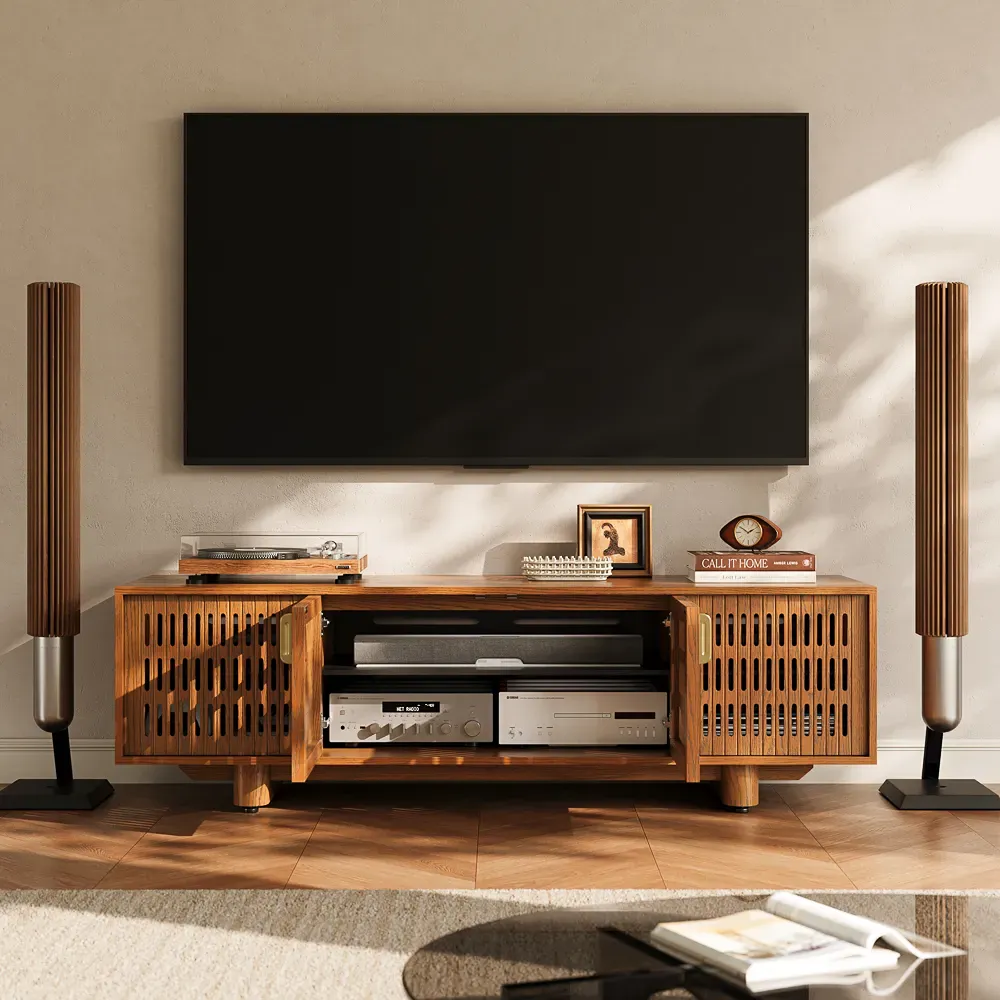
A crowded TV wall can reduce the number of positions worth testing. The POVISON Delven Verse 71″ Mid-Century Modern TV Stand provides 18.3 inches of interior depth for deeper AV gear and connected cables, while two adjustable shelves can also be removed when taller components need the space. Keeping that equipment inside the cabinet leaves more of the surrounding floor available for testing the subwoofer.
If the obvious locations still sound uneven, use the subwoofer crawl:
- Place the subwoofer temporarily at your main listening position.
- Play familiar audio with a steady bass line.
- Listen near floor level at the realistic candidate spots.
- Mark two or three locations where bass sounds smooth rather than simply loud.
- Move the subwoofer there and listen again from the sofa.
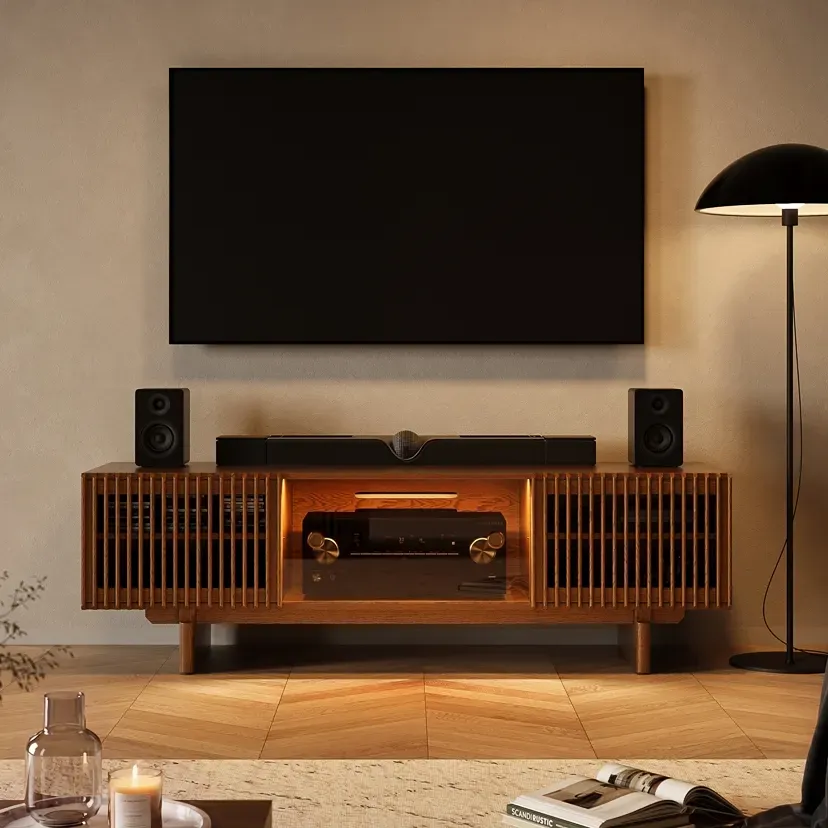
Delven Verse TV Stand
Organize receivers and other AV components with flexible shelving while keeping more TV-wall floor space open for subwoofer placement.
Compare the Most Practical Positions
Once you have narrowed the options, compare what each location gains and what it may compromise.
| Position | Try It When | Recheck If |
| Beside the media console | The TV wall has open floor space | The position crowds cabinet access |
| Front corner | Space is limited or more output may help | Bass sounds bloated or one-note |
| Front wall | The corner sounds too heavy | Cable routing becomes awkward |
| Side wall | The TV wall is crowded | Bass varies sharply between seats |
Do not apply one wall-clearance number to every subwoofer. Driver and port designs vary, so follow the manufacturer’s required clearance first.
Finally, listen from the seats people actually use. If one position sounds excellent from the center cushion but loses much of the bass from a regularly used side seat, test another candidate before finalizing the location.
How Do You Choose Between Two Good-Sounding Spots?
Once testing leaves you with two or three locations that sound good, acoustics alone no longer settle the decision. Compare the remaining positions in two passes: first for sound quality, then for how each one affects the room every day. This is where a technically good location becomes a practical long-term placement.
Pass 1: Acoustic Fit
Between the finalists, prefer the position where the bass blends into the system rather than drawing attention to one part of the room. If one sounds better mainly because it is louder, lower the level and compare again. Cleaner integration matters more than extra output.
If one candidate seems better mainly because it is louder, lower the level and compare again. Cleaner integration is more useful than extra output.
Pass 2: Living-Room Fit
Now compare the practical cost of each remaining position. Reject or adjust a location if it:
- narrows a frequently used walkway;
- prevents a cabinet door or drawer from opening;
- sends a power or signal cable across the exposed floor;
- violates the subwoofer’s required driver or port clearance;
- makes routine access or cleaning unnecessarily difficult.
Also check nearby objects for vibration. A loose frame, cabinet door, or decorative object can buzz even when the subwoofer itself is correctly positioned.
If one location sounds slightly better but blocks the path beside a doorway, while another sounds nearly as good and leaves the route open, the second location is usually the more workable long-term choice.
If the Final Position Still Sounds Wrong
If the position works with the room but the bass still sounds off, change one thing at a time:
- Boomy across several seats: Move farther from the wall or corner and test again.
- Weak mainly from one seat: Try another position before raising the level; that seat may be near a bass null.
- The media console buzzes: Remove loose objects and identify the vibrating door, shelf, or panel before relocating the subwoofer.
- Sound changes after repositioning: Once the location is settled, rerun calibration or room correction if your system recommends it.
If moving the subwoofer also changes the cable route, TV stand cable management for hidden cables can help keep power and signal cords out of open walkways.
How Should a Subwoofer Sit Beside a Media Console?
A subwoofer next to a media console should remain an independent floor-standing component. Maintain the clearance required for its driver and ports, and avoid pressing it against the cabinet simply for symmetry. Keep it outside the cabinet unless the subwoofer manufacturer specifically supports enclosed placement.
The media console should solve a different problem: housing the receiver, game systems, streaming devices, and their connections so the subwoofer remains free to occupy whichever floor position tests well. For equipment-heavy systems, choosing a media console for an AV receiver based on connected depth and rear access keeps those two decisions separate.
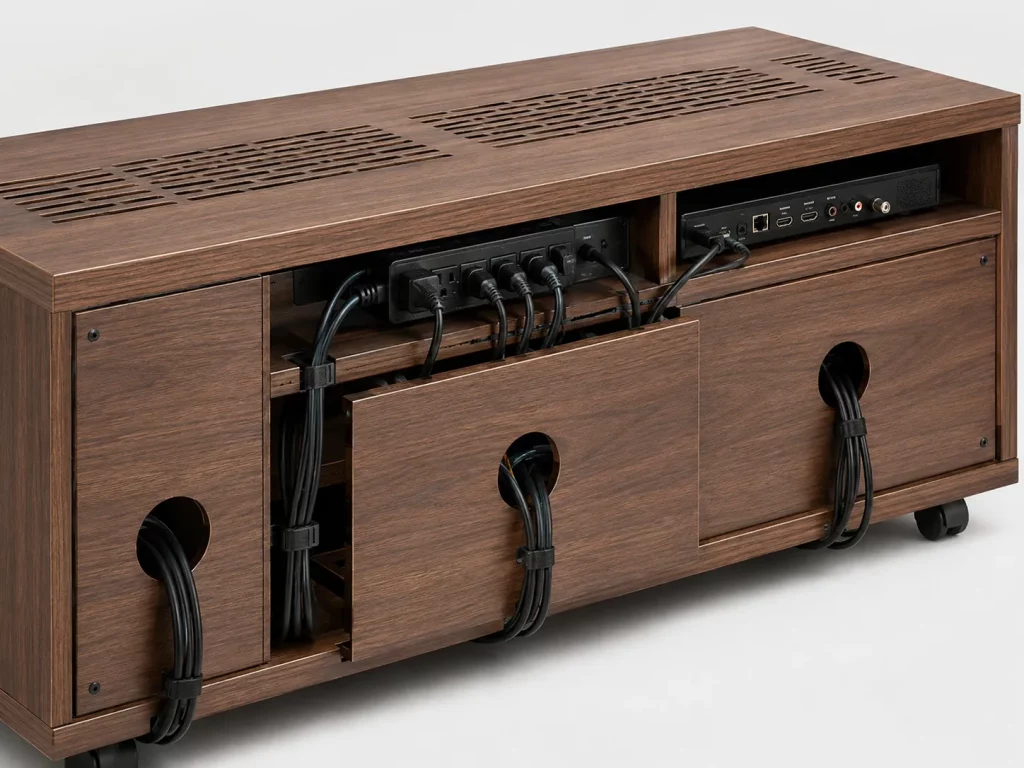
The POVISON Delven Axis Deep Vented Rolling Media Console is particularly useful when a deep AVR and its rear plugs make the back of a conventional cabinet difficult to reach. Its 18.7-inch interior depth gives connected gear more room, while removable rear panels and hidden wheels let you pull the console forward for cable changes or cleaning. That keeps the floor beside it available as a real subwoofer-placement option instead of a permanent service aisle.
Delven Axis Deep Vented Rolling Media Console
Keep deep AV gear and cables inside the console, so the floor beside it stays available for the subwoofer position that sounds best.
Conclusion
The right subwoofer placement is not one universal corner or distance from the wall. Test several realistic positions, compare them from the seats your household actually uses, and use the subwoofer crawl when the obvious locations fail. If more than one spot sounds good, choose the one that also works with your furniture, walkways, and wiring. Let the subwoofer occupy the floor space that works acoustically while the media console handles the rest of the AV system.
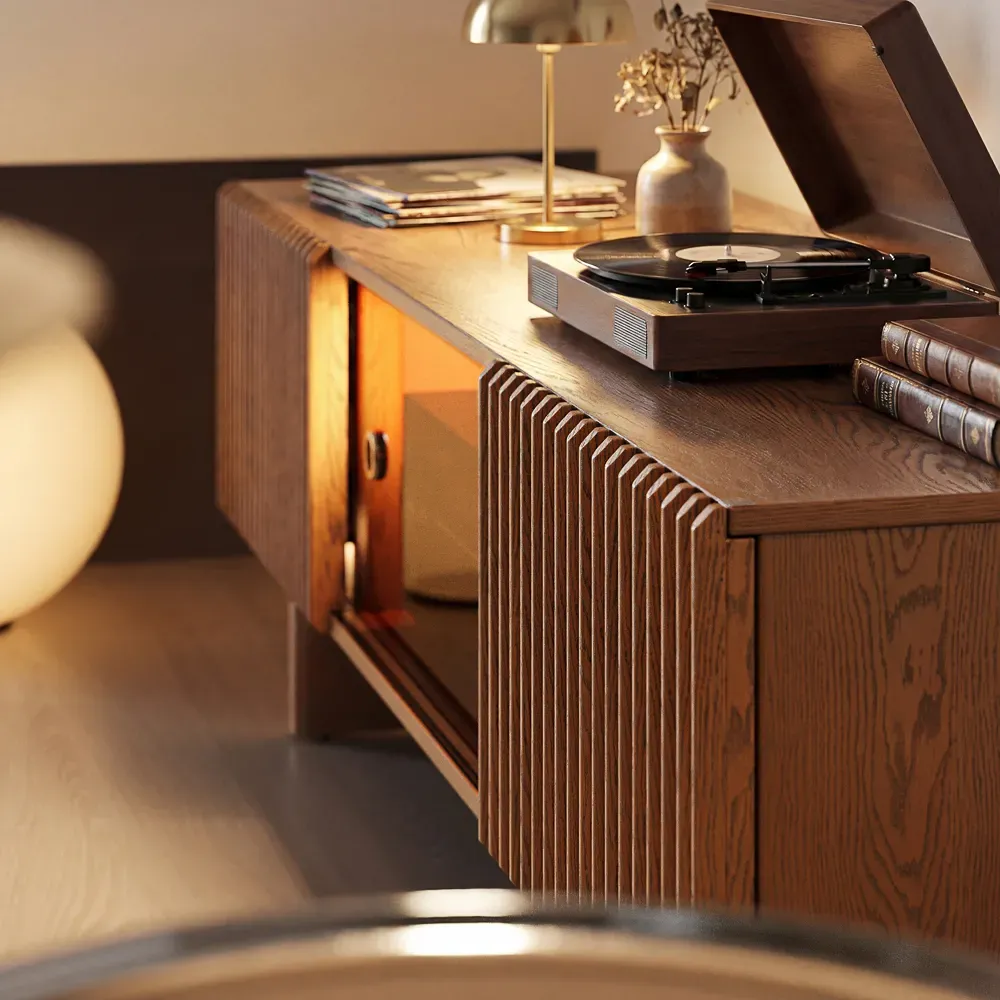
Build a Better Entertainment Setup
Explore media consoles designed for organized storage, ventilation, and modern entertainment equipment.
FAQ
Can a subwoofer sit on carpet?
Yes. Keep the cabinet stable and make sure thick carpet does not block a down-firing driver, port, or vent. Check the model’s required underside clearance before adding a platform or changing its feet.
Which way should a subwoofer face?
There is no universal direction. Follow the manufacturer’s driver and port requirements first, then compare permitted orientations from your normal listening seat. Position usually matters more than simply pointing the cabinet toward the sofa.
Does a wireless subwoofer need to stay near the TV?
No. It still needs power and must remain within the supported wireless range of its soundbar or audio system. Choose the position for bass performance first, then confirm a stable connection and safe power-cord route.
Can a subwoofer go behind the sofa?
Yes, if rear placement produces balanced bass from the seats you use. Check for excessive sofa vibration, noticeable bass localization, and a power cable that could interfere with movement around the seating area.
Does an open-plan living room change placement?
Yes. Openings into a kitchen, dining area, or hallway change the room boundaries, so visual symmetry does not guarantee balanced bass. Judge the position from the seats you actually use rather than from the TV wall alone.


[…] remains accessible and helps protect the surrounding floor space. Cabinet position can also affect subwoofer placement beside the media console, so avoid turning the adjacent floor area into a permanent cable-service […]