 By Kelvin
Introduction
Choosing between an armchair vs recliner comes down to more than which chair looks better. The bigger question is how you plan to use the seat: for conversation and occasional reading, or for longer periods of TV watching, lounging, and putting your feet up. A standard armchair keeps a relatively fixed position, while a recliner adds adjustable back and leg support. This guide compares their everyday use, working footprint, room flexibility, and practical trade-offs so you can choose the better fit for your living room.
Table of Contents
What’s the Difference Between an Armchair and a Recliner?
The main difference between an armchair and recliner is adjustability. A standard armchair is a stationary upholstered chair with arms and a largely fixed sitting position. A recliner is essentially an armchair with a mechanism that lets the back move and usually raises an integrated footrest.
That distinction affects more than comfort. It changes how much working space the chair needs, how easily it can be moved, how many sitting positions it offers, and what you need to check before buying. Swivel, rocking, and power controls are additional features rather than defining differences: both armchairs and recliners can include some of them.
| Decision Factor | Armchair | Recliner |
| Sitting position | Usually fixed | Adjustable |
| Foot support | Separate or optional | Usually built in |
| Working footprint | Mostly stays fixed | Expands when reclined |
| Best everyday role | Conversation and flexible seating | Longer lounging and TV |
| Posture changes | Limited | Multiple positions |
| Room planning | Check chair footprint | Check closed and open footprint |
| Moving parts | Few or none | Reclining mechanism |
| Power requirement | Usually none | Manual or powered |
| Swivel option | Available on some models | Available on some models |
| Best starting point | Simpler seating needs | Adjustable comfort needs |
For an armchair vs recliner for living room decision, the most useful question is therefore not whether the chair swivels. Ask whether you need the chair itself to change your sitting position. If rotation is useful, you can then narrow either category to swivel models.
This also makes a recliner vs accent chair features comparison more useful when it focuses on function rather than appearance. An accent-style armchair may offer a lighter profile and a fixed footprint, while a modern recliner can deliver a similarly streamlined look with additional posture and foot support.

Which Is Better for the Way You Sit?
An armchair vs recliner for living room use decision should start with the activity, not the silhouette. A swivel armchair makes more sense when the chair frequently turns between people—for example, two chairs opposite a sofa that also rotate toward an open kitchen. The seat stays ready for conversation without a footrest entering the coffee-table area.
A swivel recliner becomes more useful when the chair is a dedicated personal seat. Someone who reads for an hour and then turns toward the television benefits from both directional movement and a change in posture. For longer reading sessions, seat depth, back support, arm position, and the ability to shift posture matter more than whether a chair simply feels soft at first; those factors are also central when choosing the best reading chair for long sessions.
Use this simple rule:
- Choose swivel-only movement when where you face changes more than how you sit.
- Choose swivel plus recline when both direction and posture change regularly.
For TV viewing, a recliner usually provides more positional flexibility because the back and leg position can change without moving the entire chair. A swivel-only armchair can still work well when TV is occasional and conversation remains the seat’s main role.
Which Takes Up More Space?
The chair with the smaller catalog dimensions is not automatically the chair that uses less space. Swivel seating needs room to move around its base, and reclining seating adds another movement path. Compare the chair in its closed position with the full area it needs during actual use before deciding whether it fits.
Closed Footprint vs Active Footprint
A swivel armchair usually keeps the same front-to-back dimensions while rotating, but the arms or curved back can swing toward a side table, wall, lamp, or neighboring chair. Measure the rotation zone, not just the base.
A swivel recliner requires more checks:
- Closed width and depth
- Fully reclined depth
- Footrest extension area
- Rear clearance
- Side clearance while rotating
- Main walking paths
Do not assume one universal clearance number applies to every recliner. Use the manufacturer’s operating or fully reclined dimensions whenever they are provided.
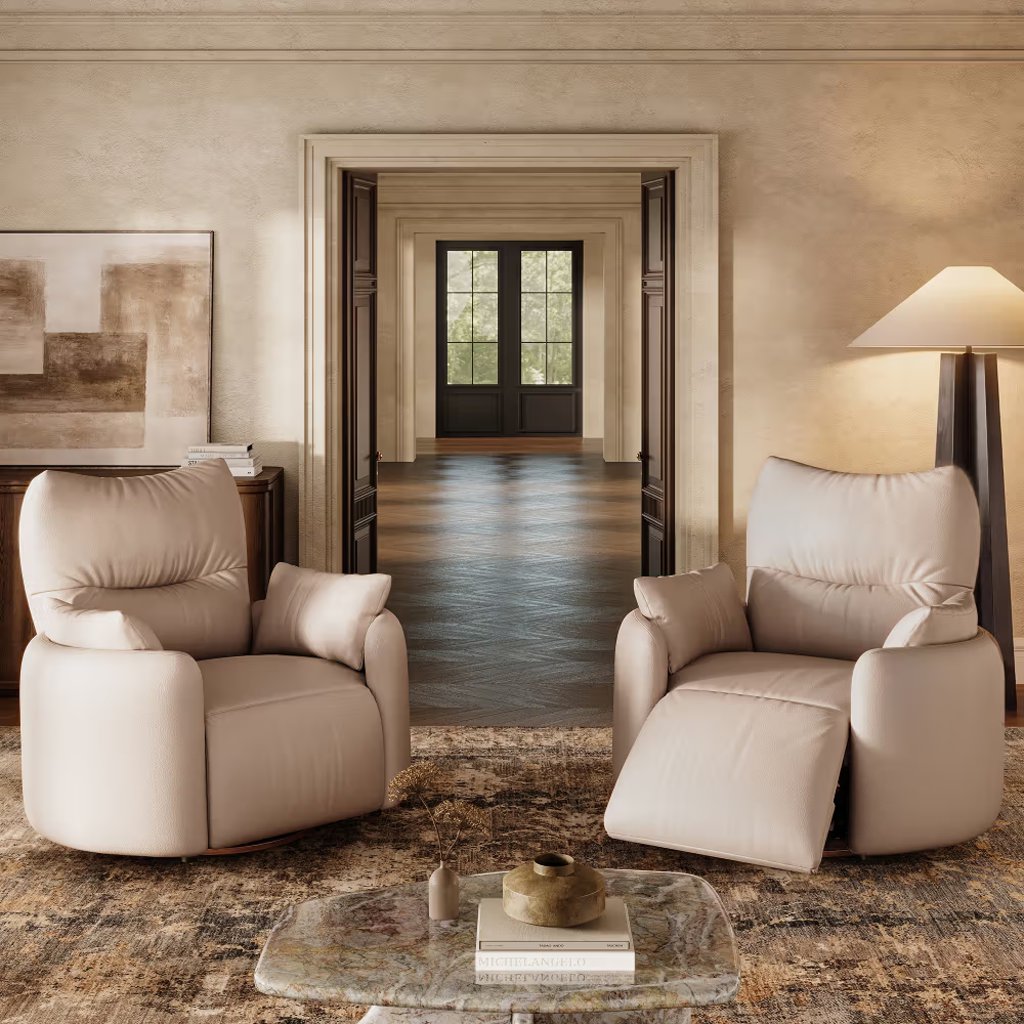
The Swayford Plush Power Recliner shows why closed measurements are only a starting point. Its published footprint is 41.34 by 41.34 inches, while the chair also combines a 270° swivel with a 90°–130° powered recline. That means nearby furniture must account for movement beyond the closed square.
Swayford Plush Power Recliner
A swivel base and powered recline support conversation, TV viewing, and lounging without adding a separate ottoman to the setup.
👍 Best for: Dedicated motion-friendly seating zones
✨ 270° swivel with power recline
✨ No assembly required
✨ 41.34-inch square closed footprint
Don’t Forget the Ottoman
A plain armchair may look more space-efficient until you add an ottoman. If putting your feet up is part of your normal routine, measure the chair and ottoman as one working setup.
An ottoman also needs enough space to move into position and still leave a usable walkway. In a tight corner, one compact recliner with an integrated footrest can sometimes use floor space more efficiently than an armchair plus a separate ottoman. The answer depends on actual open dimensions rather than the furniture category alone.
When Should You Choose an Armchair?
Choose an armchair when the seat primarily supports conversation, guests, short reading sessions, or a layout that changes often. Swivel capability is useful when the chair sits between two focal points, but it is not worth adding movement simply because the feature is available.
If your chair always faces the sofa or coffee table, a stationary armchair may actually be the simpler solution. It avoids the rotating movement zone and is generally easier to reposition when the room changes.
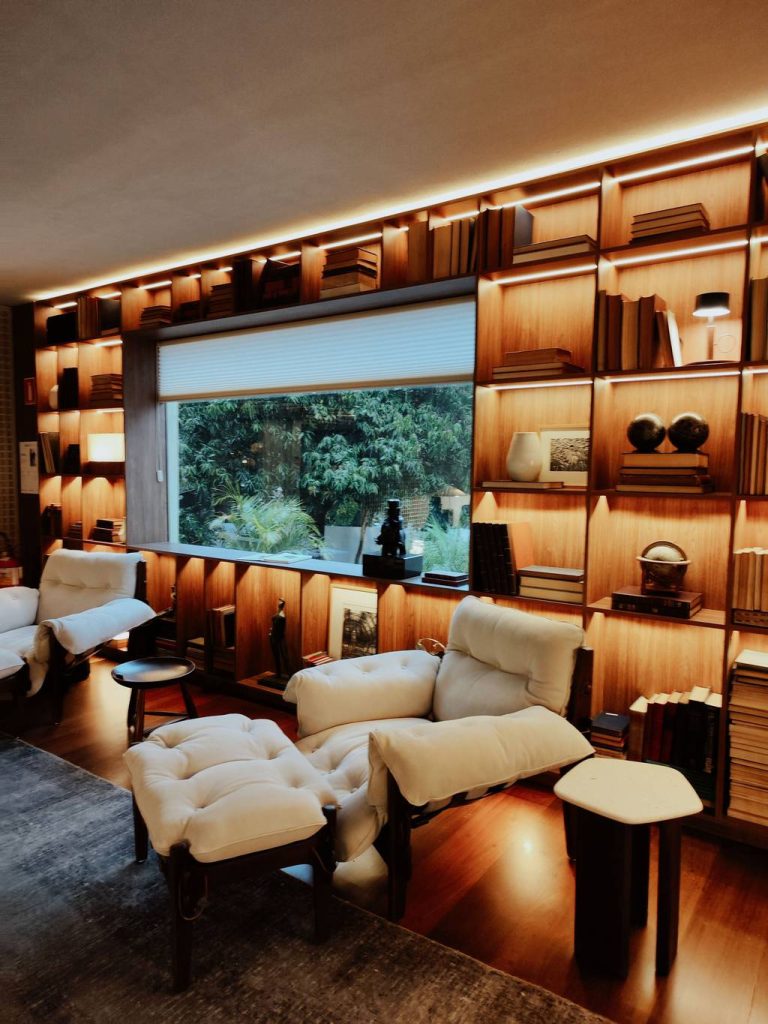
That distinction makes the Modern Suede Brown Accent Chair useful as a stationary benchmark. At 34.25 inches square and about 55.6 pounds, it occupies a defined footprint rather than an operating zone. Its water-resistant, pet-friendly polyester suede also suits everyday seating where surface care matters.
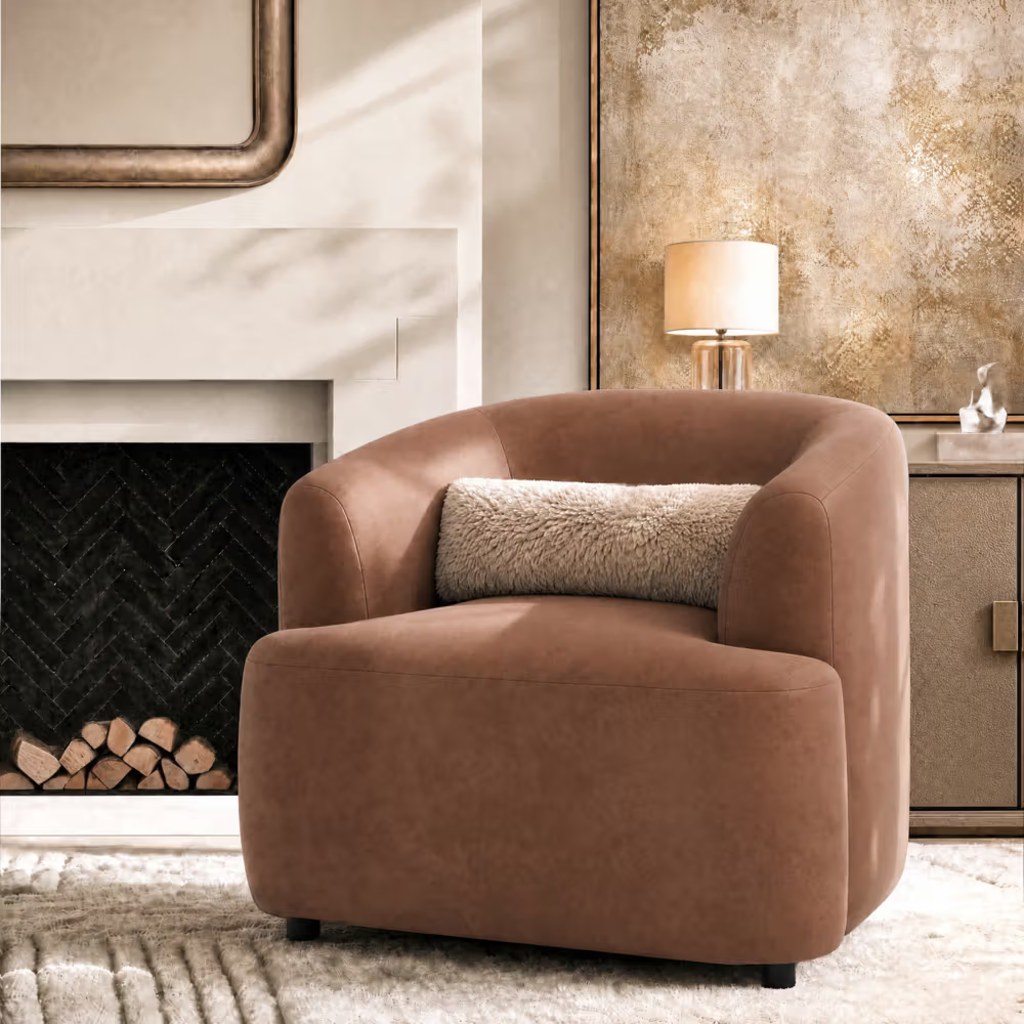
Modern Suede Brown Accent Chair
A compact stationary chair for conversation-focused rooms where reclining hardware would add unnecessary bulk or movement.
👍 Best for: Flexible conversation-focused living rooms
✨ Water-resistant pet-friendly suede
✨ Fully assembled on arrival
✨ 34.25-inch square footprint
When Should You Choose a Recliner?
A swivel recliner makes more sense when one chair needs to handle several positions throughout the day. It can remain upright while talking, rotate toward another part of the room, and then recline for reading or TV without requiring a separate footrest.
This is particularly useful in a living room with more than one focal point. A chair beside a window, for instance, might face the sofa during the day and rotate toward the television later. The trade-off is that the surrounding floor area has to support all of those movements.
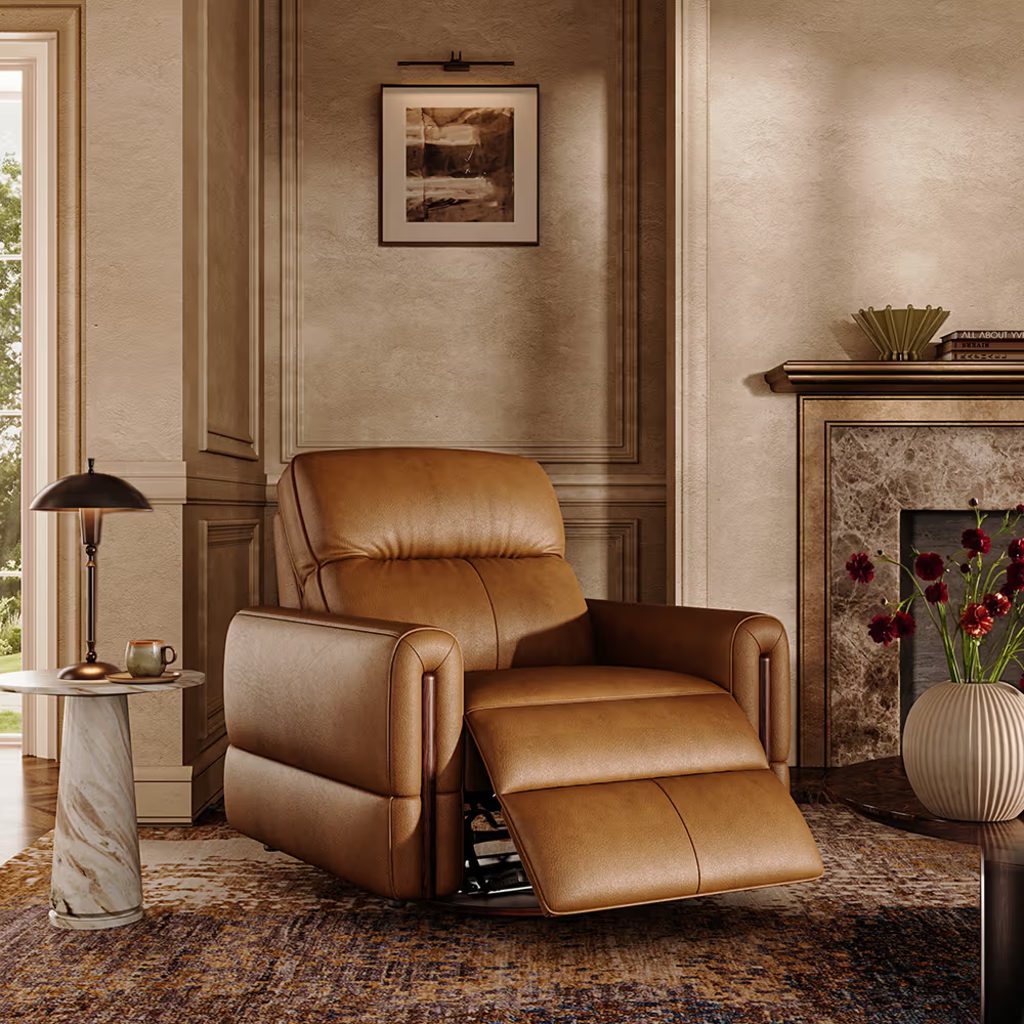
The Oliver Swivel Power Barrel Recliner combines a 270° swivel, gentle rocking, and 90°–145° powered reclining. Its closed size is 43.3 by 38.6 inches, so buyers should plan around the chair’s motion rather than treating that closed depth as its complete working space.
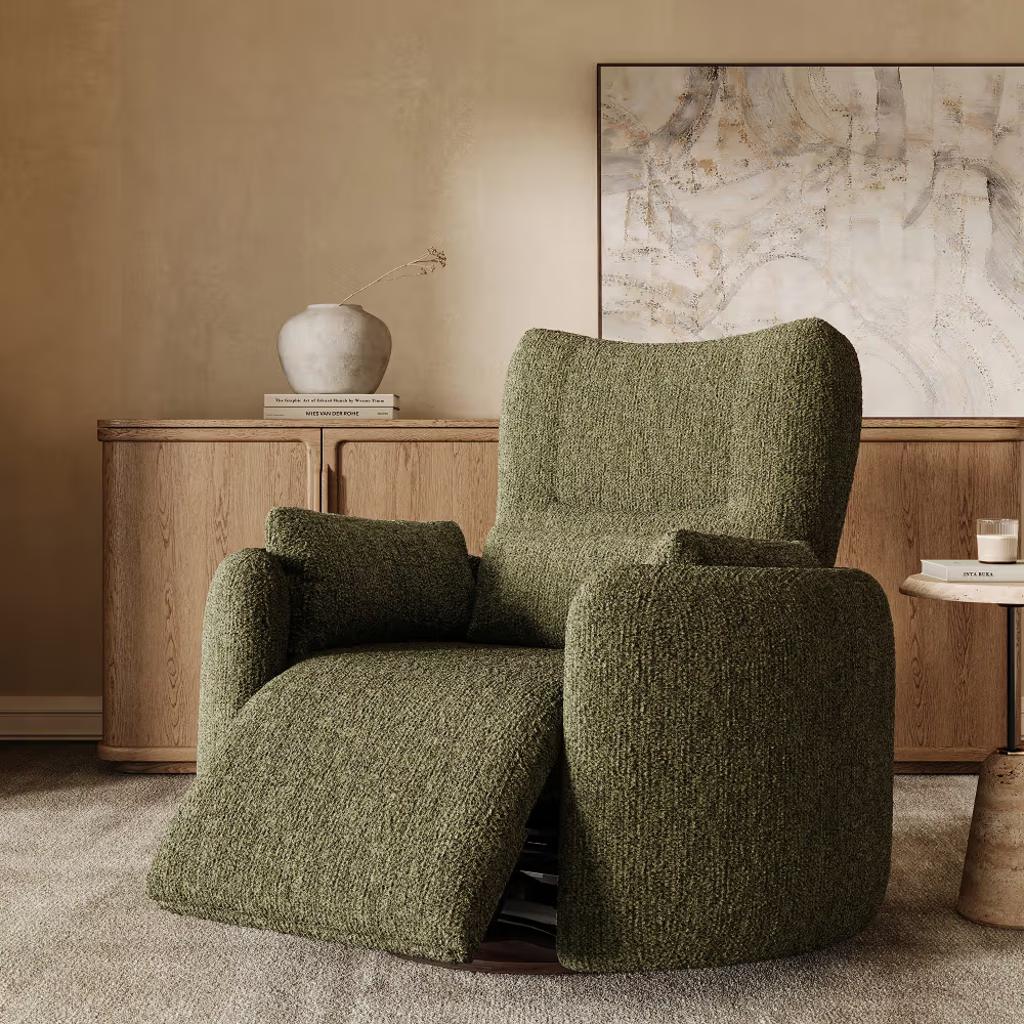
Oliver Swivel Power Barrel Recliner
A motion-rich barrel recliner for rooms where one seat needs to turn between conversation, reading, and TV zones.
👍 Best for: Multi-focus living room seating
✨ 270° swivel plus rocking
✨ No assembly required
✨ 90°–145° power recline
Can a Recliner Still Look Like an Armchair?
Yes. A modern recliner does not have to rely on an oversized padded silhouette, exposed lever, or visibly mechanical base. Rounded barrel forms, slimmer arms, concealed controls, continuous upholstery, and hidden footrests can make a recliner read more like an accent or lounge chair when it is closed.
That changes the traditional “style versus comfort” comparison. If both options suit the room visually, the more useful question is whether you actually need adjustable posture and whether the room can support the extra operating footprint.
Current recliners that don’t look like recliners include models that resemble club chairs, wingback accent chairs, and rounded swivel chairs while concealing much of their motion hardware. Some still become substantially deeper when opened, so appearance should never replace measurement as the final buying check.
Conclusion
The armchair vs recliner decision becomes simpler when you separate basic seating needs from extra movement. Choose an armchair when the seat needs to stay flexible within a conversation-focused or frequently changing layout. Choose a recliner when reading, TV, and longer lounging make adjustable posture and built-in foot support genuinely useful. If swivel movement matters, treat it as an additional feature rather than the main distinction. In either case, measure the active footprint rather than judging fit from closed dimensions alone.
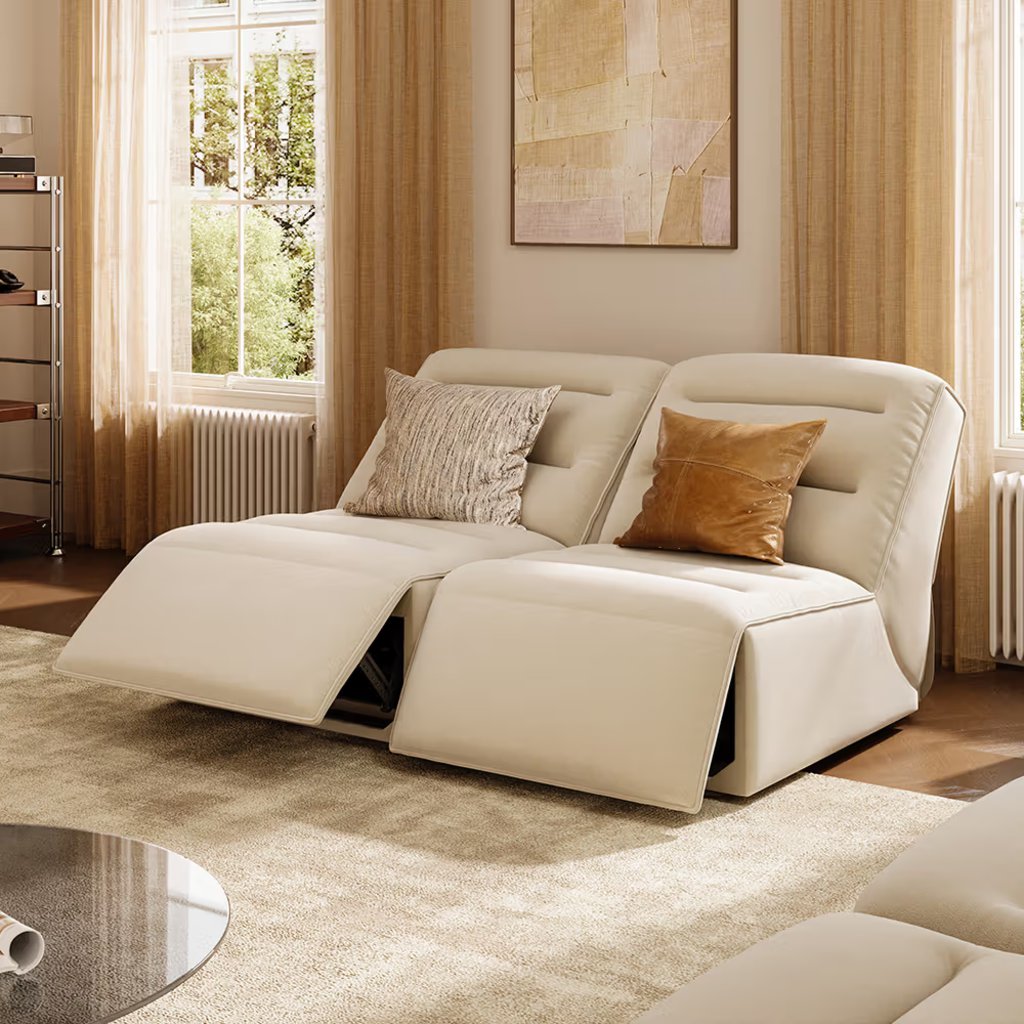
Find the Right Chair
Explore designs for different room sizes, layouts, and everyday needs.
Q&A
Should an armchair and recliner have the same seat height?
Not necessarily. Similar seat heights can make face-to-face conversation feel more natural when the chairs share one seating group. Compare actual seat height rather than overall chair height. A low armchair beside a much taller recliner may work visually, but the difference can feel noticeable when people regularly sit and talk across from each other.
Can a recliner sit partly on an area rug?
It can, but the entire moving base should remain level and stable. Avoid placing a thick rug edge beneath only part of the mechanism, especially on a swivel recliner. Test the chair through its complete movement and check the manufacturer’s flooring recommendations before using a high-pile or heavily padded rug.
What should tall buyers measure before choosing either chair?
Check usable seat depth, seat height, back height, and where the upper back or head support reaches your body. For a recliner, also check where the extended footrest supports your calves and heels. Large exterior dimensions do not guarantee a good fit if the usable seat and support points are positioned too low.
How can you keep a recliner cord out of a walkway?
Plan the cord route before finalizing a powered recliner’s position. A floor outlet or manufacturer-compatible battery can reduce exposed wiring in a floating layout. Otherwise, keep the approved power cord outside foot traffic and the chair’s moving zone, and avoid routing it where the reclining mechanism or nearby furniture could pinch it.
Will a recliner fit through a standard doorway?
Not necessarily. Compare the chair’s narrowest delivery dimension with the clear doorway opening, not simply the room-facing width shown in product photos. Also check hallway turns, stairs, landings, and elevator openings. If the recliner has a removable back, confirm how much that actually reduces its delivery dimensions before ordering.


