 By Charles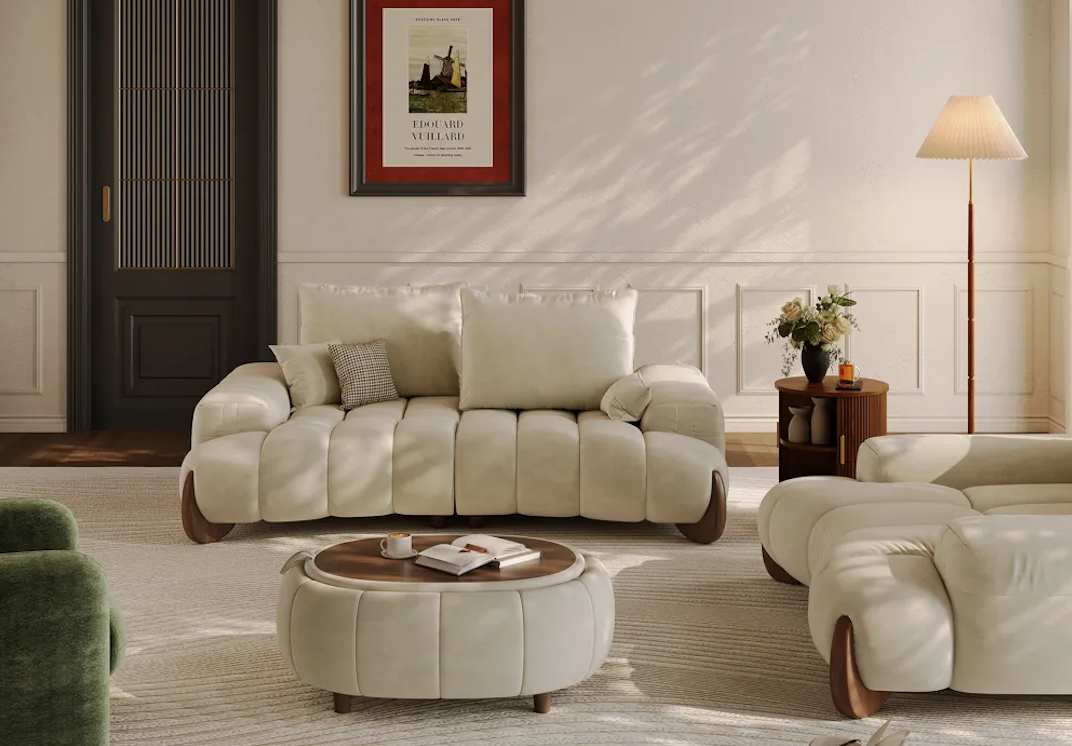
I used to think a storage ottoman was a thing apartment dwellers bought when they didn’t have room for a real coffee table. Like a compromise. A Plan B.
Then I lived through three winters in a 900 sq ft place with two dogs, a partner who reads on the floor, and a coffee table I kept stubbing my toe on. Threw the coffee table out. Tried a storage ottoman instead. Six months in, the room was unrecognizably tidier — not because we had less stuff, but because the stuff finally had a place.
That’s the question this guide is really asking. Not “is a storage ottoman pretty?” — they almost all are. The real question: does it actually reduce the clutter you live with every day?
Sometimes yes. Sometimes no. Here’s how to tell which one you are.
Why Buyers Add a Storage Ottoman
Walk through any apartment-dweller’s living room and count the items that don’t have a home. I did this exercise in mine before I made the switch. The list:
- 4 remotes (TV, soundbar, fan, Apple TV)
- 2 throw blankets in winter, 0 in summer (needed somewhere to live in July)
- 3 phone chargers
- A pile of magazines I keep meaning to read
- The dog’s chew toys
- Spare AA batteries in a junk drawer that wasn’t actually a drawer
That’s roughly 2.5 cubic feet of stuff that lived on the coffee table, on the sofa, and on the floor.
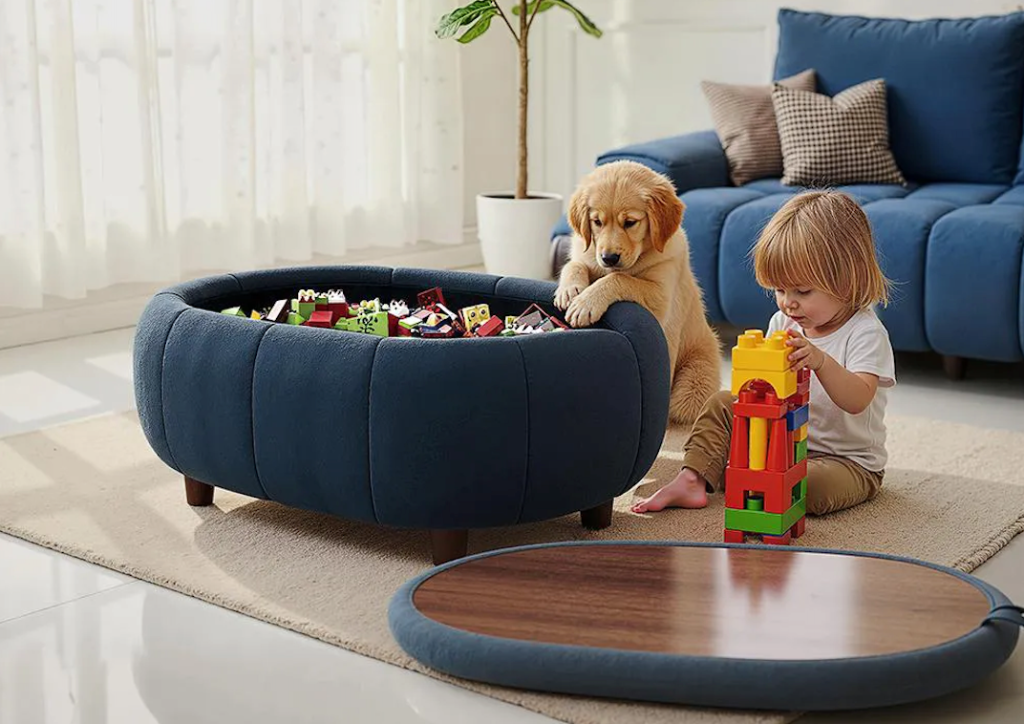
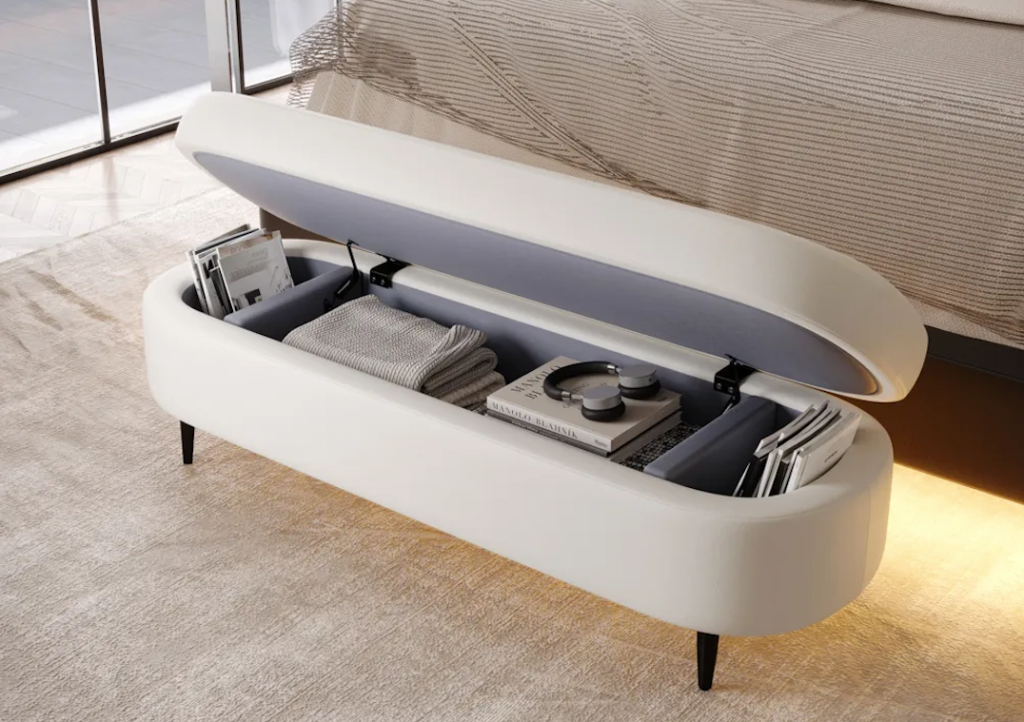
A storage ottoman gives that category of stuff one closed home. Lid up, throw it in, lid down, room looks reset. The actual time it takes to tidy goes from “10 minutes of folding and stacking” to about 90 seconds.
That’s the value. Not the styling. The reset speed.
It also doubles as:
- Footrest when you’re on the sofa
- Extra seating when guests arrive (most hold 250+ lbs)
- Coffee table with a tray on top (more on this below)
So you’re paying for one piece that does three or four jobs. In a small living room, that math gets hard to beat.
Best Rooms for This Type of Piece
Small Living Rooms
If your living room is under 14′ × 14′, this is the use case storage ottomans were basically invented for. The trick is sizing.
Rule I use: the ottoman shouldn’t be wider than half the sofa. A 78″ sofa pairs cleanly with a 36–40″ ottoman. Anything bigger starts to crowd the walking path. The interior layout guidance POVISON uses — 30–36″ walkways, 16–18″ sofa-to-table spacing — gives you the floor plan boundary to work within.
Tape it out before you order. Painter’s tape on the floor, mark the ottoman’s footprint, walk through the room for a couple of days, and see if you keep tripping on it. I do this for every furniture purchase over $300 now. Saved me at least one return.
For small rooms, also lean toward rectangular over round. A 36″ × 24″ rectangle gives you more usable storage volume than a 30″ round of similar footprint, and it docks neatly against the sofa edge.
If you’re shopping in this size range, POVISON’s Ergopals storage ottoman is the one I keep recommending — it ships fully pre-assembled (which matters for the hinge mechanism, more on that below) and the covers come off for washing.
Family Rooms With Everyday Clutter
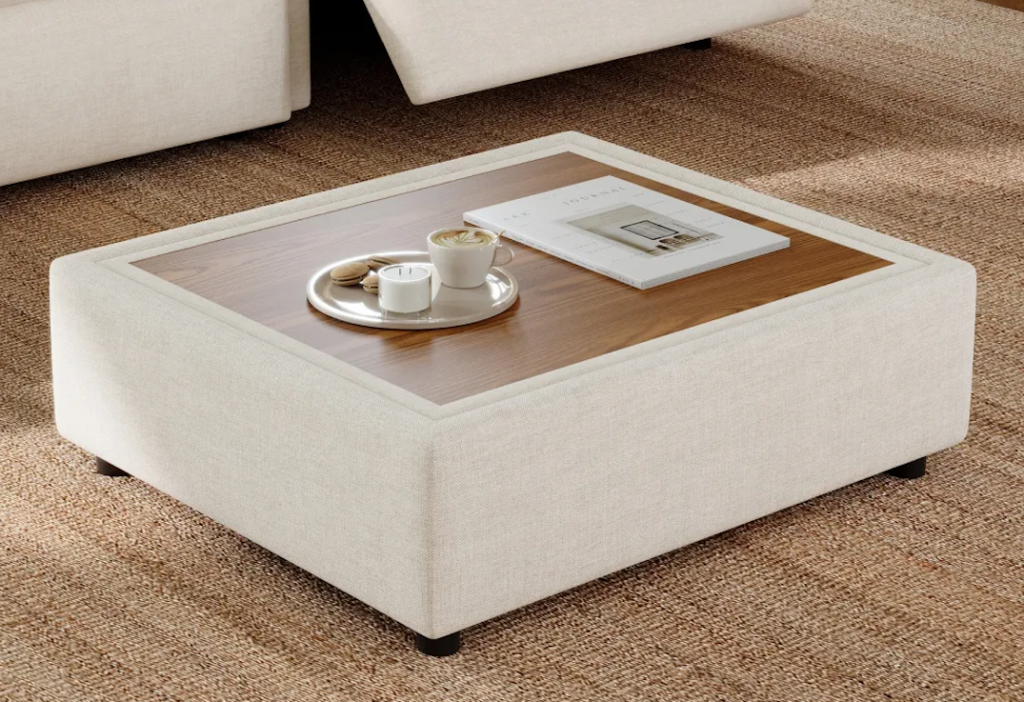
Different problem, same solution. Family rooms aren’t usually small — they just generate clutter at a faster rate than any other room in the house. Kids’ books, throws, controllers, the random stuff that accumulates between Saturdays.
Here, you can size up. A 48″ × 24″ or 54″ × 28″ ottoman in front of a sectional becomes a legitimate furniture-grade reset button. Lid opens, everything goes in, lid closes, done.
Two things matter more in this context than in a small living room:
- Lid support / soft-close hinge. Non-negotiable if kids are around. The U.S. Consumer Product Safety Commission has documented decades of injuries from chest lids without proper supports — the CPSC’s recall history on toy chests and storage trunks is a sobering read. Lid supports are the difference between safe and not.
- Washable covers. This is the one I underestimated for years. Family rooms see spills. If your ottoman fabric isn’t removable and washable, you’re hiding three years of dog hair and juice-box accidents in there. A good ottoman gives you fabric that can come off and go in the machine.
Ottoman vs Coffee Table
This is the decision that actually matters, and most buying guides skip it because it’s not the cheerful answer.
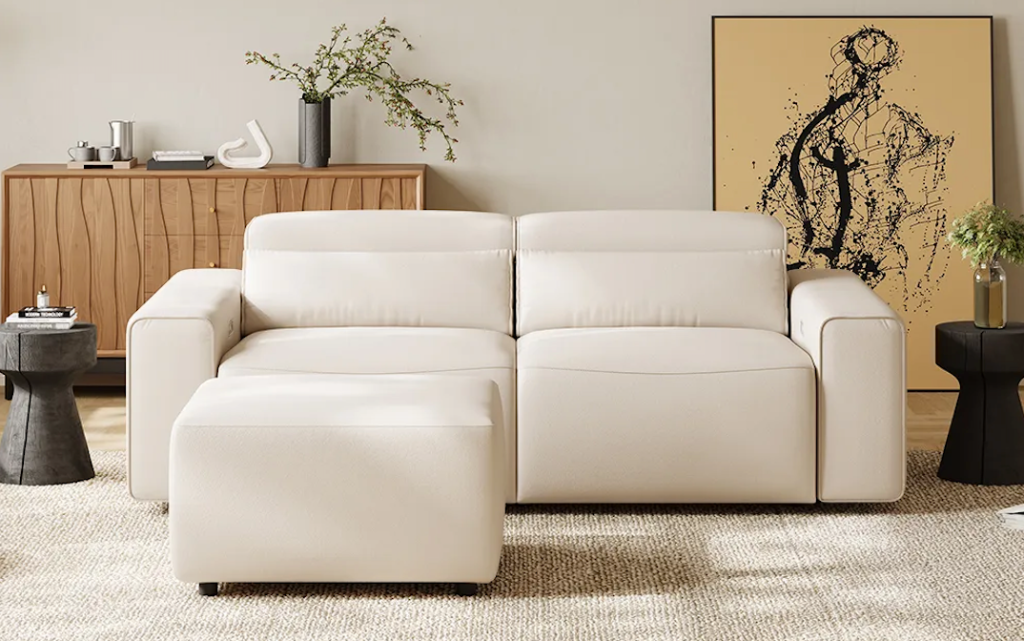
Here’s the honest version. They’re not the same piece pretending to be different. They solve different problems:
| Storage Ottoman | Coffee Table | |
| Primary job | Soft seating + hidden storage | Hard surface for styling/use |
| Best for | Casual lounging, small rooms, daily clutter | Hosting, books, styled trays |
| Works with laptops/hot drinks? | Only with a tray on top | Yes, directly |
| Safety with toddlers | Better — soft edges | Worse — corners need bumpers |
| Daily reset speed | 90 seconds | Slower — visible surface |
| Storage capacity | 2.5–4 cu ft typical | 0–1 cu ft (drawers only) |
So the question is really: what does your living room mostly do?
If it’s a low-key lounging room — TV nights, reading, kids playing on the floor — the ottoman wins. If it’s a hosting room — friends over for drinks, books on display, you actually use a coffee table for coffee — the table wins.
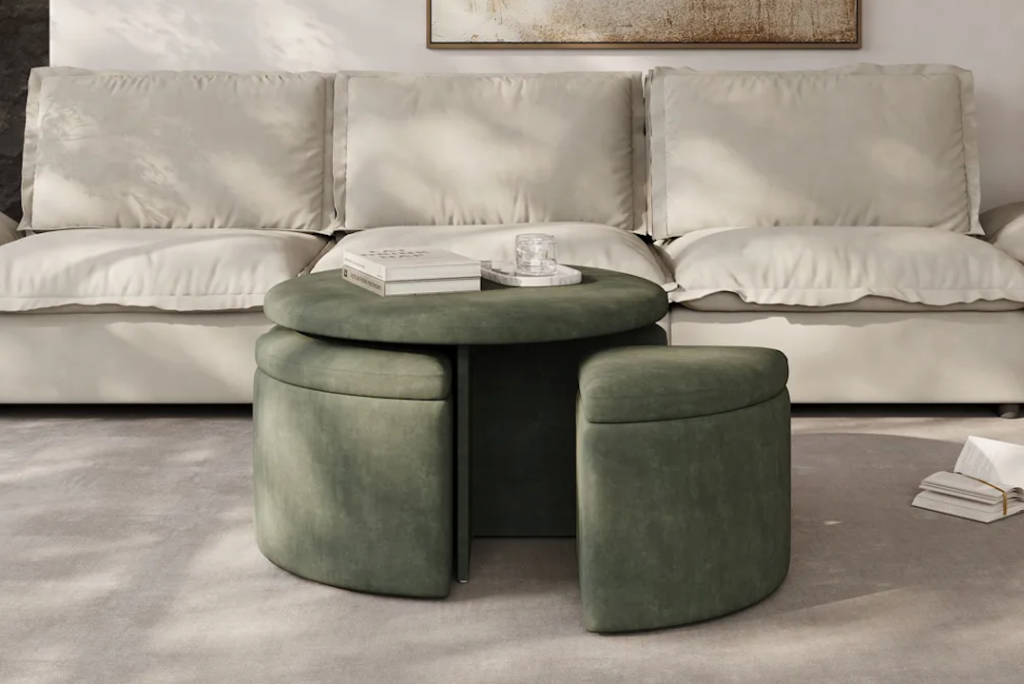
I went through this myself and ended up with both. Small ottoman beside the sofa for the daily clutter, a separate coffee table from POVISON’s collection in front for actual coffee. If you only have room for one, pick based on which problem is louder. Not the styled Pinterest version of your life — the Tuesday version.
What to Store and What Not to Store
This is where most ottoman owners go wrong. The interior of an upholstered storage ottoman is a closed, fabric-lined box. That has implications.
Good things to store:
- Throw blankets and extra pillows
- Remotes and chargers (in a small basket inside, so they don’t disappear)
- Magazines, books you’re rotating
- Kids’ toys (rotated weekly, not stockpiled)
- Board games in their boxes
- Yoga mat (folded)
Things you should not store:
- Anything that off-gasses — new electronics, anything with strong “new product” smell. The EPA notes that VOC concentrations indoors can be up to 10x outdoor levels, and a closed fabric box concentrates whatever you put in it. Furniture itself can be a contributor here, which is why the build quality of the ottoman matters.
- Damp items — wet swim gear, towels. Closed fabric box + moisture = mildew within days.
- Food — pests, smell, ruined fabric.
- Heavy items you’ll need often — reaching past 30 lbs of stuff to get the remote gets old fast.
- Anything fragile — closing the lid means crushing whatever’s at the top.
The off-gassing point is why I push hard on certified materials when buying. Look for ottomans with CARB Phase 2 compliant internal frames (formaldehyde emissions limit) and OEKO-TEX or similar certified upholstery fabric. POVISON lists both spec types on product pages. Brands that don’t list any certifications — I’d assume the worst.
What to Check Before Buying Online
Here’s my pre-purchase checklist for a storage ottoman. I’ve returned enough wrong ones to have earned this list:
- [ ] Interior storage capacity ≥ 2.5 cu ft (anything less and you’re storing 1.5 throws and calling it a day)
- [ ] Soft-close hinge OR lid support (non-negotiable — this is the difference between a safe ottoman and a CPSC recall waiting to happen)
- [ ] Top-load weight rating ≥ 250 lbs (extra seating use case)
- [ ] Removable, washable covers (especially with kids/pets)
- [ ] Certified materials — CARB Phase 2 frame + OEKO-TEX or similar fabric
- [ ] Ventilation gap or holes — closed boxes need airflow;
- [ ] Footprint that respects 16–18″ sofa-to-ottoman spacing (so legs can extend without bumping)
- [ ] Pre-assembled or low-assembly delivery — see below
That last one matters more than people realize. The hinge and lid mechanism is the hardest part to assemble correctly on a flat-pack ottoman. If the hinge is misaligned by even a couple of degrees, the lid won’t close cleanly, the soft-close fails, and you’re either returning it or living with a wobbly lid forever.
This is one of the categories where pre-assembled is genuinely worth the premium. POVISON’s storage ottomans ship fully assembled with the hinge factory-tuned — open the box, slide it into place, done in under five minutes. After watching a friend spend 90 minutes on a flat-pack lift-top ottoman that still didn’t soft-close right, I stopped recommending the cheaper option for this category specifically.
FAQ
Is a storage ottoman better than a coffee table?
A storage ottoman is better than a coffee table for casual living rooms with daily clutter, soft seating needs, or homes with toddlers (no sharp corners). A coffee table is better when you need a hard, flat surface for laptops, drinks without trays, books, or styled hosting. Most homes do well with one of each — but if you only have room for one, choose based on what your living room mostly does day-to-day, not what looks best in a styled photo.
What can you store in a storage ottoman?
A storage ottoman is best for throw blankets, extra pillows, remotes, chargers, magazines, board games, and rotated kids’ toys — anything dry, breathable, and not used more than a few times a day. Avoid storing anything that off-gasses (new electronics, strong-smelling items), damp items (mildew risk in closed fabric), food, or anything fragile that could get crushed when the lid closes. Most quality ottomans hold 2.5–4 cubic feet.
Does a storage ottoman work in a small living room?
A storage ottoman works very well in a small living room — it’s one of the best multi-functional pieces for spaces under 14′ × 14′ because it combines footrest, extra seating, and hidden storage in one footprint. The key sizing rule: keep the ottoman width under half the sofa width (e.g., a 36–40″ ottoman with a 78″ sofa), leave 16–18″ between sofa and ottoman so legs can extend, and protect a 30–36″ walking path around it.
How do I choose the right ottoman size?
To choose the right ottoman size: (1) measure the sofa width and pick an ottoman no wider than half of it, (2) keep 16–18″ of clearance between sofa and ottoman for leg room, (3) confirm interior storage of at least 2.5 cu ft if storage is the main goal, (4) check height matches sofa seat height within 2″ so it works as a footrest, and (5) verify the room layout still has a 30–36″ walkway after the ottoman is placed. Tape the footprint on the floor before ordering — you’ll catch sizing errors before they become returns.
Conclusion: The Test That Actually Matters
The honest test for whether a storage ottoman is worth it isn’t “does it look good?” — most do. It’s whether, six months in, your living room is measurably tidier than it was before.
For me, in a small space with two dogs and a partner who reads on the floor, the answer was a clear yes. The clutter that used to live on every surface now has one closed home. The room resets in 90 seconds. Guests can sit on it. My feet rest on it. It paid for itself in time saved on tidying alone.
For a friend who hosts dinners weekly and uses her coffee table for actual coffee and styled trays, the answer was no — she got a coffee table with a small drawer instead. Both of us picked the right thing.
If your living room collects daily clutter and you’re tired of looking at it, POVISON’s storage ottoman options ship fully pre-assembled with washable covers, factory-tuned hinges, and certified materials — exactly the spec list above, ready out of the box. No screwdriver, no afternoon lost, no wobbly lid two months in.
Or if you’ve decided you actually want a hard surface and storage, the coffee tables collection has lift-top and drawered versions worth a look.
Either way: pick based on the Tuesday version of your life. That’s the version you actually live.
Related Reading:


