 By Charles
I’ll be honest with you — I almost didn’t write this one.
Every few months, someone in my life asks whether they should get a leather couch or stick with fabric. And every time, I watch them get pulled in two directions: one part of them wants something that looks sharp and wipes clean in 30 seconds, the other part worries about a cold, stiff slab of material that’s going to feel like sitting on a car seat in January.
So here’s the article I wish I’d had. Not a luxury editorial. Not a “10 reasons leather is superior” sales pitch. Just a clear-headed look at where leather actually works, where it doesn’t, and what you need to know before spending $1,200+ on a sofa you’re going to live on for the next decade.
Why Buyers Still Consider Leather Couches
The honest answer? Cleaning.
Dog owners, families with toddlers, remote workers who eat lunch on the couch — they all eventually circle back to leather for one reason: a damp cloth solves most problems. Crumbs, spills, pet hair that just sits on the surface instead of embedding in the weave. That’s a real, tangible benefit that no amount of “cozy linen vibes” can fully offset.
But there’s more to it than easy cleanup. Full-grain and top-grain leather — the grades you want to be looking at — have strong, tightly bound fiber structures that resist tearing and deformation over time. A well-maintained top-grain leather sofa can last 15–20 years. Compare that to a mid-range polyester blend that starts pilling and sagging at the 5–7 year mark, and suddenly the higher upfront cost looks different.
There’s also the patina factor. Here’s the thing that surprises most people: quality leather gets better with use. Small scuffs, slight color deepening, a subtle softness that builds over years — that’s not damage, that’s character. A fabric sofa just… wears out. Leather breaks in.
That said, not all leather is created equal, and this is where a lot of buyers get burned. The grade matters enormously:
- Full-grain leather: The top surface of the hide, with natural markings intact. Most durable, develops the best patina, most expensive.
- Top-grain leather: Lightly sanded to remove imperfections, then treated. The sweet spot for most households — durable, consistent in appearance, easier to clean.
- Corrected-grain / split leather: More heavily processed, more affordable, less durable. Often used in budget pieces.
- Bonded leather: Leather scraps bonded with polyurethane. Looks like leather in photos. Starts peeling within 2–4 years. Avoid it.
If a product listing just says “genuine leather” without specifying the grade, ask. Or walk away.
Where Leather Works Best in Real Homes
Family Living Rooms
This is where the debate usually plays out, and the answer is more nuanced than “yes” or “no.”
For families with dogs, leather is genuinely the easier choice. Fur doesn’t embed — you can lint-roll or wipe it off in seconds. Muddy paw prints sit on the surface. Sticky snack residue wipes away. I talked to a friend who has two labradors and switched to a top-grain leather sectional three years ago. Her exact words: “I stopped dreading the couch.”
Kids are a slightly different equation. Toddlers with sharp toys or a phase of enthusiastic crayon use can scratch soft aniline finishes. But semi-aniline or protected top-grain leather — the kind that has a light protective coating — handles everyday kid chaos reasonably well. Juice spills wipe up. The key is acting quickly: leather isn’t fully waterproof, and if liquid sits for 20+ minutes, it can seep in.
The one honest trade-off for family rooms: leather can feel formal if you’re going for a “sink into the couch and disappear” vibe. If your household’s primary couch activity is piled-under-blankets movie nights with everyone horizontal, a deep-seat fabric sectional might actually be more comfortable for that specific use.
More Polished Modern Spaces
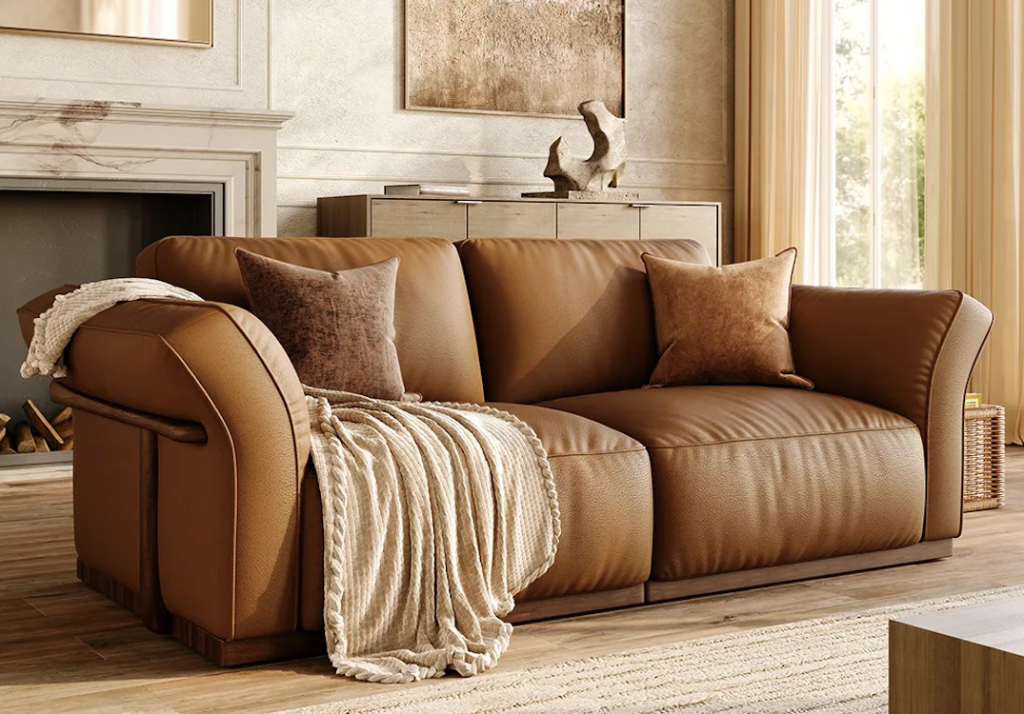
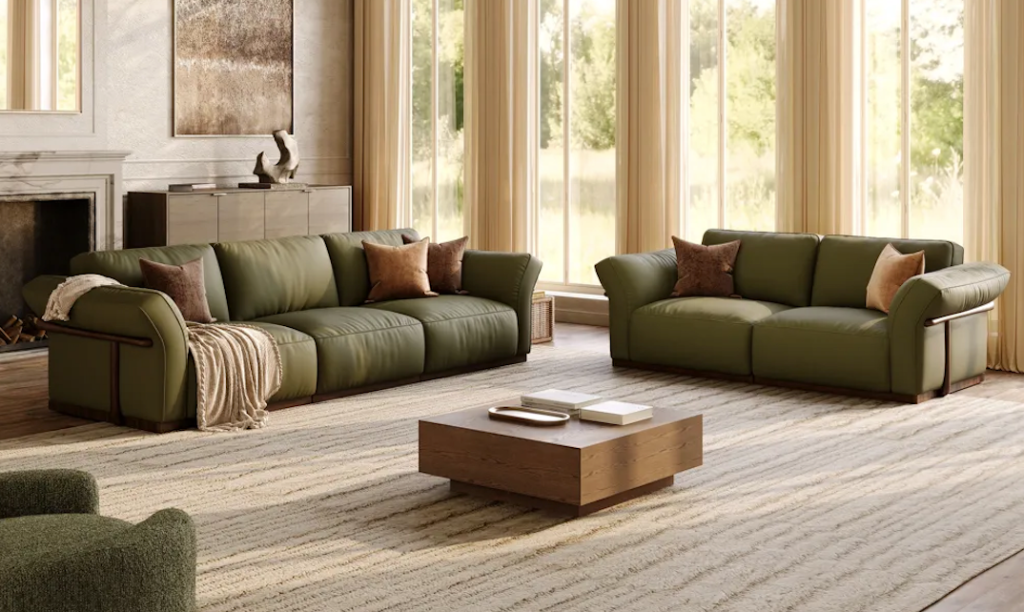
This is where leather arguably shines most. A clean-lined leather sofa in caramel, cognac, or chocolate brown reads as intentional in a way that’s hard to replicate with fabric. Mid-century modern spaces, minimalist interiors, and open-plan living rooms with wood floors — leather integrates beautifully.
The visual weight of leather also helps anchor a room. A well-built leather sofa doesn’t look like it wandered in from a college dorm. It looks like someone made a deliberate choice. That matters when your living room is also your Zoom background three days a week.
Before you fall in love with a piece in a showroom photo, tape its footprint out on your floor with painter’s tape. A 90″ leather sofa reads very differently in a 12-foot room than the styled product photo suggests. I’ve returned exactly one piece of furniture in my life that I didn’t tape-out first — the lesson stuck.
Comfort, Maintenance, and Aging Over Time
Let’s talk about the cold seat thing. Yes, leather can feel cold in the first 30 seconds of sitting down in winter. But here’s the honest version: it adjusts to your body temperature quickly — typically within a minute. Once you’re settled, it’s not cold. This is a common concern that rarely translates into a real daily problem in a climate-controlled home.
Summer stickiness is the flip side. In rooms that get very warm or humid without air conditioning, leather can feel clammy. If you’re in a hot climate and your living room doesn’t have AC, this is worth considering seriously. A throw blanket in winter solves the initial chill; there’s no equivalent easy fix for summer heat on leather if your room regularly hits 85°F+.
On maintenance, the real requirements are simpler than people expect:
- Weekly: Wipe down with a dry or slightly damp microfiber cloth. Remove surface dust and crumbs. Takes about 2 minutes.
- Monthly: Light wipe-down with a pH-balanced leather cleaner. Avoid household sprays and anything with alcohol or bleach — these strip the protective coating.
- Every 6–12 months: Condition the leather. A bottle of good conditioner costs around $15–20 and keeps the leather supple, preventing the cracking that happens when the natural oils dry out. One application takes about 15 minutes.
That’s genuinely it. The conditioning step is what most people skip, and it’s the main reason leather couches crack prematurely. Keep up with it and a top-grain leather sofa will outlast most fabric alternatives.
One thing worth flagging on the cleaner side: don’t reach for whatever spray’s under the kitchen sink. The EPA notes that many household cleaning products release VOCs into indoor air, with concentrations indoors typically 2–5x higher than outdoors. A pH-balanced leather cleaner handles the job without contributing to indoor air quality issues — and without stripping the protective coating you paid extra for.
On aging: the biggest enemy of leather isn’t daily use, it’s UV light and dry heat. Keep it out of direct afternoon sun, away from heat vents, and add a small humidifier in very dry climates. These small adjustments make a meaningful difference over a decade.
When Fabric May Be Better
I want to be upfront: this isn’t for everyone.
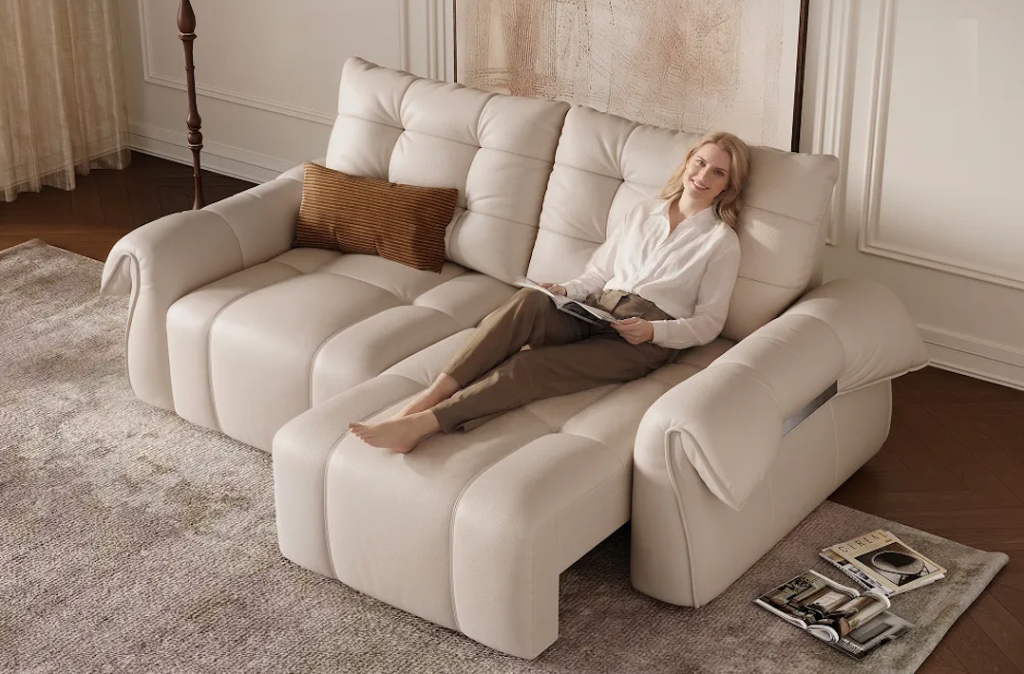
If you prioritize the feeling of wrapped-in softness over easy cleaning, fabric wins on pure comfort sensation. Performance fabrics — tightly woven polyester blends, microfiber, solution-dyed acrylics — have gotten genuinely good at resisting stains while staying soft. If you or your family members tend to curl up fully on the couch for hours, some of these fabrics feel warmer and more enveloping than leather.
Budget is also a real factor. You can find a well-built performance fabric sofa at price points that are hard to match in quality leather. The ROI calculation matters: if your budget tops out at $800, that money goes further in fabric.
And if you have cats — especially cats with intact claws and strong opinions about where they scratch — leather is a genuine risk. Unlike fabric, where scratches can be somewhat hidden by texture, leather shows punctures cleanly. Semi-aniline finishes are more vulnerable than fully protected leather. If your cat has decided the arm of the sofa is their territory, fabric with a tight weave (or a sturdy throw over their favorite spot) is the pragmatic choice.
What to Check Before Buying Online
This is where the actual decisions happen, and it’s where a lot of regret comes from. A few things I check every time:
Leather grade, explicitly stated. “Top-grain leather” should appear in the product description. If it just says “leather” or “genuine leather,” dig deeper or contact customer service. Corrected-grain leather isn’t bad, but you should know what you’re getting. The Leather Working Group — an independent industry body that audits tanneries — publishes guidance on terminology and traceability worth bookmarking if you want to verify what a brand claims.

Cushion construction. High-density foam cushions (2.0 lb/ft³ or higher) maintain their shape over years. Cheaper foam compresses into a pancake within 18 months. Look for specs, not just “high-density foam” as a marketing phrase.
Frame material. Kiln-dried hardwood frames resist warping and cracking. Metal frames are durable but can creak over time. Avoid particleboard or softwood frames — they don’t hold up under regular use.
Protective finish. Semi-aniline and protected (pigmented) leather have a light coating that makes them significantly more forgiving with everyday use. Aniline leather has no protective coating — beautiful grain and patina, but more vulnerable to staining and scratching.
Stability and anchoring. Leather sofas are heavy — typically 150–250 lbs — which actually helps stability, but the CPSC’s furniture anchoring guidance still applies if you have toddlers climbing on the back or arms. Sofas tip less often than tall storage units, but they’re not immune.
Return policy and delivery details. A leather sofa at 200 lbs is not a “leave at the curb” delivery. Check whether the price includes white-glove placement in the room, or just threshold drop. Know the return window and any restocking fees before you order. This is the single biggest source of regret I see in friends’ purchases — they fall in love online, then get stuck on a Saturday hauling 200 lbs up a stairwell with their brother-in-law.
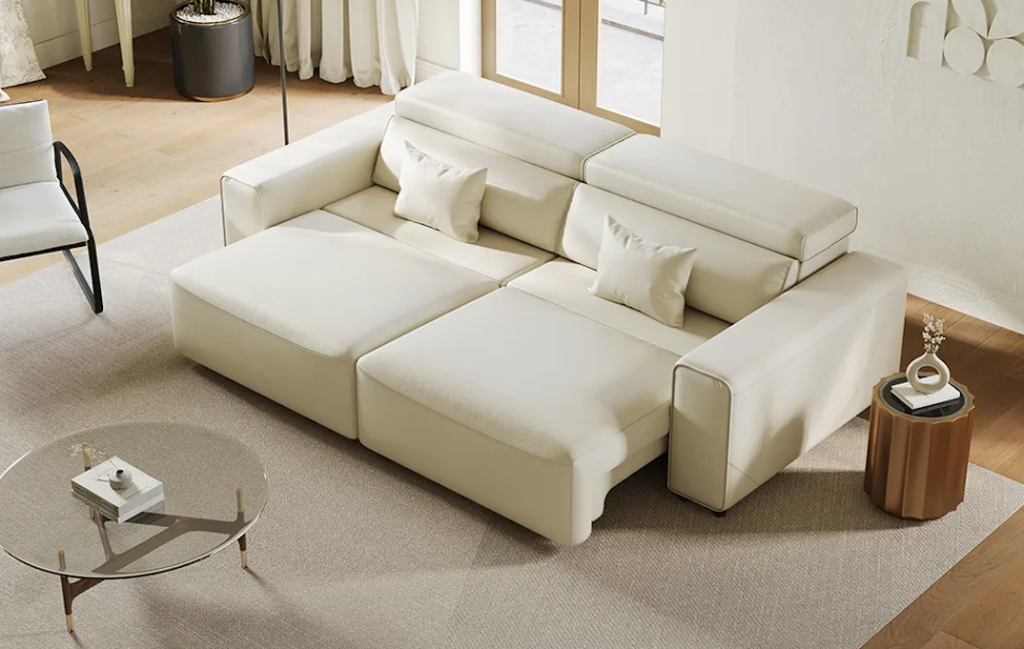
This is also where assembly quietly matters. A leather sofa with a misaligned frame doesn’t just look off — it puts uneven stress on the leather over years and accelerates wear at the seams. Pre-assembled, factory-built frames hold their geometry far better than flat-pack alternatives where you’re tightening bolts on the floor at 9pm. POVISON’s leather sofa range ships fully assembled with kiln-dried frames and white-glove delivery options on the heavier units — exactly the kind of “Ready To Live In” delivery that removes the moving-day failure mode.
FAQ
Is a leather couch good for families with kids?
A leather couch can work well for families with kids if you choose the right type. Protected or semi-aniline top-grain leather resists everyday spills and wipes clean quickly — juice, crumbs, and sticky handprints all come off easily. The honest caveat: very young kids with sharp objects or a scratching phase can mark softer aniline finishes. For busy households, choose a protected top-grain leather in a medium tone (tan, caramel, or chocolate) rather than a light cream or pure white.
Does a leather sofa get too cold or too hot?
A leather sofa adjusts to your body temperature within about a minute of sitting down, so the initial chill in winter typically isn’t a lasting issue in a heated room. In very hot, unventilated spaces — rooms that regularly reach 85°F+ — leather can feel sticky. Practically speaking, a throw blanket handles winter cold easily; summer heat is harder to solve if your room lacks air conditioning. For most climate-controlled homes, temperature is a minor concern, not a dealbreaker.
Is leather harder to maintain than fabric?
Leather is not harder to maintain than fabric once you establish a routine — and day-to-day, it’s actually easier. A damp cloth handles most spills, and pet hair doesn’t embed the way it does in fabric. The one extra step is conditioning every 6–12 months with a purpose-made leather conditioner. This prevents drying and cracking, takes about 15 minutes, and costs less than $20 per year. Skip it repeatedly and the leather will eventually dry and crack; stay consistent and it lasts decades.
What should I know before buying a leather couch online?
Before buying a leather couch online, four things matter most. First, confirm the leather grade — look for “top-grain” or “full-grain” explicitly stated, not just “genuine leather.” Second, check cushion density specs (2.0 lb/ft³ or above for long-term support). Third, verify the finish type: protected or semi-aniline finishes are much more forgiving for daily use than aniline. Fourth, check delivery method and return policy before you order — leather sofas weigh 150–250 lbs, and understanding what’s covered (white-glove delivery vs. threshold drop) saves real frustration later.
Conclusion
Here’s my honest take after years of living with furniture decisions:
A leather couch is a good choice for a lot of households — but not all of them. If easy daily cleaning is a priority, you have dogs or kids who generate messes rather than cat claws, and you’re willing to condition the leather once or twice a year, a top-grain leather sofa will likely outlast and outperform most fabric alternatives at the same price point.
If your priority is softness, warmth, or you share your home with a scratch-happy cat, a quality performance fabric is the smarter call. Neither material is objectively better — the right answer depends on how your household actually lives.
Buy for your real life, not the showroom version of it. And whichever direction you go, check the specs, ask about the grade, and don’t assume “leather” means the same thing across all price points. It doesn’t.
Related Reading:


