 By Charles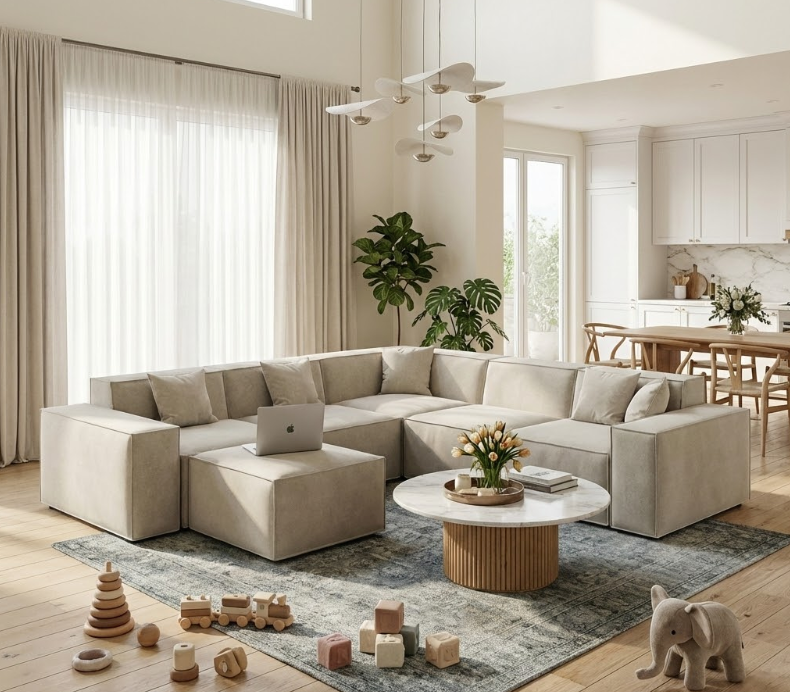
Hey fellow sofa scrollers, I’m Charles!
Let’s be real — if you’re hunting for the best modular sectional, you’re probably juggling work, kids or pets, and a living room that does triple duty. You want a sofa that can handle movie nights, pillow forts, dog zoomies, and the occasional spilled juice, without turning your weekend into an assembly project.
The good news is, modular sectionals can be your secret weapon for a flexible, “real life” living room… Trust me, you just need to know what to look for.
What Is a Modular Sectional?
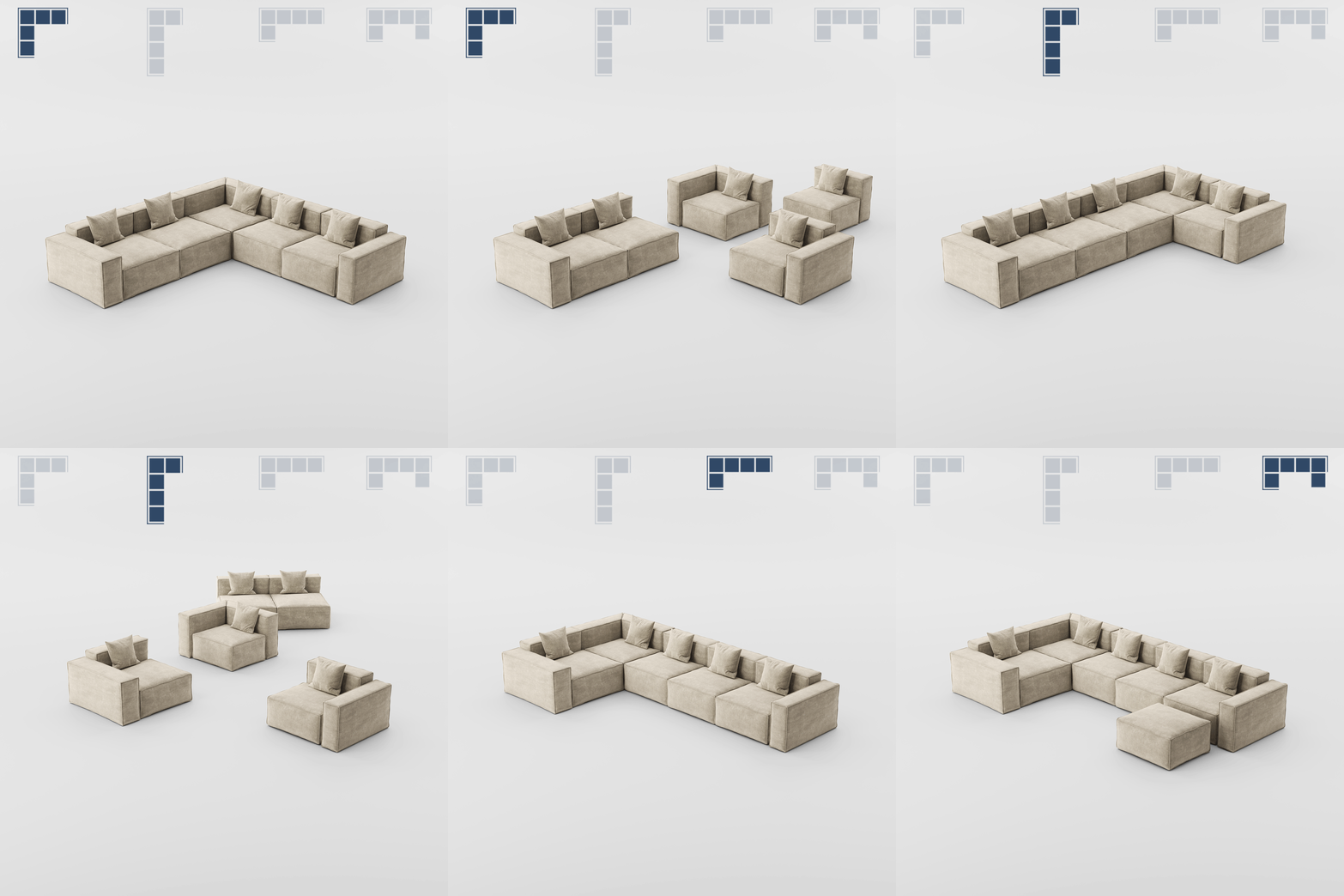
A modular sectional is a sofa made of individual pieces (modules) that you can rearrange into different shapes, L-shape, U-shape, chaise, extra ottoman, you name it. Instead of being stuck with one fixed layout, you get a living room “Lego set” that can change as your life changes.
In plain English, that means:
- You can add modules later instead of replacing the whole sofa.
- You can flip the chaise from left to right as rooms (or rentals) change.
- You can separate pieces for parties or pull one out as a lounge chair.
For busy households, the best modular sectional does three jobs at once: comfy hangout zone, flexible room divider, and emergency guest bed when someone “accidentally” falls asleep during movie night.
Modular vs Traditional Sectional
When you’re deciding between a modular and a traditional sectional, you’re really deciding between flexibility and fixed comfort. Both can be cozy, but only one keeps up when your life shifts.
Here’s how they usually compare:
Traditional sectional
Before you look at a list, know this: traditional sectionals lock you into one layout. If the chaise is wrong for your next place, you’re stuck or you’re selling.
- Layout: One fixed shape (usually an L or U)
- Moveability: Awkward to move, hard to get through doors
- Adaptability: Struggles with new rooms or moves
- Best for: Long-term homes where layout won’t change
Modular sectional
A modular design gives you more “undo” buttons. You can break it apart, spin pieces, or add one more seat when your family grows.
- Layout: Multiple shapes: add/remove modules as needed
- Moveability: Lighter individual pieces, easier through hallways
- Adaptability: Works in different homes and room sizes
- Best for: Renters, growing families, and serial rearrangers
If you move every few years, share your space with kids or pets, or just like to reconfigure the room when you get bored, a modular option almost always wins on long-term sanity.
Best Configurations
Choosing the best modular sectional isn’t just about the brand: it’s about the shape that matches how you actually live. Different setups shine in different spaces.
Apartments
In apartments and smaller homes, floor space is your most valuable asset. You want seating, but you can’t afford big “dead zones” you can’t walk through.
- Go for a compact L-shape: a 3-seat sofa plus one chaise.
- Target total width around 90″–105″ so it doesn’t dominate the room.
- Choose low-profile backs so it doesn’t block windows or sightlines.
A modular setup lets you detach the chaise later and use it as a separate lounge when you move to a bigger place.
Large Living Rooms
Big rooms are surprisingly tricky, your furniture can end up floating awkwardly in the middle. You want a layout that anchors the space and still leaves walkways.
- Look for a U-shape or a longer L-shape (over 115″ wide).
- Add an ottoman module to double as a coffee table.
- Use the sectional as a soft room divider between TV area and play zone.
The best modular sectional for large rooms usually offers at least 5–7 modules, so you can stretch it along one wall or pull pieces forward to create a cozy conversation pit.
Families with Pets
If you share your sofa with fur and sticky fingers, your configuration needs clear rules: a lounging side, a snack side, and an easy path for zoomies.
- Choose an L-shape with a chaise that becomes the “kid/dog” side.
- Keep one armrest-free module on the end so pets can hop up safely.
- Add a spare ottoman module that can take the brunt of spills and messes.
Look for washable covers, elevated legs for easy vacuuming, and at least 18″ seat depth so adults, kids, and pets can all pile in without feeling cramped.
What to Look For
To find the best modular sectional for real life, not just photo shoots, you want to zoom in on materials, comfort, and assembly. Every detail should earn its keep.
Here’s a simple checklist to keep your brain from melting while you shop:
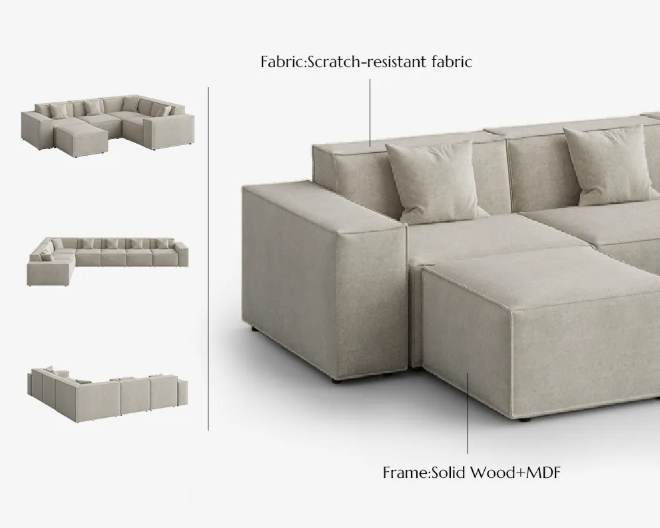
- Frame: Solid hardwood or engineered wood rated for at least 600+ lbs total. Avoid mystery materials.
- Cushions: High-density foam (1.8–2.2 lb/ft³) with a soft top layer so you don’t sink and disappear.
- Fabric: Tight-weave, stain-resistant fabric or performance polyester: look for 15,000+ double rubs on the abrasion rating.
- Covers: Removable cushion covers are a lifesaver for kids and pets.
- Connections: Metal clip or bracket system that actually locks modules together so they don’t drift apart every time someone sits down.
- Seat height & depth: Around 17–19″ high and 20–24″ deep works for most adults.
If you hate assembly, look for descriptions like “pre-assembled modules” or “tool-free.” Many of the best modular sectionals come in large, mostly built pieces where you’re just clipping units together, not building frames from scratch.
Common Problems
Even the best modular sectional can drive you a little nuts if you don’t know the usual pitfalls. Knowing them upfront helps you avoid expensive mistakes and returns.
“The pieces keep sliding apart.”
This happens when the connectors are weak or missing. Look for metal brackets that snap together, not just plastic feet. If the product photos never show the bottom hardware, that’s a red flag.
“It looked smaller online.”
Sectionals always feel bigger in real life. Double-check dimensions: measure your wall and leave at least 30″ of walkway space around the main traffic paths so you’re not sideways-walking around the chaise.
“The cushions sag after a year.”
Soft cushions feel great at first, but low-density foam breaks down fast. You want clear specs on foam density, plus a warranty of at least 1–3 years on cushions.
“My cat’s claws and my kid’s crayons ruined it.”
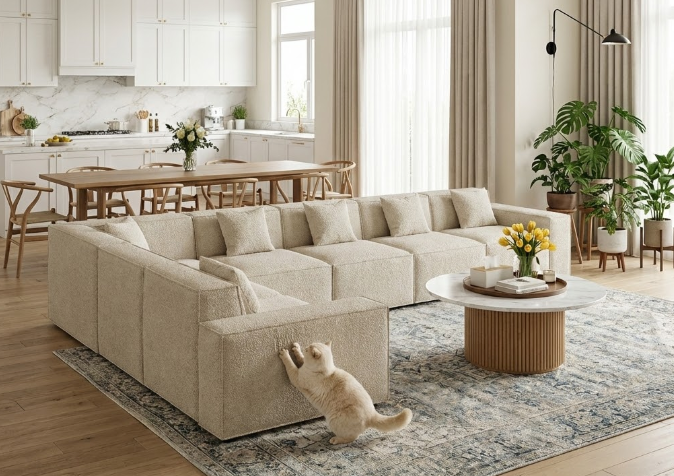
For busy homes, smooth faux leather or very loose-weave fabrics are risky. Go for tightly woven, scratch-resistant fabric in mid-tone colors that hide stains. Pattern and texture can hide a lot of sins from both paws and markers.
When you balance all this, durable materials, solid connectors, and a layout that fits real life, you end up with something close to the best modular sectional for you: a sofa that survives pets, playtime, and late-night snacks without stealing your weekends or your sanity.
To help you find that perfect fit without the guesswork, we invite you to explore the durable, life-proof modular designs we’ve curated at Povison.
Frequently Asked Questions
What makes a sofa the best modular sectional for a busy family home?
The best modular sectional for busy households offers durable materials, stain-resistant fabric, and strong metal connectors so pieces don’t drift apart. Look for high-density foam cushions, removable covers, and configurations like L- or U-shapes that can shift as your space, kids, or pets’ needs change.
How do I choose the right configuration for a modular sectional in a small apartment?
In small apartments, aim for a compact L-shape, typically a three-seat sofa plus one chaise. Keep the total width around 90″–105″ and choose low-profile backs to avoid blocking windows. A detachable chaise lets you reconfigure later as a standalone lounge in a larger home.
What should I look for when comparing modular vs traditional sectionals?
Traditional sectionals lock you into one fixed layout and are harder to move. Modular sectionals break into lighter pieces, adapt to L-, U-, and chaise setups, and handle moves or room changes better. They’re usually the smarter choice for renters, growing families, and frequent room rearrangers.
How can I stop modular sectional pieces from sliding apart?
Sliding pieces usually mean weak or missing connectors. Choose a modular sectional with sturdy metal clip or bracket systems that lock modules together instead of just plastic feet. If product images or descriptions don’t show the underside hardware, treat that as a warning sign and look for clearer specs.
How much does the best modular sectional typically cost?
Prices vary widely by size, materials, and brand, but most quality modular sectionals range from about $1,200 to $3,500. Sofas with solid hardwood frames, high-density foam, performance fabrics, and strong hardware sit at the higher end but usually offer better comfort, durability, and long-term value.


I love how you describe modular sectionals as a ‘real-life’ solution for busy households! It’s so true — having a flexible piece of furniture that can shift as your space needs change is a game-changer. I also appreciate how you touched on the fact that modular sofas can handle everything from movie nights to messy pets!