 By Charles
If you’ve ever ordered a bed, dragged the box upstairs, and then realized it swallows half your room, this bed frame size guide is for you. You want something big enough for real sleep, small enough for your space, and sturdy enough for kids, pets, and Sunday mornings.
Below, you’ll walk through how standard bed sizes compare, how to measure your room, and which frames actually survive dogs, cats, and jumping kids, without needing an engineering degree to assemble.
How Do the 6 Standard Bed Frame Sizes Compare?
When you’re short on time and sanity, you don’t want to guess on size. Choosing the right frame starts with knowing exactly how much mattress (and footprint) you’re signing up for, so you don’t end up shuffling sideways around your bed every morning.
Here’s how the six standard sizes stack up for real homes.
Standard US bed frame sizes and best-use cases
The summary below helps you match each size to your body, your room, and your family situation, so you can narrow it down before you even start shopping.
| Size | Mattress (W x L) | Ideal Room Size | Best For |
| Twin | 38″ x 75″ | 7′ x 10’+ | Kids, tight guest rooms |
| Twin XL | 38″ x 80″ | 7′ x 10’+ | Tall teens, college-style setups |
| Full | 54″ x 75″ | 10′ x 10’+ | Solo adults, small primary beds |
| Queen | 60″ x 80″ | 10′ x 12’+ | Couples, most primary bedrooms |
| King | 76″ x 80″ | 12′ x 12’+ | Couples + kid/dog drop-ins |
| California King | 72″ x 84″ | 12′ x 14’+ | Tall sleepers, long narrow rooms |
A few sanity-saving rules:
- For couples, queen is the minimum that feels comfortable long-term.
- If you share with kids or a large dog, king cuts down on elbow wars.
- In rooms smaller than 10′ x 10′, a full or queen keeps you from killing your walking space.
If you’re still torn between king and queen, measure your actual sleep. Two pillows plus 1–2 feet of buffer on each side usually feels right, especially when someone small crawls in at 3 a.m.
How Should You Measure Your Bedroom for a New Frame?
Before you fall in love with a frame online, you’ll want a quick three-step reality check: room size, clearance, and doorways. It takes five minutes with a tape measure and can save you from a return headache later.
- Measure the room (and mark it out)
Start by measuring wall to wall in feet and inches. Then:
- Mark the bed footprint on the floor with painter’s tape.
- Add 4–6 inches to length and width for the frame itself (platform and headboard overhang).
- Check that you still have at least 24–30 inches of walking space on the sides you’ll actually use.
- Check door swing and closet access
Door clearance sounds boring until your door bangs into your new bed every morning. Open bedroom and closet doors fully and make sure the taped area doesn’t cross that arc. You want:
- A clear 24-inch path to the closet.
- Enough room to open dresser drawers at least 18–20 inches.
- Don’t forget stairs and hallways
Your bed frame size guide isn’t just about floor space: it’s about getting the frame to the room in the first place. Measure:
- Hallway width (at least 30 inches is comfortable).
- Stair turns and low ceilings.
Look for knock-down or no-assembly frames that ship in smaller boxes if you have tight corners or older homes with narrow staircases. For more detailed measuring tips, check out our guide on how to measure for furniture to ensure everything fits perfectly.
Which Bed Frame Styles Maximize Bedroom Storage?

Storage-friendly frames can save you an entire dresser worth of space, especially in small rooms. The key is choosing a style that works with how you actually live, not just what looks pretty on a product page.
Platform Beds: My 6-Month Review of Drawer Space
Platform beds with built-in drawers turn dead space under the mattress into organized storage. Over about six months of normal family use, you’d notice three big wins:
First, capacity. A typical queen platform with drawers gives you 4–6 drawers. Each drawer often measures around 24–28″ wide, 18″ deep, and 6–8″ high, enough for a full set of off-season clothes or spare bedding.
Second, daily sanity. Drawers beat open bins if you have pets that love to steal socks or kids who treat under-bed space like a toy cave. Closed storage keeps dust and fur off everything.
Third, no extra boxes. The mattress sits directly on slats, so you skip the box spring and keep the overall height friendly for kids and pets.
Other smart storage styles to consider:
- Lift-up storage beds with gas lifts for bulky blankets and suitcases.
- High-leg frames (10–12″ clearance) for labeled rolling bins.
- Headboard storage with shelves for books, baby monitors, and chargers.
For a complete overview of storage options and other bedroom furniture essentials, explore our comprehensive buying guide.
Who Should NOT Buy a Low-Profile Frame?
Low-profile frames look sleek, but they’re not for everyone. You’ll want to avoid them if:
- You rely on under-bed storage for clothes, toys, or spare linens.
- Your knees or back prefer a 24-inch sitting height instead of dropping down low.
- You have pets who shed: low beds are harder to vacuum under.
Low-profile frames shine in minimalist guest rooms. For busy primary bedrooms, a higher platform or lift-up design tends to give you more storage and easier cleaning.
Solid Wood vs. Metal: Which Lasts Longer With Pets?
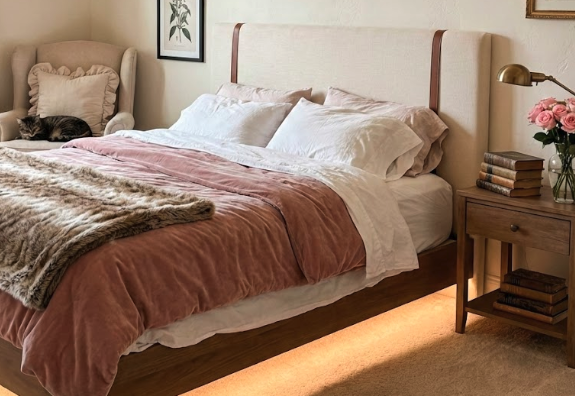
When you share your bed with pets, durability isn’t a nice-to-have, it’s mandatory. Both solid wood and metal frames can be great: the winner for you depends on claws, weight, and how often your crew treats the bed like a playground.
In general, solid hardwood handles weight and long-term stability better, while powder-coated steel shrugs off most surface abuse from claws.
Scratch Test: Oak vs. Powder-Coated Steel
If you have dogs or cats that treat furniture like a climbing wall, scratch resistance matters. Compared side by side:
- Oak: Dense hardwood: light surface scratches buff out with a bit of polish. Deep gouges need sanding but stay structurally sound.
- Powder-coated steel: Very scratch-resistant: most claw marks don’t show. When coating chips, you can see metal underneath but it doesn’t affect strength.
For large dogs with strong nails, steel legs can look better for longer. For a warmer look that still handles abuse, aim for oak, ash, or maple frames instead of soft woods like pine.
Squeak Factor: Adjusting Bolts After 90 Days
No one wants a frame that squeaks every time someone rolls over. With both wood and metal, squeaks usually come from loose hardware, not the material itself.
You can keep things quiet by:
- Re-tightening all bolts after 60–90 days as joints settle.
- Using nylon washers or felt pads at metal-to-metal contact points.
- Choosing frames with thicker side rails (at least 0.75″ wood or 1.5″ metal) to reduce flex.
If minimizing maintenance is a priority, look at solid wood platform designs with fewer metal connectors. These often need less tweaking over the years.
Is an Upholstered Headboard Safe for Cat Owners?

Upholstered headboards look soft and cozy, but if you live with a cat, you’re probably wondering if you’re just buying a giant scratching post. The good news: with the right fabric and a few small habits, you can absolutely make it work.
For most cat owners, tight-weave fabrics like performance polyester, microfiber, or commercial-grade linen blends hold up far better than loose, nubby textures.
Fabric choices that survive claws
When you choose an upholstered frame, your fabric decision is everything. You want something that’s tough, smooth, and easy to clean, so you’re not replacing it in a year.
- Performance polyester: Tight weave, snag-resistant, usually easy to spot-clean.
- Microfiber: Smooth surface: claws tend to slide rather than catch.
- Faux leather: Wipes clean: can show scratches but doesn’t shed fibers.
Skip chenille, boucle, or anything with big loops, those invite claws. Aim for removable or wipeable covers if you deal with frequent hairballs or kids’ spills.
Simple protections that actually work
You can make an upholstered headboard much safer in a cat home by:
- Placing cat trees or scratch posts within 2–3 feet of the bed.
- Using a throw blanket over the headboard area your cat loves most.
- Training with scratch pads and catnip to redirect their attention.
If you still worry, consider a hybrid approach: a wood or metal frame with a smaller upholstered panel or pillows you can replace later. You’ll get the comfort without putting your entire bed at the mercy of your cat’s claws.
Bed Frame Size Guide: Frequently Asked Questions
What is a bed frame size guide and why does it matter?
A bed frame size guide helps you compare standard bed sizes, match them to your room dimensions, and choose the right style for your lifestyle. Using a guide prevents cramped walkways, door conflicts, and storage issues, so you end up with a frame that truly fits your space and daily routine.
How do I choose between a queen and king using a bed frame size guide?
Use the bed frame size guide to compare mattress dimensions, ideal room sizes, and who’s sleeping in the bed. Queen (60″ x 80″) suits most couples and 10′ x 12’+ rooms. King (76″ x 80″) works best in 12′ x 12’+ spaces, especially if kids or big dogs regularly join you.
How should I measure my bedroom to pick the right bed frame size?
Measure wall to wall, then tape out the mattress footprint plus 4–6 inches for the frame. Check you still have 24–30 inches of walking space where you’ll actually walk. Open doors and drawers fully to confirm they clear the taped area, and consider stairways and hallways for delivery.
What is the best bed frame size and style for small bedrooms with storage needs?
In smaller rooms, full or queen frames usually preserve enough walking space. Look for storage-friendly designs like platform beds with drawers, lift-up storage beds, or high-leg frames with 10–12 inches of clearance for bins. These options can replace a dresser and keep clutter off the floor.
Do bed frames need to match the exact size of my mattress?
Yes, your bed frame should match your mattress size—twin with twin, queen with queen, etc.—for proper support and safety. A too-small frame can make the mattress overhang, while a too-large frame leaves gaps that feel unstable and can cause shifting, especially for active sleepers or kids.
So, which size wins the spot in your bedroom?
Now that you’ve got the numbers, the hard part is over. It’s time to find the frame that makes your room look like a million bucks (without the assembly nightmare).
👉 Shop Povison’s Best-Selling Bed Frames


I love how you not only explain the sizes but also talk about durability. So many bed frames look great but don’t stand up to the wear and tear of daily life. The practical tips on fitting the frame to your room size are also really helpful.