 By Jenny Smith
A luxury TV stand does more than hold a screen. It quietly organizes cables, hides chaos, and visually anchors your living room so everything else feels calmer. When you get it right, movie night, game consoles, kids’ toys and decor finally live in harmony instead of fighting for space. In this guide, we’ll unpack what truly makes a luxury TV stand different, how to spot quality in a few seconds, and how to match one to your space and lifestyle.
What Actually Counts as a “Luxury TV Stand”?
Beyond Basic Storage: How Luxury Differs from Standard
In furniture, “luxury” is less about flashy logos and more about materials, craftsmanship, and how long the piece feels good to live with. A luxury TV stand is usually pre-assembled, built from solid wood or high-grade engineered panels, and designed to stay rigid and level for years. It looks calm and intentional, even when devices pile up. That matters in a market where luxury furniture is expected to grow steadily through 2030, reaching around USD 40 billion globally (MarkNtel Advisors, 2024).
I still remember replacing a flimsy flat-pack unit with a low walnut stand and stone top. The room suddenly felt “finished”; guests commented on the stand before the giant TV sitting on it. That’s the difference: the stand becomes the visual anchor of the wall, not an afterthought.
Key Hallmarks of a Luxury TV Stand
A luxury TV stand is about proportion, performance, and feeling. You’ll see clean lines, a balanced silhouette, and smart negative space instead of random cutouts. Doors close with a soft, padded “thunk”, drawers glide without wobbling, and the base feels solid when you nudge it. Cable channels, ventilated backs and adjustable shelves quietly support real devices, not just staging photos.
Quick luxury checklist while shopping:
- Feels heavy and stable when you gently rock a corner
- Doors and drawers line up with even gaps and soft-close hardware
- Realistic materials: solid wood edges, convincing grain, no plastic “chrome”
- Built-in cable routing and ventilation, not just one big hole in the back
- Design looks calm from across the room, not busy or fussy
The Materials That Define a Luxury TV Stand
Premium Woods, Stone & Metals (and What They Signal)
Materials are the first giveaway. Solid oak, walnut, ash, or teak signal warmth, strength, and visible grain that only gets better with age. High-grade plywood with quality wood veneer can still be “luxury” when it’s thick, well-sealed, and used intelligently for stability. Stone tops in marble, sintered stone, or ceramic add weight and heat resistance, while powder-coated steel or brass details sharpen the look and protect corners. Tempered glass shelves can feel airy and premium when used sparingly and supported well.
Material comparison at a glance
| Material | Look & Feel | Durability | Maintenance | Best For Style |
| Solid wood | Warm, natural grain | Very high | Occasional oil/cleaning | Mid-century, Japandi, classic |
| Quality veneer | Consistent pattern, slim profile | High if well-made | Gentle cleaning only | Modern, minimalist, long runs |
| MDF | Smooth, uniform | Medium | Keep dry, avoid impacts | Painted, budget-friendly looks |
| Stone (marble/sintered) | Cool, luxe surface | High, heat-proof | Wipe spills quickly | Contemporary, statement TV walls |
| Glass | Light, open | Medium | Frequent fingerprinting | Minimal, airy setups |
| Metal | Sleek, structural accents | Very high | Simple wipe-down | Industrial, modern luxury |
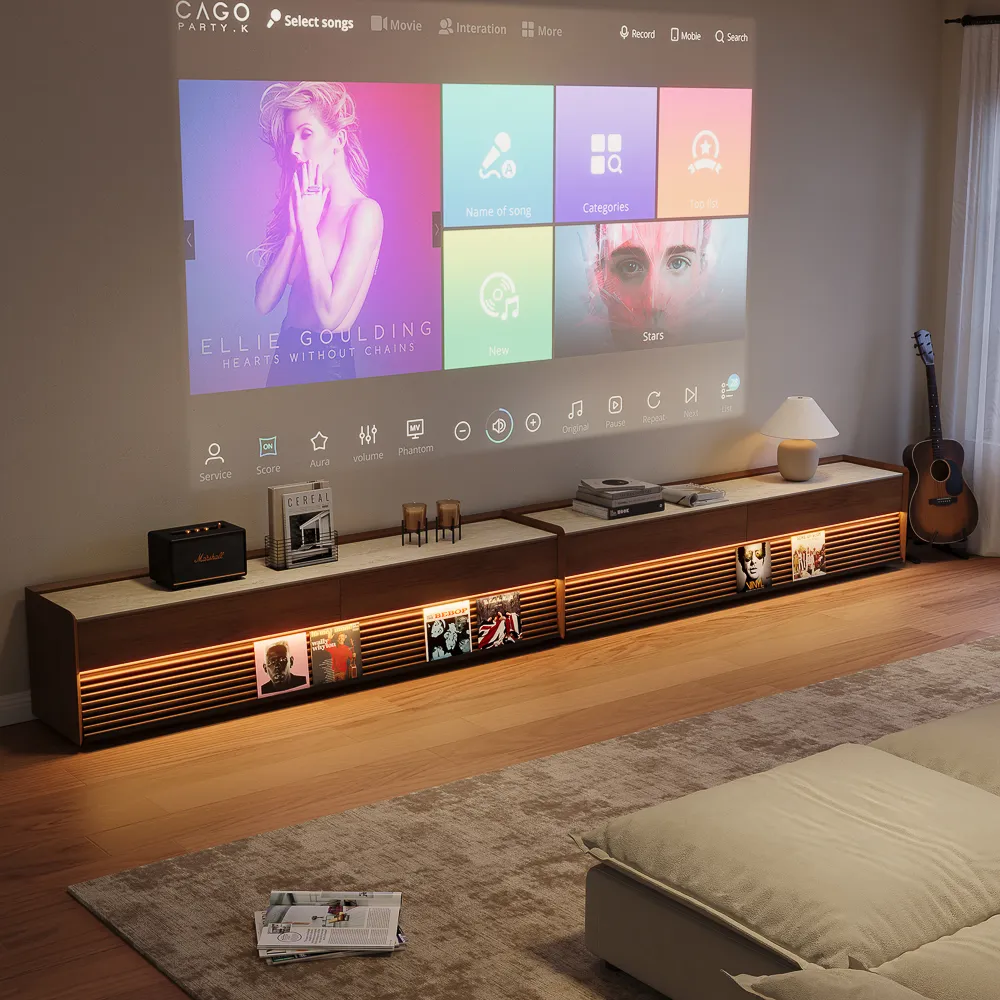
In real homes, a piece like the Ansel-70.87” Mid-Century TV Stand shows how these materials come together in a truly luxury TV stand. The warm walnut finish, fluted fronts and long, low silhouette give it that mid-century calm, while the fully-assembled plywood structure keeps it sturdy and stable. The adjustable built-in lighting quietly highlights decor or media devices, turning the TV wall into a focal point instead of just a place to park the screen.
If you want to go deeper into specific looks, bookmark Povison’s Modern TV Stand Guide for a style-by-style breakdown.
Finishes, Textures & Eco Credentials That Matter
High-quality finishes feel silky, not plasticky. Thin, water-based or low-VOC coatings let the grain show and resist yellowing; thick, high-gloss lacquers can look striking but show fingerprints quickly. Fluted fronts, ribbed doors, grasscloth wraps and subtle stone veining are textures that read as “quiet luxury,” especially in muted colors.
Modern luxury should also mean healthier air. The U.S. EPA notes that levels of certain volatile organic compounds (VOCs) average 2–5 times higher indoors than outdoors; finishes, adhesives and furniture are key contributors (U.S. EPA, 2025). Look for FSC-certified wood and clearly labeled low-VOC finishes to reduce off-gassing over time. (World Wildlife Fund)
Be cautious of very thin veneers that chip at edges, harsh chemical smells that linger after unboxing, and wobbly metal frames with visible weld blobs—those are classic signs of a “luxury look” wrapped around a non-luxury build.
Craftsmanship You Can See, Feel and Hear
Construction Details: The Hidden Signs of Quality
Craftsmanship hides in places most people never look. Peek inside a drawer: clean dovetail or dowel joints beat staples and raw screw heads. Tap the side panel; thicker walls and internal bracing should feel reassuringly solid, not hollow. Doors should hang on soft-close hinges, with handles that feel like real metal, not tinny shells.
Take a quick look at the back and underside too. A fully finished back panel, proper ventilation cut-outs, leveling feet, and anti-tip hardware tell you the maker expects this luxury TV stand to live in your home for a long time—not just long enough for a photo shoot.
Everyday Function: Drawers, Doors & Tech Integration
Once it’s in your living room, function matters more than any mood board. Drawers should pull all the way out on full-extension slides so you can reach the cables or board games at the back. Doors must swing smoothly with even gaps, no rubbing, and close with a soft click whether you push gently or a kid slams them.
Do a “15-second craftsmanship test” in the showroom: open every drawer, close every door, wiggle the top gently, then check inside for cable channels, grommets, and vents for consoles and soundbars. If anything feels gritty, misaligned, or shaky now, daily use will only magnify it. For more functional tips, you can also read Povison’s guide on how TV stands really work.
Design & Function: Matching a Luxury TV Stand to Your Space
Size, Scale & Room Layout
A simple rule: choose a stand that’s a bit wider than your TV so the screen doesn’t look like it’s teetering on the edge. Seat yourself on your main sofa and check that the center of the screen will sit close to eye level, especially for 65–75 inch TVs. Low-profile stands create a more relaxed, gallery-like vibe; taller cabinets feel more traditional and storage-forward.
Think about layout too. Align the stand with your rug and coffee table, not just the wall. In my own apartment, sliding the TV stand slightly off-center from a window and floating the sofa a few inches away from the wall instantly made the room feel bigger and more conversational. Corner setups, floating layouts, and wall-mounted TVs above the stand all still benefit from a strong, grounded base unit.
Renovation data backs up the importance of planning: nearly 3 in 5 homeowners remodeled or decorated in 2022, with a median renovation spend of $22,000 (Houzz U.S. Houzz & Home Study, 2023). When you’re investing that much, scale and layout are worth measuring twice.
Storage, Lifestyle & Style Cohesion
Start by mapping real life into the stand: media boxes, gaming consoles, modems, remote baskets, kids’ toys, candles, even extra throws. Decide what must be hidden behind doors and what you actually want to display. That will tell you how many drawers, doors and open shelves you really need. For a storage-forward approach, check out Povison’s guide to a TV stand with drawers for organized living rooms.
Then define 1–2 style words—“warm minimal,” “modern classic,” “mid-century,” etc.—and make sure the stand either matches or intentionally contrasts the rest of the room. Repeat at least one element (wood tone, metal finish, or door pattern) from your coffee table, sideboard, or shelving so the TV wall feels part of a bigger story, not its own island. For styling ideas, this tutorial on decorating a TV stand is a helpful next step.
Is a Luxury TV Stand Really Worth the Price?
If you only look at the price tag, luxury stands can feel like a splurge. But add up the hidden costs of cheaper units: hours of assembly, tools, replacement parts, sagging shelves, and the energy of repeatedly “fixing” the same messy corner of your home. A well-built, fully assembled luxury TV stand spreads its cost over many calm evenings, hosts countless movie nights, and often outlives the TV sitting on top.
Conclusion: Turning Your TV Wall into a Quiet-Luxury Statement
Your TV wall is usually the first thing people see when they walk into your living room. Choosing a luxury TV stand is about deciding what that wall says: rushed and temporary, or collected and intentional. By focusing on real materials, thoughtful craftsmanship, smart storage and the right scale, you turn “the TV area” into a quiet-luxury statement—one that supports your rituals, hides your chaos, and makes your home feel truly ready to live in.
FAQs About Luxury TV Stands
What size luxury TV stand do I need for my 55/65/75-inch TV?
As a rule of thumb, aim for a stand that’s at least 4–8 inches wider than your TV on each side. For a 55-inch TV, 60–70 inches works well; for 65 inches, think 70–80; for 75 inches, 80–90 or more. Wider stands give you breathing room for decor, speakers, and future TV upgrades.
Is solid wood always better than veneer?
Not always. Solid wood is great for warmth and longevity, but high-quality veneer on strong plywood can stay flatter and more stable across long spans. Luxury veneer work uses thick, well-matched sheets with carefully finished edges. What you want to avoid are ultra-thin veneers on weak cores—they chip easily and often hide poor construction.
How do I maintain stone or high-gloss finishes on a luxury TV stand?
Use soft microfiber cloths, mild soap, and avoid abrasive pads. For stone, wipe spills quickly and use coasters under plant pots or drinks; some stones benefit from periodic sealing. High-gloss surfaces show fingerprints, so quick weekly wipes are better than occasional scrubbing. Never use harsh solvents unless the care tag or brand specifically says they’re safe.
Can a luxury TV stand work in a small apartment?
Yes—sometimes it’s the small spaces where a luxury piece shines most. Choose a lower, visually light design with legs or a floating profile so you still see floor space underneath. Prioritize closed storage to reduce visual noise, and pick finishes that echo your flooring or doors so the stand blends into the architecture instead of chopping the room in half.
What’s the difference between custom cabinetry and a luxury ready-made TV stand?
Custom cabinetry is built for your exact wall, usually from scratch, and can integrate niches, paneling, and hidden storage—but it takes more time, coordination and budget. A luxury ready-made TV stand is faster, often fully assembled, and easier to move to a new home. Think of custom as “built-in architecture” and a high-end stand as “moveable, flexible quiet luxury.”


