 By Jenny Smith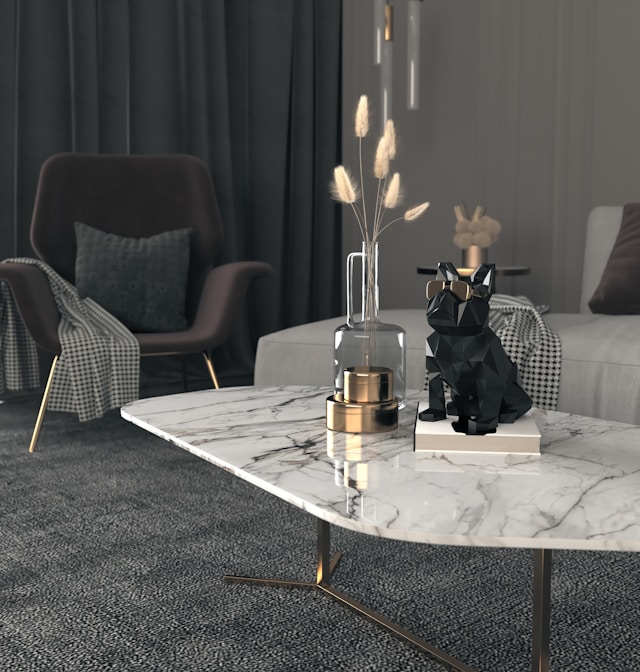
Stone coffee tables used to live only in glossy design magazines. Now a stone coffee table or stone top coffee table is just as common in a busy family room as in a minimalist loft. People want pieces that look sculptural but can handle spills, kids’ toys, and laptop days, and stone or sintered stone hits that sweet spot.
Quick Answer: Sintered stone is usually easier for daily living because it resists stains, heat, and scratches better than many natural stones. Marble and other natural stone coffee tables feel more unique and luxurious, but they need more care around spills, acids, and heavy use. For busy living rooms, compare surface durability, weight, edge shape, and cleaning habits before choosing.
Table of Contents
Why Stone Coffee Tables Are Having a Moment Again
The renewed love for stone coffee tables reflects a shift toward durable, long-lasting materials. The U.S. furniture market was valued at about USD 172 billion in 2024 and is expected to keep growing as buyers choose quality over disposable pieces.
Design-wise, stone fits today’s “soft minimalism”: plush sofas, textured rugs, and warm wood. A slim stone coffee table rectangle flatters a long sectional, while a compact stone coffee table round works in small apartments. For renters or frequent movers, simple, ready-to-style designs pair well with layout tips in Povison’s guide to why you need a coffee table for your living room.
Stone Coffee Table Materials 101
Natural Stone Tops – Marble, Travertine, Granite & More
Natural stone coffee tables are cut from quarried slabs, so every piece is unique. A marble stone coffee table has dramatic veining and a cool touch, but its pores make it prone to etching from coffee, wine, and citrus if it isn’t sealed; designers often list unsealed marble among the most high-maintenance surfaces in busy homes. Travertine feels softer and more textured, usually filled and sealed for easier cleaning. Granite is denser and more speckled, resisting heat and scratches better, which makes it a smart option for a square stone coffee table in a high-traffic room.
What Is Sintered Stone? How It’s Different from “Real” Stone
Sintered stone is an engineered surface made by compressing natural minerals under extreme heat and pressure until they fuse into an ultra-dense slab. It’s man-made but mineral-based, with a non-porous surface that resists scratches, stains, heat, and UV fading, ideal for indoor and outdoor stone coffee table designs. It is part of the fast-growing engineered stone market, projected to reach about USD 36.8 billion by 2030 (Grand View Research, 2023).
Sintered Stone vs Marble & Glass: Pros, Cons & Best Uses
Durability, Staining & Maintenance Compared
Here’s how a sintered stone coffee table stacks up against marble and glass in everyday life:
| Feature | Sintered Stone | Marble | Glass |
| Scratch resistance | Very high; knife-hard | Medium; can scratch and etch | Medium; can scratch or chip |
| Stain resistance | Excellent; ultra-low porosity | Low without sealing; stains fast | High, but shows fingerprints/smudges |
| Heat resistance | Excellent | Good, but acids can mark surface | Depends on thickness and quality |
| Daily maintenance | Simple wipe-down | Needs coasters + mild cleaners | Frequent cleaning to look clear |
| Long-term aging | Looks almost unchanged | Develops patina over time | Clear but reveals every smudge |
Style, Feeling & Price: When Each Material Shines
A sintered stone coffee table works best in high-traffic living rooms, rentals, or open-plan spaces where you host often. Think of a pale, ultra-matte oval stone coffee table that shrugs off kids’ markers and Friday-night snacks. Marble, on the other hand, is for people who love the romance of natural veining and don’t mind a lived-in patina; it’s beautiful in a formal seating area or a reading corner where you always use coasters.
Glass remains a great choice if your room is small and you want something visually light, though it can highlight clutter underneath. If you lean mid-century or love sculptural silhouettes, Povison’s guide to mid-century modern coffee tables is a helpful companion when pairing stone tops with tapered wood legs or slim metal bases.
Who Should Choose a Stone Coffee Table?
Start with how you actually live. If your coffee table is a “workhorse” for daily meals, kids’ homework and weekend guests, a sintered stone coffee table is ideal: it shrugs off spills, heat and toy cars, and works especially well in open-plan living rooms where everything happens in one spot. If you host friends often and don’t want to worry about rings from red wine or espresso, this is the most low-stress option.
If you see your coffee table more as a statement piece than a daily tray for snacks, a marble or travertine stone top coffee table suits you better. Think grown-up living rooms, reading corners or media rooms where you use coasters and wipe spills quickly. Small space with kids or pets and narrow walkways? A round or oval stone coffee table with a lighter-looking base can soften bumps and keep the room feeling open. If you move frequently or like to rearrange often, consider keeping the heavy full-stone designs for patios or permanent seating areas and choose stone tops on lighter wood or metal bases indoors.
How to Choose the Right Stone Top Coffee Table for Your Space
Size, Shape & Layout Rules That Actually Work
A few practical rules make sizing much easier:
- Leave around 16–18 inches (about 40–45 cm) between your sofa edge and the table so you can walk and sit comfortably.
- Aim for a table height that’s roughly level with your seat cushion, give or take 2 inches.
- For length, many designers like a stone coffee table rectangle that’s about half to two-thirds the length of your main sofa.
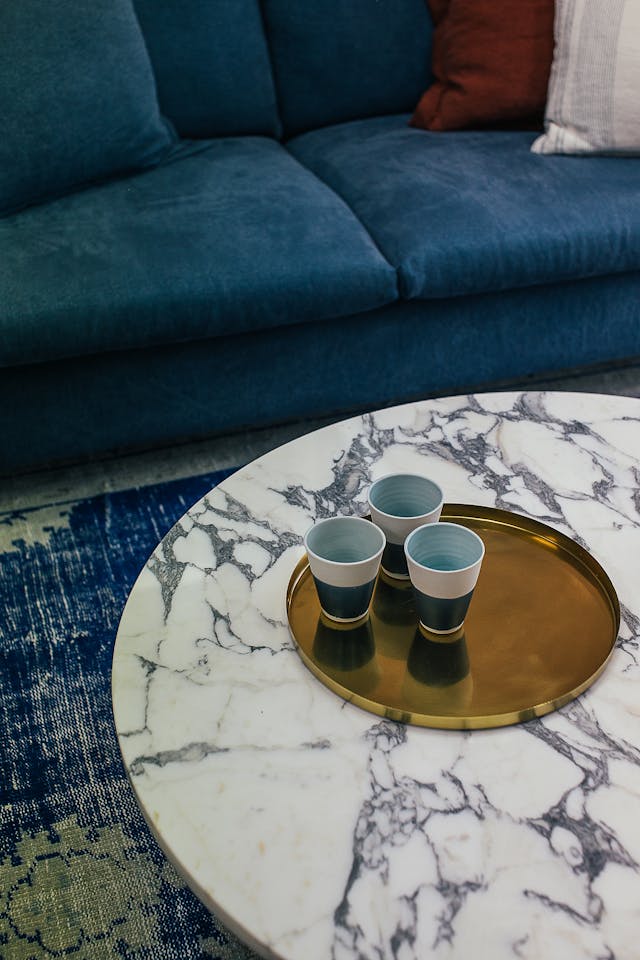
Rectangular pieces suit long sectionals; a round stone coffee table or stone coffee table round softens compact living rooms and play-friendly spaces. Organic “blob” shapes and square stone coffee tables work well between sofas and accent chairs. For more measurement tips, Povison’s coffee table size guide is a handy next read.
Color, Finish & Base Materials for a Cohesive Look
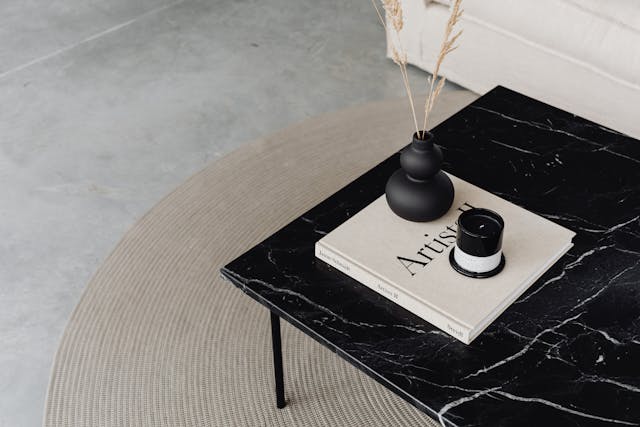
Think about contrast first. A white stone coffee table pops on dark floors or a deep charcoal sofa, while a black stone coffee table anchors pale rugs and cream upholstery. Beige or greige stone blends quietly into neutrals, ideal if you prefer your art or lighting to be the star. A wood and stone coffee table—say, a sintered stone top over warm walnut—adds balance if your room already has lots of metal or glass.
Finish also matters: polished stone reflects light and feels glamorous but can show fingerprints; honed or matte finishes look softer and hide everyday smudges. Textured tops pair nicely with slim metal bases for a contemporary look, while full stone block designs feel heavier both visually and physically. If you’re building a cohesive living room set with a TV stand, console, and side tables, Povison’s articles on coffee tables with storage and sintered stone dining tables show how repeating stone colors across rooms can make everything feel intentionally “curated.”
Care, Cleaning & Long-Term Maintenance
Day to day, caring for a stone coffee table is easier than most people expect. For both natural and sintered stone, wipe spills quickly with a soft cloth and mild, pH-neutral cleaner; avoid harsh acids or abrasive pads. Marble, travertine, and limestone should be sealed on a regular schedule recommended by your fabricator, especially if you often serve coffee or wine.
Sintered stone is lower-maintenance: its near-zero porosity means most stains sit on the surface rather than soaking in, so a simple wipe usually does the job. For stone outdoor coffee tables, check that the material is rated for exterior use and re-seal natural stone more often, since sun, rain, and temperature swings are harsher outside. Whatever you choose, felt pads under trays and accessories help prevent micro-scratches and keep your stone looking new longer. On my own sintered stone top, I’ve stopped panicking about wine or coffee rings—most evenings it’s just a quick cloth wipe and the surface looks brand new again.
Conclusion
Choosing between natural stone, sintered stone, and glass isn’t just a style decision—it’s about how you actually live. A stone coffee table can be a quiet sculpture, a hardworking landing spot for everything, or both at once. Sintered stone offers near-bulletproof performance, while marble and travertine reward you with organic beauty and character if you’re okay with patina. By matching material, shape, and color to your lifestyle, you get a stone top coffee table that feels timeless today and still makes sense years from now.
FAQs About Stone & Sintered Stone Coffee Tables
Do Stone Top Coffee Tables Stain Easily?
It depends on the material. Sintered stone is extremely stain resistant because of its ultra-low porosity, so coffee, wine, and oils usually wipe away without a trace. Marble and travertine are more absorbent and can stain or etch if spills sit too long, which is why sealing and quick cleanup matter. Coasters, trays, and a yearly reseal schedule go a long way.
Is Sintered Stone Worth the Upgrade Over Marble or Glass?
For busy, family-focused or entertaining-heavy homes, yes—sintered stone’s scratch, heat, and stain resistance make daily life noticeably easier. Marble is still unbeatable if you love authentic veining and don’t mind some patina as memories build up. Glass wins if you want a visually light, budget-friendly table and don’t mind wiping fingerprints more often.
Can I Put Hot Mugs Directly on a Stone Coffee Table?
Sintered stone shrugs off typical beverage heat with no problem, and granite is similarly resilient. Marble and travertine handle warmth but can be etched by very hot items or repeated thermal shock over time. To be safe—and to protect any sealant—use coasters for boiling-hot mugs or teapots, especially on polished natural stone.
How Do I Style a Stone Coffee Table Without Scratching It?
Layer soft materials between décor and the surface. Felt or cork pads under trays, books, and vases prevent micro-scratches, while woven baskets or fabric-lined boxes keep remotes and chargers contained. On a black stone coffee table, a light linen runner can soften the look; on a white stone coffee table, darker trays and candles create contrast without compromising the finish.


