 By Jenny Smith
A quality couch bed subtly serves two purposes: it grounds your living area during the day and becomes a cozy place to sleep at night. In order to choose the best one, you must be aware of the many kinds, take accurate measurements of your room, and give comfort the same consideration as you would with a standard mattress. You can purchase with confidence because this guide guides you through each step.
What Is a Sofa Bed & Is It Right for Your Living Room?
What Is a Sofa Bed?
A sofa bed is a seat-by-day, sleep-by-night piece of furniture that converts from a sofa into a mattress. The most common types are pull-out sofa beds with a foldable mattress, click-clack designs where the back folds flat, futons with a single cushion that becomes the bed, sectional sofa beds with a hidden sleeper in a chaise, and daybeds with a trundle that pulls out from underneath. All are designed to save space without sacrificing basic comfort.
Pros & Cons of a Sofa Bed vs a Regular Sofa
Compared with a regular sofa, a sofa bed gives you instant flexibility: a built-in guest bed for overnight visitors, a solution for studio apartments, or a backup sleeping spot when someone is sick. The trade-offs are extra weight, a slightly firmer sit in many models, and often a higher price. Very cheap sofa beds can feel thin and bouncy when open, so if you want guests to actually sleep well, quality matters more than with a standard couch.
Who Actually Needs a Sofa Bed?
If you live in a small apartment where the living room serves as a bedroom, have overnight guests but don’t have a separate guest room, or need a flexible family room for movie nights and sleepovers, a sofa bed will be very helpful. Classic sofa-bed households include young professionals in studios, couples in one-bedroom apartments, and families who frequently host parents or friends. The convenience of having an extra bed is difficult to match if it is used even a few times a year.
Measure Your Space Like a Pro Before You Shop
The Two Sets of Measurements You MUST Take
Get a tape measure before you fall in love with any sofa bed. Measure the sofa’s width (side to side), depth (front to back), and height when it is closed, particularly if it will be positioned beneath wall shelves or windowsills. Next, measure the open footprint, which includes the length of the bed when it is completely extended and a minimum of 24 to 30 inches of space at the foot and sides. This guarantees that visitors may enter and exit without having to climb over furniture.
Planning Traffic Flow in the Living Room
Consider the natural flow of people through your living room. You still want a clear passage for people to travel from the hallway to the kitchen or bathroom when the couch bed is open. In limited spaces, position the couch bed against the longest wall and allow it to open to a space where a coffee table can be moved aside. The sofa bed should be positioned in the middle of medium-sized and big rooms, with walkways free along the sides, and the bed opening toward a rug.
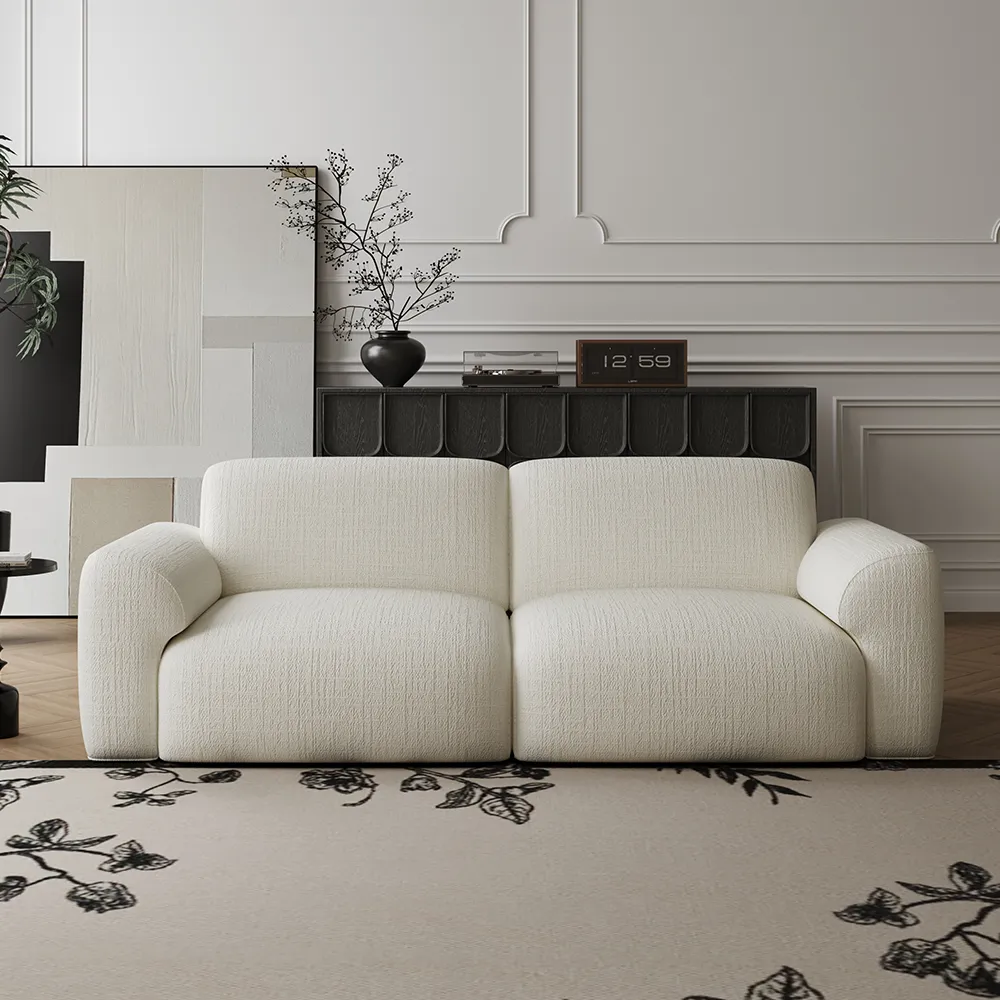
For a living room that shifts between everyday seating and occasional guest use, the Mila Power Sofa Bed makes traffic planning more flexible because each side operates independently. One side can extend into a chaise while the other stays seated, but opening both sides increases the usable depth from 32 to 59 inches. Measure that fully extended footprint before fixing the coffee table or main walkway.
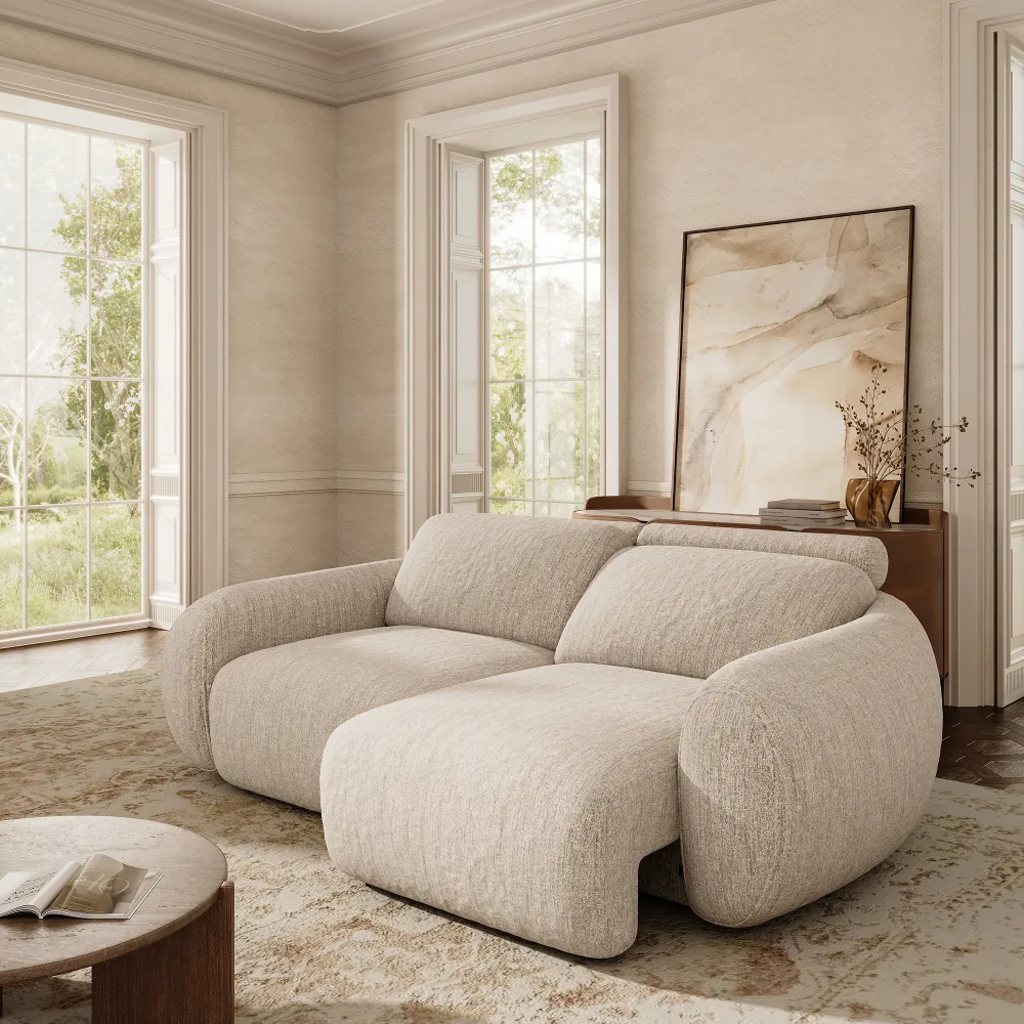
POVISON Mila Power Sofa Bed
Power sofa bed for flexible living rooms, combining everyday seating, adjustable lounging, and guest-ready sleep without a separate pull-out mattress.
Key Factors to Choose the Best Sofa Bed (Comfort + Function)
Size: Twin, Full, or Queen?
Choose the size based on who will actually sleep on the sofa bed and how big your living room is. A twin works for one child or a smaller adult and suits very compact spaces. A full is the most versatile for occasional guests. A queen offers the most comfort for two adults but needs more open floor space to extend. If your living room is narrow, a full-size mattress in a slim frame often feels like the best compromise.
| Sofa bed size | Standard mattress dimensions* | Sleeps comfortably | Best for | Recommended minimum room size* |
| Twin | 38″ x 75″ | 1 child or smaller adult | Very small living rooms, studio corners, home offices | About 7′ x 10′ |
| Full / Double | 54″ x 75″ | 1 adult (or 2 for a short stay) | Compact living rooms that host guests occasionally | About 9.5′ x 10.5′ |
| Queen | 60″ x 80″ | 2 adults | Main living rooms that double as a guest room | About 10′ x 10′ |
Frame & Mechanism
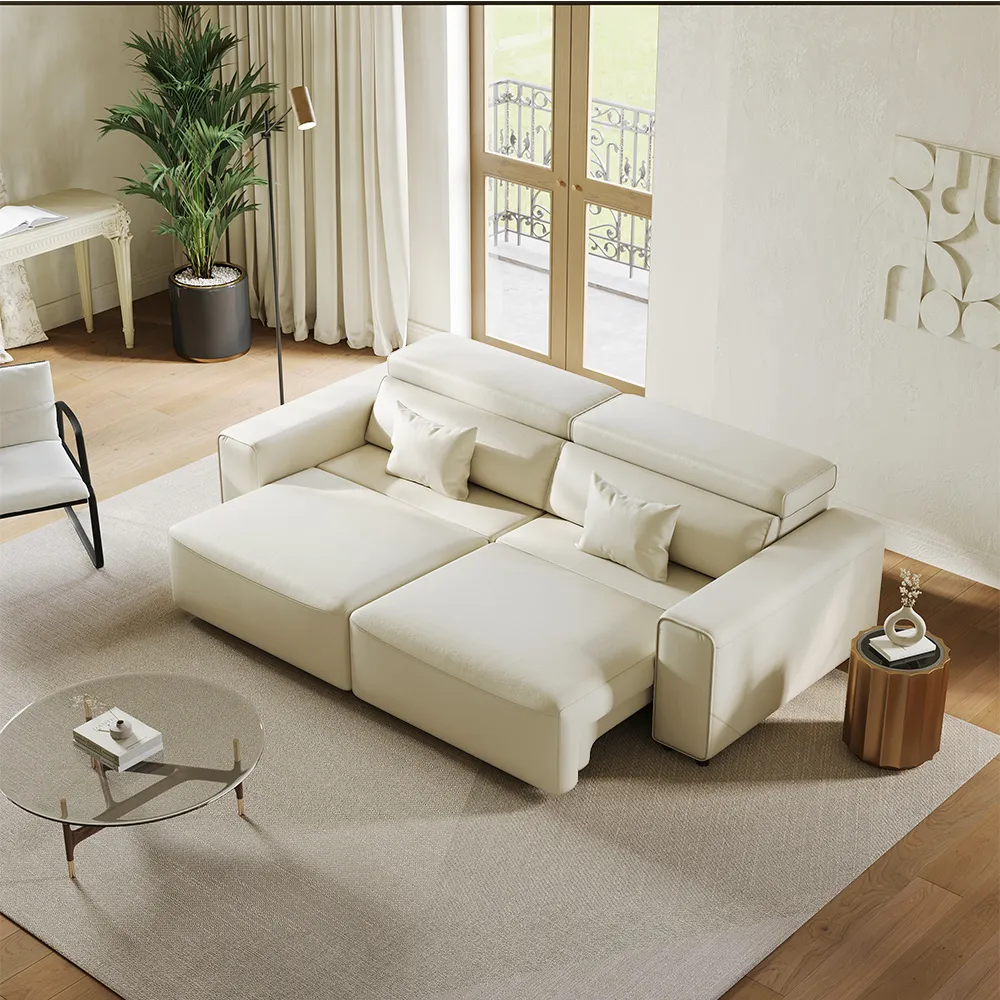
Examine how smoothly the mechanism opens and closes, and look for a strong metal or wooden frame. Pull-out systems should lock firmly into position and glide with little effort. When flat, click-clack designs should feel steady and unwavering. If the mechanism isn’t easy enough for one person to turn the sofa into a bed in less than a minute, you’ll hate using it. A fully assembled sofa bed like Povison’s is definitely satisfying.
Mattress Types & Comfort Levels
Sofa beds come with different mattress constructions: innerspring for a more familiar bounce, memory foam for pressure relief, hybrid for a mix of both, and air-over-coil styles that allow some adjustability. Thickness matters: aim for at least 4–5 inches for occasional guests and thicker if someone will sleep on it often. Comfort isn’t a luxury here—93% of people say a comfortable mattress is important for good sleep (source: National Sleep Foundation)
Upholstery & Materials
Your living room lifestyle should drive your fabric choice. For kids, pets, and high-traffic spaces, performance fabrics with stain resistance or tightly woven synthetic blends are practical. Leather and high-quality faux leather wipe clean easily but can feel cooler to the touch. Linen or cotton blends look relaxed and airy but may stain more quickly. If sustainability matters to you, look for FSC-certified wood frames and low-VOC finishes that reduce indoor emissions and are kinder to your home environment.
Comfort First: How to Judge If a Sofa Bed Is Actually Comfortable
Comfort for Sitting vs Sleeping (And Why Both Matter)
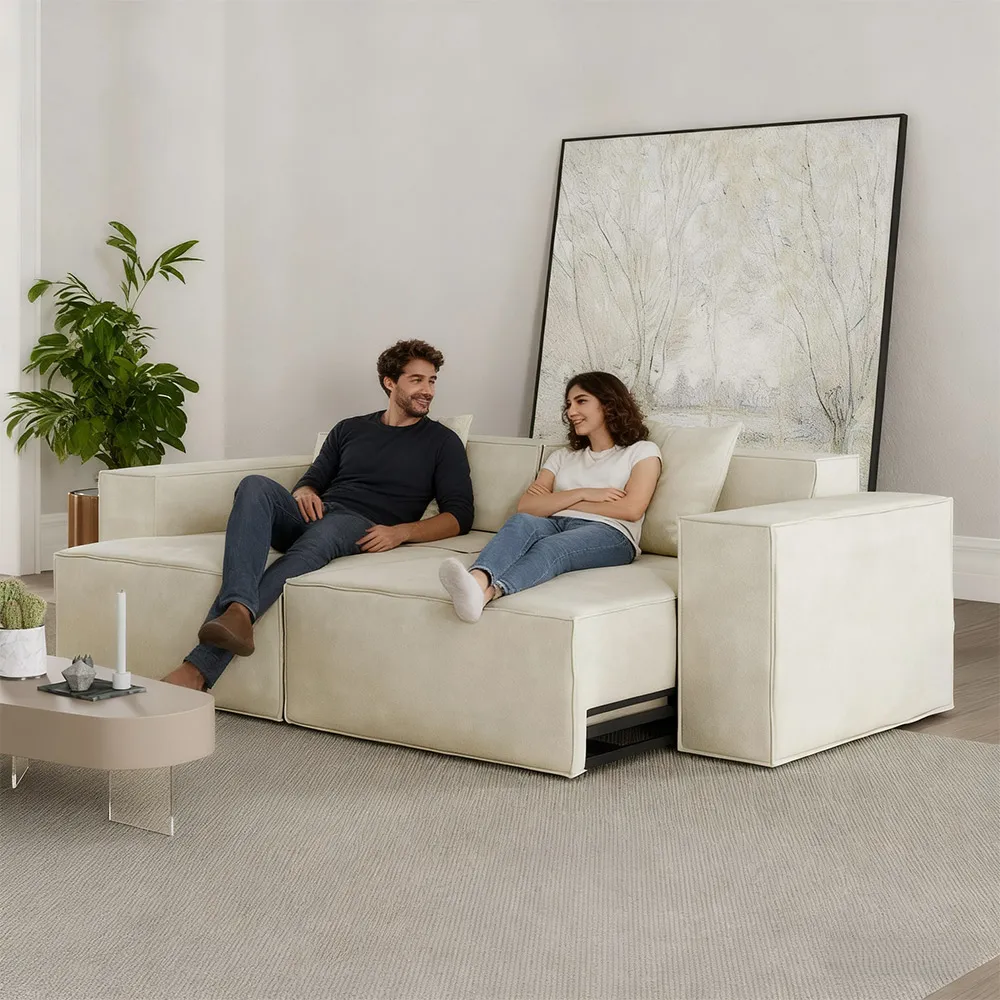
A sofa bed has to feel good in two modes. When it’s a sofa, check the seat depth and height: your feet should rest flat on the floor and your back should feel supported without slouching. When it’s a bed, lie down in your normal sleeping position and notice whether your shoulders and hips are supported or sinking into bars and gaps. The best sofa beds feel like a decent couch and a decent guest mattress—not perfect, but genuinely restful. The best sofa beds feel like a decent couch and a decent guest mattress—not perfect, but genuinely restful. If you want to go even deeper into evaluating comfort specifically, check out our guide to how to find the most comfortable sleeper sofa for your room.
A Simple Comfort Checklist in the Store or at Home
Use this quick 10-point comfort test when evaluating a sofa bed:
- Open and close the mechanism yourself at least twice.
- Check that nothing scrapes the floor.
- Lie down in your usual sleeping position.
- Roll from side to side to spot pressure points.
- Sit on the edge of the open bed to test support.
- Listen for squeaks or metal noises.
- Check that the mattress doesn’t sag in the middle.
- Sit on the sofa as you normally would to test seat comfort.
- Make sure there’s enough room to walk around when open.
- Ask yourself honestly: would I sleep here for two nights in a row?
How to Make a Sofa Bed More Comfortable (Before & After You Buy)
Easy Upgrades for Better Sleep
Start with the sleep surface if you’re wondering how to improve the comfort of a couch bed. A basic mattress can be transformed with a high-quality mattress topper, such as memory foam for contouring, latex for buoyant support, or a featherbed for cloud-like softness. Include a breathable mattress pad for hygienic purposes and padding, particularly if it will be used by several visitors. Lastly, make an investment in pillows that fit your sleeping type; side sleepers typically want bigger pillows, whilst back and stomach sleepers require flatter ones. In my own one-bedroom apartment, adding a 2-inch memory foam topper and switching to breathable cotton sheets turned a basic sofa bed from “just okay” into the spot my guests actually request to sleep on. Now I always recommend budgeting for these upgrades from day one.
Bedding Tricks That Make a Big Difference
The right bedding setup can make even a modest sofa bed feel more like a real bed. Use a fitted sheet that matches the mattress depth so it doesn’t pop off when the bed folds back up. Layer a lightweight blanket and a warmer quilt so guests can adjust their temperature easily. Store a dedicated “guest bedding kit” in a nearby ottoman or cabinet so making the bed takes minutes, not a stressful hunt for spare linens.
Style Guide: Matching Your Sofa Bed to Your Living Room
Choose a Style That Fits Your Home
Instead of being an emergency backup, your couch bed could be a style decision. Choose basic legs in light wood or metal, low arms, and clean lines for modern or minimalist environments. Slim arms and tapering legs go nicely with mid-century and Scandinavian styles. While intimate and informal settings make excellent use of overstuffed couches and textured textiles, traditional rooms can accommodate curled arms and soft cushions. To make it blend in organically, match the general silhouette to existing pieces.
Color & Fabric by Lifestyle
Your living room’s aesthetic is greatly influenced by color. While deeper tones feel more forgiving and grounded, lighter hues make a small space appear larger yet rapidly reveal stains. Consider earthy greens, taupes, or mid-tone grays that conceal daily wear if you have children or pets. Fabrics that are easy to clean or resistant to stains are worth the investment. If you’re a big fan of vivid colors, keep the couch bed neutral and add some individuality with easily interchangeable cushions, throws, and artwork.
Design Tricks to Make a Sofa Bed Look Like a Design Choice
Make your sofa bed the focal point of a chic seating room. Choose lighting that gives the room a sense of purpose rather than transience, add side tables for symmetry, and anchor it with a rug that goes beyond the sofa on all sides. To add softness and cover up any “sleeper sofa” lines, layer cushions and throws. These straightforward style techniques are frequently what cause visitors to forget that a couch bed exists at all in a before-and-after living room makeover.
Materials, Safety & Sustainability Details You Shouldn’t Ignore
Consider the material of your couch bed in addition to its comfort and elegance. Instead of weak particleboard, look for frames made of solid wood or premium engineered wood. To lower indoor chemical emissions, look for safety labels that attest to the foams’ compliance with fire safety regulations and, whenever feasible, select low-VOC or CertiPUR-US certified foams. FSC-certified timber and non-toxic coatings demonstrate that the producer takes sustainability seriously rather than merely using it as a catchphrase if eco-friendliness is a top concern.
Conclusion
The ideal couch bed for your living room is one that complements your taste, fits your area, and really promotes restful sleep. Plan a basic comfort upgrade kit with toppers and quality bedding, measure attentively, and give high priority to a sturdy mechanism and supportive mattress. Both your future self and your guests will notice the difference when you treat your couch bed like a real bed and an essential piece of seating. When you’re ready to start comparing specific models, take a look at our roundup of the best sleeper sofa to choose in 2025.
FAQs About Sofa Beds
Is a Sofa Bed Good for Everyday Sleeping?
A high-quality sofa bed with a supportive mattress can work for everyday sleeping, especially in small apartments or studio spaces. However, many budget models are better suited to guests only. If someone will sleep on it nightly, prioritize a thicker mattress, robust frame, and consider adding a quality topper to reduce long-term pressure on joints and back.
Can I Use a Regular Mattress on a Sofa Bed?
Most sofa bed mechanisms are designed for thinner, flexible mattresses that can fold without damage. A regular mattress is often too thick and rigid, which can strain the frame, prevent the bed from closing properly, or damage the hinges over time. If the original mattress wears out, look for a replacement labeled specifically for sofa beds with the correct thickness and dimensions.
How Can I Make My Sofa Bed More Comfortable Without Replacing It?
Start with a good mattress topper that adds both support and cushioning, then add a breathable mattress pad for extra softness and hygiene. Use fitted sheets that actually match the mattress depth so they stay put overnight. Finally, upgrade pillows and blankets, and keep everything stored nearby so setting up the sofa bed feels easy instead of like a chore.
What Size Sofa Bed Is Best for a Small Living Room?
In a small living room, a full-size sofa bed usually offers the best balance. It’s big enough for most adults to sleep comfortably but doesn’t demand as much floor space as a queen when opened. Pair it with a slimmer arm design and a small, easy-to-move coffee table or nesting tables to keep walkways clear when the bed is in use.
Do Sofa Beds Break Easily?
A quality sofa bed from a reputable brand should not break easily, but cheaper models can suffer from flimsy frames and weak mechanisms. To gauge durability, check the weight capacity, look for solid wood or metal construction, and test the mechanism several times. Reading customer reviews that mention long-term use can also give you clues about how well the sofa bed holds up over years.


