 By Stephanie

A futon couch vs sofa comparison is about more than whether your furniture can turn into a bed. A futon provides seating and sleeping space in one piece, while a regular sofa is designed primarily for sitting. The better choice depends on how many people use your living room, what happens when someone needs to lie down, and whether an extra bed is worth the changes it brings to your layout. This guide compares both options through everyday household activities, practical space calculations, and buying decisions that go beyond basic features.
Table of Contents
What Is the Difference Between a Futon Couch and a Sofa?
The main difference between a futon and a sofa is that a futon converts its existing mattress or upholstered cushions into a sleeping surface, while a standard stationary sofa has no built-in bed conversion.
The terms sofa and couch are generally interchangeable in modern American English. For this futon vs couch comparison, we’re focusing on Western-style convertible futons and regular, non-convertible sofas.
| Feature | Futon Couch | Regular Sofa |
| Primary function | Seating and sleeping | Dedicated seating |
| Construction | Folding frame or convertible cushions | Fixed seating structure |
| Sitting comfort | Depends on mattress and frame design | Cushions designed primarily for sitting |
| Sleeping function | Converts into a sleeping surface | No dedicated bed conversion |
| Shared seating | May change or disappear during conversion | Seating layout remains consistent |
| Floor space | Varies between sitting and sleeping positions | Fixed footprint |
| Durability | Depends on frame, hinges, and cushioning | Depends on frame and cushion construction |
| Price | Often lower entry-level cost | Broad price range |
| Appearance | Exposed-frame or fully upholstered designs | Wide range of living room styles |
Neither design guarantees better quality. Compare individual models rather than assuming that every futon is less comfortable or less durable than a regular sofa.
Can a Futon Replace Your Main Living Room Sofa?
A futon can replace a regular sofa, but its suitability depends on what happens around it throughout the day. In a shared living room, the challenge is not simply whether the furniture feels comfortable. It is whether one person’s activity changes how everyone else can use the seating area.
Everyday Seating and Socializing
Start by counting how many seats your household needs when the living room is busiest, rather than how many people use it on an average afternoon.
A family of three that occasionally hosts two friends needs five seating places during those visits. A three-seat futon and a three-seat sofa may meet the same requirement when paired with two accent chairs. However, if the futon is partially or fully converted, that seating arrangement may no longer work.
Check whether your room has enough alternative seating before choosing a convertible couch as its main piece of furniture. Once the seating arrangement works, evaluate futon comfort for everyday sitting and sleeping separately.
Lounging Without Taking Over the Entire Couch
Lounging can use seating space in two different directions. Stretching out sideways takes up more of the couch’s width, while extending your legs forward uses additional floor depth.
On a three-seat sofa, someone lying sideways may occupy two or even all three seats. A full-width folding futon may also change the seating position for everyone when its backrest is lowered.
A split-back futon can help preserve an upright seat, but check whether the adjustment also provides enough legroom. If you regularly need two upright seats while another person rests, look for a design that supports forward lounging rather than relying entirely on additional sofa width.

Overnight Guests and Shared Seating
Before choosing a futon for overnight guests, consider whether your living room can function as a bedroom without disrupting anyone’s routine. In an open-plan apartment, a guest sleeping on a futon may have little privacy when someone prepares breakfast early or watches TV late at night.
A futon makes more sense if the living room can remain undisturbed during sleeping hours. If household members keep different schedules, a regular sofa paired with a separate guest sleeping arrangement may be more practical.
Does a Futon Actually Save More Space Than a Sofa?
A futon may occupy less floor space when closed, but that advantage matters only if the space remains useful throughout the day. Compare both furniture types within the same room layout, keeping the coffee table, walking route, and other furniture consistent. This reveals how much usable space each option actually provides.
Suppose you have 108 inches of available room depth, an 18-inch-deep coffee table, and a preferred 16-inch gap between the seating and the table. You’re comparing a 38-inch-deep sofa with a futon that measures 34 inches when closed and 52 inches when opened forward.
| Layout Measurement | Regular Sofa | Futon Closed | Futon Open |
| Furniture depth | 38″ | 34″ | 52″ |
| Gap before coffee table | 16″ | 16″ | 16″ |
| Coffee table depth | 18″ | 18″ | 18″ |
| Remaining passage | 36″ | 40″ | 22″ |
These dimensions are illustrative rather than standard furniture measurements.
The futon gains four inches of walking space during the day. However, maintaining the same coffee table gap when it opens would reduce the passage to just 22 inches. Removing the table would free up more space, but that requires somewhere to store it.
When planning living room furniture around everyday activities, check whether the extra daytime space is worth that temporary restriction.
If the futon opens only when guests visit, moving the table may be manageable. If you expect to adjust your seating every evening, a layout that remains usable without repeated furniture rearrangement deserves greater consideration.

Which Should You Buy Based on How You Use Your Couch?
Rather than comparing two pieces of furniture in isolation, compare the complete setup your household would need with each option. A less expensive futon may require additional seating, while a regular sofa may leave you needing a separate guest bed. The more practical purchase is the one that meets your needs with fewer unnecessary additions.
| Your Household Needs | What to Consider Buying |
| Everyday seating with no guest-bed requirement | A regular sofa |
| Everyday seating with rare overnight visits | A regular sofa and a storable guest bed |
| Occasional seating and sleeping in the same room | A convertible futon |
| A guest bed without space for separate mattress storage | A futon or sofa bed |
| Frequent lounging without a permanent chaise footprint | An adjustable sofa or power sofa bed |
Before deciding, compare the cost and space requirements of the complete arrangement, including any extra chairs, ottomans, mattresses, or bedding storage you would need.
If choosing a futon means buying additional furniture to make everyday seating work, its lower initial price may not translate into better overall value.

Power Sofa Beds: A Flexible Alternative to Fixed Sofas and Futons
If you frequently stretch out on your couch, a fixed chaise or an extra-wide sofa can provide additional lounging room. However, both occupy that space even when you don’t need it. A traditional futon offers a convertible surface, but its folding design may provide fewer intermediate positions.
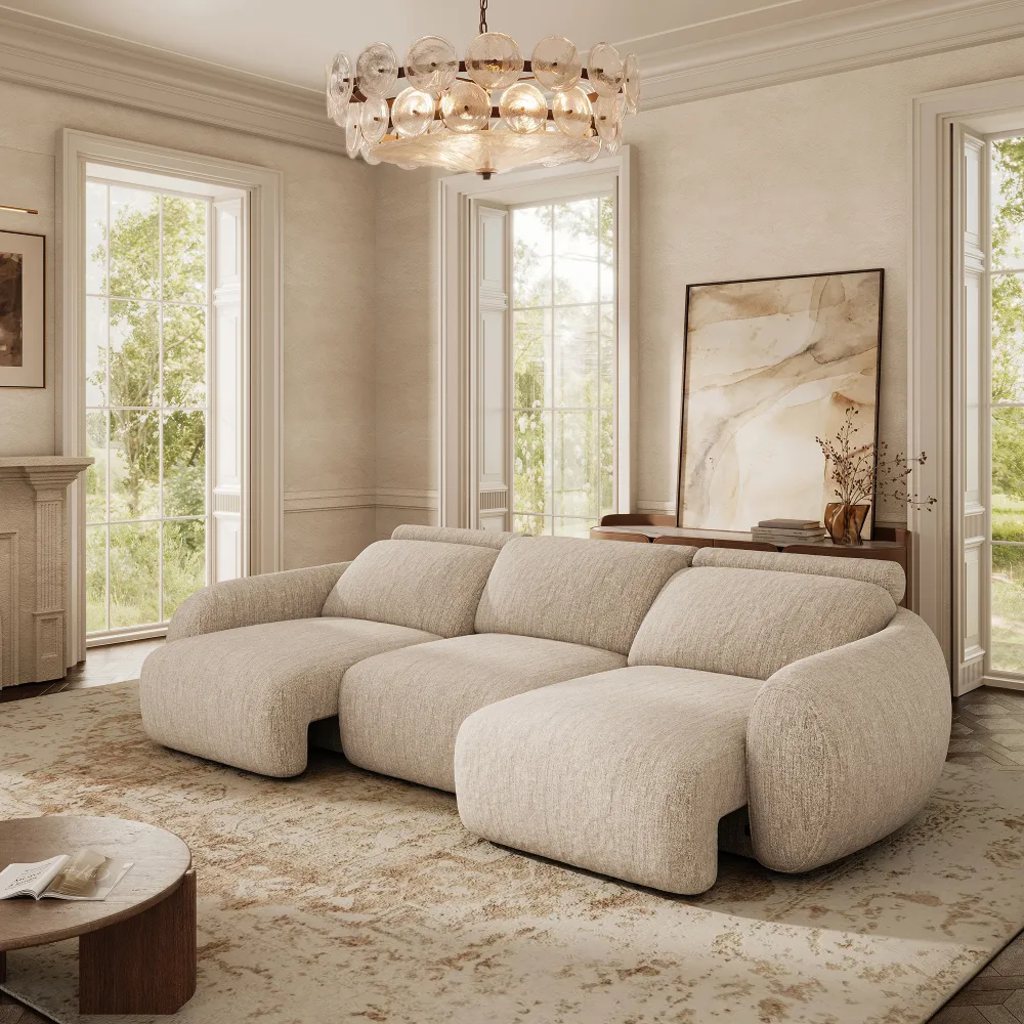
A power sofa bed offers more ways to use your living room sofa, combining everyday seating with flexible lounging and sleeping options. Its motorized mechanism allows you to adjust the seating surface without getting up or manually folding the frame. This is particularly useful if you frequently switch between sitting upright and stretching out but don’t need a fully opened bed every time.
The POVISON Aurora Power Sofa Bed is particularly practical for living rooms used for both entertaining and relaxation. Its continuously adjustable seat depth ranges from 27 to 45.5 inches, providing room to stretch out during an afternoon nap or a long evening watching TV. Retracting the seat afterward frees up floor space for everyday activities.
Before choosing this design, make sure your preferred seating depth works for everyday sitting and that the extension won’t obstruct essential walkways. You’ll also need a conveniently located electrical outlet.

Aurora Convertible Sofa Bed
A worthwhile option if you need the versatility of a futon without giving up the feel of a dedicated living room sofa.
Conclusion
The futon couch vs sofa decision becomes easier when you consider the entire living room rather than the furniture alone. A regular sofa makes sense when consistent seating is your priority, while a futon can accommodate occasional guests without a separate bed. A power sofa bed is worth considering when adjustable lounging depth would improve your daily routine. Before buying, count the seats your household needs, compare the remaining walking space in each furniture position, and account for any additional furniture required. These checks help you choose a setup that works beyond the showroom.
Find a Sofa That Fits Your Everyday Life
Explore flexible seating for daily comfort, relaxed evenings, and overnight guests.
FAQ
How can you tell if a sofa is actually a futon when shopping online?
Check the product’s conversion photos rather than relying on its name. A futon typically uses its existing seat and backrest or a folding mattress to form a sleeping surface. A traditional pull-out sleeper sofa usually contains a separate mattress beneath the seating cushions. Product terminology can overlap between retailers.
Can a futon couch have armrests and still fold flat?
Yes. Some futons have fixed armrests, while others feature adjustable or removable arms. If the arms fold down to create extra sleeping length, confirm that the manufacturer permits weight on those sections and that they lock securely. Not every adjustable armrest is designed to support a sleeper.
Can a futon couch work in a living room with young children?
Yes, but pay attention to exposed hinges, folding joints, and the security of the locking mechanism. Choose a model with protected moving parts where possible, and keep children away during conversion. An adult should operate the mechanism and confirm that the frame is fully secured before anyone uses it.
Can an ottoman make a futon more practical for everyday lounging?
Yes. An ottoman can provide leg support without requiring you to lower the futon’s backrest. Choose one close to the height of the occupied seat for comfortable leg positioning. A lightweight ottoman is particularly useful because it can be moved aside when the futon needs to open.
Can you use a regular sofa slipcover on a futon couch?
A regular sofa slipcover may fit a futon in its seating position but become too tight when the frame unfolds. Check whether the fabric restricts moving sections or folding joints. A futon-specific cover or separate cushion covers may be more practical if you convert the furniture frequently.


