 By Stephanie

The daybed vs futon comparison becomes more complicated when you need one piece of furniture for everyday seating, relaxed lounging, and overnight sleep. A daybed keeps a conventional mattress ready for use, while a futon converts between sofa and bed positions. The challenge is that improving one function can sometimes make another less comfortable or convenient. Whether you’re furnishing a multipurpose living room or replacing an uncomfortable futon, this guide explains the practical trade-offs between both designs and helps you determine which features matter most before making a purchase.
Table of Contents
What Is the Difference Between a Daybed and a Futon?
The main difference between a daybed and a futon is how each creates its sleeping surface. A traditional daybed holds a mattress in a stationary, sofa-like frame, while a Western-style futon uses a folding frame with a flexible mattress or integrated cushions. This structural difference affects everything from daytime seating to mattress replacement and overnight setup.
| Feature | Daybed | Futon |
| Primary function | Sleeping and casual seating | Convertible seating and sleeping |
| Mattress design | Usually a standard mattress | Flexible mattress or integrated cushions |
| Conversion | Main mattress stays ready; trundle models may require setup | Usually manual folding |
| Mattress replacement | Often accepts a compatible standard mattress | Requires a compatible folding mattress or proprietary cushions |
| Daytime footprint | Relatively deep and fixed | Typically shallower when upright |
| Sleeping capacity | Usually one person; expandable options available | One or two, depending on mattress size |
| Additional features | Storage drawers or trundle beds | Adjustable backrests or split-back designs |
| Cost considerations | Frame, mattress, bedding, and optional trundle | Frame, mattress, and potential replacement costs |
A daybed vs futon vs sleeper sofa comparison also needs to account for how the sleeping surface is formed. Unlike a standard daybed or futon, sleeper sofas may use a concealed mattress or an extendable seating platform. The difference between a daybed and a sleeper sofa becomes particularly important when the furniture will serve as your main living room couch.
Which Is More Comfortable for Sitting, Lounging, and Sleeping?
Comfort depends on more than mattress firmness. Furniture that feels supportive during a full night’s sleep may position your body awkwardly when you’re sitting upright. Similarly, a comfortable couch may develop uncomfortable pressure points when opened into a bed. Evaluate these three activities separately before deciding which design works for you.
Everyday Sitting
A daybed’s mattress can make upright sitting awkward even when it feels comfortable for sleeping. A standard twin mattress is approximately 38 inches wide. If your preferred sitting depth is 24 inches, you would need back cushions that occupy about 14 inches of that depth when compressed.
Mattress thickness creates another trade-off. Replacing a 6-inch mattress with an 8-inch one raises the sitting surface by 2 inches on the same frame and leaves 2 inches less exposed backrest height. Check both measurements before upgrading the mattress.
A futon generally provides a more defined sitting position, but its folding mattress must maintain adequate support in both configurations. Whether a futon is comfortable for sitting and sleeping depends partly on how well those two requirements are balanced.

Casual Lounging
A daybed provides plenty of room to curl up with a book or stretch out without operating a mechanism. Its limitation becomes more noticeable when several people want to use the furniture differently.
For example, one person may want to lie down after dinner while another prefers sitting upright to watch TV. On a standard daybed, stretching across the mattress can take up much of the available seating.
A futon with intermediate reclining positions or a split backrest may offer greater flexibility. A conventional full-width folding design, however, can require everyone to change positions when the backrest is adjusted.

Overnight Sleeping
A daybed usually offers greater freedom to choose mattress firmness, thickness, and construction. Its stationary frame also avoids the folding joints found in many futons.
A futon can provide a comfortable sleeping surface when its mattress remains level and the frame supports it evenly. Check for ridges, gaps, or noticeable changes in support where the mattress bends.
For two overnight guests, a full-size or queen-size futon may provide more shared sleeping space than a standard twin daybed. Always compare usable mattress dimensions rather than the furniture’s overall width.
How Do Daybeds and Futons Affect Your Daily Space?
The space advantage of a futon depends on whether you actually use the floor area it frees up. A daybed occupies a relatively fixed footprint, while a futon returns some floor space when folded into a couch.
Suppose a daybed occupies 40 inches of floor depth and a futon occupies 35 inches when closed and 54 inches when opened. The futon frees up 5 inches during the day but requires another 19 inches whenever it converts. These illustrative dimensions show why the smaller piece isn’t necessarily the more practical one.
Consider what happens in that extra space. If it provides access to a desk, storage cabinet, or frequently used walkway, the futon’s smaller daytime footprint has real value. If the area must remain empty for frequent conversion anyway, a fixed daybed may be equally practical.
Also account for the clearance needed to access storage drawers or a trundle. A daybed that fits the room may still have features you cannot use without rearranging nearby furniture.

How to Test Whether a Daybed or Futon Fits Your Routine
Before choosing either design, think about how the furniture will be used during a typical week rather than during an occasional overnight visit. Three questions can help narrow your options.
- How often will you actually switch positions? If the furniture stays ready for sleeping most of the week, a daybed avoids unnecessary conversion. If you need to reclaim living space each morning, a futon may be more practical.
- Which activity can you least afford to compromise? If guests need a conventional mattress, prioritize the sleeping surface. If this will be your only couch, rule out designs that make everyday seating uncomfortable, even if they work well as beds.
- What will the furniture cost once it’s fully usable? Compare the complete setup, including mattresses, covers, supportive cushions, and optional trundles. A less expensive frame may offer little savings once the necessary accessories are included.
If you frequently need all three positions—sitting, lounging, and sleeping—without prioritizing one over the others, neither traditional design may provide enough flexibility. That is when the conversion mechanism becomes more important than the furniture category itself.
Power Sofa Beds: A Flexible Alternative to Daybeds and Futons
Neither a fixed mattress nor a full-width folding frame necessarily accommodates the small changes in posture that happen throughout the day. You may want to stretch your legs after dinner without preparing a bed or interrupting your evening.
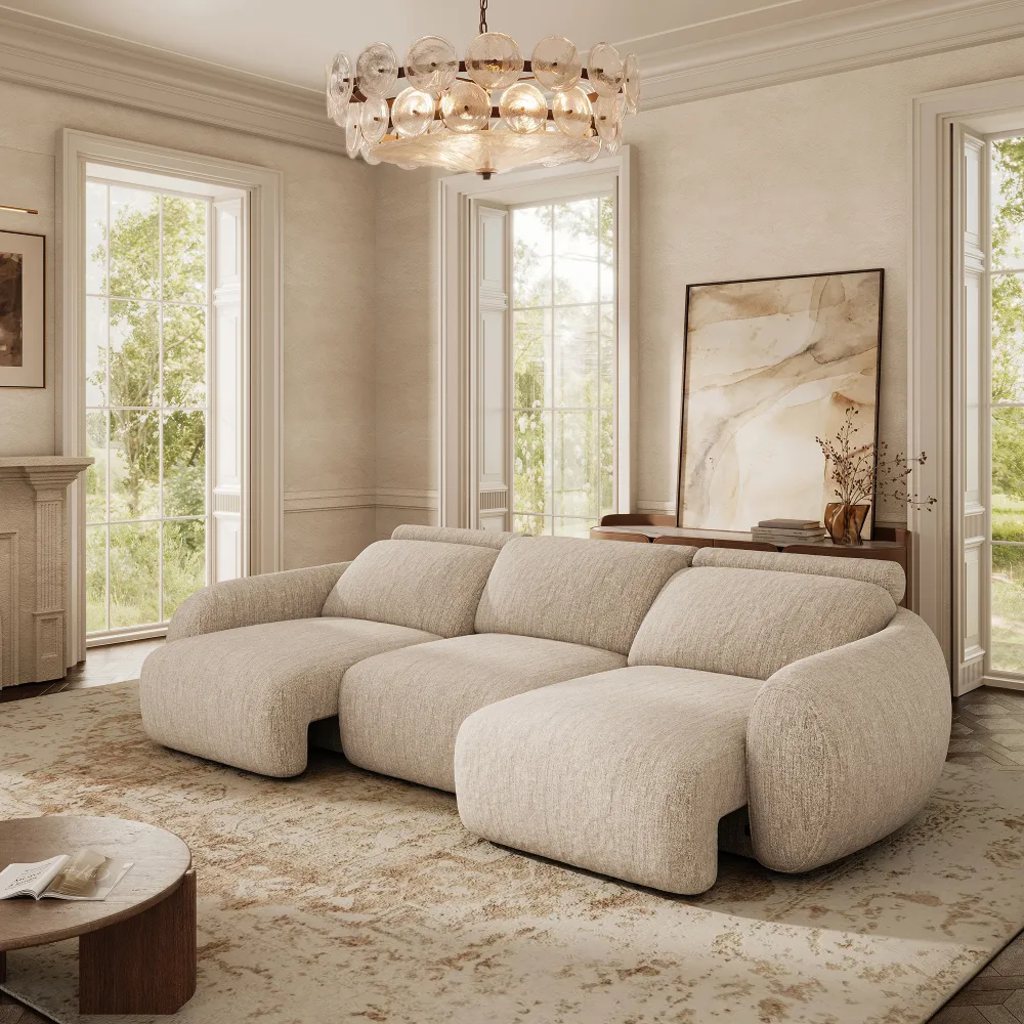
An extendable power sofa bed offers another approach. Its motorized seating platform moves forward at the touch of a control, allowing you to adjust the available lounging space without manually folding a mattress or lowering an entire backrest.
The POVISON Aurora Multifunctional Sofa Bed is particularly relevant for living rooms used for both everyday seating and evening relaxation. Its seat depth adjusts continuously from 27 to 45.5 inches, and you can operate the extension while seated. This lets you create just enough room to stretch out or lie down without completing a full sofa-to-bed conversion.

Aurora Multifunctional Sleeper Sofa
A practical choice for households that need more flexibility than a traditional daybed or futon without sacrificing everyday seating.
Conclusion
The daybed vs futon decision is ultimately about which compromises fit your everyday life. A daybed makes sense when a ready-to-use mattress and casual lounging matter most. A futon is practical when daytime seating and a smaller closed footprint take priority. Before buying, check sitting proportions, usable sleeping dimensions, and the space required for normal operation. If your household frequently shifts between sitting, stretching out, and sleeping, an adjustable power sofa bed offers another approach worth considering. Choose the design that accommodates your regular activities without creating unnecessary work.
Find a Sofa That Adapts to Your Day
Explore flexible sofa beds for everyday seating, relaxed lounging, and occasional overnight guests.
FAQ
Can a Daybed With a Pop-Up Trundle Become a King-Size Bed?
Two standard twin mattresses placed side by side measure approximately 76 by 75 inches, five inches shorter than a standard king. Two twin XL mattresses match standard king dimensions, but the frame must accommodate them. Also check whether both sleeping surfaces align in height and remain securely supported.
Can You Leave Fitted Sheets on a Futon When Folding It?
Only if the manufacturer allows it and the sheet does not restrict mattress movement. Remove bedding that bunches near hinges, retaining brackets, or locking mechanisms. For futons with integrated upholstered cushions, using removable sleeping sheets is generally more practical than keeping the sleeping surface covered throughout the day.
Are Daybeds or Futons Easier to Move Between Apartments?
Neither is automatically easier to move. A daybed with a removable mattress and detachable frame may be easier to transport in separate pieces. Some futons also disassemble, while integrated upholstered models can be bulky. Before purchasing, check the assembly instructions and the dimensions of the largest nonremovable component.
Can You Use a Daybed or Futon as a Room Divider?
Yes, if the furniture is designed for freestanding placement. Look for a finished rear surface and a backrest that doesn’t rely on wall support. With a futon, confirm that opening the bed won’t obstruct access between the two living areas or block an essential walking route.
Can You Place a Futon or Trundle Daybed on a Thick Rug?
Thick rugs can interfere with rolling trundles, sliding frames, or moving support legs. Before buying, check whether the mechanism needs to travel across the rug or its raised edge. A low-pile rug or a clear hard-floor operating area may make opening and closing the furniture easier.


