 By Kelvin
Furnishing an Airbnb means more than filling each room with a bed, sofa, and dining table. Hosts need to match furniture to the number of guests the property can actually accommodate, while leaving enough room to sleep, sit, eat, store belongings, and move around. This guide explains how to furnish an Airbnb in a practical order: plan sleeping arrangements, size shared seating and dining areas, build a room-by-room checklist, and test the setup before check-in. The goal is a comfortable, usable rental—not a crowded collection of furniture.
Table of Contents
Step 1: Start With the Number of Guests You Need to Accommodate
Before comparing furniture styles or adding decorative pieces, determine how many guests your Airbnb is intended to host. When deciding how to furnish an Airbnb, work backward from that number: identify every usable sleeping place, then count the seats and dining places guests can use at the same time.
Your furniture plan should account for three basic needs:
- Sleeping capacity: Every guest needs a suitable sleeping surface, whether in a dedicated bedroom or a properly arranged shared space.
- Living room seating: Guests should have enough places to sit together without relying on dining chairs as their primary lounge seating.
- Dining capacity: The dining area should accommodate the number of people likely to eat together.
The right setup also depends on who you expect to host. A family may need separate sleeping areas for parents and children, while a group of friends may prefer individual beds rather than sharing one. Couples, on the other hand, may prioritize privacy between bedrooms over additional sleeping capacity in the living room.
Before purchasing additional furniture, verify that each sleeping arrangement is suitable for overnight use. A sofa’s seating capacity does not automatically indicate how many people can sleep on it comfortably. If you plan to use a sleeper sofa, check its actual sleeping dimensions and make sure the room can accommodate it when fully extended.
Step 2: Plan Sleeping Arrangements and Daytime Seating Together
Once the guest count is clear, focus on the two living functions that most directly affect comfort: sleeping and seating. These needs can overlap in a smaller rental, but they should not be confused. A sofa may seat several people without providing suitable overnight sleeping space, while a sleeper sofa can occupy much of the floor when extended.
Confirm a Suitable Sleep Surface for Every Guest
Start with the permanent beds and mattresses. Consider whether your typical guests are couples, families, or groups of friends who may prefer separate sleeping surfaces.
If the property has limited bedrooms, a sofa bed can provide an additional sleeping option without permanently dedicating more floor space to a bed. However, check its actual sleeping dimensions, surface comfort, and surrounding clearance before including it in your guest setup.
Also consider where guests will find their bedding. Keeping sheets, pillows, and blankets in a nearby storage cabinet makes the transition from daytime seating to nighttime sleeping easier.
Keep the Living Room Useful in Both Modes
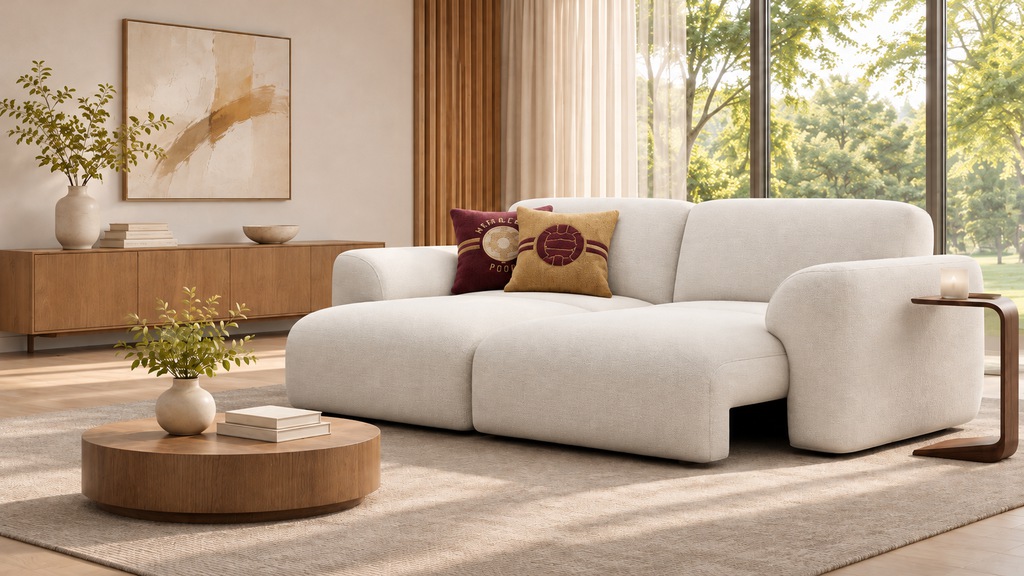
Living room furniture should support daytime activities without making overnight conversion difficult. A sofa, a few additional seats, and a practical surface for drinks or personal belongings may be enough. Avoid filling the room with oversized furniture that leaves little space when a sleeper sofa is opened.
For example, a one-bedroom rental accommodating four guests might use a permanent bed for two people and a convertible sofa for the other two. During the day, the living room remains a shared gathering area. At night, the sofa becomes an additional sleep surface, provided the layout leaves enough room for guests to move around.
In a rental where the living room needs to serve as everyday seating and an occasional sleep area, the Aurora Power Sofa Bed lets hosts extend the seat with one-touch controls instead of pulling out a separate frame. Its depth adjusts from 27 to 45.5 inches, and selected chenille finishes are water- and scratch-resistant. I’d consider it when a flexible lounge-to-sleep setup matters and the room has enough clearance.
Aurora Power Sofa Bed
Combines everyday seating with an adjustable sleep surface for flexible rental layouts.
👍 Best for: Small rentals needing occasional extra sleep
✨ One-touch lounge, recline, and sleep modes
✨ Water- and scratch-resistant chenille
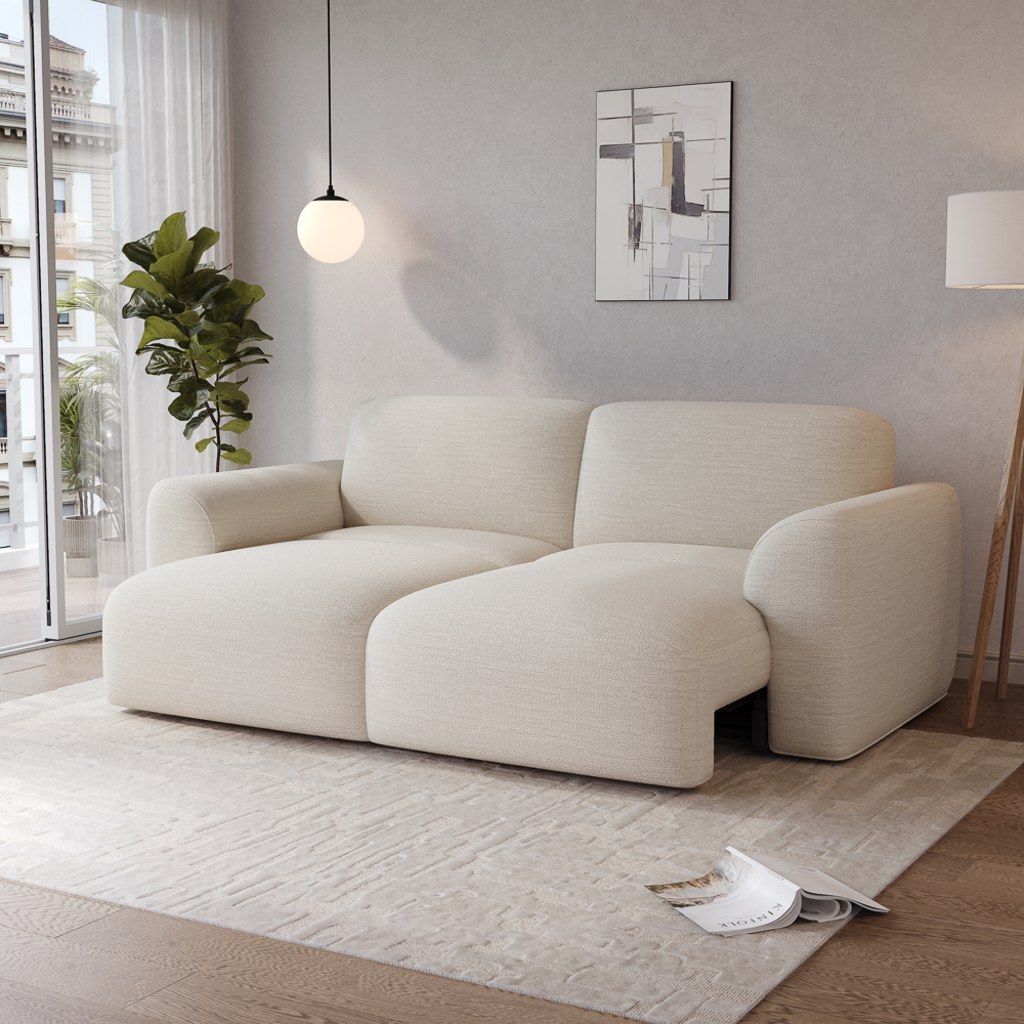
Before selecting any convertible sofa, consider how guests will operate it, whether a nearby outlet is available for powered models, and how easily the room can return to its daytime arrangement.
Furnish the Bedroom for Comfortable Sleep
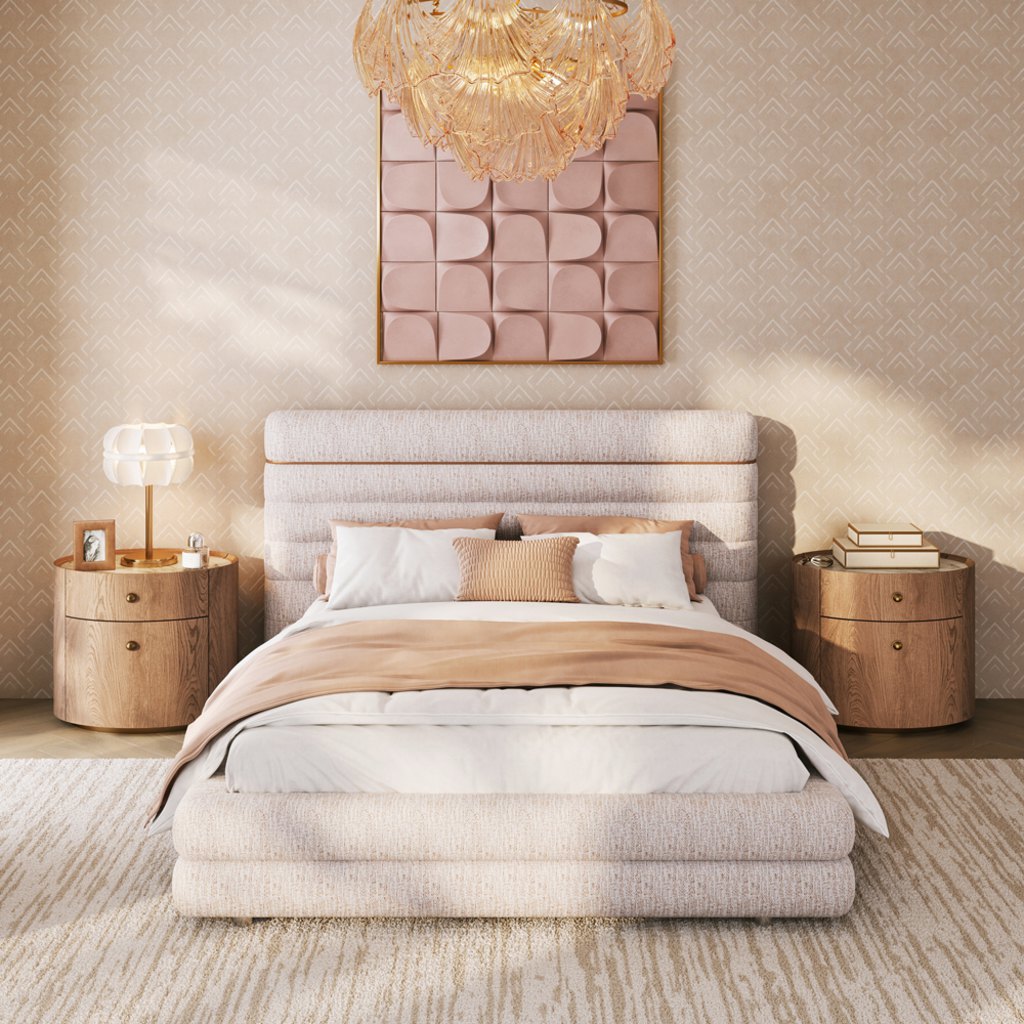
Start with a bed frame and mattress that suit the room size and the number of people expected to share the space. Leave enough clearance around the bed for guests to get in and out comfortably and for housekeeping to change the bedding. Add bedside tables or wall-mounted shelves to keep phones, glasses, and other personal items within reach. Bedside lighting, accessible outlets, and clothing storage also make a bedroom more practical for overnight stays. If the room is compact, choose furniture that provides useful storage without crowding the walking area.
Step 3: Match the Dining Setup to Guest Capacity
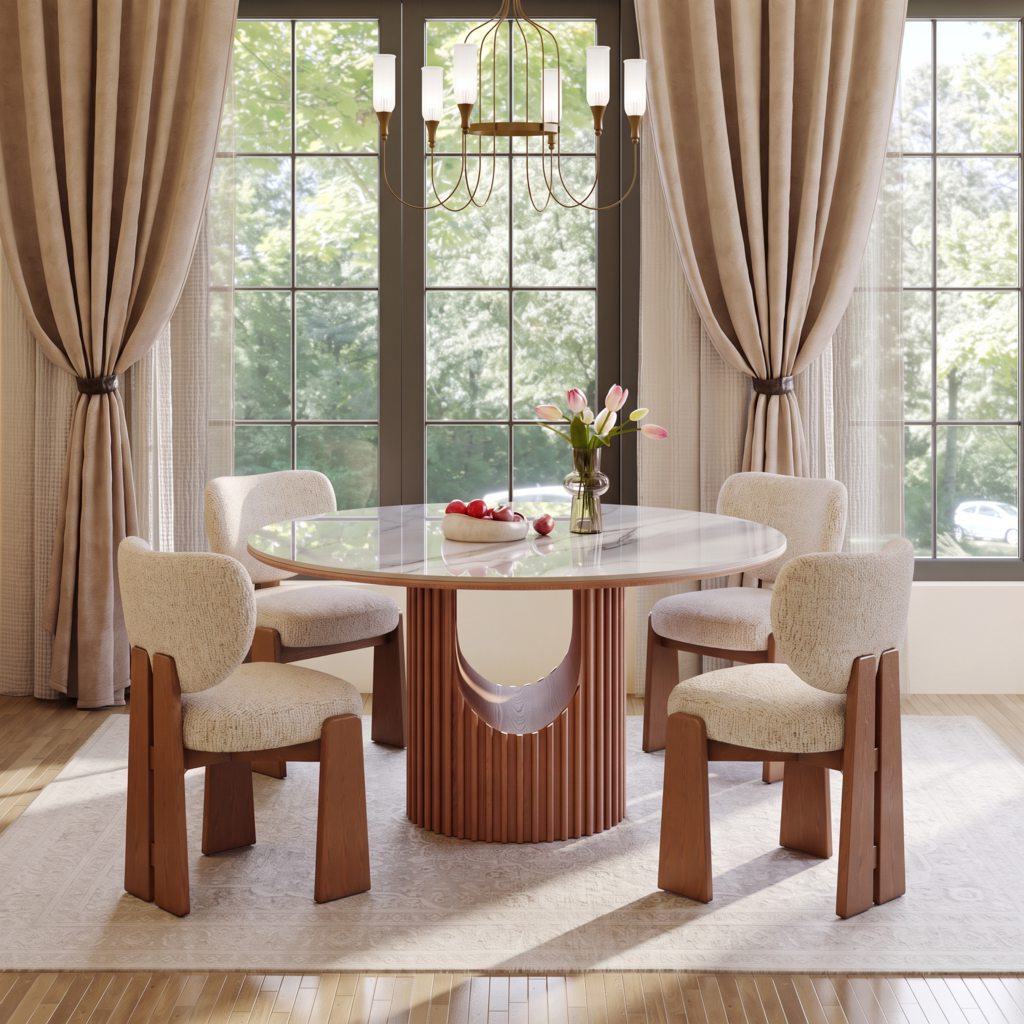
A dining area should accommodate the number of guests your property is designed to host. If a listing accommodates four people, a table with only two usable dining positions can make shared meals inconvenient.
Start by measuring the available dining area, then choose a dining table and dining chairs that fit without blocking nearby walkways. Remember that chairs need additional room to slide out, and guests should be able to move behind seated people.
For smaller rentals, a kitchen island or breakfast bar may provide an alternative to a traditional dining table. However, consider how guests will actually use the space:
- A breakfast bar can work well for quick meals and shorter stays.
- A dining table is generally more practical for families, group meals, and longer stays.
- An extendable dining table can provide additional seating when needed, provided there is enough clearance when fully opened.
The goal is not to fit the largest possible table into the room. Choose a setup that accommodates the expected group while keeping everyday movement comfortable.
Step 4: Build an Airbnb Furniture Checklist and Set Purchase Priorities
An Airbnb furniture checklist helps you identify essential pieces before shopping and avoid overlooking important areas. Organize your Airbnb furnishing checklist by room, then prioritize purchases based on how directly each item affects guest comfort and everyday use.
| Room | Essential Furniture | Purchase Priority |
| Bedroom | Bed frame, mattress, nightstands, bedside lighting, and clothing storage | High |
| Living Room | Sofa, additional seating when needed, coffee or side table, and practical storage | High |
| Dining Area | Dining table and enough chairs for the intended guest capacity | High |
| Entryway | Coat hooks, shoe storage, or a small bench where space allows | Medium |
| Other Shared Areas | Storage cabinets, shelving, and additional lighting where needed | Medium |
| Decorative Areas | Accent furniture and decorative pieces that are not essential for daily use | Later |
Prioritize furniture that supports sleeping, seating, and dining before spending on decorative additions. If your property already has a functional bed or dining setup, you can shift your budget toward other areas that need improvement rather than replacing usable furniture.
When budgeting, also consider durability and maintenance. Furniture in a short-term rental needs to withstand frequent use and regular cleaning. Choose surfaces that are easy to access and maintain, and avoid designs that make routine cleaning or room resets unnecessarily difficult. Reviewing different short-term rental furniture picks can help you compare practical features such as seating capacity, upholstery, and storage.
Step 5: Measure Furniture Before Ordering
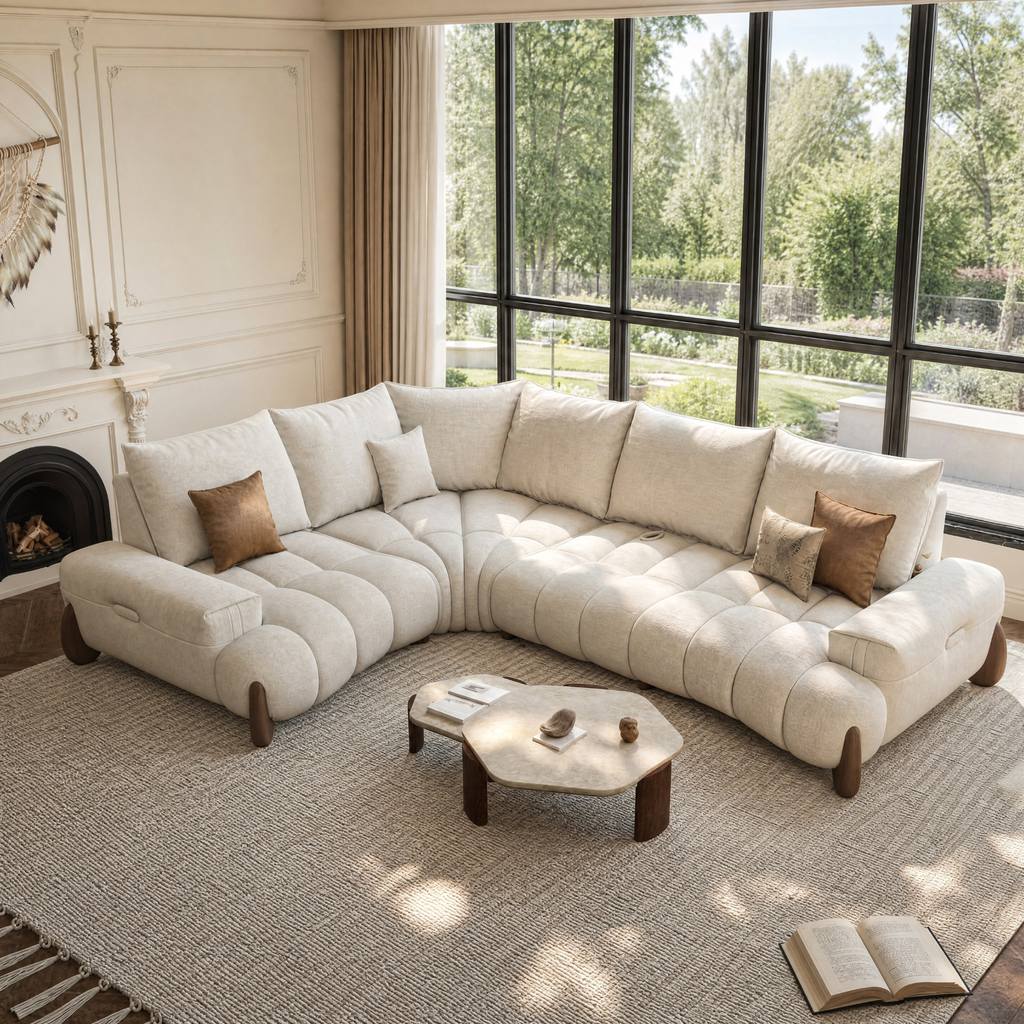
Furniture that fits a room on paper may still cause problems once guests start using it. This is particularly important when planning how to furnish a short term rental, where several people may need to move through shared spaces at the same time.
Before ordering, measure both the furniture and the area around it.
Check these five things:
- Room dimensions: Measure the available width and depth, accounting for doors, windows, and built-in features.
- Delivery access: Check entrance doors, hallways, staircases, elevator dimensions, and tight turns before ordering bulky pieces.
- Extended furniture dimensions: Measure sleeper sofas, reclining chairs, and extendable tables in their fully opened positions.
- Chair and drawer clearance: Make sure dining chairs can slide out and cabinet doors or drawers can open without hitting nearby furniture.
- Walking paths: Keep routes between the entrance, bedrooms, bathroom, and shared areas accessible.
For convertible seating, the closed dimensions are only part of the decision. A sofa bed needs enough room to extend without blocking the main walkway or making the bathroom difficult to reach.
When comparing sleeper sofas for Airbnb hosts, evaluate the full sleeping footprint, conversion process, and upholstery care requirements rather than choosing based on the sofa’s appearance or width alone.
A simple trick is to mark the furniture footprint on the floor with painter’s tape. For a sofa bed, mark both its regular and fully extended positions. This makes it easier to spot potential conflicts before delivery.
Step 6: Run a Guest-Ready Walkthrough Before Check-In
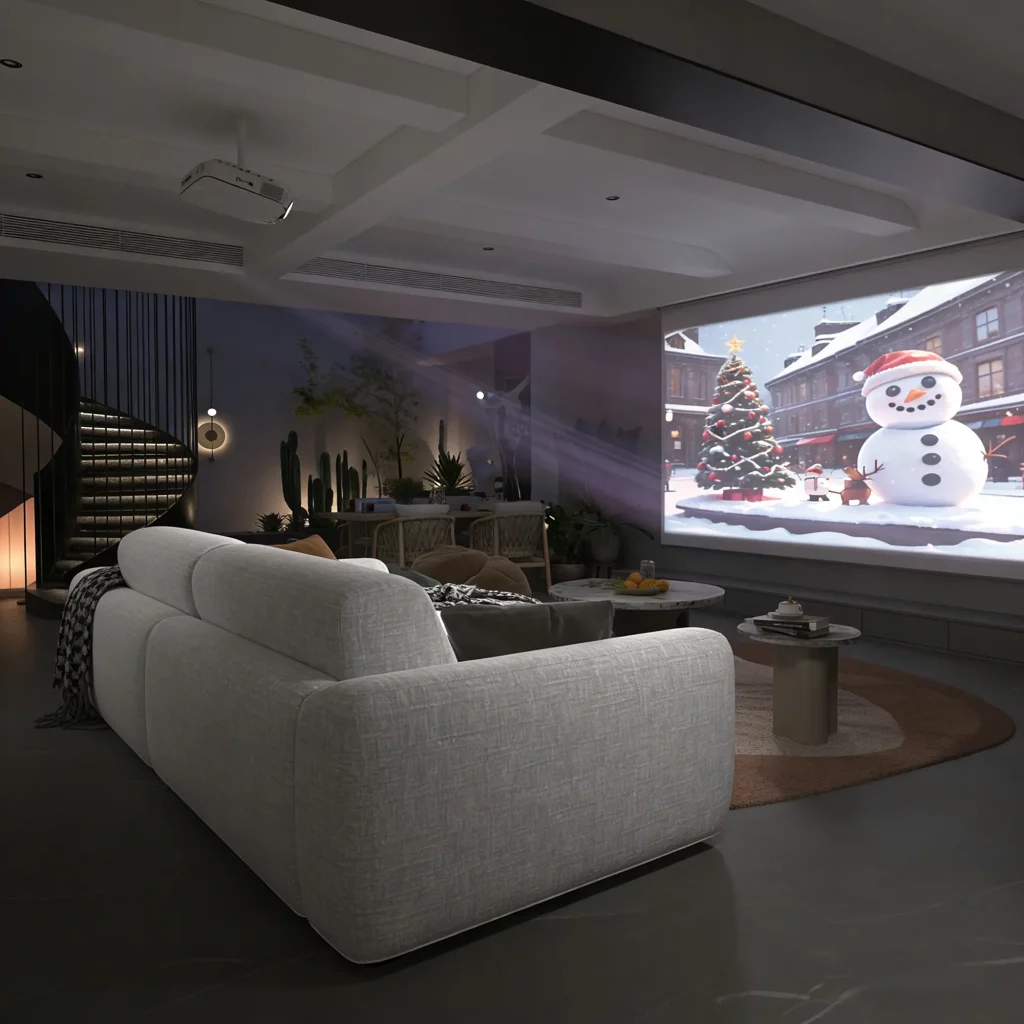
Furniture planning is not complete just because every item has arrived. Test the property as a guest would use it, ideally with the maximum advertised number of occupants in mind.
Follow this practical pre-arrival checklist:
- Enter with luggage: Walk from the entrance to the sleeping areas with a suitcase to check whether furniture blocks the route.
- Test shared seating: Confirm that everyone has a comfortable place to sit without moving essential furniture.
- Check the dining area: Pull out the chairs and make sure the table remains accessible.
- Test convertible furniture: Open and close sofa beds, extendable tables, and other adjustable pieces. Check that their mechanisms work smoothly.
- Locate everyday essentials: Make sure guests can find bedding, storage, lighting controls, and accessible outlets.
- Review the cleaning routine: Confirm that furniture can be cleaned underneath and around, and that housekeeping can restore the original layout.
For powered convertible furniture, make sure the controls are easy to locate and the floor is clear before operating the mechanism. Understanding power sofa bed configurations for sitting, lounging, and sleeping also helps hosts prepare simple instructions for guests who have never used this type of furniture.
Finally, check that the actual sleeping arrangements and furniture setup match the information and photos in your listing. A walkthrough can reveal practical problems before they affect a guest’s stay.
Conclusion
Comfortable Airbnb furnishing comes from matching the property’s furniture to the way guests will use it. Start with the advertised guest capacity, verify every sleep surface, and make sure shared seating and dining areas can serve the group without crowding the room. Then prioritize essential furniture, measure every piece in its working position, and test the layout before check-in. A thoughtful approach to how to furnish an Airbnb helps hosts avoid buying pieces that look right online but interfere with everyday use or create unnecessary turnover work.

Find Furniture for Every Room
Explore furniture for different rooms, layouts, and everyday needs.
Q&A: Common Questions About Furnishing an Airbnb
How Much Does It Cost to Furnish an Airbnb?
Furnishing costs depend on the property’s size, bedroom count, existing furniture, and whether you buy new, used, or premium pieces. Estimate each room separately, then add delivery, assembly, lighting, window treatments, and replacement reserves. A room-by-room budget is more useful than relying on one average figure.
How Many Sets of Bedding Should I Keep for Each Airbnb Bed?
Keep at least two complete sets of sheets and pillowcases for each bed so one set can be in use while the other is being washed or stored. For high-turnover properties, add a spare set if laundry cannot be completed between check-out and the next arrival.
Can a Sleeper Sofa Count Toward Airbnb’s Maximum Occupancy?
A sleeper sofa can provide an additional sleeping surface, but it does not automatically increase a property’s permitted occupancy. Check local occupancy and fire-safety requirements, platform rules, and the actual size and suitability of the opened surface. Describe the arrangement accurately in the listing.
Is Secondhand Furniture a Good Option for an Airbnb?
Secondhand furniture can reduce setup costs, especially for solid tables, dressers, and shelving. Inspect joints, stability, odors, stains, pests, and missing hardware before buying. Be more cautious with mattresses and heavily upholstered pieces because cleanliness, wear, and hidden damage are harder to assess.
What Upholstery Is Easiest to Maintain in a Short-Term Rental?
Choose upholstery based on likely spills, pets, turnover time, and the manufacturer’s cleaning instructions. Smooth surfaces may be easier to wipe, while performance fabrics can offer everyday comfort. Water-resistant does not mean stain-proof, so check the care label and test cleaners in an inconspicuous area.


[…] with the listing promise rather than room style. At maximum occupancy, count what the property must reliably provide: usable sleep positions, seats, dining places, bedside functions, and shared entertainment. Spend […]
[…] the mechanism before. For hosts, the challenge is not simply finding a comfortable sofa bed, but adding useful overnight capacity without creating extra work between stays. The six picks below suit different rental setups, from compact one-bedroom units to larger family […]