 By Kelvin
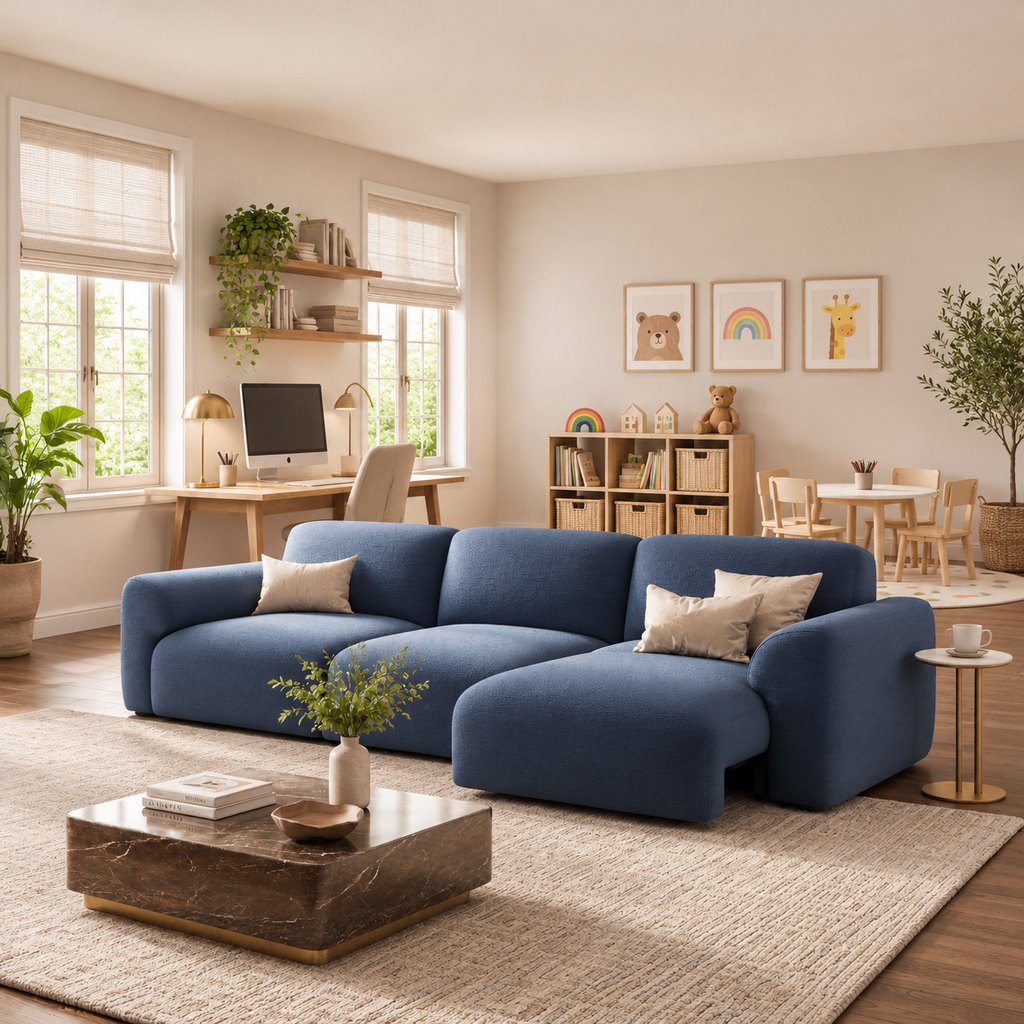
Combining a home office and children’s play area in one room takes more than placing a desk beside a toy shelf. Parents need a workspace that supports focused work while leaving children enough room to play safely and comfortably. The best office playroom ideas balance sightlines, furniture placement, storage, and noise control without making either area feel like an afterthought. Whether you’re working with a spare bedroom or a small multipurpose room, the right layout can help both activities coexist with fewer daily disruptions.
Table of Contents
1. Plan the Room Around Work and Play Routines
Before choosing furniture or dividing the floor plan, consider how the room will be used throughout the day. A home office and playroom combo needs to accommodate two different routines, and the amount of space each one requires depends on your family’s habits.
Start with three questions:
- Work requirements: Do you spend full days at your desk, take frequent video calls, or mainly use a laptop for shorter tasks?
- Children’s activities: Do your kids need room for active play, or do they spend more time reading, drawing, and building?
- Supervision needs: Can children play independently, or does an adult need to maintain a clear view of them?
For example, a parent who takes frequent video calls may need a more defined workspace with a consistent background. A parent who works on a laptop between household tasks may prefer a flexible desk near the children’s activity area.
Don’t automatically divide the room into two equal halves. Give the larger or more permanent function the space it needs first, then fit the secondary activity around it.
2. Choose an Office Playroom Layout That Fits Your Room Shape
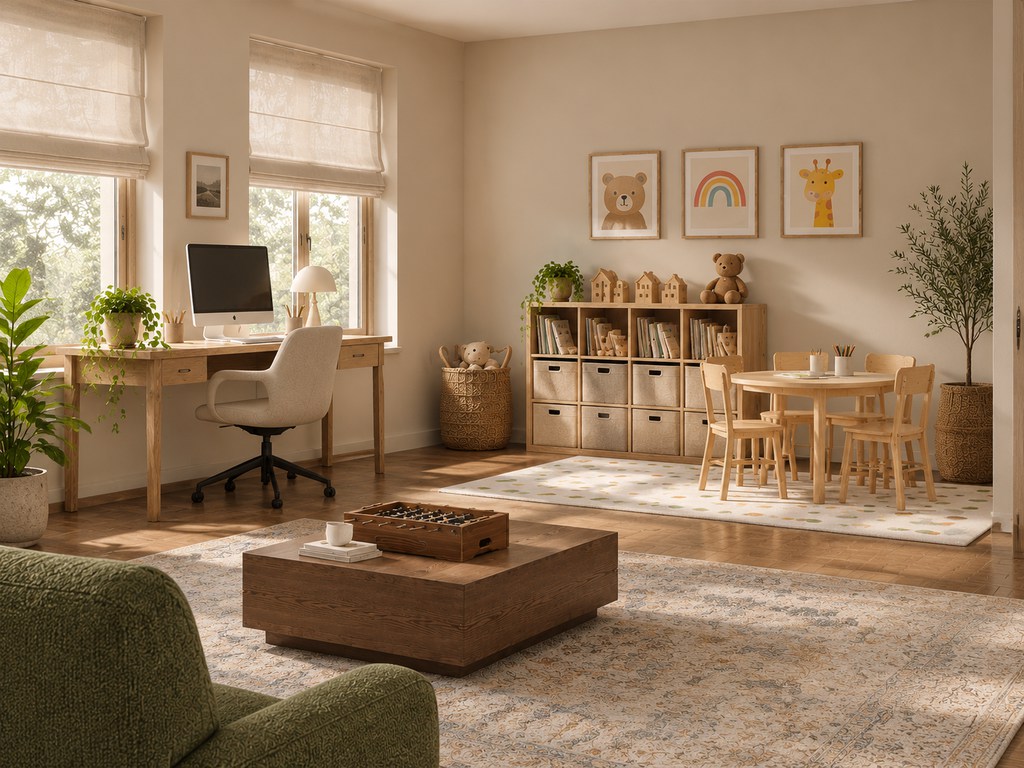
The most practical office playroom ideas start with the room’s dimensions, doorways, windows, and existing furniture. Rather than copying a design photo, choose a layout that keeps the main walkway open and gives both activities a recognizable home.
| Layout | Best for | How to arrange it | What to watch |
| Side-by-Side Zones | Wide or square rooms | Place the desk along one wall and the play area on the opposite side | Keep a clear central walkway |
| L-Shaped Layout | Compact rooms | Position the desk in one corner and the play area along an adjacent wall | Avoid crowding the corner |
| Office-First Layout | Small rooms with daily work needs | Keep the desk against the main wall and reserve the remaining open floor for play | Limit extra furniture |
| Open Shared Layout | Larger multipurpose rooms | Use a low shelf, rug, or furniture placement to define separate zones | Preserve visibility between areas |
Side-by-Side Zones for Wider Rooms
If the room has enough width, placing the desk and play area on opposite sides creates a straightforward division. The adult workspace can stay organized while children have a separate surface for drawing, puzzles, or building activities.
L-Shaped Layout for Compact Rooms
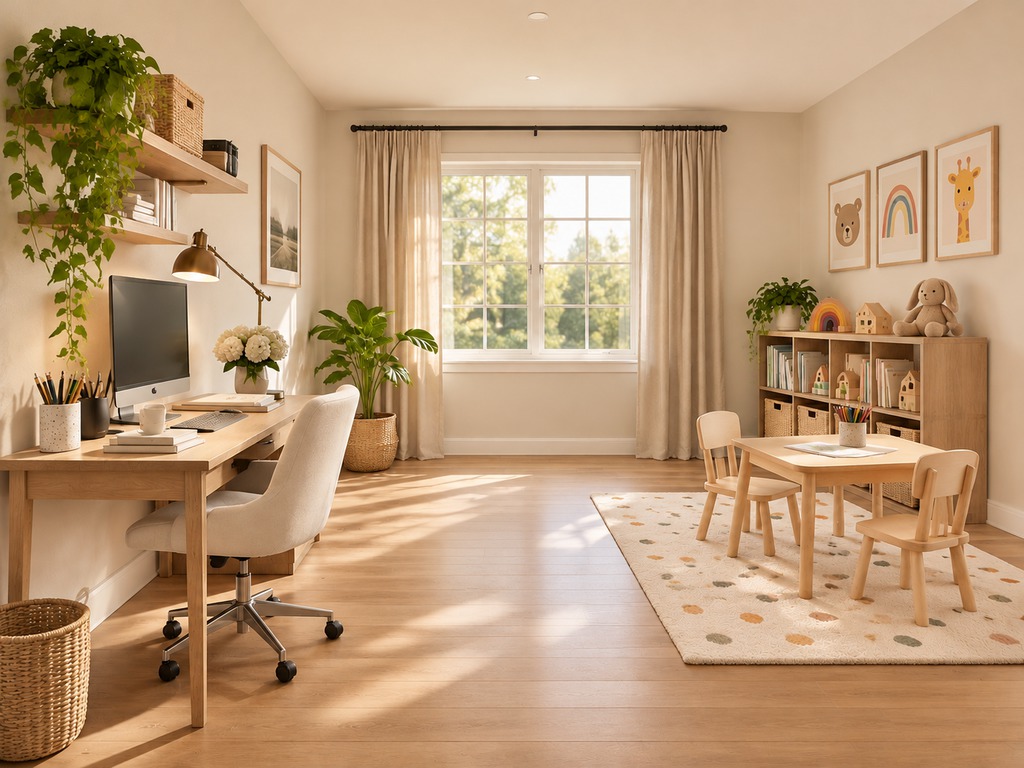
An L-shaped arrangement makes use of corners that might otherwise go unused. A desk can sit against one wall, with a small activity table or floor-play area extending along the adjacent wall. This keeps the center more open than placing large furniture on every side.
Office-First Layout for Smaller Rooms
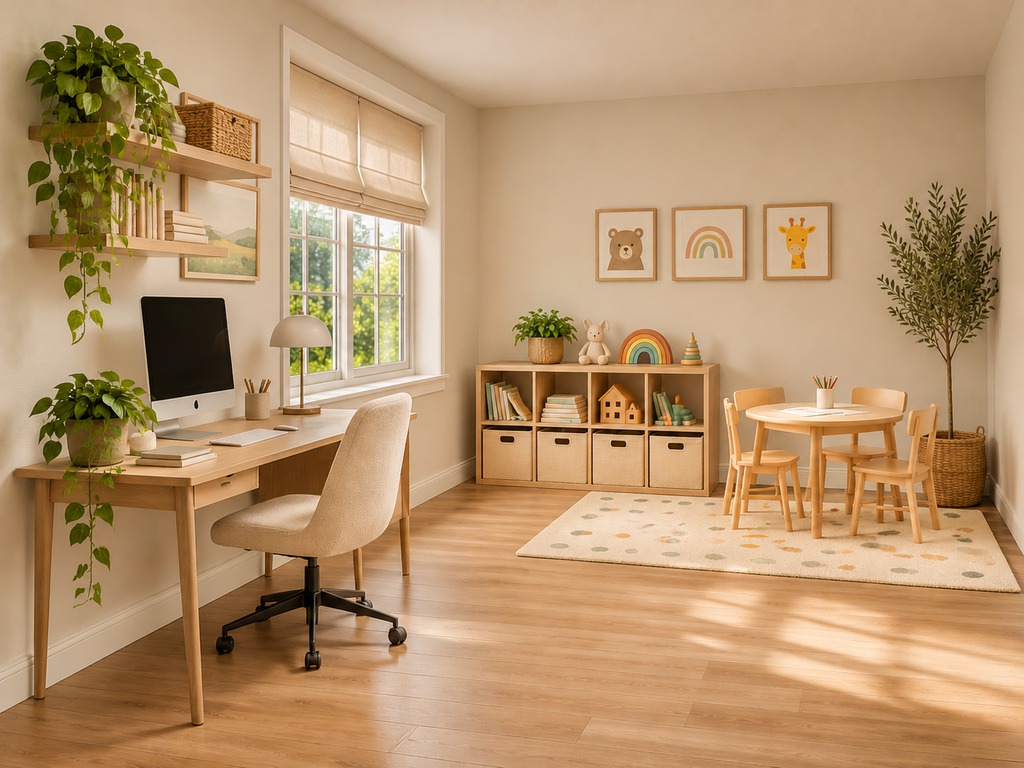
When work is the room’s primary function, keep the desk and office chair in a permanent position. Instead of adding a second large table, reserve an open section of floor for children’s activities. A foldable play mat and a few accessible storage bins can provide enough flexibility for everyday play.
For more ways to arrange furniture around room shape and traffic flow, these living room layout ideas for different spaces offer additional planning principles that also apply to shared family rooms.
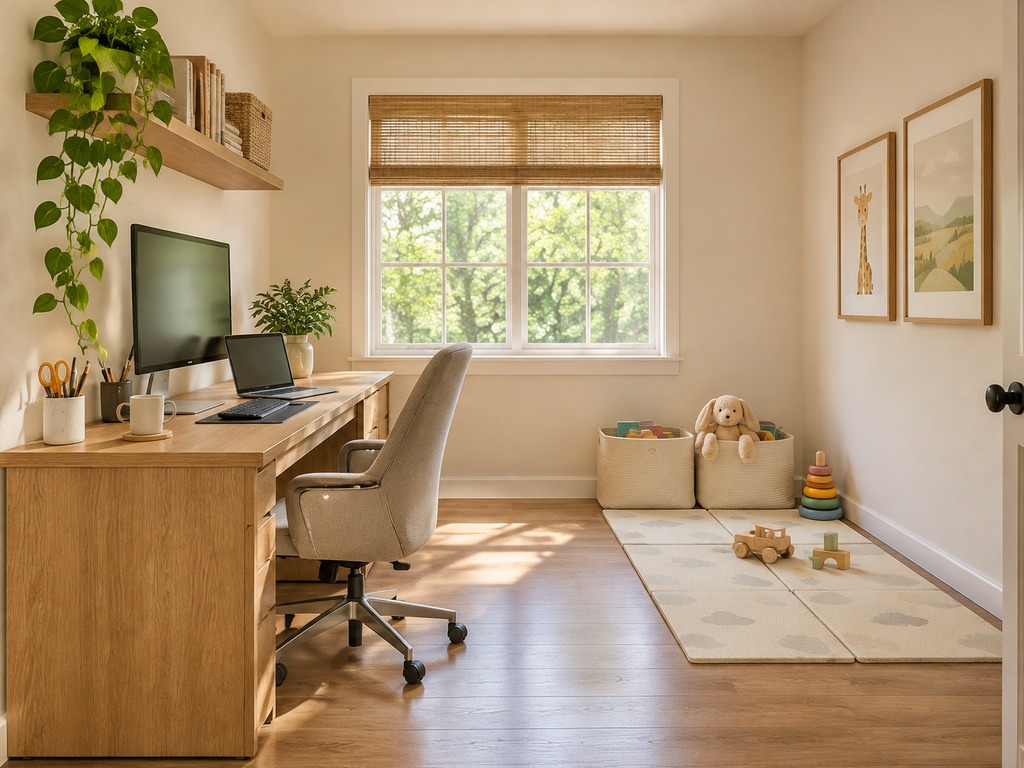
3. Protect Sightlines Without Putting Kids in the Work Zone
Good visibility is one of the most important considerations in a shared workspace. Parents should be able to see the main play area without constantly turning away from their desks. The goal is to create a visual connection between the two zones while maintaining a practical boundary around work equipment.
Position Your Desk for Better Sightlines
Avoid placing the desk with its back completely toward the children’s activity area if that makes supervision difficult. Depending on the room, turning the desk slightly or positioning it along a side wall may provide a better view.
Before settling on a layout, sit in your actual office chair and check:
- Can you see the main play area without repeatedly standing up?
- Does your monitor block the view of where children spend most of their time?
- Can children reach the desk, computer, or cables from their activity area?
A small adjustment to the desk’s orientation may be more useful than adding another partition.
Use Low Furniture to Define Boundaries
Low shelving and storage units can create a visual separation without completely closing off the room. They also provide a convenient place for books, art supplies, and frequently used toys.
Avoid tall, unsecured bookcases between the two zones. They can block visibility and create tip-over risks if children try to climb them.
Keep the Play Area Within a Practical Viewing Range
Place frequently used toys and activities where parents can see them from their normal working position. Avoid putting the play area behind a tall cabinet, in a hidden corner, or directly beside a doorway where people frequently pass.
Visibility helps with everyday supervision, but it does not replace active adult supervision, particularly for toddlers and children who are still exploring their surroundings.
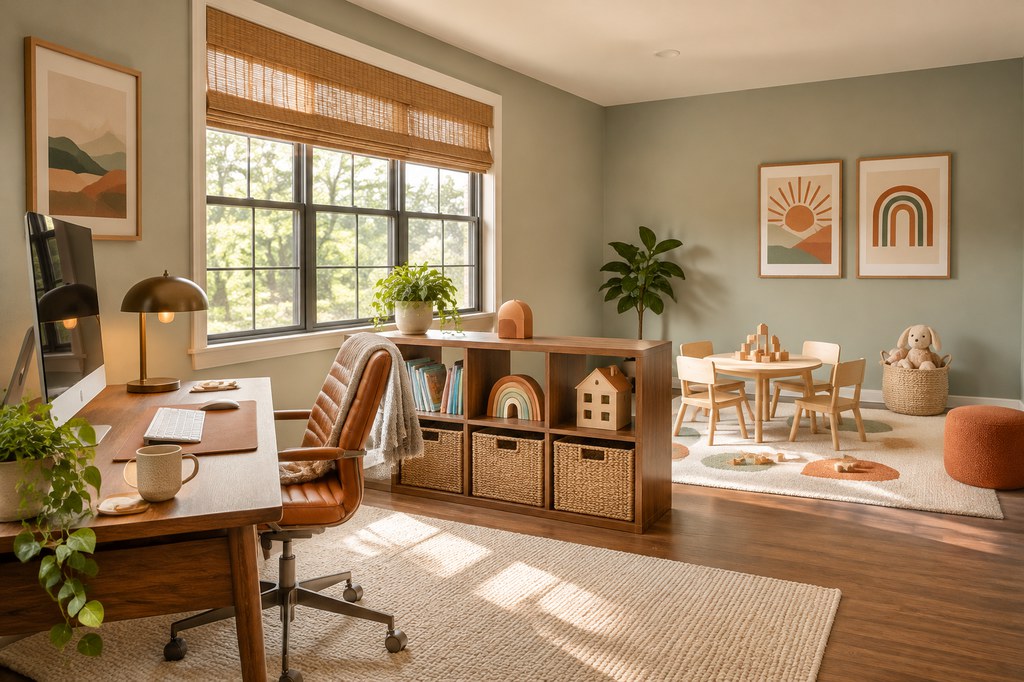
4. Make the Shared Room Safer and Quieter
An office playroom needs to protect both children and work equipment. The most effective approach is to address physical hazards first, then reduce everyday distractions that make working in the room difficult.
Keep Office Equipment and Cords Out of Reach
Children may be attracted to keyboards, chargers, computer accessories, and other objects on an adult desk. Keep these items within the designated work zone rather than allowing office supplies to spill into shared storage.
Pay particular attention to:
- Electrical cords: Use cable organizers or cord covers to prevent children from pulling or playing with loose wires.
- Power strips and outlets: Keep them inaccessible and use appropriate outlet protection.
- Furniture stability: Anchor tall shelving, cabinets, and other tip-prone furniture securely.
- Window coverings: Choose cordless blinds where possible, or ensure existing cords remain inaccessible.
- Office supplies: Store scissors, small accessories, and confidential paperwork in closed adult-only storage.
The U.S. Consumer Product Safety Commission’s Anchor It! guidance recommends securing TVs and top-heavy furniture to prevent tip-over injuries. Keep window-covering cords out of children’s reach as part of your room’s safety setup.
Reduce Noise During Work Hours
A completely silent playroom is unrealistic, but the right arrangement can reduce how much everyday activity interrupts work.
Use a combination of:
- Rugs or play mats to soften footsteps and dropped toys.
- Curtains and upholstered furniture to help absorb some room noise.
- Quiet activity options near the desk, such as reading, puzzles, or drawing.
- A headset for calls when children are playing nearby.
Place louder activities farther from the desk whenever possible. For instance, a child building a large block structure on the floor may be better positioned on the opposite side of the room than directly behind the parent’s video-call setup.
Soft furnishings can reduce echoes, but they are not a substitute for professional soundproofing when confidential calls or frequent meetings require substantial noise isolation.
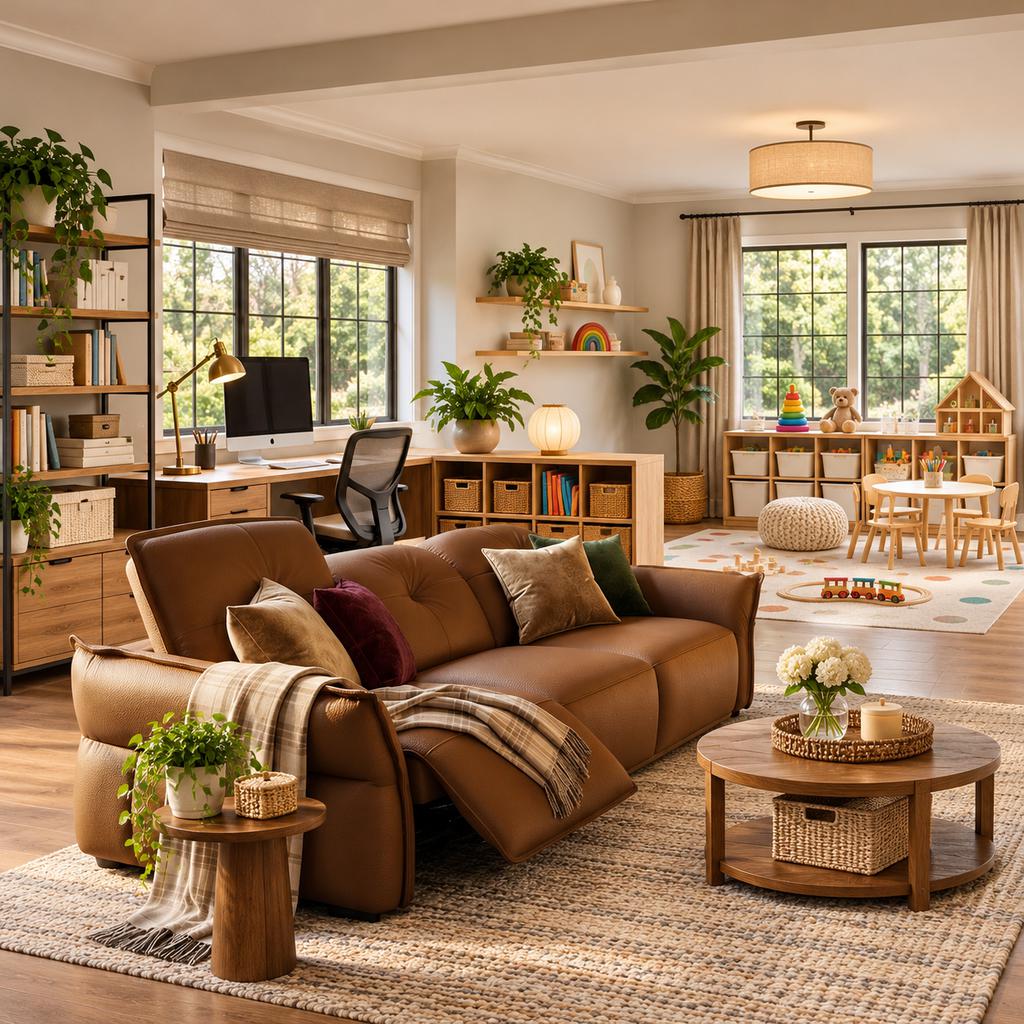
5. Choose Storage and Furniture That Earn Their Space
A home office playroom combo can quickly feel crowded when every activity gets its own piece of furniture. Prioritize items that support more than one everyday need, while keeping work equipment separate from children’s belongings.
Separate Storage for Work and Play
The easiest way to keep a shared room organized is to assign storage according to who uses it.
- Children’s storage: Use accessible bins, low shelves, and labeled containers for toys, books, and art materials.
- Office storage: Keep documents, electronics, chargers, and work accessories in closed drawers or cabinets.
- Shared supplies: Place items such as notebooks, coloring materials, and everyday stationery in a designated location that suits their users.
Keep frequently used toys close to the play area so children can find and return them without walking through the workspace. More detailed toy storage ideas for a shared living room can also help when deciding how to keep children’s belongings from spreading into adult seating areas.
Add Flexible Seating for Adult Breaks
A shared office playroom may also need a comfortable place for adults to unwind after work. In a larger room with enough space for a separate seating zone, the Aurora Power Sofa Bed offers adjustable seat depth from 27 to 45.5 inches, allowing adults to switch from everyday seating to deeper lounging. Its water- and scratch-resistant chenille also suits busy family spaces. However, leave enough clearance for the extended position so it doesn’t interfere with the children’s play area.
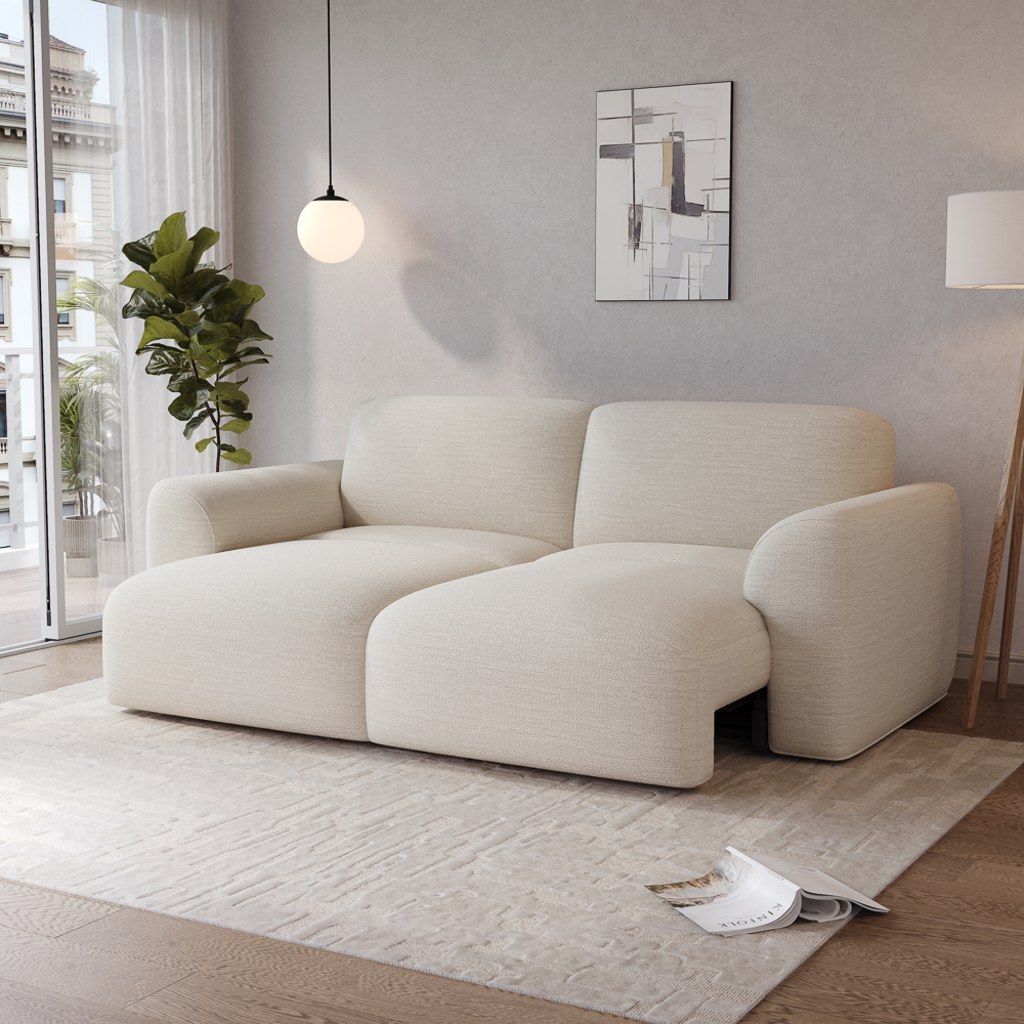
Aurora Power Sofa Bed
Powered seat-depth adjustment gives adults flexible lounging in larger shared rooms.
👍 Best for: Larger shared family workspaces
✨ 27–45.5-inch adjustable seat depth
✨ One-touch powered extension
✨ Water- and scratch-resistant chenille
For more ways to understand how powered seating changes between everyday sitting and deeper lounging, see how power sofa beds support different ways to live. Remember that powered furniture needs a nearby outlet and a clear extension area. It should never create an accessible cable hazard or block the children’s main walkway.
Add a Useful Surface Without Crowding the Play Area
Once the main seating is in place, consider whether the room needs an additional surface. A coffee table can hold drinks, books, or small everyday essentials, but it shouldn’t take up floor space that children need for play.
An adult seating corner may need a convenient place for a drink, book, or laptop during a break. However, a large table should not take up the floor space children need for everyday activities.
The Silva Lifting Top Round Coffee Table provides a compact round surface for an adult lounge area. Its top raises from 16.9 to 23.2 inches, while two drawers and concealed storage help keep smaller essentials organized. I’d consider it when the room has a separate adult seating zone, not inside the main play area. Keep the lift mechanism under adult control.
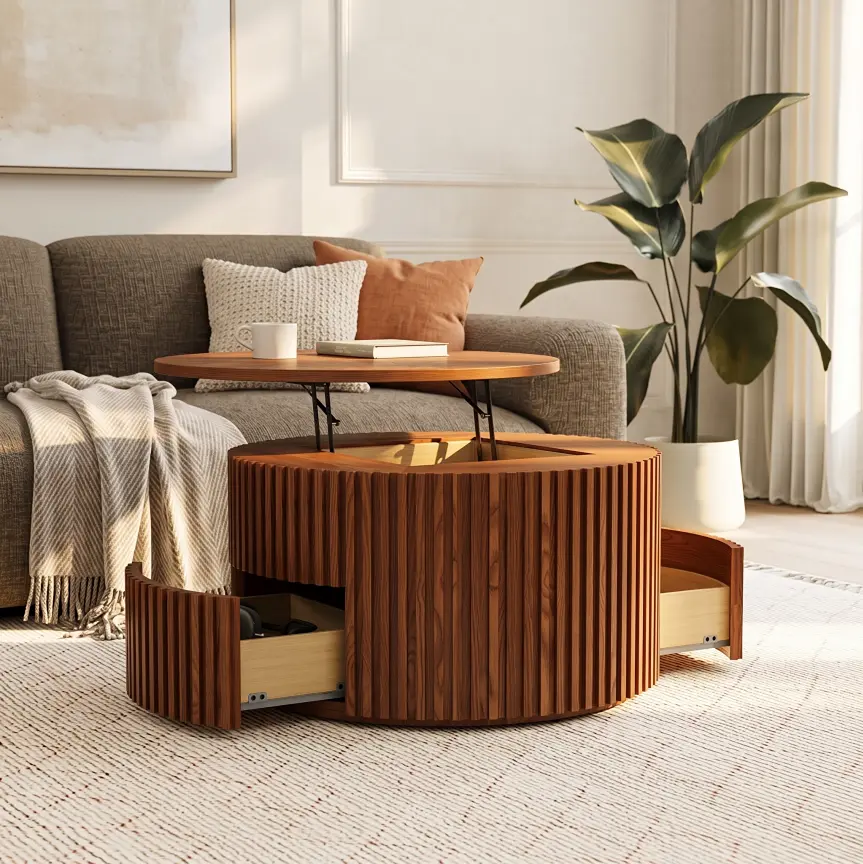
Silva Lifting Top Round Coffee Table
Lift-top access and concealed drawers keep adult essentials close without another cabinet.
👍 Best for: Adult lounge zones near play
✨ Raises from 16.9 to 23.2 inches
✨ Two built-in storage drawers
✨ Rounded 31.5-inch tabletop
6. Make Room for Adult Downtime and a Quick Reset
A shared room should remain useful after the workday ends. Once children finish playing, parents may want to relax, read, or spend time together without feeling surrounded by office equipment and toys. A flexible adult seating area can support this transition, provided it does not compete with the primary play space.
A simple end-of-day reset can make the room easier to share:
- Return toys to their designated bins.
- Put office supplies and documents away.
- Clear the desk and turn off equipment.
- Check that cords and walkways remain unobstructed.
- Restore the open floor area for the next activity.
The objective is not to move furniture every evening. Keep large pieces in stable positions and make smaller items easy to put away.
Conclusion
The best office playroom ideas make room for both productive work and everyday family activities without forcing either one into an awkward corner. Start with your family’s routines, choose a layout that fits the room, and prioritize visibility, safety, and separate storage. Add only the furniture that supports how the space is actually used, and leave enough open floor for children to play. With thoughtful planning and a simple daily reset, a shared home office can remain functional for adults while still giving children a place of their own.
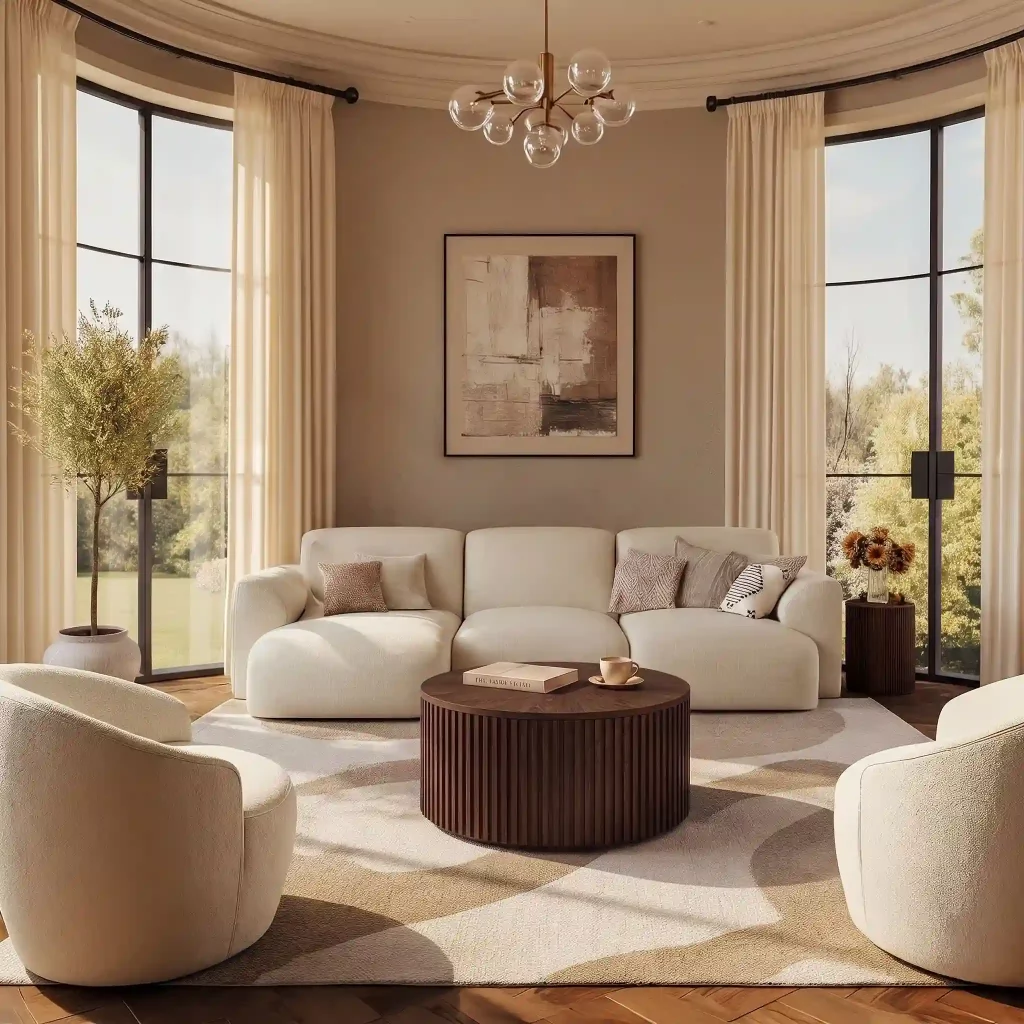
Explore Furniture for Every Room
Find thoughtfully designed furniture for living rooms, dining spaces, bedrooms, and more, with options for different layouts and everyday needs.
Frequently Asked Questions
What Toys Work Best in an Office Playroom During Work Hours?
Choose activities that match your child’s age and encourage independent play without excessive noise. Picture books, age-appropriate puzzles, coloring materials, and larger building blocks can work well. Avoid small pieces around toddlers and keep messy crafts or activities requiring close adult assistance away from periods when you need focused work.
Can Renters Create an Office Playroom Without Installing Permanent Dividers?
Yes. Area rugs, movable storage units, folding screens, and furniture placement can define separate zones without permanent construction. However, freestanding shelves and cabinets still need appropriate anti-tip protection. Check your lease before drilling, and prioritize stable furniture over decorative dividers that could fall.
How Can You Keep an Office Playroom Ready for Video Calls?
Keep the camera-facing wall simple and position toy storage outside the camera frame. Use closed bins for quick cleanup, store confidential documents, and establish a designated place for children’s supplies. A neutral background and consistent lighting can make the workspace look organized without requiring the entire room to be rearranged.
Is a Power Sofa Bed Practical in an Office Playroom?
It can work in a larger multipurpose room where adult lounging or occasional overnight use is genuinely needed. Check the sofa’s closed footprint, extended seating depth, outlet location, and forward clearance. For a small office playroom, a fixed loveseat or accent chair may preserve more usable floor space.
How Should an Office Playroom Change as Children Get Older?
As children grow, replace some floor-play space with age-appropriate desks, reading areas, or craft storage. Toddlers need closer supervision and fewer accessible hazards, while school-age children may benefit from a separate homework surface. Reassess furniture placement as activities and independence levels change.


[…] a parent works while a child studies, use two separate work surfaces when both need the room simultaneously. Shared storage can sit […]