 By Kelvin
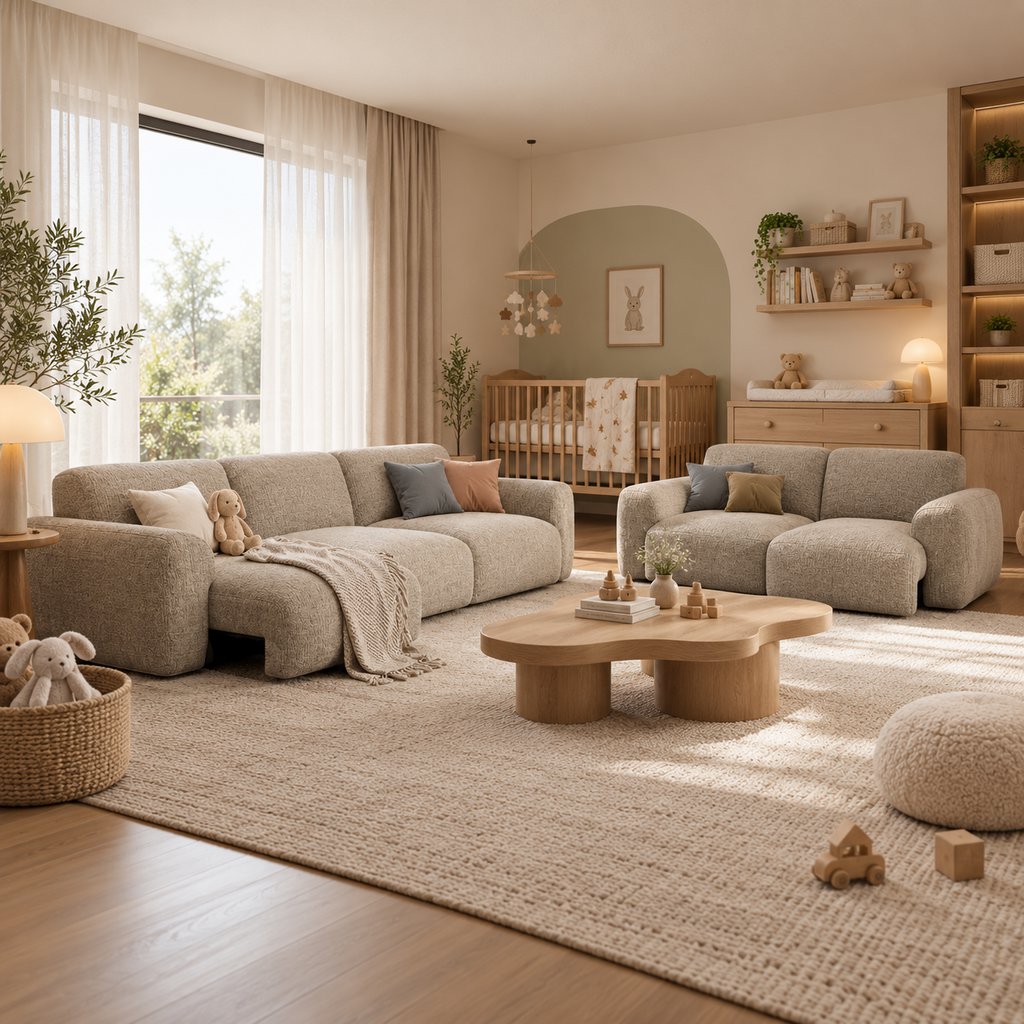
A nursery and guest room combo can give your baby a dedicated care space while keeping a comfortable place for visiting family and friends. The challenge is arranging a crib, changing area, and adult sleeping space without crowding the room or disrupting nighttime routines. The most practical solution depends on your room’s shape, how often guests stay overnight, and which furniture needs to remain in place every day. These six layout ideas cover different room sizes, guest bed options, and space-planning decisions to help you create a setup that works for your family.
Table of Contents
How to Plan a Nursery and Guest Room Combo
Start with the activities that happen every day, then fit occasional guest needs around them. A successful layout should make baby care convenient without requiring you to rearrange the entire room whenever relatives visit.
Prioritize the Baby’s Daily Routine
Place the crib where you can reach it easily and maintain a clear route for nighttime care. Position the changing area near frequently used supplies, and keep diapers, clothing, and other essentials organized in accessible storage.
Next, identify the permanent footprint available for an adult bed or sofa bed. If your family hosts grandparents only a few times a year, a flexible sleeping arrangement may make more sense than dedicating most of the room to a second bed.
Map the Room Before Buying Furniture
Measure the room and mark the door swing, windows, closet openings, electrical outlets, and existing furniture. Then draw the footprint of each proposed piece, including drawers, pull-out sections, and fully extended sleeping surfaces.
A layout that looks spacious in a photo may not work when a closet door opens or someone needs to reach the crib at night. Similar principles apply when planning small living room layouts: protect essential movement paths before adding secondary furniture.
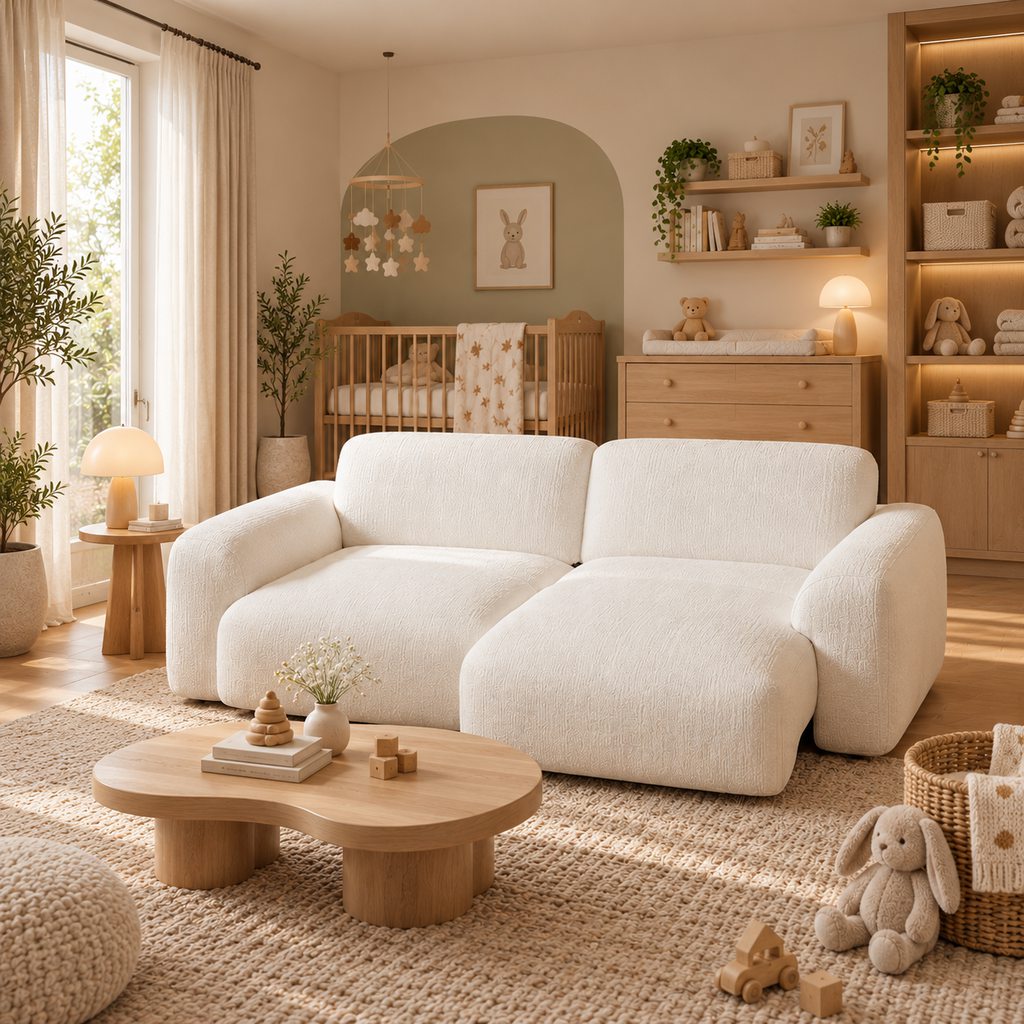
Which Guest Bed Works Best for a Shared Nursery and Guest Room?
The right guest bed depends on how frequently you host, whether the room needs everyday seating, and how much floor space you can spare. Compare each option by its normal footprint, conversion requirements, and comfort for the adults who will use it.
| Guest bed type | Best suited for | Main advantage | Important limitation |
| Sofa Bed | Rooms that need everyday adult seating | Combines seating and guest sleeping | Needs clearance when extended |
| Daybed | A room with space for a permanent single bed | Works as seating and a sleeping surface | Occupies floor space all day |
| Murphy Bed | Occasional guests in a room that needs open floor space | Folds away when not in use | Requires suitable installation and opening clearance |
| Trundle Bed | A room that needs an extra sleeping surface | Stores a second bed beneath the main bed | Needs space to pull out |
| Regular Guest Bed | Frequent or longer guest stays | Always ready for overnight use | Takes up a permanent footprint |
6 Nursery Guest Room Layout Ideas for Different Homes
The best layout is not necessarily the one with the most furniture. It is the arrangement that protects the baby’s daily care area while giving adults a usable place to sleep. Choose from these six setups according to the room’s shape, existing furniture, and how much flexibility you need.
1. Place a Sofa Bed Along the Longest Wall
Best for: Rooms that need everyday adult seating and occasional guest sleeping.
Position a sofa bed against the longest suitable wall, with the crib and changing area arranged separately. Keep the extension zone free of permanent storage, side tables, and other furniture that would need to be moved every time a guest stays.
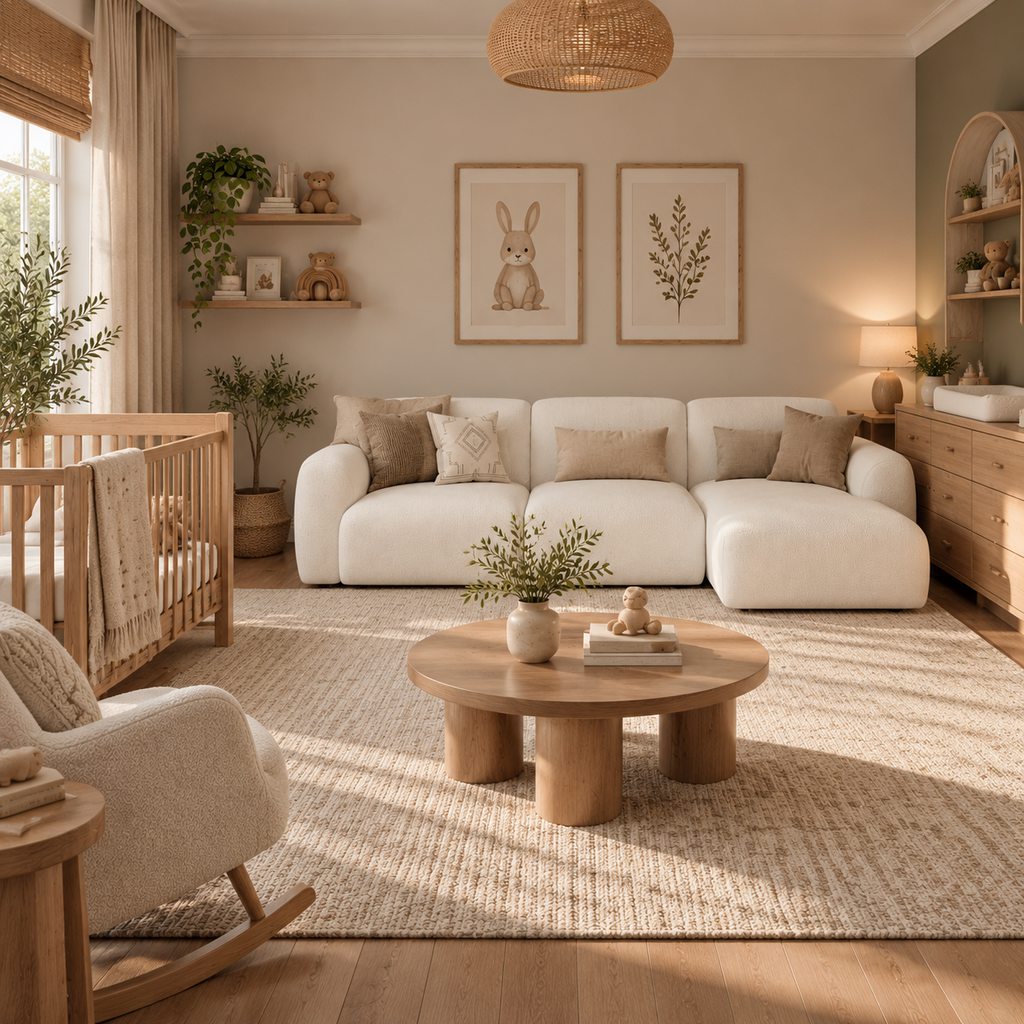
When the room needs flexible seating more often than a dedicated guest bed, the Aurora Power Sofa Bed offers one-touch seat-depth adjustment from 27 to 45.5 inches. Its 83-inch width and 41-inch closed depth help with initial space planning, but the fully extended footprint still needs checking. It works best when the room can preserve clear access to the crib.

Aurora Power Sofa Bed
A cream sofa keeps adult seating available while accommodating occasional overnight visitors.
👍 Best for: Flexible seating and occasional guests
✨ One-touch seat-depth adjustment
✨ Chenille upholstery
✨ 27–45.5-inch adjustable seat depth
2. Arrange the Crib and Guest Bed Along Opposite Walls
Best for: Rectangular rooms with two usable walls.
Place the crib along one wall and the adult bed along the opposite wall, leaving the center open for movement. Position the changing table or dresser where supplies remain accessible without blocking either sleeping area.
This layout makes each function easy to identify and can work well when grandparents visit. However, it needs enough width to accommodate both furniture pieces and a usable route between them. Avoid squeezing a guest bed into the room if doing so makes nighttime care difficult.
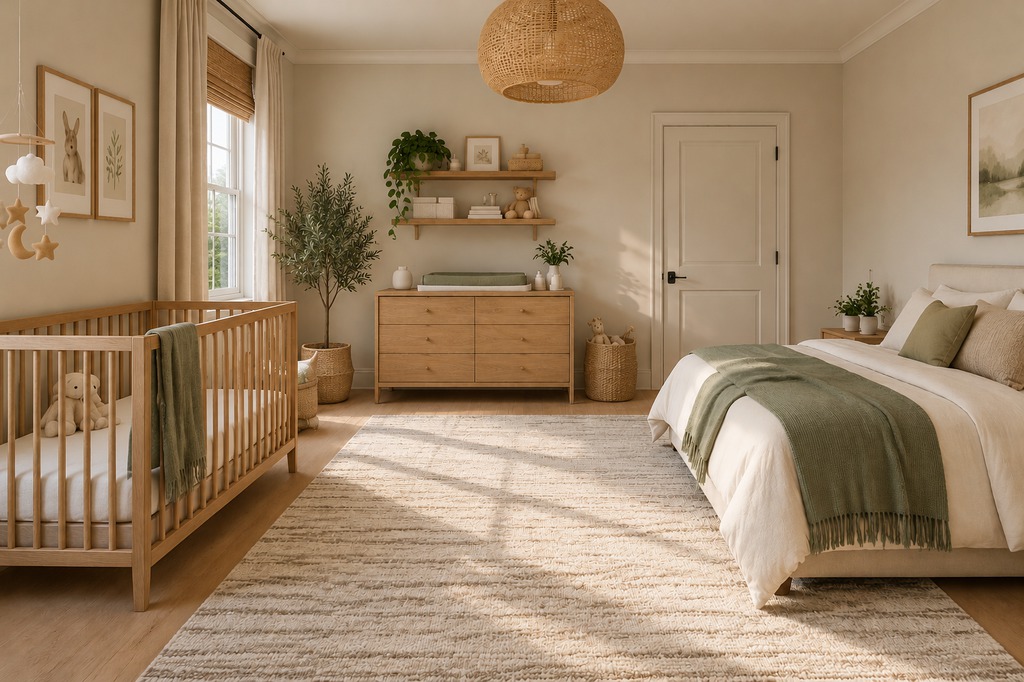
3. Keep the Existing Guest Bed
Best for: Rooms that already have a suitable adult bed.
If the room already contains a guest bed, first test whether a crib and changing area can fit without compromising access. You may be able to make the arrangement work by replacing bulky nightstands with smaller surfaces, moving a dresser, or using vertical storage.
This option avoids buying another sleeping product, but it is only practical if the remaining floor area supports daily baby care. If you must move the crib or remove essential storage every time someone visits, reconsider the arrangement.

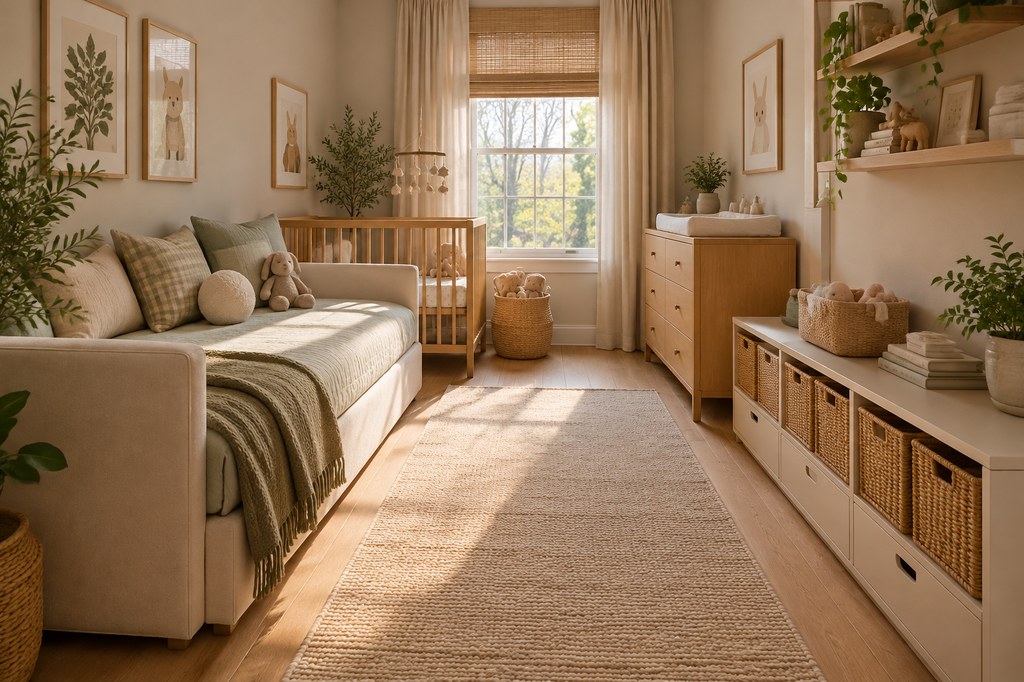
4. Use a Daybed With Low Storage
Best for: Narrow rooms that need a permanent single sleeping surface.
Place a daybed along one wall and use low storage on another to keep baby supplies organized without making the room feel crowded. A daybed can also serve as a convenient resting spot for a parent during the day.
Unlike a sofa bed, a standard daybed does not need extra floor depth to convert into a bed. That can be useful in a narrow room where forward extension would obstruct circulation. The trade-off is that the sleeping surface remains in place, so check the available space before committing to this layout.
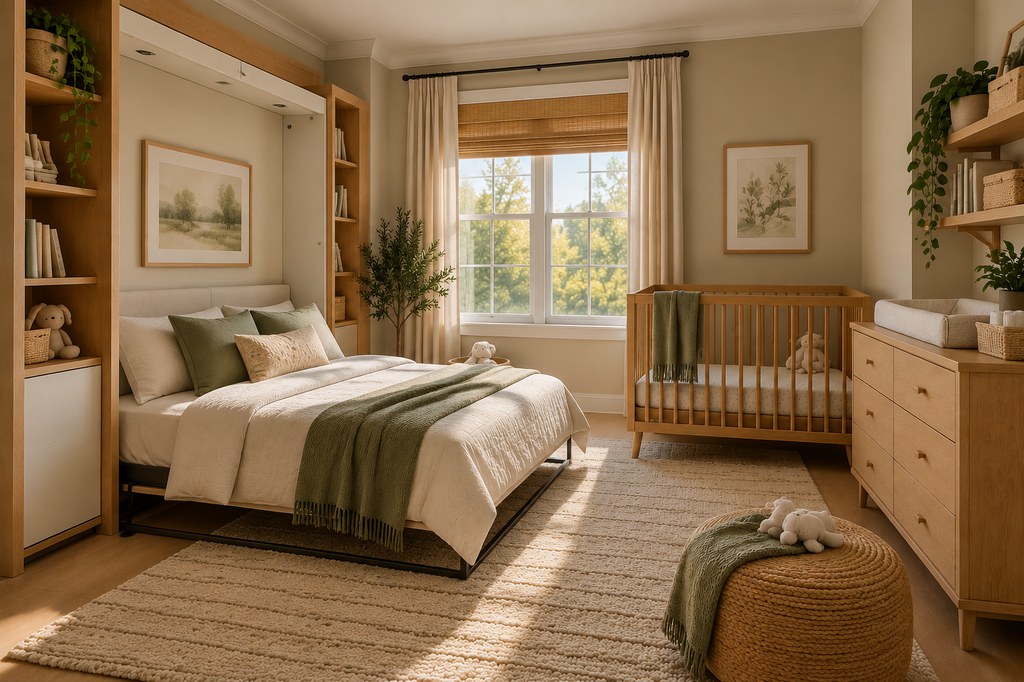
5. Choose a Murphy Bed for Occasional Visits
Best for: Rooms that need open floor space most days.
A Murphy bed can fold away when it is not being used, leaving more room for everyday nursery activities. Position the unit where it can open fully without interfering with the crib, changing area, closet, or main walkway.
Check the installation requirements, floor clearance, and manufacturer’s safety instructions before selecting this setup. The folded unit also occupies wall space, so confirm that its placement does not conflict with windows, doors, or other essential features.
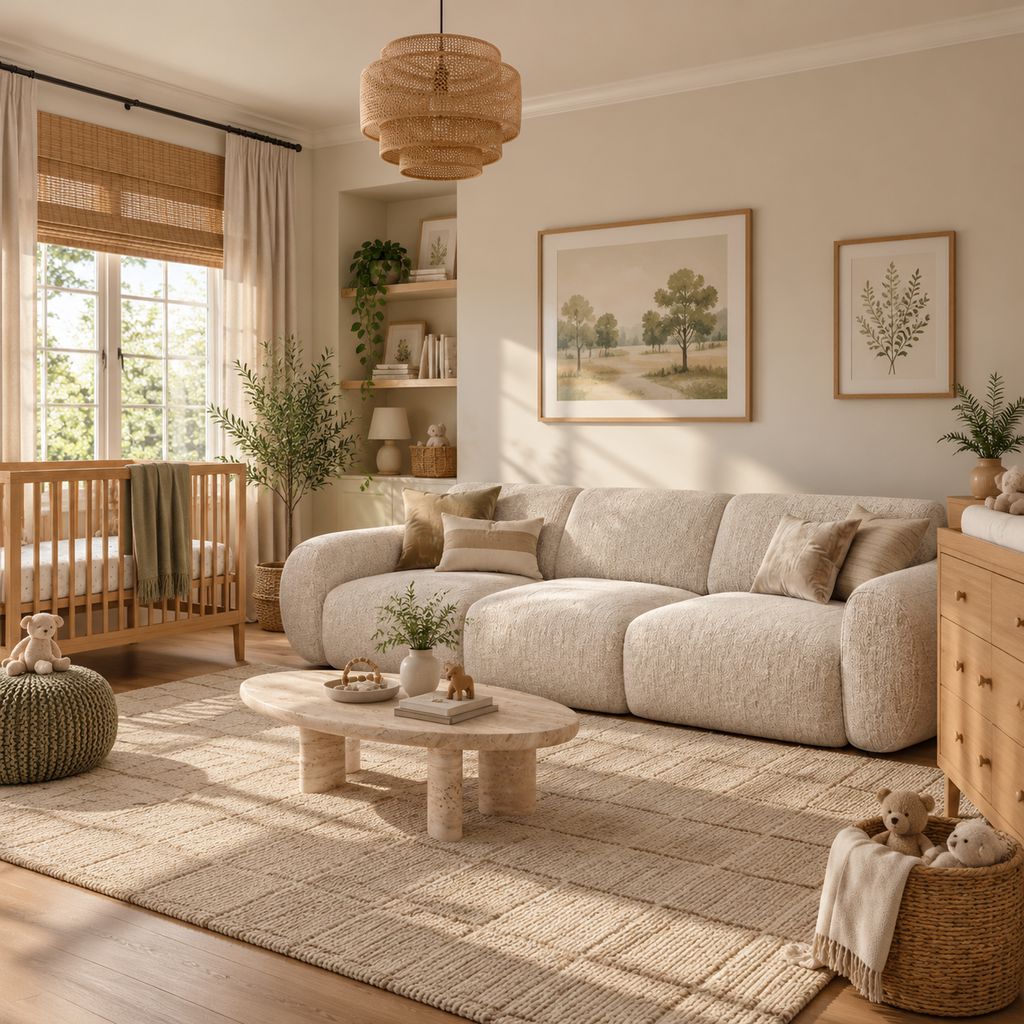
6. Create Separate Zones in a Larger Room
Best for: Larger rooms where both functions need dedicated space.
Use the room’s shape to establish a baby-care zone and an adult sleeping zone. A dresser or appropriately positioned storage unit can help visually distinguish the areas, provided it does not block access or create a tipping hazard. Keep the crib away from windows, cords, and other hazards.
For a larger room that hosts relatives for several nights, the Mila Power Sofa Bed offers an adult seating area with an adjustable 32–59-inch seat depth and a backrest that reclines from 105° to 180°. Its 90-inch width and 52-inch depth require more room than compact options. Consider it only if the extended footprint leaves the crib and care area easy to reach.
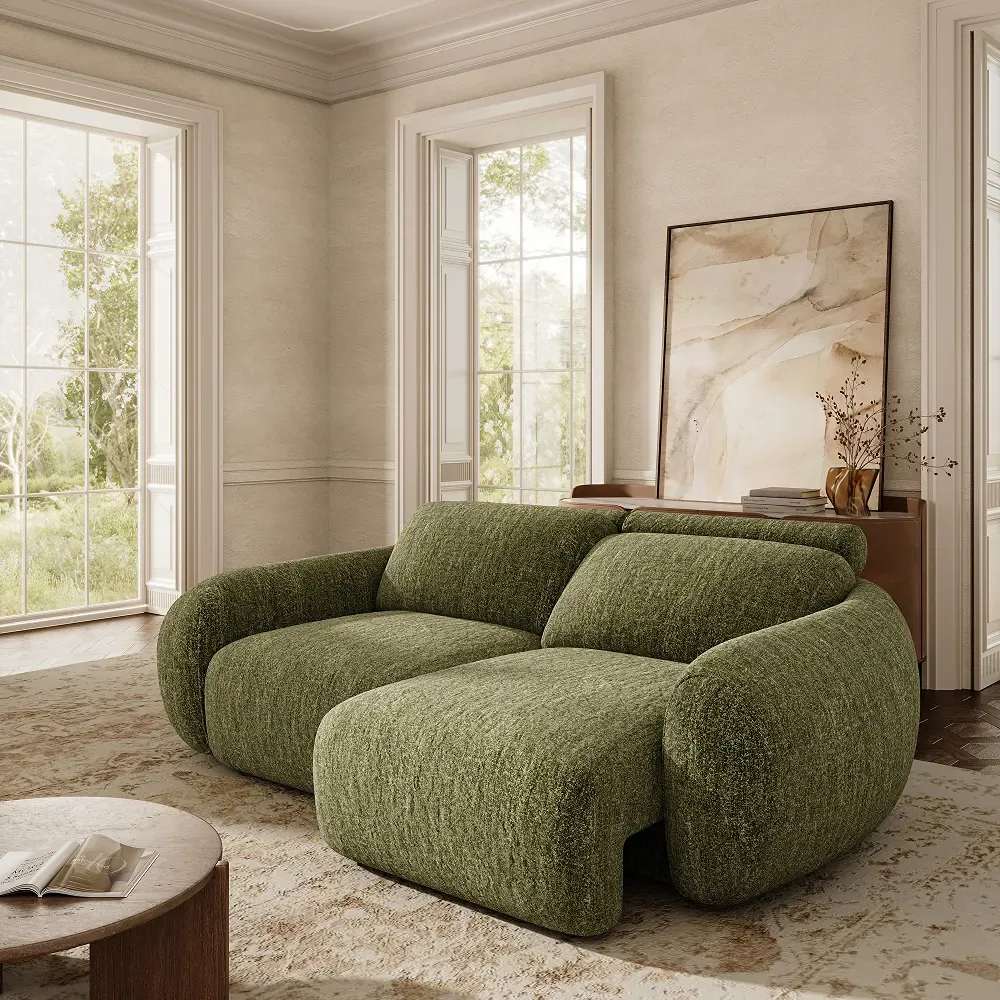
Mila Power Sofa Bed
Roomy adult seating supports frequent overnight visits when the nursery has ample clearance.
👍 Best for: Larger rooms hosting overnight guests
✨ Adjustable 32–59-inch seat depth
✨ 105°–180° reclining backrest
✨ Oversized sofa-bed design
This arrangement works when guests stay more frequently or need a more private sleeping area. You can also include a separate chair for feeding or soothing if space allows. The main drawback is that two distinct zones require enough room to remain functional without crowding the center.
How Much Space Does This Shared Room Need?
There is no single room size that guarantees a successful layout. The answer depends on the dimensions of your furniture, the space needed to use it, and the location of doors, closets, and windows.
Use these mattress dimensions as a starting point for planning adult beds:
- Twin: Approximately 38 × 75 inches.
- Full: Approximately 54 × 75 inches.
- Queen: Approximately 60 × 80 inches.
These are nominal mattress dimensions, not the complete footprint of the bed frame. Cribs, dressers, and convertible furniture also require their own measurements.
Before buying, record the following:
- The crib’s external dimensions and space needed for care.
- The guest bed’s full dimensions, including its extended configuration.
- The clearance needed to open drawers, closets, and doors.
- The available route between the room entrance, crib, and changing area.
For more flexible seating and sleeping options, compare living room and guest room layouts to see how convertible furniture can serve different room functions. Apply the same measurement principle here, but prioritize nursery access and safety over maximizing guest capacity.
What to Check Before Guests Arrive
A room is ready for guests when the sleeping area works without disrupting the baby’s routine. Run through this short checklist before each stay:
- Confirm that the guest bed opens fully without blocking the main walkway.
- Store guest bedding separately from everyday baby supplies.
- Check nighttime lighting and keep cords and window coverings safely arranged.
- Keep the crib’s sleep surface clear of pillows, loose blankets, and soft toys.
- Make sure furniture remains stable and is anchored where appropriate.
For infants, use an appropriate crib or other approved infant sleep product with a firm, flat surface. Room-sharing without bed-sharing is recommended for at least the first six months, so a shared nursery and guest room should never compromise the baby’s safe sleep arrangement.
When comparing flexible adult seating and sleeping configurations, power sofa beds for more ways to live can help you evaluate options for everyday seating and overnight guests.
Conclusion
A nursery and guest room combo works best when the layout balances the baby’s daily routine with the needs of visiting adults. Start with the crib and care area, choose a guest bed based on hosting frequency, and measure every furniture footprint before buying. Sofa beds, daybeds, Murphy beds, and regular guest beds can all work under the right conditions, but none suits every room. The goal is to preserve safe infant sleep, convenient care, and comfortable adult accommodation without requiring constant rearrangement.

Find the Right Power Sofa Bed
Explore adjustable sofa beds for everyday seating and overnight guests.
FAQs
Can a nursery guest room combo work for week-long guest visits?
Yes, if the room provides comfortable adult sleeping space, a place for luggage, and enough privacy for a longer stay. If guests need to use the room during the day, choose a bed that does not require daily rearranging and keep their belongings separate from the baby-care area.
Can renters create a nursery guest room without drilling?
Yes. Freestanding storage, movable furniture, and portable privacy screens can define separate areas without permanent alterations. Keep screens stable, maintain clear exits, and avoid attaching heavy items to walls without permission. Check that the crib and changing area remain accessible after rearranging furniture.
Do you need a separate nursery chair if you have a daybed?
Not necessarily. A daybed may provide a place to sit, but its height, back support, and seating depth may not suit every feeding or soothing routine. If you spend extended periods holding your baby, assess whether the daybed offers comfortable support before eliminating a dedicated chair.
How should guest bedding be stored in a nursery?
Store guest sheets, blankets, and pillows in a designated cabinet, closet, or lidded container away from the crib. Keep adult bedding separate from infant sleep supplies, and remove loose bedding from the crib before every sleep period. Choose storage that remains accessible without blocking walkways.
Can two adults share the guest bed in a nursery?
A Full mattress, approximately 54 × 75 inches, can accommodate two adults but may feel cramped for several nights. A Queen mattress, approximately 60 × 80 inches, provides more room but takes up more floor space. Measure the bed frame as well as the mattress, and preserve access to the crib.


