 By Stephanie

If your couch cushions sink in the middle, look flat, or leave you sitting lower than everyone else, you may be able to restore them without replacing the entire sofa. Learning how to fix sagging couch cushions starts with identifying whether the problem comes from compressed filling, worn foam, or weakened support underneath. Each requires a different repair. This guide explains how to diagnose the problem, restore damaged cushions, handle attached upholstery, and check whether your repair will hold up to everyday use.
Table of Contents
Quick Diagnosis: Why Are Your Couch Cushions Sagging?
Before making repairs, check whether the problem comes from the cushion filling, foam, or support underneath. Use these quick signs to identify the likely cause.
| What You Notice | Likely Cause | What to Do |
| Cushion looks flat but still rebounds | Compressed filling or batting | Redistribute or replace filling |
| Cushion stays dented after sitting | Worn foam core | Replace the foam |
| Cushion feels firm on the floor but sinks on the sofa | Weak seat foundation | Inspect springs or webbing |
For removable cushions, press the affected cushion on a firm, flat surface to check its support. If the problem comes from the frame or springs rather than the cushion, focus on repairing a sagging sofa base instead.
How to Fix Sagging Couch Cushions Based on the Damage
Once you’ve identified the problem, follow the repair method that matches your cushion’s construction. Start with materials you can safely access, and make one adjustment at a time so you can evaluate the result. Keep a tape measure, replacement filling, and upholstery tools nearby as needed. Avoid changing multiple layers at once, since that makes it harder to tell which repair worked.
Restore Loose or Flattened Cushion Filling
If the cushion still rebounds but looks thinner than it used to, you may be able to fix sagging couch cushions without replacing foam. The right approach depends on whether the cushion contains loose filling or a foam core wrapped in batting.
For loose-fill back cushions, unzip the cover, gently separate clumped polyester fibers, and redistribute the filling toward empty corners. Replace badly matted filling that no longer separates easily. Add small amounts of matching fiberfill where needed, then smooth the cushion from the outside to check its shape.
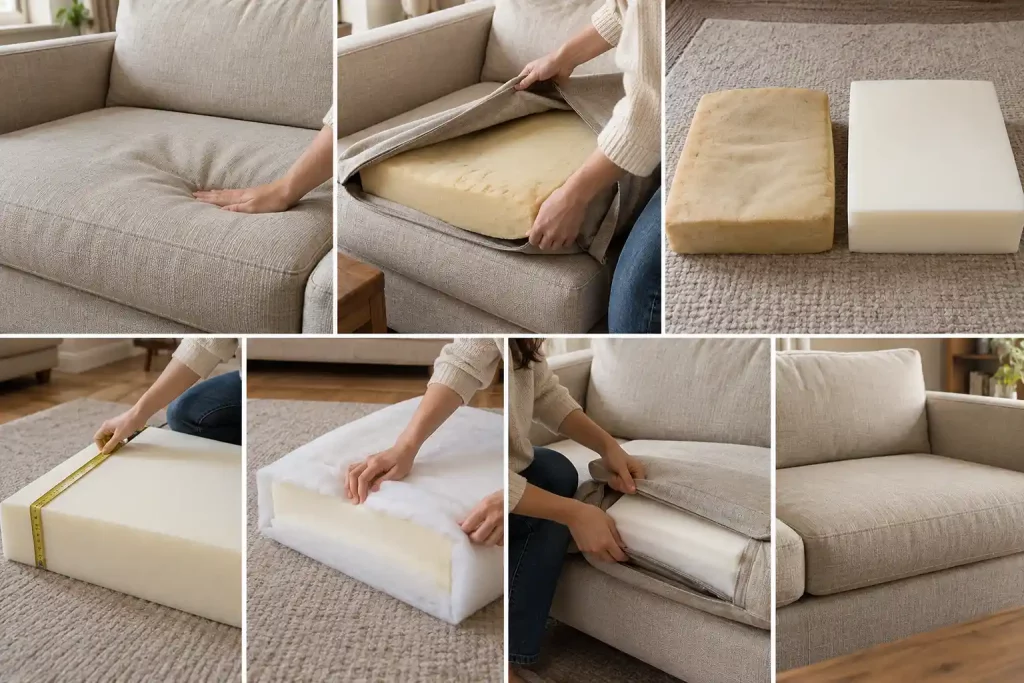
For foam seat cushions, remove the insert and inspect the batting around the core. If the foam remains resilient, replace flattened or torn batting with an even wrap, keeping the corners smooth and avoiding thick overlaps.
Close the cover without forcing the zipper. The cushion should look full without bulging or placing excess tension on the seams. Avoid packing loose fiberfill around a foam core to compensate for permanent dents; damaged foam needs a different repair.

Replace Collapsed Foam Without Changing the Seat Height
If a cushion retains a deep indentation after use, the foam may have lost its ability to recover. Adding batting might improve its appearance temporarily, but replacing the damaged core is usually more effective.
The goal is to restore support without making one seat taller or firmer than the others.
- Compare the inserts. Remove the worn foam and compare its thickness, edges, and shape with a less-used matching cushion.
- Measure the replacement. Record the original width, depth, and thickness. If the foam is badly distorted, refer to the manufacturer’s specifications or an undamaged cushion.
- Match the seating feel. Choose upholstery foam with suitable density and firmness to avoid creating an uneven seat.
- Restore the cushion shape. Add an even batting wrap if needed, fit the new foam into the cover, and close the zipper without stretching the seams.
Avoid adding extra foam thickness just to raise the seat. If the replacement feels too hard, choosing firmer replacement foam requires balancing density, firmness, and thickness for everyday comfort.
Check the Support Beneath a Healthy Cushion
For a stationary sofa with an intact but slightly flexible seat foundation, a properly fitted support board may help distribute weight more evenly. Make sure it rests securely without pressing against exposed hardware or creating a raised edge.
Do not use a support board to cover broken springs, detached webbing, or cracked frame components. Avoid adding rigid boards around reclining mechanisms or electrical parts. Structural damage requires professional assessment rather than another layer of cushioning.
How to Fix Attached Couch Cushions Without Removing Them
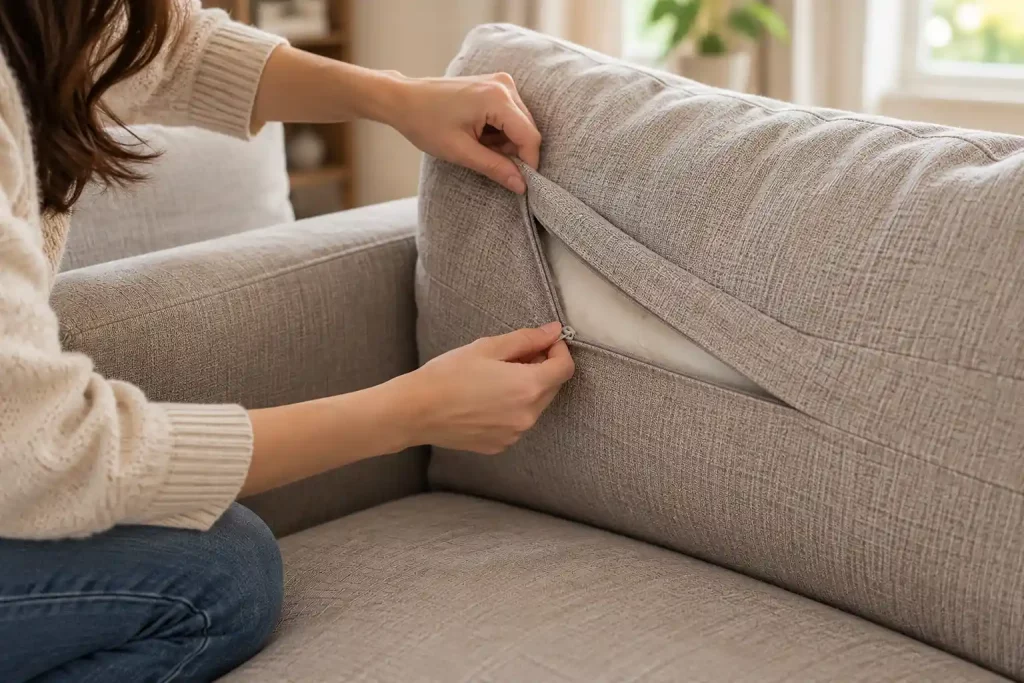
Attached cushions may have hidden zippers or covers secured directly to the frame. Before making repairs, check the underside and back seams for an accessible opening.
If there’s a hidden zipper:
- Open it carefully without pulling on the upholstery.
- Check whether the cushion contains loose filling or a foam insert.
- Redistribute flattened filling or replace damaged foam with a matching insert.
- Smooth the cushion and close the zipper without forcing it.
If there’s no zipper: Check the manufacturer’s instructions before attempting repairs. Some fixed cushions require professional upholstery work to access the filling.
Avoid cutting seams or pulling apart attached upholstery, as this may damage the fabric or affect warranty coverage.
How Can You Tell If the Cushion Repair Worked?
A successful cushion repair should improve more than its appearance. The repaired seat needs to support your weight comfortably and recover its shape after ordinary use.
Start by comparing the repaired cushion with an adjacent seat that has not been modified.
- Before sitting: Check whether the cushion surface is even and the front edge matches the neighboring seat.
- After 10–15 minutes of sitting: Stand up and observe whether the cushion returns toward its original shape without a persistent low spot.
- While seated: Notice whether your hips sink significantly deeper than on the neighboring cushion or whether you can feel the hard support underneath.
- Around the cover: Look for tight seams, raised corners, or wrinkles caused by unevenly positioned filling.
Repeat the check after several days of normal use. Different foam types recover at different speeds, so compare the repaired cushion with its intended feel rather than expecting every material to rebound instantly.
If the cushion quickly develops the same indentation, reassess the foam or underlying support before adding more filling.

Power Sofa Beds: When Cushion Repairs Aren’t Enough
When several cushions have lost their support and the sofa’s foundation is also deteriorating, repeated repairs may no longer be worth the expense. Replacing the sofa also gives you a chance to improve everyday comfort. A power sofa bed extends its cushioned seat electronically, offering more room to lounge without unfolding a separate mattress like a traditional pull-out sleeper.
The Aurora Power Sleeper Sofa combines high-resilience foam with responsive cushioning for everyday seating. For families who alternate between sitting upright and stretching out, its one-touch extension adjusts the seat depth from 27 to 45.5 inches. Unlike a fixed-depth sofa, it offers more flexibility without requiring a separate pull-out mattress.
A power sofa bed is worth considering when you need both supportive everyday seating and flexible lounging space. Check the sofa’s width and available floor clearance in its fully extended position before replacing your current furniture.

Aurora Power Sleeper Sofa
A practical upgrade when repeated cushion repairs no longer make sense.
Conclusion
If you’re deciding how to fix sagging couch cushions, start with the condition of the insert rather than the appearance of the sofa. Choose a repair that addresses the worn material, preserves the original cushion fit, and feels comfortable during normal sitting. Recheck the repaired seat after several days instead of judging it immediately. When the upholstery cannot be opened safely or the underlying structure is failing, professional repair may be more appropriate. A targeted cushion replacement can extend the life of a sofa you still enjoy, while widespread damage may justify replacing it.

When Cushion Repairs Aren’t Enough
Explore power sofa beds with responsive cushioning and adjustable seating for everyday comfort.
FAQ
Can I replace only one sagging couch cushion?
Yes, if the other cushions remain supportive. Match the replacement’s thickness, shape, and firmness to neighboring seats. If multiple cushions have deteriorated, replacing them together may create a more consistent seating surface.
Can I wash cushion covers before replacing the foam?
Only if the care label permits washing. Some upholstery fabrics can shrink or lose their finish. Follow the recommended washing and drying instructions, and let the cover dry completely before reinstalling the foam.
Can I use leftover foam scraps to refill cushions?
Shredded foam may work for cushions designed for loose filling, such as certain back cushions. Avoid using uneven scraps to replace a solid seat cushion core, as they may create lumps and inconsistent support.
Can leather sofa cushions be restuffed?
Yes, but preserving the original cushion dimensions is especially important. Leather covers may retain stretching or creases caused by oversized inserts. Match the replacement filling to the original shape, and avoid forcing the cover closed. Professional upholstery work may be needed for delicate or tightly fitted leather.
What if pets have damaged the cushion filling?
Inspect the foam, inner lining, and cover for tears or loose fragments. Replace damaged or contaminated filling, repair exposed fabric, and remove small pieces that pets could swallow. Adding stuffing alone will not correct a torn cushion insert.


[…] Cushion has deep sagging or no access point […]
[…] the toughest fabric will fail early if it’s wrapped around a weak frame or sagging cushions. Look for kiln-dried hardwood or high-quality engineered wood frames; these resist warping, which […]