 By Stephanie
A futon that feels too hard at night or awkward to sit on during the day doesn’t automatically need replacing. The problem could be the mattress, the frame underneath, or the way the futon folds into a couch. If you’re wondering how to make a futon more comfortable, start by checking when and where the discomfort happens. These seven practical fixes will help you improve sleeping and sitting comfort without interfering with the folding mechanism. They focus on common convertible futons with separate mattresses, though several adjustments also apply to models with integrated cushions.
Table of Contents
Why Does Your Futon Feel Uncomfortable?
A futon uses the same basic surface for sitting and sleeping, but each position puts pressure on different parts of the mattress and frame. A mattress that feels reasonably supportive when flat may slide forward or bunch up when folded. Likewise, a stable seat can develop pressure points when opened into a bed.
Before making changes, test the futon in both positions.
| When You Notice Discomfort | What to Check | What It May Indicate |
| Only when lying flat | Check the center fold and mattress alignment | Uneven folding or frame pressure |
| Only when sitting upright | Sit down and stand up several times | Mattress movement or seat angle |
| The same spot sags in both positions | Press the affected area in each position | Worn or compressed mattress filling |
| A hard spot appears over one section | Inspect the support directly underneath | Damaged slat or exposed frame pressure |
| You must sit forward to keep your feet down | Check usable seat depth and height | Seating proportions that don’t fit your body |
A futon that forces you to perch near the front has a similar fit problem to a couch that’s too deep for comfortable upright sitting. However, a futon may also change shape as its mattress folds, so check its position before adding cushions.
Pay attention to whether the discomfort remains in the same spot after switching modes. That distinction helps you decide whether the mattress needs repositioning, the frame needs attention, or the seating setup needs adjusting.
How to Make a Futon More Comfortable: 7 Practical Fixes
Start with adjustments that don’t require buying anything. A poorly positioned mattress or loose frame component can create discomfort that extra cushioning won’t solve. Once the futon sits evenly and operates correctly, you can address surface firmness and everyday seating support. These fixes cover both sleeping and sitting, with different steps depending on when the problem occurs.
1. Reposition the Mattress for an Even Surface
If your futon feels lumpy or uneven when unfolded, check whether the mattress is sitting correctly on the frame.
Open the futon completely and make sure it reaches its intended sleeping position. Center the mattress and check that the sections near the folding point lie flat.
If the mattress bunches up, lift and reposition it instead of pressing the extra material toward one end. Smooth out the surface and lie down again.
A ridge that disappears after repositioning was likely caused by how the mattress settled during conversion. If you still feel a hard line directly over a frame joint, move on to checking the support underneath.
2. Check the Frame and Slat Support
A hard bar beneath the mattress or an area that sinks noticeably lower than the rest may indicate a support problem.
If your futon has a removable mattress, lift it away and inspect the frame. Look for cracked wooden slats, bent metal supports, loose connections, or missing hardware.
Check whether the frame sits evenly on the floor when opened. If a section moves independently or appears damaged, stop using the futon until the problem has been addressed.
Tighten loose hardware according to the manufacturer’s instructions, and replace damaged components with compatible parts.
Avoid adding plywood across folding joints unless the manufacturer specifically approves it. A rigid board may interfere with the mechanism or place pressure on moving components.
3. Add a Mattress Topper for Extra Cushioning
If the mattress feels uniformly firm but remains flat and supportive, a removable topper can make sleeping more comfortable.
Memory foam contours around the shoulders and hips, while latex provides a more responsive feel. A thinner quilted pad may be enough when the mattress only needs a small amount of extra softness.
For anyone considering how to make a futon more comfortable for sleeping, a topper is most useful when the underlying mattress is still in good condition.
The same factors involved in choosing a memory foam mattress topper for a sofa bed—firmness, thickness, and storage—can help narrow your options.
For overnight use, finish with a smooth, breathable sheet and a supportive sleeping pillow. These small adjustments can make the surface feel more comfortable without adding bulky layers that need to be removed every morning.

4. Rotate the Mattress to Reduce Uneven Wear
A futon mattress may develop compressed areas where people sit most often, especially along the seat and folding sections.
If your mattress is removable and the manufacturer permits rotation, turn it from head to foot to distribute use across different areas. Flip it only if its construction is designed for double-sided use.
After repositioning the mattress, let it settle into its intended shape before testing both seating and sleeping positions.
If the same deep impression remains after rotation, the filling may have permanently compressed. Regular repositioning can help distribute future wear, but it cannot restore a mattress that has lost its internal support.
5. Stop the Futon Mattress From Sliding
A futon mattress that moves forward every time someone sits down can make the seat feel unstable, even when the cushioning itself is comfortable.
Start by checking whether the mattress is centered and whether its original retaining straps or fasteners are properly secured.
For a separate futon mattress, a compatible non-slip pad between the mattress and frame may reduce movement. Choose one that won’t damage the upholstery or interfere with the hinges.
Test the setup by sitting down, standing up, and changing positions several times.
If the mattress still slides noticeably, check whether its size and thickness meet the frame manufacturer’s requirements. A mattress that doesn’t fit the frame correctly may be difficult to stabilize with accessories alone.
6. Improve Back Support Without Losing Seat Space
When a futon folds into sofa mode, the mattress may leave a gap behind your lower back or shift toward the seat. Even a cushioned futon can feel uncomfortable if your back doesn’t have consistent support.
First, make sure the mattress is positioned correctly against the backrest. If there’s still a gap, try adding one firm lumbar cushion rather than stacking several pillows.
Sit back for a few minutes to see whether the cushion stays in place without pushing you toward the front edge. If it keeps slipping whenever you change positions, check the mattress retainers before adding more cushions.

7. Adjust the Sitting Position and Seat Angle
Sometimes the futon mattress feels fine, but the folded frame creates an awkward sitting position.
Make sure the backrest has fully locked into its intended seating position. If your futon offers several manufacturer-approved reclining angles, try the available settings to find one that supports your back without making you slide forward.
Check the front edge as well. A mattress that bunches up near your knees can create pressure beneath your thighs.
Your feet should rest comfortably on the floor, with enough support beneath your legs to sit without constantly adjusting your position.
If the frame has a fixed angle that remains uncomfortable, extra cushions may provide limited relief. The problem may be the seating design rather than the mattress.
Will These Fixes Still Work When You Fold the Futon?
An improvement that works in bed mode isn’t necessarily practical when the futon becomes a couch. Before treating a new pad, cushion, or mattress adjustment as a permanent solution, check how the entire setup behaves during normal conversion.
Use this three-part test:
- Test the sleeping position. Open the futon completely, lie down, and check for pressure points or shifting layers. Confirm that nothing extends into the frame’s moving sections.
- Return to sofa mode. Remove accessories that aren’t approved for folding, then close the frame without forcing it. Make sure the backrest locks correctly and the mattress doesn’t bunch up.
- Test everyday sitting. Sit down, lean back, and stand up several times. Check whether the mattress stays in place and whether your cushions leave enough usable seat depth.
Repeat the conversion once more. A setup that only works after extensive repositioning may become inconvenient if you switch between sitting and sleeping every day.
For example, a futon in a guest room may only need a removable topper a few weekends each year. In a studio apartment, where the same furniture serves as the main couch and bed, a simpler arrangement may be more practical.
The goal is to improve comfort without losing the flexibility that made the futon useful in the first place.
When Should You Replace the Mattress, Frame, or Futon?
If the adjustments haven’t solved the problem, the next step depends on which part of the futon is no longer working properly.
| Condition | What to Consider |
| Mattress feels firm but remains level | Keep the futon and adjust surface cushioning |
| Mattress has lasting impressions or uneven filling | Replace it with a compatible futon mattress |
| Frame has damaged supports or won’t lock securely | Stop using it and arrange proper repair or replacement |
| Sitting and sleeping positions remain uncomfortable despite appropriate fixes | Consider a different convertible furniture design |
Replacing just the mattress can be a reasonable option when the frame is still stable and functions correctly. But if the futon no longer suits how your household uses the room, changing the furniture design may offer more lasting benefits than adding accessories.
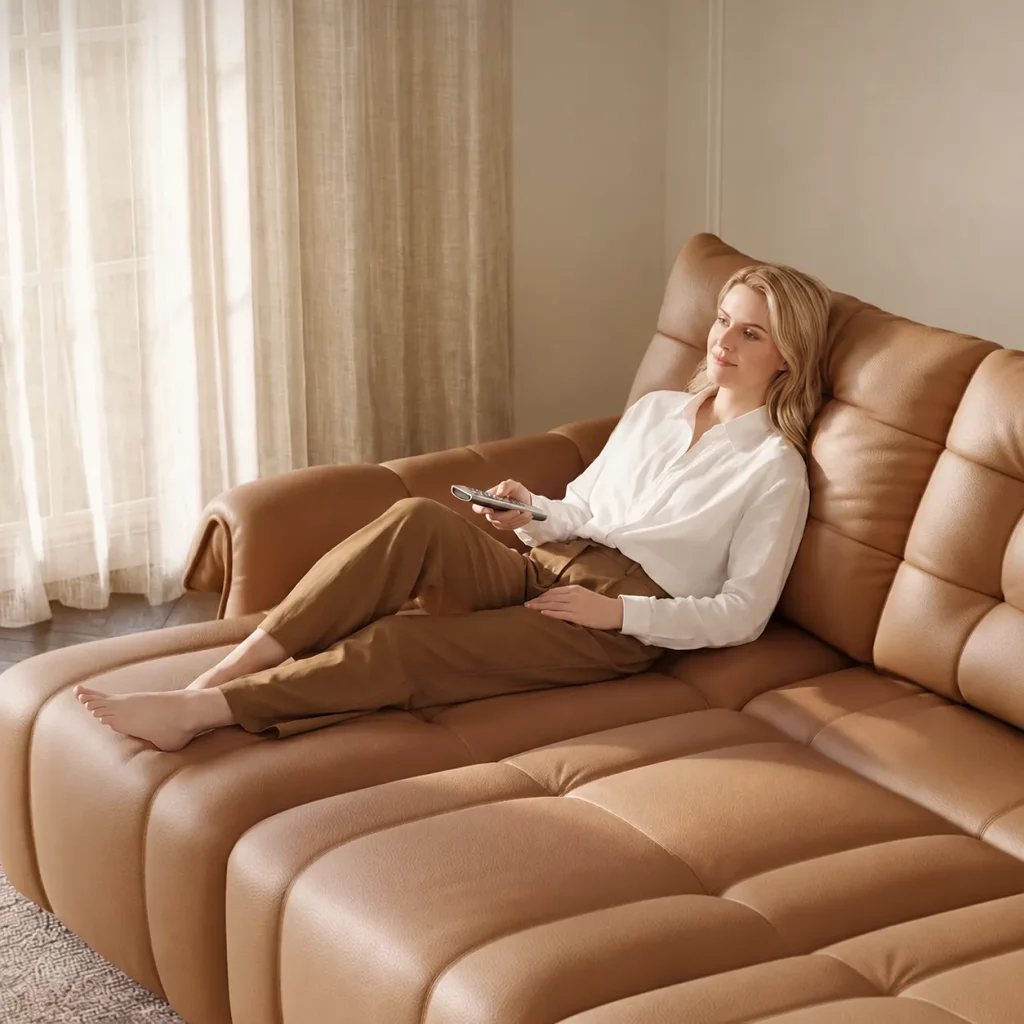
For households that regularly switch between sitting and stretching out, the POVISON Aurora Convertible Sofa Bed eliminates the hassle of unfolding a frame and repositioning a mattress. With one touch, its seat extends from 27 to 45.5 inches, giving you room to lounge or nap without getting up. High-resilience foam provides cushioned support, while the wall-hugging design lets the seat extend without moving the sofa away from the wall.
Aurora is designed around roomy seating, so its 27-inch starting depth may not suit someone who prefers a shallow upright seat. Before replacing your futon, check both the seating proportions and the floor space required when the sofa is extended.

Aurora Power Sofa Bed
A worthwhile upgrade when a futon’s daily setup becomes more frustrating than its firmness.
Conclusion
Learning how to make a futon more comfortable comes down to matching the solution to the problem. Start with mattress positioning and frame support, then adjust cushioning, mattress care, and sitting comfort as needed. Test every improvement in both sleeping and sofa modes to make sure it doesn’t interfere with the futon’s operation. For occasional guests, a few simple adjustments may be enough. If the mattress is worn, the frame is unsafe, or the design no longer works for daily living, repairing or replacing the appropriate part may be the more practical choice.

Looking for More Flexibility Than a Futon?
Explore sofa beds that offer comfortable everyday seating, room to stretch out, and space for overnight guests.
FAQ
Can a Futon Be Comfortable for Sleeping Every Night?
Yes, if the mattress provides consistent support and is designed for regular sleeping. Check whether it stays level, supports your preferred sleeping position, and maintains its shape over time. A thin or worn futon mattress may be adequate for occasional guests but uncomfortable for nightly use.
Can I Use a Regular Mattress on a Futon Frame?
Usually not if the frame needs to fold. Most standard mattresses aren’t designed for repeated bending. Check the frame manufacturer’s approved mattress dimensions, thickness, weight, and flexibility requirements. If the frame converts between sitting and sleeping, choose a compatible futon mattress rather than assuming a regular mattress will work.
What Sheets Fit a Nonstandard Futon Mattress?
Measure the mattress when fully opened, including its length, width, and thickness. Check the fitted sheet’s pocket depth as well as its overall dimensions. If standard Full or Queen sheets don’t fit securely, choose futon-specific bedding or a correctly sized flat sheet that can be tucked around the mattress.
What If Bedding Gets Caught in a Power Sofa Bed?
Stop the mechanism immediately and avoid forcing it to move. Follow the manufacturer’s instructions before removing trapped fabric, and check that the moving parts are clear before operating the sofa again. To prevent this, remove loose bedding and pillows before retracting unless the manufacturer specifically allows them to remain in place.
How Much Space Does a Power Sofa Bed Need?
Measure the sofa’s full extended depth, not just its dimensions when closed. Use painter’s tape to mark that footprint on the floor, then check nearby coffee tables, door swings, and walking paths. Also confirm the manufacturer’s wall-clearance requirements, since different power sofa bed mechanisms need different amounts of space.


