 By Stephanie
If your pull-out sleeper feels fine as a sofa but uncomfortable once opened, the problem may be underneath the mattress—not on top of it. A sleeper sofa support board can reduce pressure from metal crossbars and bridge mild unsupported areas, but it cannot repair a worn mattress or damaged frame. The key is identifying which layer is failing before you buy another accessory. This guide shows how to diagnose bar pressure or sagging, measure the actual support area, choose the right board style, test it safely, and know when a different repair makes more sense.
Table of Contents
Do You Need a Sleeper Sofa Support Board?
A support board makes sense when the pull-out frame is stable but the mattress dips between supports or lets you feel a metal crossbar underneath. Its job is to bridge a weak span and spread pressure across a wider area rather than letting your body load one bar or gap directly.
It is less useful when the bed is already level and the problem is simply surface firmness. In that case, changes that make a sofa bed more comfortable address the comfort layer more directly. If one side of the open bed sits lower, a rail looks bent, or the mechanism does not move normally, inspect the structure before adding another layer.
Is the Sag Coming From the Mattress or the Frame?
A sag can come from the mattress, the support underneath it, or the folding frame itself. They can feel similar when you lie down, so check each layer separately before spending money on a fix.
Use this quick diagnosis:
| Check | What You Find | What It Usually Means |
| Look at the mattress while the bed is empty | A dip remains in the same place | The mattress itself may be worn |
| Check where the dip appears when the mattress is in place | It lines up with a gap or crossbar | The support span is the likely problem |
| Compare both sides of the open frame | One side sits lower or a rail is bent | Repair the frame before adding support |
| Press across several mattress areas | Surface feels even but too firm | The issue is comfort, not structural support |
For a closer check, remove the mattress and place it temporarily on a clean, flat surface. If a pronounced dip remains, adding a board underneath the sleeper will not restore the mattress itself. At that point, sleeper sofa mattress care and replacement becomes more relevant than adding more support underneath. If the mattress looks reasonably even off the frame but sinks over the same unsupported area once reinstalled, sleeper sofa mattress support is the most likely issue.
This distinction is especially useful when deciding how to fix a sagging sleeper sofa mattress. A support board can bridge an intact frame; it cannot straighten a bent rail or reverse foam that has permanently collapsed.
How Do You Measure for a Sleeper Sofa Support Board?
Do not order by “Queen,” “Full,” or “Twin” alone. Sleeper labels describe the approximate sleeping size, but frame width, crossbar spacing, hinge positions, and fold lines can vary by manufacturer.
Open the sleeper completely and measure the part that actually needs bridging. Record the usable width from side to side, the length of the unsupported or bar-heavy zone, and the distance to any hinges or moving joints. The board should support the mattress without resting on a pivot point or extending into the folding path.
Then check clearance. If you plan to leave the board installed, you need enough room for the mattress and board to fold without bunching or forcing the mechanism. Learning how to identify your sofa bed mechanism first makes this easier because a traditional pull-out frame behaves differently from an integrated fold-flat or powered sleep surface.
A practical home check is to mark the proposed board footprint with painter’s tape before ordering. This makes it easier to spot a hinge, support leg, or hardware area that needs to remain clear.
Removable or Stay-in-Place Board: Which Fits Your Mechanism?
A removable board is the safer default when the panel is rigid, the sofa maker does not specify room for an added support layer, or the board will cross a hinge or fold line. It can be taken out before the sleeper closes, so its storage size matters as much as its open dimensions.
A stay-in-place design only makes sense when the board is specifically designed to move with a compatible sleeper mechanism. The key question is not whether the panel looks thin enough, but whether its attachment points, fold lines, and thickness match the movement of the frame.
In a small apartment or home office, a folding removable board may be easier to store than one rigid sheet. A compatible installed board removes that storage step, but it should never be improvised simply to save time.
How Do You Install and Test a Support Board Safely?
Installation should start with an inspection, not with the board. Fully open the sleeper and make sure its legs sit flat, the rails look straight, and the hinges move normally. A support panel should not be used to hide a frame that is already damaged.
For a removable board, center it over the problem area, keep it clear of hinges and sharp hardware, then replace the mattress. Lie down in several positions instead of testing only the center. The goal is a more even surface, not maximum firmness.
If the board is designed to remain in the sleeper, perform one slow open-and-close cycle before normal use. Stop if you notice:
- Binding or unusual resistance
- Scraping against hardware
- Mattress bunching at a fold
- A latch that no longer aligns
- The board shifting out of position
Never force the frame closed around added thickness. A board that improves overnight support but interferes with the mechanism is not a compatible fit.
When Does a Different Sleeper Sofa Make More Sense?
A support board can solve the physical problem and still be the wrong long-term setup. How often you use the sleeper can change that decision. Pulling out a board, positioning it, replacing the mattress, adding a topper, and reversing the process a few times a year may be reasonable. Doing the same routine several nights a week is a different tradeoff.
Look at the whole setup rather than the cost of one accessory. If the board works but you repeatedly have to reposition it, store extra layers, or rebuild the sleeping surface, the sleeper may no longer match how the room is being used. That is especially relevant in a living room that changes between seating, lounging, and sleeping throughout the week.
If repeated board setup is becoming the problem but the living room still has limited space, the Aurora Power Sofa Bed takes a different approach. At 83 inches wide, it gives shoppers a clear wall-fit reference, while the powered seat extends from 27 to 45.5 inches. That adjustable depth lets the same sofa move from everyday seating toward a sleep-ready surface without handling a separate support panel each time.
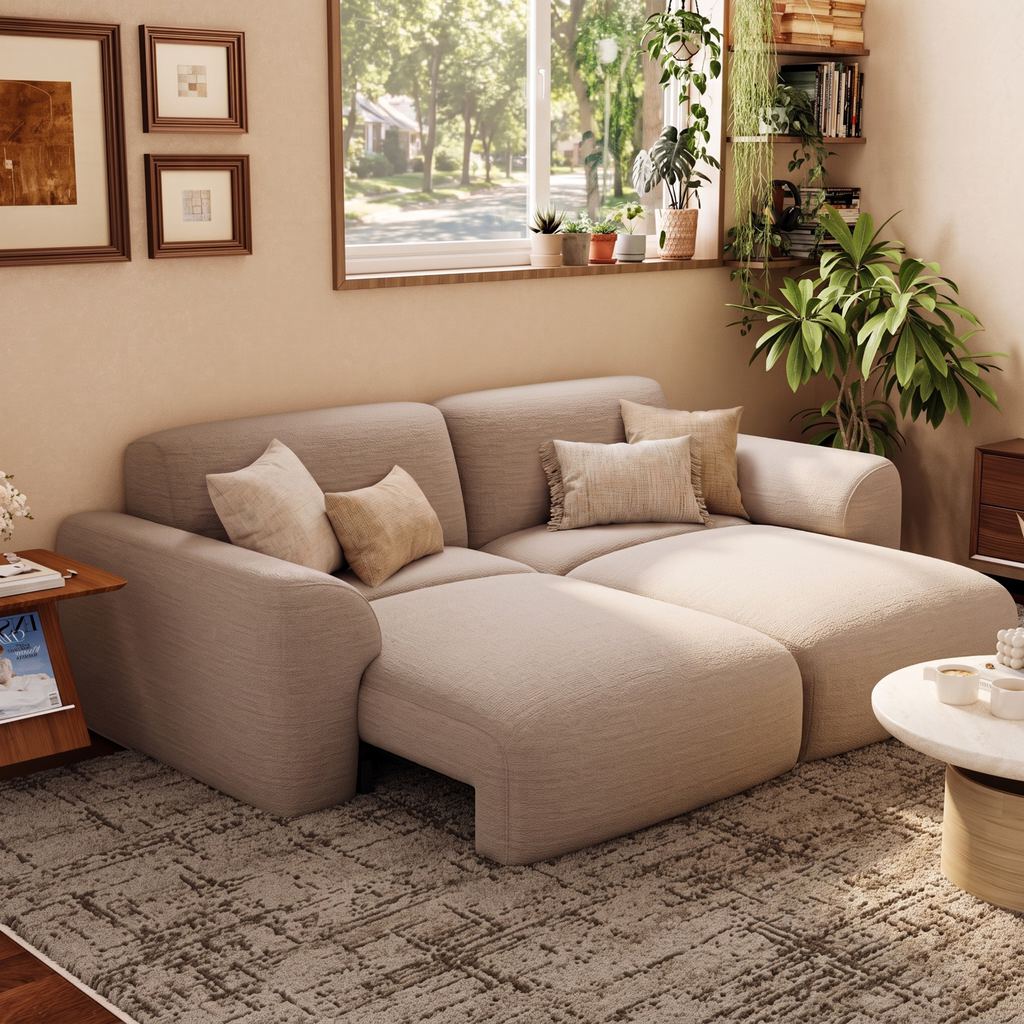
POVISON Aurora Power Sofa Bed
A smart fit for homes that need frequent sofa-to-sleeper use without making the room feel dominated by the sleep setup.
When the bigger limitation is shared sleeping space, the Mila Power Sleeper Sofa serves a different need. Its seat depth extends from 32 to 59 inches, and the backrest adjusts from 105° to 180°; POVISON describes the fully extended configuration as a near-king-size sleep platform. That makes the upgrade more relevant when two sleepers need room to settle in, not simply when a support board is inconvenient.
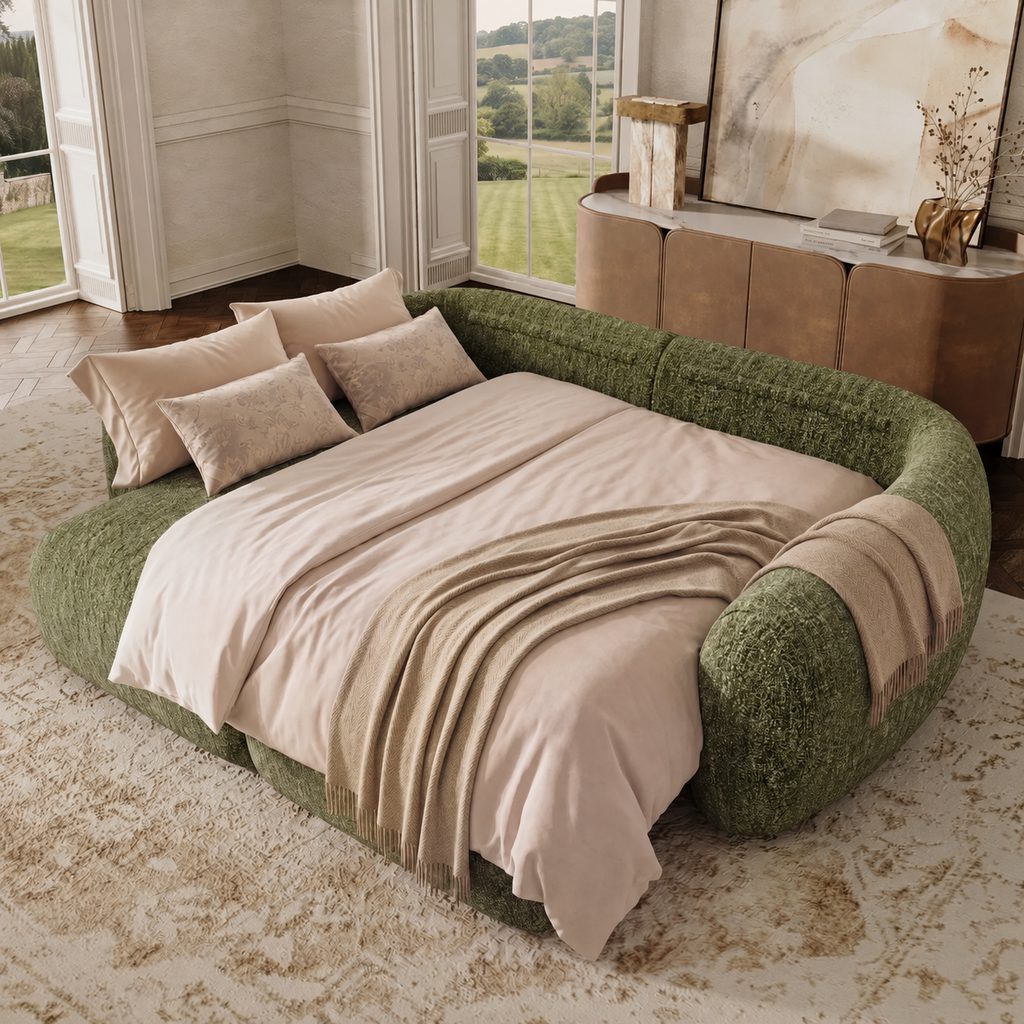
POVISON Mila Multifunctional Power Sleeper Sofa
Better suited to households where shared sleeping space matters more than keeping the sleeper compact.
Conclusion
A sleeper sofa support board is useful when an otherwise sound pull-out has a specific weak span or crossbar pressure point. Diagnose the source first, measure the open frame rather than relying on the mattress label, and confirm that the added support does not interfere with the mechanism. If the mattress remains sagged away from the frame or the structure itself is uneven, address that problem instead. The right fix starts with identifying which layer is actually failing.
FAQ
Can I use a bunkie board on a sleeper sofa?
Sometimes. It must fit the actual support area, stay clear of hinges, and be thin enough for the sleeper to operate normally. A bunkie board made for a stationary bed is not automatically compatible with a folding frame, so check its dimensions and movement clearance before regular use.
Can I use plywood instead of a support board?
Plywood can bridge a weak span, but unfinished edges may snag fabric and a rigid sheet can be difficult to store. Size it around the actual support area and keep it clear of moving hardware. Unless the sofa maker says otherwise, treat DIY plywood as removable rather than folding it inside the mechanism.
Does adding a support board affect the sofa warranty?
It depends on the manufacturer and how the board is installed. A removable panel is different from drilling into the frame or permanently modifying the mechanism. Check the sofa’s warranty before using screws, straps, or other permanent attachments, especially if the board maker’s installation method differs from the sofa manufacturer’s instructions.
Can a support board increase a sleeper sofa’s weight capacity?
No. A support board may distribute pressure more evenly, but it does not increase the sofa manufacturer’s stated weight capacity. The rails, legs, joints, and folding mechanism still carry the load. When two people use the sleeper, the sofa’s published structural capacity remains the limit that matters.


