 By Stephanie
A well-made real leather sofa commonly lasts 15 to 25 years, while lower-grade or synthetic upholstery may deteriorate much sooner. If you are asking how long do leather sofas last, the useful answer depends on more than the sofa’s age. Leather type, internal construction, daily traffic, room conditions, and maintenance all affect the result. This guide helps you estimate a realistic lifespan for your household, identify early warning signs, and decide whether an aging sofa needs care, repair, or replacement.
Table of Contents
How Long Do Leather Sofas Last by Type?
High-quality real leather sofas generally last 15 to 25 years or longer. Full-grain leather can remain usable for decades, while top-grain leather often provides 10 to 20 years or more service. Bonded and faux leather usually have shorter lifespans because their surface layers can crack or peel.
These figures are planning ranges, not guarantees:
| Upholstery type | Typical planning range | What usually limits its life |
| Full-grain leather | 20+ years | Frame, cushions, severe dryness, or deep damage |
| Top-grain leather | 10–20+ years | Heavy traffic, neglected spills, heat, or direct sun |
| Split or corrected leather | 5–10 years | Faster surface wear and finish deterioration |
| Bonded leather | 3–7 years | Peeling as the bonded surface separates |
| Faux leather | 3–7 years | Cracking, peeling, and heat-related deterioration |
Which Part of a Leather Sofa Wears Out First?
A sofa does not reach the end of its useful life all at once. The leather may still look good after the cushions flatten, or the surface may show wear while the frame remains stable. Identifying the first component likely to fail gives you a more accurate lifespan estimate than judging the upholstery alone.
Leather Surface
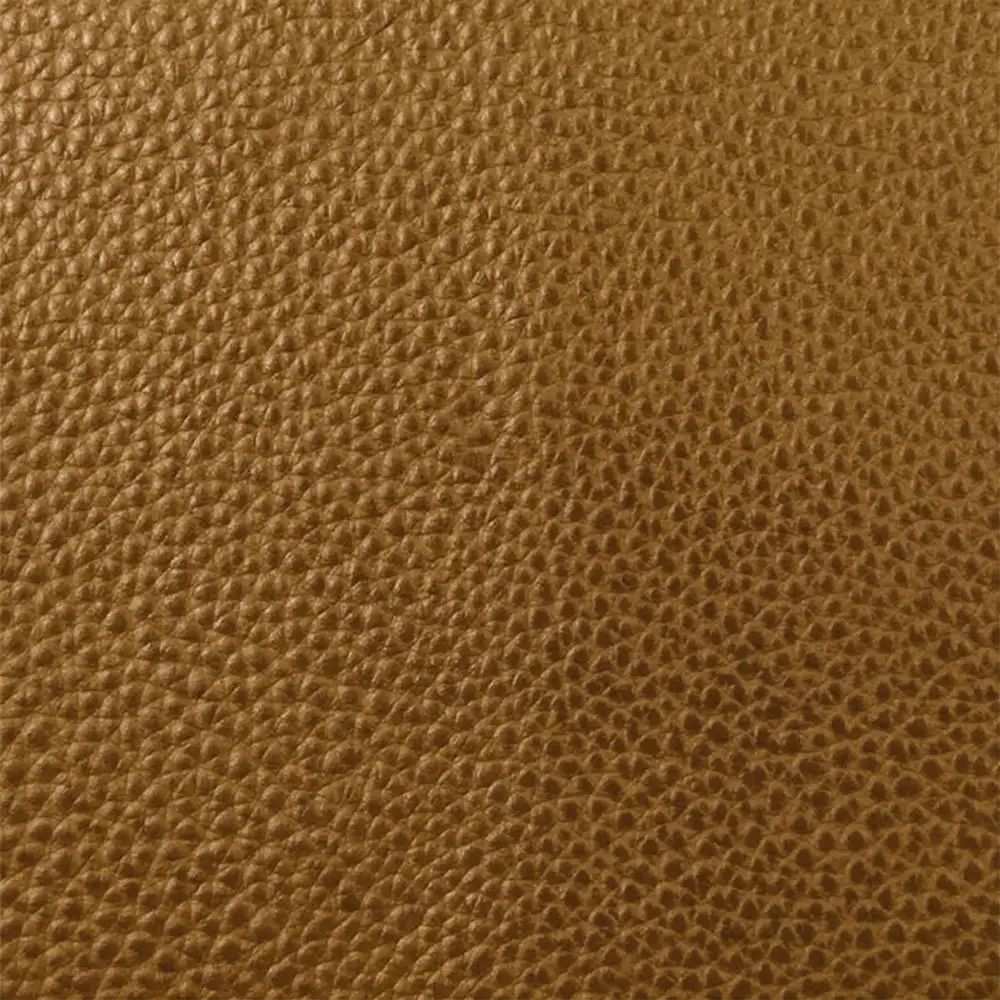
High-quality leather usually changes before it fails. Natural softening, wrinkles, color variation, and patina can develop without weakening the hide. These changes are different from deep cracking, open tears, or sheet-like peeling.
Check the areas that receive the most contact: seat fronts, arm tops, headrests, and the space between cushions. If the leather remains flexible and the surface is intact, visible aging may be cosmetic. Stiff patches, exposed backing, spreading cracks, or lifting surface layers signal more serious deterioration.
The product description should also identify the leather more precisely than “genuine.” Full-grain and top-grain describe the hide more clearly, while the finish determines how the surface responds to spills, scratches, and daily cleaning. The Federal Trade Commission’s Leather Guides address disclosure when leather-looking products contain non-leather material (Federal Trade Commission).
Cushions and Seat Support
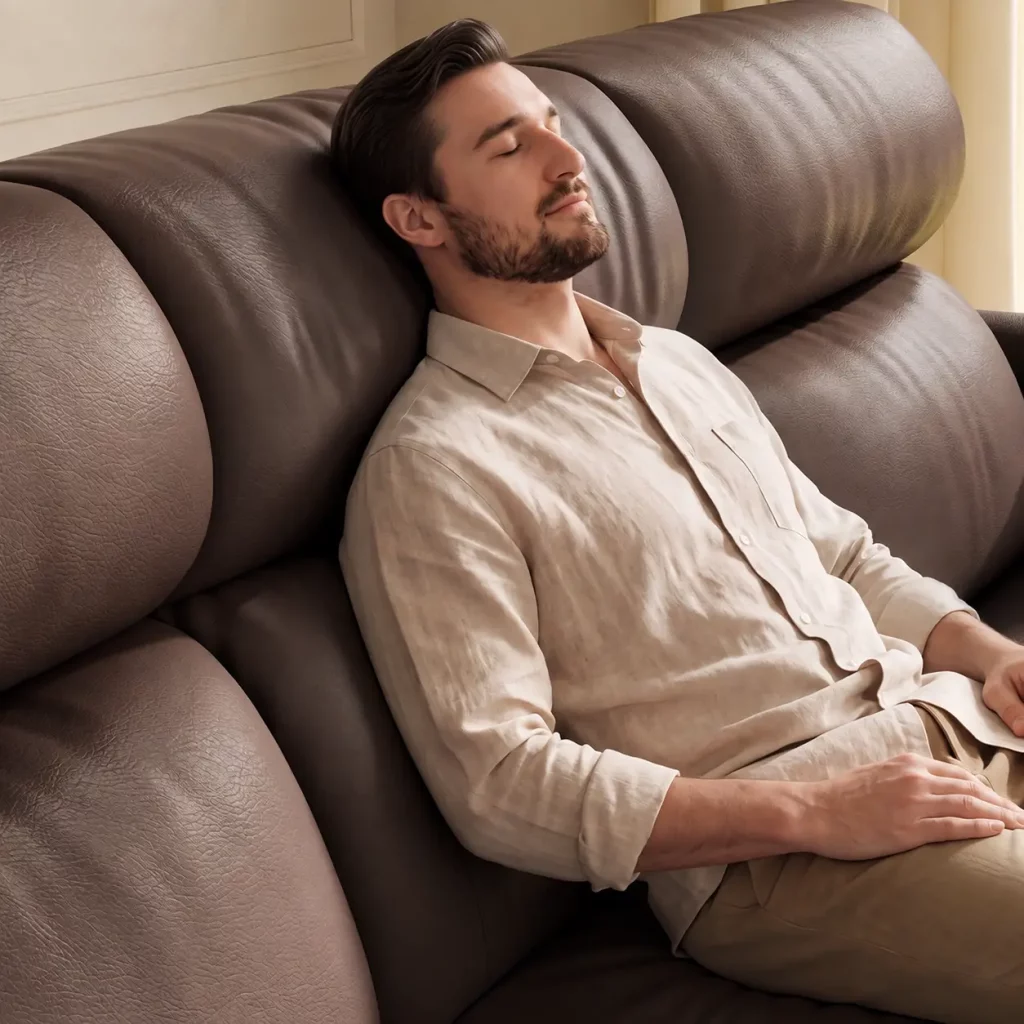
Cushions often lose comfort before real leather wears out. A seat that stays compressed after use, slopes toward one side, or allows you to feel the frame may need new foam or filling even when the upholstery remains serviceable.
Test every seat rather than checking only the center cushion. Uneven recovery usually indicates concentrated use, while similar sagging across the entire sofa may point to worn suspension beneath the cushions. Removable cushion inserts are generally easier to refresh than fixed seats, but replacement filling will not correct broken springs or a weakened support platform.
Frame, Seams, and Moving Parts
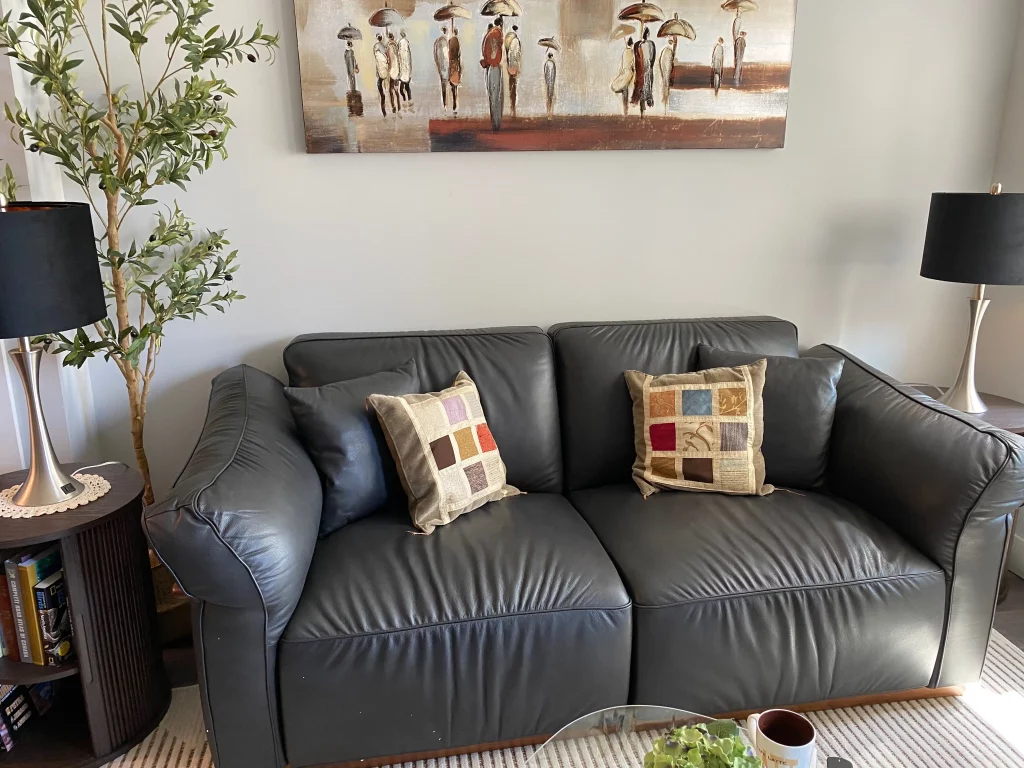
Sit at each end of the sofa and gently shift your weight. Repeated creaking, loose arms, a twisting base, or movement at the joints can indicate structural wear. Seams should lie flat without widening around high-pressure areas. On powered models, the mechanism should move smoothly without pulling the upholstery or producing new grinding sounds.
Material quality matters only when the structure beneath it can continue supporting daily use. The Cronus Modular Sofa pairs matte pebble-grain top-grain leather with a solid wood frame and reinforced stitching. Its leather is designed to soften and develop a natural luster, while premium down filling supplies a fuller seat feel. Together, these details address both visible aging and the support beneath the upholstery.
The best leather for a sofa based on daily use should therefore be evaluated alongside the frame, cushion system, seams, and expected traffic. A premium hide cannot compensate for weak support, and a strong frame does not prevent unsuitable upholstery from wearing prematurely.
POVISON Cronus Genuine Leather Modular Sofa
A good fit for buyers who want a leather sofa designed to stay supportive as it ages.
How Can You Estimate Lifespan in Your Home?
The leather type establishes a starting range, but your household determines whether the sofa is likely to reach its upper or lower end. Instead of assigning an exact expiration date, evaluate use intensity, wear concentration, and the condition of the weakest component.
1. Measure Use by Frequency and Function
A sofa used occasionally in a formal room will generally age more slowly than the only sofa in an apartment. Count more than the number of people in the home. Consider how many hours the sofa is used, whether it doubles as a workspace or napping spot, and whether children or pets regularly climb across it.
A multifunctional sofa also performs more movements than stationary seating. That does not automatically give it a shorter life, but its upholstery, cushions, frame, and mechanism should be inspected separately.
2. Check Whether Wear Is Evenly Distributed
One favorite seat can flatten long before the rest of the sofa changes. Compare cushion recovery, leather texture, seam tension, and support across every seating position.
Concentrated wear usually places a sofa toward the middle or lower end of its expected range, even when the unused seats look nearly new. Rotating removable cushions and changing seating positions can help, but existing damage should not be hidden by judging only the least-used section.
3. Identify the Weakest Component
The sofa’s usable lifespan is usually controlled by the component that is hardest or least economical to repair. Worn cushion filling may be replaceable. A small seam opening may be repairable. A twisting frame, broken suspension, widespread peeling, or several failures occurring together can move the sofa toward the end of its practical life.
| Current condition | Likely position within the range | What to do next |
| Flexible leather, even support, stable frame | Upper end | Continue routine care and yearly inspection |
| Visible patina with moderate cushion compression | Middle | Monitor high-contact areas and assess cushion filling |
| One heavily worn seat with otherwise stable construction | Middle to lower end | Repair early and redistribute use |
| Deep cracks, unstable support, or multiple failures | Lower end | Compare professional repair with replacement |
| Widespread peeling on bonded or faux leather | Lower end | Confirm material and evaluate replacement cost |
This approach avoids treating age as the only deciding factor. A ten-year-old sofa with stable support and flexible leather may have substantial life remaining, while a much newer sofa with peeling upholstery and a loose frame may not be economical to restore.
How to Make a Leather Sofa Last Longer
Knowing how to make a leather sofa last longer does not require an elaborate cleaning schedule. The most effective actions reduce friction, prevent moisture and heat damage, distribute daily pressure, and stop small problems from spreading.
- Remove abrasive debris. Vacuum crumbs from seams and cushion gaps before repeated movement rubs them against the leather.
- Blot spills immediately. Use a clean, absorbent cloth without scrubbing or soaking the surface.
- Control sun and heat exposure. Close window coverings during intense sunlight and keep the sofa away from fireplaces, radiators, and heating vents.
- Condition according to the leather’s condition. Follow the manufacturer’s instructions and apply an approved product only when the surface begins to feel dry or stiff.
- Distribute daily wear. Rotate removable cushions when permitted and avoid using the same seat for every activity.
- Repair small damage early. Address an opening seam, loose stitching, or shallow cut before regular pressure makes it larger.
Pet owners should keep nails trimmed and protect a pet’s preferred resting area if repeated climbing creates scratches. However, covering the entire sofa continuously can trap crumbs or moisture, so remove and clean throws regularly.
The complete leather couch care routine for lasting beauty explains material-safe cleaning and conditioning in greater detail. For lifespan purposes, regular inspection matters more than frequent product application. Check the most-used seat, armrest, and headrest before damage becomes difficult to repair.
When Should You Repair or Replace It?
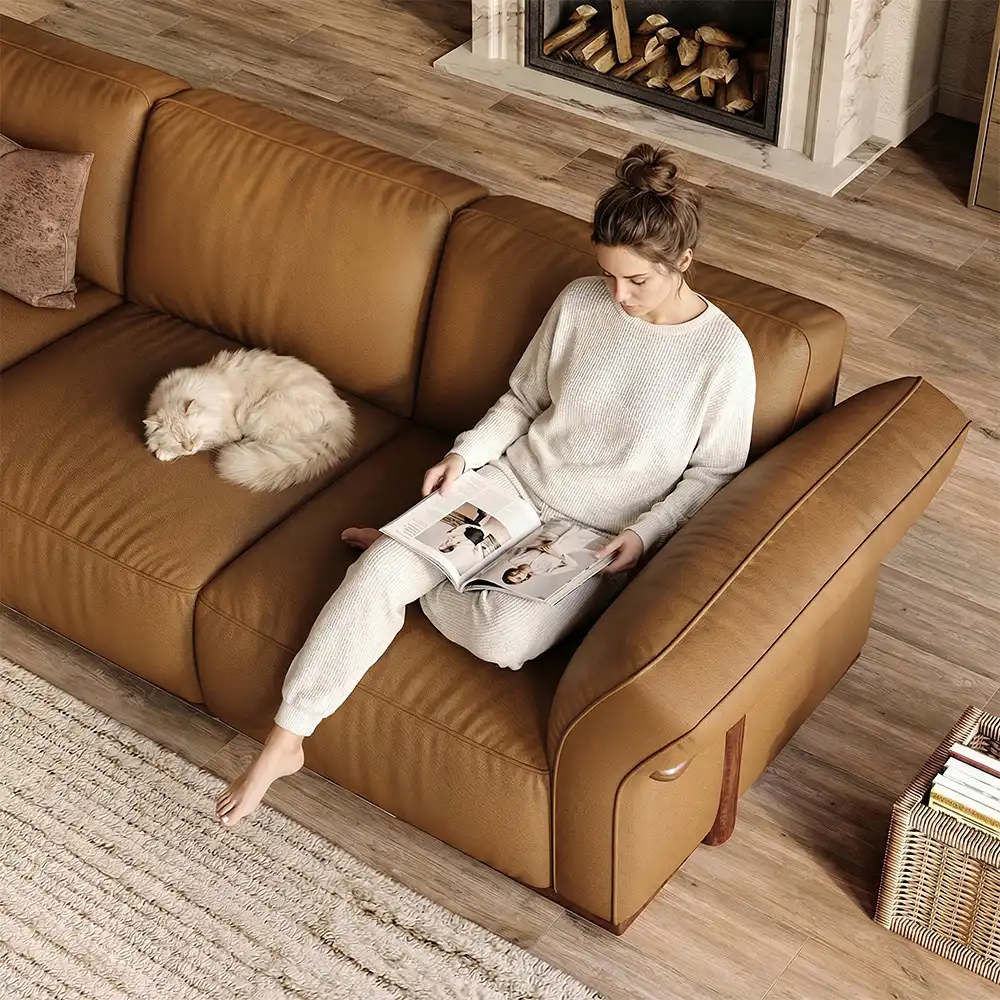
Do not replace a leather sofa because of age or patina alone. The better decision depends on whether the damage is cosmetic, limited to a replaceable component, or connected to the sofa’s main structure. Repair becomes harder to justify when several expensive systems are failing at the same time.
| Condition | Recommended response | Decision standard |
| Patina, wrinkles, or natural color variation | Keep and maintain | Leather remains flexible and intact |
| Light scratches without an open cut | Monitor or professionally blend | Hide beneath the finish is undamaged |
| Localized dryness or stiffness | Assess before conditioning | No deep cracks or exposed backing |
| Small tear or opening seam | Repair promptly | Surrounding leather and stitching remain strong |
| Flattened removable cushions | Refill or replace inserts | Frame and suspension still feel stable |
| Broken spring or weakened suspension | Obtain a professional repair estimate | Leather and frame justify the repair cost |
| Widespread peeling | Confirm the upholstery material | Large-scale surface separation is rarely a simple spot repair |
| Loose joints or a twisting frame | Arrange a structural inspection | Movement continues when no one is seated |
| Repeated mechanism failure | Compare parts and labor with replacement | Upholstery, cushions, and frame remain worth preserving |
| Several failures at once | Consider replacement | Repairing one component will not restore reliable use |
A sofa is usually worth repairing when the frame is stable and the problem is limited to the cushions, a seam, or a small section of leather. Replacement becomes more practical when the frame, suspension, and upholstery are all deteriorating or when the necessary parts are unavailable.
If replacement is necessary, choose for the workload the new sofa will actually carry. The Cygnus Power Sofa Bed is designed for homes where one sofa supports daily sitting, reclining, and occasional sleeping. Its top-grain leather covers high-density resilient foam and a reinforced frame, while each seat is rated for up to 500 pounds. Those specifications make the support system—not only the leather label—easier to evaluate before buying.
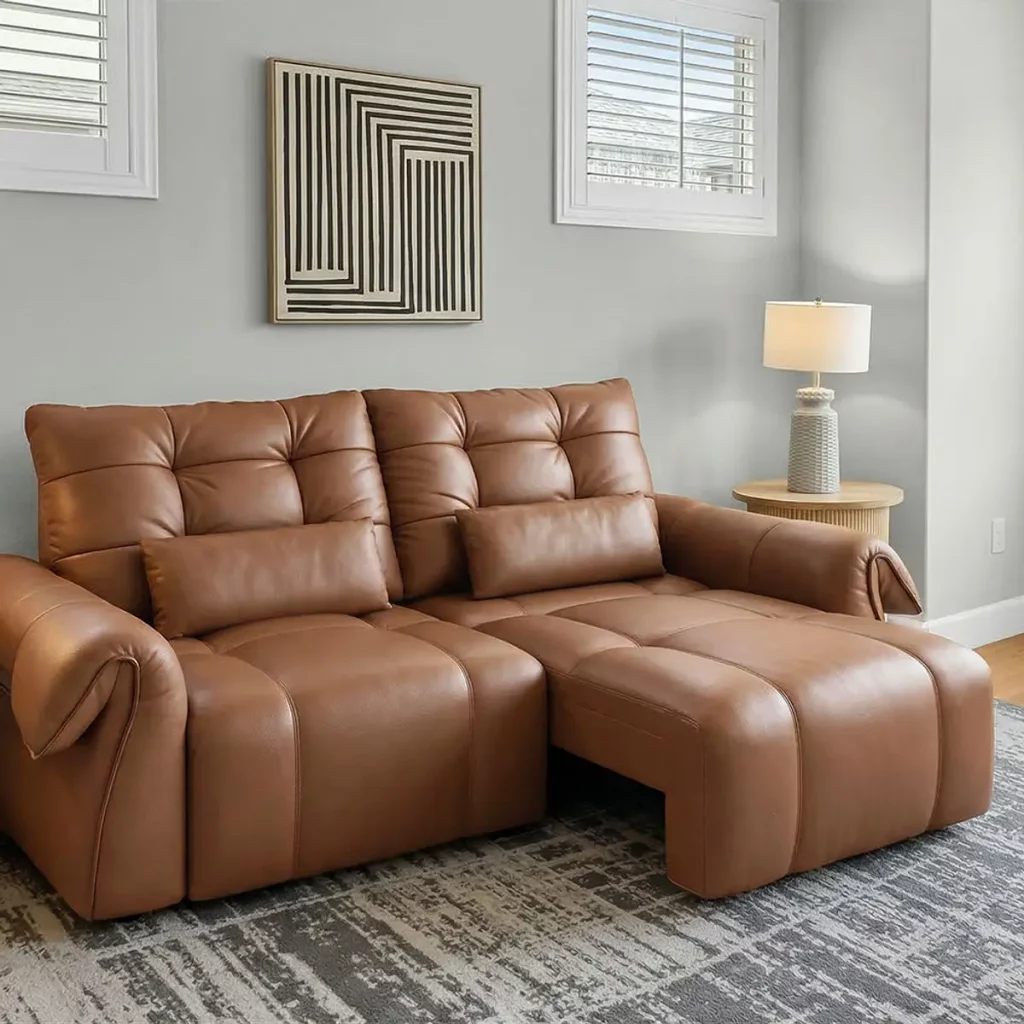
POVISON Cygnus Power Sleeper Sofa
A practical option for homes where one sofa is expected to handle a heavier day-to-day workload.
Conclusion
So, how long do leather sofas last? High-quality real leather commonly provides 15 to 25 years of use, but leather grade alone cannot guarantee that result. The frame, cushions, room conditions, traffic level, and maintenance routine determine whether a sofa reaches the upper or lower end. Treat patina and minor marks differently from peeling, structural movement, or support failure. When buying, choose clearly identified leather and documented construction; when evaluating an existing sofa, repair stable components before cosmetic wear becomes deeper damage.
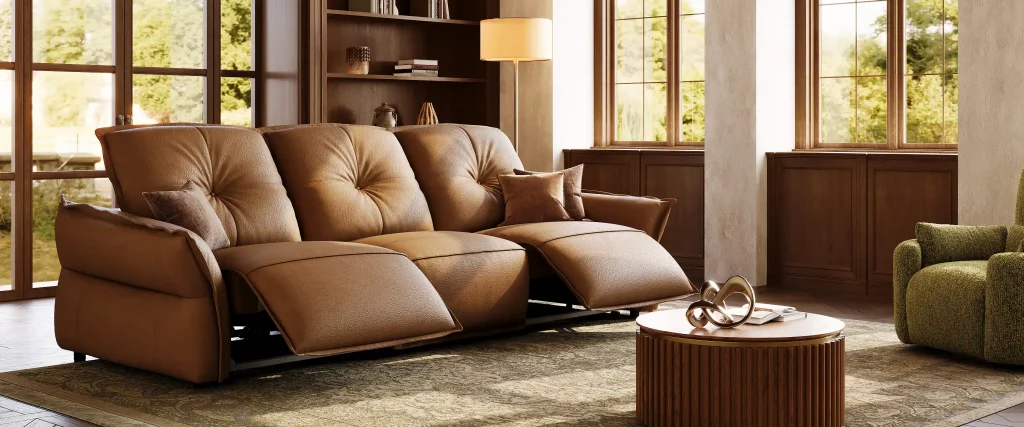
A Good Leather Sofa Goes Beyond the Surface
Compare leather types, construction, and seating options with long-term use in mind.
FAQ
Does leather color affect sofa lifespan?
Leather color does not change the strength of the hide, but it affects how quickly wear becomes visible. Pale leather shows dye transfer and darkened contact areas sooner, while darker colors can conceal minor marks. Finish type, cleaning compatibility, and sunlight exposure matter more to actual lifespan than color alone.
Should a new leather sofa be protected?
Do not apply a protector automatically. Some finished leathers already have a protective coating, and an incompatible product can alter color, sheen, or texture. Check the manufacturer’s care instructions first, then test an approved product in a hidden area. Natural or unfinished leather may require different treatment from protected top-grain leather.
What warranty matters for a leather sofa?
Check the frame, upholstery, cushions, seams, and powered components separately because they may have different coverage periods. Confirm whether peeling, cracking, color transfer, cushion compression, or motor failure is covered. A long frame warranty alone does not protect against premature upholstery or mechanism problems.
Can one damaged modular section be replaced?
Sometimes, but replacement depends on whether the manufacturer still offers the same module, leather, color, and connection system. Even when a matching piece is available, older leather may have developed a different patina. Ask about individual-module availability before purchasing if the sofa will receive concentrated daily use.
Can new cushions extend a leather sofa’s life?
Yes, when the leather, frame, seams, and suspension remain stable. Replacing foam or refilling removable cushions can restore support without discarding usable upholstery. It is less worthwhile when sagging comes from broken springs, loose joints, widespread peeling, or several structural problems occurring at the same time.


