 By Stephanie
Table of Contents
What Changes When Your TV Is Wall-Mounted?
Once the TV is on the wall, a TV stand for a wall-mounted TV no longer needs to support the screen. Instead, it becomes part of how the wall looks and how the entertainment setup functions day to day. That changes the buying priorities: the wrong console can feel out of proportion, create clutter below the screen, or make the setup harder to use. These six picks focus on how well each stand works beneath a mounted TV rather than how much television weight its top can hold.
What Type of TV Stand Works Best Under a Wall-Mounted TV?
Choose the console by what needs to live below the screen. If you mainly need storage for remotes, games, and small streaming devices, a shallow floor console or floating cabinet can keep the setup visually light. If a soundbar and gaming systems stay below the TV, prioritize accessible storage and ventilation. A receiver, amplifier, or larger home-theater system calls for more usable interior depth and easier rear access.
Width and height then become final filters rather than the starting point, because the wall mount already handles screen support and viewing position. The best media console for wall mounted TV setups is the one that fits the equipment and storage routine below the screen without adding unnecessary bulk or forcing the TV higher on the wall.
Quick Summary Table
| Product | Best For | Key Features | Price | Editorial Rating |
| POVISON VISION Modern Wood TV Stand | Best Overall | 70.87″ width, four cabinets, relatively shallow profile | $899 | 4.9/5 |
| POVISON Arboren Mid-Century Modern TV Stand | AV Equipment | 22″ depth, ventilation, cable holes, removable shelves | $1,699 | 4.8/5 |
| Burrow Opera Media Console | Soundbars & Gaming | Ventilated slatted doors, open-back bays, soundbar shelf | $862 sale | 4.7/5 |
| POVISON Merrin Black Floating TV Stand | Floating Setup | 14.57″ depth, three cabinets, fully assembled | $699 | 4.6/5 |
| Article Seno Low Media Unit | Smaller Living Rooms | 63″ width, open media bay, cord management | $899 | 4.4/5 |
| IKEA BESTÅ TV Unit With Doors | Budget Storage | 70⅞” width, adjustable shelves, multiple cord outlets | $225 | 4.2/5 |
Prices were checked August 7, 2026 and may change with promotions, finishes, regions, or retailers.
The 6 Best TV Stands for Wall-Mounted TVs
These products solve the same core problem, so they are ranked using the same editorial criteria: fit below a wall-mounted TV, media-device usability, storage access, room footprint, setup requirements, and overall value. Ratings reflect how well each product performs for this specific use case rather than manufacturer review scores.
🥇1. POVISON VISION Modern Wood TV Stand
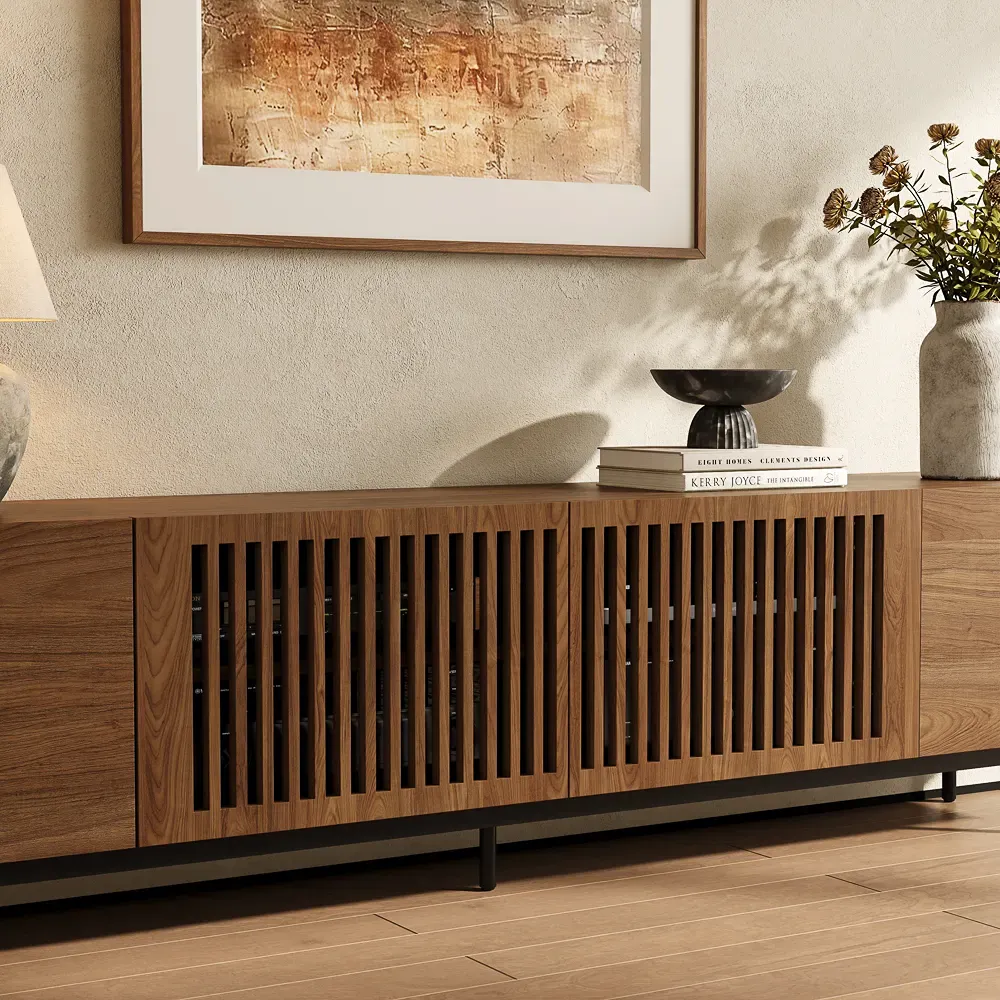
Price: $899
Editorial Rating: 4.9/5
Best For: Most living rooms that need balanced proportions and closed storage
Highlights
- 70.87″W × 15.75″D × 21.65″H
- Four cabinets with four interior shelves
- Walnut-tone MDF body with elevated metal legs
Limitations
- 14″ shelf depth is less suitable for unusually deep AV receivers
- 163-lb unit requires two adults for moving and partial assembly
Why It Fits:
VISION works best when the mounted TV needs a strong visual base without turning the area below it into a bulky equipment wall. The elevated design keeps more of the floor visible, while the removable horizontal shelves give smaller media devices and accessories more flexible storage. In a family room with a 65-inch mounted TV, that combination kept the screen visually grounded while leaving the top uncluttered for a soundbar. Deep AV receivers are the main exception.
Buyer review: “With the proper placement of A/V components and some clever cord management, you have a winner!” — Zeal
🥈2. POVISON Arboren Mid-Century Modern TV Stand
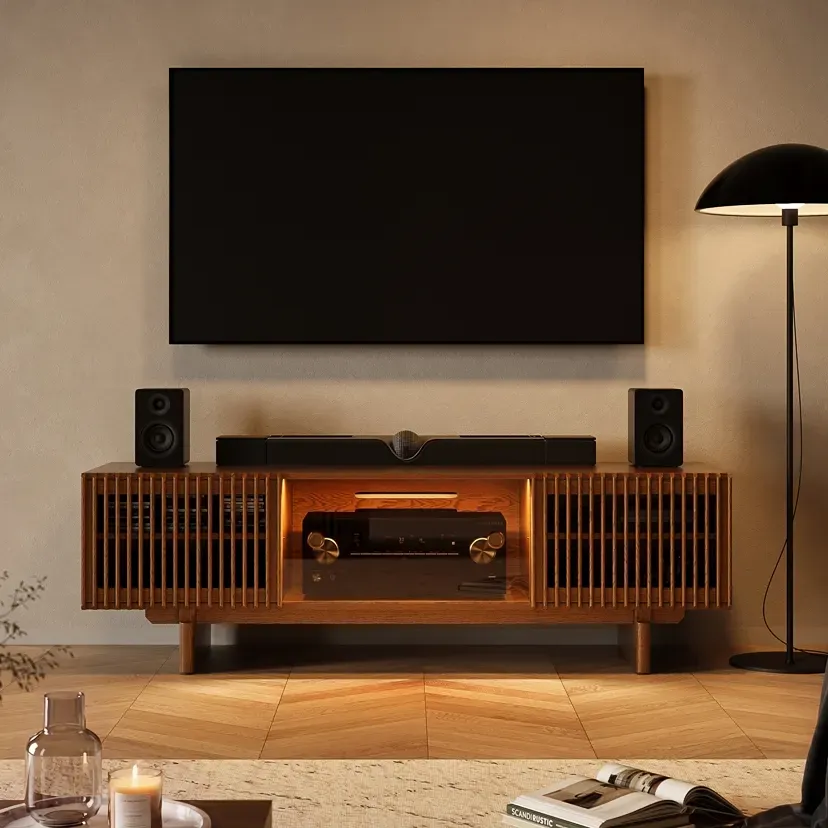
Price: $1,699
Editorial Rating: 4.8/5
Best For: AV receivers, amplifiers, speakers, and multi-device home theaters
Highlights
- 70.9″W × 22″D × 22″H
- Six internal and three rear cable holes
- Removable shelves, rear vents, and slatted doors that allow sound and IR signals through
Limitations
- 22-inch depth takes up noticeably more floor area
- 143.3-lb package requires two adults to move
Why It Fits:
Arboren is built for buyers who want the wall-mounted TV to look clean while keeping serious AV gear out of sight. Its center tempered-glass doors allow infrared remote signals to reach compatible components without leaving the cabinet open, while the interior can be reconfigured around taller receivers or speakers. That makes it especially useful for multi-device home theaters where everyday control and equipment access matter as much as storage capacity.
Buyer review: “The side compartment shelves can be removed, leaving enough room in the compartments to fit our speakers inside.” — Victoria
🥉3. Burrow Opera Media Console
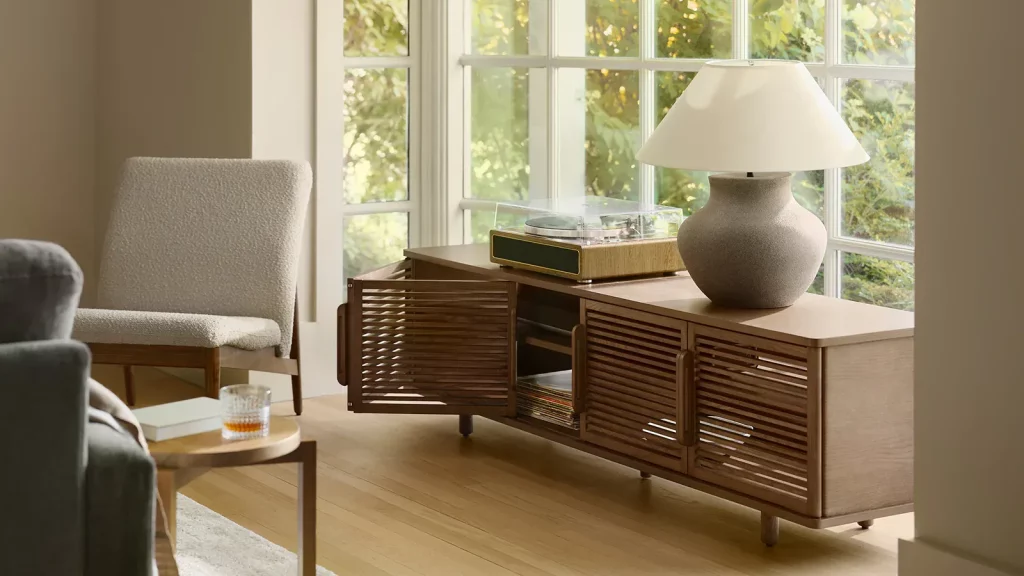
Price: $862 sale; $1,149 regular
Editorial Rating: 4.7/5
Best For: Soundbars, gaming consoles, and airflow-conscious setups
Highlights
- 70″W × 17″D × 20″H
- Full-width soundbar shelf
- Slatted doors, open-back bays, and cable channels
Limitations
- Assembly is required
- 15-inch interior depth is less accommodating than a dedicated deep AV cabinet
Why It Fits:
Opera is particularly well suited to setups where audio equipment stays inside the console. Its slatted doors are designed to let sound pass through with the doors closed, so the room can look tidier without completely hiding the sound system behind a solid front. Accordion-style doors also open without the usual hinged-door swing, making larger game consoles and media components easier to reach below a mounted screen.
4. POVISON Merrin Black Floating TV Stand
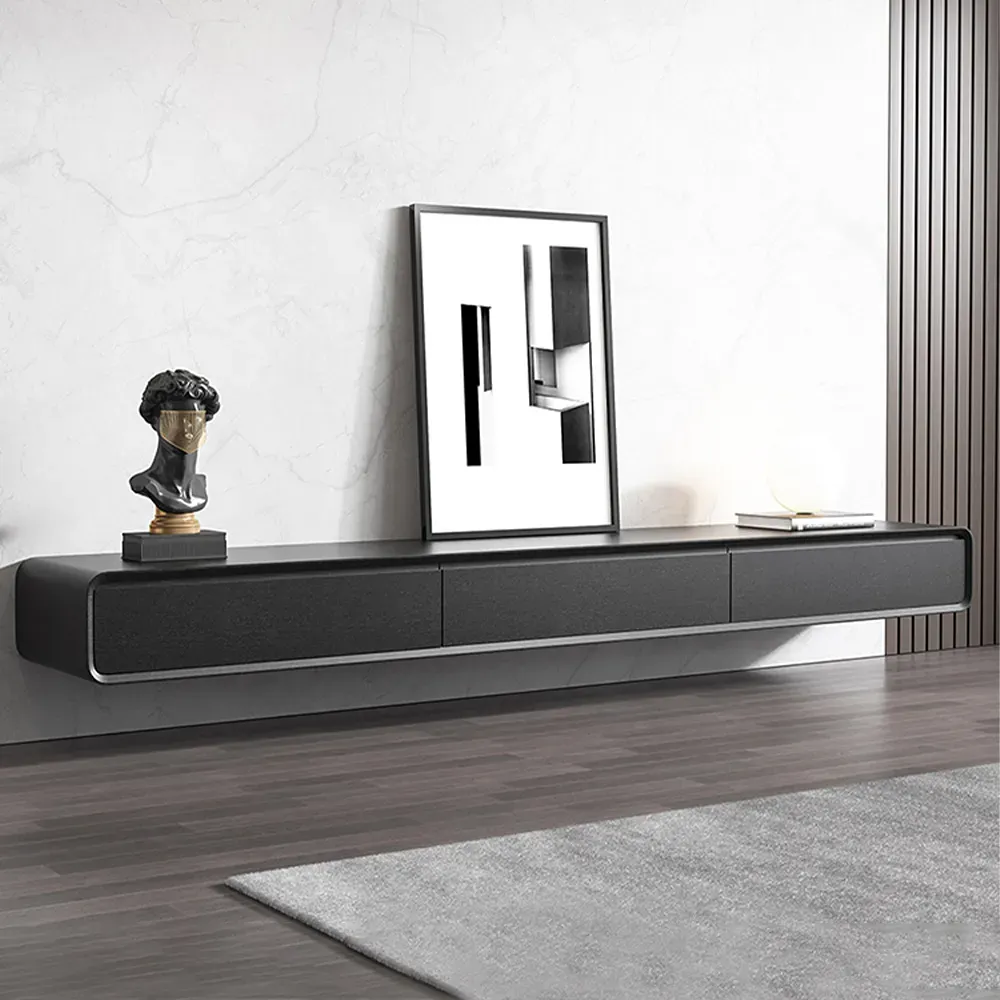
Price: $699
Editorial Rating: 4.6/5
Best For: Small rooms and fully floating TV-wall layouts
Highlights
- 62.99″W × 14.57″D × 9.84″H
- Three closed cabinets
- Fully assembled with a 110-lb listed capacity
Limitations
- Requires a structurally suitable wall for installation
- Shallow cabinet depth is not ideal for large AV receivers
Why It Fits:
Merrin gives you more control over the vertical composition of the TV wall because its mounting height can be adjusted to suit the screen position and room. That is especially useful when the television is already mounted and you want to preserve a deliberate gap below it rather than letting a floor console dictate the layout. It also keeps the floor completely open, making it a stronger choice for compact rooms where visual space matters.
Buyer review: “Mounting to the wall is simple, just screw a couple boards to the wall and hang the unit.” — John
5. Article Seno Low Media Unit
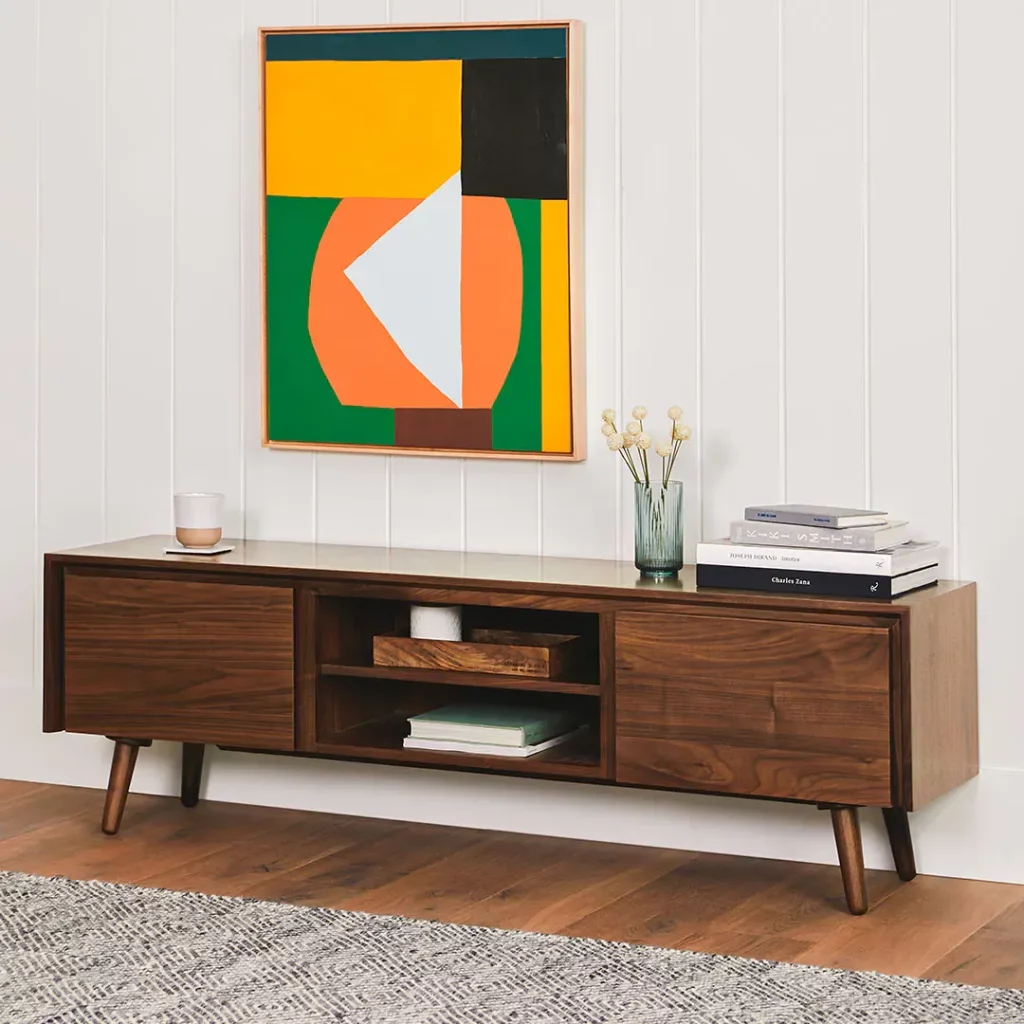
Price: $899
Editorial Rating: 4.4/5
Best For: Smaller rooms with streamlined media equipment
Highlights
- 63″W × 16″D × 20″H
- Central open cabinet with removable shelf
- Two closed cabinets and discreet cord management
Limitations
- 63-inch width can look undersized beneath very large screens
- 14-inch cabinet depth limits deeper electronics
Why It Fits:
Seno suits smaller wall-mounted-TV setups where the electronics are relatively simple. The exposed center section keeps a streaming device or other frequently used component accessible, while the surrounding closed storage prevents remotes, games, and accessories from spreading across the top. Its restrained footprint is easier to integrate into apartments, but it is less convincing beneath an oversized screen or with a more demanding home-theater system.
6. IKEA BESTÅ TV Unit With Doors
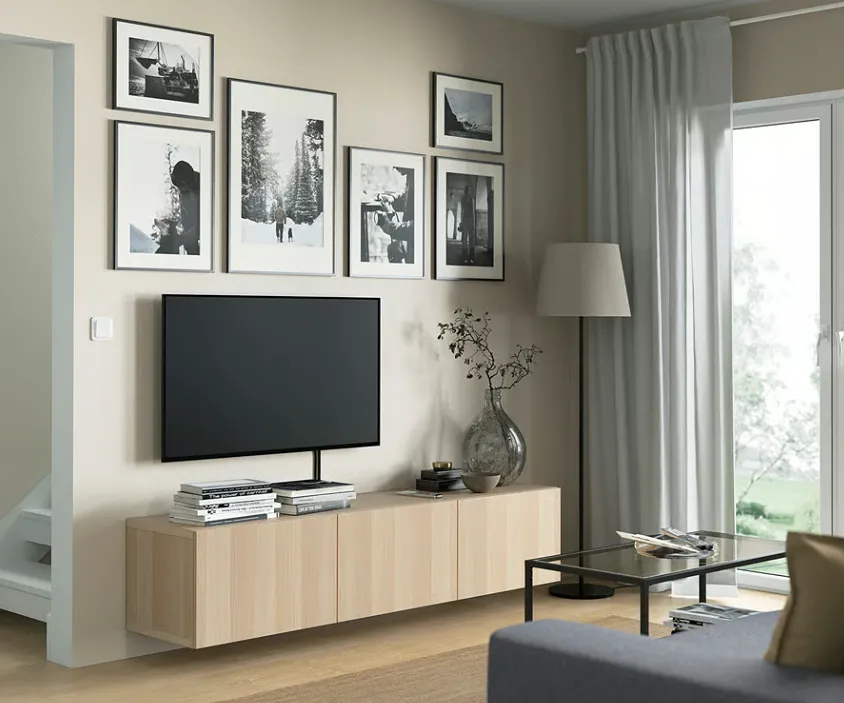
Price: $225
Editorial Rating: 4.2/5
Best For: Budget-conscious buyers who want low, enclosed storage
Highlights
- 70⅞”W × 16½”D × 15″H
- Adjustable shelves
- Rear cord outlets plus a top cable outlet
Limitations
- Delivered in multiple packages and requires substantial assembly
- Wall installation depends on wall construction and appropriate fasteners
Why It Fits:
BESTÅ is the value pick for buyers who need a lot of concealed everyday storage more than specialized AV performance. Cables can enter the unit from both the top and rear, which is useful when a wall-mounted TV has wiring dropping directly toward the cabinet. The adjustable interior also makes it easy to repurpose storage as devices change. Its biggest tradeoff is setup: this version requires extensive assembly and secure wall anchoring.
Will the TV Stand Block Your Wall Outlets or Cable Exit?
Before choosing a console, check where the wall outlet, low-voltage plate, or cable pass-through sits below the mounted TV. A stand can look perfectly sized from the front but create problems if its solid back panel lands directly over the connection point.
Mark the console’s planned top edge and rear openings against the wall. The setup passes if plugs remain accessible and TV cables can drop naturally into a rear opening without being pinched or routed around the side. Rule out a stand if it would cover the outlet, force a sharp bend in a power cord, or leave visible cables running outside the cabinet.
What Changes With a Full-Motion TV Mount?
A full-motion mount adds another variable: the screen moves while the TV stand stays put. Before buying, extend and swivel the TV to the positions you expect to use, then check the space between the screen, the console top, and anything placed on it.
The setup passes if the TV can move through its normal range without hitting a soundbar, speaker, or decor, and connected cables still have enough slack to move without pulling on equipment below. Rule out a console setup that requires clearing the top every time the TV swivels or leaves HDMI and power cables under tension when the screen is extended.
Lower-profile consoles generally leave more flexibility below a moving screen, while taller stands or floating cabinets require more careful height planning because their relationship to the TV is harder to adjust later. This matters more with a TV mount and TV stand setup, where the cabinet needs to work with the TV’s movement rather than just its fixed position.
Conclusion
The right console should make a mounted-TV wall easier to live with, not simply fill the empty space below the screen. Start by deciding whether its main job is everyday storage, soundbar support, serious AV equipment, or a floating look, then eliminate designs that conflict with wall connections or TV movement. That role-first approach keeps the setup cleaner and more comfortable without buying more cabinet than you need. POVISON adds an advantage with furniture-focused designs ranging from shallow everyday storage to purpose-built deep media consoles.
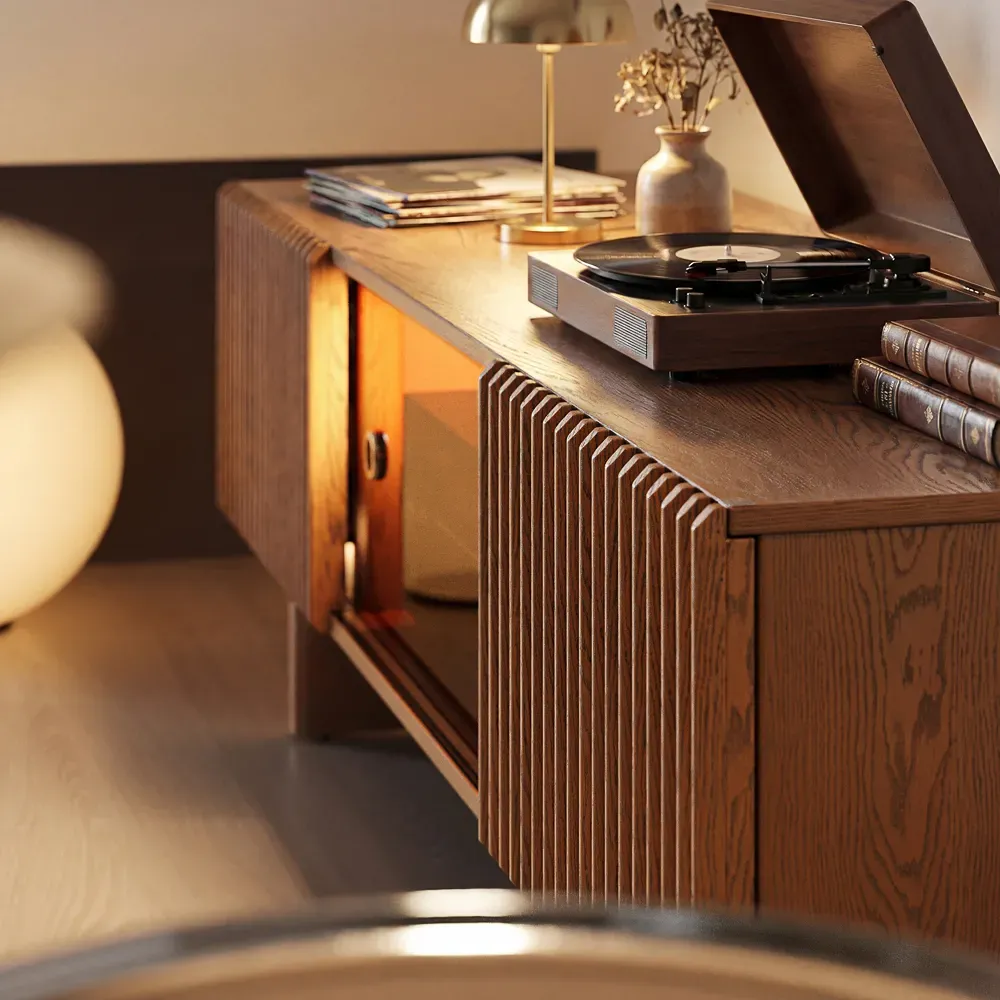
Build a Better Entertainment Setup
Explore media consoles designed for organized storage, ventilation, and modern entertainment equipment.
FAQs
Can a TV stand be off-center under a wall-mounted TV?
Yes, when the overall layout is intentionally asymmetrical. An offset console works best when a speaker, doorway, shelving unit, or other element balances the composition. Otherwise, centering it usually looks cleaner. Also check that the offset does not force TV cables to run visibly across the wall.
Does a floor TV stand still need wall anchoring?
Often, yes. Wall-mounting the TV removes the screen’s weight from the cabinet, but it does not eliminate furniture tip-over risk. Follow the stand manufacturer’s anchoring instructions and use appropriate wall fasteners. The U.S. Consumer Product Safety Commission recommends securing furniture appropriately, especially in homes with children (U.S. Consumer Product Safety Commission).
Can a Wi-Fi router stay inside a media console?
Usually, if both signal strength and temperature remain acceptable. Start with a ventilated wood compartment rather than a tightly sealed or metal-heavy section, then test Wi-Fi from your normal seating area and nearby rooms. Move the router to an open shelf if performance drops or the unit becomes unusually warm.
Which TV stand finish is easiest to maintain?
Smooth matte or low-sheen wood-look surfaces usually hide light dust, fingerprints, and small smudges better than glossy black finishes. Slatted fronts can improve media functionality on some consoles but add grooves that take longer to dust. Choose smoother fronts when easy weekly cleaning matters more than ventilation or signal access.


