 By Kelvin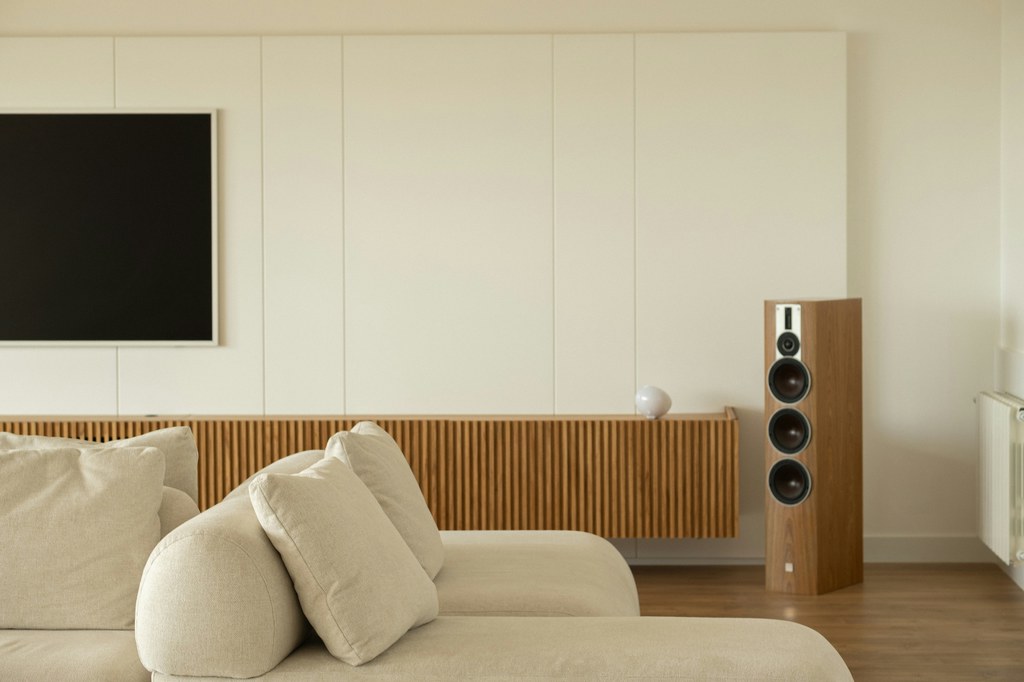
Introduction
Power seating should make a room easier to use, not leave a wire across the floor. This guide explains how to hide power recliner cords according to sofa position, outlet location, flooring, and traffic flow. You will learn which methods work beside a wall, behind nearby furniture, or in the middle of a room, plus where to place the transformer and how to protect exposed runs. The goal is not merely to cover the cable. It is to keep it accessible, ventilated, and clear of every moving mechanism.
Table of Contents
Check the Cord Route Before Hiding Anything
The safest way to hide power recliner cords is to inspect the entire power path first. Unplug the sofa and identify the wall plug, transformer, connectors, and wires entering each powered seat. When setting up a power recliner sofa, confirm that the cable reaches without tension and stays outside the footrest, rails, legs, and sectional connectors.
Check for:
- Cracked insulation, bent pins, or loose connectors
- A hot transformer or burning odor
- Cable compressed by furniture feet
- Too little slack at full recline
- A plug that concealment would make inaccessible
The U.S. Consumer Product Safety Commission advises against routing extension cords under carpets, through doorways, or beneath furniture because they can be damaged or overheat.
Choose a Cord-Hiding Method by Recliner Placement
Placement determines whether a cord can follow a protected edge or must cross open floor. Start with the shortest route outside walking paths and moving parts. Then choose a removable solution, such as clips or a floor cover, or a permanent solution, such as an electrician-installed receptacle.
Recliner Against a Wall
Guide the cord down a fixed rear frame section, leaving a small service loop. Use removable clips only on a stable, nonmoving surface allowed by the manufacturer. Continue behind the sofa or through a baseboard raceway. Do not wedge extra cable between the backrest and wall.
Recliner Near a Side Table or Console
A side table can shield the transformer and final approach to the outlet. Keep the power brick on a hard, ventilated surface rather than inside a fabric basket. Run the power cord for a reclining sofa along the furniture’s rear edge while keeping the plug accessible.
Recliner in the Middle of the Room
For an occasional floating layout, use a low-profile floor cord protector outside the main walkway. For a permanent arrangement, ask a qualified electrician whether a floor receptacle is appropriate. Never use an area rug to conceal a reclining couch power cord.
Multi-Seat Power Reclining Sectional
Connect modules exactly as the manual shows, protect internal connectors, and direct the main external cable toward one outlet side. Do not daisy-chain power strips for separate seats. Recline every seat individually and together to check for tension between modules.
Six Safe Ways to Hide Power Recliner Cords
When deciding how to hide cords for a power recliner, control both visibility and movement. Power cords for electric recliners still need adapter airflow, operating slack, and an inspectable route.
- Rear-frame clips: Attach correctly sized removable clips to a fixed frame area, never to a sliding rail or motor housing.
- Nearby furniture: Follow the back of a console or end table, avoiding drawers, hinges, casters, and furniture legs.
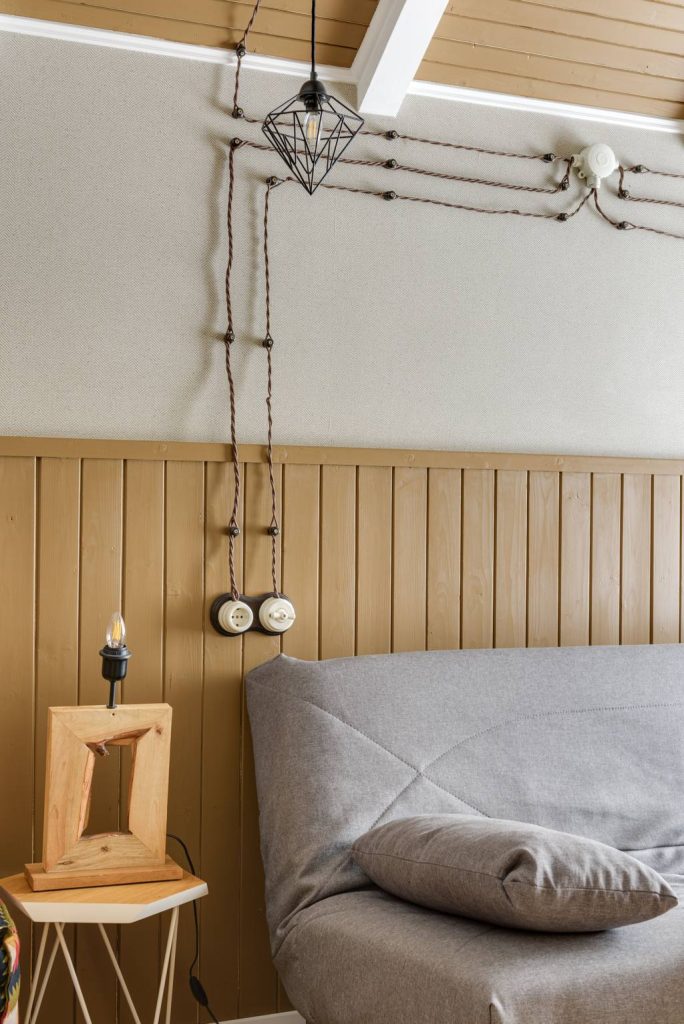
- Baseboard raceway: Use a paintable raceway large enough to hold the cable without crushing or sharply bending it.
- Floor cord protector: Select a low-profile cover rated for pedestrian areas and position it away from doors and chair casters.
- Ventilated transformer tray: Rest the adapter and loose cable curves on a hard tray, with ventilation openings left clear.
- Floor receptacle: For a permanent floating sofa, a qualified electrician can assess whether a code-compliant floor outlet is suitable.
Match the Method to Hardwood, Tile, and Carpet
Flooring affects grip, adhesive performance, cleaning, and trip risk. Choose a method that protects the cable without damaging the finish or creating a raised edge in a frequently used path.
| Floor or Layout | Preferred Method | Check First | Avoid |
| Hardwood | Baseboard raceway or removable protector | Floor-safe pads or adhesive | Strong tape on the finish |
| Tile | Nonslip low-profile protector | Grout ridges and wet areas | Loose cable on polished tile |
| Wall-to-wall carpet | Wall-edge route or floor outlet | Sofa base does not pinch cable | Cable beneath carpet |
| Area rug | Route around the rug | Flat rug edge and clear walkway | Rug used as a cord cover |
| Floating sectional | Floor outlet or perimeter route | All seats tested together | Several uncovered floor runs |
Cord-Hiding Methods to Avoid
A hidden cord is not necessarily a safe cord. The National Fire Protection Association says cords should not cross doorways or run under carpets, while extension cords are intended for temporary use.
Avoid:
- Rugs, carpets, or sofa legs pressing on the cable
- Nails or staples that can pierce insulation
- Wires routed through footrests, rails, or moving joints
- Tight coils around the transformer
- Closed fabric baskets that block adapter airflow
- Chained power strips or unapproved replacement adapters
- A cable stretched tightly to reach the outlet
Reposition the sofa or change the power plan when concealment requires one of these compromises.
Three POVISON Power Sofas That Simplify Cord Planning
Cord routing becomes easier when the final position, powered seats, and charging functions are known before delivery. Buyers comparing a fully assembled power reclining sofa should still map the outlet beforehand. These models suit different layouts rather than removing the need for a safe power route.
Prices may vary by region, selected configuration, and active promotion.
🥇 Top 1: Ergopals-Power Reclining Loveseat
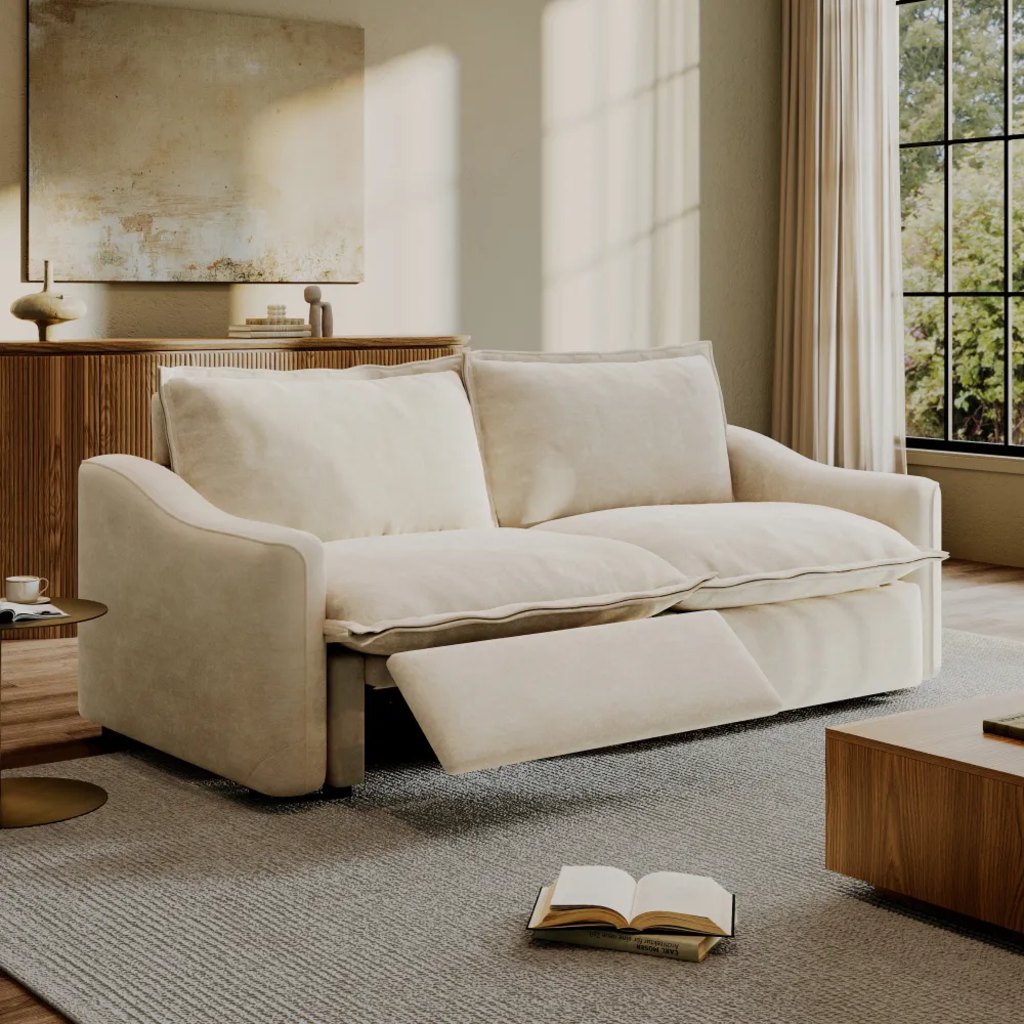
👍 Best for: Wall-adjacent layouts and washable upholstery
💲 Price: $2,399; approximately $2,111 with the current coupon
✨ Highlights
- Zero-wall placement supported by the product page
- Two powered seats with 90°–145° adjustment
- Removable pet-friendly covers and hidden USB ports
🎯 Features: Ergopals can sit flush against a wall, allowing the main cable to drop behind the loveseat and follow a protected wall route. Its independent powered seats still require a full movement test, while removable covers make cleaning around the rear cable area easier in homes with pets.
🗨️ Buyer review:“The reclining features are smooth and easy to use.” — Tiffany, June 24, 2026.
🥈 Top 2: Benjamin-Power Reclining Loveseat
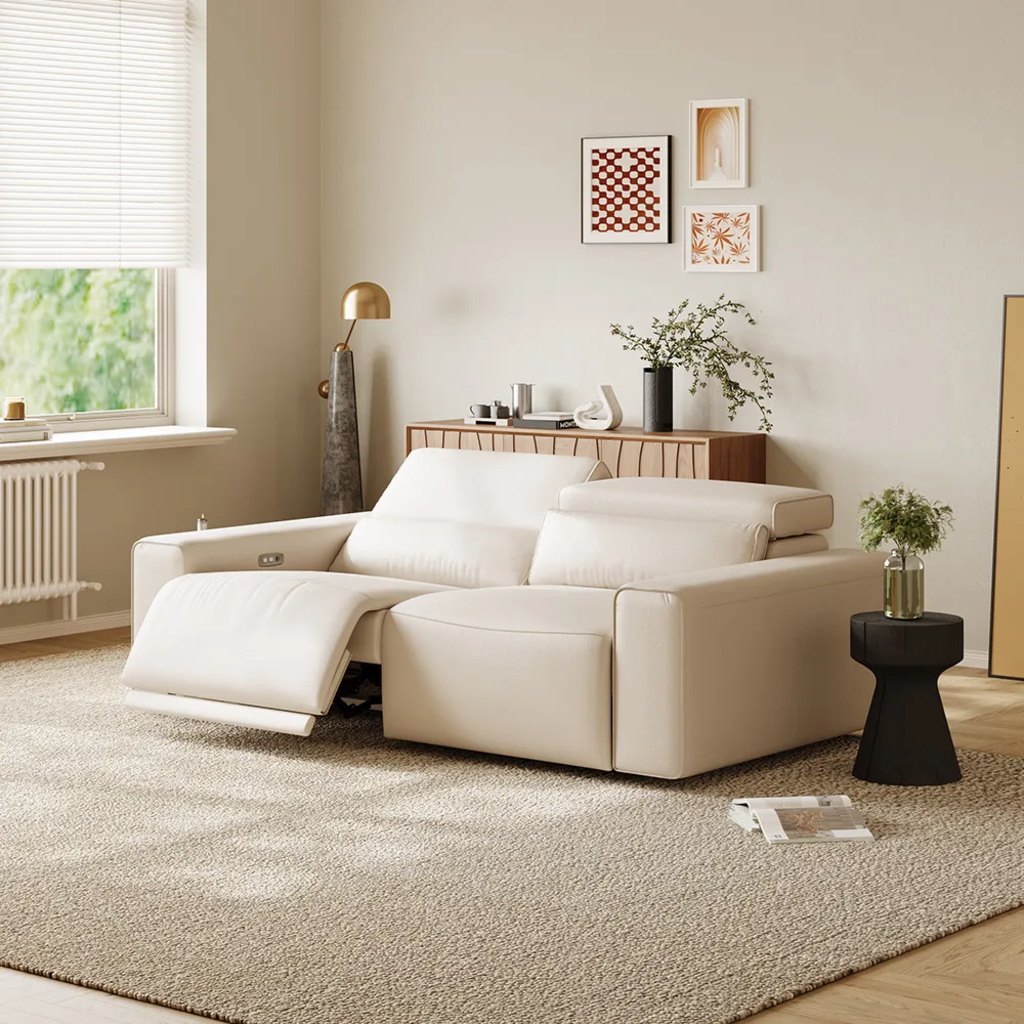
👍 Best for: Two-person media rooms
💲 Price: $2,159; approximately $1,899 with the current coupon
✨ Highlights
- Two reclining seats and adjustable headrests
- Built-in USB and Type-C charging
- Easy-clean sustainable microfiber leather
🎯 Features: Benjamin gives two viewers separate recline control while its built-in charging ports reduce the need for loose phone cables around side tables. Its modular construction keeps connections easier to inspect, but the main power route must remain outside the moving seats and footrests.
🗨️ Buyer review:“We each have our own recliner so no fighting!” — Suzanne, May 3, 2026.
🥉 Top 3: Elara-Dual Power Reclining Loveseat

👍 Best for: Open rooms where under-sofa access matters
💲 Price: $2,799; approximately $2,639 with the current coupon
✨ Highlights
- Independent powered headrest and footrest
- Elevated carbon-steel legs
- Chenille upholstery and built-in charging
🎯 Features: Elara’s raised legs keep the floor beneath the loveseat visible, making it easier to notice a shifted cable after cleaning. Its 90°–145° powered range needs enough loose cable for full movement, so secure the route to a fixed point rather than letting it pass beneath a leg.
🗨️ Buyer review:“The packaging was neat and included clear instructions, making the setup process easier than anticipated.” — Nicole, July 30, 2025.
Final Safety and Movement Test
Reconnect the sofa after every clip, raceway, tray, or floor protector is secure. Test each powered seat fully upright, partially reclined, and fully reclined. Then operate multiple seats together when applicable.
Confirm that the cable:
- Does not tighten, lift, drag, or rub against metal
- Stays clear of footrests, rails, legs, and connectors
- Does not pull the transformer or wall plug
- Remains accessible for inspection
- Sits outside walking and cleaning paths
Stop if the sofa hesitates, hums without moving, or pulls a connector. The steps used to fix a power recliner that will not move can help distinguish a routing fault from a mechanical or electrical problem.
Conclusion
Good cord management begins with furniture placement, not a decorative cover. Once you know how to hide power recliner cords, choose the shortest protected route, keep the transformer ventilated, and preserve enough slack for every movement. Wall-adjacent sofas usually work with clips or a raceway, while a permanent floating layout may justify a professionally installed floor outlet. Test each seat through its full range and recheck the route after moving or cleaning. A concealed cable should always remain easy to reach, inspect, and unplug.
Frequently Asked Questions
Can a robot vacuum cross a recliner cord cover?
Only when the cover is lower than the robot vacuum’s stated climbing clearance and remains firmly in place. Choose a model with beveled edges and supervise one full cleaning cycle. Change the route if the vacuum lifts the cover, catches a brush, or pushes the cable toward the sofa mechanism.
How can renters hide power recliner cords safely?
Renters learning how to hide power recliner cords should prioritize freestanding furniture, removable clips, and nonpermanent floor protectors. Check the lease before attaching a raceway to a wall or floor. Reposition the recliner when the only temporary route would cross a busy walkway or risk damaging the rental’s finishes.
How can I protect recliner cords from pets?
Use an enclosed cord channel or manufacturer-compatible protective sleeve in areas pets can reach. Keep the transformer and connectors uncovered for ventilation and inspection. Replace the cord if chewing exposes insulation, loosens a connector, or leaves deep tooth marks; a protective sleeve should not be used to conceal existing electrical damage.
Can adhesive cord clips damage hardwood or painted walls?
Yes. Some adhesives can lift paint, leave residue, or react with wood-floor finishes. Confirm which surfaces the clip manufacturer approves and test one clip in a hidden location before completing the route. Use furniture-backed routing or a freestanding floor protector when the finish is delicate, recently painted, or difficult to repair.
When should a floor cord cover be replaced?
Replace it when it curls, cracks, slides, loses its beveled edge, or no longer closes securely around the cable. Reassess the cover after changing rugs, furniture placement, or cleaning equipment. A protector that previously worked may create a trip point when the walkway or surrounding floor height changes.


