 By Kelvin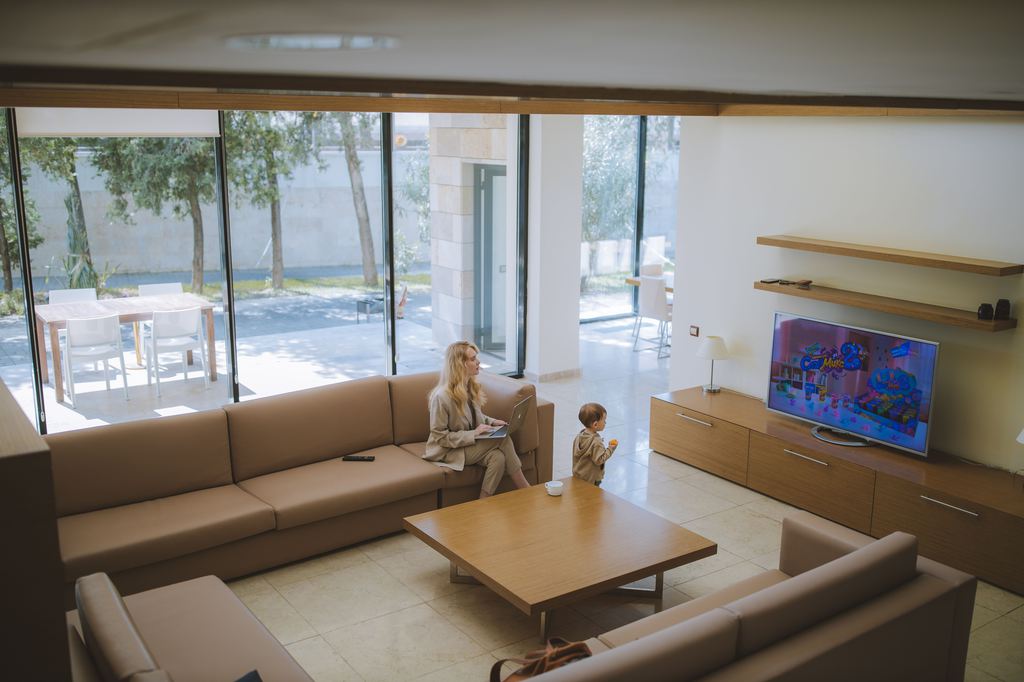
Introduction
A kid friendly coffee table should reduce everyday collision concerns without making the living room less useful for adults. This guide helps you compare shapes, materials, storage, moving parts, size, and stability before you buy. The goal is not to label one design completely childproof. It is to find a table that fits your child’s current stage, leaves a workable path through the room, handles snacks and play, and still gives the household a practical surface for daily life without forcing every family into the same shape or material.
Table of Contents
What Makes a Coffee Table Kid-Friendly?
A kid friendly coffee table combines a forgiving outer shape with stable construction, a practical surface, and enough clearance for family movement. Rounded edges help, but they do not correct a wobbly base, fragile top, projecting legs, or exposed hinge. HealthyChildren.org, a site of the American Academy of Pediatrics, identifies hard-edged coffee tables as a particular concern and recommends removing hazardous furniture from traffic areas or using cushioned protectors.
Start with six checks:
- Edges: Look for rounded, oval, waterfall, or upholstered outer edges.
- Stability: The table should resist rocking, sliding, and tipping under side pressure.
- Surface: Choose a non-fragile top that matches your cleaning habits.
- Base: Avoid legs or metal parts extending beyond the tabletop.
- Movement: Check lids, drawers, lift tops, and nesting pieces for pinch points.
- Clearance: Leave room for sitting, standing, crawling, and walking.
“Kid-friendly” describes a better fit for family life. It does not mean a child can climb or play on the table without supervision.
Which Shape and Material Work Best for Your Family?
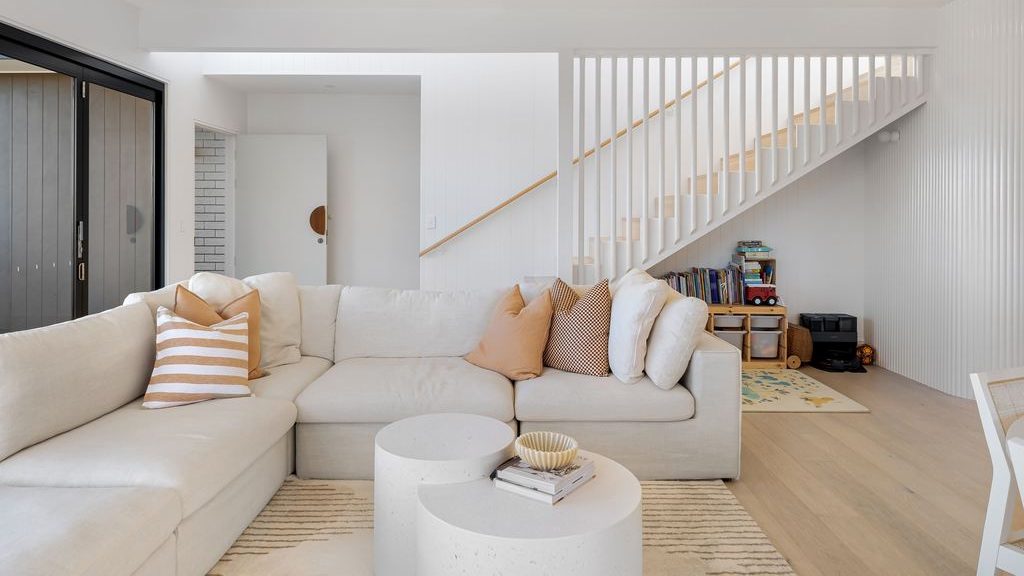
Decide which trade-off matters most: softer contact, a steady surface for drinks, easy cleaning, or hidden storage. Shape changes circulation, while material affects cleaning and how hard an accidental bump may feel. No single combination performs best in every category.
| Coffee Table Type | Works Well For | Main Advantage | Reality Check |
| Round or oval hard-surface table | Drinks, snacks, and hosting | Removes projecting tabletop corners | Wood and stone remain hard |
| Upholstered ottoman | Floor play and flexible seating | Cushioned top and edge | Needs a tray for stable drinks |
| Drum table with drawers | Toy and remote storage | Concealed organization | Heavy tables are harder to move |
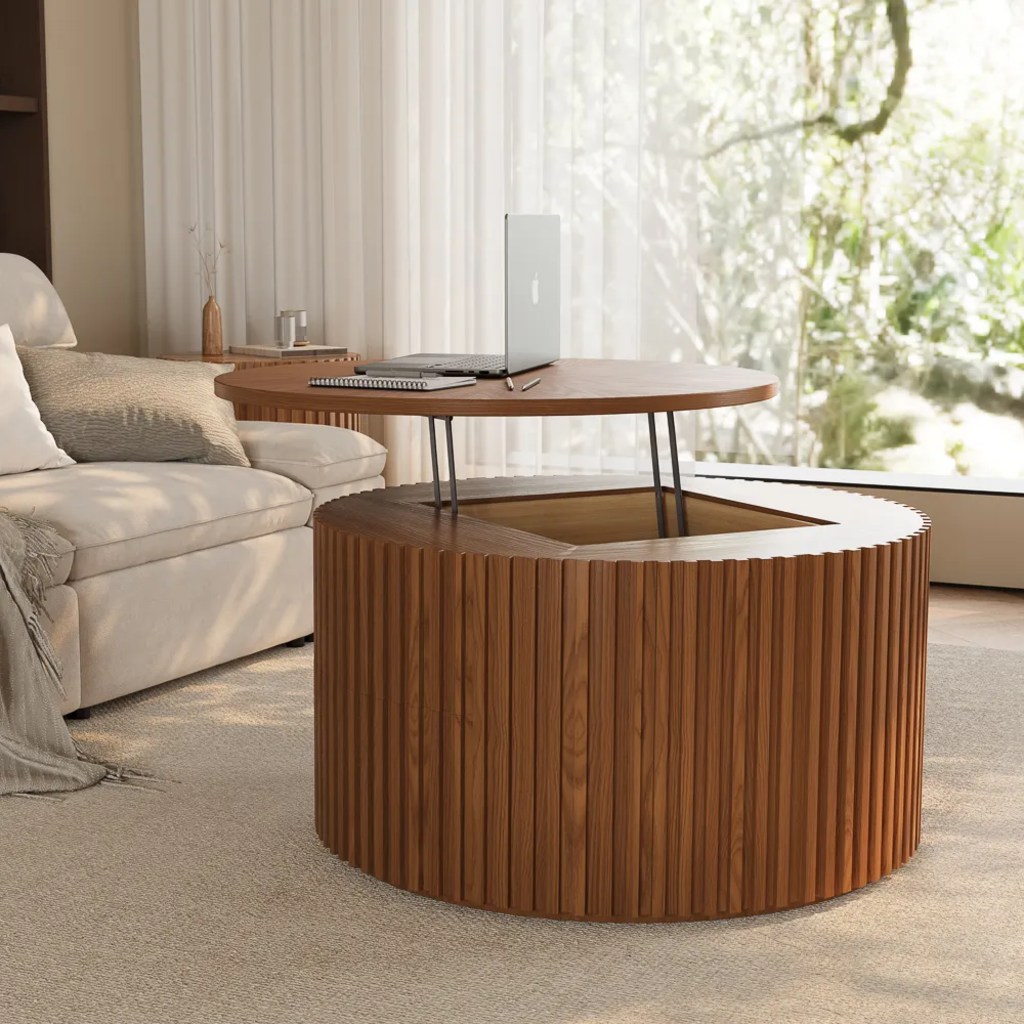
| Lift-top table | Sofa meals or laptop use | Raised surface and hidden storage | Hinges and gaps need inspection |
| Nesting tables | Flexible small rooms | Pieces separate when needed | Small tables may enter play routes |
Round and Oval Hard-Surface Tables
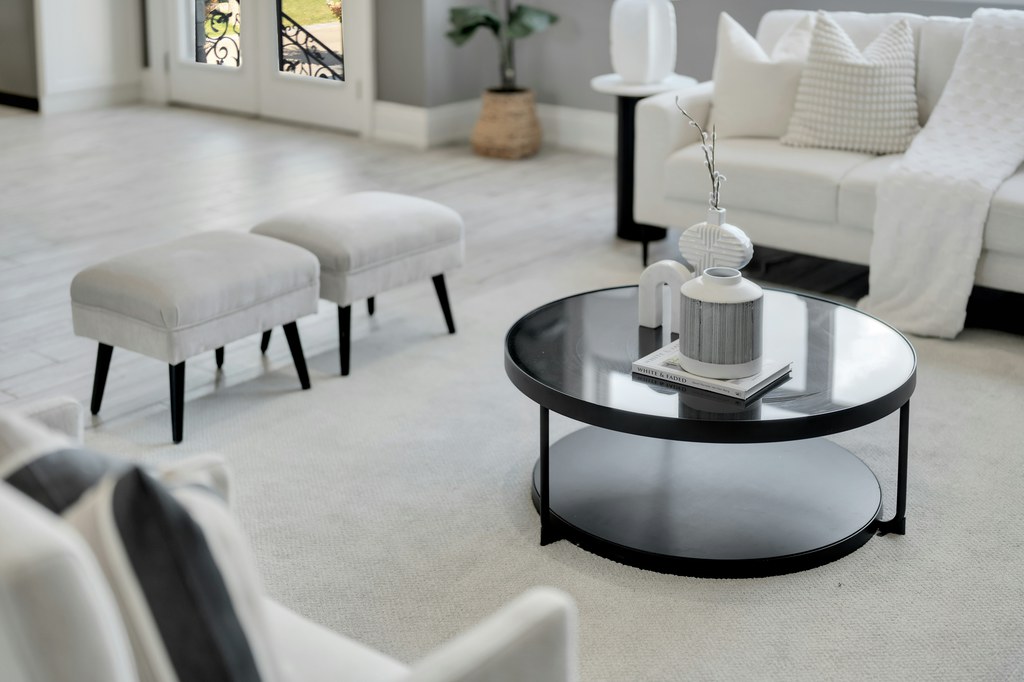
A round coffee table removes four projecting corners and often improves circulation. An oval table offers more serving length while keeping curved ends. Still inspect the base: a narrow pedestal may rock, and a curved top can sit above outward-splayed legs.
A square coffee table may suit a deep sectional, but it needs softened corners and generous clearance. A rectangular coffee table aligns with a long sofa, yet its ends can project into cross-room traffic. Use either only when those corners stay outside the child’s main route.
Upholstered Ottomans
An ottoman offers softer contact and can serve as a footrest, casual seat, or play surface. Prioritize tightly woven performance fabric, secure upholstery, and a top that does not shift when leaned on. A broad tray creates a stable place for cups.
The choice between an ottoman coffee table vs coffee table comes down to whether your household values cushioning or a firm, wipeable surface more often.
Storage, Lift-Top, and Nesting Tables
Drawers make it easy to hide toy cars, controllers, and coloring supplies without moving the tabletop. Check whether an open drawer enters a running path and whether it closes with controlled movement.
Lift tops and flip lids add function, but hinges and closing gaps need closer review. Nesting tables save space only when every piece is independently stable and has a planned place when separated.
How Do You Check Size and Stability Before Buying?
Measure the full table, including legs, handles, and any top that slides or rotates. Keep about 14 to 18 inches between the table and sofa as a starting point, and roughly 24 to 30 inches in a main walkway when the room allows. With active children, protect the route they actually use rather than forcing a larger table into a standard formula.
Follow this four-step check:
- Tape the footprint on the floor. Walk around it while carrying a toy bin.
- Mark opened parts. Add the space needed by drawers, lift tops, or extensions.
- Study the base. Check its width and whether legs project beyond the top.
- Test side pressure. Press gently near several edges and recheck fasteners after assembly.
Detailed sizing rules for coffee tables for small living rooms can help, but clearance should take priority during crawling and running stages.
Match the Table to Your Child’s Stage
A child’s behavior changes faster than furniture. Use developmental stage as a practical filter rather than a strict age rule. A table that works during quiet floor play may need reevaluation once a child starts pulling up, climbing, or carrying toys at a run.
| Child Stage | Main Concern | Features to Prioritize |
| Crawling | Low hard edges and under-table parts | Rounded perimeter, simple base, open floor |
| Pulling to stand | Rocking or shifting under load | Broad base, secure assembly, limited movement |
| Active toddler | Running, climbing, and pinch points | Clear circulation, few moving parts |
| School age | Snacks, games, homework, clutter | Wipeable top and organized storage |
A family with a new walker may benefit more from a smaller oval table and an open route to the hallway than from a larger storage table. Later, that household may prioritize a flat homework surface and drawers for game pieces.
Which Coffee Table Type Fits Your Daily Routine?
Focus on what happens most often between breakfast and bedtime, not the feature that looks most impressive in a product video. A table used for drinks every day needs different strengths from one that mainly stores toys or moves aside for floor play.
For Snacks, Drinks, and Everyday Hosting
Choose a steady hard surface when adults regularly set down hot mugs, plates, or laptops. Rounded wood or sintered stone provides a conventional tabletop without a rectangle’s projecting corners. Keep breakable decor away from the edge and hot drinks beyond a young child’s reach.
For Toys and Fast Living Room Resets
Drawers or simple closed cabinets support a quick evening reset without moving the tabletop. Give frequently used items a defined compartment so a child does not unload everything to find one toy. Heavy flip lids and exposed lift hardware require more adult control.
A round coffee table with storage can combine a curved perimeter with organization, but the opening method matters as much as capacity.
For Small Family Rooms
A compact circle or oval usually leaves a smoother route than a wide square. An ottoman can move aside for play, while one small table may be simpler than several nesting pieces. In a very narrow room, side tables may provide enough landing space until the busiest crawling and running stage passes.
A 60-Second Kid-Friendly Coffee Table Checklist
Before ordering, check the following:
- Are exposed tabletop edges rounded, curved, or cushioned?
- Does the table stay steady under pressure near different edges?
- Do the legs and base remain inside the tabletop perimeter?
- Is the surface non-fragile and realistic to clean weekly?
- Can drawers, lids, or smaller pieces create a pinch point or obstacle?
- Is there clearance when every moving part is open?
- Does the size preserve the child’s main play route?
- Are full dimensions, product weight, and assembly requirements listed?
A failed check does not automatically rule out a table. It identifies where you may need more clearance, a guard, closer supervision, or another structure.
Discover POVISON Coffee Tables Designed for Modern Family Living
POVISON’s round coffee tables combine modern styling with features that support real family routines, from storing toys to creating more open circulation around the sofa. These three options serve different priorities, so the ranking considers versatility, footprint, surface maintenance, and how each design fits a shared living room.
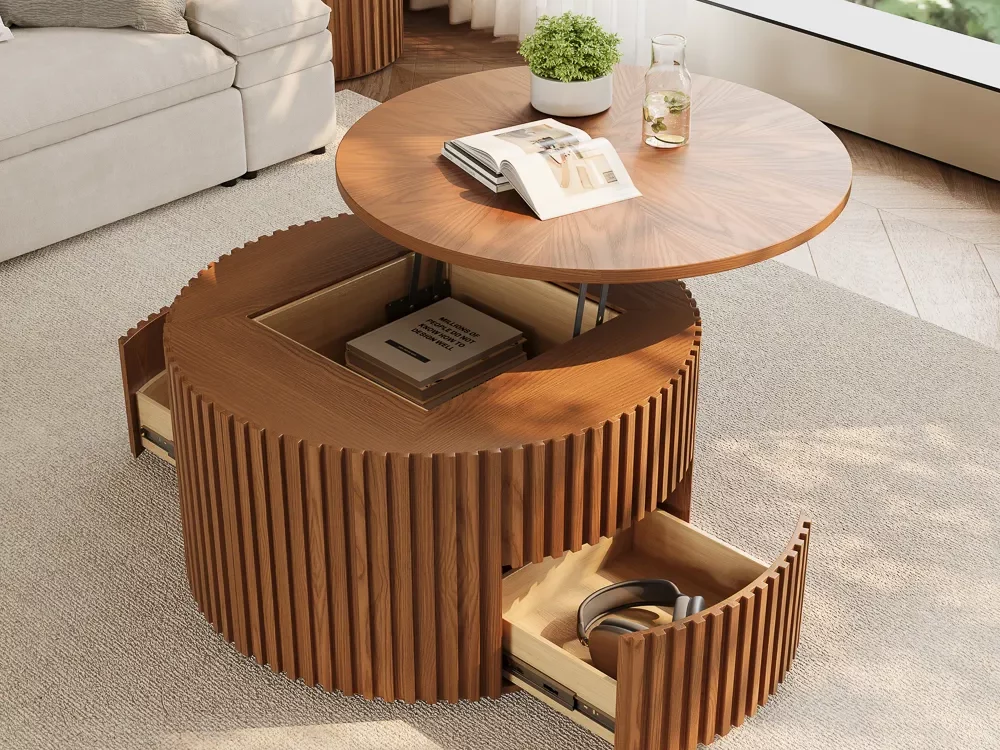
Top 1: Silva-31.5” Lifting Top Round Coffee Table
The Silva-31.5” Lifting Top Round Coffee Table is the most versatile option for families who use the living room for meals, homework, laptop time, and storage. Its rounded fluted body avoids projecting tabletop corners, while the top rises from coffee-table height to a more comfortable working position. Hidden storage and two drawers keep books, controllers, and craft supplies out of sight. The smooth mechanism includes an anti-collision feature, but adults should still operate and close the lifting top around young children.
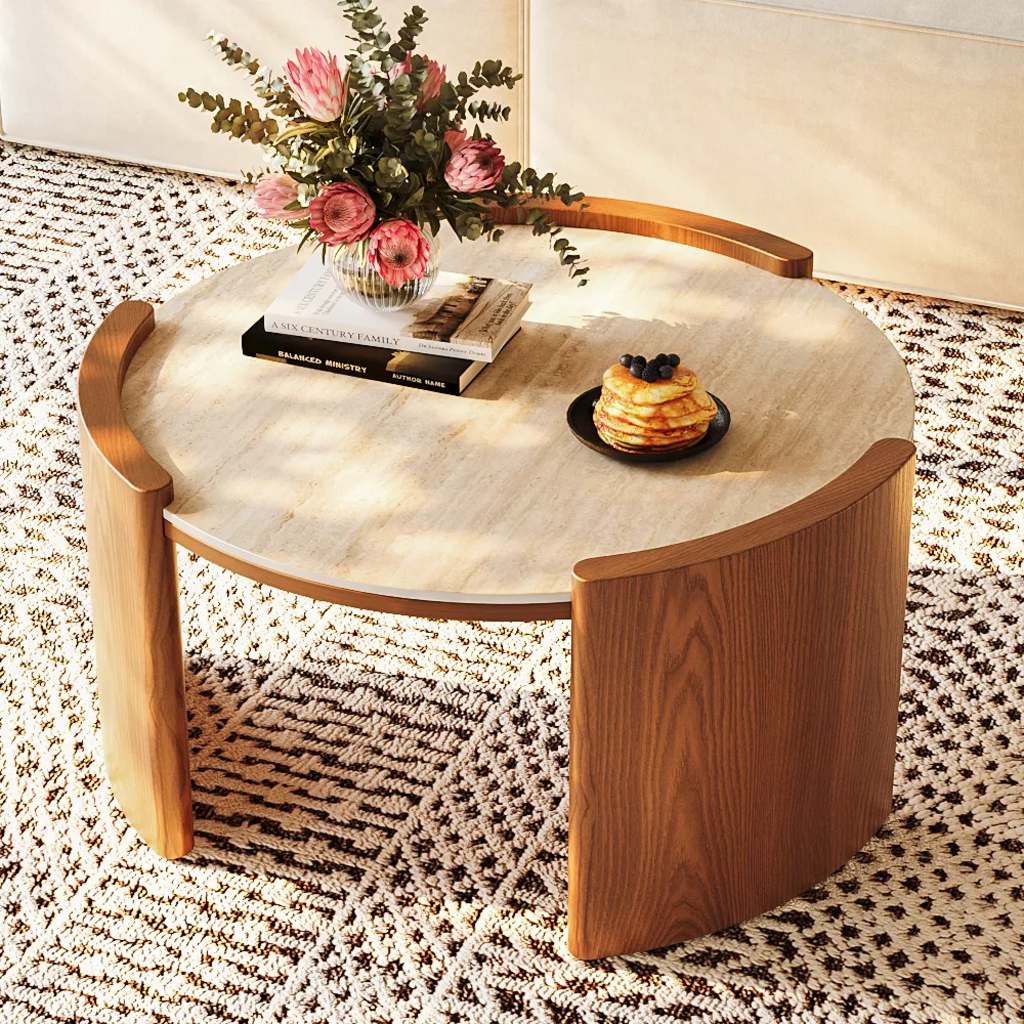
Top 2: Silva-31.5” Lifting Top Round Coffee Table
The Silva-31.5” Lifting Top Round Coffee Table suits smaller family rooms where maintaining an open route around the sofa matters more than adding storage. Its compact circular top removes projecting corners, while the low 15.4-inch profile keeps the room visually open. The sintered stone surface is practical for snacks, drinks, and frequent wiping, and the ash-veneer three-leg base adds a warm furniture look. Check that the leg positions remain outside the child’s usual play route.
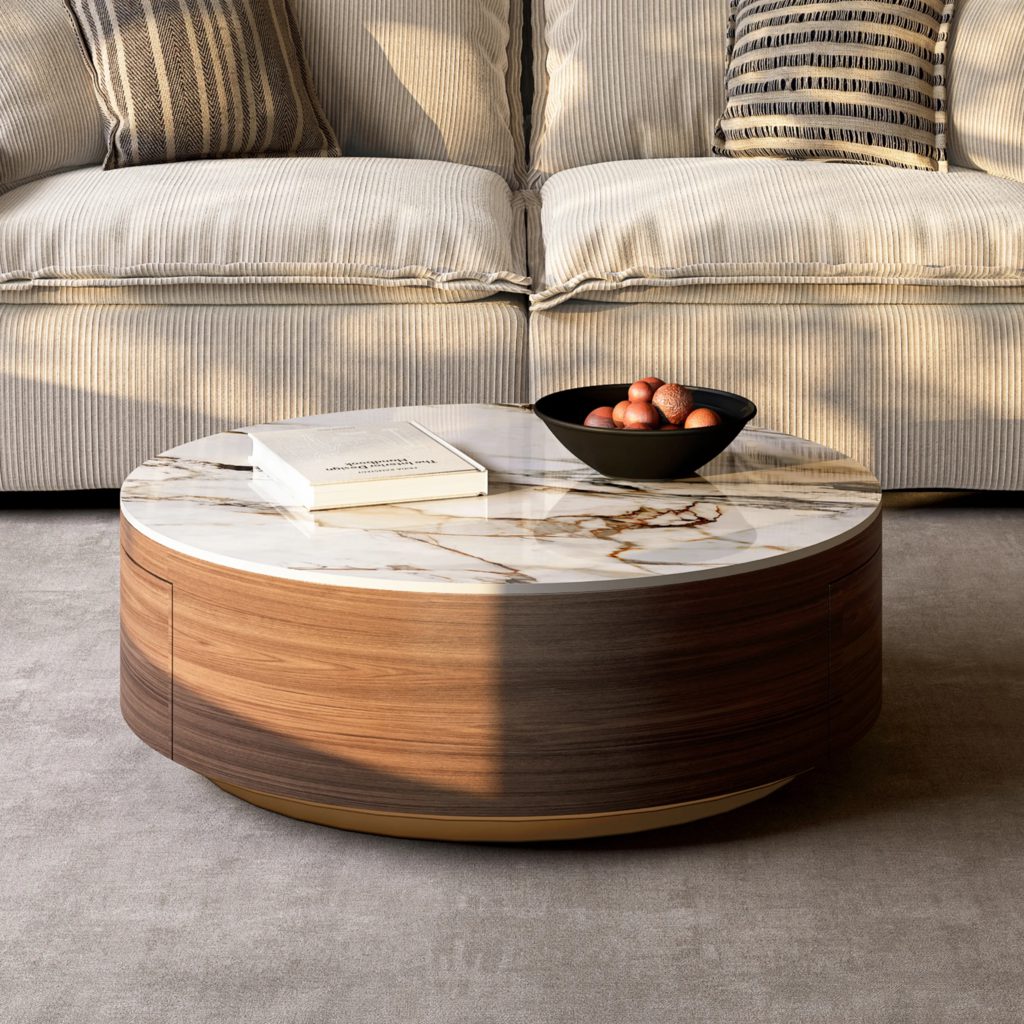
Top 3: 35″ Round Drum Sintered Stone Coffee Table with Storage
For households that need more concealed storage, the 35″ Round Drum Sintered Stone Coffee Table with Storage provides two drawers for toys, remotes, and everyday living room clutter. Its broad drum-shaped body and 110-pound listed weight give it a more substantial presence than a lightweight table, while the rounded perimeter removes exposed tabletop corners. The wipeable sintered stone top supports everyday family use, though its larger footprint requires careful measurement in narrow living rooms.
Conclusion
Choosing a kid friendly coffee table starts with the child’s movement, not the furniture style. First remove projecting edges, unstable bases, fragile surfaces, and uncontrolled mechanisms from consideration. Then measure the real footprint, protect the busiest route, and match the surface or storage to daily habits. A rounded hard table, upholstered ottoman, or drawer-based design can each work when its trade-offs fit the household. The strongest choice remains useful to adults while giving children more forgiving space to crawl, stand, and play before decorative details enter the decision.
Frequently Asked Questions
Can corner guards make a rectangular coffee table more suitable for kids?
Corner guards can soften the main impact points when they remain firmly attached. However, they do not fix a glass top, unstable base, outward-projecting legs, or exposed hardware. Check the adhesive regularly and inspect the entire table before deciding that guards are the only adjustment needed.
What should I do if a coffee table slides on hard flooring?
First confirm that every leg or base section sits level. Manufacturer-approved non-slip furniture pads can reduce movement on wood or tile when they fit fully beneath the base. Check them regularly for wear. A rug may add friction, but it cannot correct a table that already rocks or has loose connections.
Can children use a sintered stone coffee table for crafts?
Children can use a sintered stone surface for supervised crafts, but place paint, glue, crayons, and sharp tools on a washable mat or tray. Clean spills according to the manufacturer’s care instructions, and avoid letting children strike the hard tabletop with heavy toys or craft equipment.
How high should a family coffee table be?
A coffee table generally works well when its top is level with the sofa seat or about one to two inches lower. Measure the actual seat height before buying. A table that is too high can feel awkward for drinks, while an unusually low table may be uncomfortable for frequent adult use.
What finish hides fingerprints and small scratches most effectively?
Low-sheen finishes, visible wood grain, subtle stone patterns, and softly varied colors usually disguise daily marks better than mirror-like surfaces or high-gloss black. For upholstered tops, tightly woven performance fabric or a removable cover is generally easier to maintain than loose, pale, highly textured fabric.


