 By Kelvin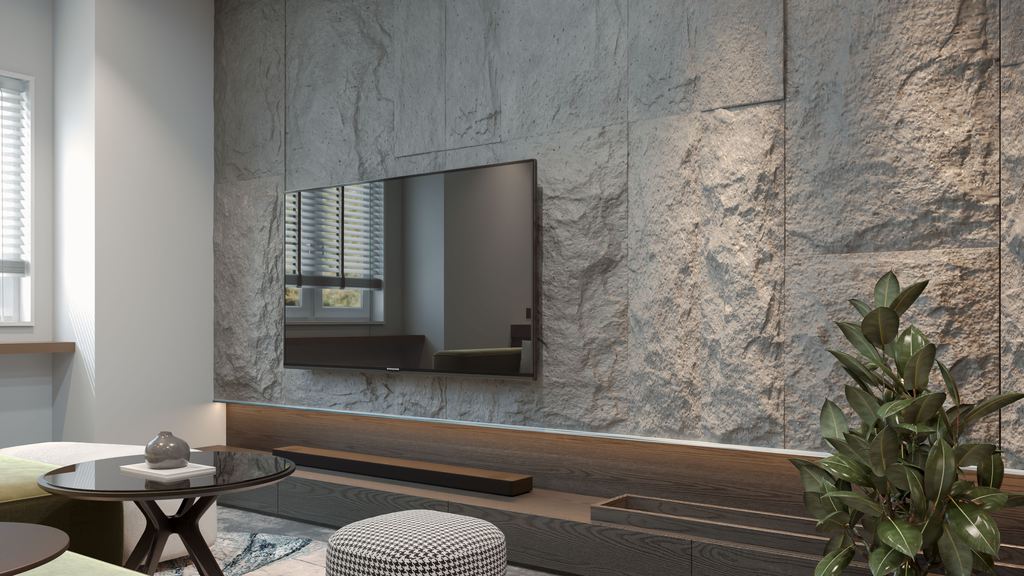
Introduction
A wall-mounted TV can free up surface space, but it often leaves one practical question behind: what should sit underneath it? The right console can give the screen a visual base, keep everyday devices within reach, and stop cords from taking over the room. This guide helps you decide whether you need a cabinet at all, which type suits your setup, and how to avoid proportion mistakes before ordering. People searching for tv stands for tv on the wall are rarely looking for another place to hold the screen. They need a media zone that works for real life.
Table of Contents
Do You Need a TV Stand Under a Wall-Mounted TV?
You do not always need one. But a TV stand still makes sense when the wall needs visual balance, the room needs storage, or your electronics need a permanent home. Think beyond the screen itself: a TV wall also has to support the soundbar, router, streaming box, game controllers, charging cables, and the small items that otherwise migrate to the coffee table.
When a TV Stand Still Makes Sense
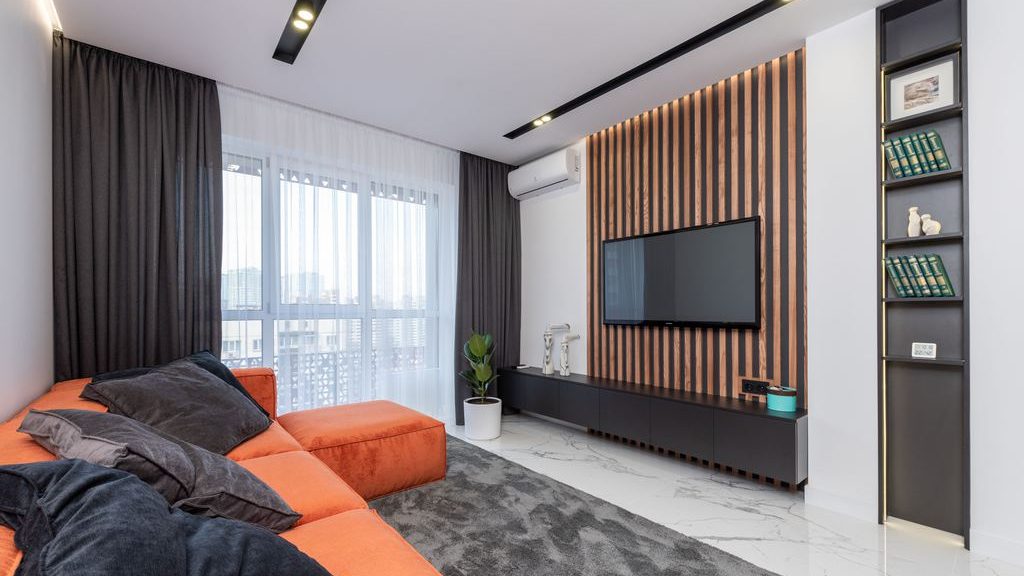
A low console is useful when your mounted TV feels isolated on a large wall or when the screen visually outweighs everything below it. It can also make a busy family room easier to reset after movie night.
A TV stand is usually worth adding when you need to:
- Store remotes, games, cables, and chargers out of sight.
- Give a soundbar or speaker a consistent location.
- Keep a router, streaming box, or game console close to the TV.
- Anchor a large screen above a sectional or deep sofa.
- Make the TV wall connect visually with the rug, coffee table, and seating area.
When You Can Leave the Space Empty
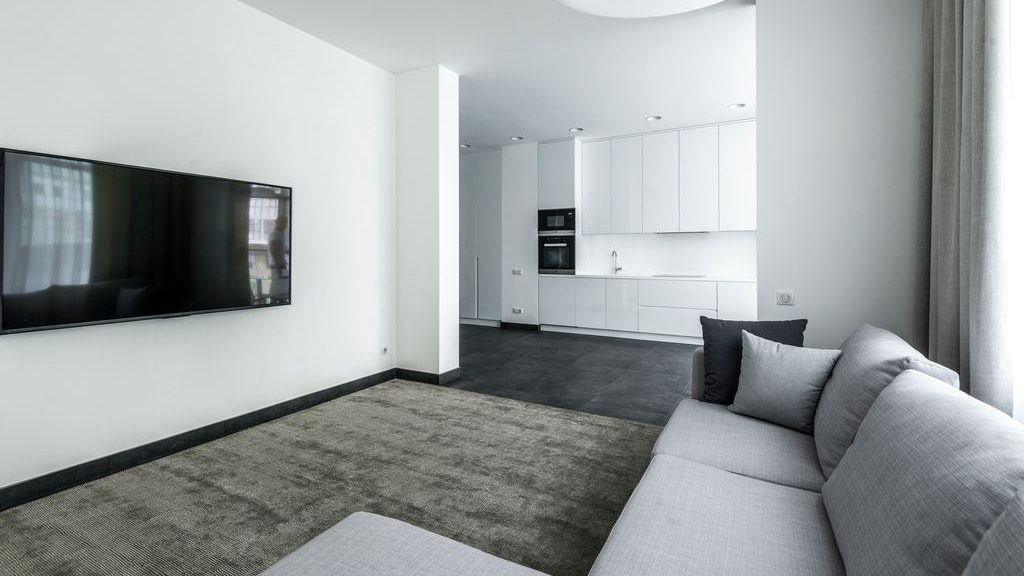
Leaving the space open can work when the wall already has a clear purpose. Built-in cabinetry, a substantial fireplace mantel, or storage placed directly beside the screen may already provide enough balance.
It can also be the better choice when a narrow wall would feel crowded with another piece of furniture. A secondary TV in a guest room, workout space, or rarely used den may not need a console either. The question is not whether every mounted TV requires furniture underneath. It is whether the wall still functions and looks intentional without it.
What Works Best Under a Wall-Mounted TV?
Once you know the wall needs a base, choose based on daily use rather than a single style preference. A floor console, floating cabinet, or intentionally open wall each solves a different problem. The right answer depends on storage needs, installation limits, visual weight, and how much open floor space matters in the room.
| Your setup | Usually the strongest option | Why it works |
| Large TV, several devices, family media use | Low floor media console | Adds visual weight, storage, and easy equipment access |
| Small apartment or open walkway | Floating TV cabinet | Keeps the floor visible and reduces visual bulk |
| Few devices, built-ins, or a very narrow wall | Leave the area open or use a slim surface | Avoids filling space that does not need furniture |
| Rental or frequently changing layout | Floor console | Requires no wall mounting and moves more easily |
Choose a Low Floor Console When the Wall Needs Weight
A low floor console works well below a large TV, especially in a family room with a sectional, reclining sofa, or wide seating zone. The cabinet gives the screen a horizontal base, which helps the wall feel more stable instead of top-heavy.
This option is also practical when several devices need storage. The differences between a floating vs. floor TV stand become most noticeable when you compare real needs: a floating unit saves floor space, while a floor console is easier to install, move, and load with deeper gear.
Choose a Floating Cabinet When Floor Space Is the Priority
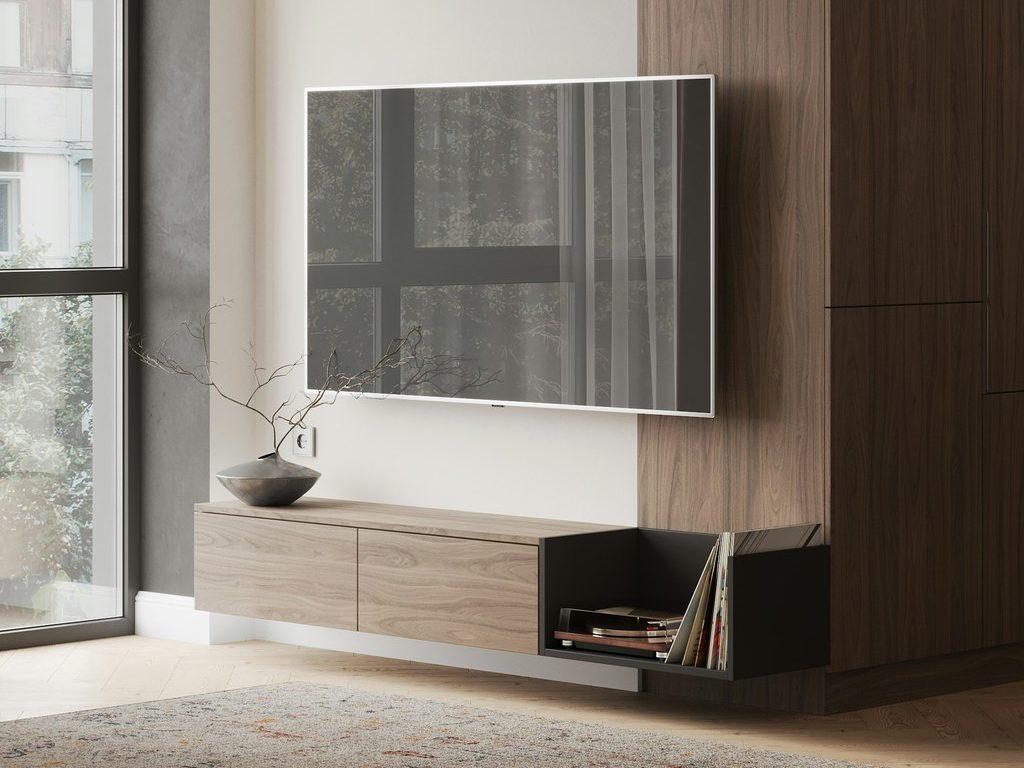
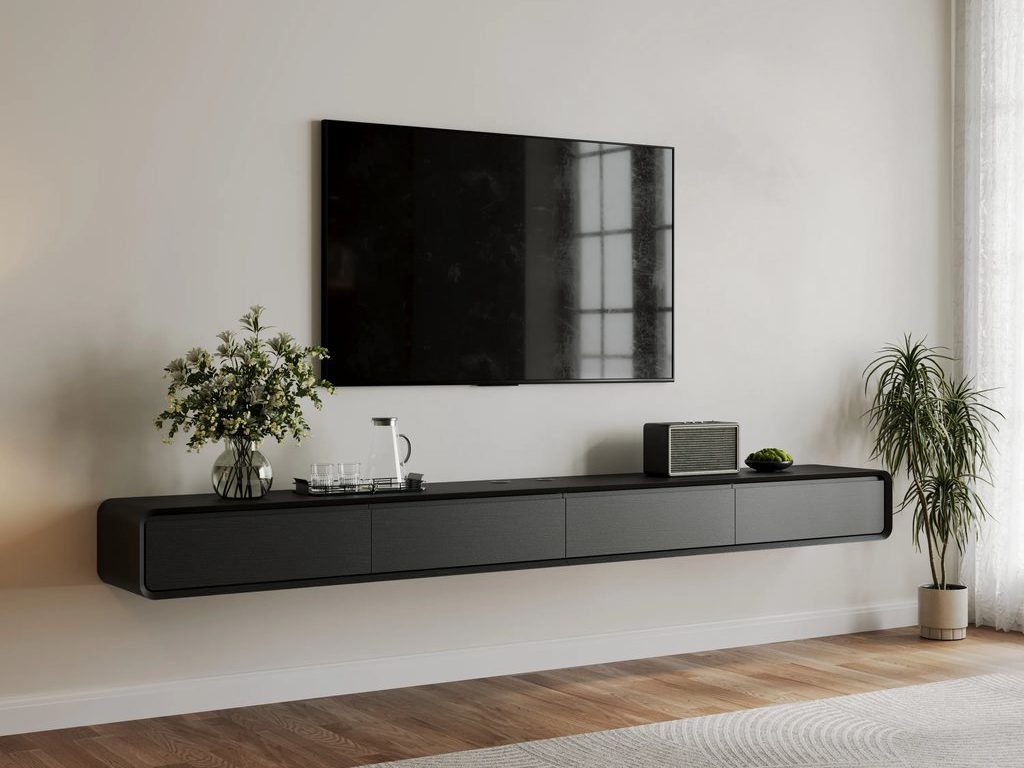
A floating cabinet suits compact rooms, minimalist interiors, and homes where visible floor area makes the room feel less crowded. Because the cabinet is mounted below the screen, the TV and storage can read as one clean wall feature.
A mounted TV stand is most useful when the wall can support it properly and when your devices are relatively compact. It may be less practical for renters, heavy audio equipment, or households that expect to rearrange often.
Leave It Open Only When the Wall Already Has a Job
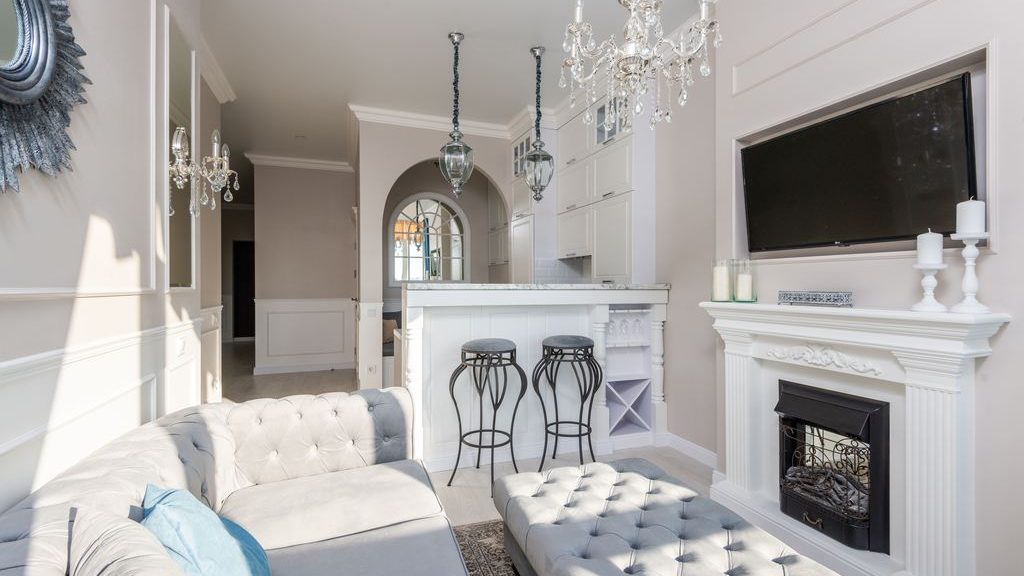
An open space below the TV can look calm and deliberate, but only when another feature supports the composition. Built-ins, a fireplace, a wide rug and low coffee table, or adjacent shelving can carry the room visually.
Do not add a narrow bench or random decor just because the wall feels empty at first glance. If the TV is mounted too high, the cables are visible, or the screen is too large for the wall, a small piece underneath will not solve the actual problem.
How Should a TV Stand Fit the TV, Wall, and Seating?
A good setup is not based on TV diagonal size alone. Measure the screen’s real width, the usable wall width, the cabinet depth, and the distance to your usual seats. The TV and console should look related, but the room still needs clear walkways, practical cable access, and comfortable viewing from the sofa.
| Check | What to measure | What to avoid |
| Width | TV frame width, available wall width, side clearance | Choosing only by diagonal screen size |
| Height | Seated eye level, TV position, soundbar space | Raising the TV just to fit a taller cabinet |
| Depth | Device depth, rear plugs, cabinet doors, walkway | A shallow console that forces cords to bend |
| Wall scale | Screen size compared with the full furniture zone | A very large TV above a narrow, lightweight piece |
Use Width for Balance, Not Just Compatibility
In most living rooms, the console should be at least as wide as the TV’s physical frame and ideally extend beyond both sides when the wall allows. This makes the screen feel anchored instead of perched above a smaller object.
However, width is not a hard rule that overrides the room. A narrow wall, nearby doorway, or built-in shelving may require a more compact console. A practical TV stand size guide starts with the actual TV width, then checks the wall and circulation space before treating any number as final.
Set the TV Height Before You Judge the Console Height
Mount the TV for seated comfort first. Then choose a cabinet that leaves enough space for a soundbar, cable routing, and visual breathing room beneath the screen.
A deep sectional or reclining sofa changes the viewing angle because people sit lower and lean back farther. In that situation, avoid hanging the TV high simply to create room for a tall console. A lower, wider piece often supports the layout without forcing the screen upward.
Plan Storage Around the Devices You Actually Use
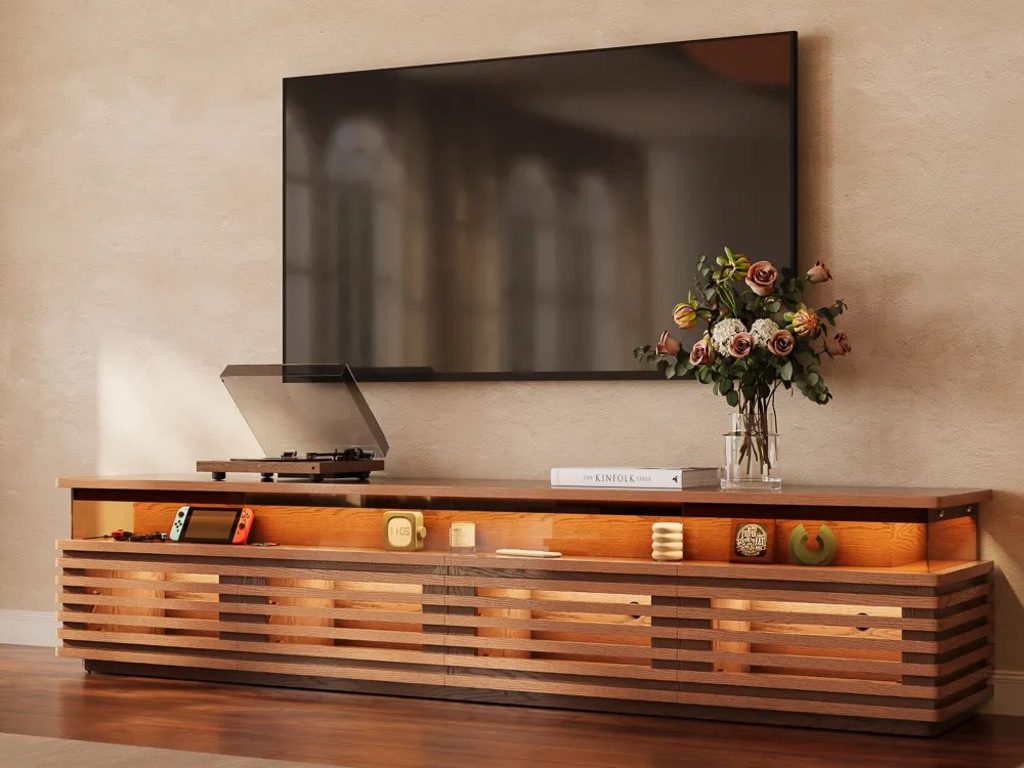
Cable management is not just about hiding black cords. It is about giving each device enough room to connect, cool down, and stay accessible. Before choosing doors, drawers, or open shelving, list what actually lives near the TV on an ordinary weeknight.
| Device | What it needs | Cabinet feature to look for |
| Soundbar | Clear path below the screen | Open top surface or dedicated shelf |
| Game console | Airflow, rear plug clearance, controller storage | Ventilated compartment and cable openings |
| Router | Space around it and a sensible cable path | Lightly ventilated or open area |
| Streaming box | Remote signal and easy access | Low shelf or shallow open compartment |
| Remotes and chargers | Quick daily access without clutter | Drawer, tray, or closed compartment |
Closed Storage Helps—Until It Traps Heat
Closed cabinets are useful for hiding remotes, game cases, and power strips. They become less useful when an AV receiver or console is pressed against the back panel with no air movement around it. Measure the device with every cable attached, not just the equipment body.
For a family room with an AV receiver, game console, or turntable, the Arboren-71” Mid-Century Modern TV Stand with storage gives the wall a grounded base without placing the screen on the cabinet. Its 22-inch depth, adjustable shelves, rear ventilation, and six internal cable holes give larger equipment room to run without turning the top into a wire tray.
Put Devices Away Before Adding Decor
A cabinet top looks better when it is not doing the work of a charging station, router shelf, and game-storage bin at the same time. Give functional items a home inside the console first. Then leave only the soundbar, a small tray, or one restrained decorative object on the surface when needed.
This is especially useful in homes where someone watches a game on Sunday afternoon, children play a console after school, and the same room has to feel tidy again before guests arrive.
How Do You Make the TV and Stand Feel Like One Setup?
The visual goal is not to disguise the TV. It is to make the TV wall feel connected to the rest of the room. The screen is already a strong black rectangle, so the furniture and decor around it should reduce visual noise rather than compete for attention.
Keep the Center Low and Calm
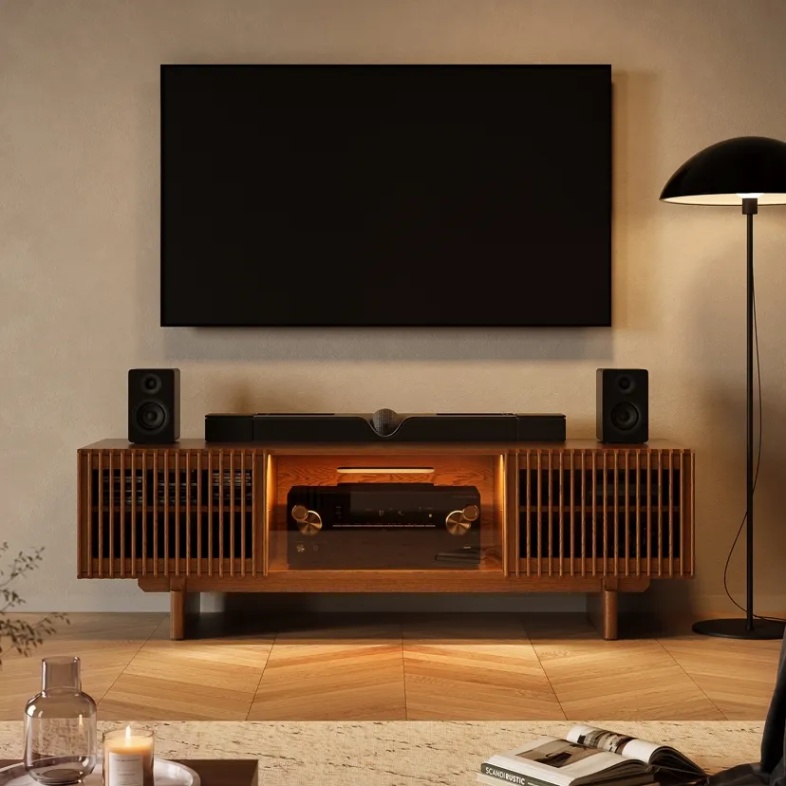
Avoid stacking tall books, large flowers, or oversized artwork directly below the TV. These objects crowd the space between the screen and the cabinet, making the wall look busier and the TV harder to watch.
A soundbar, a low tray, or a short bowl can work in the center because they do not compete with the screen.
Add Height at the Sides
When the wall needs more softness, place a slim lamp, plant, or vase outside the TV’s width rather than directly beneath the screen. This creates a gentle frame without blocking the viewing area.
The principles of TV stand decor without clutter work especially well here: keep the middle clear, use the outer edges for height, and repeat a material already present in the room.
Repeat One Material From the Room
A walnut-toned console can relate to a coffee table. Black hardware can repeat a floor lamp. A pale stone surface can connect to a side table or fireplace surround.
The TV wall does not need to match every piece exactly. It just needs one or two visual connections that make it feel like part of the living room instead of a separate electronics zone.
Use the Screen–Base–Gear–Wall Check Before You Commit
Before ordering, run through four short questions:
- Screen: Is the TV mounted at a comfortable height for the main seating?
- Base: Does the wall need storage, visual weight, or nothing at all?
- Gear: Will every device fit with its cables, ventilation needs, and remote access?
- Wall: Will the cabinet interfere with a doorway, outlet, walkway, or future furniture change?
This check prevents the most common mistake: choosing a console because it looks right in isolation, then discovering that the router has no signal, the receiver has no breathing room, or the cabinet blocks the room’s main path.
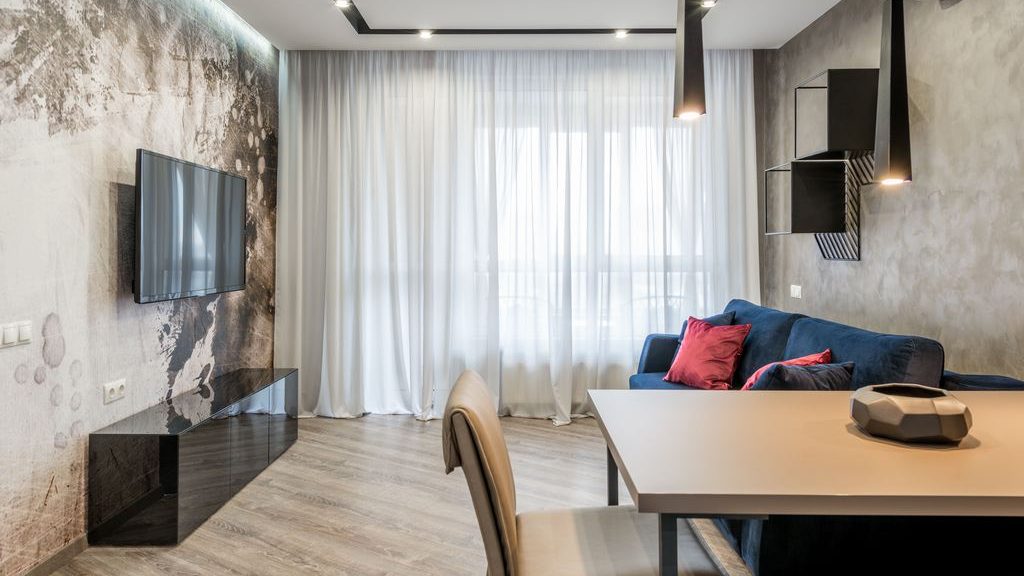
Conclusion
Wall mounting changes where the TV sits, not the need for a useful media zone. Start by identifying what the wall lacks: a visual base, storage for real equipment, or clearer cable control. Then choose a solution that fits the wall width, seating height, and everyday use of the room. The most useful tv stands for tv on the wall do not compete with the screen. They give it a calm, proportional foundation while keeping the parts of movie night—from the soundbar to the remote—where they belong.
Q&A
Is a TV Mount Stand for Wall the Same as a Floating Media Console?
No. A TV mount stand for wall may refer to a freestanding unit with a built-in vertical mount, while a floating media console is storage mounted below a separately wall-mounted screen. Check the product description carefully, because one may support the TV itself and the other may only provide a finished base beneath it.
What Should You Do When the Outlet Is Not Centered Below the TV?
Center the furniture around the TV wall or main seating zone rather than the outlet alone. A slightly offset power point is usually less noticeable than an off-balance console. Use discreet cord covers or rear access points so cables can travel to one side without making the layout look accidental.
Can a Dining Sideboard Be Repurposed as a TV Console?
Yes, especially when you already own a long, low sideboard that matches the room’s materials and overall scale. The main question is whether it feels natural beside sofas and lounge furniture. Avoid tall serving-height pieces, overly formal detailing, or fragile finishes that make the TV wall look disconnected from the living area.
Can a TV Console Sit Slightly Off-Center Under a Wall-Mounted TV?
Yes, when the room has a doorway, window, fireplace, built-in shelving, or another fixed feature that prevents perfect symmetry. Align the console with the larger furniture zone or wall composition instead of forcing it to match the TV’s centerline. Intentional asymmetry looks better than furniture squeezed into an impractical position.
What If the Soundbar Is Wider Than the TV Stand?
Do not place a soundbar where it overhangs the cabinet edges or feels wedged between decorative objects. Use a wider console, mount the soundbar directly below the screen, or place it on a dedicated shelf. It should sit securely, remain clear of the screen, and leave enough room for its cables.
When Should You Add a Cable Raceway Instead of Relying on the TV Stand?
Add a cable raceway when cords must run visibly down the wall from the mounted TV to furniture below. A console can conceal cables once they reach it, but it cannot hide the exposed vertical path on the wall. A paintable raceway is most useful when in-wall cable routing is not possible.
Is a Low Console Useful Below a TV Mounted Over a Fireplace?
Sometimes, but it should not be used to disguise a poor TV position. A low console can make a fireplace wall feel more finished and provide a place for everyday items, yet it cannot correct an uncomfortable viewing angle or reduce heat exposure. Confirm the screen placement first, then decide whether furniture adds a real function.


