 By Stephanie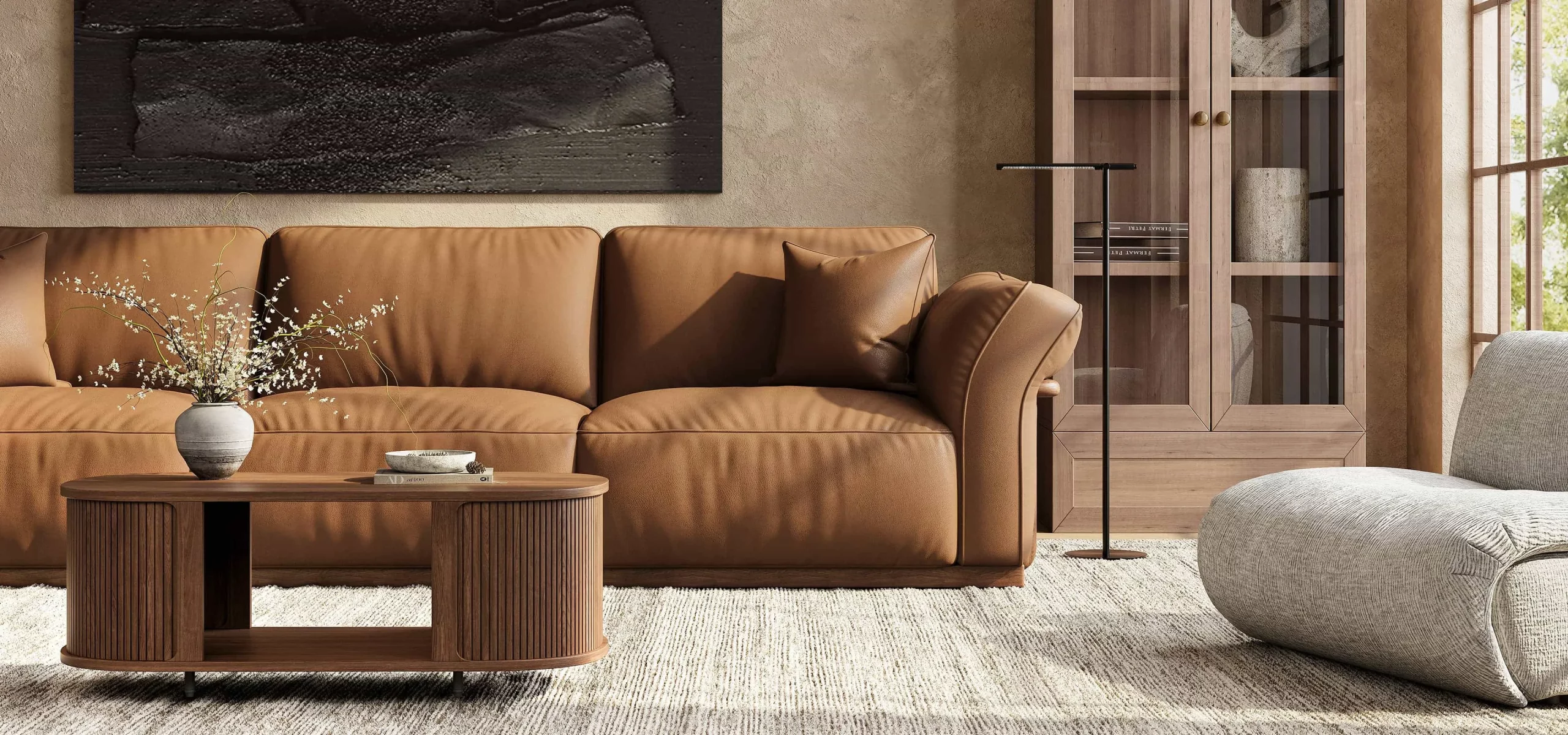
What is aniline leather, and why does it look richer than many other sofa leathers? Aniline leather is dyed with transparent colorants that leave the hide’s natural grain, pores, and markings visible. The result feels soft and warm, with natural variations that make every hide look different, but the minimally protected surface also absorbs spills and shows scratches more readily. That trade-off matters if you have kids or pets, place your sofa in a sunny room, or use it every day. This guide explains the finish, compares practical alternatives, and helps you decide whether its beauty fits your life and care habits.
Table of Contents
What Is Aniline Leather?
The word “aniline” describes the leather’s finish, not its grade. Full-grain and top-grain describe how much of the hide’s original surface remains and how heavily it has been corrected. Aniline refers to how that surface is dyed and protected. When you shop for a sofa, check both the leather grade and the finish. The phrase “genuine leather” alone tells you very little.
How Aniline Leather Is Made
After tanning, the hide is colored with transparent dyes that do not cover its natural grain. Pure-aniline leather has no pigmented surface coating, so pores, markings, and subtle differences in color remain visible.
Some aniline leathers may still receive transparent waxes, oils, or clear protective treatments. What defines the finish is the absence of opaque pigment that would conceal the hide’s natural grain.
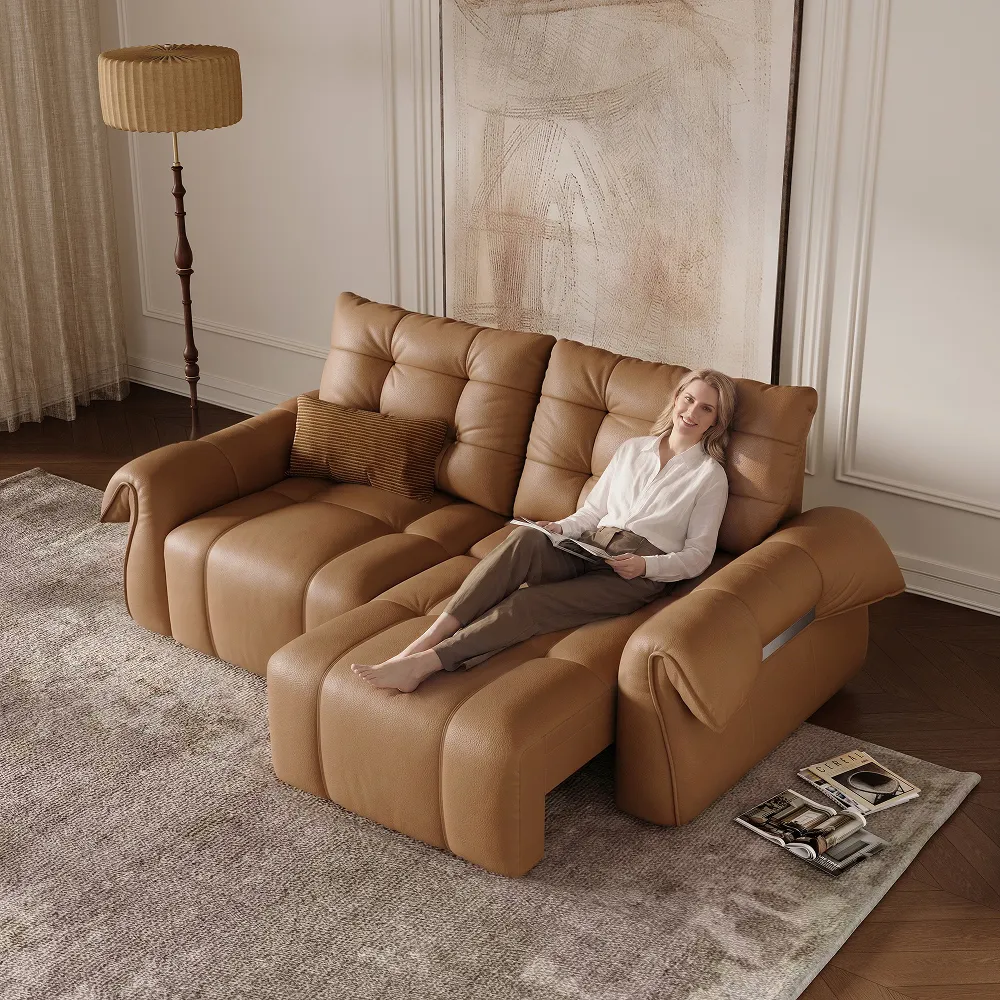
The Melody Dual Power Reclining Loveseat shows how leather grade and finish work together. It uses top-grain leather made from premium European hides, while “pure-aniline” refers to the transparent finish applied in Italy. The leather is hand-tumbled to create a softer feel, then waxed and polished to enhance its color and natural character. Over time, the surface develops a richer patina.
Aniline Leather Texture, Grain, and Appearance
Aniline leather usually feels warm and supple rather than slick or heavily coated. Common characteristics include:
- Visible pores and irregular grain
- Slight color differences between panels
- Natural wrinkles and markings
- A soft, matte surface
- A patina that becomes more noticeable over time
Because leather is a natural material, differences in color and texture are normal. Pure-aniline upholstery may also show light scratches more easily. Minor marks can sometimes be softened by gently rubbing them with a fingertip or a dry chamois.
Sunlight can also affect color. A cognac leather swatch left near a bright window may gradually look warmer on the exposed side than on the shaded area. The change can add character, but it also shows why furniture placement and routine care matter when choosing the best leather for a sofa based on daily use.
Aniline Leather Pros and Cons
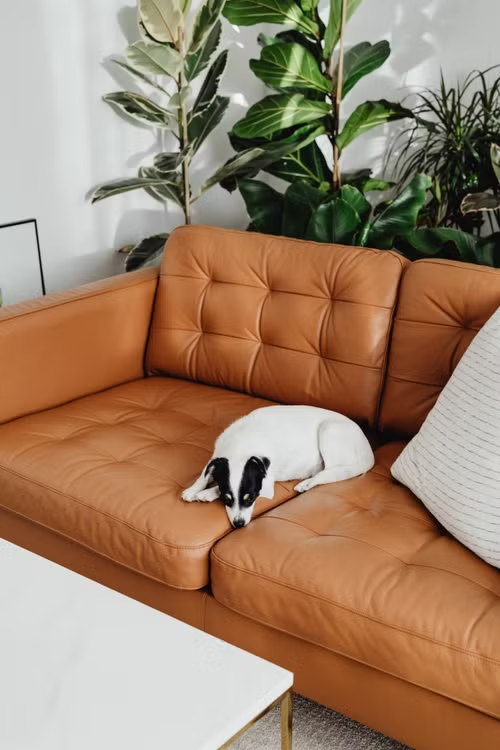
Aniline leather’s strengths and weaknesses come from the same feature: very little material sits between you and the natural hide. That creates a more expressive surface, but it also leaves less protection against daily accidents. The right decision depends on whether you value character or predictability more.
Benefits of Aniline Leather
Its main benefits are sensory and visual:
- Natural character: Every hide looks and ages differently.
- Softness: Minimal coating preserves a flexible, warm feel.
- Color depth: Transparent dyes create layered tones instead of flat color.
- Patina: Gentle use can add richness and personality over time.
These qualities explain why aniline leather is often selected for luxury furniture. However, its minimal finish also provides less protection from soiling than semi-aniline or pigmented alternatives.
Drawbacks of Aniline Leather
Aniline leather absorbs moisture and body oils faster than protected finishes. It also displays scratches more clearly and may fade when exposed to strong sunlight. The leather itself may be strong, but the surface can still show every spill, scratch, and oil mark.
A few unnoticed drops of cola can leave a dark ring within minutes because aniline leather absorbs liquid quickly — the kind of ordinary accident a busy family room produces. Homes comparing pet-friendly sofa materials for claws, fur, and spills should usually favor a protected finish unless visible wear is part of the desired look.
Is Aniline Leather Good for Sofas?
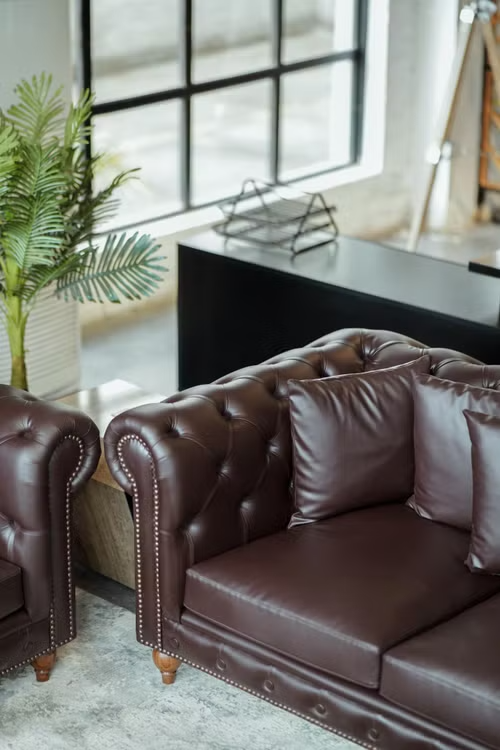
A sofa magnifies every upholstery choice because it faces body oils, friction, sunlight, snacks, pets, and repeated sitting. Aniline can be excellent in the right room yet frustrating in the wrong one. Use your household routine — not showroom softness — as the final test.
Best Rooms and Lifestyles for Aniline Leather
Choose aniline when the sofa:
- Sits away from prolonged direct sunlight
- Is used by owners who can respond quickly to spills
- Belongs to a household that accepts scratches, tonal changes, and patina
- Is placed in a formal lounge, reading room, or carefully used main living space
- Is not expected to maintain a perfectly uniform, showroom-new surface
Aniline leather can still work for regular seating, but it suits buyers who see visible aging as character rather than damage.
When Semi-Aniline Leather Is the Better Choice
Choose semi-aniline when you still want visible grain and a soft feel but need more protection from spills, body oils, and daily friction. Its light protective finish gives you more time to blot accidents without making the surface look as uniform as heavily pigmented leather.
It is often the practical middle ground for buyers who want premium-looking leather without treating the sofa like a display piece.
Aniline vs. Semi-Aniline vs. Pigmented Leather
All three finishes can look premium, but they differ in how much protection is added to the surface. Comparing aniline, semi-aniline, and pigmented leather makes it easier to balance softness, natural variation, stain resistance, and maintenance.
What Semi-Aniline Leather Is
Semi-aniline leather is aniline-dyed leather with a light protective finish that improves stain resistance without completely hiding the natural grain.
ISO-aligned definitions separate it from aniline leather, which has no pigmented coating, and pigmented leather, whose natural grain is concealed beneath an opaque finish.
What Pigmented Leather Is
Pigmented leather has a layer of color and a protective topcoat, giving it a smoother, more consistent appearance. That extra protection makes it better at handling spills, sunlight, and everyday wear, though it usually feels less soft and shows fewer natural markings than aniline leather.
It is still real leather, rather than faux or bonded leather. Because it is easier to clean and maintain, it is often a practical choice for family rooms, dining chairs, and other high-traffic areas.
| Feature | Aniline | Semi-Aniline | Pigmented Leather |
| Natural grain | Most visible | Clearly visible | Mostly concealed |
| Feel | Softest and warmest | Soft with light protection | More coated and uniform |
| Stain resistance | Low | Medium | High |
| Color consistency | Naturally varied | More even | Most uniform |
| Best use | Quiet, careful homes | Everyday premium seating | Children, pets, high traffic |
Choosing the Right Leather Finish for Daily Use
Pick aniline for maximum natural character, semi-aniline for balance, and pigmented leather for easier cleanup. Always confirm both the grade and the finish. A “top-grain” label alone does not reveal how heavily the surface has been protected.
When making your choice, consider the furniture’s daily role. A multi-functional piece built for high-traffic living demands a smart compromise between luxury and resilience. This is exactly where the Cygnus Power Sofa Bed shines. By utilizing New Zealand top-grain leather with a light protective coating, it delivers the premium, breathable feel of an aniline-dyed finish, while offering the practical stain and wear resistance needed for daily lounging, reclining, and sleeping.
Identifying and Caring for Aniline Leather
Labels are helpful, but they should be supported by what you can see, feel, and confirm with the seller. Once you own the sofa, finish-specific care becomes equally important. These checks can help you verify the finish before you buy and avoid damaging the leather later.
How to Identify Aniline Leather
Read the material specification first, then request a swatch. Look for visible pores, uneven grain, and a soft matte feel rather than relying on price or the phrase “genuine leather.”
Ask the seller:
- Is it full aniline, semi-aniline, or protected?
- Is the same leather used on every visible panel?
- Are natural marks covered by the warranty?
- Which cleaner or conditioner is approved?
A hidden water-drop test may darken absorbent leather, but use it only with permission. Water absorption alone cannot prove the leather’s grade.
Aniline Leather Cleaning and Spill Care
Blot spills immediately with a clean, dry cloth—never rub. Keep the sofa away from direct sunlight and heat, dust it gently, and use only products approved for its exact finish.
A safe routine for how to clean a leather sofa without damaging its finish should begin with the manufacturer’s care label.
Avoid:
- Alcohol, bleach, ammonia, and household sprays
- Soaking or aggressive scrubbing
- Unapproved oils and conditioners
- Hair dryers or other direct heat
- Large DIY color repairs
Conclusion
Aniline leather is worth considering when you want a sofa that feels exceptionally soft, displays authentic grain, and becomes more personal with age. Its beauty comes with responsibility: spills, sunlight, claws, and body oils can change the surface quickly. For a quiet room and a careful household, those changes may create the patina you love. For busy daily seating, semi-aniline or pigmented leather usually offers a calmer balance of comfort and protection. Confirm the finish, request a swatch, review care instructions, and choose for your routine — not the showroom appearance.
FAQs About Aniline Leather
Does Aniline Leather Peel?
True aniline leather does not normally peel like bonded or synthetic upholstery because it lacks a thick surface film. It can still dry, crack, or scuff. Peeling may indicate leather match, bonded material, a repair coating, or a later-applied finish rather than the natural hide itself.
How Long Can an Aniline Leather Sofa Last?
Finish alone cannot predict lifespan. Longevity depends on hide quality, frame construction, cushion support, sunlight, humidity, cleaning, and usage. A well-built sofa in controlled conditions may serve for many years, while weak construction can fail even when the upholstery itself is premium.
Why Is Aniline Leather More Expensive?
Transparent finishing cannot hide heavy corrections or inconsistent grain, so manufacturers generally need cleaner-looking hides and more careful sorting. Price can also reflect dyeing skill, upholstery work, and frame construction. Aniline describes the finish; it does not guarantee that every sofa component is premium.
Can Stained or Faded Aniline Leather Be Restored?
Specialist cleaning or controlled recoloring may improve light scuffs and uneven color. Deep oil stains, water rings, sun fading, and failed DIY treatments can remain visible or require professional redyeing. Test products in a hidden area and consult a leather technician before attempting a large repair.


