 By Kelvin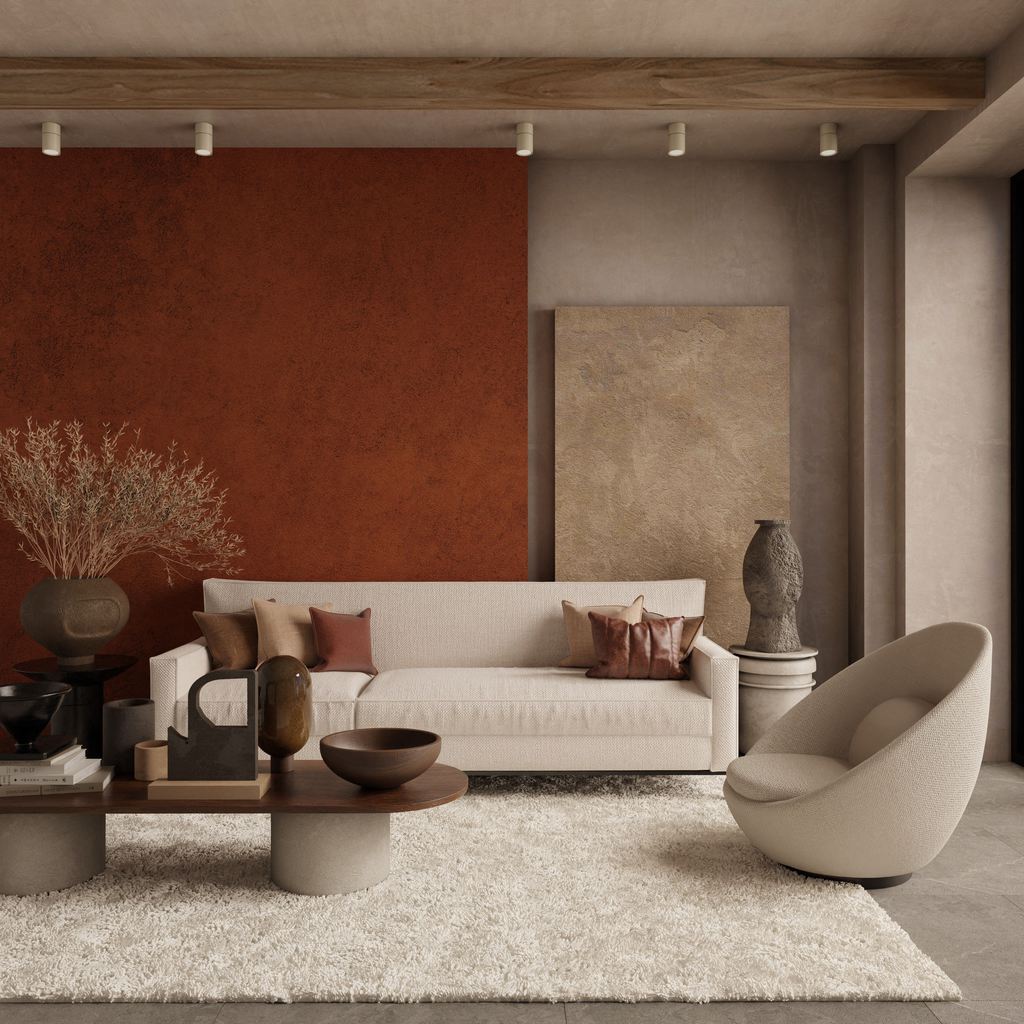
Introduction
If your minimalist home looks clean but feels cold, this guide will help you fix the problem without adding clutter. Warm minimalist interior design keeps the calm lines and open space of minimalism, but adds comfort through texture, wood, soft lighting, useful storage, and furniture that supports daily routines. Instead of copying a perfect beige room, the goal is to understand what makes a space feel unfinished, stiff, or too empty, then adjust the pieces that matter most.
Table of Contents
Why Does Your Minimalist Room Feel Cold?
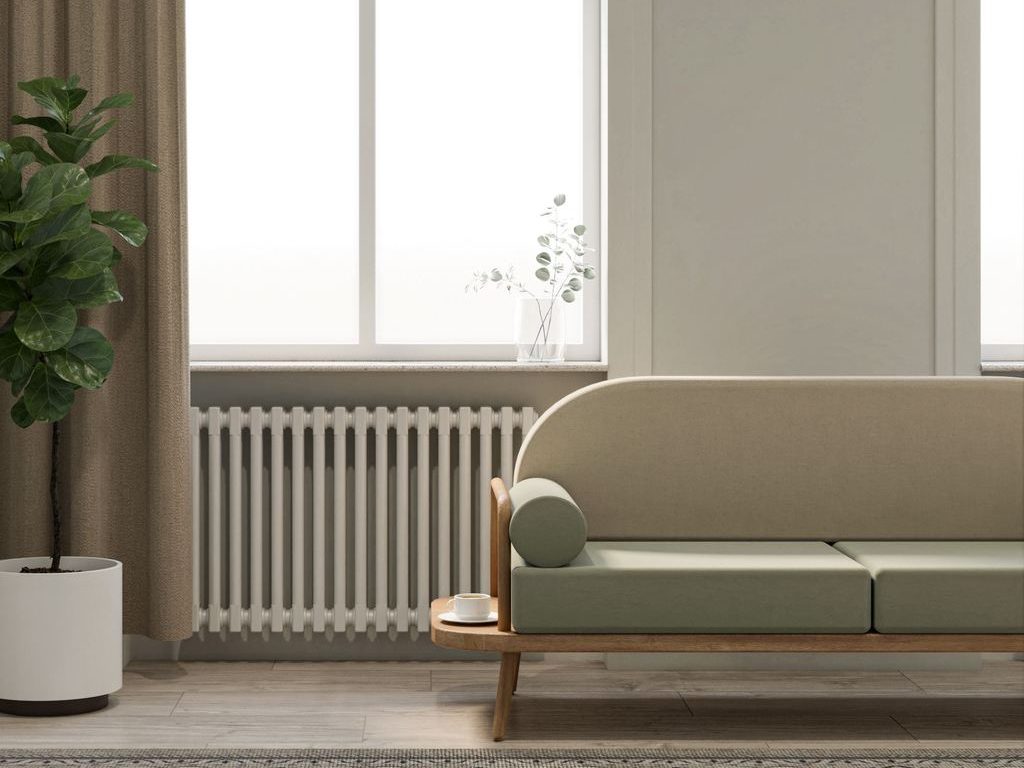
A cold minimalist room usually fails for practical reasons, not because minimalism itself is wrong. The room may have too many hard surfaces, not enough texture, or furniture that looks slim but feels uncomfortable. Before buying new decor, look for the exact source of the cold feeling.
Common causes include:
- Walls are bright white or cool gray with no warmer undertone.
- The sofa looks clean-lined but feels stiff or shallow.
- There is no rug, curtain, throw, or fabric layer to absorb sound.
- Lighting comes from one ceiling fixture.
- Open shelves show daily clutter, while closed storage is missing.
- Every tabletop is empty, so the room feels staged instead of lived in.
This is why cold, ultra-sparse minimalism often feels less useful in real homes. A calm room still needs comfort, storage, and a few objects that make daily life easier.
What Makes Warm Minimalist Interior Design Different?
Warm minimalism keeps the clean lines, open space, and edited surfaces of minimalism, but it removes the coldness that often comes from hard materials, cool colors, and furniture chosen only for appearance. The room should still feel calm, but it should also feel comfortable enough for daily use.
A warmer minimalist space usually has:
- Warm whites, ivory, taupe, soft beige, or muted earth tones instead of sharp white and cool gray.
- Natural materials such as wood, linen, wool, stone, leather, or woven fibers.
- Furniture with clean shapes but enough softness, support, and storage.
- A few useful or meaningful decor pieces rather than completely empty surfaces.
- Layered lighting that makes the room feel softer in the evening.
The difference is not about adding more items. It is about choosing fewer pieces with more comfort, texture, and purpose.
How Do You Add Warmth Without Adding Clutter?
This is the main challenge. Warmth often gets confused with more pillows, more vases, more baskets, and more small accents. That approach can quickly make a minimalist room feel busy. A better method is to add warmth through larger surfaces, repeated materials, and better lighting.
Add Texture Before Adding Decor
Texture changes how a room feels without adding much visual noise. A flat beige room may look calm in a photo, but in real life it can feel dull. Start with tactile layers that cover larger areas: a wool rug, linen curtains, boucle upholstery, a wood table, or a woven shade.
This works better than adding five small decorative pieces because the room gains softness without looking crowded. At night, these textures also help the room feel quieter and less echoey.
Use Wood as Warmth, Not Just Decoration
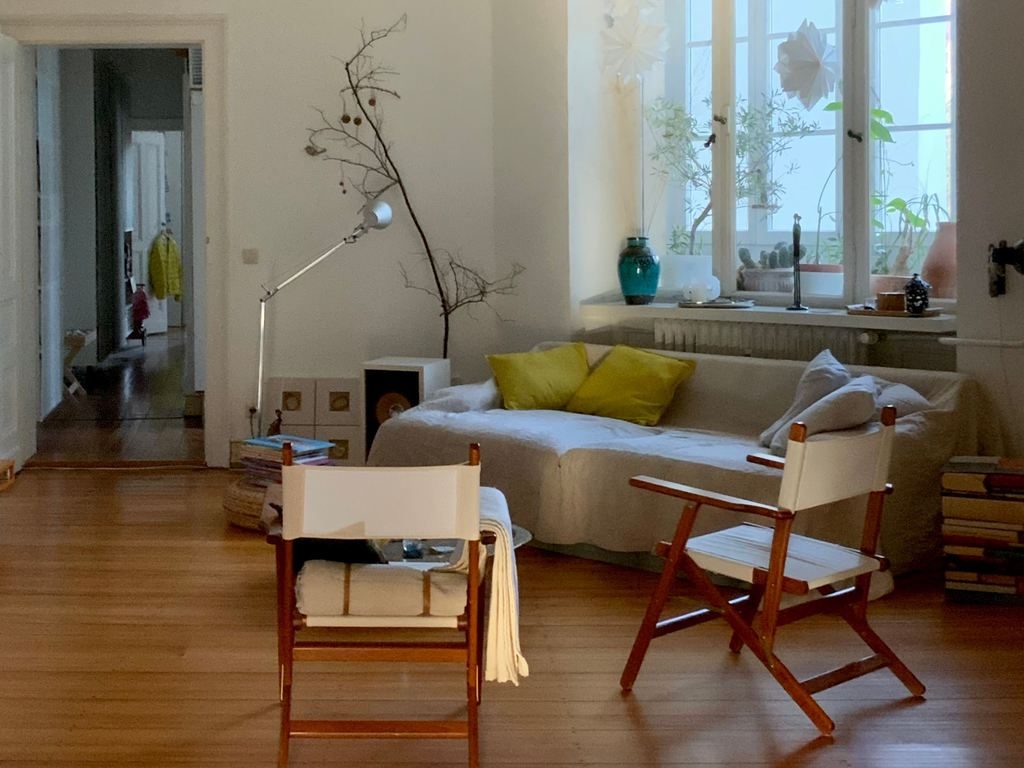
Wood is one of the easiest ways to warm up a minimal room. Light oak, ash, walnut, and warm medium wood tones can soften white walls and neutral sofas. The key is to let wood appear in functional pieces, not just small accessories.
A TV stand, coffee table, dining table, console, or sideboard can bring warmth while solving a real storage or layout problem. This is especially useful if your room has white walls, pale floors, or cool stone surfaces.
Keep Surfaces Edited, Not Empty
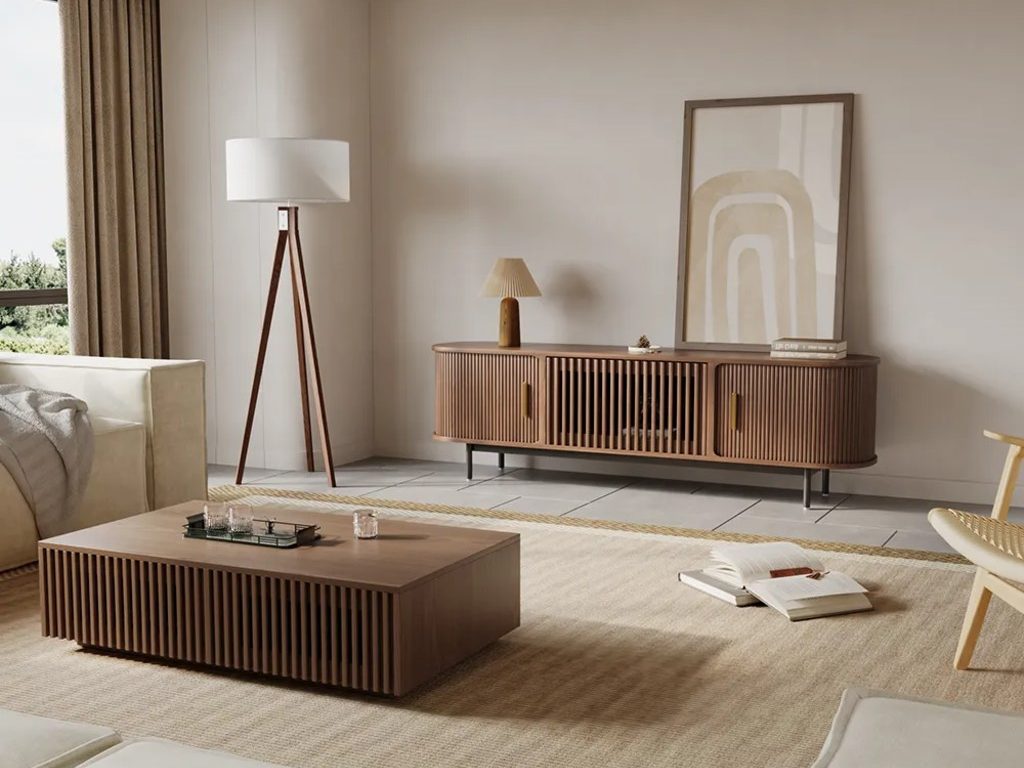
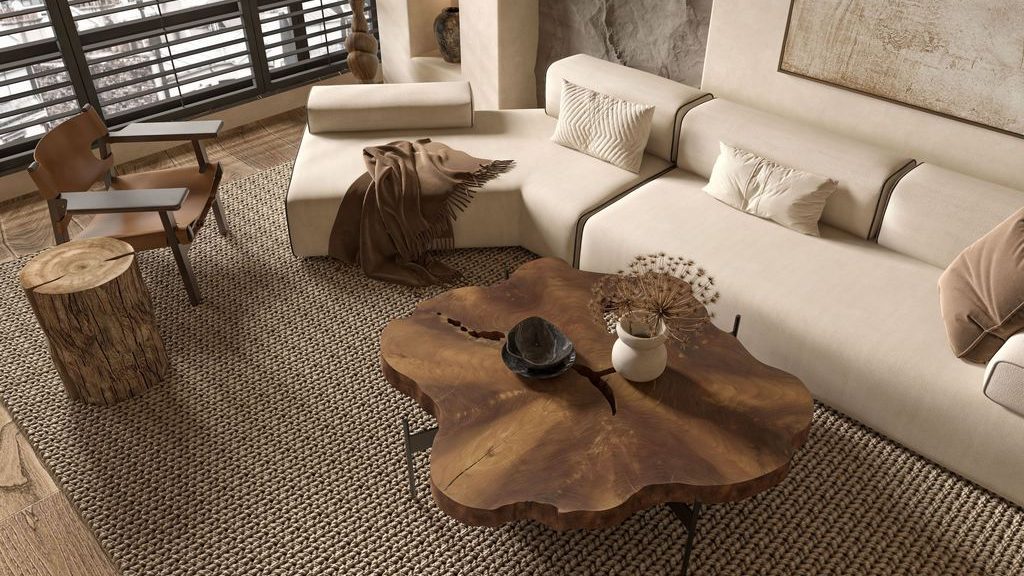
An empty coffee table can look unfinished. A crowded coffee table can look messy. The warm minimalist middle ground is an edited surface: one tray, one book stack, one low bowl, or one ceramic vase.
Use this rule: if an object does not add function, texture, or personal meaning, remove it. Warm minimalist decor should make the room feel used and considered, not styled for a photo only.
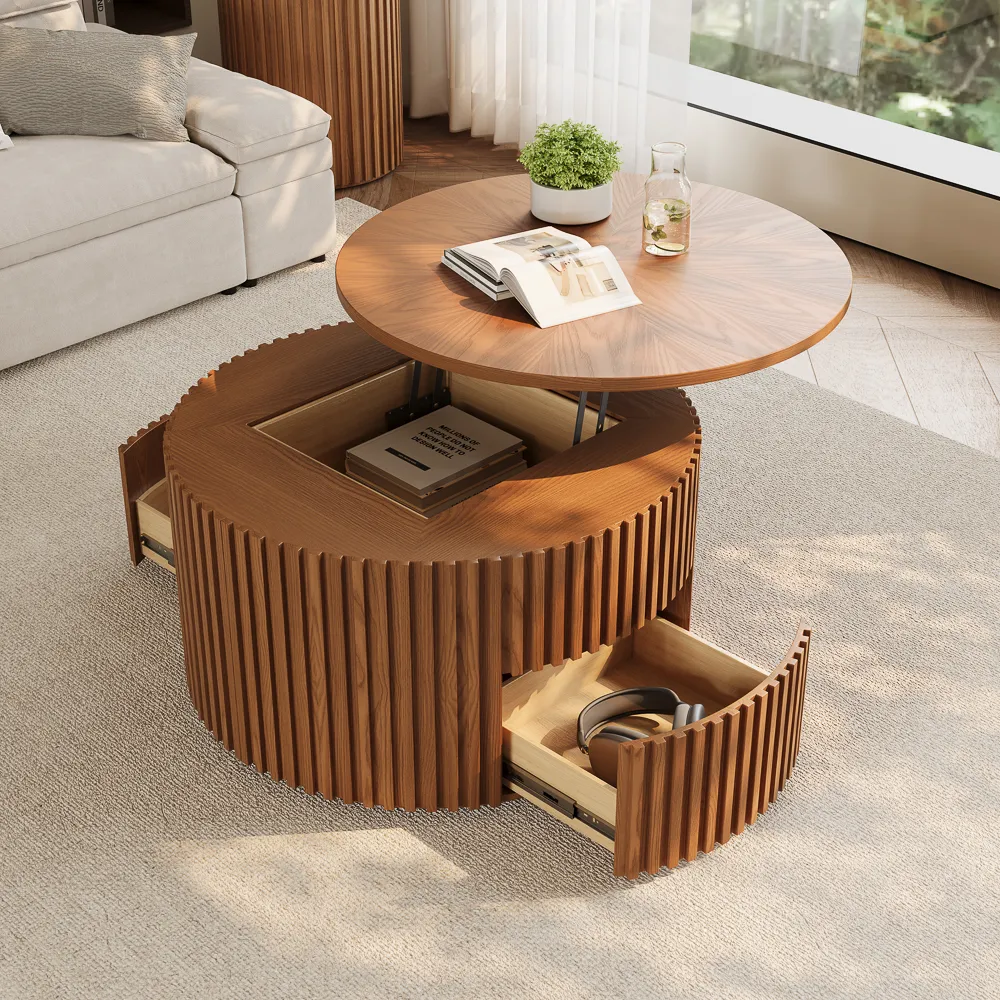
Layer Lighting at Human Height
Ceiling lights make a room bright, but they rarely make it comfortable. A warm minimalist room usually needs light at different heights. Place a table lamp near a sofa, a floor lamp beside a reading chair, or a low lamp on a sideboard.
In a real evening routine, this matters. A living room that feels sharp at 9 p.m. under one ceiling light can feel softer with two smaller lamps and a warmer bulb temperature.
Which Furniture Pieces Should You Check First?
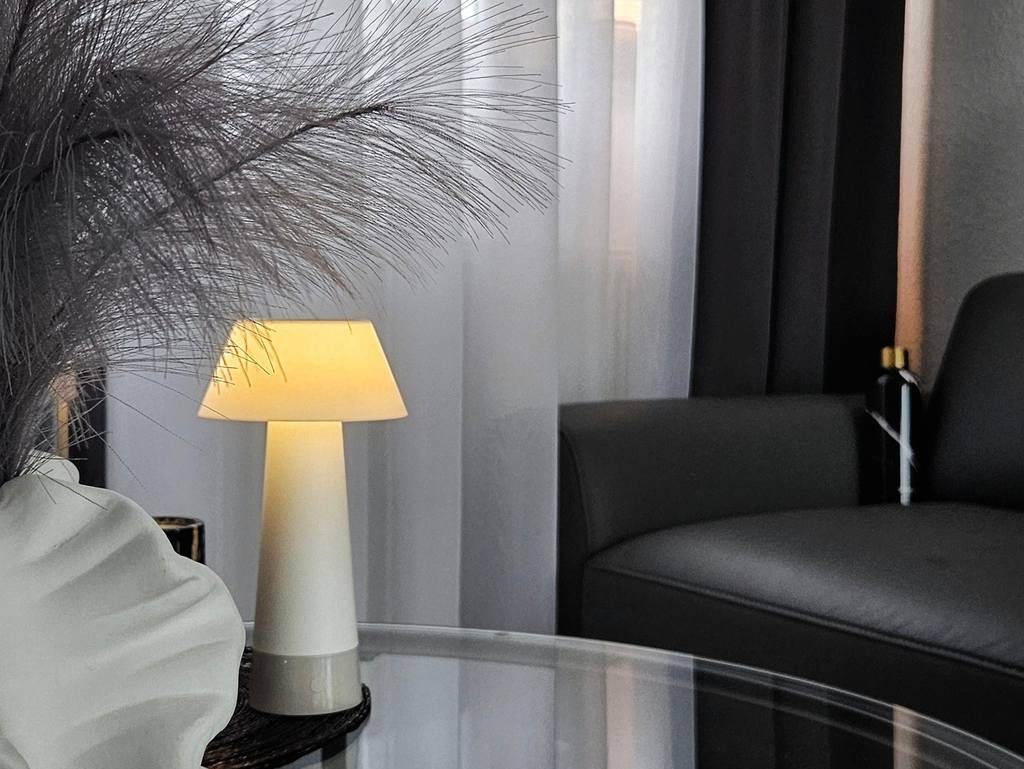
Furniture sets the temperature of the room before decor does. If the main pieces are too hard, too glossy, too thin, or too open, no amount of pillows will fully fix the space. Check the large pieces first because they shape comfort, storage, and visual weight.
Sofa
The sofa should look calm from across the room but still feel comfortable when you sit down. Look for soft upholstery, supportive cushions, and a seat depth that works for your routine. A very slim sofa may photograph well, but it can make the room feel less welcoming if no one wants to relax on it.
For a warm minimalist interior design living room, the sofa is often the emotional anchor. If it feels stiff, the whole room reads colder.
TV Stand or Media Console
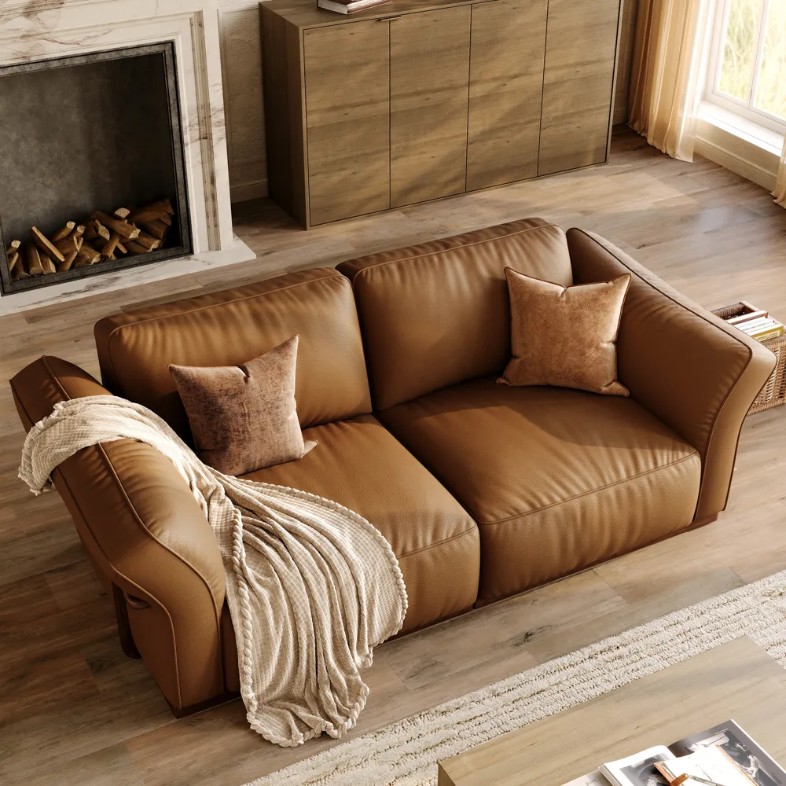
The TV wall can ruin a minimalist room if cables, remotes, gaming devices, and small accessories stay visible. A warm wood media console with closed storage helps the room feel calmer while adding natural texture.
This is also where minimalist furniture that looks simple without feeling cold becomes useful. The piece should reduce visual noise, not just look plain, and the Arboren 71” Modern TV Stand supports that goal with a walnut finish, closed cabinets, removable shelves, and cable holes that help keep the TV area organized.
Coffee Table
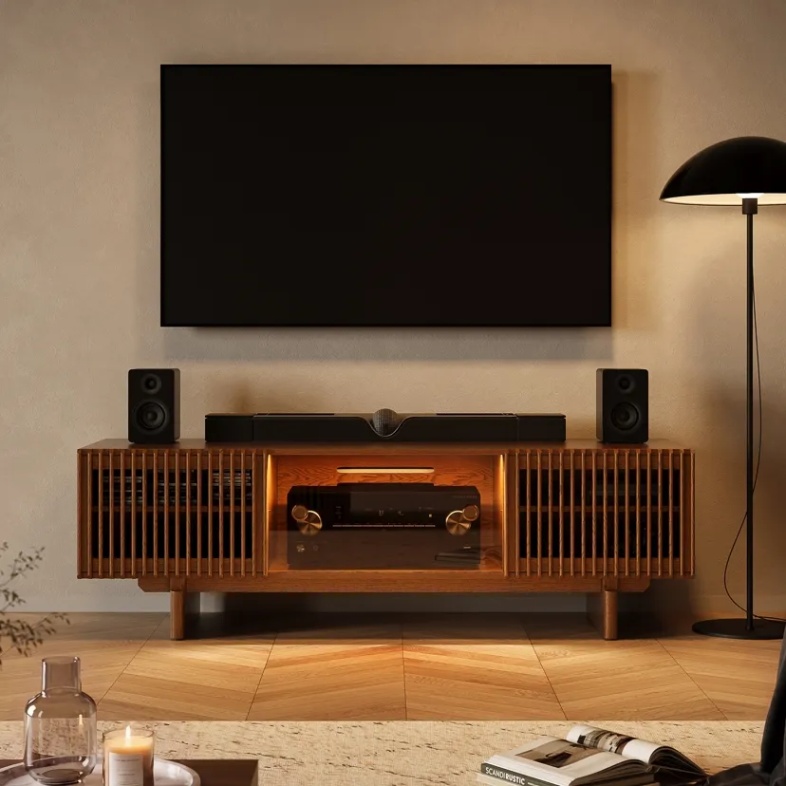
Choose a coffee table that balances shape and function. Rounded edges feel softer than sharp blocks. Wood, stone, or matte finishes usually work better than glossy white surfaces. The size should support daily use without crowding the sofa area.
A simple test: there should be enough surface for a drink, book, and small tray, but not so much surface that it becomes a clutter zone.
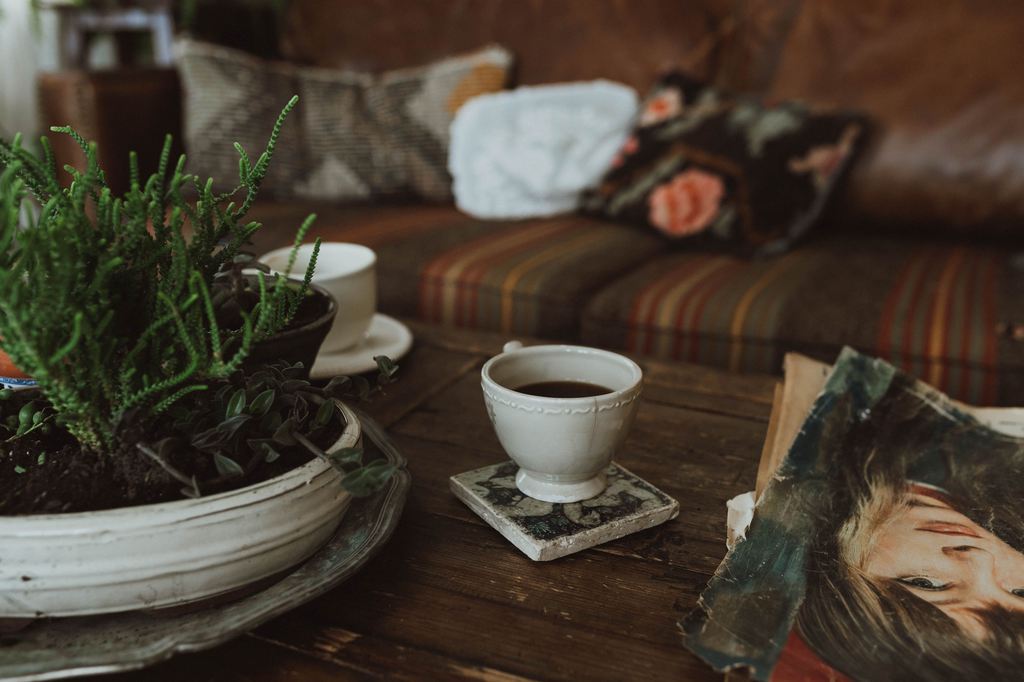
Dining Table and Chairs
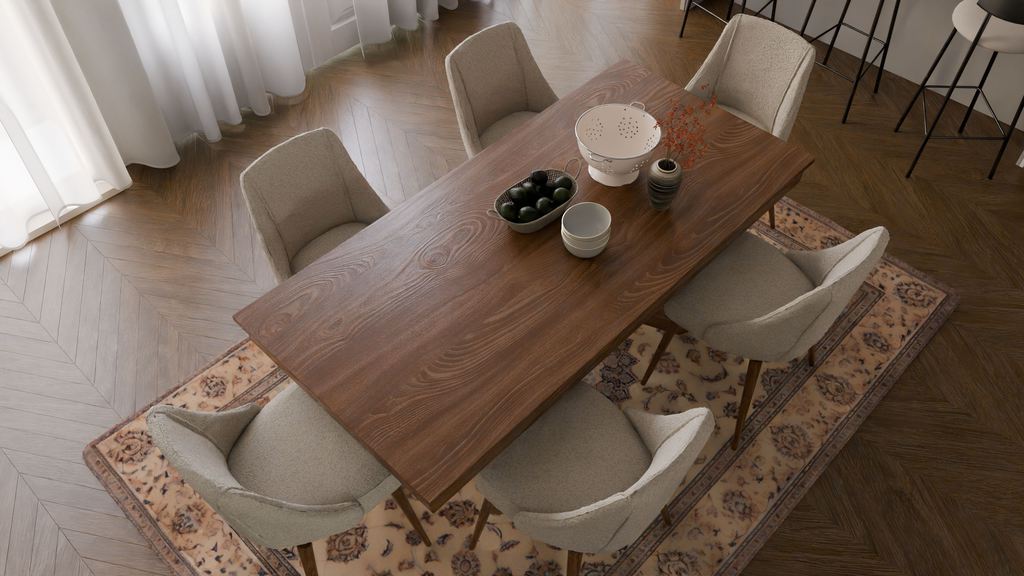
A warm modern minimalist interior design can still feel sociable. In the dining area, warmth often comes from the table material and chair comfort. A wood or stone table can act as the main anchor, while chairs should be simple enough to keep the room clean but comfortable enough for long meals.
Avoid chairs that look elegant but feel too upright. Minimalism should not shorten dinner.
How Can Other Rooms Feel Warmer Without a Full Redesign?
After the main living area feels balanced, smaller updates can carry the same warmth into the rest of the home. The goal is not to restyle every room from the beginning. Focus on the item that controls comfort, storage, or lighting in each space.
- Bedroom: Start with bedding and bedside lighting. Linen, cotton, or a textured coverlet can soften the room more naturally than a pile of decorative pillows. A warm lamp on a simple nightstand also makes the room feel more finished at night.
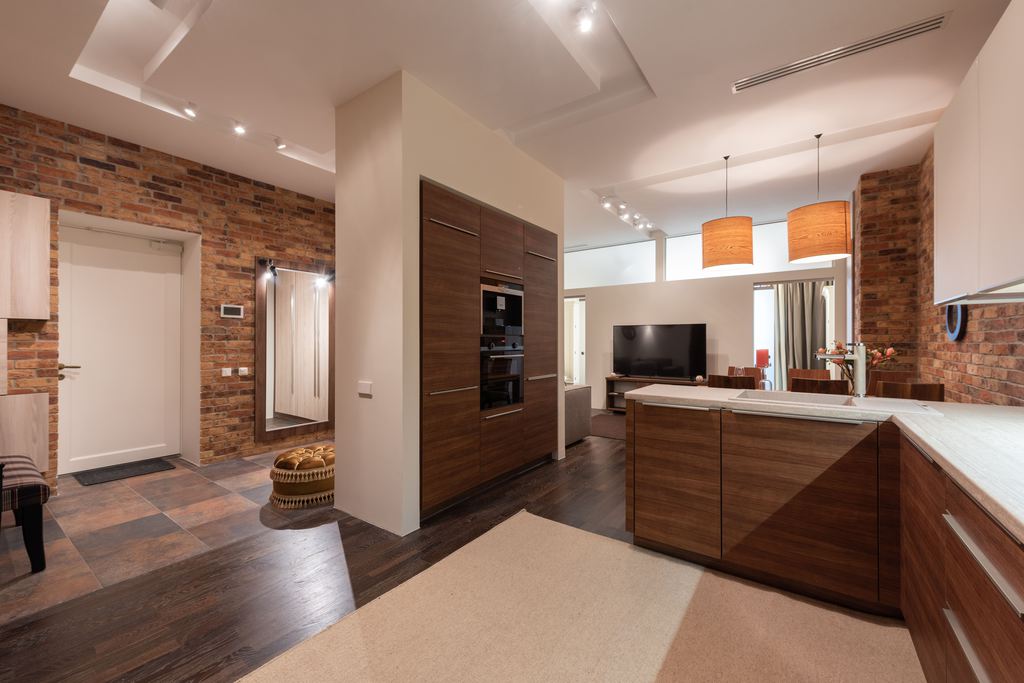
- Entryway: Use storage to create calm. A slim console, closed shoe cabinet, wall mirror, and small tray can make the area feel intentional while hiding keys, mail, and daily items.
- Small apartment: Choose lighter wood tones, lower furniture, hidden storage, and warm lighting. A compact space should feel edited, not unfinished. One rug, one cabinet, and one comfortable seat can often do more than several small decorative accents.
What Mistakes Make Warm Minimalism Look Flat?
Warm minimalism looks simple when it works, but the wrong choices can make a room feel beige, stiff, or unfinished. Use this checklist to identify what needs to change before adding more decor.
| Mistake | Why It Fails | Better Fix |
| Using only beige | The room has no depth | Mix ivory, taupe, wood, and texture |
| Buying for looks only | The room feels uncomfortable | Check seat depth, fabric feel, and support |
| Skipping closed storage | Daily items stay visible | Use cabinets, drawers, and media storage |
| Removing all decor | Surfaces look unfinished | Keep one meaningful object per area |
| Using one overhead light | The room feels harsh at night | Add lamps at different heights |
| Matching every piece | The room feels showroom-like | Repeat materials, but vary tone and shape |
The safest approach is to adjust one layer at a time. Change lighting before repainting. Add a rug before buying more decor. Improve storage before styling shelves.
Conclusion
Warm minimalist interior design works best when it solves the cold parts of minimalism without turning the room into a cluttered space. Start with what affects daily life first: comfortable seating, hidden storage, soft lighting, natural texture, and a few edited decor pieces. A home can still feel clean and open while looking warmer, quieter, and easier to use. The best result is not an empty room. It is a room where every piece has a reason to stay.
FAQ
Is warm minimalism the same as organic modern?
No. Organic modern usually leans more into sculptural shapes, natural materials, and earthy contrast, while warm minimalism starts with a cleaner minimalist base. The two styles can overlap, but warm minimalism is more focused on reducing coldness and clutter while keeping the room simple, functional, and calm.
Is fabric or leather better for a warm minimalist home?
Fabric usually feels softer and warmer, especially in a living room where comfort matters. Leather can still work if it has a matte finish and a warm tone, such as caramel, taupe, or brown. For pets, kids, or frequent lounging, prioritize cleanability, scratch resistance, and how the material feels against skin.
How do I choose warm minimalist furniture for an open-plan space?
Use repeated materials to connect zones, but avoid buying every piece from the same set. A warm wood dining table, a similar-toned media console, and neutral upholstery can help the living and dining areas feel related. Keep circulation clear so the space feels open, not divided by bulky furniture.
Should my TV stand match my coffee table in a warm minimalist room?
They do not need to match exactly. A warmer room often looks better when pieces share a related material or tone but vary slightly in shape or texture. For example, a wood TV stand can work with a stone, matte, or lighter wood coffee table if the overall palette stays calm.
What should I avoid buying if I want the room to stay minimal but practical?
Avoid furniture that looks clean but creates daily frustration. Very open shelving, glossy surfaces, delicate pale upholstery, oversized coffee tables, and pieces with no storage can make the room harder to maintain. Warm minimalism works better when furniture is simple, durable, comfortable, and useful in everyday routines.


