 By Kelvin
Introduction
A living room with sectional couch can feel relaxed, useful, and well-planned, but only when the layout fits the room instead of fighting it. Most people searching this topic are not just looking for pretty photos. They want to know where the sectional should go, how much space it needs, what table or rug works with it, and how to avoid making the room feel crowded. This guide focuses on practical layout decisions first, then styling choices that make the whole room feel complete.
Table of Contents
What Living Room Layout with Sectional Fits Your Room Shape?
Different room shapes need different sectional decisions. A layout that looks great in a wide family room may feel cramped in a narrow apartment living room. Use the table below as a quick planning tool before choosing the final position, chaise direction, or matching furniture.
| Room Type | Best Sectional Layout | Why It Works | Extra Planning Tip | What to Avoid |
| Small living room | Compact L-shaped sectional in a corner | Keeps the center more open | Choose slimmer arms and lighter visual weight | Oversized chaise or bulky arms |
| Long narrow room | Sectional along one long wall with a clear side path | Reduces the hallway effect | Keep one side open for movement from door to door | Chaise blocking the main walkway |
| Open-concept room | Floating sectional facing the TV or fireplace | Defines the living zone without a wall | Add a slim console, floor lamp, or low storage behind the sofa | Leaving the sofa back unfinished |
| Large family room | U-shaped or modular sectional | Creates a strong gathering area | Use a large rug so the seating zone does not feel scattered | A rug that is too small |
| TV-focused room | Sectional facing the media wall | Improves viewing comfort | Keep the chaise within a comfortable viewing angle | Chaise placed sideways to the screen |
These living room ideas with sectional couch work best when you start with how people move through the room. A family that watches movies every weekend needs a different setup than someone who hosts casual drinks and conversation.
How Do You Arrange a Living Room with Sectional Couch?
The best way to arrange a living room with sectional couch is to make the sectional support the room’s main purpose first, then use the rug, coffee table, chairs, and lighting to make the seating zone feel balanced. A sectional is both a layout anchor and a visual anchor, so arrangement and styling should be planned together instead of treated as two separate steps.
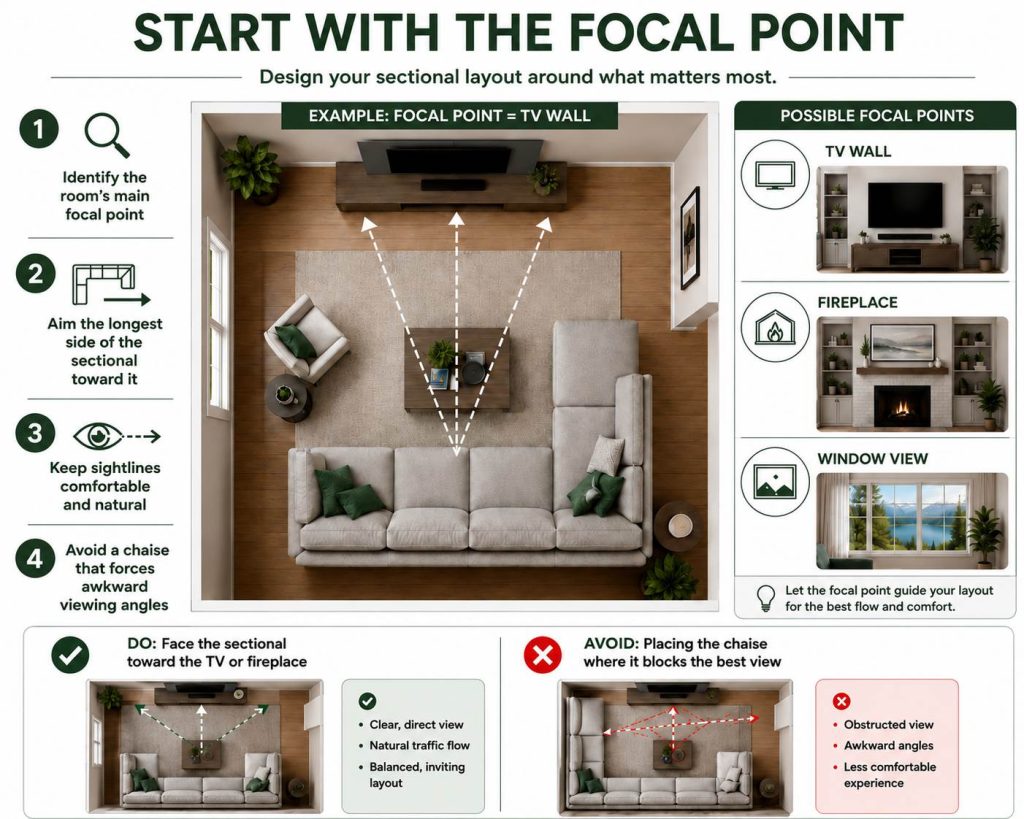
Start with the Focal Point
In many homes, the focal point is the TV wall. In others, it may be a fireplace, a wide window, or the open connection to the kitchen. The longest side of the sectional should usually support that focal point, not compete with it. If the TV is the main focus, avoid placing the chaise where it forces people to turn their necks.
Once the sectional faces the right direction, use the rug to define the seating area. At minimum, the front legs of the sectional should sit on the rug. In a larger room, a bigger rug that extends beyond the sectional helps the whole area feel grounded instead of visually disconnected.
Protect the Main Walking Path
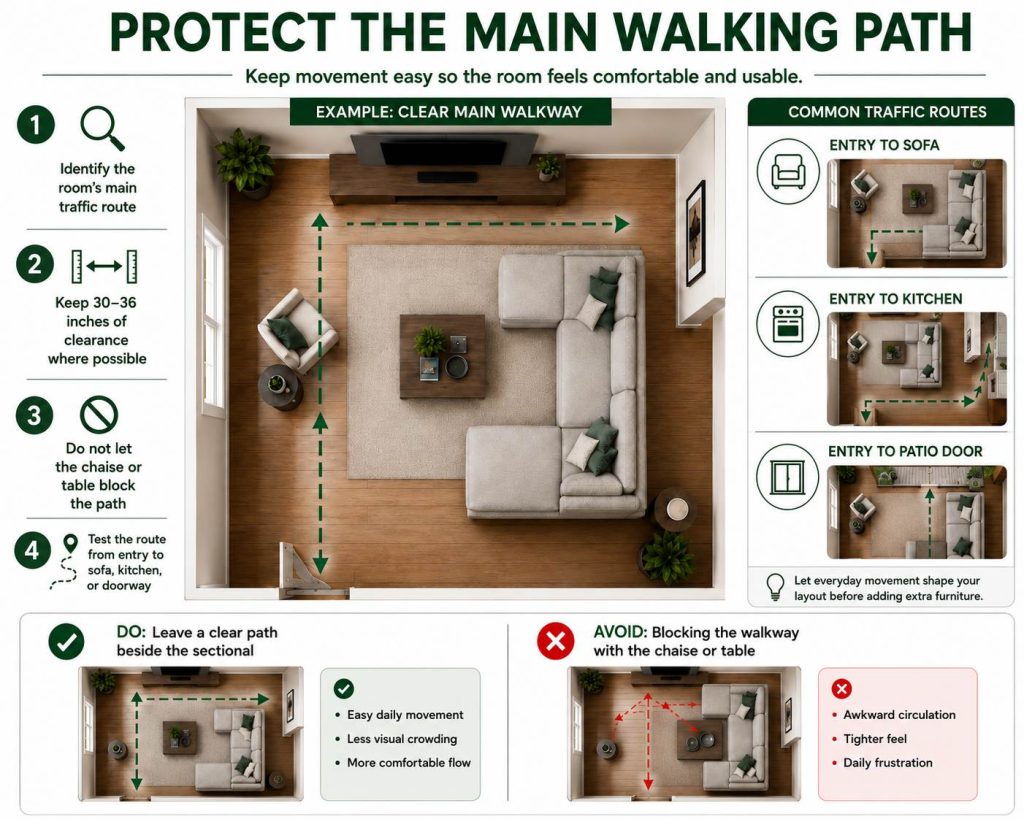
A sectional can make a room feel more organized, but it can also block movement if the chaise cuts across the natural route from the entry to the kitchen, hallway, or patio door. Walk through the room as you normally would. If you have to step around the sectional every time, the layout needs to change.
This is also where visual weight matters. A dark or oversized sectional can feel heavier if it sits too close to every wall or leaves no breathing room around it. Keeping one clear path open and avoiding bulky furniture on every side helps the room feel more spacious.
Choose the Chaise Side Based on Movement, Not Habit
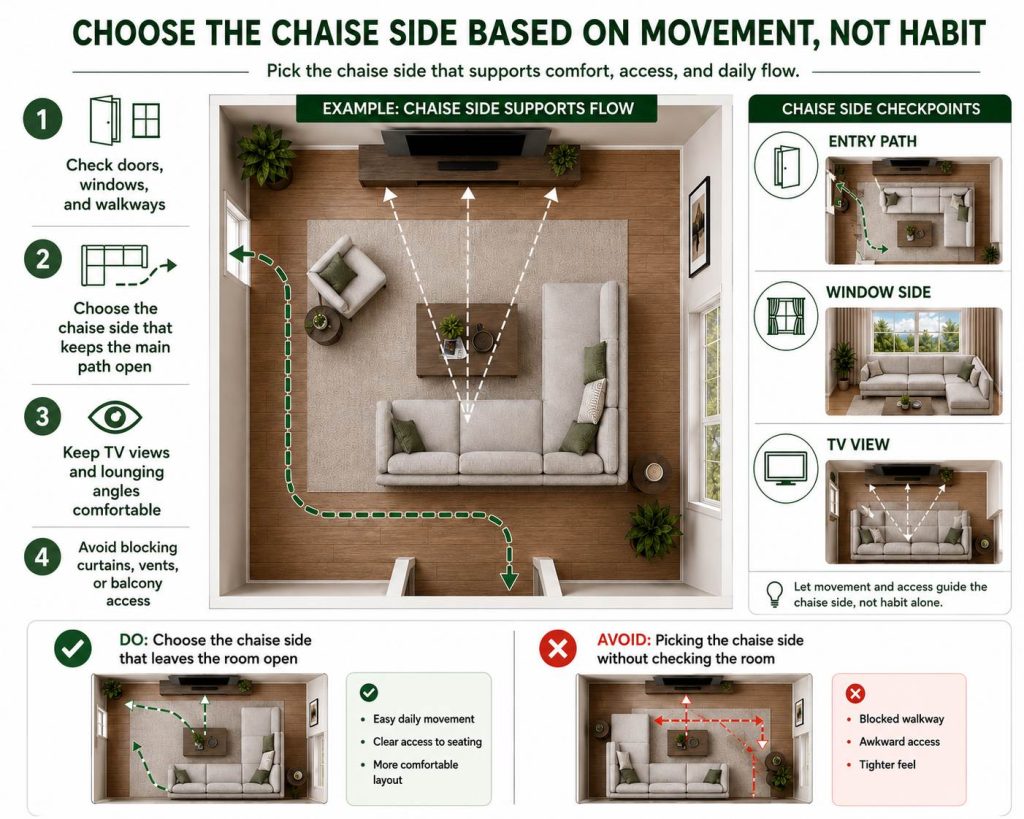
Left-facing or right-facing should depend on doors, windows, TV position, and traffic flow. The chaise should create a comfortable lounging zone without acting like a barrier. If the chaise blocks the easiest path into the room, it will feel inconvenient no matter how comfortable it looks.
For rooms with windows, check whether the chaise blocks curtains, vents, or balcony access. If the chaise sits near natural light without interrupting movement, it can become a comfortable reading or lounging spot. If it blocks the room’s function, place it against the wall instead.
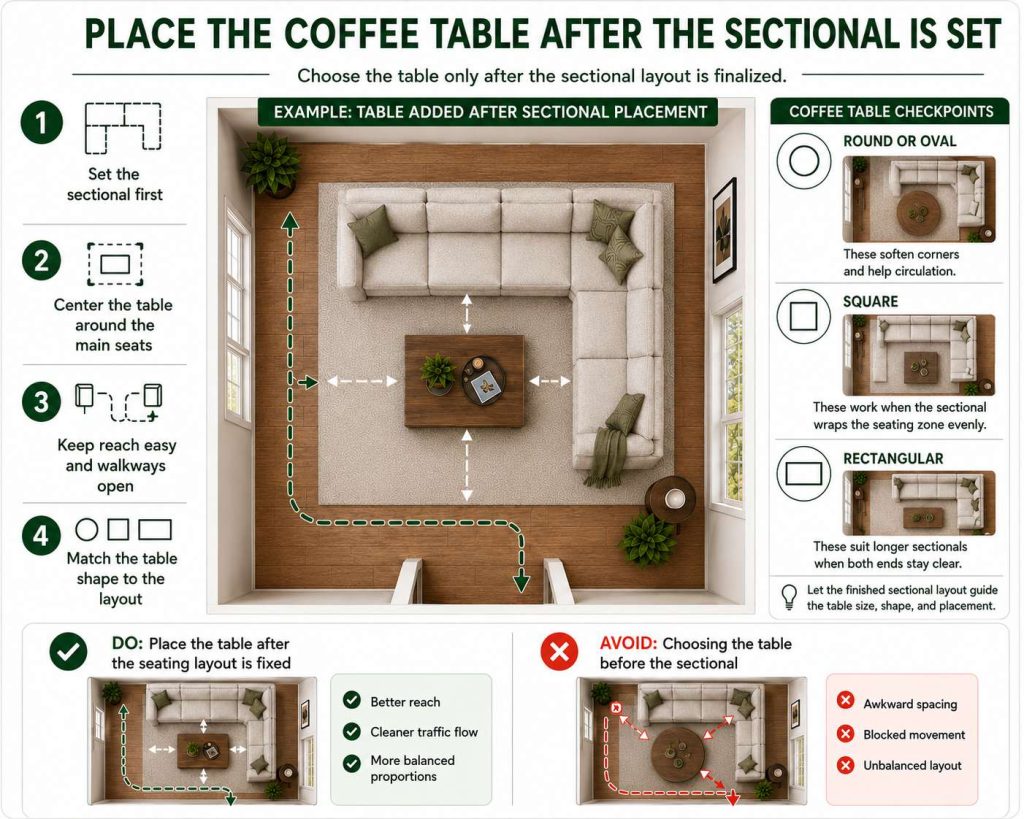
Place the Coffee Table After the Sectional Is Set
Do not center the table in the room first. A sectional changes the way people reach, stand, and move. After the sectional position is confirmed, choose a table that serves the most-used seats and does not block the chaise.
Round and oval tables work well with many L-shaped sectionals because they soften sharp corners and improve circulation. Square tables can work when the sectional wraps evenly around the seating area. Rectangular tables fit longer sectionals, but they need enough space at both ends so people do not bump into corners. A coffee table size guide for sectionals can help when you need to check table distance, shape, and reach from each seat before finalizing the setup.
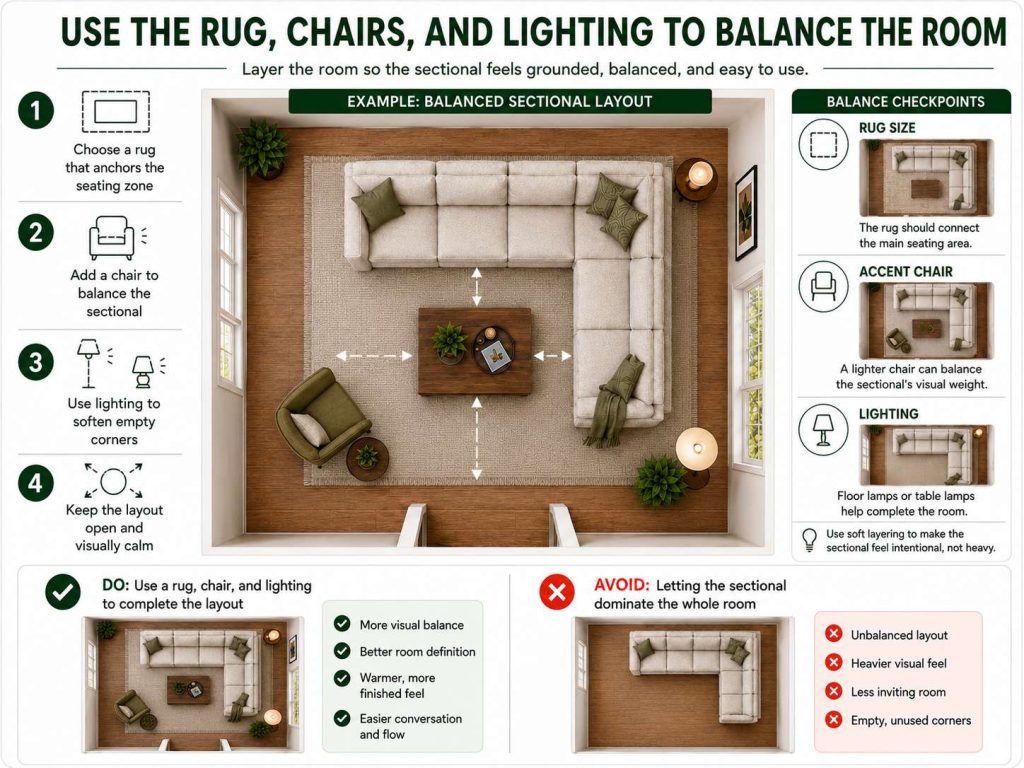
Use the Rug, Chairs, and Lighting to Balance the Room
The rug should connect the sectional, coffee table, and any nearby chairs. It should not be used to hide a layout problem. If the sectional feels too large before the rug goes down, the issue is usually scale, placement, or blocked circulation.
If the sectional sits heavily on one side of the room, balance it with lighter pieces across from it. A slim accent chair, swivel chair, floor lamp, or tall plant can complete the layout without adding another bulky item. In a large open living room where the sectional faces the TV, one swivel chair near the window can serve both the TV zone and the conversation area.
Keep pillows and throws edited. Sectionals already have many cushions, so too many patterns or high-contrast colors can make the room feel busy. Use a limited palette, mix textures, and place a throw on the chaise or one corner where it feels useful rather than staged.
How Much Space Do You Need Around a Sectional Couch?
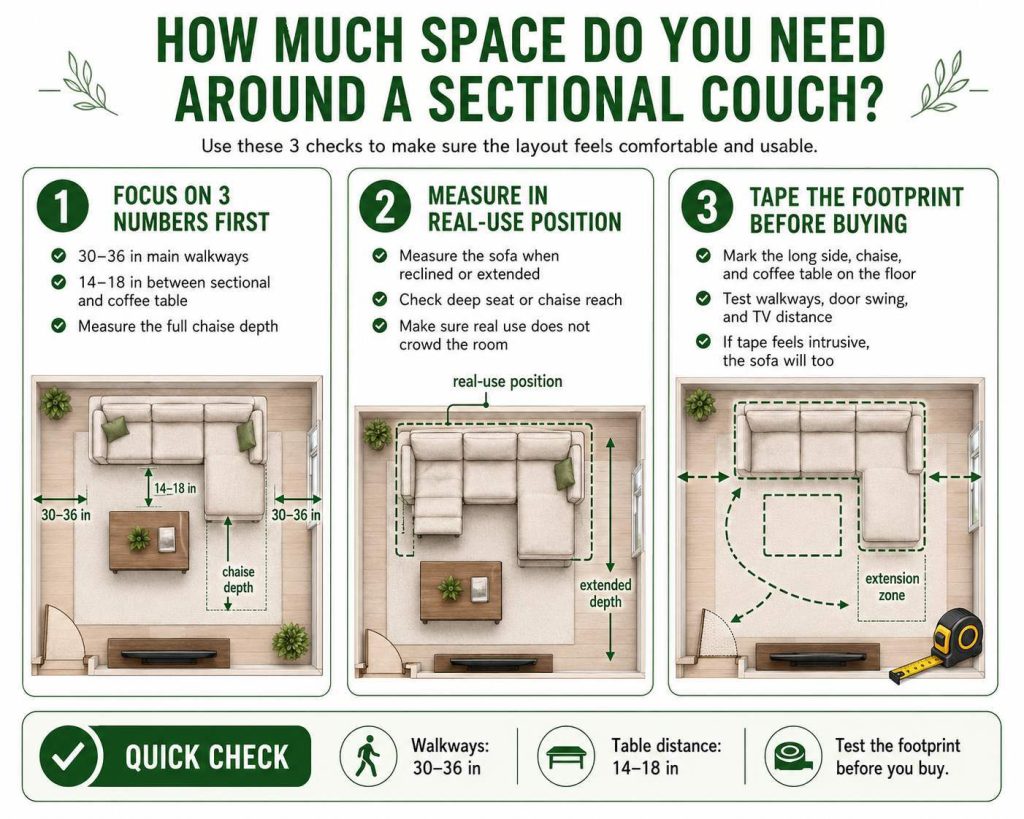
A sectional should fit in three ways: physical fit, functional clearance, and visual balance. Physical fit means the dimensions work on the floor. Functional clearance means people can still walk, sit, open doors, use side tables, and reach the coffee table. Visual balance means the sectional does not overwhelm the room.
Focus on three numbers first. Try to keep main walkways around 30 to 36 inches wide when possible. Keep about 14 to 18 inches between the sectional and coffee table so people can reach drinks without squeezing their knees. Measure the full chaise depth, not just the sofa width, because the chaise is often the piece that blocks movement.
Measure the sectional in its real-use position. If the sofa reclines, extends, or includes a deep chaise, measure the furniture when it is fully in use. A sectional may fit when closed but feel too tight once someone reclines, stretches out, or pulls a side table closer.
Tape the footprint before buying. Mark the long side, chaise, coffee table, and any reclining extension on the floor. Then walk around the taped area with door swings, TV distance, outlets, windows, and nearby storage in mind. If the tape already feels intrusive, the real sofa will feel larger.
A detailed sectional couch buying guide for modern homes can be helpful when you are comparing room size, seat depth, configuration, delivery path, and daily use before choosing a final layout.
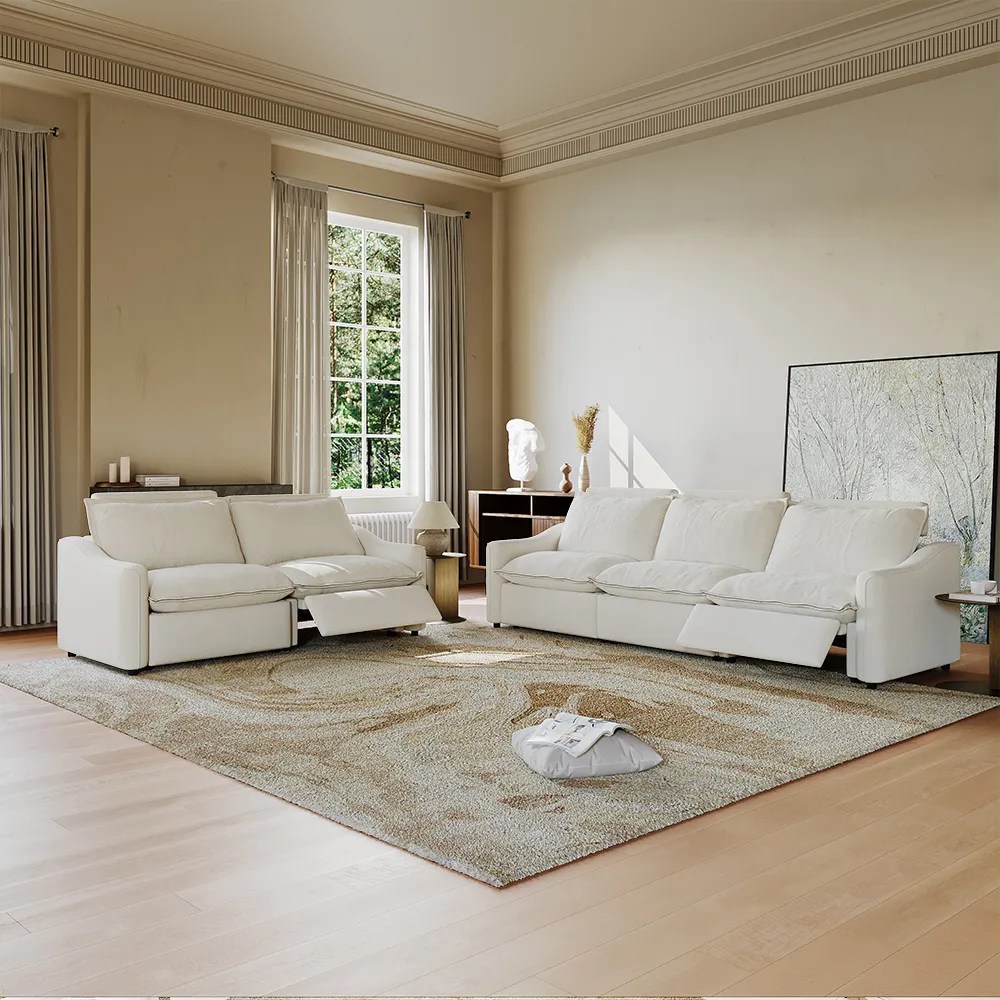
If you want sectional-style comfort but your room needs more flexible walkways, the Ergopals-Power Reclining Sofa works well in a large TV room or family lounge. Its 2-piece sofa-and-loveseat setup offers power reclining from 90° to 145°, adjustable headrests, hidden USB ports, and pet-friendly fabric, while separate pieces leave more control over traffic flow than one fixed sectional.
When Should a Sectional Float Instead of Sitting Against the Wall?
A sectional does not always need to touch the wall. Floating it can make a room feel more intentional, especially in open-concept homes or large living rooms where the furniture would otherwise look scattered. The key is making sure the floating position still supports movement and sightlines.
Float the sectional when the room is large enough to leave a clear path behind it. This layout works well when the sofa back creates a natural boundary between the living area and another zone, such as a dining table or kitchen island. It also works when the TV wall is not directly across from a solid wall.
Push the sectional against the wall when the room is small, narrow, or has several doorways. In this case, wall placement keeps more open floor space in the middle and reduces visual crowding.
If you are unsure about chaise direction, a right vs left facing sectional orientation guide can help you check entrances, windows, TV position, and the main walking path before choosing a fixed layout.
What Should You Check Before Buying a Sectional for Your Living Room?
Before buying, connect the layout decision to real daily use. A sectional may look right in photos, but the details decide whether it works after delivery.
Check these points before ordering:
- Room dimensions: Measure wall length, room depth, ceiling height, and window placement.
- Main walkway: Keep the easiest route through the room open.
- Focal point: Confirm whether the sectional should face the TV, fireplace, view, or conversation area.
- Chaise side: Choose left-facing or right-facing based on doors, windows, and movement.
- Seat depth: Deep seats are comfortable for lounging but may feel too large in tight rooms.
- Modularity: Modular pieces are easier to reconfigure if your layout changes later.
- Delivery path: Measure doorways, stairs, hallways, and tight turns.
- Reclining clearance: Power reclining sofas need extra space when fully extended.
- Daily maintenance: Consider pets, kids, snacks, sunlight, and fabric cleaning.
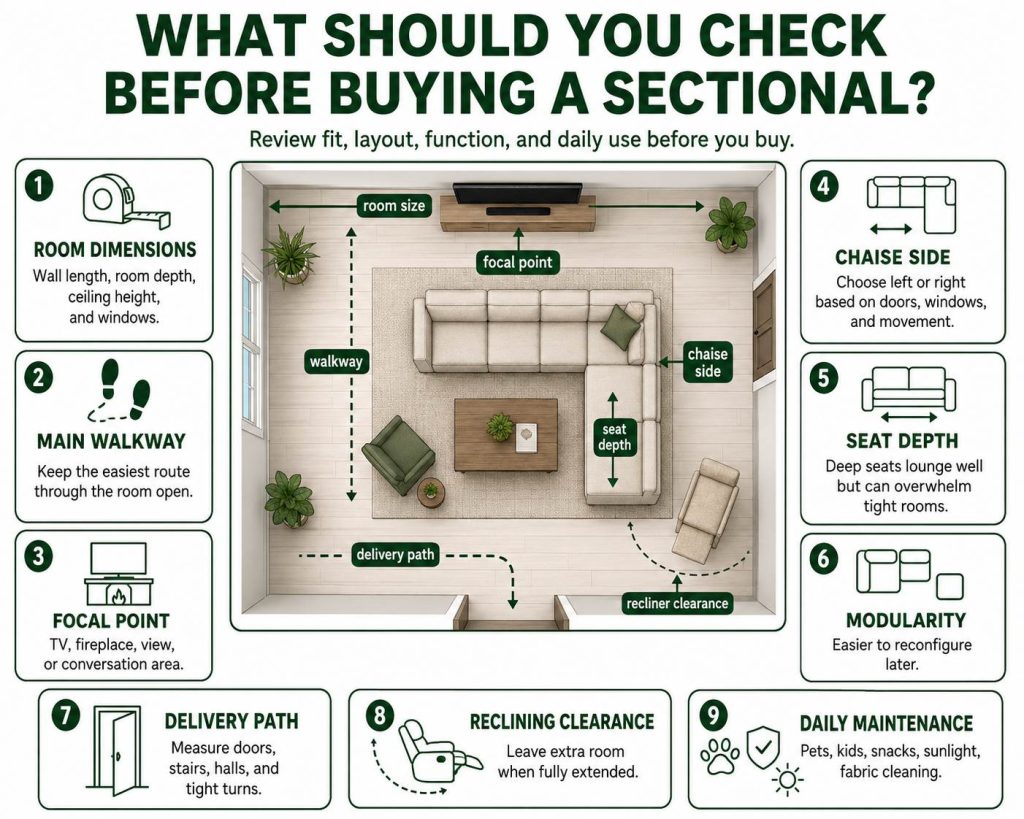
A strong living room layout with sectional should feel good on a normal weekday, not just when the room is cleaned for photos. Someone should be able to sit with a laptop on the chaise, another person should still walk to the kitchen, and the coffee table should be close enough to use without leaning forward awkwardly.
Conclusion
A good living room with sectional couch starts with layout, not decoration. Place the sectional around the room’s real purpose, protect the main walkway, check the chaise direction, and measure the full footprint before buying. Once the big decisions are right, the rug, coffee table, chairs, and lighting can make the space feel balanced and easy to use. The best result is not just a larger sofa, but a living room that supports everyday lounging, hosting, TV time, and movement without feeling crowded.
Q&A
Is a modular sectional better than a fixed sectional?
A modular sectional is better if you may move, rearrange the room, or change the chaise side later. A fixed sectional can look cleaner and more tailored when the layout is already decided. Choose modular for flexibility and fixed for a long-term, settled furniture plan.
Should I choose one full sectional or a sofa-and-loveseat set?
Choose one full sectional when you want a connected lounging zone for TV, family time, or open-plan zoning. Choose a sofa-and-loveseat set when your room has multiple doors, tighter walkways, or a layout that needs separate seating pieces. Separate pieces can create a sectional-like feel while making circulation easier.
What material works best for a sectional used every day?
Performance fabric, tightly woven polyester, microfiber, and easy-clean upholstery usually work best for daily use. These materials are practical for snacks, pets, kids, and frequent lounging. Light linen or delicate velvet can look beautiful, but they need more careful maintenance and may not be the easiest choice for high-traffic family rooms.
Can a sectional couch work in a room with both a TV and fireplace?
Yes, but choose one primary focal point. If the TV is used daily, face the main seats toward the screen and let the fireplace support the side atmosphere. If the fireplace is the main feature, angle chairs or a chaise slightly so the room still supports conversation and occasional TV viewing.
Do storage sectionals make sense for small living rooms?
Storage sectionals can make sense when the room lacks closets, toy storage, or a place for blankets and remotes. They are most useful in apartments, family rooms, and multipurpose spaces. The caution is bulk: storage bases can look heavier, so check seat height, arm size, and whether the room still feels open.
Can I use accent chairs with a sectional in a narrow room?
Yes, but choose slim chairs with open legs, armless frames, or swivel bases. Avoid wide lounge chairs that compete with the sectional. In a narrow room, one chair across from the chaise often works better than two chairs that squeeze the walkway.
What should pet owners check before buying a sectional couch?
Pet owners should check fabric type, cushion cover care, color, claw resistance, and how easily fur can be removed. Medium-tone textured fabrics often hide daily wear better than very dark or very light solids. Avoid delicate upholstery if pets jump, scratch, or nap on the chaise every day.


