 By Charles
A white coffee table is practical in 2026 if you match the material to your life: a sealed, matte, dense surface in a low-traffic or design-forward room can absolutely last, while a glossy or porous white top in a busy family living room becomes a maintenance project. The white isn’t the problem. The material under it is.
I’ll be honest about where this comes from. I almost bought a glossy white coffee table two years ago purely because it looked incredible in the listing photos. Then I remembered the white desk I’d owned for 3 years before it — the one that showed every coffee ring and went grey in the corners. I stopped, did the homework I’d skipped the first time, and have lived with two different white surfaces across two rooms since. Here’s what held up, what didn’t, and who should skip white entirely.
Why White Coffee Tables Appeal to Modern Buyers
The pull is real and it isn’t only taste. White reads as clean, current, and calm — the default of modern, Scandinavian, and minimalist interiors. But the practical draw is light. A white surface bounces daylight and lamplight around a room instead of absorbing it, which is why white furniture is a standing recommendation for small or dark spaces.
There’s also a visual-weight argument. A dark, heavy table sits in a room like an anchor. A white one of the same size visually recedes, so the floor and walls feel more open. In a small apartment under 600 square feet, that’s not a styling preference — it’s space you can feel without owning more of it.
The catch nobody puts in the product photo: white is the least forgiving color for daily contact. Every other shade hides something. White hides nothing — which is why material and finish matter more here than on any other color.
Best Rooms for a White Coffee Table
White is not a whole-home answer. It’s a room-by-room decision.
Small Bright Living Rooms
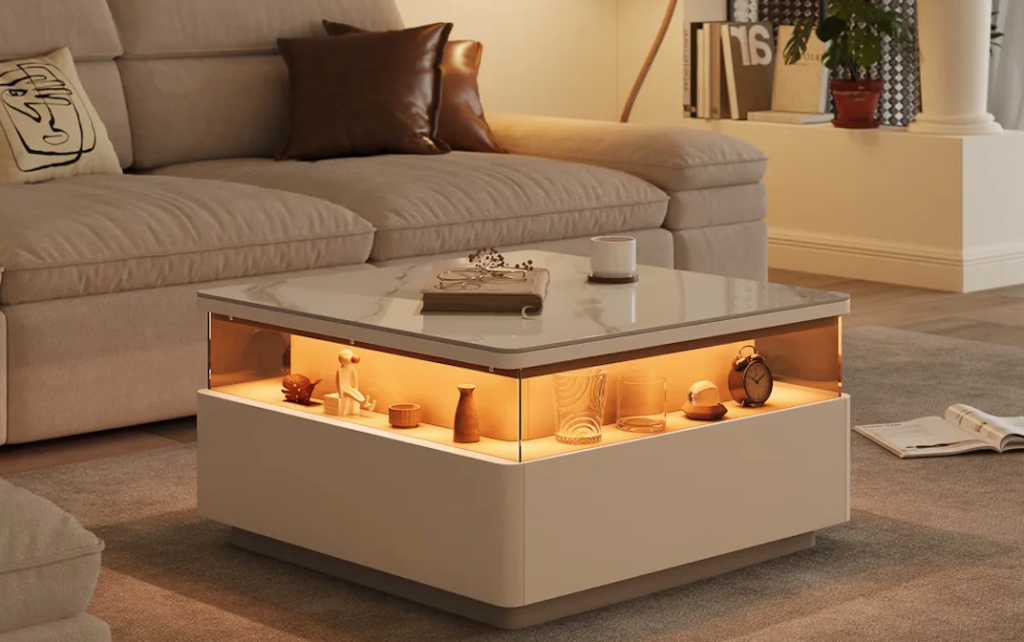
This is where white earns its keep. In a compact room with at least one decent window, a white coffee table does measurable work: it keeps the center of the room from feeling blocked and amplifies the light you already have. If the room is small and the table doubles as a workspace, lean toward a sealed matte finish over high gloss — gloss throws glare across a laptop screen at the wrong angle. I tested both in the same room over 2 weeks; the matte was livable all day, the gloss was a mirror by 3pm.
Minimal Modern Spaces
In a deliberately pared-back room, a white table becomes a quiet structural element instead of a statement. This is the lowest-risk scenario for white — minimal rooms tend to be lower-traffic and the owner is already maintenance-aware. The caveat: minimalism shows dirt faster precisely because nothing else competes for the eye. A scuff that vanishes in a busy room is the only thing you see in a spare one.
Acrylic, Wood, and Drum Table Options
This is the section that actually decides whether your white table is practical. The shape matters far less than what it’s made of.
White acrylic and clear-with-white framing look weightless — ideal for tiny rooms because they barely register visually. The trade-off is real: acrylic scratches more easily than almost any other surface, and fine scratches show as a permanent haze under lamplight. Strong for a low-contact accent piece, poor for a table that hosts car keys and toddler trucks daily.
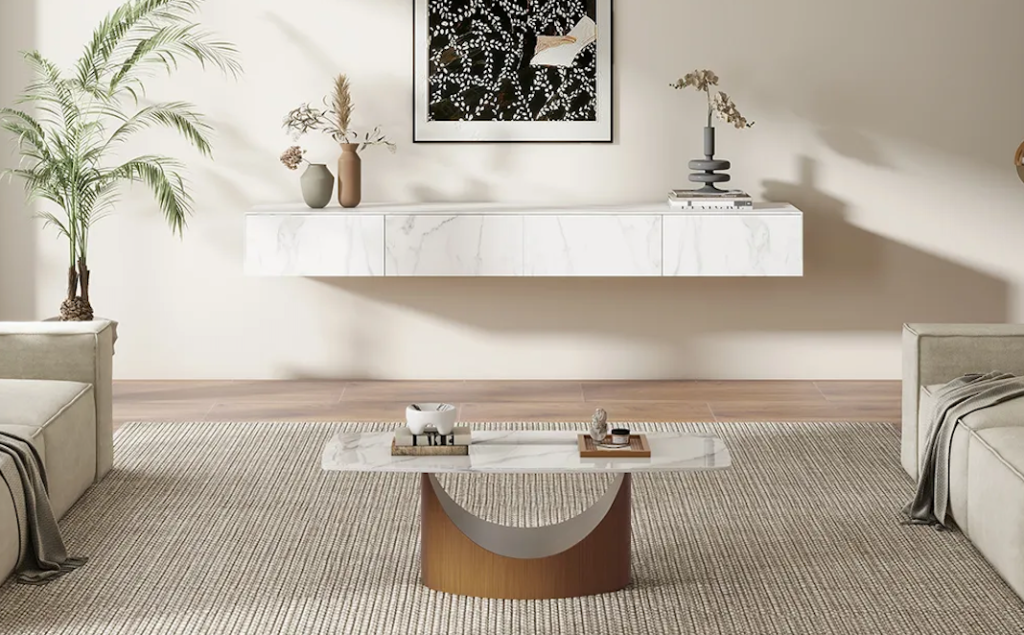
White-painted, laminate, or engineered-wood (MDF) tables are the most common white option, and quality varies enormously. The deciding factor is the finish. A well-sealed factory finish resists stains reasonably well; a thin matte paint layer absorbs everything. This is where indoor-air quality quietly enters: painted and composite-wood furniture can off-gas, and the EPA notes building materials and furnishings are a recognized source of VOCs indoors. The takeaway isn’t fear; it’s specifics. Look for a named low-emission standard — CARB Phase 2 for the wood substrate, a stated water-based finish — not a vague “eco-friendly” badge. A certificate you can check beats an adjective you can’t.
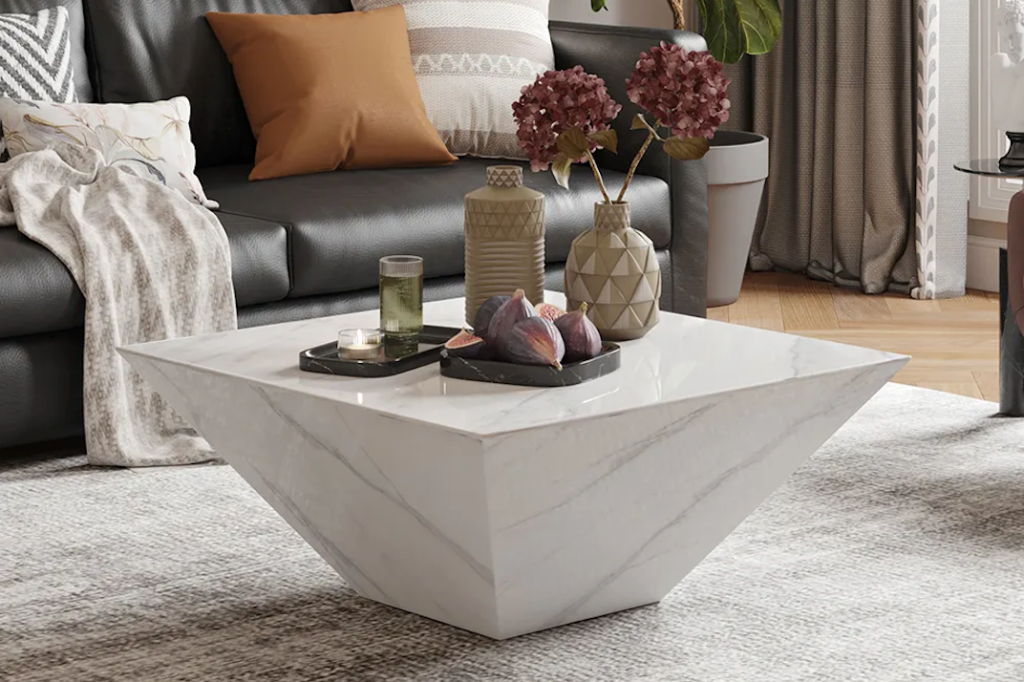
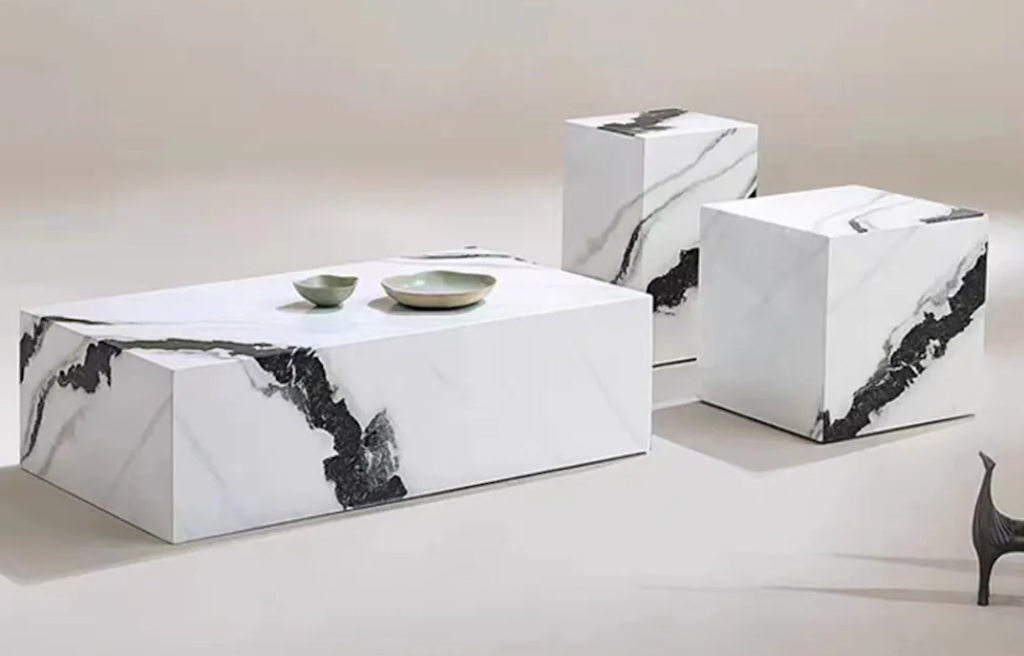
White sintered stone or stone-look drum and pedestal tables are the most genuinely practical white option for daily life. A dense, non-porous sintered surface resists staining and heat far better than painted wood, and a matte version hides the fingerprints that haunt a glossy one. The drum or solid-base shape also removes sharp corners — relevant if kids share the room. It’s the heaviest and usually priciest route, often $400–$800+ versus $150–$300 for painted MDF, and no surface is fully stain- or scratch-proof; but for a white table that has to survive real Tuesdays, this is the one I’d trust.
One practical note across all three: a white table that ships fully assembled skips the single highest-risk moment for a white finish — dragging a 100+ lb piece across a floor and tightening hardware against a surface that shows every scuff. Fewer steps between box and room, fewer chances to mark it before you’ve used it once.
Cleaning, Stain, and Scratch Trade-Offs
Here’s the part the styling photos never show, broken down by what you’ll actually do.
Daily cleaning is genuinely easy on the right white surface and hard on the wrong one. Sealed sintered stone or sealed wood: a 30-second damp-cloth wipe clears most of it, same as any color. Porous or matte-painted white: coffee, oil, and ink absorb before you reach the cloth, and don’t fully lift later. The variable isn’t “white.” It’s “sealed versus not.”
Stains are where white loses to every other color, and there’s no spin worth putting on that. A red-wine ring invisible on walnut is a project on white. The realistic defenses are boring and they work: coasters and felt pads under everything, and wiping spills within the first minute or two while they’re still wet. Fresh is almost always recoverable; set-in usually isn’t.
Scratches behave by material, not color, but white displays them worse because there’s no grain or tone to camouflage the mark. Acrylic is the worst offender; sealed stone the most forgiving. Skip abrasive pads on any white surface — they leave a dull patch that, on white, reads as damage from across the room.
Families with young kids: white is doable, but only on a low, stable, sealed, matte, rounded piece — and stability is its own safety question independent of color. The U.S. Consumer Product Safety Commission’s guidance on furniture stability is worth a read before you buy anything a child shares a room with; low and grounded beats tall and tippy regardless of finish. Before committing, do the tape test: outline the table’s footprint on the floor with painter’s tape and live around it for 2 days. You’ll learn whether a glossy white surface at toddler eye level is a wipe-down you’ll actually keep up with — or one you’ll resent by week two.
If you want to compare white finishes side by side, it helps to filter by color rather than scroll a mixed list; POVISON’s coffee table category page lets you sort by White and by material so you can see sealed-stone versus painted-wood options against each other instead of guessing from one photo.
FAQ
Are white coffee tables hard to keep clean in real life?
White coffee tables are hard to keep clean only when the surface is porous or matte-painted. On a sealed, dense finish like sintered stone or a quality factory-sealed wood top, daily cleaning is a 30-second wipe — identical to any color. White’s real weakness is set-in stains, not routine dust. The honest fix is unglamorous: coasters, felt pads, and wiping spills before they dry.
Does a white coffee table actually make a small room look bigger?
A white coffee table genuinely helps a small room feel larger, but it works through light and visual weight, not magic. A white surface reflects daylight and lamplight instead of absorbing it, and it visually recedes rather than anchoring the floor like a dark, heavy piece. The effect is strongest in rooms with at least one window and is amplified by an open or pedestal base that keeps the floor visible.
Which material is best for a white coffee table that gets daily use?
For heavy daily use, sealed white sintered stone or a dense stone-look surface is the most practical: it resists stains and heat far better than painted wood and hides fingerprints in a matte finish. White acrylic is the least durable for daily contact because it scratches into a permanent haze. No white surface is fully stain- or scratch-proof — sealed density simply ages more gracefully than paint.
Is a white coffee table practical for families with kids?
A white coffee table can work for families, but only a low, stable, rounded piece with a sealed matte surface — and stability matters as much as the finish. Glossy white at toddler height shows every smudge and becomes a constant wipe-down. Sealed stone with rounded edges is the realistic family choice; matte-painted white in a high-traffic room usually isn’t worth the upkeep.
Conclusion
White coffee tables are practical in 2026 — conditionally. The question was never really the color. It’s whether the surface under that white is sealed and dense enough to survive your actual life, and whether the room genuinely benefits from the light a white piece gives back.
In a small or dark space with a sealed, matte, dense surface, white pays you back daily in a room that feels bigger than its square footage. With young kids, a glossy painted top, and a high-traffic living room, a warm wood or stone tone spares you a maintenance habit you won’t keep — and there’s no shame in admitting that before you buy instead of after.
Either way, tape it out and live around it for two days first. A white table that photographs like a dream can still be the thing you wipe down every single evening. Better to learn that from blue painter’s tape than from a credit card statement.
Related Reading:


