 By Kelvin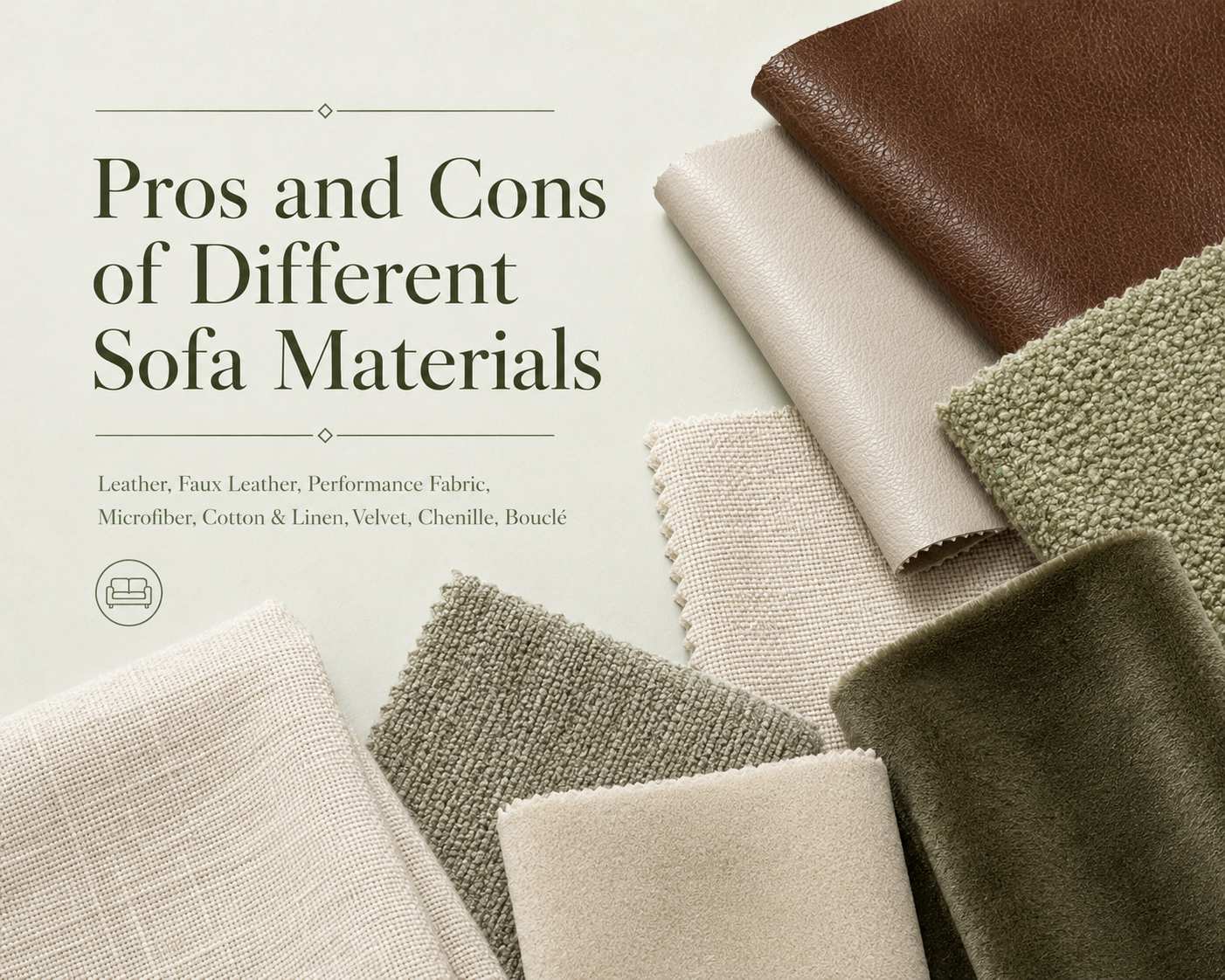
Table of Contents
Introduction
Choosing a sofa material is not just about color or style. It affects how your sofa feels, how it cleans, how long it lasts, and whether it works with pets, kids, sunlight, spills, and daily lounging. This guide explains the pros and cons of different sofa materials so you can compare leather, fabric, microfiber, chenille, velvet, linen, and more with real-life use in mind. By the end, you should know which material fits your home instead of guessing from product photos alone.
What Matters Most When Choosing Sofa Material?
The best sofa material is the one that matches how the sofa will actually be used. A formal living room, a family movie room, and a small apartment with a dog do not need the same upholstery. Before comparing materials, judge them by five practical factors:
- Daily use: Is this the main sofa or an occasional seating piece?
- Cleaning needs: Will it deal with coffee, snacks, pet hair, or kids?
- Durability: Does the material resist scratches, sagging, fading, or pilling?
- Comfort: Do you prefer cool, breathable, plush, smooth, or textured surfaces?
- Budget: Are you optimizing for lower upfront cost or longer-term value?
The pros and cons of different sofa materials become clearer when you connect them to lifestyle. For example, linen may look relaxed and breathable, but it is not always practical for a busy family room. Microfiber may not feel as elevated as leather, but it can handle daily wear better than many delicate fabrics. For a deeper fabric-only comparison, a practical sofa fabric guide can help narrow down weave, cleaning, and pet-friendly options.
Pros and Cons of Different Sofa Materials
Different upholstery names can sound simple, but performance depends on quality, weave, finish, and care instructions. “Velvet” can mean delicate decorative velvet or performance velvet. “Leather” can mean top-grain leather, bonded leather, or faux leather. Use the table as a quick starting point, then look at each material more closely.
| Sofa Material | Main Pros | Main Cons | Best For | Think Twice If |
| Leather | Durable, wipeable, polished look | Higher cost, can scratch, needs care | Long-term use, allergy-sensitive homes | You have cats or strong direct sunlight |
| Faux Leather | Budget-friendly, easy to wipe | Can peel, less breathable | Short-term use, low-traffic rooms | You want long-term aging |
| Performance Fabric | Stain-resistant, family-friendly | Quality varies | Kids, pets, daily lounging | You dislike synthetic feel |
| Microfiber | Soft, durable, value-friendly | Can attract lint or water marks | Pets, families, budget buyers | You want a formal look |
| Linen / Cotton | Breathable, natural look | Wrinkles, stains, fades | Low-traffic, casual rooms | You need easy cleanup |
| Velvet / Chenille | Plush, stylish, textured | Can trap dust or pet hair | Cozy, design-focused spaces | You have scratching pets |
| Bouclé | Soft, sculptural, trendy | Snags easily, holds debris | Accent seating, low-use rooms | You have cats or messy daily use |
Leather
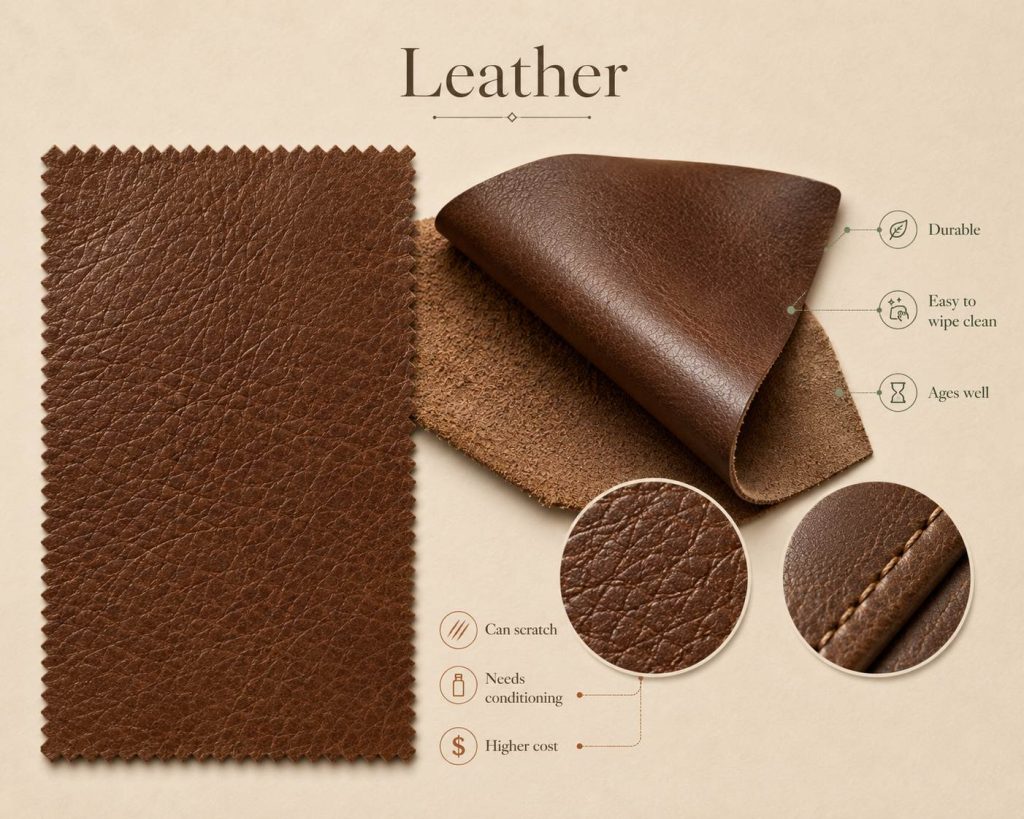
Leather is one of the most durable and structured sofa materials. It is easier to wipe clean than many woven fabrics, does not trap dust as easily, and develops a natural patina over time. The pros and cons of leather furniture usually come down to longevity versus maintenance. Real leather can last well with care, but it can also scratch, fade near windows, and feel cool at first touch.
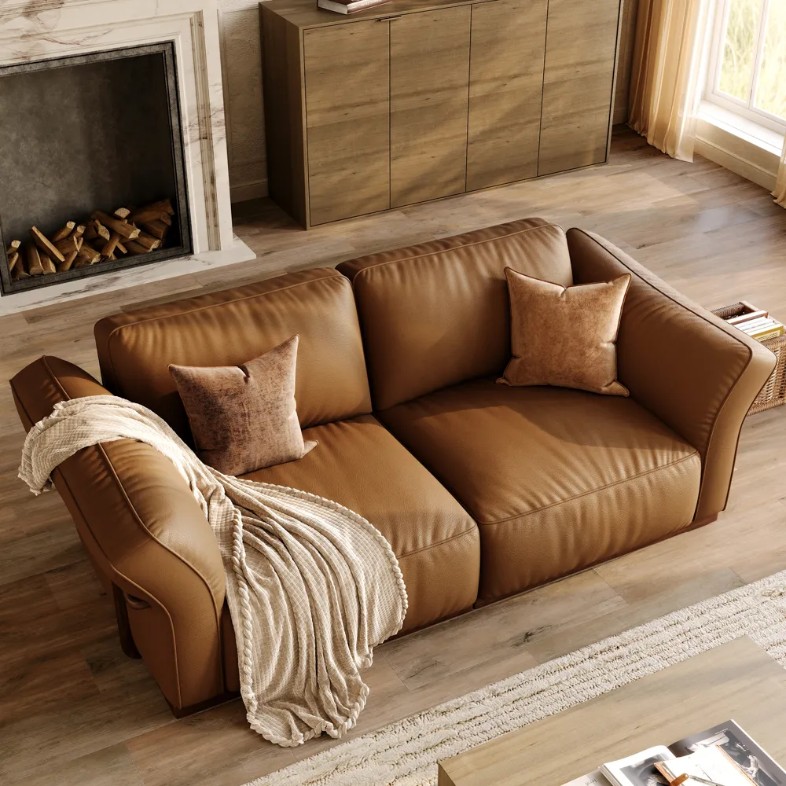
For a living room where the sofa is used daily but still needs a polished look, the Cronus-Brown Genuine Leather Modular Sofa fits the leather category well. It uses top-grain leather with a matte pebble grain, a 26-inch seat depth, and a modular 2–3 seat layout, making it more useful for lounging than a stiff formal leather sofa.
Faux Leather
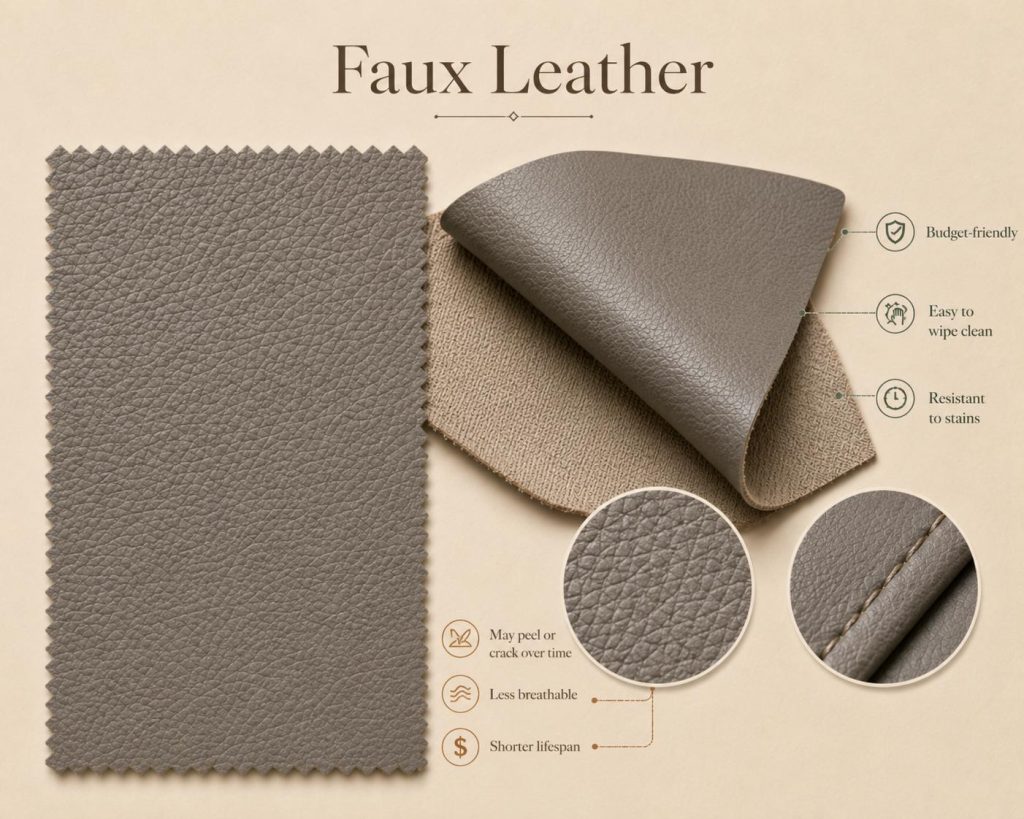
Faux leather is easier on the budget and simple to wipe after small spills. It can work in rentals, guest rooms, or low-traffic spaces where long-term aging is not the top concern. The downside is that lower-quality faux leather may crack, peel, or feel sticky in warm rooms. It also does not develop the same patina as real leather.
Performance Fabric and Polyester Blends
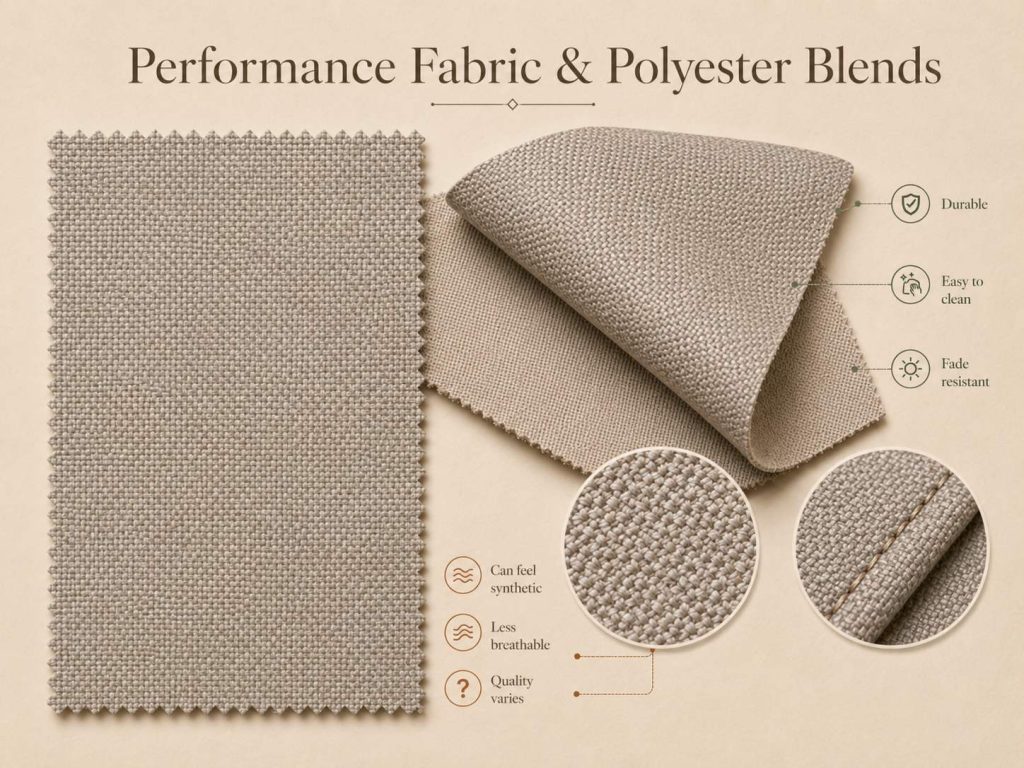
Performance fabric is often one of the most practical choices for modern homes. It can resist stains, fading, and daily wear better than many natural fabrics. It is especially useful in family rooms where people snack, nap, work, and watch TV on the same sofa. The main drawback is that quality varies widely, so always check the fabric description, cleaning code, and texture before buying.
Microfiber
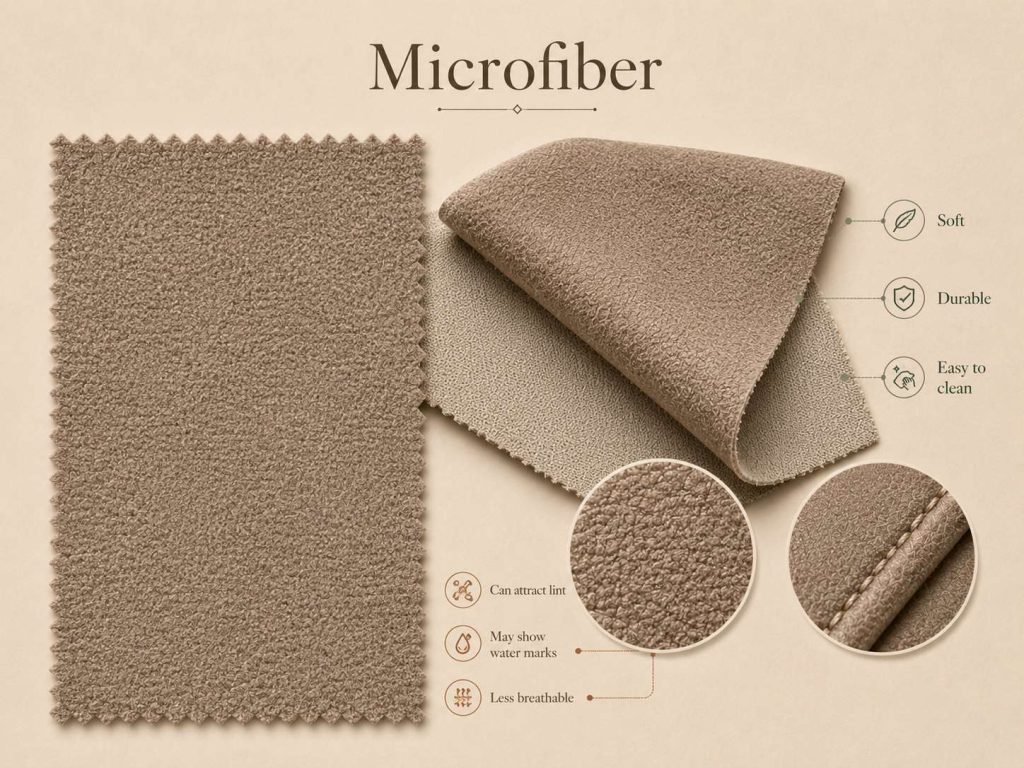
Microfiber is soft, dense, and often easier to maintain than loose-weave fabric. It is a strong option for families and pet owners because fur usually sits on the surface instead of sinking deeply into the weave. It can, however, show water marks or collect lint depending on the finish. If the sofa gets heavy use, microfiber often performs better than its price suggests.
Cotton and Linen
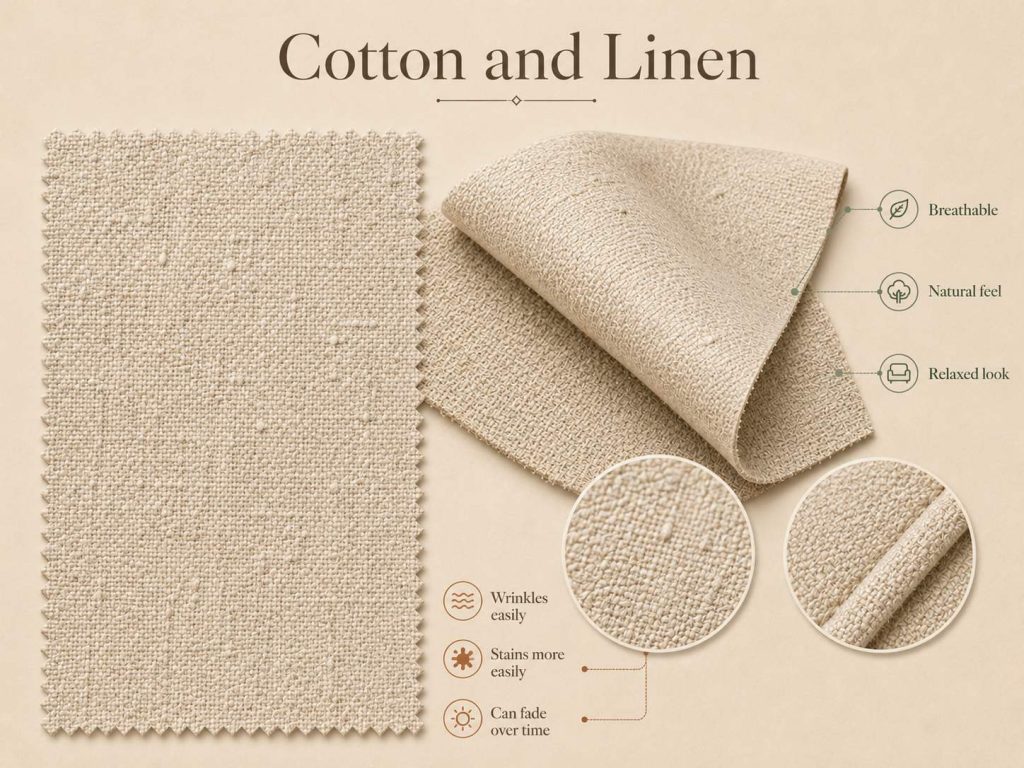
Cotton and linen feel breathable, casual, and natural. They work well in relaxed living rooms, sunrooms, or adult spaces where spills are not a daily issue. Their disadvantages are practical: they can wrinkle, stain, fade, or absorb moisture more easily than performance fabrics. If you love the look, consider a removable slipcover or a blended fabric with better stain resistance.
Velvet, Chenille, and Bouclé
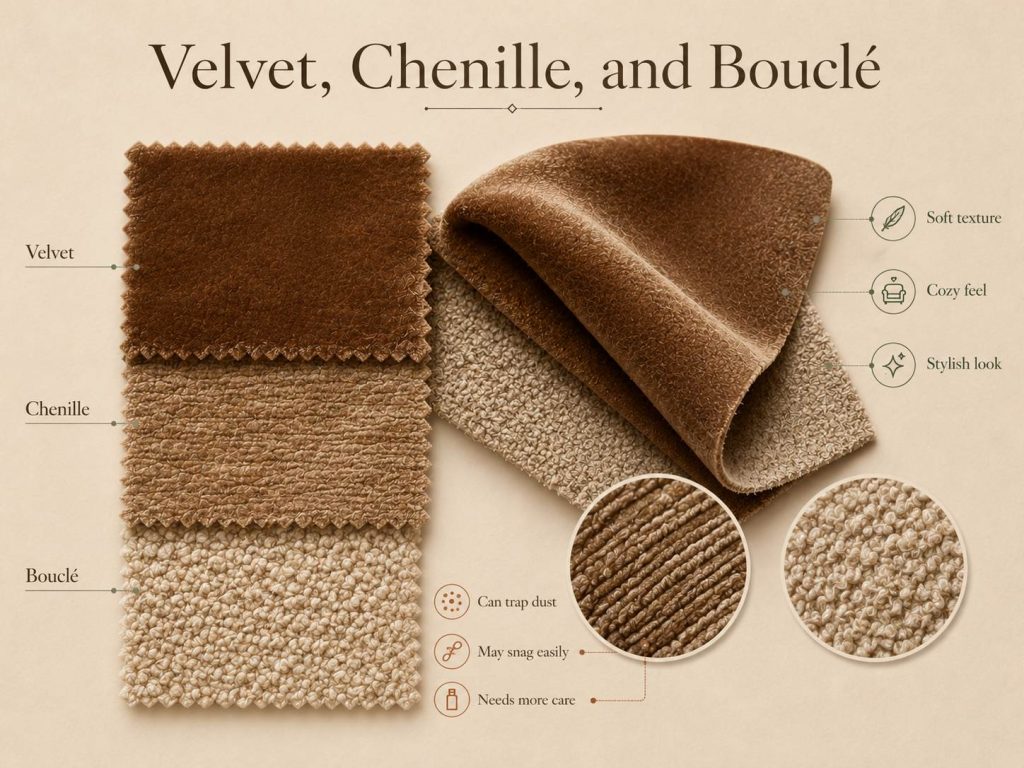
Velvet, chenille, and bouclé bring softness and texture. They are great for making a sofa feel cozy or visually rich. Chenille can be especially comfortable for lounging, while velvet gives a more refined look. Bouclé is stylish but risky in high-use homes because loops and nubby textures can catch claws, crumbs, and lint. For everyday use, performance chenille or performance velvet is usually safer than delicate decorative versions.
Which Sofa Material Fits Your Lifestyle Best?
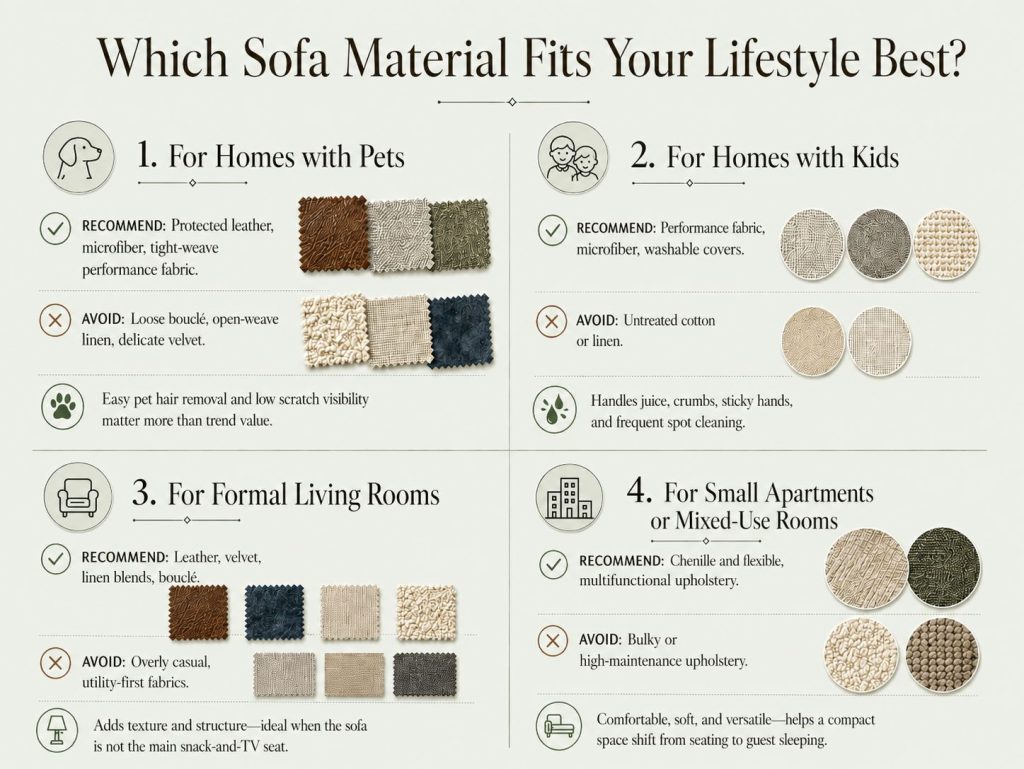
Once you understand the material types, the next step is matching them to real routines. A sofa that looks beautiful online can become frustrating if it fights your daily habits. The best sofa materials are not always the most expensive ones; they are the ones that solve the right problem for your room.
For homes with pets, look for protected leather, microfiber, or tight-weave performance fabric. Avoid loose bouclé, open-weave linen, and delicate velvet if claws or heavy shedding are part of daily life. In a home with a dog that likes the same corner of the sofa every night, easy hair removal and scratch visibility matter more than trend value.
For homes with kids, performance fabric and microfiber are safer than untreated cotton or linen. A family sofa needs to handle juice, crumbs, sticky hands, and frequent spot cleaning. Light colors can still work, but only if the fabric has stain resistance or washable covers.
For formal living rooms, leather, velvet, linen blends, or bouclé may be more appropriate. These materials can add texture and structure, especially when the sofa is not used as the main snack-and-TV seat.
For small apartments or mixed-use rooms, comfort and flexibility matter. The Aurora-Power Sofa Bed uses chenille fabric with a soft textured feel and one-touch lounge, recline, and sleep modes. Its extendable design helps a compact living room shift from seating to guest sleeping without adding a separate bed.
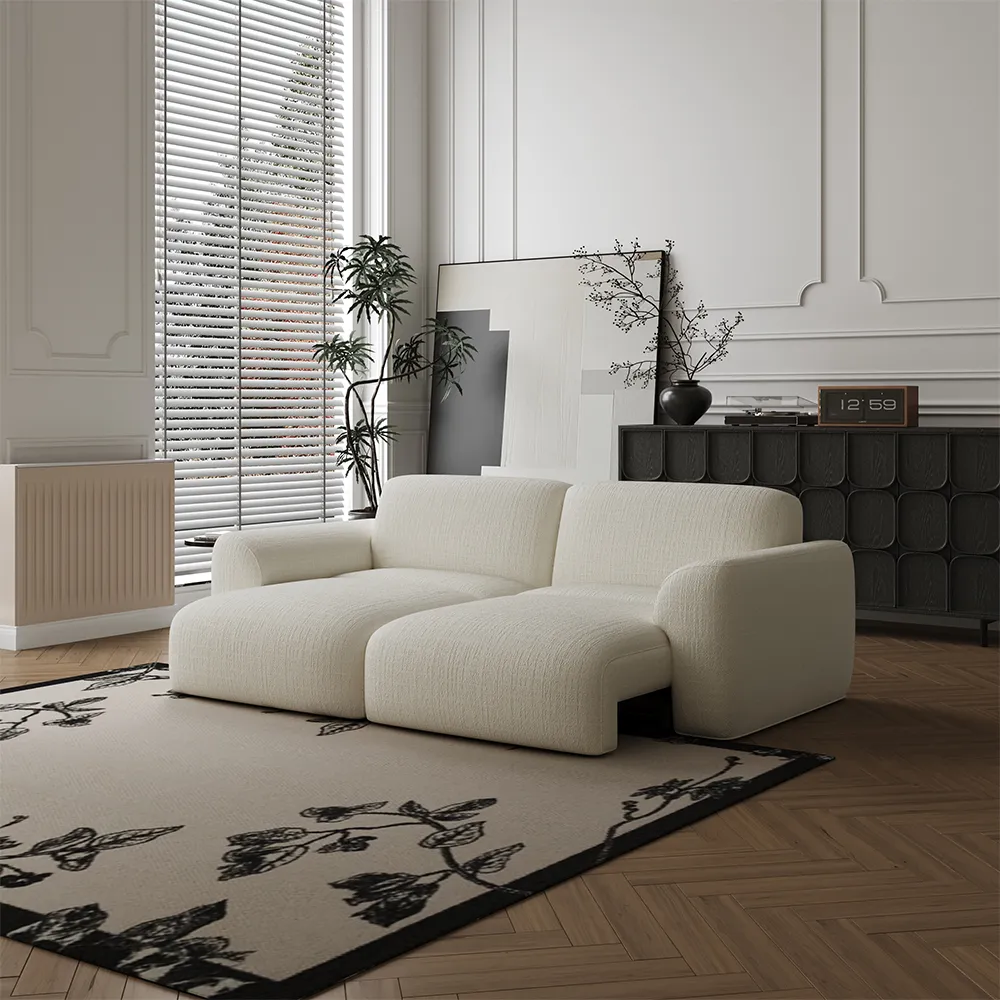
If you like more than one upholstery type, you do not need to choose only leather or only fabric. A leather sofa can anchor the room, while fabric chairs or pillows soften the look. The key is balancing color, scale, and texture when you mix leather and fabric furniture.
What Should You Check Before Buying a Sofa Material?
A material name alone does not tell you enough. Before buying, check the details that affect everyday use.
- Order swatches when possible. View them in daylight and evening light.
- Check the cleaning code. Some fabrics allow water-based cleaning, while others need solvent or professional care.
- Look at the weave. Tight weaves are usually better for pets and high traffic.
- Consider sunlight. Leather, linen, cotton, and some bright fabrics may fade or dry near strong windows.
- Ask about removable covers. They are useful for kids, pets, and light-colored sofas.
- Read the care instructions. A beautiful material is not practical if you cannot maintain it.
This is also where a dedicated leather vs fabric sofa comparison can help if your final decision comes down to those two broad categories.
Common Sofa Material Mistakes to Avoid
The biggest mistake is choosing by appearance alone. A white linen sofa may look calm and airy, but it may not suit a household where the sofa doubles as a dinner seat, pet bed, and weekend nap zone.
Another mistake is assuming leather is always low-maintenance. Good leather is durable, but it still needs protection from harsh sunlight, sharp claws, and chemical cleaners. Fabric has a similar issue: not all fabric is hard to clean, but not all fabric is family-friendly either.
Avoid these common errors:
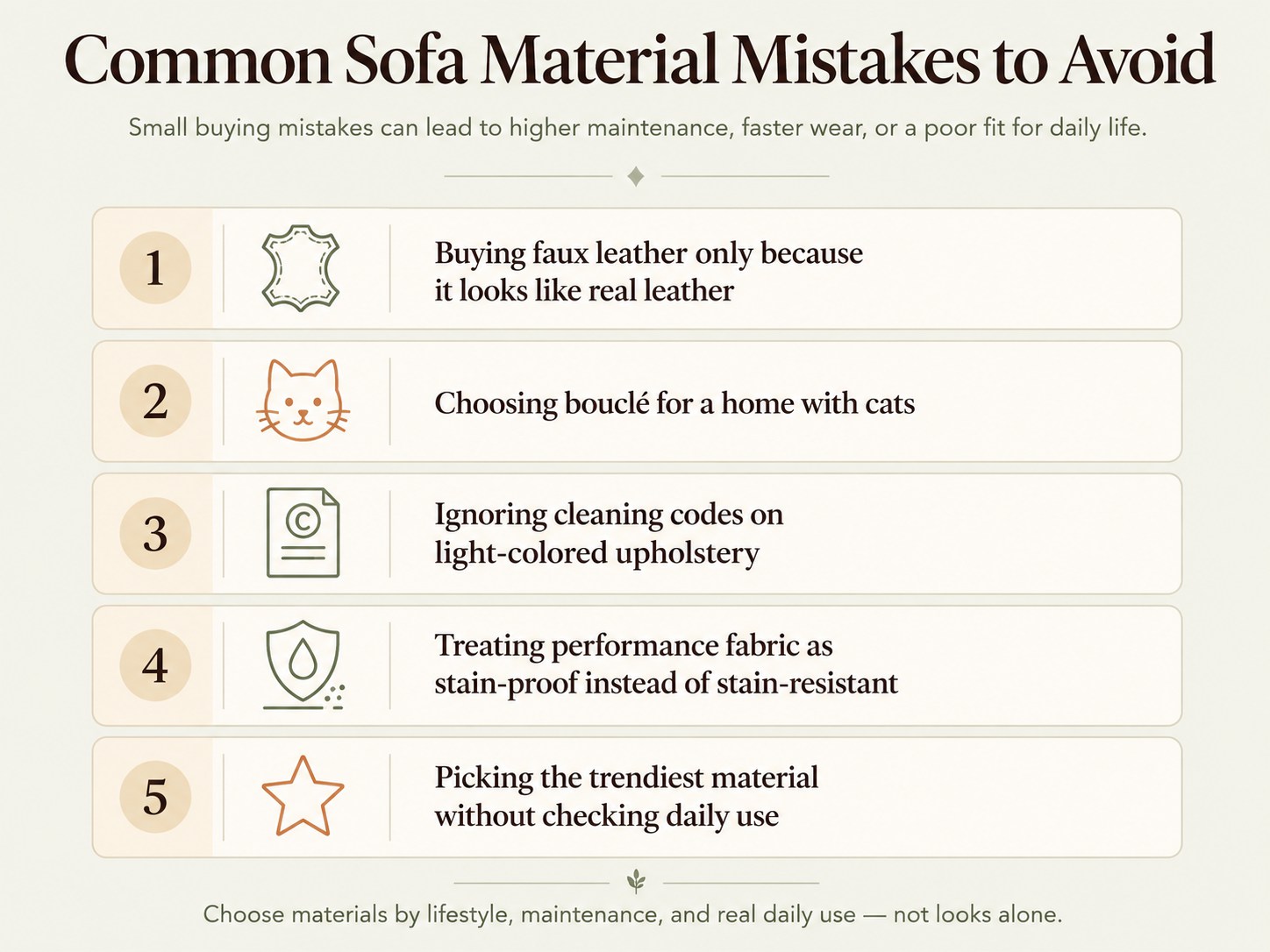
🔹Buying faux leather only because it looks like real leather
🔹Choosing bouclé for a home with cats
🔹Ignoring cleaning codes on light-colored upholstery
🔹Treating performance fabric as stain-proof instead of stain-resistant
🔹Picking the trendiest material without checking daily use
Conclusion
Choosing sofa upholstery is a practical decision as much as a design choice. Leather offers structure, durability, and easy wipe-down care, but it needs protection from scratches and sunlight. Performance fabric and microfiber are strong choices for families, pets, and daily lounging. Linen, cotton, velvet, chenille, and bouclé can be beautiful, but they work best when matched to the right room and routine. Use swatches, cleaning codes, weave, and lifestyle needs to choose a sofa material that will still make sense after the first few months of real use.
FAQ
How do I choose between two sofa materials that both seem practical?
Choose the material that solves your most frequent daily problem first. If spills and kids are the issue, prioritize performance fabric or microfiber. If dust, pet hair, and wipe-down cleaning matter more, leather may work better. When comfort is the tie-breaker, order swatches and test texture, temperature, and how easily lint or hair shows.
Is a high rub count more important than the sofa material itself?
A high rub count is important, but it should not be the only factor. It helps show abrasion resistance, which matters for family rooms, pets, and frequent sitting. However, cleaning code, weave tightness, stain resistance, cushion support, and color choice also affect how the sofa performs in real life.
How does sofa material affect comfort during long sitting?
Sofa material affects long-sitting comfort through temperature, texture, and surface grip. Leather feels smooth and supportive but may feel cool at first or warmer in direct heat. Chenille and microfiber feel softer for lounging, while linen and cotton blends feel more breathable. For movie nights or long reading sessions, avoid rough textures or fabrics that feel sticky against skin.
Should I choose removable covers or stain-resistant upholstery?
Choose removable covers if you expect full-seat messes, kids’ spills, or seasonal deep cleaning. Choose stain-resistant upholstery if you want a cleaner tailored look with less fabric shifting. Removable covers are practical but can wrinkle or require washing space, while treated upholstery still needs fast spot cleaning and careful product use.
How do I compare the pros and cons of different sofa materials online?
Start with use case, not color. Check the fabric composition, cleaning code, weave, care instructions, seat depth, return policy, and customer photos. The pros and cons of different sofa materials are easier to judge when you compare how each one handles stains, scratches, heat, pet hair, and daily wear.
When is a stylish sofa material not worth the maintenance?
A stylish material is not worth the maintenance when it conflicts with your daily routine. Bouclé, light linen, delicate velvet, or low-quality faux leather may look attractive at first, but they can become frustrating with pets, frequent snacks, strong sunlight, or heavy sitting. The best material is the one you can realistically clean and maintain.


