 By Charles
A pet-friendly couch is one built from a tight-weave performance fabric and a kiln-dried hardwood frame that takes daily jumping, sheds hair instead of trapping it, and wipes clean in seconds — not a couch that magically resists everything a dog or cat throws at it. I want to say that up front, because most “pet-friendly” marketing won’t.
Here’s the scene that started this for me. My sister’s beagle used to launch off the back of her couch to greet anyone at the door, paws digging in mid-sprint. Eighteen months later that couch had a permanent beagle-shaped dent, two pulled threads where the cat “tested” the arm, and a smell nobody discussed. She replaced it. The replacement lasted eight months — two couches in two years, roughly $1,800 gone, plus the weekends shopping.
So I went down the rabbit hole. I’ve now lived with performance-fabric seating for over three years across two households — one with a shedding retriever, one with two cats who treat upholstery like a spa menu. Here’s what held up, what didn’t, and where the honest limits are.
What Makes a Couch Pet-Friendly?
A genuinely pet-friendly couch solves four separate problems, not one. Shedding. Scratching. Accidents. Odor. A fabric that wipes clean beautifully can still trap fur like a magnet. A surface that hides hair can still snag on claws. You’re not buying one feature — you’re buying a system.
The foundation is the frame. Pets jump on and off the same spot a dozen times a day, and that repeated impact is what kills cheap couches first. Kiln-dried hardwood resists warping and loosening far better than softwood or particleboard, especially under a 70-pound dog who treats the seat cushion as a landing pad. When I’m in a showroom, I do one test: press hard on the arm, sit down, then rock side to side. If it creaks or flexes, your pets will find that weakness faster than you will.
The second layer is fabric structure, and this is where weave density beats fiber name every time. Hold a swatch up to a window. If light passes through the weave, claws will too. Tight, flat weaves give claws nothing to hook. Long pile, loops, and texture variation — bouclé, chenille, shaggy weaves — feel cozy in the store and turn into a fur trap and a snag risk at home.
One honest caveat before we go further: no upholstery is claw-proof. Anyone selling you a “scratch-proof” sofa is overpromising. The real question is how visible damage is and how forgiving the surface is over years of normal life. In my own living room, the pattern has been consistent — tight weave and short pile matter far more than any label on the tag.
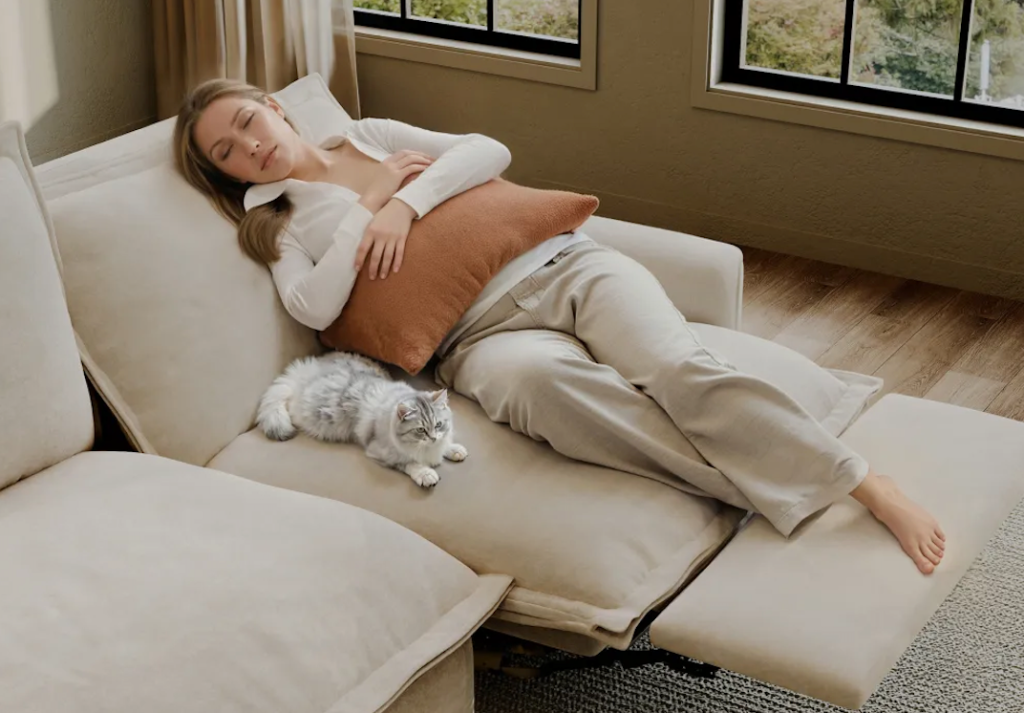
Best Couch Features for Dogs and Cats
Different animals break couches in different ways. Pick the war you’re actually fighting before you pick a fabric.
Dogs That Shed or Track Dirt
The dog problem is volume. Hair everywhere, mud on rainy days, body oils where they nap. For a heavy shedder, the single best fabric trait is a short, smooth, dense surface. Hair sits on top instead of weaving in, so a 30-second vacuum or lint roller actually clears it. On long-pile fabric, that same hair migrates to the base and never fully comes out — I’ve tested this with the same retriever on two couches, and it isn’t close.
Color does real work here too. Mid-tone neutrals — greige, mushroom, oatmeal, medium gray — camouflage shed hair between cleanings far better than pure white or true black, both of which spotlight every strand. Keep a small caddy near the couch with a pet-safe wipe and a lint roller so you handle mud while it’s fresh, not after it’s set into the seam.
Cats That Scratch
The cat problem is precision. A dog leans on a couch; a cat targets it — arms, corners, the front edge of the seat. The defense is a flat, tightly woven surface with short fibers that give claws nothing to grab and pull. Look for fabrics that publish an abrasion rating; a high double-rub count (Crypton-class performance fabrics often test around 100,000 double rubs) is a meaningful signal, not marketing fluff.
Leather behaves differently and it’s worth understanding the trade-off honestly. Fur doesn’t embed in it, and most messes wipe off with a damp cloth — genuinely excellent on shedding and odor. But claws can leave visible surface marks, especially from an energetic cat. If you love the look, protected or semi-aniline leather plus regular nail trims is the realistic combination. It is not a scratch-proof choice, and any honest guide should say so.
What matters more than the fabric on a cat couch: give the cat a better option nearby. This isn’t folk wisdom — the ASPCA’s guidance on destructive scratching is explicit that the goal isn’t stopping a cat from scratching but redirecting it, with a sturdy sisal or cardboard post placed right next to the furniture the cat already targets. A post in the right corner does more to protect upholstery than any “cat-proof” claim on a product page.
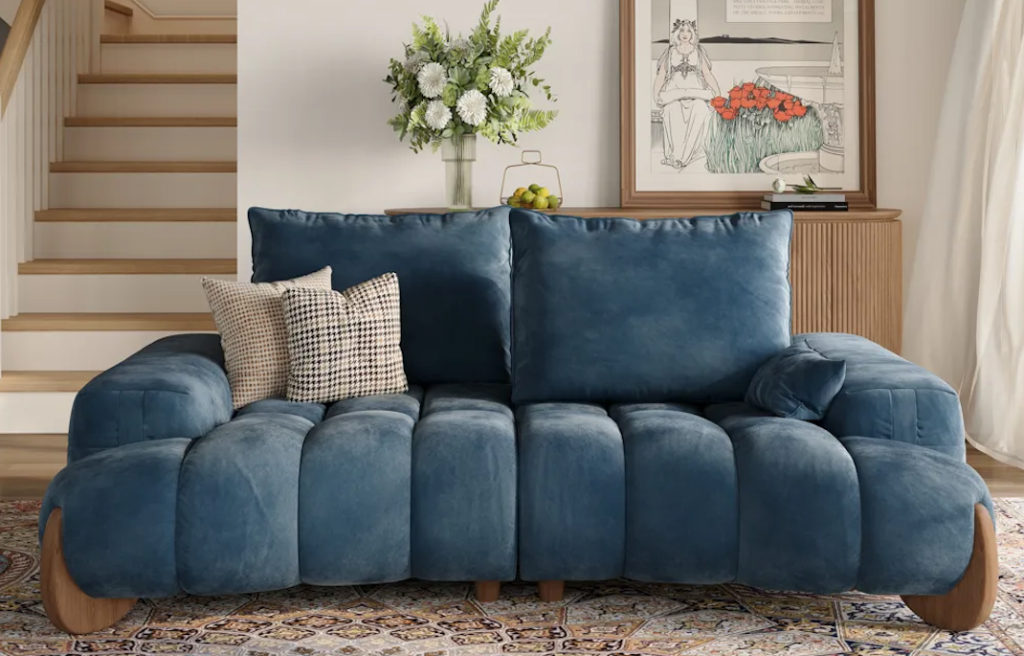
Sofa vs Sectional for Pet Owners
This is the question I get asked most, and the honest answer depends on how your household actually moves.
A standard sofa is easier to clean comprehensively — you can get behind it, flip it, vacuum every side. Fewer seams means fewer places for hair and crumbs to lodge. For a single pet in a smaller room, a well-built sofa with removable, washable covers is often the smarter, lower-maintenance choice.
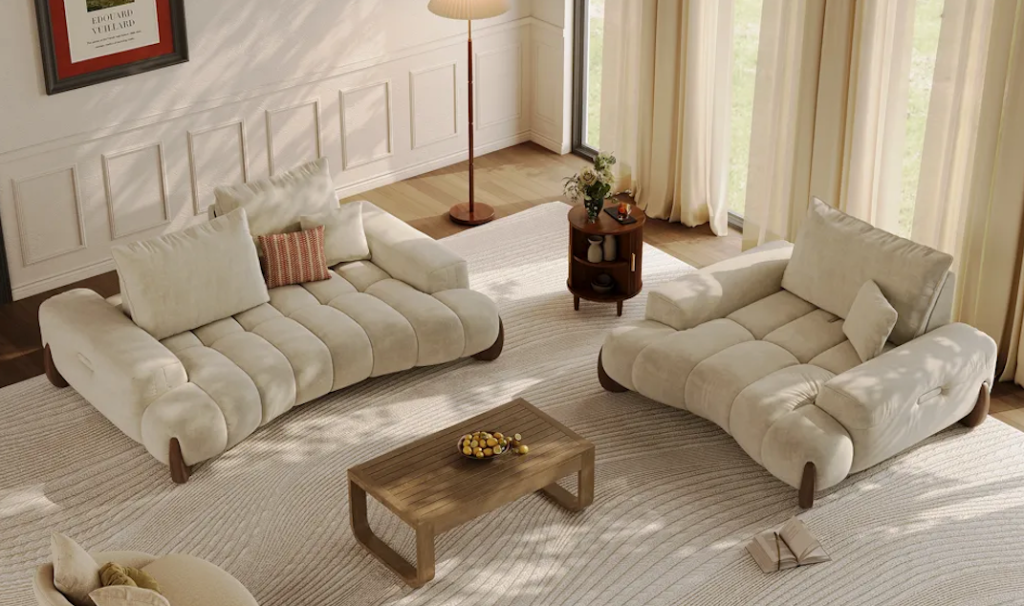
A sectional earns its place in active family households — kids and pets sharing the same zone, weekend movie sprawl, a dog who needs a designated end. Two things make a sectional genuinely pet-practical. First, removable cushion covers, so you can spot-clean or wash one panel instead of wrestling the whole frame. Second — and this is the part people skip — design cohesion. A sectional pieced together from mismatched modules looks like four brands arguing. Matching modular pieces in the same finish family keep the room coherent even as the configuration changes around the chaos, which is exactly the kind of coordinated, ready-to-live-in setup POVISON’s pet-friendly anti-scratch modular L-shape sectional is built around — note its own product page is upfront that barbed cat claws may still cause snags, which is the honesty you want before buying.
Before you commit either way, do the Charles tape test. Lay painter’s tape on the floor in the exact footprint of the sofa or sectional you’re considering. Live around that outline for two days — walk past it, pretend to vacuum behind it, imagine a dog bed beside it. A sectional that looks perfect on screen can eat a small room alive, and tape costs nothing to find that out.
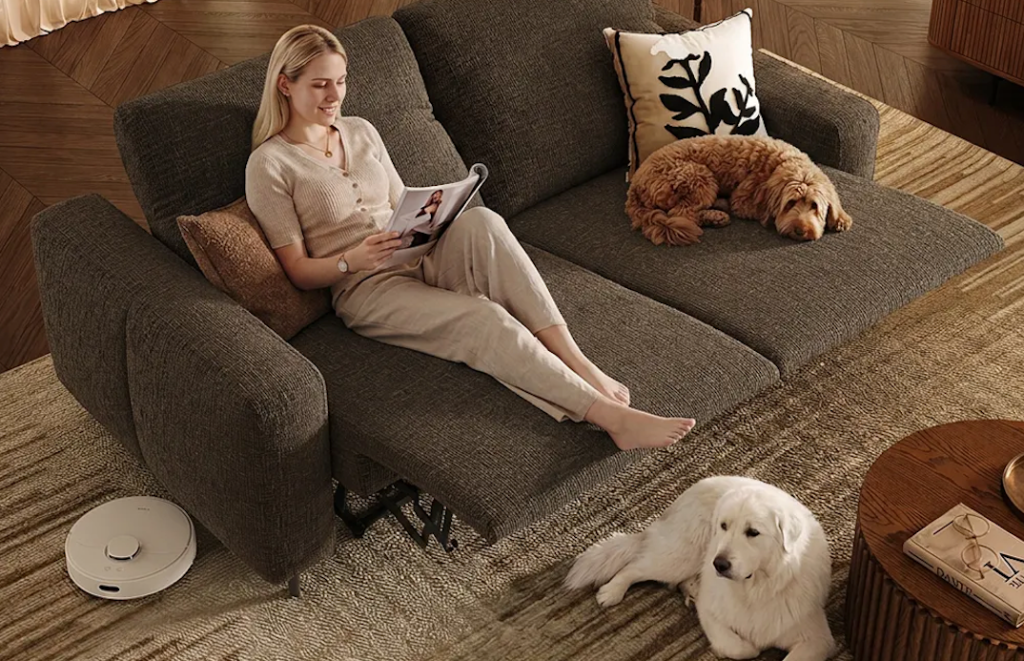
Materials and Features to Be Careful With
Some details look fine in a product photo and become daily friction at home. Here’s what I’d slow down on.
Loose-weave, looped, and bouclé fabrics. Cozy in the store, a snag magnet at home. One pulled loop from a claw becomes a run, and a run becomes the reason you’re shopping again.
Cheap faux leather and thin vinyl. They photograph like the real thing and can crack or peel within a year or two under claws, body oils, and temperature swings. Higher-performance polyurethane hybrids hold up far better — here the price difference reflects a real durability difference.
Vague safety language. “Eco-friendly,” “non-toxic,” and “tested for safety” mean nothing without a named standard behind them — and this matters more in a pet home, because animals lick, chew, and press their faces into the fabric for hours a day. Look for a real certification: OEKO-TEX® STANDARD 100, which independently tests every component against a list of over 1,000 harmful substances, or a kiln-dried frame meeting CARB Phase 2 limits on formaldehyde. POVISON’s performance pet fabric, for instance, lists OEKO-TEX® Standard 100 certification — but the rule holds for any brand: verify the named standard on the product page, not the marketing banner. A certificate number you can check beats an adjective you can’t.
Exposed recliner mechanisms. If you love motion furniture, pick designs with minimal exposed gaps so a tail or paw can’t get caught. It’s a small detail that becomes a big one exactly once.
Cleaning, Covers, and Daily Maintenance
The best pet-friendly couch is the one whose maintenance routine you’ll actually keep. Three habits do most of the work.
Removable, washable covers are the single highest-leverage feature in a pet home. When a cushion cover unzips and goes in the wash, an accident is a Tuesday, not a crisis. When it doesn’t, you’re refinishing or replacing. I will not buy a pet-zone couch without this anymore — it’s that decisive.
Quick daily friction beats deep cleaning. A 30-second wipe or vacuum the moment something happens prevents most of the problems people deep-clean for later. Oils, stains, and odor set when messes wait; fresh messes are almost always recoverable.
Grooming the pet is cleaning the couch. Brushing, nail trims, and wiping paws after walks dramatically cut the fur, dirt, and micro-scratches the fabric ever has to handle. The American Society for the Prevention of Cruelty to Animals offers solid, free pet care and grooming guidance — the lower-effort, higher-impact half of keeping any couch livable.
One more reason fully assembled matters in a pet home specifically: when a couch ships ready to use, you can test the fabric against your actual dog the day it arrives — no flipping a 70-pound frame looking for hex keys before you even know if the cat approves. The faster you can live on it, the faster you learn whether it works.
FAQ
What couch fabric is truly best for homes with dogs and cats?
The best couch fabric for homes with dogs and cats is a tightly woven performance synthetic — performance polyester, microfiber, or a high-rub performance weave — because the flat, dense structure resists snags, releases fur instead of trapping it, and wipes clean. No fabric is fully scratch- or stain-proof; tight weave and short pile simply age more gracefully under real pet use.
Are leather couches a good option for dog owners?
Leather is a strong option for dog owners on shedding and odor: fur doesn’t embed and most messes wipe off with a damp cloth. The honest trade-off is scratching — claws can leave visible surface marks, especially from active dogs. Protected or semi-aniline leather plus regular nail trims is the realistic combination. It manages damage well; it does not prevent it.
Which couch materials are hardest for cats to scratch?
The hardest materials for cats to scratch are tight, flat-weave performance fabrics with short fibers and a high double-rub abrasion rating, plus protected leather. Cats target loose loops and texture, so anything bouclé, chenille, or shaggy is highest-risk. No material is claw-proof — pairing a low-snag surface with a scratching post placed near the couch’s target corner protects upholstery far more reliably than any single fabric alone.
How do pet owners actually keep hair and dirt off a couch?
Pet owners keep hair and dirt off a couch with three habits, not one product: choose a short-pile fabric in a mid-tone neutral so hair sits on top and camouflages between cleanings; keep a lint roller and pet-safe wipe within arm’s reach for 30-second daily touch-ups; and groom the pet regularly so less fur and dirt reaches the fabric in the first place. Removable washable covers turn the occasional deep clean from an ordeal into a wash cycle.
Conclusion
A pet-friendly couch isn’t a fabric you buy once and forget — it’s a tight-weave surface, an honest frame, washable covers, and a maintenance habit you’ll actually keep, matched to whether your animals shed, scratch, or both. Skip the “pet-proof” promises. There’s no such thing, and the brands worth trusting are the ones that say so before you pay.
If you’re a multi-pet family choosing for an active shared living room, prioritize removable covers, a kiln-dried frame, and a coordinated set that stays coherent as life rearranges around it. If you’re a single calm cat in a small apartment, a well-built standard sofa in a flat-weave performance fabric will outlast and out-clean a sectional you don’t need.
Either way, lay the tape down before you buy. Two days living around an outline tells you more than two hours reading specs — and your weekends are worth that much diligence.
Related Reading:


