 By Charles
Hey there, counter-height confusers. Picking the best bar stools for a modern home sounds simple until you’re measuring your kitchen island at 11 p.m. with a tape measure in one hand and a browser tab full of conflicting size charts in the other. The wrong stool — even a good-looking one — can leave you with seats that bang against the counter, crowd each other out, or wobble every time someone sits down.
I’ve been through enough of that chaos to write this guide. After measuring my own island three times and testing seating across a range of modern furniture styles, here’s everything you need to make a confident call before you buy online — from counter math, to how a stool actually arrives at your door, to which finish will still look intentional next to the cabinets and dining chairs you already own.
What Makes a Bar Stool Worth Buying Online?
According to the 2026 U.S. Houzz Kitchen Trends Study, about 40% of homeowners renovate their kitchens with entertaining in mind, and islands play a central role in that shift. Buying bar stools online carries real risk. You can’t sit in them, feel the weight, or check whether the finish matches your cabinets in actual light. A stool worth buying online clears three practical hurdles before aesthetics even enter the picture.
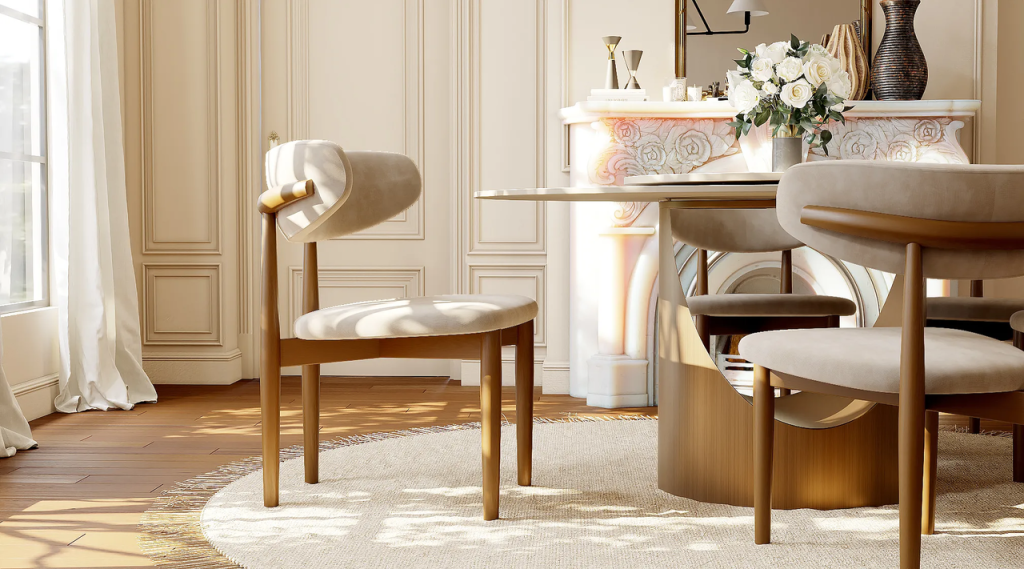
First: the dimensions are honest. Product pages that publish both the overall stool height and the seat height are a good sign. Many listings only show the total height, which tells you almost nothing useful about fit. If a page buries seat height in a spec sheet you have to download, assume that’s not the only place the detail is thin.
Second: the construction holds up to daily use. Bar stools live a harder life than most furniture. They get bumped, dragged, leaned back in, and sat on by guests who don’t treat your things the way you do. According to BIFMA seating standards, commercial-grade seating is tested to withstand repeated load cycles well above 250 lbs. Consumer stools don’t face the same certification requirements, but that standard is a useful benchmark when evaluating frame material and joint construction.
Third: the stool arrives ready to use. This is the one most guides skip. Flat-pack stools ship in more pieces, which means more chances for damage, a longer setup window, and a higher likelihood that you’ll be on the floor with an Allen key the night before guests arrive. Fully assembled stools remove all of that: the frame is welded or joined at the factory under controlled conditions, the joints are set, and if the packaging holds, the stool lands on your floor in the same condition as it leaves the line. That matters more about a product you can’t inspect in a showroom — and more still if you’re ordering a set of four.
If you want to pre-filter for this, Povison’s bar and counter stool collection ships fully assembled as a category default, with published seat heights, stated weight capacity, and white-glove-level packaging — the three things above, resolved before you click into any individual product page.
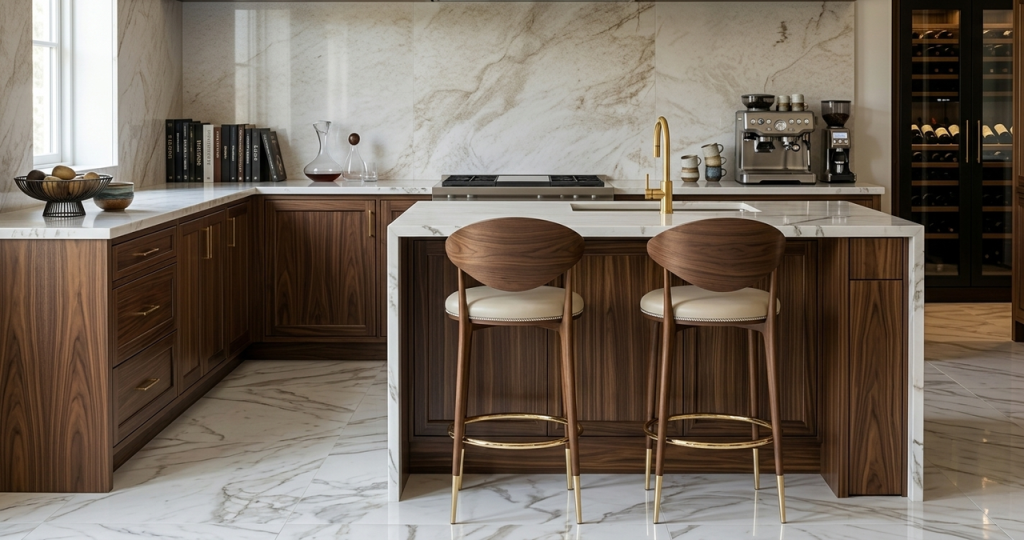
Start With Seat Height and Counter Measurements
The rule is straightforward: your seat height should sit 9 to 13 inches below your counter surface. That range keeps your legs comfortable and lets you eat at the counter without hunching or reaching up awkwardly. Go outside that range and the stool is wrong for the space, full stop.
Measure your counter before you open a single product page. Take the height from floor to the top of the counter surface — not the underside, the top. Write the number down. If you’re ordering for an island with an overhang, measure the top; the overhang thickness doesn’t change the seat-height math.
Counter Height vs Bar Height
These two terms get used interchangeably and they shouldn’t be. They describe two different counter heights with two different seat requirements.
Counter height surfaces measure 34 to 36 inches from the floor. They’re common in kitchen islands and breakfast bars designed for casual eating. The matching seat height is 24 to 26 inches.
Bar height surfaces measure 40 to 42 inches from the floor. These appear in dedicated home bars, elevated kitchen peninsulas, and some entertainment setups. The matching seat height is 28 to 30 inches.
Buying a 30-inch stool for a 36-inch counter means your knees are hitting the underside of the surface. Buying a 24-inch stool for a 42-inch bar means you’re eating at chin level. Neither is a look — and neither is fixable short of a return.
Quick-Reference Sizing Table
| Counter type | Counter height | Seat height | Typical use |
| Counter height | 34–36 in | 24–26 in | Kitchen island, breakfast bar |
| Bar height | 40–42 in | 28–30 in | Home bar, elevated peninsula |
| Extra-tall bar | 44–47 in (rare) | 32–34 in | Custom home bars only |
If you’re planning seating across both the island and an adjacent dining table, cross-reference seat heights so the two zones feel like one room. Povison publishes seat heights on every product page — Povison’s dining chairs collection is the natural next stop when you want the counter stools and the dining chairs to share the same wood tone, leg profile, and sit height.
How Much Width Each Stool Needs
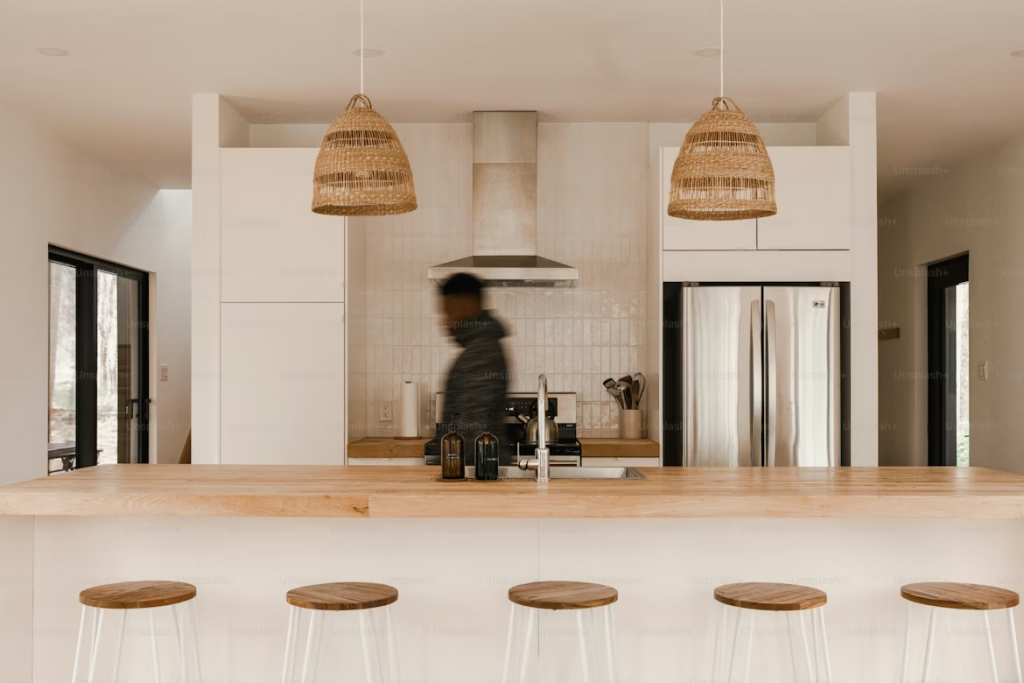
Seat width and spacing are separate problems. The seat itself needs to be wide enough for an adult to sit comfortably — 16 to 18 inches covers most bodies without feeling cramped. But the space between stools matters just as much, and it’s the piece most people skip until the stools are already in the box.
The standard recommendation from most interior planning guides is 26 to 30 inches center-to-center between stools. That gives each person roughly 6 inches of elbow room on either side without elbowing their neighbor every time they reach for a drink.
For a standard 8-foot (96-inch) island, that works out to 3 stools comfortably, or 4 stools with tighter spacing that some people find acceptable for a household of regulars but tight for guests. For a 5-foot peninsula, plan on 2 stools. Trying to force a third onto a 5-foot run almost always ends with the middle seat being the one nobody picks.

Small apartments — galley kitchens, studios, one-bedrooms with a short peninsula — change math. If your seating run is under 4 feet, one or two backless stools is usually the honest answer, and the recovered floor space is worth more than the seat count. For the wider open-plan layout where a peninsula doubles as the dining zone, the small-space dining table guide covers how to size the neighboring table and chairs so the two eating zones don’t fight for the same footprint.
Backless vs Backed vs Swivel Designs
The design choice here isn’t about style first — it’s about how the stool will actually be used. Pick the form factor that matches your daily rhythm, and the aesthetic will have a lot less work to do.
Backless stools have one major practical advantage: they slide fully under the counter. When nobody’s sitting, they disappear, and the kitchen reads as a clean continuous surface instead of a row of visible furniture. That matters in smaller kitchens where visual clutter adds up fast, and it matters for anyone whose island has to look tidy in photos as often as it gets used. The tradeoff is real: without back support, most people shift position after 20–30 minutes at a meal, and backless stools aren’t great for working at a counter for longer stretches. They suit spaces where seating is occasional — a quick breakfast, a coffee, a perch while someone else cooks.
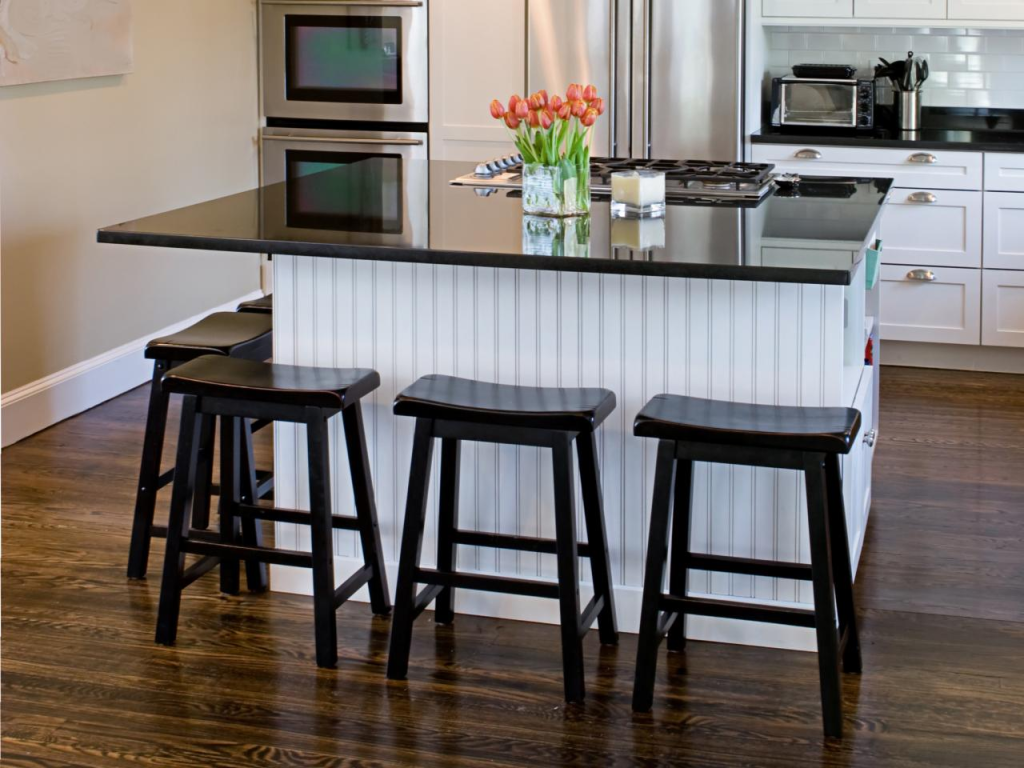
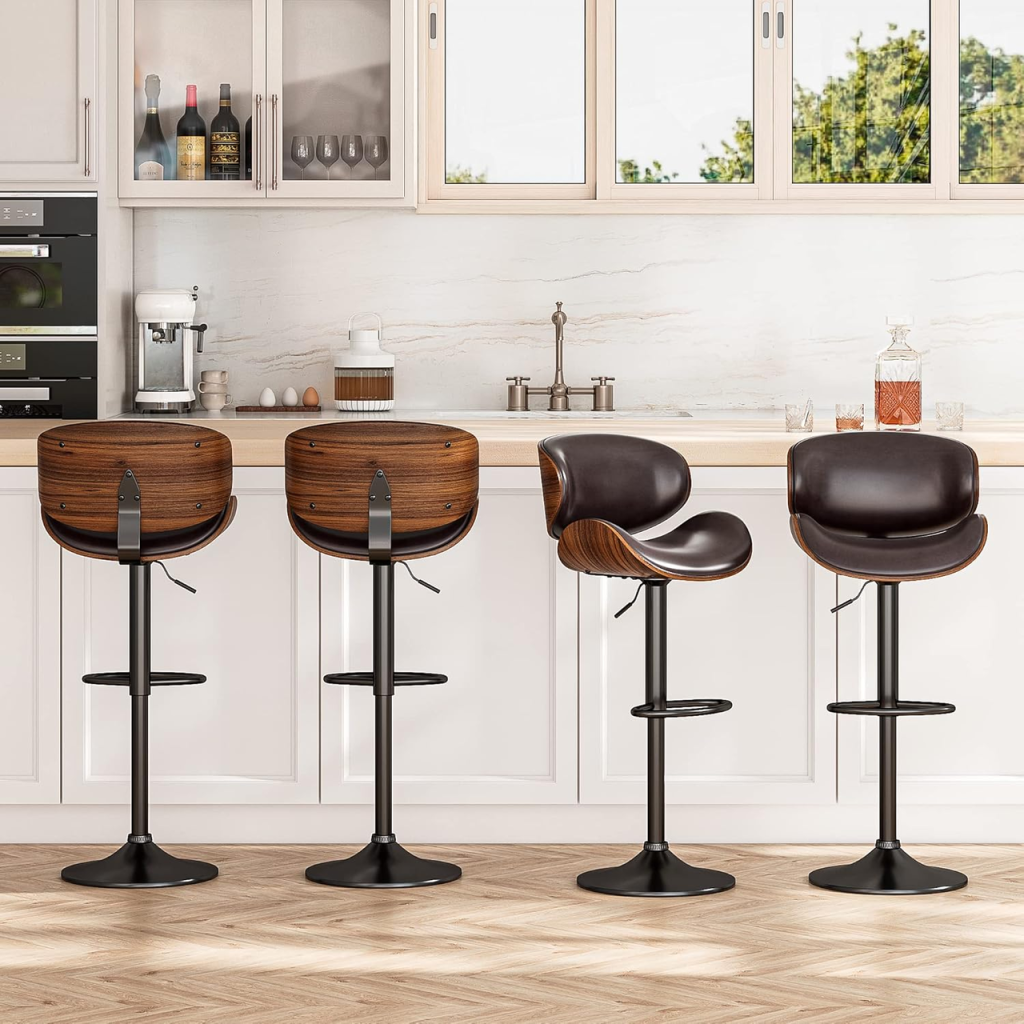
Backed stools support longer sits. If your kitchen island doubles as a workstation or you host dinners where people linger over food and conversation, a backed stool earns its place. The back does add visual weight to the space and won’t tuck as neatly under the counter — expect 6 to 10 inches of stool visible when pushed in — so the finish and silhouette start to matter. This is where picking a stool from the same design family as your dining chairs pays off: matching wood tone and leg profile means the visible portion reads as part of the dining setup, not a separate category of furniture.
Swivel stools add convenience in high-traffic kitchens. Guests can turn to face the room without scooting the stool back and spinning around. The mechanism adds weight and a small amount of wobble compared to fixed-base designs — worth accepting in a social kitchen, worth skipping in a quiet breakfast setup. Look for stools with a 360-degree swivel and a return mechanism if you have kids who will spin these until the end of time.
Most buyers end up choosing based on their primary use case. Eat-in kitchen island → backed stool. Entertaining bar → swivel. Small apartment galley kitchen → backless, because the floor space recovered when they’re pushed in is genuinely useful. Matching one form factor to the actual room — rather than buying for the room you wish you had — is the single highest-return decision in this whole guide.
Which Bar Stool Styles Fit Different Modern Homes
Modern doesn’t mean one thing. The same word covers mid-century walnut, Japandi oak, industrial steel, and everything in between — and the stool that looks right in one of those settings looks like a mistake in another. Here’s how style categories map to actual home types, and the finish cues to look for inside each one.
Mid-century modern homes (walnut tones, tapered legs, clean upholstery) suit backed stools with solid wood frames and neutral seat cushions. The tapered leg profile reads as intentional rather than generic. Solid wood frames in walnut or oak age well and resist the kind of surface damage that shows up quickly on painted MDF alternatives.
Minimalist or Japandi interiors (light woods, white walls, negative space) work best with backless or slim-backed stools in natural oak or ash. Heavy upholstery competes with the restraint of the space. A footrest rail in brushed brass or matte black adds detail without clutter. Look for FSC-certified wood — the grain and tonal consistency are usually better than the uncertified alternatives, which matter when the whole room depends on a quiet palette.
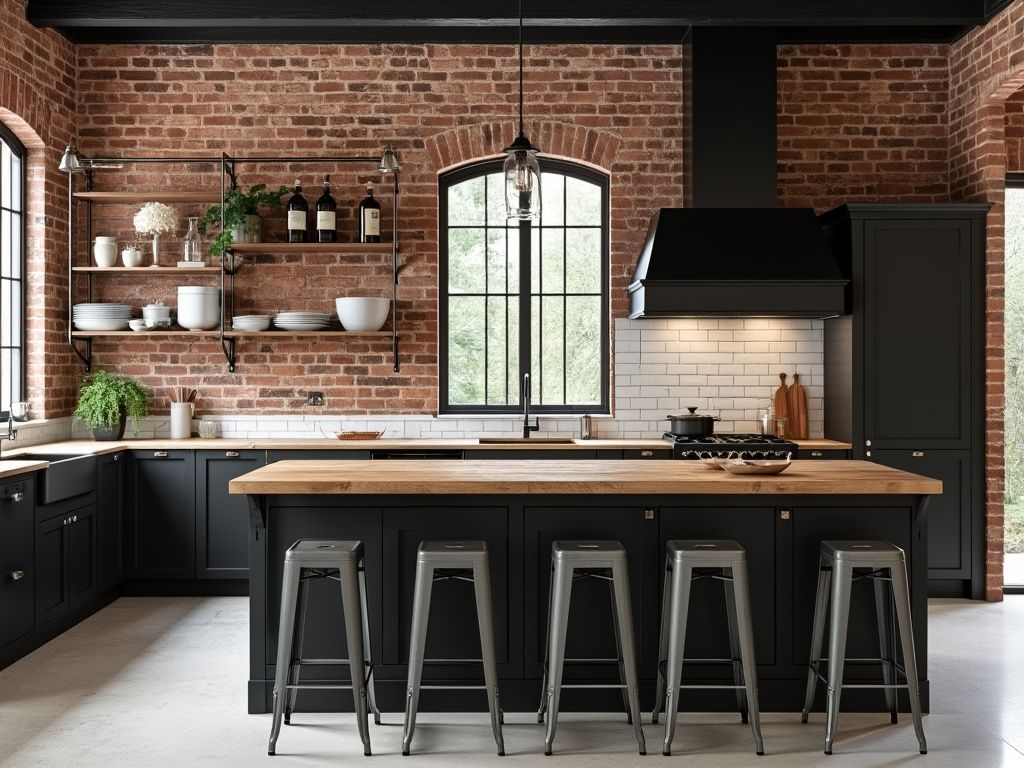
Industrial loft or open-plan spaces (exposed brick, dark metals, concrete) suit metal-framed stools — powder-coated steel bases in black or aged bronze with wooden seats. Fully welded joints handle the hard-use reality of high-traffic spaces better than press-fit assembly, and a welded frame on a fully assembled stool means no field-tightened bolts to loosen over time.
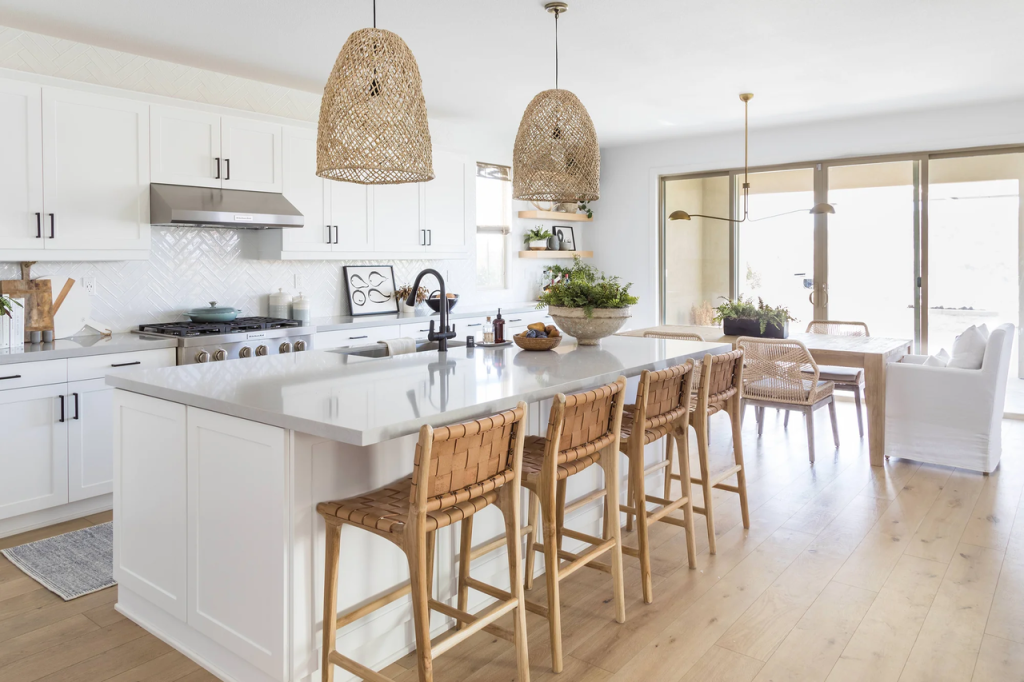
Transitional homes (the majority of modern American interiors that blend warm and neutral tones) have the most flexibility. A solid wood stool with an upholstered seat in a mid-grey or warm beige sits comfortably in almost any transitional space without demanding attention.
One thing worth knowing: finish consistency across space matters more than matching perfectly. If your kitchen cabinets are warm white oak and your stool is cool grey ash, the two will fight the room even though both are “light wood.” Color temperature — warm vs. cool undertones in wood finishes — is something product photography often obscures. Two safeguards help here: reading user reviews that specifically mention finish accuracy against the hero shot, and buying stools from the same product family as pieces you already own, so the wood tone is set by one source of truth instead of three.
What to Check Before Ordering
This is the section I wish more buying guides spent time on. The stool you want on Day 1 and the stool you’re happy with on Day 90 are determined by details that don’t show up in hero shots.
Frame material and joinery. Solid wood resists racking forces better than engineered wood. Metal frames should be fully welded, not bolted at joints — bolted joints loosen with use. If the product listing says “sturdy construction” without specifying material grade or joint type, that’s a signal to dig into the reviews or ask customer service directly.
Weight capacity.Most standard bar stools are rated for 250 to 300 lbs. If you’re hosting adults regularly, check this number. A stool rated at 220 lbs that gets used by guests over that limit will develop squeaks and structural loosening faster than the manufacturer’s warranty will cover.
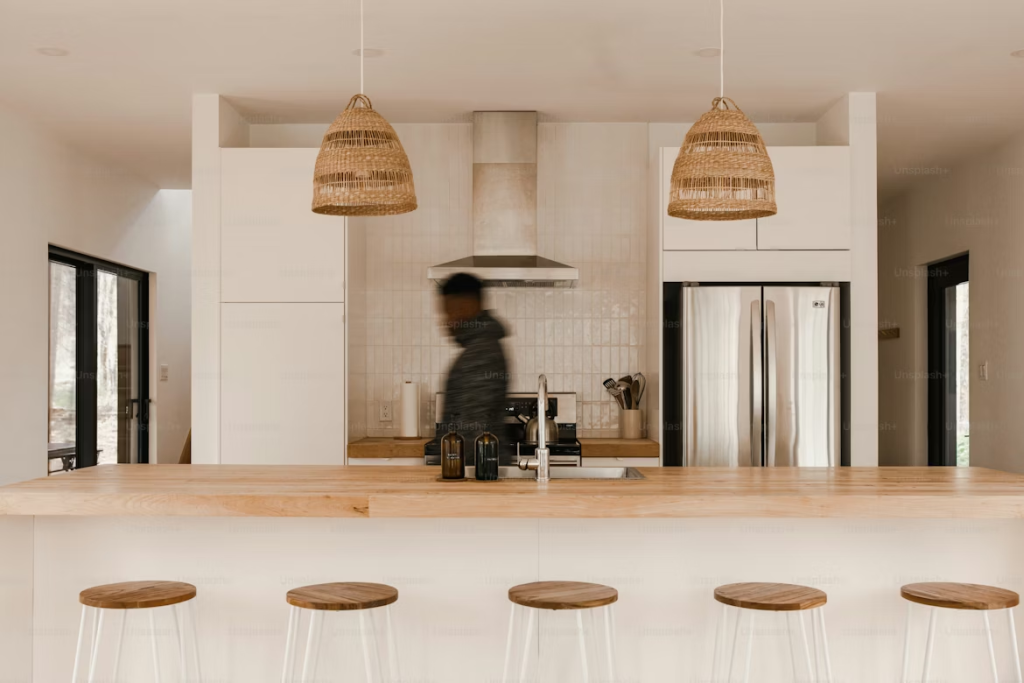
Finish and material safety. This is the detail most buyers don’t think to ask about until there’s a smell in the kitchen on delivery day. Look for two things on the product page: FSC-certified wood (which confirms the material is traceable to responsibly managed forests) and a stated non-toxic or low-VOC finish. Kitchen stools live where people eat — a finish that off-gasses for the first three weeks of ownership is a detail worth filtering for up front, not discovering after. If the product page doesn’t mention either certification, assume neither is guaranteed.
Footrest placement. The footrest shouldn’t be an afterthought. It should sit at a height where your feet rest naturally when seated — roughly 6 to 8 inches below the seat height. A footrest that’s too low means dangling legs; too high means awkward compression in the hip flexors. Some product pages list footrest height separately; most don’t. If it’s not listed, email and ask before ordering multiple stools.
Seat material for daily eating. Upholstered seats are more comfortable but harder to clean. Solid wood seats are wipe-clean but unforgiving for long sits without a cushion. Leatherette (PU leather) sits in the middle — easier to wipe down than fabric, warmer than wood, though it will crack at seams over time with daily use. For a kitchen where spills happen, a tight-weave performance fabric or leatherette seat with a removable cover is the practical call.

Assembly requirement. Fully assembled stools ship as a complete unit — the frame is joined, the seat is attached, the footrest is set. They land on your floor ready to slide under the counter. Some near-assembled stools require attaching the seat to the base (2–5 minutes with a screwdriver). Flat-pack stools require assembling the frame from individual components — 45 to 90 minutes per stool, depending on complexity. For a set of four, that’s the difference between a Saturday afternoon of unboxing and a Saturday afternoon of assembly. The other reason to prefer fully assembled: factory-joined frames have tighter, more consistent joints than anything tightened by hand in a living room, which translates to less wobble and fewer squeaks a year in.
Delivery and ownership terms. For any online furniture order, confirm four things before checkout: whether the item ships in a single carton or multiple boxes, estimated delivery window to your region, whether threshold or white-glove delivery is available, and what the return window looks like if the finish doesn’t match the photo. Povison’s bar stool pages publish the delivery window and return terms directly on the product listing — so the ownership picture (what arrives, when, and what your options are if something’s off) is set before you click add to cart, not after.
FAQ
How Many Bar Stools Fit on a Kitchen Island?
Allow 26 to 30 inches of counter width per stool — this covers seat width plus elbow room. A 5-foot island fits 2 stools comfortably; an 8-foot island fits 3 to 4 depending on spacing. Always measure the usable seating side only, not the full island perimeter. If your island has a corner turn, treat each straight run as its own seating zone rather than wrapping stools around the corner.
Are Bar Stools Good for Small Apartments?
Yes — go backless. Backless stools slide fully under the counter when not in use, recovering 8 to 12 inches of visual floor space per stool. Two 24-inch backless stools at a peninsula do the job of a dining table without eating into your floor plan. In open-plan layouts, backed stools can double as dining seats too, which is often the smarter move in a one-bedroom: one seating zone does two jobs instead of squeezing two into the same footprint.
Is Fully Assembled Seating Worth It?
For most buyers, yes — for two reasons, not one. The first is time: fully assembled stools skip 45 to 90 minutes of labor per stool, up to 6 hours on a set of four. The second is structural. Factory joints are set on jigs under controlled conditions, with welded or pressed frames that a home assembly can’t replicate. That translates to less wobble over time and fewer joints to re-tighten a year in. The price premium runs $30 to $80 per stool. For something used daily — and sat in by guests who won’t baby it — that’s an easy trade.
What Should Buyers Know About Damage or Returns?
Most retailers offer a 14 to 30-day return window, with the buyer covering return freight — which can run $50 to $150 per box on large items. Two habits reduce the risk of needing to use it. First, for transit damage, photograph the packaging before opening and the damage before moving anything; most carriers require photo evidence within 48 to 72 hours. Second, before ordering a full set, order a single stool first if the product listing allows it — one stool in the actual room, against the actual cabinets and floor, settles the finish question far more reliably than any photo. Povison’s return window and damage-claim process are listed directly on each product page; confirm the specifics for your region at checkout.
Conclusion
The best bar stool for a modern home is the one sized correctly for your specific counter, spaced to give each person actual elbow room, and built to survive daily use without becoming a wobbling regret in six months. Style matters — but it’s the last variable to solve, not the first.
Lock in your counter height, calculate your seating width, decide between backless and backed based on how long people actually sit there, and then filter by frame construction, finish safety, and delivery terms before you filter by finish color. Fully assembled, FSC-certified, honestly dimensioned — those three filters knock most of the noise out of the shortlist before aesthetics even enter the conversation.
If you’re building out a complete dining or kitchen seating setup, it’s worth browsing Povison’s full bar and counter stool collection alongside complementary pieces — keeping the same wood tone and design language across bar stools and dining chairs makes a space feel pulled-together without requiring an interior designer. For that next decision, the dining chairs guide for open-plan layouts covers the overlapping considerations in more detail.
Related Reading:


