 By Jenny Smith
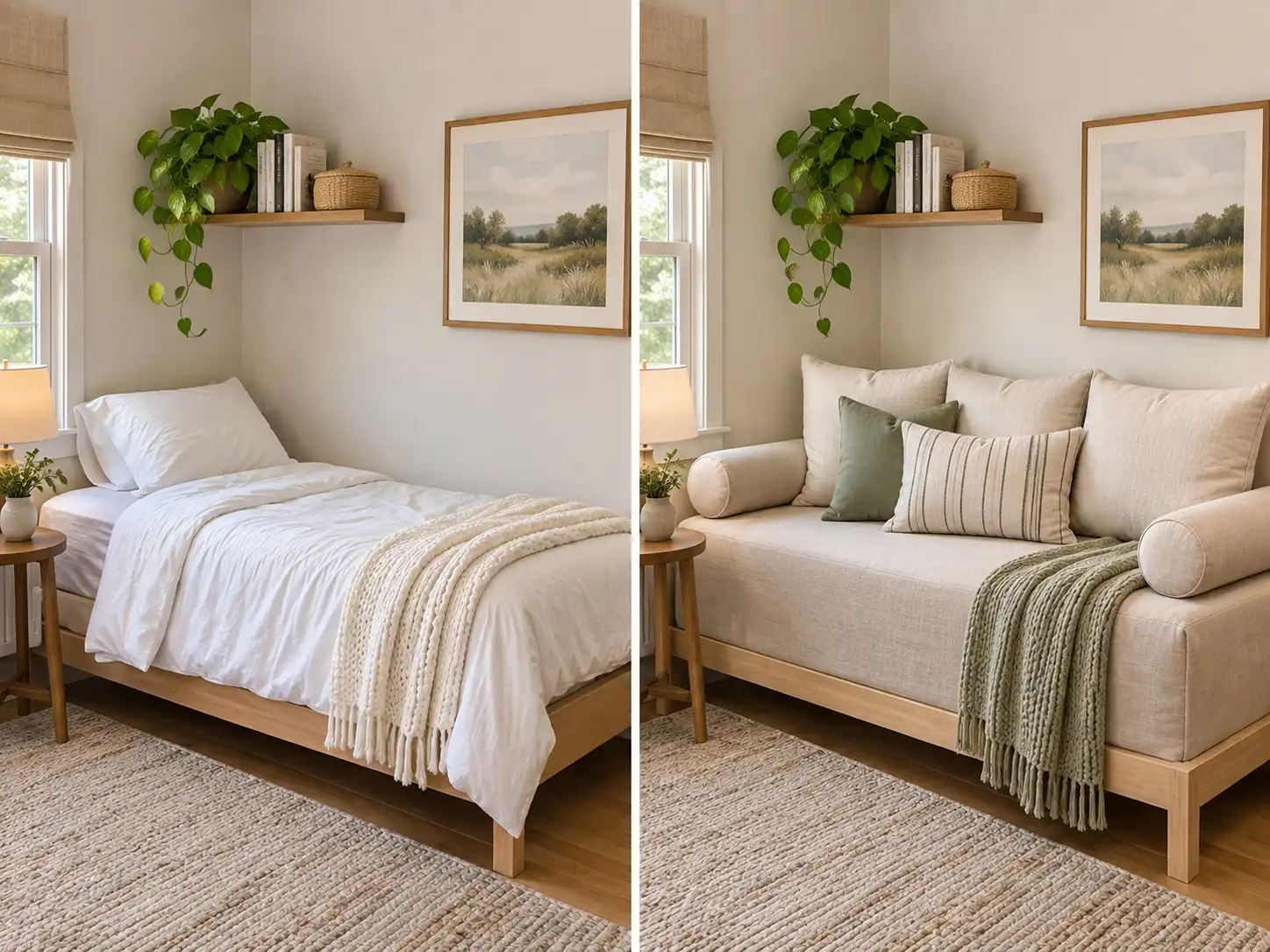
If you live in a studio apartment, guest room, small bedroom, or home office, learning how to make a bed look like a sofa can help one room do two jobs without buying new furniture. Start by pushing the bed lengthwise against a wall, covering the mattress with a fitted cover, and adding supportive back cushions and bolsters. The trick is to make the bed feel as much like a couch as it looks. Whether you have a twin, full, or queen bed, the right cushion arrangement and cover can create comfortable daytime seating without making it difficult to switch back to a bed at night.
Table of Contents
How to Make a Bed Look Like a Sofa in 7 Steps
The goal is not to hide every sign of a bed but to give it the shape and function of a sofa: a supportive backrest, defined armrests, a smooth mattress cover, and a living room setting. These seven steps show you how to turn a bed into a couch without buying a new frame or permanently changing your existing bed.
Choose the Right Bed Type for a Sofa Look
The easiest beds to style are those with a manageable sitting depth and a structured base. Use the table below to compare common bed types and the styling adjustments each one needs.
| Bed Type | Mattress Depth | Sofa-Look Difficulty | Best Styling Move |
|---|---|---|---|
| Twin / Single bed | 38″ | Easy | Use firm back pillows and a bolster at each end |
| Daybed | Varies | Easy | Choose a fitted cover and matching side pillows |
| Platform bed | Varies | Varies by size and frame | Keep bedding flat and minimal |
| Full / Double bed | 54″ | Medium | Add firm, deeper back cushions to reduce usable seat depth |
| Queen bed | 60″ | Hard | Use structured back cushions or create a corner lounge |
| King bed | 76″ | Hard | Create lounge-style seating rather than conventional upright seating |
Mattress depth refers to the front-to-back dimension when the long side of the mattress is placed against the wall. Dimensions are based on standard U.S. mattress sizes.

Step 1: Push the Bed Lengthwise Against a Wall
A bed looks more like a sofa when its long side sits against the wall. This creates a backrest, which is the main difference between “bed in a room” and “seating zone.” If the bed floats in the center, it will always read as a sleeping area. In a narrow guest room, placing the bed against the longest wall can make it feel more like a small lounge before you even add pillows.
Step 2: Use a Fitted Daybed Cover or Tucked Coverlet
Loose bedding is the fastest way to make the setup look unfinished. Use a fitted daybed cover, a tailored slipcover, or a coverlet tucked tightly under the mattress. Solid colors usually work better than busy bedding because they mimic sofa upholstery.
Before buying a fitted cover, measure the mattress length, width, and thickness to ensure a snug fit around the corners. If you prefer a no-sew option, use a lightweight quilt or coverlet you already own.
If you are researching how to style a daybed, this is the first rule: treat the mattress like one clean seat cushion, not like a layered bed.
Step 3: Add Large Pillows as a Sofa-Style Backrest
Place large, firm pillows along the wall side of the bed to create a supportive backrest and reduce the usable seat depth. For a twin bed, three large square pillows or one long back cushion are a good starting point. A full or queen bed may require deeper, more structured cushions.
To make a twin bed look like a sofa and feel comfortable to sit on, consider both cushion firmness and depth:
- Measure the usable seat depth: A 38-inch twin mattress with a 14-inch backrest leaves about 24 inches of seating space. Measure with the cushions in place to check the actual seat depth. For a full or queen bed, use deeper, firmer back cushions or embrace a lounge-style setup if upright seating feels awkward.
- Choose firm back cushions: Foam-filled or densely filled cushions hold their shape better than soft sleeping pillows.
- Check your sitting position: Sit against the cushions and make sure your feet can rest comfortably on the floor without sliding forward.
Use smaller decorative pillows to finish the look rather than relying on them for back support.

Step 4: Place Bolsters at Both Ends as Armrests
Bolsters help the bed look more like a finished seating piece. Put one at each end to create the feeling of sofa arms. If real bolsters feel expensive, use body pillows inside firm covers. They work well, especially for renters or students. When people search for a twin bed that looks like a sofa, this is often the missing piece: the ends need structure, not just more decorative pillows.
Step 5: Layer a Throw Blanket for Texture
A throw adds softness, but it should look intentional. Fold it across one side, drape it over the front edge, or place it near one bolster. Avoid spreading it flat like a blanket for sleeping. A textured knit throw softens the look without making the bed feel messy. This is also helpful when styling a daybed that feels too plain or too formal.

Step 6: Add a Coffee Table, Side Table, or Ottoman
Furniture around the bed tells the eye how to use the space. A coffee table, side table, ottoman, rug, or floor lamp makes the area feel like a living room. Leave enough walking space so it does not feel cramped. If the room is small, a small living room layout mindset helps you plan seating, movement, storage, and lighting as one system.
Step 7: Hide the Bed Frame With a Tailored Bed Skirt
If the frame, box spring, or under-bed storage is visible, the setup will still feel bedroom-like. A tailored bed skirt can hide the base and create a cleaner sofa silhouette. Choose a straight skirt, not a ruffled one, for a modern look. This step matters most with metal frames or older beds. The cleaner the base looks, the easier it is to use the bed as a couch without making the room feel temporary.
What Do You Need to Make a Bed Look Like a Sofa?
You don’t need to buy everything at once. Check what you already have, then spend your budget on the items that make the biggest difference in how the bed looks and feels.
- Start with the essentials: A mattress cover and supportive back cushions create the basic shape of a sofa. Prioritize these if your existing bedding or pillows aren’t suitable.
- Reuse what you already own: Body pillows can serve as armrests, while existing throws and quilts can help finish the look without additional purchases.
- Buy only what your setup needs: A bed skirt is useful if the frame is exposed, but unnecessary if the base already looks clean and finished.
Once the basic setup works, consider adding a small coffee table, side table, or storage ottoman. These are optional additions, especially if you already have limited floor space.

Why Does a Bed Still Look Like a Bed?
If your bed still looks or feels more like a bed than a couch, check the overall proportions before adding more pillows or accessories.
- The backrest looks uneven: Arrange firm cushions in a row of consistent height, then layer smaller decorative pillows in front.
- The mattress still feels too deep: Try a structured foam back cushion instead of stacking more soft pillows. For a full or queen bed, a lounge-style arrangement may feel more natural.
- The setup looks like separate pieces: Coordinate the mattress cover, back cushions, and bolsters so they look like parts of the same upholstered sofa.
- The bed sits too high: Check whether removable bed risers are making the seating position awkward. A bulky bed skirt alone won’t solve a seat-height problem.
- Switching back to a bed takes too long: Keep sleeping pillows and bedding in a nearby storage ottoman or basket, and use fewer, larger decorative cushions that are easy to remove.
Before buying anything else, step back and look at the setup from the doorway. A clean, consistent silhouette often makes a bigger difference than adding more decor.
Power Sofa Beds: An Alternative to Bed-to-Couch Conversions
If you already have a bed that works well for occasional daytime seating, adding a fitted cover and supportive cushions may be all you need. But if the mattress remains too deep for comfortable sitting or you’re constantly rearranging pillows and bedding, a purpose-built sofa bed may be easier to live with.
A power sofa bed lets you adjust the seating area for sitting or lounging at the touch of a button, with some models also offering a sleeping surface for overnight guests. How often you switch between sitting and sleeping is an important factor in deciding whether a sofa bed is a good idea for your space.
For everyday sitting and lounging, the POVISON Aurora Modern Power Sofa Bed offers flexibility that a fixed mattress cannot. Its seat depth adjusts from 27 to 45.5 inches, letting you choose a more upright sitting position or create extra room to stretch out. Rather than stacking and rearranging back pillows to change the usable seat space, you can adjust the seating itself to suit how you want to relax.

Aurora Modern Power Sofa Bed
A practical choice for rooms where you want comfortable, upright seating for conversation and extra room to stretch out when it’s time to relax.
If your priority is a polished living-room aesthetic, the POVISON Cygnus Leather Power Sofa Bed takes a different approach. Its top-grain leather gives the room the cohesive look of a purpose-built sofa, without relying on bed covers and decorative pillows to disguise a mattress. It also offers a sleeping function for overnight guests, making it a practical option when you want the room to look like a living space first.
Before choosing a sofa bed, measure its fully extended footprint and make sure there’s enough room to walk around it when open.
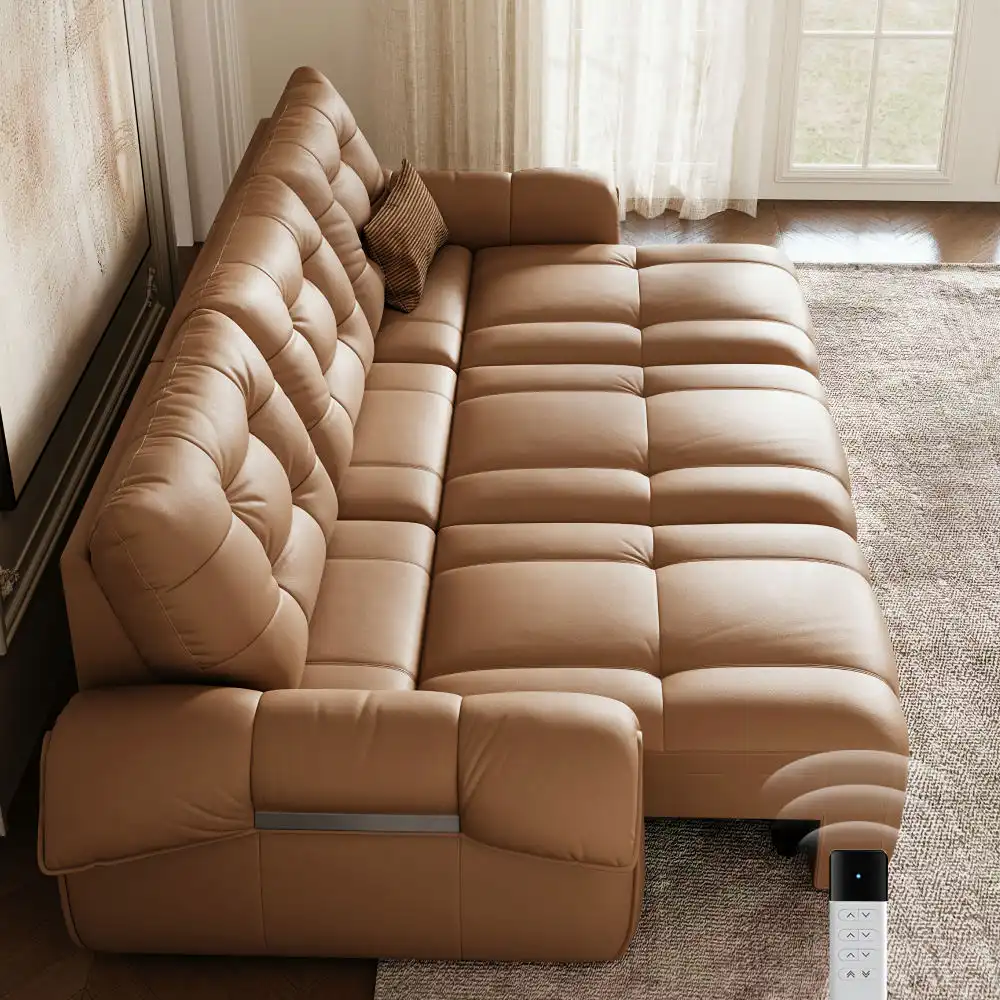
Cygnus Leather Power Sofa Bed
A great fit for rooms where you want a polished living-room look without having to dress up a bed with covers and decorative pillows.
Conclusion
Styling a bed like a sofa is a practical, budget-friendly option for occasional daytime seating, especially in a guest room or home office. If the space needs comfortable seating every day or regularly accommodates overnight guests, a purpose-built sofa bed may be easier to use. Let your daily routine, desired seating comfort, and available floor space guide the decision.
Q&A
Can a queen bed look like a sofa?
Yes. A standard queen mattress measures approximately 60 by 80 inches, making it suitable for a spacious lounge-style setup. Before moving it against a wall, measure the full bed frame rather than the mattress alone. Make sure you can still reach nearby doors, drawers, and closets. In a narrow room, a queen bed may work better as a deep lounge seat than a conventional upright couch.
How do I keep back pillows from sliding?
Use firm pillows, place the bed tightly against the wall, and choose covers with textured fabric. You can also add a non-slip rug pad strip behind the pillows. A wall-mounted cushion rail is another option if you want a more permanent setup.
Can I use a regular comforter?
Yes, but tuck it tightly and smooth out excess fabric. A bulky comforter can make the seat look lumpy, so a fitted daybed cover or lightweight coverlet usually looks cleaner during the day. If you need the comforter at night, fold it away and bring it back when you’re ready to sleep.
What is a bed that looks like a couch called?
There isn’t one universal name. A daybed is designed for sitting and sleeping, while a regular bed can be styled to resemble a couch with back pillows and a fitted cover. A sofa bed is built to function as a sofa and convert into a sleeping surface. The right choice depends on whether you want to restyle a bed you already own or need purpose-built seating for everyday use.


