 By Kate
Introduction
If you are asking How Big Should Rug Be Under Dining Table, start with this rule: plan for at least 24 inches of rug space beyond each side of the table, and choose 30 inches when you want more everyday comfort. This is the baseline, not the final answer for every room. The best size also depends on your table shape, seating count, chair depth, and room layout. Below, you’ll find a practical dining table rug size chart and clear sizing rules to help you choose with confidence.
Table of Contents
How Big Should a Rug Be Under a Dining Table?
Before choosing a pattern or color, get the size right. A dining rug should do more than sit under the table. It should make the dining area feel balanced, protect the floor, and give the full dining set enough visual space. The answer to How Big Should Rug Be Under Dining Table starts with three sizing levels, then becomes more specific by table shape and seating count in the sections below.
Minimum Clearance: Start With 24 Inches
The minimum rule is simple: add 24 inches to each side of your dining table. That means adding 48 inches to the table length and 48 inches to the table width. This gives the dining set enough rug coverage to feel connected instead of squeezed onto a small island. Treat this as the starting point, especially if your room is compact or you are choosing between standard rug sizes.
Everyday Comfort: Aim for 30 Inches
For most homes, 30 inches beyond each table edge feels more comfortable than the minimum. This gives the dining area more breathing room and works well with wider chairs, upholstered seats, or family meals where people move around often. It is often the safest everyday rug size for dining table setups because it balances comfort, proportion, and practicality without making the rug feel oversized.
Spacious Fit: Use 36 Inches When the Room Allows
A 36-inch border creates a generous, polished look, especially in open dining rooms or larger spaces. The rug reads as a true dining zone rather than a small mat under furniture. Still, bigger is not always better. Keep visible floor space between the rug edge and walls, cabinets, or doorways. If a 36-inch border crowds nearby furniture, choose the next smaller comfortable size.
Simple formula:
- Rug length = table length + 48–60 inches
- Rug width = table width + 48–60 inches
- For a more spacious look, add up to 72 inches total when the room allows.
What Size Rug Goes Under Each Dining Table Shape?
Table shape changes how a rug feels in the room. A long table needs length. A round table needs even clearance. An extendable table needs planning for its largest size, not just its everyday size. Use this section as your main dining table rug size chart before narrowing down color or material.
Rectangular table: use a rectangular rug
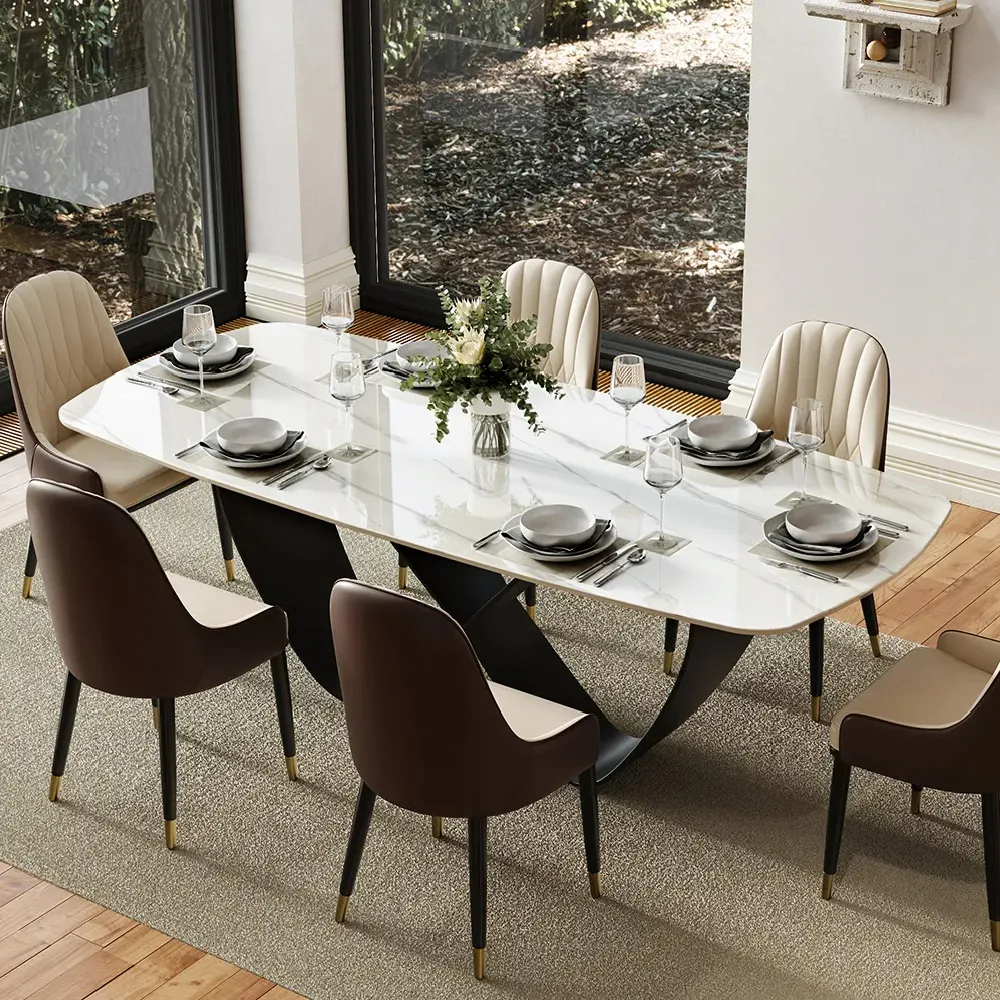
A rectangular dining table usually looks best on a rectangular rug because both shapes move in the same direction. The rug should be wide enough for side chairs and long enough for end chairs. A 36″ x 60″ table often starts with an 8′ x 10′ rug, while a longer 84″ table usually needs 9′ x 12′ or larger. If you are also comparing right dining table size for your space, keep rug clearance in the same floor plan.
The rectangular dining table works well for this sizing method because its longer rectangular surface makes rug choice straightforward: add 24–30 inches around the tabletop, then choose the next standard rug size that keeps every chair fully supported.
Round table: choose a round or square rug
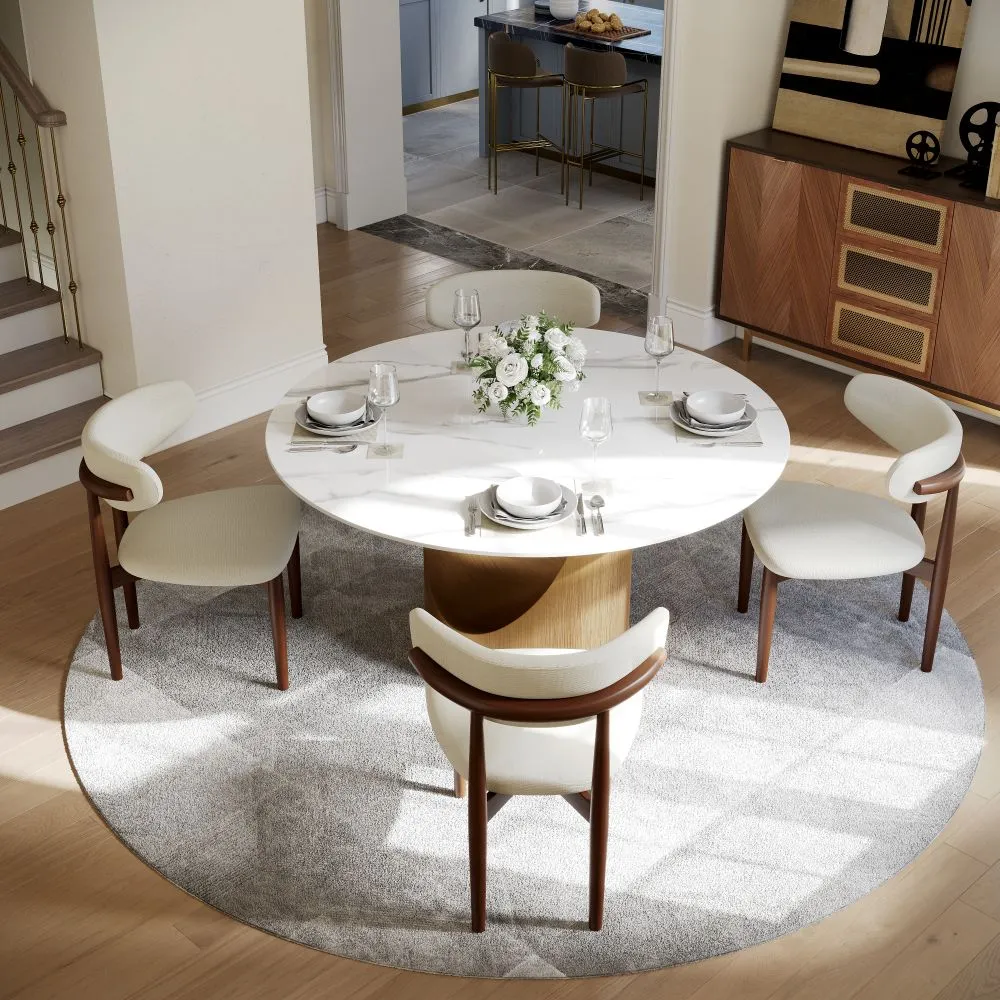
A round table pairs naturally with a round rug because the border stays even from every angle. A 48″ round table usually needs at least an 8′ round rug, while a 60″ round table often needs a 9′ or 10′ round rug. A square rug can also work if you want a cleaner modern frame. The goal is the same: chairs should stay on the rug when pulled out.
The round dining table suits compact dining corners because round edges soften traffic flow. With 47″, 51″, and 59″ size options listed on the product page, rug sizing can scale from an 8′ round to a 10′ round layout.
Square table: keep the rug shape balanced
A square table usually looks most grounded on a square rug. The equal sides help the dining area feel calm and centered. If the room feels too boxy, a round rug can soften the layout, especially in breakfast rooms or smaller apartments. The key is to measure from the table edge to the pulled-out chair legs, not just from table corner to rug corner.
Oval or extendable table: measure the largest size
For oval and extendable tables, always measure the table at its largest usable size. A rug that fits when the table is closed may become too small when leaves are added. This matters during holidays, dinner parties, or family gatherings, when chairs are used on all sides. In open layouts, the rug can also help define the dining zone without adding walls.
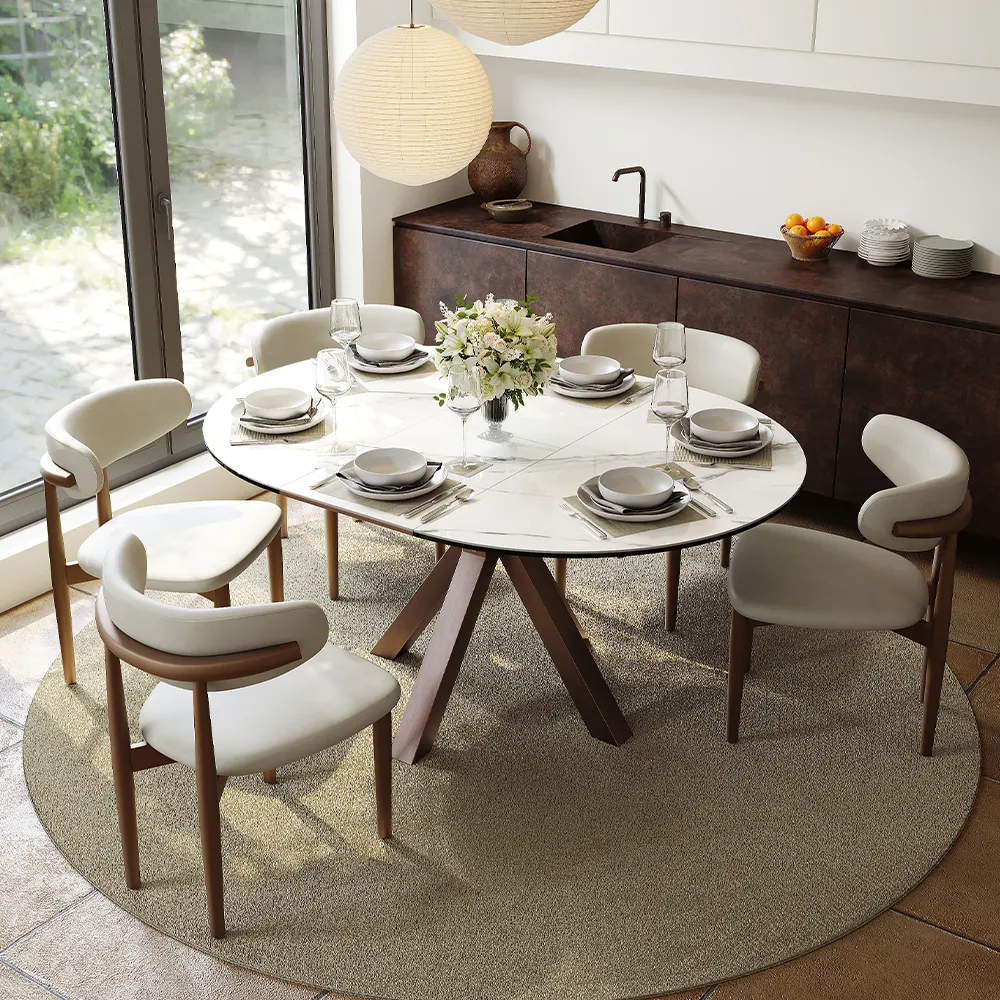
The round extendable dining table shifts from a compact round table to a 63″ oval shape. That makes it a useful reminder to size the rug for the extended footprint, not just the daily footprint.
| Table Shape | Table Size | Minimum Rug | Comfortable Rug |
|---|---|---|---|
| Round | 48″ dia. | 8′ round | 9′ round |
| Round | 60″ dia. | 9′ round | 10′ round |
| Rectangular | 36″ x 60″ | 8′ x 10′ | 9′ x 12′ |
| Rectangular | 40″ x 72″ | 8′ x 10′ | 9′ x 12′ |
| Rectangular | 42″ x 84″ | 9′ x 12′ | 10′ x 14′ |
| Extendable | 42″ x 96″+ | 10′ x 14′ | Larger/custom |
How Seating Count Helps Narrow Your Rug Size
Seating count is a useful shortcut when you are comparing standard rug sizes. More seats usually mean a larger table, more chair movement, and a wider dining footprint. Still, it should only be your first filter. After checking the chart, confirm the final rug size with your actual tabletop size and chair clearance.
Use Seating Count as a First Shopping Filter
A seating-based chart helps you quickly understand whether you should look at compact rugs, mid-size rugs, or large dining room rugs. It is especially helpful when you know your dining set seats 4, 6, or 8 people, but you have not measured every detail yet. Use the table below as a starting point, then adjust based on table shape, chair depth, and room layout.
| Seating Count | Common Table Size | Minimum Rug Size | More Comfortable Rug Size |
|---|---|---|---|
| 2–4 seats | 36″–48″ round or square / 36″ x 48″ rectangular | 6′ x 9′ or 8′ round | 8′ x 10′ or 9′ round |
| 4–6 seats | 36″ x 60″ / 40″ x 72″ rectangular | 8′ x 10′ | 9′ x 12′ |
| 6–8 seats | 40″ x 72″ / 42″ x 84″ rectangular | 9′ x 12′ | 10′ x 14′ |
| 8–10 seats | 42″ x 96″ or larger rectangular / extendable | 10′ x 14′ | Larger or custom size |
Confirm the Rug Size With Your Actual Dining Set
This chart narrows the search, but it should not replace measurement. Two six-seat tables can need different rugs if one uses slim chairs and the other uses wide upholstered chairs. The same is true for extendable tables. If your dining table expands, choose the rug based on the largest table size you actually use, not the compact daily setup.
Choose the Larger Option When the Room Allows
If your dining set falls between two rug sizes, the larger option usually works better. It gives the chairs more room, makes the dining area feel more complete, and prevents the rug from looking like it barely fits. The only reason to stay smaller is if the larger rug would crowd walls, block doors, or interfere with nearby storage furniture.
When Should You Size Up, Size Down, or Skip the Rug?
The best rug is not always the largest one you can buy. Room shape, traffic flow, doors, sideboards, and table extensions all matter. This is where many size charts stop too early. Use these decision rules to adjust your rug size after you know the standard recommendation.
Size Up for Deep Chairs, Hosting, and Open Layouts
Size up when your chairs are deep, heavy, or upholstered. A larger rug also works better if you host often, use an extendable table, or want the rug to define the dining zone in an open room. In a how to decorate an open floor plan layout, a larger rug can separate the dining area from the living space without blocking sightlines.
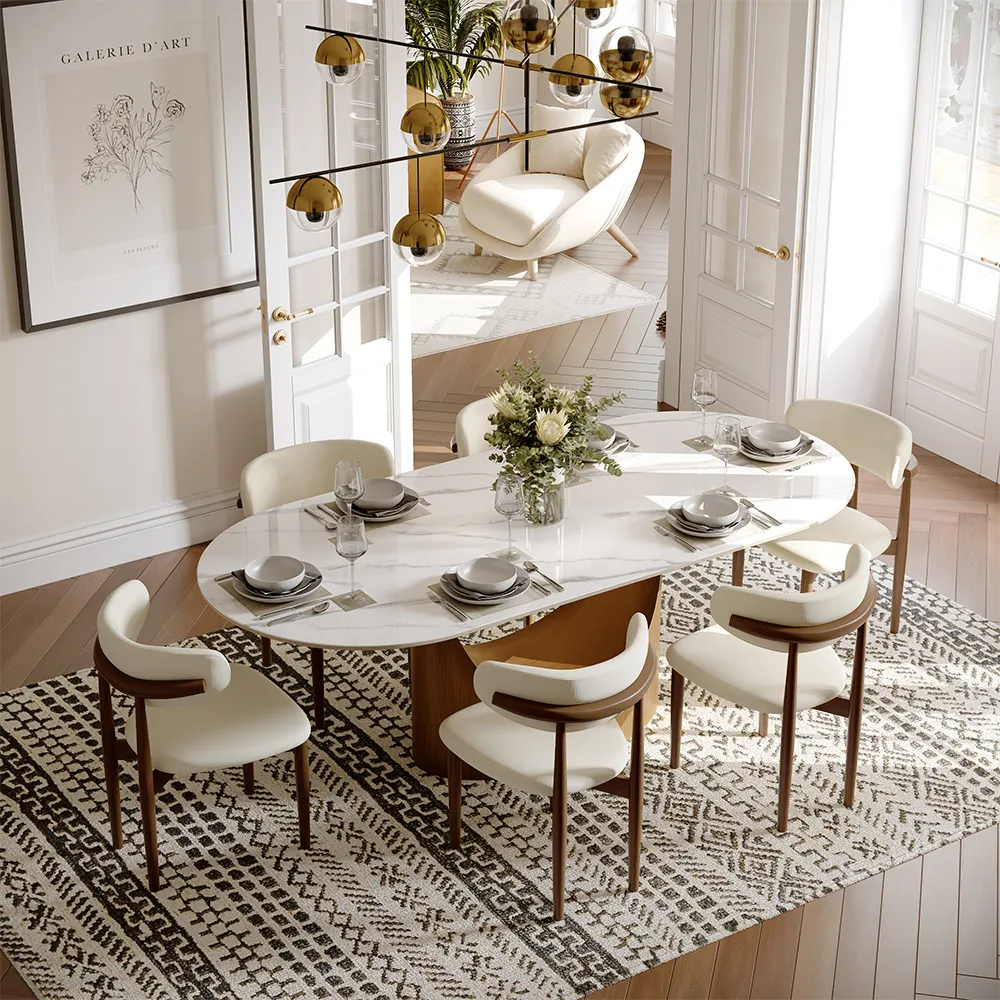
Size Down Only When the Room Has Hard Limits
Size down only when the room is tight and the chairs still stay mostly on the rug when used. This may happen in apartments, breakfast corners, or narrow dining rooms. Do not size down just to save money. A smaller rug often looks cheaper because it breaks the connection between the table, chairs, and floor area.
Skip the Rug When It Hurts Flow or Function
Skip the rug if it touches the wall, blocks a door, bunches near a cabinet, or traps chair legs at the edge. Also skip it if the room already feels crowded. A bare floor with a well-sized table often looks cleaner than a rug that is clearly too small. The small-space rule is simple: no rug is better than the wrong rug.
How Do You Measure Before Buying a Dining Rug?
Measurements prevent expensive mistakes. Do this before you order, especially if you are choosing between 8′ x 10′ and 9′ x 12′. The practical answer to How Big Should Rug Be Under Dining Table is not just a standard number. It is the rug size that fits your actual table, chairs, room edges, and daily movement.
Start With the Tabletop Size
Measure the tabletop length and width first. Write these numbers down before looking at standard rug sizes. Then use the basic formula: add 48–60 inches to both the table length and width. This gives you a starting rug size based on the table itself. If your table is extendable, measure it at its largest usable size, not its compact everyday size.
Measure the Chair Pull-Out Depth
Pull one chair out as if someone is sitting at the table. Measure from the table edge to the back chair legs. Repeat this on the long side and short side of the table. If your end chairs are larger than your side chairs, measure those separately. This step shows the real clearance your rug needs to cover, instead of relying only on standard table dimensions.
Test the Rug Outline Before You Buy
Before buying, tape the rug outline on the floor. Walk around it, open nearby doors, pull out every chair, and check the sideboard or buffet clearance. If your measured size falls between two standard rug sizes, choose the larger size unless it crowds the room. This final test makes the dining table rug size chart practical, not theoretical.
Use This Final Checklist to Confirm the Fit
- Measure the tabletop.
- Measure the table at full extension if it expands.
- Pull out one chair naturally.
- Measure from the table edge to the back chair legs.
- Repeat for end chairs if they are larger.
- Add the needed clearance to all four sides.
- Tape the rug outline on the floor.
- Check doors, walkways, walls, and storage furniture.
- Pick the next size up if the room allows.
FAQ
Should I choose the dining rug before or after buying chairs?
Choose the rug after you know your chair size, or at least after you know the chair style. Slim wooden chairs need less pull-out space than deep upholstered chairs or armchairs. If you plan to replace chairs later, measure with the larger option in mind.
What rug pile height works best under a dining table?
A low-pile or flatweave rug works best under a dining table because chairs move more smoothly across the surface. Thick, shaggy rugs can trap crumbs, catch chair legs, and feel uneven under seating. A tighter weave also makes everyday cleaning easier.
Do I need a rug pad under a dining room rug?
Yes, a rug pad is helpful in most dining rooms. It keeps the rug from shifting when chairs move and adds a little floor protection. Choose a thin, non-slip pad so the rug stays stable without making chair movement feel bumpy.
Can I use a patterned rug under a dining table?
Yes, a patterned rug can work well under a dining table, especially in busy family spaces. Subtle patterns help hide small crumbs and daily wear. Just avoid designs that are so bold they compete with the table, chairs, or nearby decor.
Is a dining rug a good idea for homes with kids or pets?
It can be, as long as the rug is easy to clean and stable under chairs. Look for low-pile, washable, or stain-resistant options. Darker tones, mixed patterns, and medium textures usually hide small messes better than very pale solid rugs.
Conclusion
The key to choosing a dining rug is not whether it looks “about right” when chairs are pushed in. It is whether the rug still works when people sit, move, and stand up. Start with the 24-inch rule, use 30 inches for better comfort, and size up only when the room allows. Once you match the rug to your table shape, seating count, and chair depth, choosing the right size becomes much easier.


