 By Hana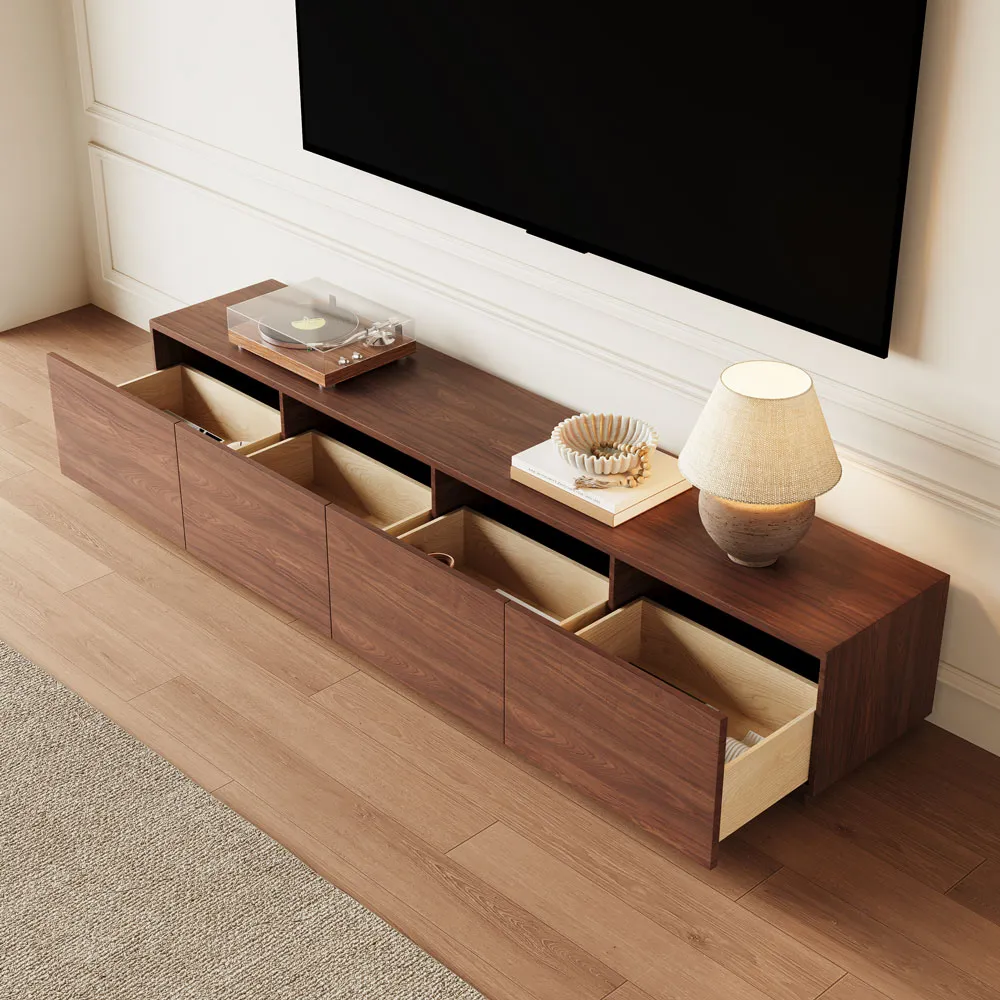
Minimalist storage vs bulky traditional cabinets is no longer just a style debate; it’s a lifestyle decision. Picture this: one living room with low, wall-mounted cabinets and clear surfaces that make the ceiling feel taller; another packed with oversized traditional cabinets that swallow light and floor space, even though both rooms are the same size. In 2026, with smaller homes, hybrid work, and a growing desire for effortless living, “good storage” means calm, flexible, and easy to live with. This guide walks you through aesthetics, capacity, sustainability, budget, and a simple framework so you can decide which approach truly fits your home over the next 5–10 years.
What Is “Minimalist Storage” vs “Bulky Traditional Cabinets”?
Defining Minimalist Storage
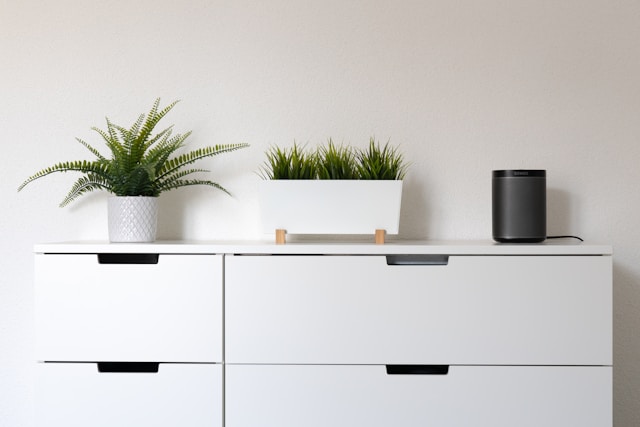
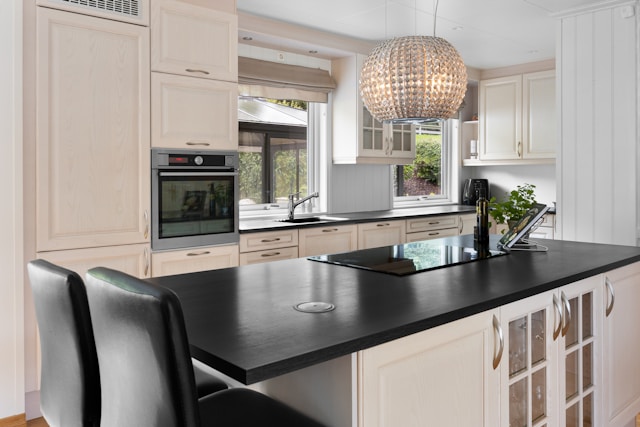
Minimalist storage focuses on low visual weight: clean lines, flush fronts, slim profiles, and often handleless or minimalist cabinet pulls that almost disappear. Minimalist kitchen cabinet systems often use hidden, soft-close hardware and integrated channels instead of knobs, so the eye reads long, uninterrupted lines. This approach supports a “Ready to Live In” lifestyle where pieces arrive mostly or fully assembled, slide into place, and instantly make a small space feel curated instead of cluttered.
What Counts as Bulky Traditional Cabinets?
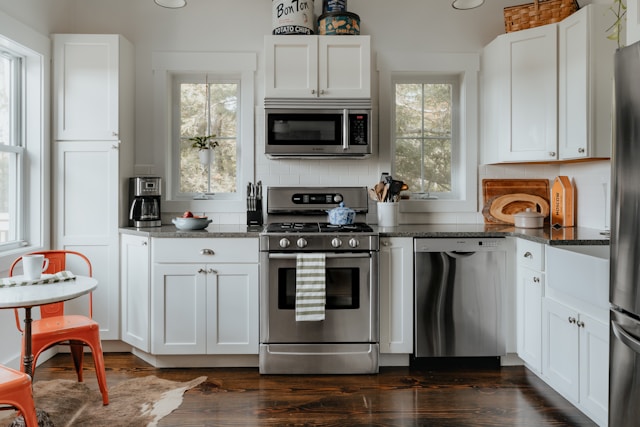
Bulky traditional cabinets are all about mass: deep carcasses, thick face frames, heavy crown moldings, raised panels, and chunky hardware. Think traditional kitchen cabinets, oversized hutches, armoires, and traditional bathroom cabinets that run from floor to ceiling. In many homes you’ll still see traditional white kitchen cabinets with ornate doors and prominent handles. Even within shaker cabinets vs traditional vs modern, traditional style cabinets usually have more profiling, thicker rails, and more decorative detail, which adds character—but also visual heaviness.
Quick Pros & Cons Snapshot
Here’s a fast comparison of minimalist storage vs bulky traditional cabinets across key factors:
| Aspect | Minimalist storage | Bulky traditional cabinets |
| Visual impact | Light, airy, recedes into walls | Dominant, becomes the main visual feature |
| Capacity perception | Looks smaller, relies on smart internal layout | Looks huge and obviously “stores a lot” |
| Flexibility | Easy to reconfigure, modular, renter-friendly | Often built-in or very heavy; hard to move or repurpose |
| Cost range | Wide range; design and hardware drive price | More material and carpentry can push costs higher |
| Installation | Often pre-assembled or simple wall mounting | Custom install, leveling, and complex assembly more common |
| Resale appeal | Aligns with modern, minimalist buyers | Great in period homes; can feel dated in compact, modern spaces |
Visual & Emotional Impact on Your Space
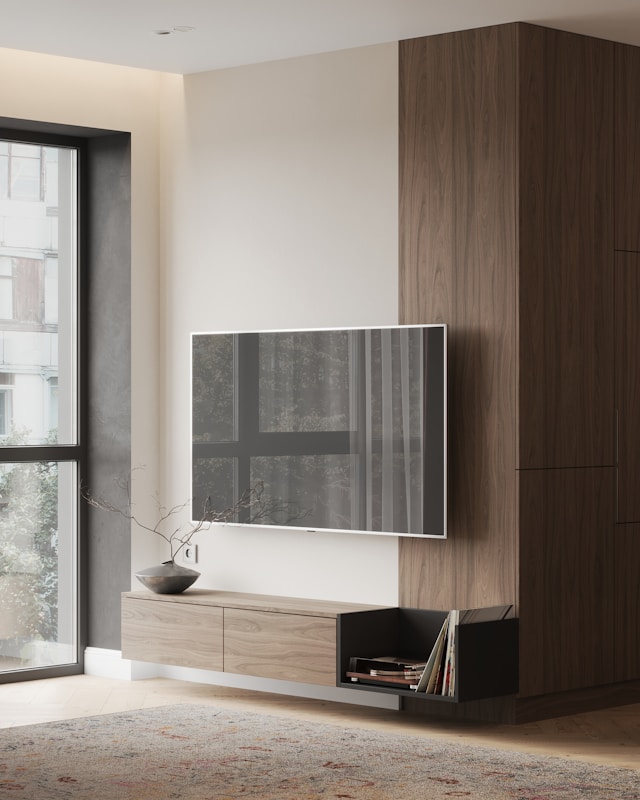
Visual weight is how “heavy” a piece feels to your eyes, regardless of its actual size. Tall, deep traditional cabinets stack a lot of weight at eye level, which can make even a decent-sized room feel shorter and narrower. That matters because homes themselves are trending smaller: data from the National Association of Realtors and the U.S. Census Bureau show the median U.S. home size has shrunk from nearly 2,000 square feet in 2019 to around 1,791 square feet in 2024 (Investopedia, 2025). In compact homes like this, a minimalist cabinet with shallow depth, open toe space, and lighter colors can visually stretch walls and bounce light, making ceilings feel higher without changing a single square foot.
At the same time, people increasingly crave calm, simple spaces. A 2023 Adobe survey reported that 63% of consumers prefer brands with minimalist design elements because they feel clearer and less overwhelmed.(LinkedIn) That same psychology applies at home: a minimalist kitchen cabinet run, or a low media console with clean fronts, reads as breathable and modern, while a wall of traditional style cabinets reads as heavy and “busy,” even if everything is perfectly tidy.
Bulky cabinets plus cluttered surfaces create constant visual noise—your brain is always scanning for shapes, handles, and stacks of stuff. Minimalist storage aims for the opposite: fewer lines, fewer protruding handles, fewer open shelves. One young family told me that after they swapped a massive china cabinet for a slim buffet, their dining room suddenly felt “like a place to exhale, not a storage closet with chairs.” You can test your own space quickly: do you avoid looking at certain corners? Do cabinet doors bump into each other? Do you hesitate to host because the room feels crowded? If your answers lean yes, lighter, more integrated storage might give you that subtle “reset” feeling every time you walk through the door.
Storage Capacity, Organization & Real-Life Function
Does Minimalist Storage Really Hold Less?
Not always. Capacity depends on internal layout more than door style. A minimalist cabinet with full-extension drawers, vertical dividers, and adjustable shelves can beat a deep but poorly organized traditional cabinet that hides things in the back. The growing global home organization products market—valued around $13.13 billion in 2024 and projected to reach $17.67 billion by 2032—shows how seriously people now take smart storage and decluttering (Verified Market Research, 2024). That trend favors slim, efficient solutions: kitchen cabinet minimalist systems with pull-outs, dividers, and organizers that use every inch.
Here are a few high-capacity minimalist ideas that quietly hide a lot:
- Wall-mounted media units with deep drawers instead of open cubbies
- Low sideboards that double as banquette seating with storage under the seat
- Under-sofa drawers on smooth casters for toys, linens, or seasonal decor
- Tall but flat wardrobes along a hallway that act like a “storage wall”
- Minimalist cabinet towers in bathrooms that use vertical space instead of floor area
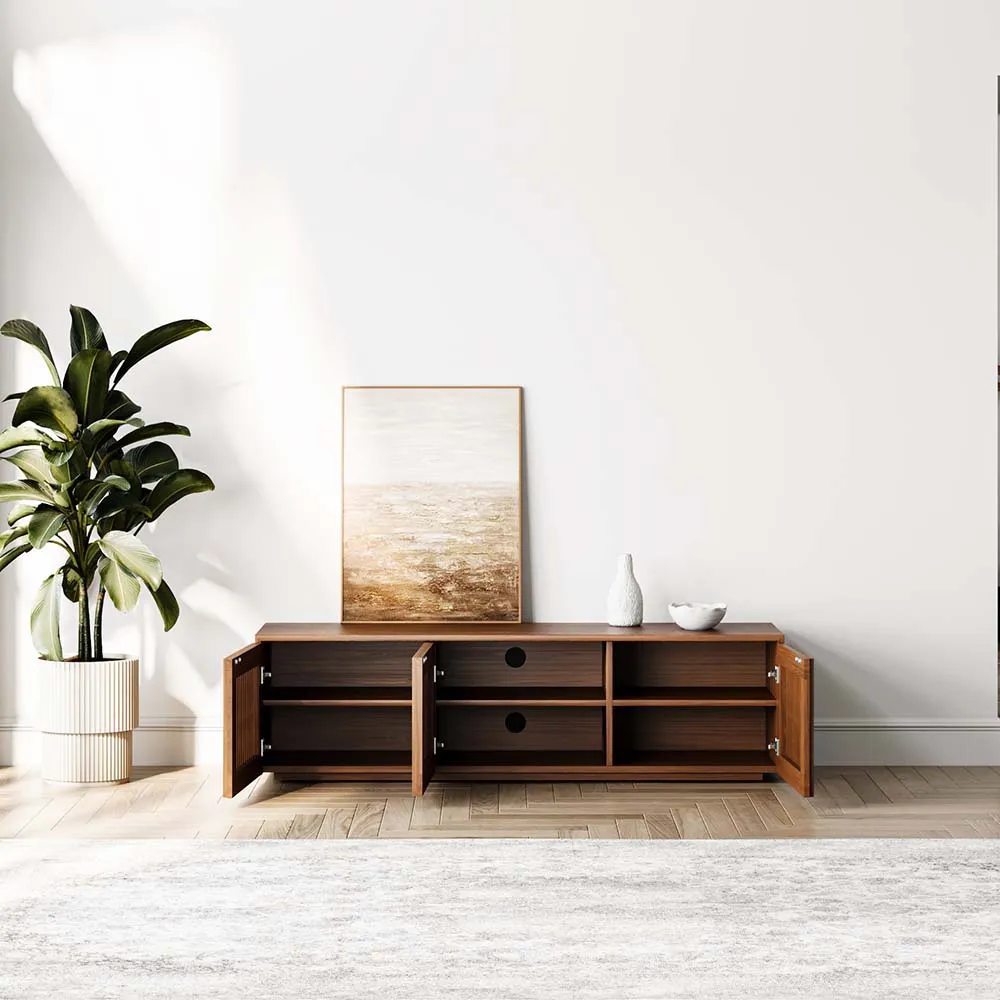
In real life, that might look like a low, high-capacity media unit rather than a bulky wall of cabinets. For example, Povison’s Aeolus 59″ Modern Wood TV Stand uses a minimalist slatted front to keep the look light, while the closed cabinets and internal shelving quietly hide consoles, routers, and clutter. It arrives fully assembled, is CARB P2 and FSC certified, and its long, low profile works perfectly in smaller living rooms that need both storage and breathing space.
Everyday Function – Access, Flow & Safety
Doors from conventional cabinet kitchen layouts may clash with appliances, entry doors, or one another in small apartments. Shallower depths, soft-close hinges, and even sliding doors are frequently used in minimalist storage to safeguard traffic flow. Wall-mounted units make cleaning tiny spaces easier and free up floor space for robot vacuums, which are particularly useful for children and pets. Tall freestanding cabinets in particular can generate “black-hole” zones that are impossible to access and provide a tip-risk if they are not securely fastened. Choosing lower, rounder pieces or simple cabinet hardware with no sharp projections can be a subtle but significant safety improvement if you have small children.
Materials, Sustainability & Longevity
In 2026, materials, sustainability, and longevity all sit at the same table. Minimalist storage often uses engineered wood panels with clean veneers, low-VOC finishes, and lighter metal bases, which makes pieces easier to move yet surprisingly durable. Traditional cabinets typically rely on thicker solid wood or heavy composites with face frames and raised-panel doors that can be sanded, repainted, or refaced for decades. As eco-friendly furniture grows into a major category—valued at about US$40.6 billion in 2022 and projected to reach US$88 billion by 2031 (Transparency Market Research, 2022)—both minimalist and traditional makers are under pressure to prove that what looks beautiful is also built responsibly.
At the same time, buyers are far more conscious of what they bring home. More than 35% of consumers say environmental sustainability is important to their purchase decisions (KPMG Consumer Pulse, 2023), which directly affects how people compare cabinets and storage. In practical terms, that means looking for low-VOC or water-based finishes, FSC or equivalent certifications on wood, and hardware that can be repaired instead of thrown away. Minimalist storage has a quiet advantage here: modular units are easier to move or resell instead of sending them to landfill during each life transition. But well-built traditional cabinets can also be a sustainable choice if you plan to keep, refinish, and reuse them across multiple room updates instead of replacing them every few years.
Budget and Installation
Upfront Costs – What You Actually Pay For
Reduced storage doesn’t always translate into lower costs. Typically, you pay for hardware quality, design, and occasionally pre-assembly. Basic traditional style cabinets with common hardware may be less expensive than a minimalist kitchen cabinet with custom minimalist cabinet knobs and high-end hinges. Conversely, bulky cabinets just require additional materials: thicker doors, deeper compartments, intricate moldings, and, if they are built-ins, custom woodwork. The cost of two or three modular minimalist units that collectively provide comparable storage but greater layout flexibility may be equal to that of a single large china cabinet.
Time & Effort: Assembly vs “Ready to Live In”
The hidden cost of storage is your time. A wall of flat-pack traditional cabinets can eat an entire weekend (or more) between unboxing, deciphering diagrams, drilling, and fixing mistakes. Fully assembled or low-assembly minimalist storage—like a sleek sideboard that only needs legs attached—fits the 2026 trend toward effortless living and “Ready to Live In” homes where you spend more time styling shelves than tightening bolts. For busy households, it’s often worth paying slightly more for pieces that arrive aligned, level, and ready to store, which is why many people gravitate toward “ready to live in” ranges from brands like Povison, where TV stands, sideboards, and storage cabinets are designed to arrive mostly pre-assembled so your real work is simply unboxing, attaching a few legs, and putting everything neatly away.
Which One Is Right for You? A 2026 Decision Framework
Start With Your Life, Not Just Your Floor Plan
Before googling shaker cabinets vs traditional or comparing European cabinets vs traditional framed options, start with how you actually live. First, look at your household: how many people share the space today, and is that likely to change in the next five years? Next, think about how your rooms work—do you spend more time working from home, cooking, or hosting friends and family? Finally, look at your personality with stuff: are you a “curator” who’s happy to edit and display a few favorites, or a “collector” with books, hobby gear, and heirlooms you want easy access to? Clear answers to these three areas will naturally point you toward lean, minimalist cabinet systems or a more storage-maximal approach with a few substantial traditional pieces.
Small Space, Growing Family, or Entertaining Hub?
City apartments and condos typically benefit from wall-mounted minimalist storage, slim buffets instead of giant hutches, and media units that float above the floor. Suburban family homes often land on a mix: minimalist everyday storage in living rooms and kids’ spaces, plus one or two traditional cabinets kitchen-side for heirloom dishware. Multi-use dining rooms might pair a minimalist sideboard with a round table and integrated storage, keeping visual weight low but function high. The sweet spot is often a modern envelope—minimalist kitchen cabinet runs and hardware—anchored by one or two character pieces.
Conclusion – Design a Home That Feels Light but Lives Large
Minimalist storage vs bulky traditional cabinets isn’t about right or wrong; it’s about which approach matches your space, your stuff, and your next decade of life. In a world of hybrid work, smaller homes, and rising sustainability expectations, many people start with a minimalist backbone—clean, flexible storage that keeps rooms feeling open—then layer in a few traditional cabinets where history or sheer capacity truly matters. Treat yourself as the curator of your home rather than its full-time installer: walk through one room this week, notice which piece feels heaviest, and imagine how a lighter, more streamlined solution might change the way you breathe when you open the door.
FAQs – Minimalist Storage vs Bulky Traditional Cabinets
Do minimalist storage units actually hold enough for a family?
Yes—if you plan the interior. Use full-extension drawers, vertical dividers for baking sheets and lids, and baskets inside minimalist cabinet runs. Many families find that once they edit duplicates and rarely used gadgets, a well-planned minimalist kitchen cabinet setup holds plenty without feeling stuffed.
Will minimalist pieces go out of style faster than traditional cabinets?
Minimalist storage ages well when you choose simple shapes, warm neutrals, and quality hardware rather than ultra-trendy details. Think flat fronts, soft white or wood tones, and discreet minimalist cabinet pulls. You can refresh the look later with new hardware or wall color, while the core forms stay timeless.
What if I rent—should I invest in either style?
If you rent, bias toward modular, free-standing minimalist storage that’s easy to move and fits multiple floor plans: slim sideboards, low TV units, and tall but shallow cabinets. Avoid custom built-ins you can’t take with you. Simple, modern pieces also help future-proof your style if you change cities or roommates.
How do I safely mix both styles in one home?
Start with a clear baseline: maybe minimalist kitchen cabinet runs and wall colors, then layer in one or two traditional cabinets as accents. Keep finishes related—similar wood tones or metal hardware—and balance visual weight so one wall doesn’t feel overloaded. The goal is curated contrast, not a tug-of-war between eras.
Is there a difference between shaker cabinets vs traditional vs modern minimalist?
Shaker cabinets sit in the middle: cleaner than ornate traditional raised-panel doors but more detailed than ultra-flat minimalist fronts. In a 2026 home, you might use shaker in a more classic kitchen, minimalist cabinet doors in the living room, and reserve heavily profiled traditional style cabinets for one or two statement pieces, rather than every wall.


