 By Charles
Look, I’m just going to say it: my living room has been in “temporary Christmas mode” since 2023.
You know the drill. Shove the coffee table against the wall to make room for the tree. Tell yourself you’ll “fix it properly after New Year’s.” Then suddenly it’s March and you’re still doing that awkward sideways shuffle to get to the couch.
This year, I’m done with that. I want a space where my kids can actually play without launching ornaments like tiny holiday missiles. Where guests don’t have to perch on the arm of the sofa because there’s nowhere else to sit. Where I can take one decent family photo without having to Photoshop out the furniture chaos in the background.
But here’s the thing—I’m not tearing my entire living room apart. I have exactly one Saturday afternoon to figure this out, probably while simultaneously making hot chocolate and untangling lights.
So I did what any Smart & Busy Homeowner does: I found the shortcuts. A few strategic moves that make the room feel intentional without requiring a design degree or sacrificing my weekend.
Is this layout strategy for you?
You’ll love it if:
- You’re hosting people this year and need the room to actually work (not just look pretty in theory)
- You have kids, pets, or anyone who moves faster than a gentle stroll
- You’d rather spend 2 hours rearranging than 2 months shopping for new furniture
You might want to skip this if:
- Your living room is basically a museum where no one sits (respect, but not my vibe)
- You’ve made peace with the toy explosion aesthetic
- Your space is so small or built-in-heavy that “rearranging” means moving a lamp 3 inches
Consider this your sanity-saving blueprint. We’re tweaking the room, not overhauling your life.
Why Furniture Layout Matters for Holiday Hosting
Your furniture layout does more than just “look nice.” Over the holidays, it decides whether your living room feels like a warm hug or a crowded waiting room.
When you dial in your layout, you:
- Control the chaos – There’s a place to sit, a place to put plates and drinks, and a spot for the tree that doesn’t turn into a tripping hazard.
- Make hosting easier – You’re not constantly passing through the TV zone or blocking the kitchen while everyone wanders aimlessly.
- Protect your stuff – Fewer tight squeezes mean fewer bumped lamps, spilled drinks, and shattered ornaments.
Think of your living room like an airport: if the gates, walkways, and seating are badly placed, everyone feels it. Same with your christmas living room arrangement, when you plan it, your guests relax and you actually enjoy your own party.
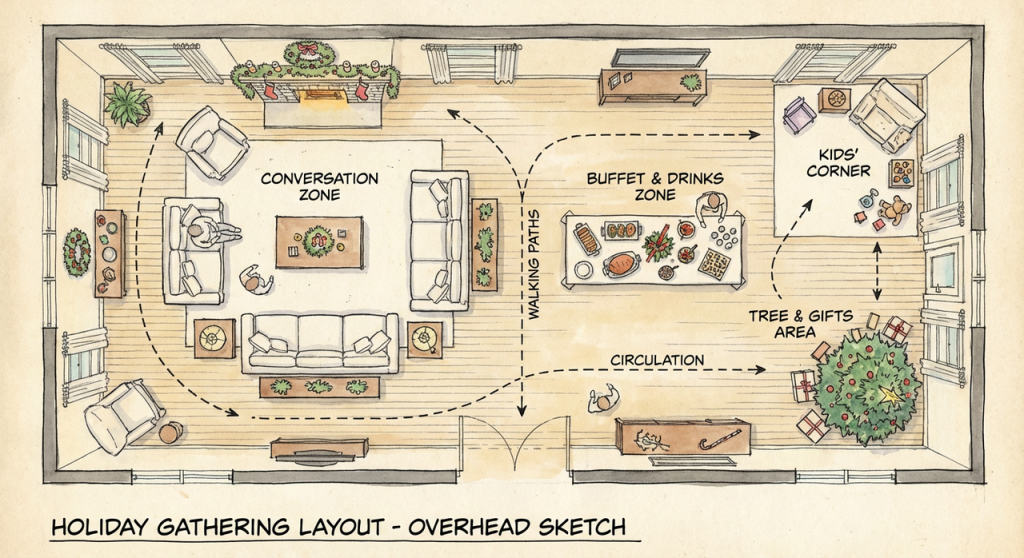
Creating Conversation Zones
Instead of lining everything up against the walls, think in small groups. Your goal is to create a few mini “hangout pockets” so people naturally gather and talk.
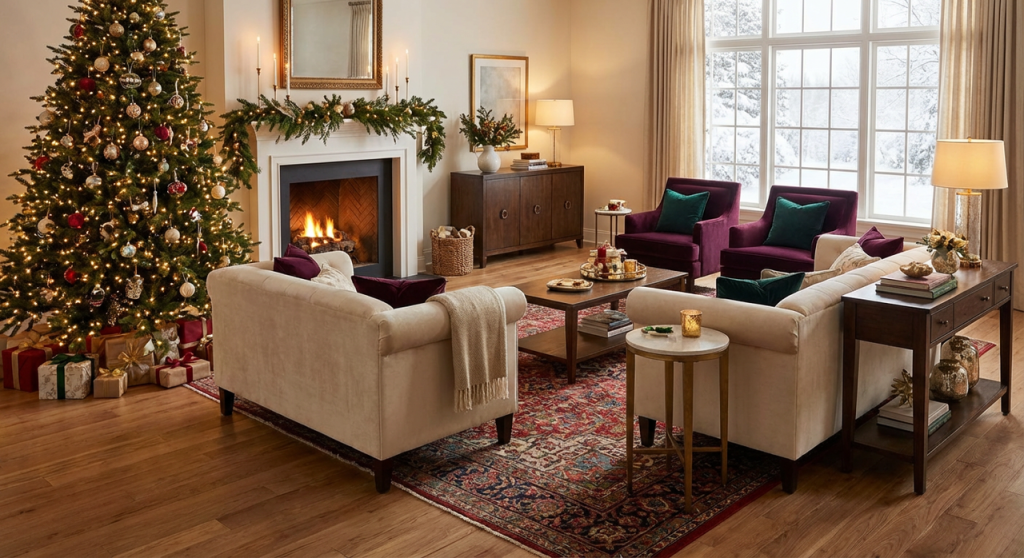
1. Build a main seating circle
Start with your biggest pieces:
- Sofa facing the TV or fireplace.
- A couple of armchairs or accent chairs angled in.
- A coffee table or two sturdy ottomans in the middle.
You want people to be able to sit and talk without shouting across the room. Aim for about 3–4 feet between seats, close enough to chat, not so close you’re knee-to-knee.
If your coffee table is a magnet for Lego builds or dog toys, consider sliding in a side table next to the sofa for drinks and plates (and yes, this is where a solid, no-assembly piece really shines). If you’re curious how that plays with kid-proof furniture, you can always check out other kid-proof tables for ideas.
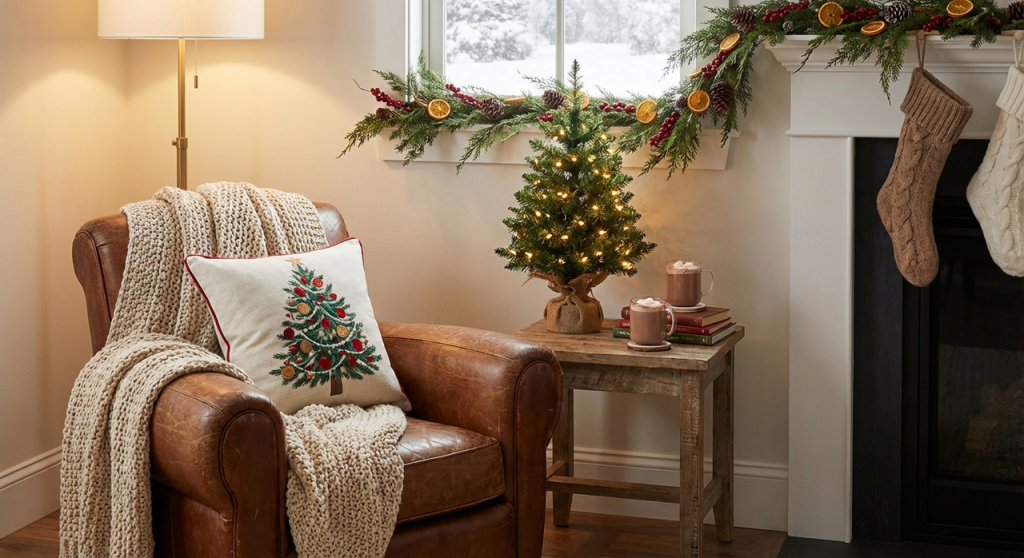
2. Add a secondary “quiet” spot
If space allows, create a smaller zone:
- A comfy chair + floor lamp + small table.
- Or two chairs facing each other near a window.
This becomes the chat corner for your introvert friend, the phone call zone for your sibling, or the late-night cocoa spot once the kids are in bed.
Making Room for the Christmas Tree
The tree is the star of the show, but it shouldn’t hijack your whole living room.
1. Choose the right spot
Aim for a corner or area that:
- Is visible from most seats.
- Doesn’t block the main walkway to the kitchen or hallway.
- Isn’t right in front of the TV (unless you like watching movies through branches).
If you’ve got pets or little kids, try placing the tree where you can see it from the sofa, that way you can intercept curious hands or paws before the ornament avalanche.
2. Resize if needed (it’s okay to go smaller)
If you’re constantly stepping sideways around your tree, it’s too big for the room. A slightly smaller tree with a well-planned christmas living room arrangement will always feel better than a giant one you resent every time you walk by.
Slim trees, pencil trees, or even a tabletop tree on a sturdy console can still look magical, especially if you pair it with simple, solid wood furniture that doesn’t wobble every time someone walks past. For inspiration on that front, you might like this guide to pet-friendly solid wood furniture ideas.
3. Protect the space around it
Give yourself a tree buffer zone:
- At least 18–24 inches from the nearest seat.
- No delicate glass coffee tables right next to it.
- A sturdy tree skirt or mat to catch needles and drips.
Traffic Flow Tips for Guests
Nothing kills a cozy vibe faster than a traffic jam between the sofa and the snacks.
You want clear, obvious paths for how people will move through the room:
1. Map the main routes
Think about how guests will:
- Enter the room.
- Get to the seating area.
- Reach the snacks/drinks.
- Head to the bathroom or kitchen.
Try to keep 3 feet of walkway in those spots. Slide chairs in a bit, angle a bench, or push your console closer to the wall if you need more breathing room.
2. Keep kids and pets in mind
If you know there will be running children or zooming dogs:
- Avoid narrow paths between tree + TV stand.
- Skip tall, tippy floor lamps in the middle of a route.
- Use a sturdy, low-profile media console to corral cables (you can steal some ideas from this breakdown of time-saving TV stands with cable management).
3. Create “landing zones”
Give guests obvious drop spots:
- A bench or ottoman near the entry for bags.
- A sideboard or console for desserts and drinks.
- A basket for blankets or kids’ toys.
These little staging areas keep the main seating area from turning into a clutter pile.
Quick Rearrangement Checklist
You don’t need a design degree, you just need a 20-minute checklist and maybe one strong cup of coffee.
Here’s your fast-track plan:
- Clear the extras
Move out random stools, extra chairs, or side tables you don’t really need.
- Place the tree first
Pick the corner or wall where it makes the most sense for your space and safety.
- Build your main seating group
Sofa + chairs + coffee/side tables in a loose circle or “U” shape so people can see each other.
- Open up the walkways
Check you’ve got about 3 feet of space on main paths. Adjust chairs or angle pieces if needed.
- Add a secondary zone
A reading chair in a corner, a small kids’ play rug, or a game table if you’ve got the space.
- Tidy cables and clutter
Use a TV stand or console with decent storage and cable management so your pretty lights aren’t fighting with messy wires.
- Do the “full house” test
Walk the room like you’re carrying a plate of food and a drink. If you’re dodging furniture every few steps, tweak again.
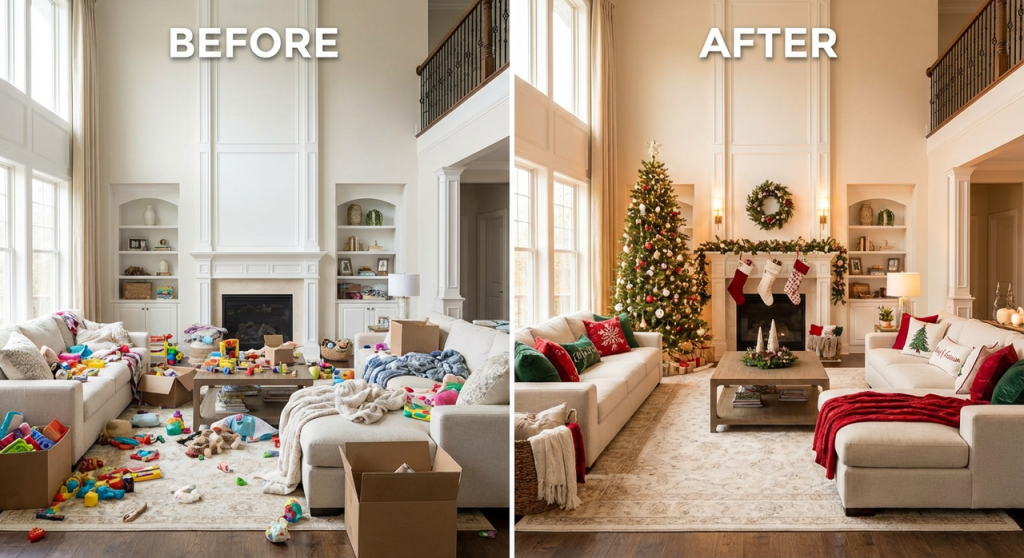
If you treat your christmas living room arrangement as a seasonal reset instead of a huge project, you’ll get a space that works harder for you all winter, not just on December 25th.
And if you’re looking at your space thinking, “New Year, New Living Room,” but dread the thought of assembly day—don’t worry.
You can skip the hardware store and check out Povison’s Fully Assembled Collection. Start 2026 with a cohesive look that comes straight out of the box ready to enjoy.
About the Author
Charles is a self-proclaimed Recovering Flat-Pack Victim and busy homeowner who believes life is too short for hex keys. He tests real-world, pet- and kid-friendly setups so you can skip the frustration and get straight to “unbox & enjoy.” His motto: Smart Choices for Real Living, especially during the holidays, when your living room has to work overtime.
Frequently Asked Questions
How do I start planning a Christmas living room arrangement without feeling overwhelmed?
Begin by clearing out extra or unused pieces like random stools or small tables. Place the Christmas tree first, then build your main seating group around it in a loose circle or U-shape. Finally, open up walkways and add one smaller secondary zone if you have space.
What is the best way to arrange furniture around a Christmas tree for safe traffic flow?
Keep at least 18–24 inches between the tree and the nearest seat, and about 3 feet of space on main walkways to the kitchen, bathroom, and entry. Avoid narrow paths between the tree and TV stand, and skip tippy floor lamps in the middle of walking routes.
How can I create conversation zones in my Christmas living room arrangement?
Form a main seating circle using your sofa, a couple of armchairs, and a coffee table or ottomans, leaving about 3–4 feet between seats. Then, if space allows, add a quiet corner with a comfy chair, small table, and lamp for reading, phone calls, or one-on-one chats.
What are some ideas for arranging a small living room for Christmas?
In a small living room, choose a slimmer or pencil tree and tuck it into a visible corner that doesn’t block doors. Float the sofa a bit off the wall, use nesting or ottoman tables instead of a bulky coffee table, and prioritize one strong seating zone over multiple areas.
How can I decorate for Christmas if I can’t move my living room furniture?
If furniture is fixed, work vertically and in existing surfaces. Add a slim or tabletop tree on a console, layer garlands and lights on shelves or mantels, and use throw pillows and blankets for a festive feel. Keep pathways clear by limiting floor decor to corners and underused spots.


