 By Charles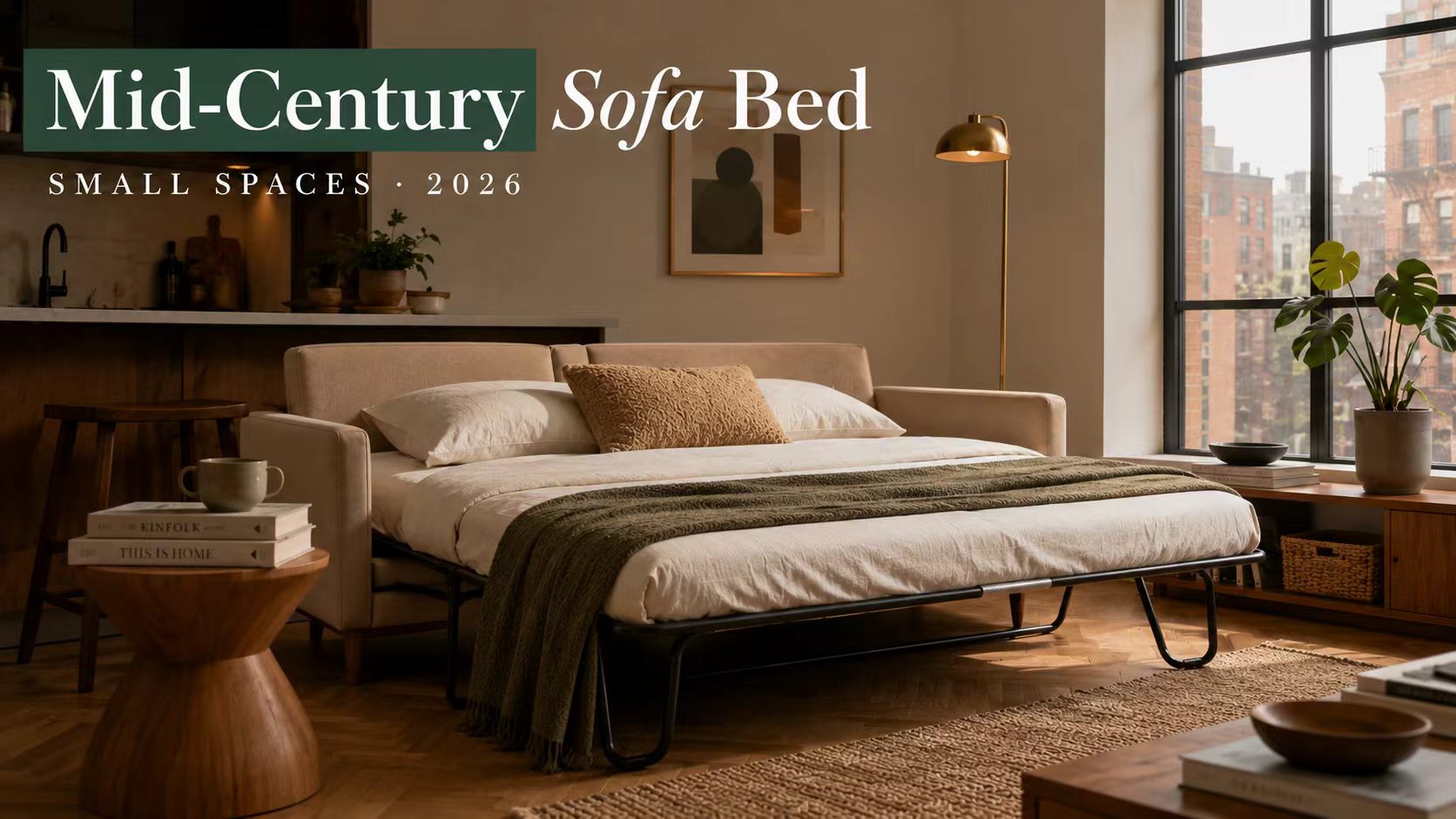
I almost gave up on the idea of a mid-century sofa bed last spring.
Been helping my sister move into a 540-square-foot studio in Williamsburg, she wanted a real mid-century living room, and her parents needed to sleep over four nights a year without the place turning into a Holiday Inn. Those two things kept fighting each other every time we opened a furniture site.
Most “mid-century sofa beds” online were generic sleepers with tapered legs glued on for marketing. Proportions wrong. Seat depths too deep. Arms from a totally different decade. The good-looking ones were either $4,800 or arrived in seven boxes with an Allen wrench.
So I spent six weeks deep in this category. Here’s what I figured out about making one actually work in a small space.
What Makes a Sofa Bed Mid-Century
A real mid-century piece isn’t just a sofa with tapered legs. That’s the marketing trick a lot of brands run. The actual design vocabulary is more specific, and once you see it, you can’t unsee it.
Mid-century modern grew out of the postwar period between roughly 1945 and 1969, shaped by Charles and Ray Eames, George Nelson, and Eero Saarinen — and launched into the mainstream by MoMA’s 1940 “Organic Design in Home Furnishings” competition. The discipline: form serves function, ornament is suspicious, proportion does the talking.
For a sofa bed to read as genuinely mid-century, four things:
Low silhouette. Seat height around 16–18 inches off the floor. Total back height 28–32 inches. If a sleeper sits up like a club chair, it’s not mid-century — it’s transitional with vintage cosplay.
Tapered legs angled outward. Classic splay is 5°–15° off vertical. Straight pencil legs read Scandinavian; chunky square legs read contemporary.
Visible wood frame elements. A wood base rail, exposed arm caps, or a thin wood “lip” along the seat front. The frame should announce itself.
Tight, low-profile cushions. Seat depth 20–23 inches (not the 26+ inch “lounge depth” of modern sectionals). Back cushions usually attached.
If a “mid-century sleeper” fails three of those four, you’re looking at a regular sleeper with tapered legs.
What makes this category hard: the sleeper mechanism was invented for chunkier, bulkier shapes. Squeezing a real sleeping platform into a low, lean mid-century silhouette is a design problem, not a marketing problem. The brands that solve it well are doing actual engineering. The brands that don’t are bolting a mechanism into the wrong shell.
Best Spaces for This Type of Sofa Bed
Footprint, delivery route, and what you’re using the piece for the other 360 days of the year all change the math.
Studio Apartments
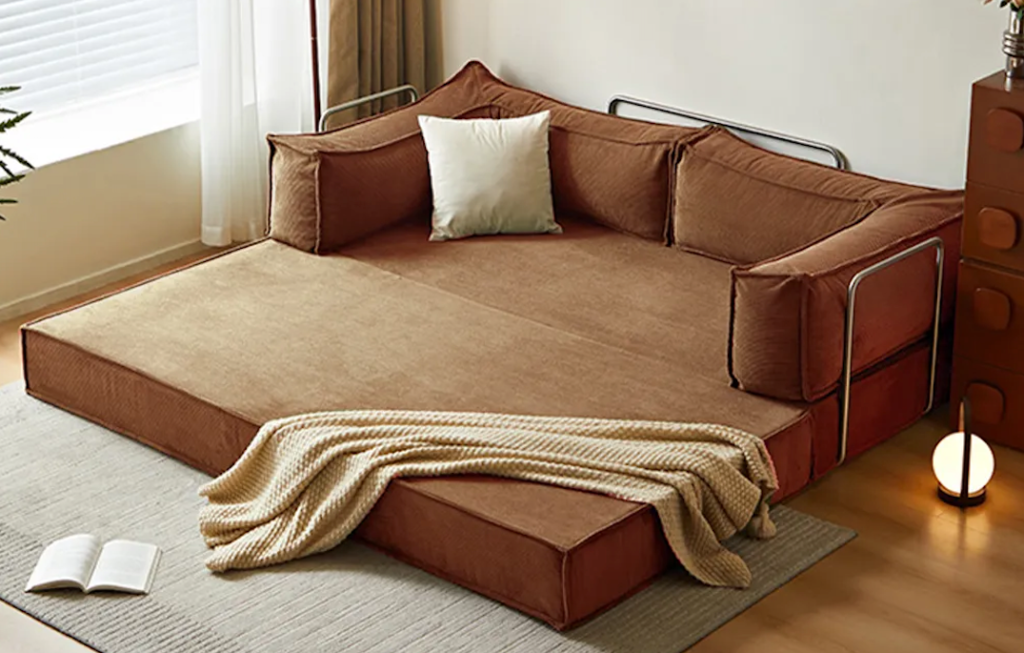
This is where mid-century geometry pays off. Low-profile sleepers under 32 inches tall keep the eye traveling above the furniture, making ceilings feel taller. Visible legs let light pool under the piece — the trick that prevents a studio from feeling like a furniture warehouse.
Numbers to memorize for studios:
- Sofa length: 72–78 inches works in most studios under 600 sq ft. 84+ starts blocking flow.
- Open bed footprint: A full-size sleeper needs roughly 75″ × 54″ of clear floor when extended. Measure that before you fall in love with anything.
- Walkway clearance: Leave 24–30 inches around the perimeter when the bed is open. This is the spec most people skip and regret.
Charles’s Tape-Out Rule, which I will die on this hill defending: before buying anything, lay painter’s tape on your floor in the exact footprint of the sofa closed AND open. Walk around it for 48 hours. You’ll feel the constraint before you’ve spent a dollar.
A sleeper also works as a soft room divider. Float it 4–6 inches off a wall, put a slim console behind it, and you have a “bedroom area” behind and a “living area” in front — without actual walls.
Home Offices and Guest Rooms
In a home office that doubles as a 4-nights-a-year guest room, you want a sleeper that disappears into “office furniture” 96% of the time. Mid-century works beautifully here because the visual vocabulary already signals “intentional design choice,” not “I gave up and bought a futon.”
Key spec: seat comfort during long workdays. If you take video calls from this sofa, seat depth matters more than bed comfort. Aim for 21–23″ seat depth and “medium” firmness. Soft sleepers look great in photos and ruin your lower back by hour three of a Zoom call.
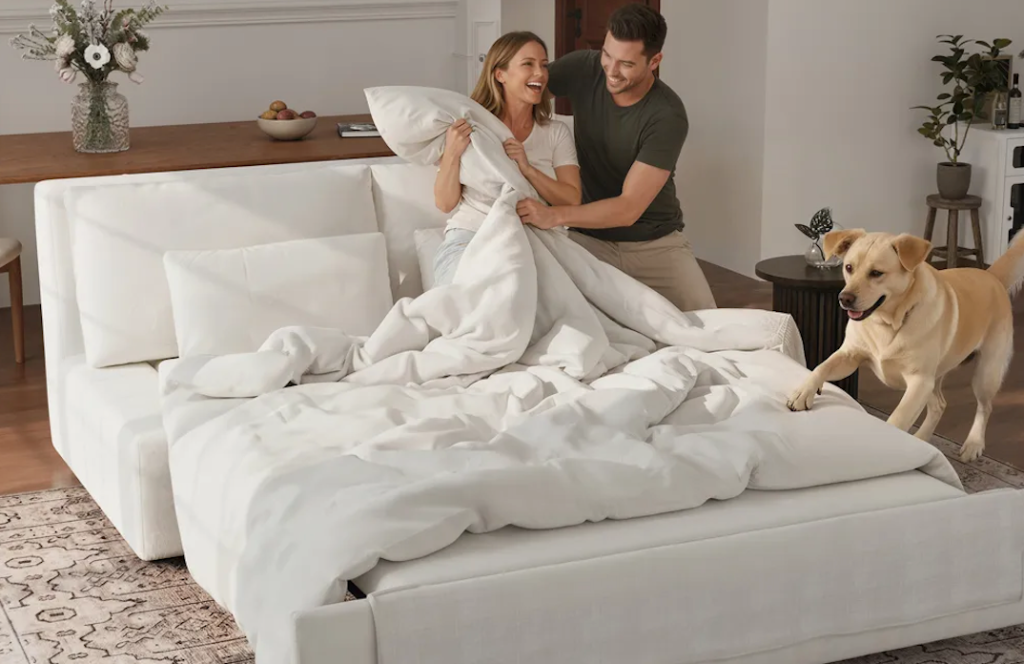
For guest rooms, the math flips. Bed quality matters more than seat depth. Look for at least a 4-inch mattress — anything thinner and your guests will feel every bar by morning. Better brands use 5–6 inch pocket-coil or high-density foam.
Sofa Bed Function vs Mid-Century Style
Here’s the central tension of this whole category.
Mid-century design was built on form following function — every piece should look exactly like what it does. A sofa should look like a sofa. A bed should look like a bed. A sleeper, by definition, has to hide one function inside the other. That’s a philosophical conflict.
The brands that handle this well embrace the hybrid rather than denying it:
- Coordinated finishes. The wood on the sleeper matches your coffee table and media console. This is the single biggest visual upgrade in a small space — when everything speaks the same finish language, the eye stops noticing individual pieces and starts reading the room as one composition. POVISON’s sofa bed collection is organized this way — most pieces share a walnut or oak finish family that pairs across the mid-century catalog, so a sleeper doesn’t read as the odd piece out.
- Honest mechanisms. A clean pull-out under a thin, low-profile seat is more honest to mid-century values than a hidden electric system buried in a thick base. The Eames generation would have respected the visible engineering.
- Restraint on tufting. Real mid-century used very little button-tufting. Heavy diamond tufting on a “mid-century sleeper” usually means someone confused the era with Chesterfield.
Avoid: anything described as “mid-century glam,” “mid-century luxe,” or “mid-century traditional.” Those are marketing words for “something else with mid-century legs.”
Comfort and Mechanism Trade-Offs
This is where most online buyers get burned. Product pages rarely give you the numbers you need.
Three mechanisms, three compromises:
Pull-out (true sleeper): The classic spring-bar mechanism. Pros: real mattress (4–6″), full sleep surface, most comfortable for guests. Cons: heavy, bulky, adds 60–90 lbs to sofa weight, requires the deepest frame (36″+ deep). Mid-century in name only on most pull-outs because the depth requirement kills the silhouette.
Click-clack (fold-flat back): The seat stays put, the back folds down flat. Pros: lean profile, closer to true mid-century proportions, often 30–34″ deep total. Cons: sleep surface is essentially the seat cushion, so comfort depends on cushion quality. Cheap ones feel like a yoga mat. Good ones are surprisingly fine for occasional use.
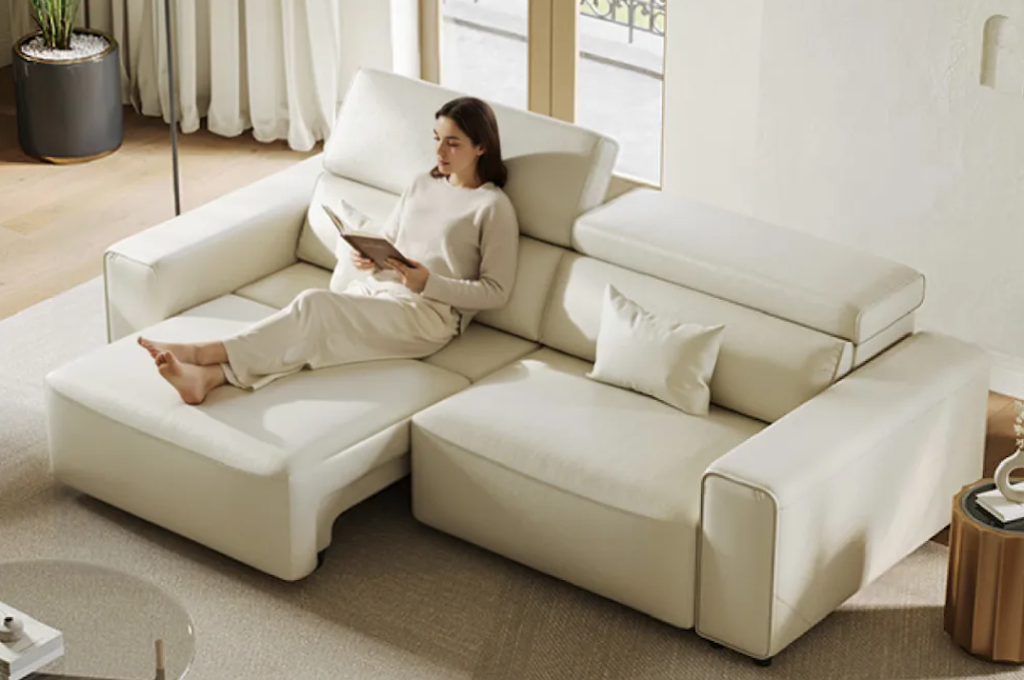
Electric/retractable: A motorized seat that slides forward. Pros: one-button conversion, no lifting, low profile achievable. Cons: motor adds cost plus an electrical component that can fail. Usually sized for one adult, not two.
For a true small-space mid-century setup, click-clack mechanisms usually win the silhouette war. For comfort if guests sleep over more than monthly, the pull-out is worth the bulk hit.
A spec check worth doing: ask whether the frame meets ANSI/BIFMA durability standards — the X5.4 standard for lounge seating tests structural integrity under up to 275 lbs across 250,000 front-to-back load cycles. Most residential sleepers don’t carry the full commercial cert, but better brands publish similar internal cycle testing. If a brand can’t tell you anything beyond “kiln-dried hardwood,” that’s a yellow flag.
One thing that matters more for sleepers than regular sofas: assembly state. A flat-pack sleeper requires you to align the mechanism’s pivot bar inside the frame yourself, and misalignment is the single most common cause of returns in this category. POVISON ships their sleeper sofas fully assembled with the mechanism already calibrated — no tools, no pivot-bar alignment, no swearing at hex keys at 9pm on a Tuesday. That’s worth real money here.
For delivery: a pull-out sleeper typically weighs 140–180 lbs. You’ll need two strong friends or white-glove delivery. Don’t skip this. I’ve watched people get a 165-lb sofa delivered to the curb and discover they live on a 4th-floor walkup with a 28-inch stairwell.
FAQ
Are mid-century sofa beds comfortable for both sitting and sleeping?
Yes for sitting — lower seat heights and firmer cushions match how the style was originally designed (upright, posture-supporting). For sleeping, comfort depends on the mechanism: click-clack designs feel like sleeping on the seat cushion (fine for occasional use), while pull-out mechanisms with 5–6″ mattresses approach the comfort of a real guest bed. If you host guests more than once a month, prioritize a true pull-out. For 4–6 nights a year, a click-clack with high-density foam is usually enough.
Does a mid-century sofa bed work well in small apartments?
Exceptionally well — possibly better than any other style. The low silhouette (28–32″ total height) keeps sightlines open, visible tapered legs let light pool underneath, and the lean proportions (30–34″ deep) fit walkways better than chunky modern sectionals. For studios under 600 sq ft, look for total length 72–78″ and confirm the open-bed footprint (around 75″ × 54″) leaves at least 24″ of walkway clearance.
Is a leather mid-century sleeper sofa practical for daily use?
A leather mid-century sleeper is practical if the leather is real top-grain or full-grain — both develop a patina and resist everyday wear better than fabric. The trade-off is temperature: leather feels cold in winter and warm in summer, which matters more on a sleeper. Bonded leather and PU “leather” should be avoided on sleepers — the constant flexing of the mechanism causes the surface to crack within 18–24 months.
What should I check before buying a mid-century sofa bed online?
Check five things: (1) exact dimensions for both sofa and open-bed configurations — tape-out both on your floor before ordering; (2) mattress thickness (4″ minimum for occasional guests, 5–6″ for monthly use); (3) assembly state — fully assembled saves significant headaches with sleeper mechanisms; (4) delivery method, especially whether white-glove service is available for your address; and (5) the return policy specifically for sleeper sofas, since some brands exclude sleepers due to weight.
Conclusion
A mid-century sofa bed is one of the most demanding pieces you can buy for a small space. It has to win two arguments at once: honor a design philosophy built on honesty and proportion, and perform a function the style was never originally designed for. Most brands punt on one side. The ones that succeed are doing real engineering inside lean, disciplined silhouettes.
If you’re shopping right now, my honest order of operations: measure twice (closed AND open footprint), decide whether you’re prioritizing daily sit or occasional sleep, then narrow by mechanism. The style choice is the easy part once those constraints are set.
My sister’s studio ended up with a click-clack sleeper, a walnut media console in the same finish family, and a coffee table picking up the same wood tone. Her parents slept on it twice this year and survived. The rest of the year, she has a real mid-century living room. That’s the whole job.
If you want a different perspective on small-space layouts before committing, Apartment Therapy’s tours of sub-400-sq-ft apartments are worth scrolling through — real homes, not staged showrooms, which is the only way to pressure-test whether a layout actually works.
Related Reading:


