 By Jenny Smith
Most people asking how long do sofas last want a simple answer first: most sofas last about 7 to 15 years. The real number depends on build quality, upholstery, how often the seat is used, and how well you maintain it. In this article, “sofa” and “couch” mean the same thing. You’ll learn how long do sofas last, what shortens or extends that lifespan, when wear is cosmetic versus structural, and how to make a couch last longer without overspending.
How Long Do Sofas Last on Average?
Before you judge your current seating, it helps to understand the normal lifespan range. A couch in a formal sitting room can age very differently from one that handles movie nights, pets, naps, and snack spills every day. This section breaks down the average numbers and shows why your home setup matters as much as the sofa itself.
What Is the Average Life of a Sofa?
If you are wondering how long do couches last, the average life of a sofa is usually 7 to 15 years. Budget sofas often last 5–7 years, mid-range models usually last 8–12 years, and high-quality sofas can last 12–15 years or more when the frame, cushions, and upholstery are all well made. That is the practical answer to how long do sofas last for most households.
Another helpful way to think about it is by performance, not price tag alone. The average lifespan of a couch rises when the frame is solid and the cushions recover after daily use. A low-cost sofa may still look decent for a while, but the life expectancy of a couch drops fast once the seat sags or the frame loosens.
How Long Should a Couch Last in Different Homes?
How long should a couch last in real life? It depends on traffic. A sofa used for one hour a day and a sofa used for five hours a day are not aging at the same speed. I once had a compact apartment couch that doubled as my reading chair, work perch, and weekend nap spot; the seat dip showed up much sooner than it would have in a guest room.
| Home situation | Typical wear level | Expected lifespan |
| Formal living room | Light | 10–15+ years |
| Everyday family room | Moderate to heavy | 7–12 years |
| Homes with kids or pets | Heavy | 5–10 years |
| Small apartments / one main sofa | Heavy daily use | 6–10 years |
A couch in a busy family room may reach the end of its comfortable life years before its frame actually fails. That is why how long should a couch last is really a lifestyle question, not just a product question.
What Affects Sofa Durability the Most?
Lifespan is not random. Sofas usually fail in predictable ways: weak frames loosen, cheap cushions flatten, and delicate upholstery shows wear early. The biggest durability wins come from construction details you cannot always see at first glance, so this section focuses on what is happening inside the sofa as well as on the surface.
What Construction Features Make a Sofa Last Longer?
The frame matters most. A kiln-dried hardwood frame with strong joinery tends to outlast engineered wood or softer materials that can loosen under repeated stress. Consumer Reports notes that kiln-dried hardwood frames and high-quality spring support are among the best signs of durable furniture construction (Consumer Reports).
Seat support matters almost as much. Good suspension helps the sofa hold shape, while dense, resilient cushions slow down sagging. Internal construction is often more important than the fabric color or trend appeal, because a beautiful sofa with weak support can feel tired in only a few years.
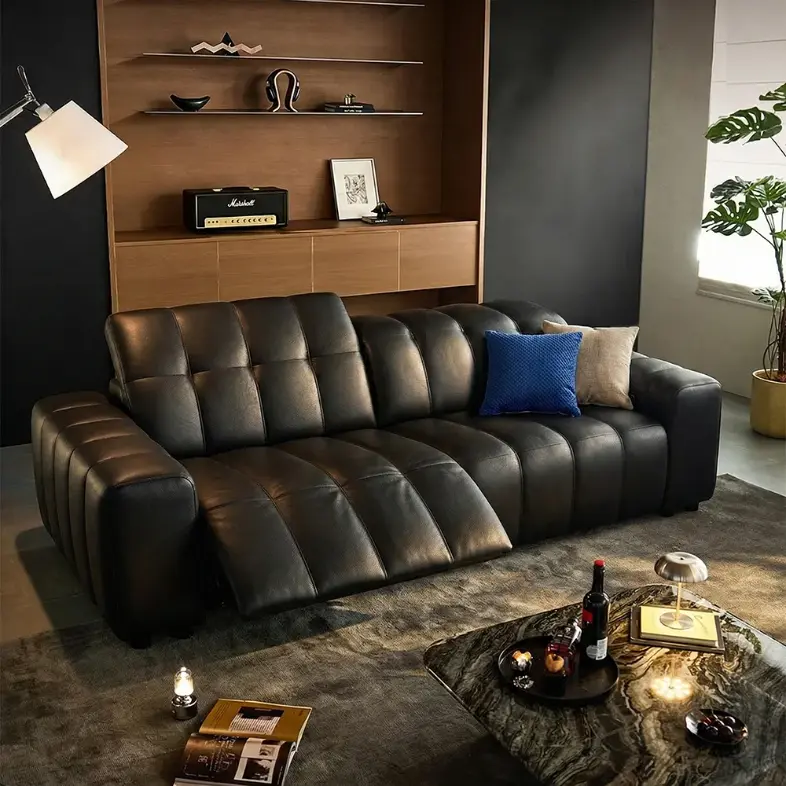
For example, a genuine leather power reclining sofa with a piano-key seat design can spread weight more evenly across the seat, easing pressure on key support zones. In daily use, that can help reduce localized sagging while keeping the sofa more comfortable over time.
What Materials Wear Best Over Time?
Upholstery changes how a sofa ages visually. Fabric can feel warm and flexible, but friction may cause pilling, thinning, or staining over time. Performance fabrics usually handle spills and abrasion better than standard weaves, while leather often wears in rather than wears out. TheAHFA upholstery guidelines use abrasion checkpoints up to 15,000 double rubs, which is one reason higher-rub-count upholstery tends to perform better in busy homes.
Visible wear and structural lifespan are not the same thing. A sofa can look faded, wrinkled, or scratched before the frame has any real problem. That is why comparing leather vs fabric sofa options should include both appearance aging and core support.
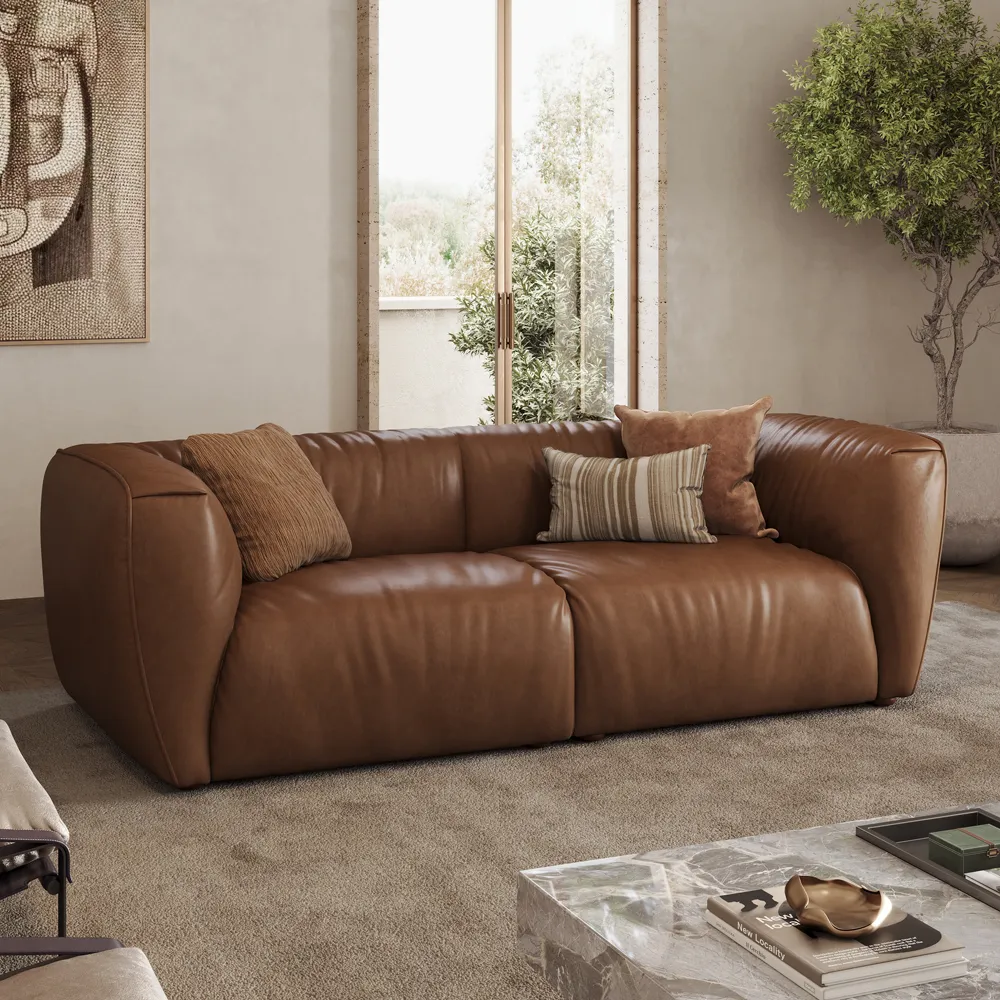
A good example is this top-grain leather sofa, which uses top-grain leather with a waterproof, stain-resistant finish designed to wipe clean from coffee or soda spills. For buyers who want easier upkeep without giving up a refined look, that kind of surface treatment can make a sofa feel newer for longer in everyday use.
How Do You Know When a Couch Needs Replacing?
Not every old sofa needs to go right away. Some need only new cushion inserts or fabric care, while others are already past the point where repairs make financial sense. This section helps you separate normal aging from signs that comfort, support, or hygiene are truly declining.
What Are the Signs a Sofa Is Worn Out?
Look for these signs:
- Seats sag even after you stand up
- Cushions feel flat, lumpy, or uneven
- The frame squeaks, creaks, or shifts
- Upholstery is torn, badly faded, or permanently stained
- Back support feels weak or uncomfortable
- Odors linger in the fabric or filling
If you notice several of these at once, the couch is probably nearing the end of its useful life.
Should You Repair It or Replace It?
Repairs make sense when the frame is still strong. Replacing seat foam, refilling back cushions, or reupholstering a solid sofa can buy you several more years. But if the structure is loose, the support is gone, and the sofa is already old, replacement is usually the better investment.
| Condition | Repair is worth it | Replace is better |
| Frame | Solid and stable | Loose, cracked, or noisy |
| Cushions | Flat but fixable | Fully collapsed and uneven |
| Upholstery | Worn but recoverable | Torn, stained, and aged throughout |
| Cost | Under ~50% of replacement cost | Near or above replacement value |
| Age | Under 8–10 years for a quality frame | Older sofa with multiple failures |
A simple rule works well: if the sofa is structurally sound and repairs cost much less than a new one, repair it. If both comfort and structure are failing, replace it.
How Can You Make a Sofa Last Longer?
Most sofas do not fail because of one dramatic event. They wear out from the same seat being used every night, sunlight hitting one arm, skipped cleaning, and spills that sink deeper than they look. A few small habits can make a noticeable difference, especially over a five- to ten-year stretch.
What Daily Habits Help Extend Couch Life?
Rotate and fluff cushions often, especially if one family member always claims the same spot. Try not to drop your full body weight into the same corner every evening, and use throws or covers in high-contact areas. When pets jump up, trimmed claws and washable covers help more than people think.
I learned this the hard way with a fabric sofa in a sunny room: the window-side arm looked older a full year before the rest of the couch. That kind of uneven wear sneaks up on you. Following the manufacturer’s care instructions and treating one “favorite seat” as a warning sign can add real life to the sofa.
What Maintenance Matters Most for Fabric and Leather?
Fabric sofas need regular vacuuming and quick spot cleaning before dirt settles into the weave. Leather sofas need gentle dusting, occasional conditioning, and distance from direct heat and strong sun. The EPA recommends keeping indoor humidity ideally between 30% and 50%, which can also discourage dust mites and moisture-related problems in the home (EPA).
Seasonal care helps too. In humid climates, use a dehumidifier and keep airflow steady. In dry climates, leather benefits from conditioning so it does not stiffen. If you are comparing upholstery options, a practical sofa fabric guide can help match material choice to cleaning effort and traffic level.

What Should You Look for If You Want a Longer-Lasting Sofa?
Buying for longevity means looking past surface style. The smartest long-term sofa is not always the most expensive one, but it usually has a better frame, stronger support, and upholstery that fits your real life. Here is what tends to be worth paying for if you want fewer problems later.
Which Sofa Features Are Worth Paying More For?
Prioritize a kiln-dried hardwood frame, reinforced joints, reliable suspension, and high-density foam or other resilient cushion fills. Durable upholstery matters too, especially performance fabric or quality leather. Reversible or removable cushions are a quiet advantage because they let wear spread more evenly instead of building up in one spot.
These features improve sofa durability because they slow the two failures that most owners actually feel first: loss of support and surface wear. A sofa that still looks fine but feels uncomfortable is already on borrowed time.
What Type of Sofa Lasts the Longest for Most Homes?
For families with kids, easy-clean leather or performance fabric usually lasts longer than delicate natural weaves. Pet owners often do better with tighter weaves or leather that can be wiped down quickly. Low-maintenance households may prefer leather, while buyers focused on value should choose the strongest frame they can afford before upgrading decorative details.
A smart mini checklist is simple: sturdy frame, resilient cushions, durable upholstery, even seat support, and a size that matches your room so the sofa does not get overused as a bed or all-day workstation. For style-focused buyers who still want practicality, a mid-century modern sofa guide can help narrow the field without ignoring durability.
Conclusion
So, how long do sofas last? For most homes, the honest answer is 7 to 15 years. The real lifespan depends on construction, material choice, daily traffic, and regular care. Instead of judging a couch by age alone, look at support, comfort, seat recovery, and frame condition. A well-built sofa that is maintained properly often costs less over time than replacing a cheaper one early. In most cases, buying better structure first and caring for it well is the smartest long-term move.
Frequently Asked Questions
How long do couches last with everyday use?
A couch used every day usually lasts 7 to 10 years, depending on build quality and how evenly it wears. If one seat gets most of the use, sagging may show up earlier even when the rest of the sofa still looks fine.
What is the average lifespan of a couch with pets or kids?
The average lifespan of a couch in a home with pets or kids is often closer to 5 to 10 years. Scratching, spills, rough play, and frequent cleaning all speed up visible wear, especially on lower-grade fabric and softer cushions.
How long should a couch last before it starts sagging?
A lower-quality couch may start sagging in three to five years, especially with heavy daily use. A better-made sofa with stronger suspension and denser cushions should keep its shape much longer, often well past the middle of its lifespan.
Is it worth repairing an old sofa?
It can be, but only when the frame is still solid and the repair cost stays reasonable. New foam, cushion refills, or reupholstery can make sense on a quality sofa. If the frame, support, and comfort are all failing, replacement is usually smarter.


