 By Charles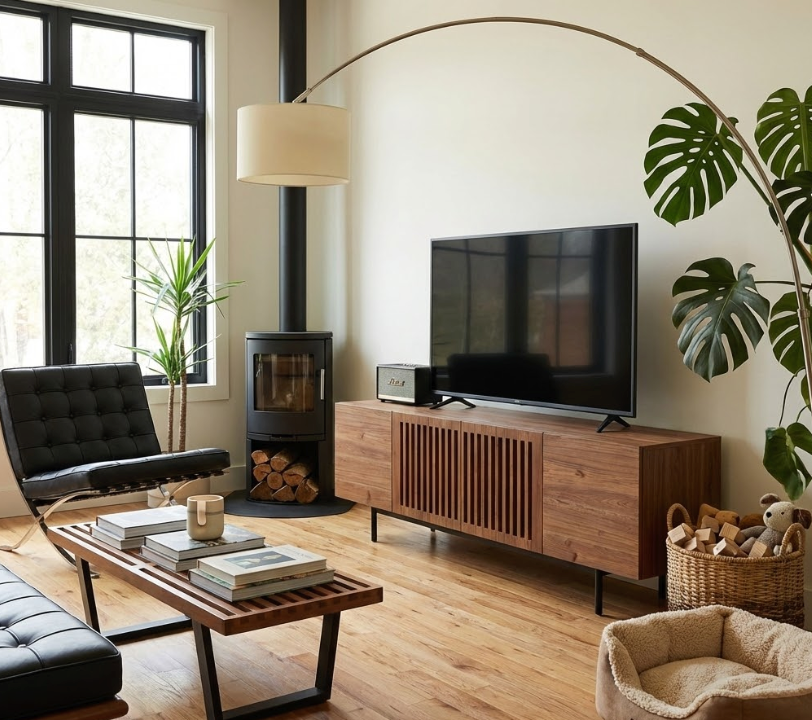
Hey fellow nest builders,
You want a beautiful mid-century modern TV stand, but let’s be real—you also want to keep your Saturday for soccer games. I’m Charles, and I’ve built enough furniture to know that ’emotional support hex keys’ are a real thing.
You’re not alone. This guide keeps it simple: what actually makes a TV stand feel mid-century, what to avoid, and how to style one so it works with your real life, kids, pets, spills and all.
What Makes It “Mid Century Modern”?
Before you start scrolling through options, it helps to know what actually makes a TV stand feel mid-century instead of just “kind of retro.” The core idea: simple shapes, warm wood, and details that define mid-century modern style. Once you recognize those, you can pick a piece that still looks good ten years from now.
Tapered Legs
Tapered legs are one of the fastest ways your brain says, “Oh, that’s mid-century.” They’re narrower at the bottom than the top and usually slightly angled out. That shape:
- Makes the stand look lighter so your room feels more open
- Gives you clearance for robot vacuums, toy cars, and stray socks
- Helps with stability when designed well (wider stance = less wobble)
If you’ve got pets or kids, look for legs that are solid wood, at least 1.25–1.5 inches thick at the top, not skinny metal that bends the first time someone bumps it.
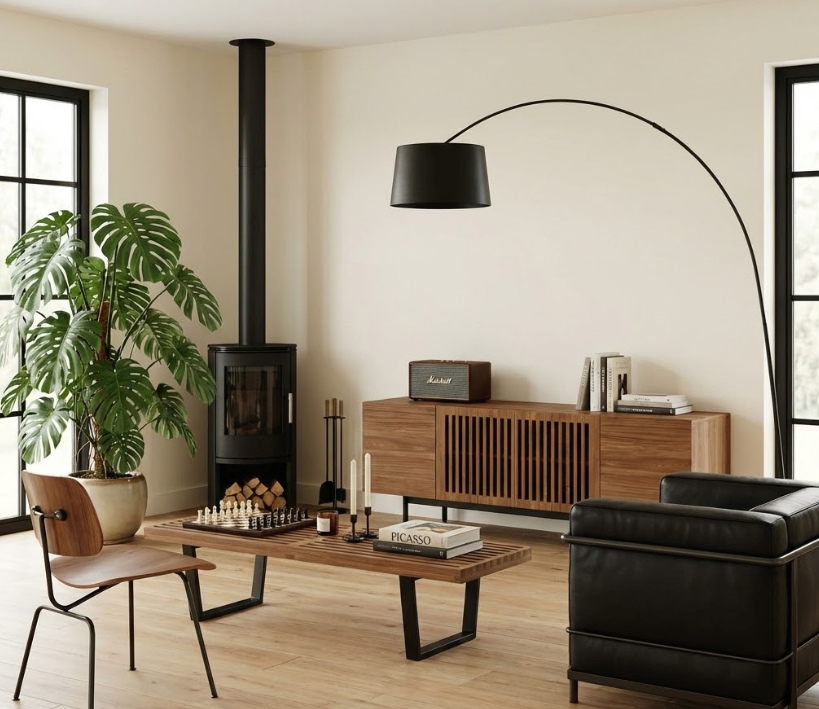
Clean Lines
Mid-century modern is all about clean lines and simple forms. In a TV stand, that usually means:
- Flat front panels instead of fussy carving
- Minimal or hidden hardware
- Doors and drawers that sit flush with the frame
This matters for you because clean lines equal less dust-catching detail and fewer edges to bang a toddler’s head on. It also makes it easier to mix with other styles, your existing sectional, that farmhouse coffee table, or the random chair you inherited will all play nicer with simple shapes.
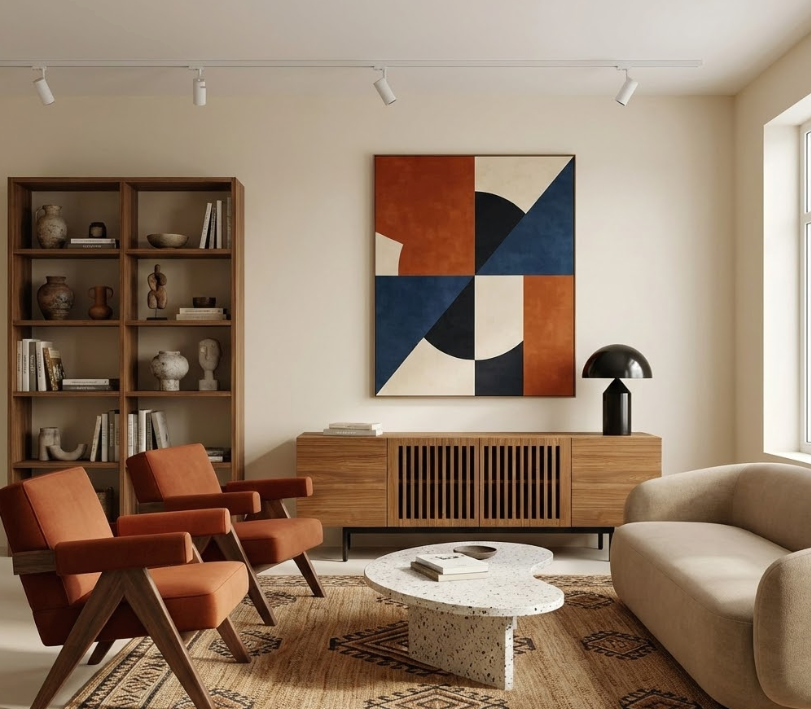
Natural Wood Tones
Most mid century modern TV stands lean on walnut, oak, or teak tones, warm, natural-looking wood that doesn’t feel orange or gray. For a busy home, that’s a win:
- Medium walnut hides dust and fingerprints better than black
- Visible grain helps camouflage small scratches from toys or pet claws
- Warm tones make your TV wall feel less like a black hole
If you love the look but worry about durability, look for solid wood frames with veneered panels on the doors. You get the real-wood feel with added stability and fewer warping issues over time.
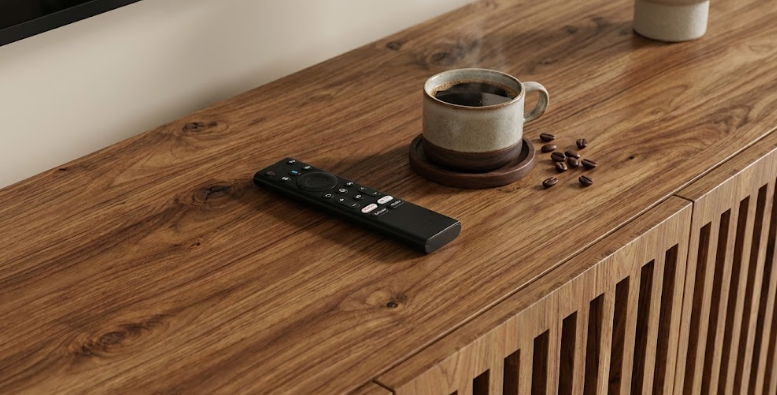
Common Design Mistakes
Mid century modern is surprisingly easy to get wrong, especially when you’re juggling kids’ schedules and clicking “add to cart” at 11 p.m. A few design mistakes can make a stand look cheap or drive you crazy in daily use.
The most common mistake is buying too small. If your stand is shorter or narrower than your TV by a big margin, everything looks top-heavy. Aim for:
- Stand width at least 10–15 inches wider than your TV
- Height in the 20–26 inch range so you’re not craning your neck—check your optimal TV placement to be sure.
The next mistake: no closed storage. Open cubbies look great in styled photos, but in real life they collect:
- Gaming controllers
- Random mail
- Plastic dinosaurs and dog toys
Look for at least one section with doors or drawers, so you can sweep the chaos out of sight in 10 seconds when guests come over.
Another easy miss is ignoring cable management. Without grommet holes or a cable channel, you end up with a nest of wires behind the stand that somehow attracts every dust bunny in a 5-mile radius. Check that there are at least two cable cutouts, about 2–3 inches in diameter, on the back panel.
Finally, watch out for stands that are all look, no strength. If the specs don’t clearly say it can hold at least 75–100 lbs, assume it’s more decor than workhorse. Learning how to find quality furniture specifically helps you avoid wobbly builds.
How to Style an MCM TV Stand
Styling your mid-century modern TV stand doesn’t have to become a full-blown design project. A few smart moves make it look intentional without turning it into a clutter magnet.
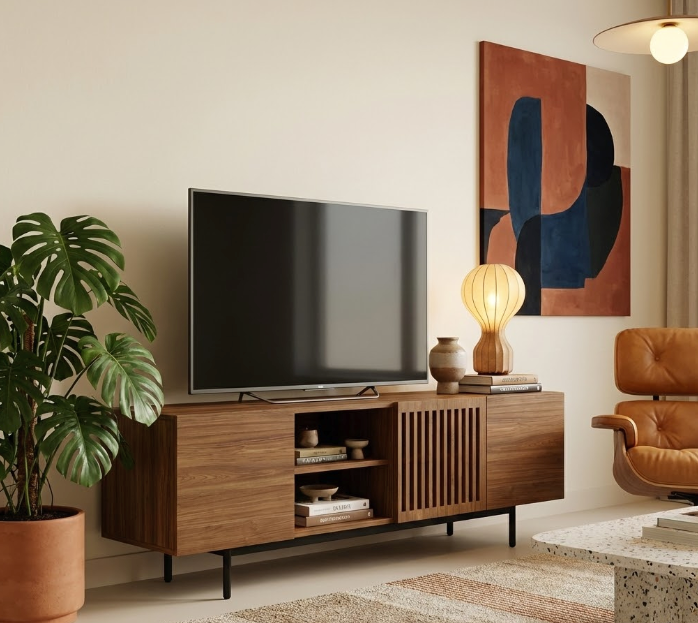
Start with the basics: your TV is the visual anchor, so everything else should balance, not compete. Think in three zones:
- Under the TV: Use this for low-profile items, soundbar, slim media box, or a stack of 2–3 books. Leave at least half the surface clear so it doesn’t feel crowded.
- One side: Add some height with a plant, small table lamp, or framed photo. This softens the hard rectangle of the screen.
- The other side: Keep it lighter, a small bowl for remotes or a decorative box that secretly holds chargers and random kid treasures.
If you have toddlers or pets, avoid tall, tippy objects and glass. Go for:
- Soft-edged decor (rounded vases, fabric boxes)
- Weighted bookends that don’t fly off when bumped
- Closed baskets in lower cubbies for toys or blankets
Color-wise, let the warm wood be the star. Layer in:
- Greens from plants (real or very good faux)
- Neutrals like white, cream, or charcoal
- One or two accent colors pulled from a rug or throw pillow
This way, if your kids’ toys are neon or your dog’s bed is bright blue, the stand still feels calm and pulled together around the chaos.
Best Materials
When you’re choosing a mid century modern TV stand for a busy home, materials matter as much as looks. The right build survives sticky fingers, Netflix marathons, and the occasional flying toy.
For the frame, solid wood (like walnut, oak, or rubberwood) is your best friend. It handles dings better, can be refinished, and usually supports more weight. Look for panels that are at least 0.75 inches thick and a total weight capacity of 100 lbs or more if you have a larger TV and decor.
Veneer gets a bad reputation, but knowing the difference between plywood cabinets vs. solid wood reveals that high-quality wood veneer over plywood is actually a smart choice for doors and shelves. You get:
- A consistent wood look
- Less risk of warping over time
- Often a lower price than all solid wood
Just avoid thin, plastic-looking laminates that chip easily.
Here is a quick breakdown to help you decide:
| Material Type | Pros | Cons |
| Solid Wood | Durable, refinishable, unique grain patterns | Pricey, reacts to humidity (can warp) |
| Wood Veneer | Stable, consistent look, cost-effective | Can’t be sanded down deeper scratches |
Charles’ Tip: For the best of both worlds, look for a solid wood frame (for structure) with veneered panels (for stability).
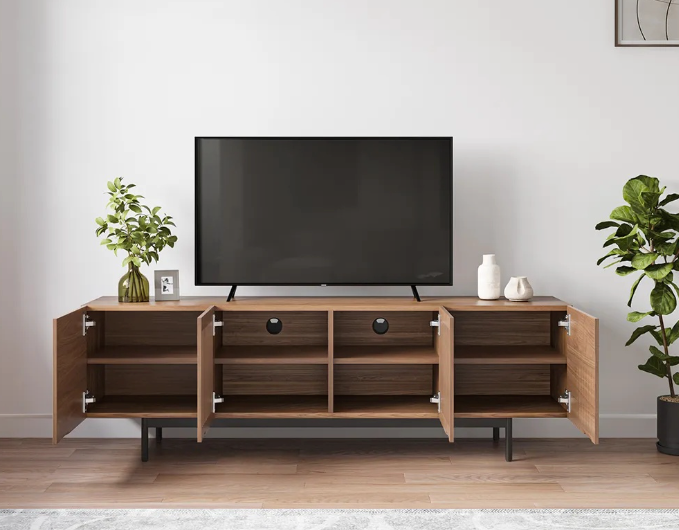
For finishes, look for a matte or low-sheen protective coating. A too-glossy surface shows every fingerprint: a matte finish hides a lot and still wipes clean with a damp cloth. If you can, check that the finish is stain-resistant and ideally carries a UL Greenguard certification for lower chemical emissions—a big plus for indoor air quality.
Hardware is the last piece of the puzzle. Soft-close hinges and smooth drawer slides aren’t just nice-to-have, they:
- Reduce slamming (and late-night noise)
- Protect the frame over time
- Make it easier for kids to use without pinching fingers
Put it all together, and the best materials for your TV stand are the ones that quietly survive your real life while still looking like you put thought into your space.
To save you some scrolling time, we recommend checking out the mid-century modern TV stands at Povison, which consistently hit that sweet spot between solid craftsmanship and family-friendly design. We love them for their solid wood construction and 30-day return policy (just in case it doesn’t fit).
Frequently Asked Questions
What makes a TV stand a true mid century modern TV stand?
A true mid century modern TV stand features tapered legs, clean lines, and warm natural wood tones like walnut, oak, or teak. Look for flat-front doors, minimal or hidden hardware, and a simple, low-profile shape that feels timeless instead of trendy and mixes easily with other furniture styles.
What size mid century modern TV stand should I get for my TV?
Choose a TV stand that’s at least 10–15 inches wider than your TV so the screen doesn’t look top-heavy. For comfortable viewing, aim for a height of about 20–26 inches, which keeps the center of the screen close to eye level when you’re seated.
What materials are best for a mid century modern TV stand in a busy family home?
For durability, look for a solid wood frame (walnut, oak, or rubberwood) with panels at least 0.75 inches thick and a 75–100 lb weight capacity. Quality wood veneer over plywood or MDF works well for doors and shelves, paired with a matte, stain-resistant finish and soft-close hinges or slides.
How do I style a mid century modern TV stand without making it look cluttered?
Use your TV as the visual anchor, then style in three zones: low-profile items or a soundbar under the TV, a taller element like a plant or lamp on one side, and a lighter piece such as a small bowl or box on the other. Leave at least half the surface clear.
Can a mid century modern TV stand work with non-MCM decor like farmhouse or coastal styles?
Yes. Because mid century modern TV stands have simple lines and warm wood tones, they blend well with many styles. Pair them with neutral rugs, simple textiles, and a few shared colors from your existing pieces so the stand feels like a clean, timeless anchor in the room.


I’ve always loved mid-century modern but struggled with making it work in a real home. Your point about avoiding pieces that are ‘kind of retro’ really struck a chord. Keeping things simple yet functional seems like the key to a timeless look.