 By Jenny Smith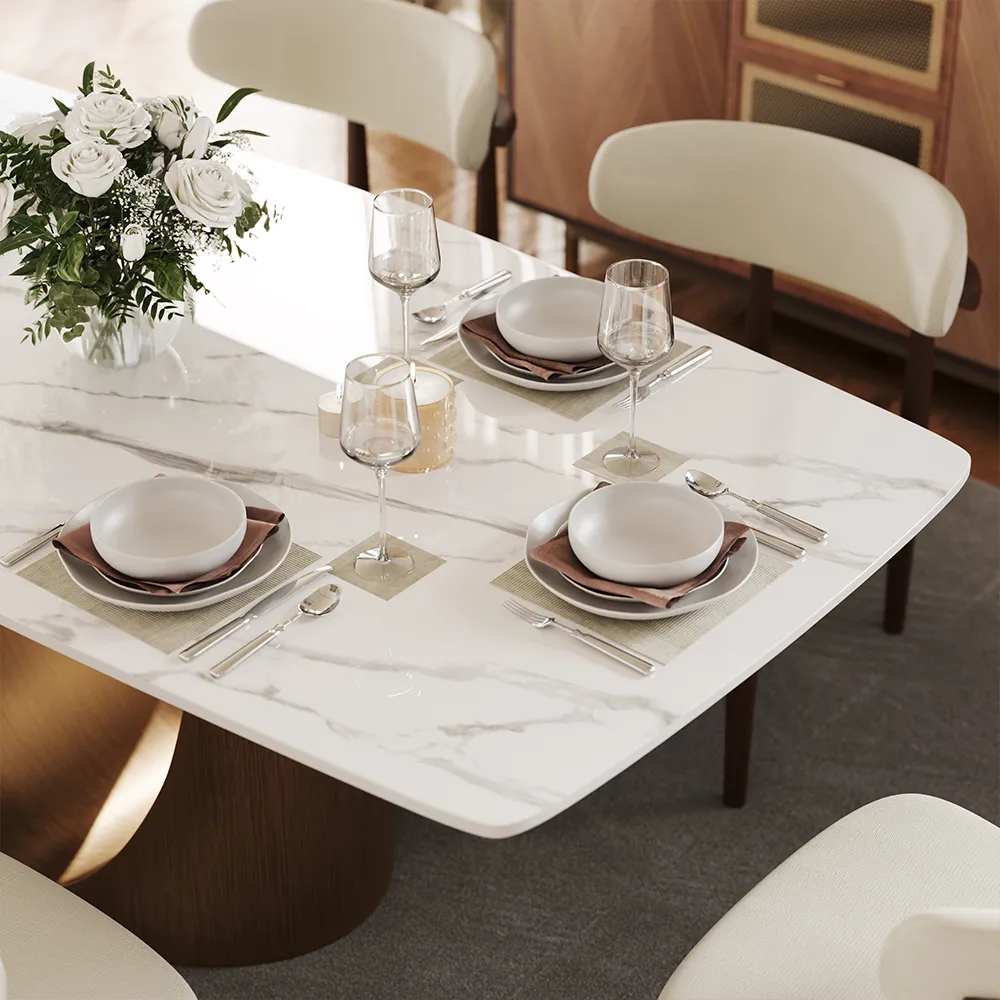
A Minimalist Dining Room in 2026 isn’t about empty white boxes anymore. It’s about calm, warm spaces where you can eat, work, host, and unwind without visual noise. Think fewer pieces, better quality, and a soft “quiet luxury” feel. In this guide, we’ll walk through layout, furniture, color, lighting, and styling ideas—plus how minimalist collection can help you create a space that feels both effortless and elevated.
Redefining Minimalist Luxury for 2026
From Cold Minimalism to Warm, Lived-In Spaces
Minimalism used to mean stark white walls, hard edges, and almost no personality. In 2026, designers are pivoting to “warm minimalism”: cleaner lines remain, but with tactile fabrics, natural wood, and cozy lighting layered in. Picture a modern minimalist dining room with a slim table, upholstered chairs, and a textured rug, but also a stack of linen napkins, a favorite ceramic bowl, and a branch in a simple vase. Major design outlets are already calling out this shift toward warmth, character, and craftsmanship over clinical simplicity.
2026 Interior Design Trends That Complement Minimalism
2026 interior design trends lean into inviting spaces—moody browns, soft curves, and layered neutrals that still work beautifully with a dining room minimalist aesthetic. Brown tones and aged metals are reappearing as the new “neutrals,” pairing well with oak, walnut, and ash tables for a quietly luxurious look.
Homes themselves are also being designed to do more with less space, which makes a minimalist dining room design especially practical. Open kitchens and dining zones are increasingly connected: in one recent study, 43% of renovating homeowners opened their kitchens to other interior spaces, up from 38% just two years earlier (according to the 2024 U.S. Houzz Kitchen Trends Study).
Designing the Layout – Function-First Minimalist Dining Room
Decide How Your 2026 Dining Room Needs to Work
Before you buy a single chair, define what your minimalist dining room must do every week, not just on holidays. Many 2026 households use the dining space as a hybrid zone—part dining, part WFH office, part kids’ homework hub—so your floor plan has to match real life.
- Daily meals and coffee chats
- Remote work or study sessions
- Weekend brunches and casual hosting
When I helped a couple in Los Angeles rethink their dining room, we listed these roles first. That simple exercise stopped them from over-furnishing and made layout decisions obvious: no bulky china cabinet, yes to a slim sideboard and a comfortable chair that could double as a desk seat.
Layout Ideas for Small, Open-Plan, and Dedicated Dining Rooms
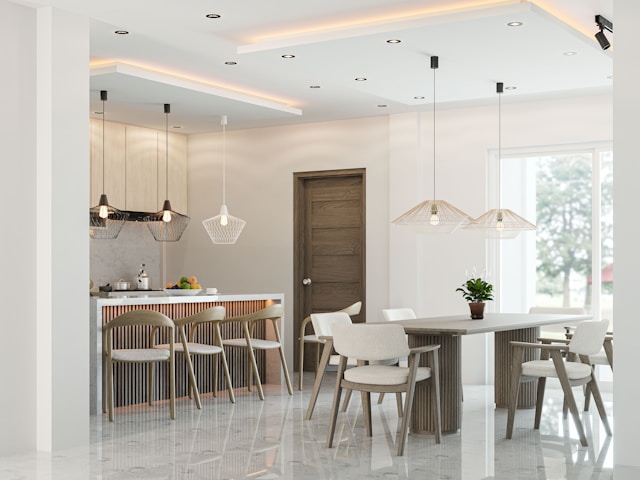
For small apartments, tuck a modern minimalist dining table against a wall or window and pair it with a bench on one side. This keeps circulation open and visually light. In open-plan spaces, place the table parallel to the kitchen island and anchor it with a rug; it instantly reads as a minimalist dining room zone rather than “extra kitchen.”
If you’re lucky enough to have a dedicated dining room, resist the urge to fill every wall. One hero table, a set of chairs, and a single streamlined storage piece are usually enough. Keep the center of the room clear so the table feels like the star, not just one more object in a crowded scene.
Smart Storage That Keeps Surfaces Clear
Minimalist dining room decor starts with what you don’t see. Closed storage—low sideboards, wall-mounted cabinets, or a built-in banquette with drawers—lets you stash placemats, candles, kids’ art supplies, and laptop chargers out of sight. That way, your table can reset to a calm, clutter-free state in minutes.
If your space doubles as a remote-office zone, dedicate one drawer to work items so your laptop and notebooks vanish at dinnertime. A minimalist Scandinavian dining room often relies on exactly this trick: simple light wood furniture, clean lines, and storage that keeps the rituals of daily life hidden until they’re needed.
Furniture Choices – Fewer Pieces, Better Pieces
The Hero Table – Shapes and Materials on Trend for 2026
In any minimalist dining room, the table is the anchor. For 2026, look for warm wood finishes—oak, walnut, ash—with visible grain, or sleek sintered-stone tops that bring a subtle sheen without feeling flashy. Soft oval or pill-shaped tops fit beautifully with the growing preference for curved, welcoming silhouettes.
Sculptural bases are also on trend: think pedestal or T-shaped legs that almost read like art, but don’t add fussy visual noise. Choose a size that seats your “everyday” crew comfortably, with the option to extend or add a leaf for guests. For deeper inspiration, explore POVISON’s guide to the best minimalist dining tables 2026.
Space-Savvy Seating – Chairs, Benches, and Banquettes
Chairs, benches, and banquettes are being mixed more freely in 2026, and that’s good news for a modern minimalist dining room. A slim bench against the wall frees up circulation on the opposite side, makes the room feel bigger, and visually simplifies the silhouette of the set.
Low-profile, upholstered chairs in neutral fabrics echo the lines of your table and soften the room. If you host often, consider a corner banquette: it wraps the space, adds hidden storage underneath, and turns your minimalist dining room into a genuinely comfortable hangout instead of a formal museum.
Flat-Pack vs Fully Assembled Minimalist Sets
Flat-pack furniture can be budget-friendly, but it comes with hidden costs: time, tools, and the risk of wobbly results. A recent DIY report found that 70% of people prefer hiring professionals because they’re afraid of making mistakes, and 89% experience regret or fatigue mid-project (from the Better Homes & Gardens 2024 DIY Trend Report).
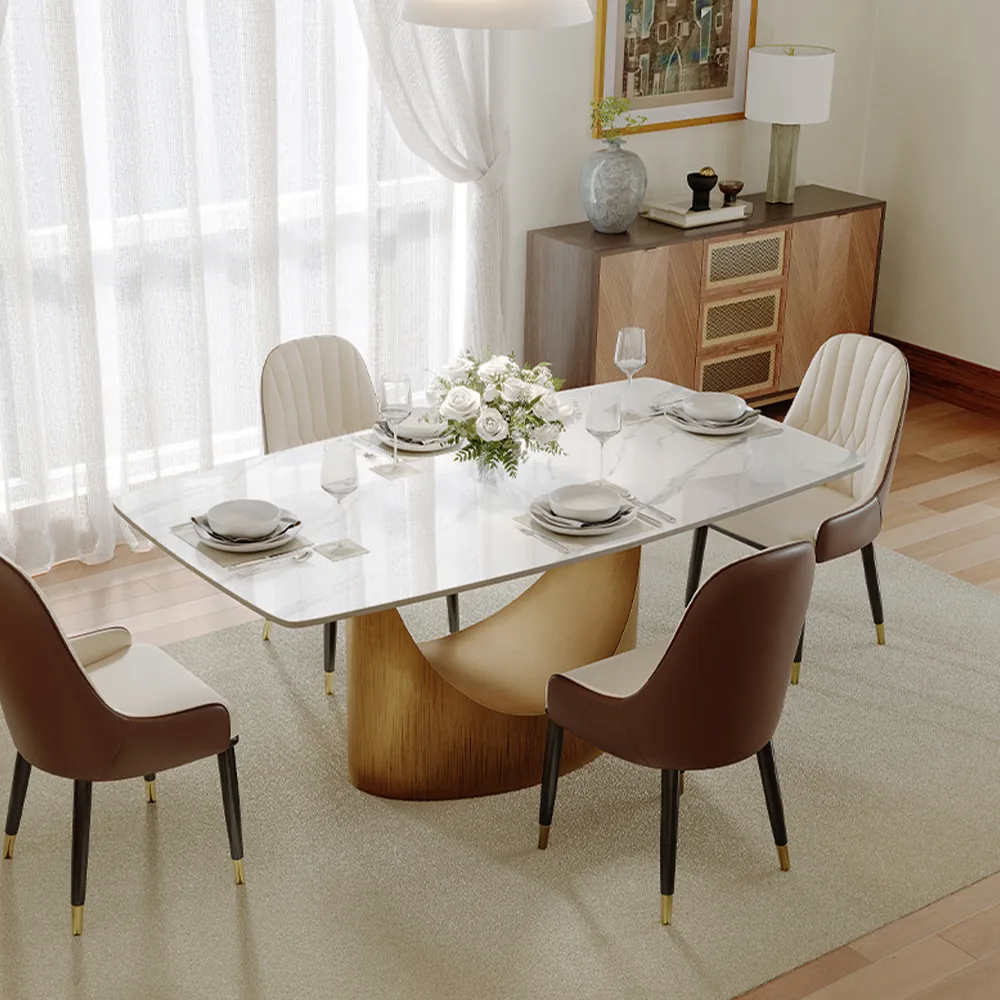
A fully assembled minimalist dining set—like the POVISON minimalist collection and the Hobart Minimalist Dining Table—skips all of that. The Hobart features a glossy sintered stone tabletop and a slim metal base that feels sculptural yet understated, offering a scratch-resistant, heat-proof, and stain-resistant surface that’s ideal for everyday family use and dinner parties alike. Here’s how flat-pack compares:
| Flat-Pack Dining Set | Fully Assembled (POVISON Minimalist Collection) | |
| Time & tools | Hours of assembly, multiple tools | Arrives ready to use; unpack, place, dine |
| Build quality | Dependent on your assembly skills; visible hardware | Factory-assembled for stability and longevity |
| Visual simplicity | Extra screws, joints, and “DIY tells” add visual noise | Cleaner lines, fewer seams, more refined minimalist look |
| Stress level | Instructions, missing pieces, returns hassle | Delivery options available: focus on styling, not complicated setup |
In my own dining room, swapping a wobbly flat-pack table for a fully assembled sintered-stone design instantly made the space feel more expensive—and breakfast stopped being a balancing act.
For more help deciding between options, check out Povison’s modular dining set vs fixed dining table guide.
Color, Materials, and Light for a Calm but Luxurious Mood
2026 Color Palettes for Minimalist Dining Rooms
2026 color trends pair beautifully with minimalist dining room ideas. Warm whites, mushroom beiges, caramel browns, and inky blues are edging out flat gray. Design editors are calling rich browns and moody palettes key players in the years ahead, a big step away from stark all-white spaces.
Try this: paint walls a soft oat or greige, choose a mid-tone wood or stone table, and add a deep brown or charcoal rug for grounding. Add a touch of blue or forest green in art or upholstery for a subtle, sophisticated contrast that still feels minimalist.
Layering Textures and Natural Materials Without Visual Clutter
To make a minimalist dining room feel luxurious, layer textures instead of adding objects. Natural materials—solid wood, stone, linen, wool, jute—bring warmth and a sense of sustainability that’s increasingly important to homeowners. Industry reports expect sustainable, natural materials like wood, jute, and stone to keep rising in popularity for home decor.
A sintered-stone tabletop with linen placemats, a wool rug, and a single ceramic vase gives you depth without clutter. For material inspiration and care tips, POVISON’s article on why choose a sintered stone dining table is a helpful deep dive.
Light Layers – Sculptural Fixtures and Subtle Glow
In 2026, a minimalist chandelier dining room doesn’t mean a boring one. Oversized, sculptural fixtures—slim black rings, branching brass forms, or delicate glass globes—double as art and focal point, especially above a simple table.
Layer your minimalist dining room light with three elements: a statement chandelier or pendant, soft wall or table lamps, and very subtle recessed lighting if needed. Dimmer switches are your best friend; they let a minimalist dining room chandelier glow gently for late-night talks, then shine bright for kids’ homework or laptop time.
Styling Like a Minimalist – Décor That Breathes
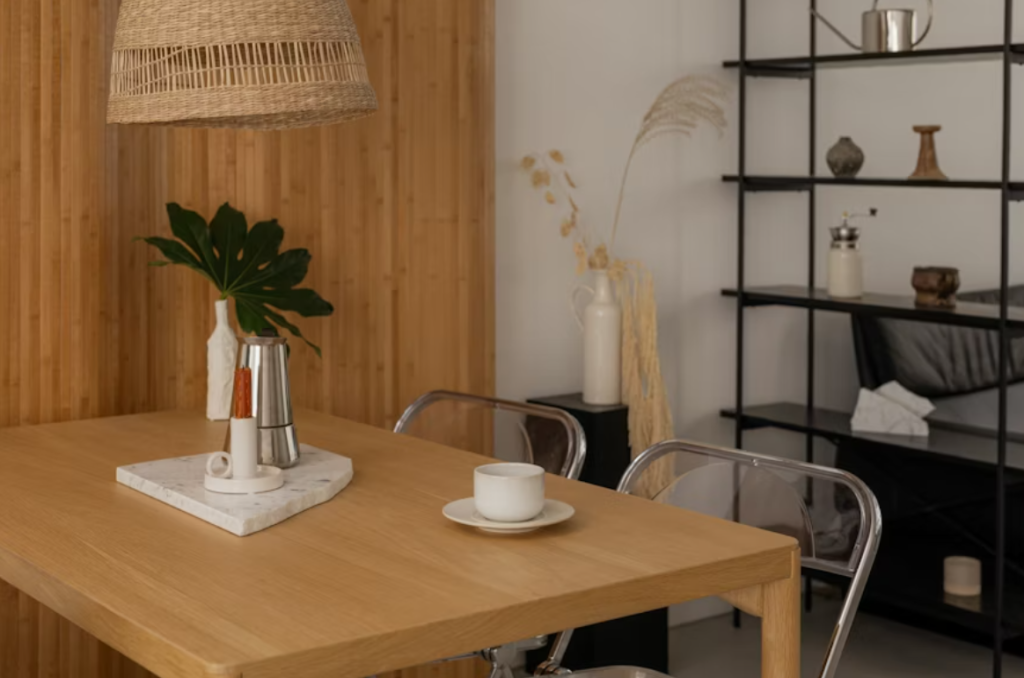
Styling a minimalist dining room is about editing, not deprivation. Start with a clear table, then add just one or two everyday objects that feel special: a sculptural bowl, a small stack of linen napkins, or a single branch in a glass cylinder. When everything on the table has a purpose, even simple pieces read as luxurious.
Wall decor should be equally restrained. One large artwork, a pair of minimalist prints, or a slim shelf with two or three curated objects is usually enough. Think of your walls as negative space that lets the furniture and light shine—this is what makes a minimalist dining room decor scheme feel gallery-level rather than unfinished. For more styling inspiration, browse Povison’s piece on top rated minimalist dining tables 2026 and imagine how the vignettes could translate into your own room.
Conclusion – Less Effort, More Luxury in Your 2026 Minimalist Dining Room
A 2026-ready Minimalist Dining Room is soft, functional, and deeply personal. By clarifying how you use the space, choosing a hero table and thoughtful seating, embracing warm colors and natural materials, and keeping decor edited, you get that “quiet luxury” look without constant tidying. Fully assembled pieces from collections like POVISON’s minimalist line reduce effort even more, so you can spend your time at the table—not under it with an Allen wrench.
Minimalist Dining Room 2026 FAQs
Is Minimalism Out of Style in 2026?
No. Minimalism is evolving, not disappearing. Designers are moving toward warm minimalism—clean lines plus cozy textures and richer colors—rather than stark, all-white rooms. And in a 2025 survey of 2,000 American homeowners, 56% still preferred minimalist decor over maximalist styles (in a study summarized by the New York Post).
How Do I Make a Minimalist Dining Room Kid-Friendly?
Choose a table with rounded corners and a durable top—sintered stone or solid wood with a tough finish. Opt for wipeable, stain-resistant chair fabrics and a low-pile rug. Add closed storage for coloring books and games so they disappear after dinner. Keep breakable decor minimal and place it out of reach on higher shelves.
What’s the Best Budget Split for a Minimalist Dining Room Makeover?
As a rough guide, invest about 50–60% of your budget in the table and chairs, since they set the tone and take daily wear. Allocate 15–20% to lighting (your minimalist dining room chandelier or pendant), 15–20% to storage pieces, and keep the remaining 10% for decor, textiles, and art.
Can I Mix Old Pieces with a Minimalist Look?
Absolutely. A minimalist Scandinavian dining room, for example, often pairs modern silhouettes with one vintage cabinet or heirloom chair. The key is editing: keep only a few special old pieces, and stick to a tight palette of colors and materials so everything feels intentional rather than random.
How Many Chairs Should I Buy for a Minimalist Dining Room?
Plan for your everyday number of diners plus a small buffer—usually two extra chairs. For a family of four, six chairs is enough. If space is tight, store the extra chairs in a hallway or bedroom and pull them out only when needed. Avoid lining every wall with spares; it clutters the minimalist look.


