 By Jenny Smith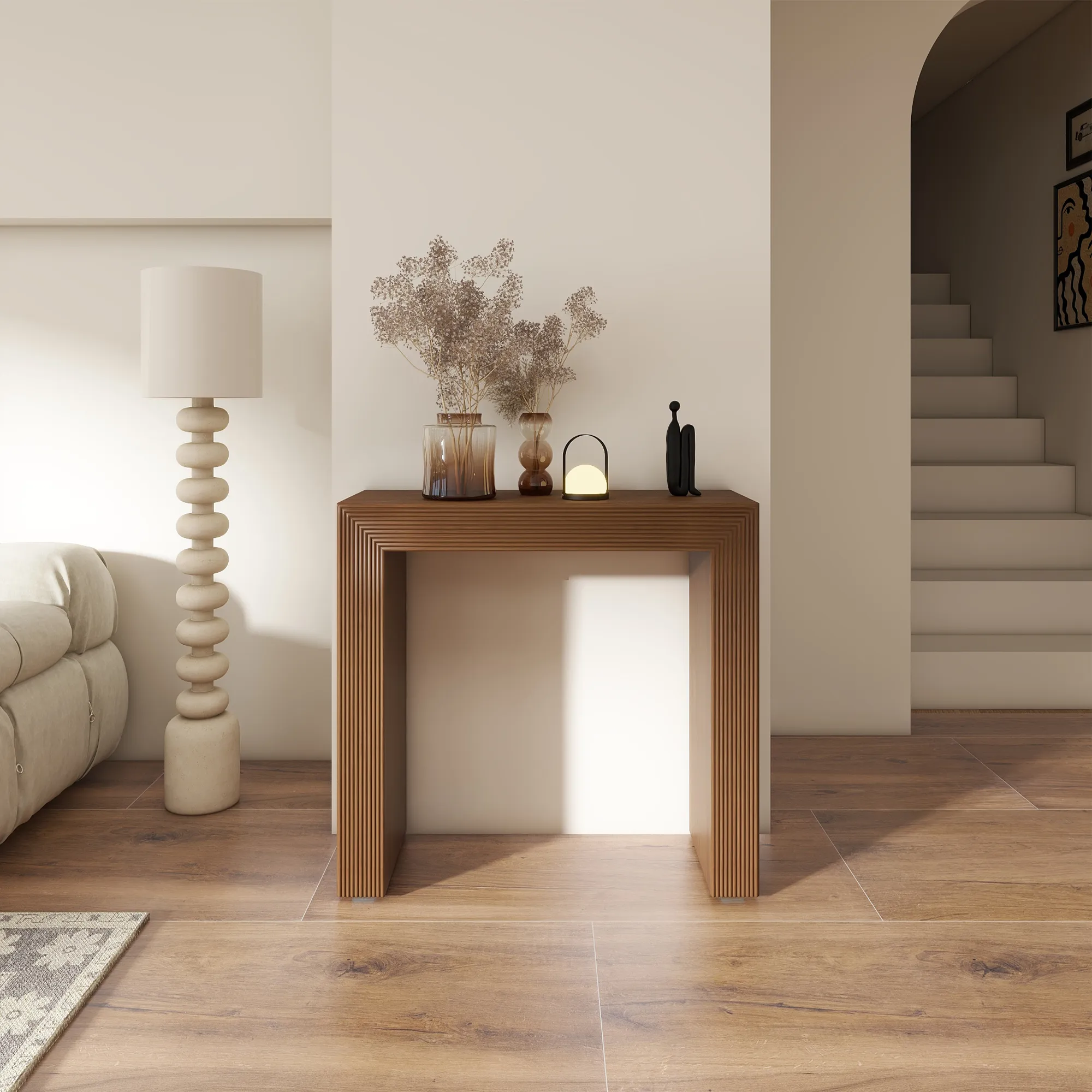
A console table might look like a simple narrow surface, but it can completely change how your home feels the moment you walk in. In this guide, we’ll break down exactly what a console table is, where it works best, and how to style a console table so it looks intentional rather than cluttered. We’ll also share five editor’s-pick console tables you can shop right now, from versatile budget-friendly pieces to sculptural designs that anchor an entire room.
What Is a Console Table?
What Exactly Is a Console Table?
A console table is a long, narrow table designed to sit against a wall or behind a sofa. Unlike a dining or coffee table, its main job is to provide a shallow surface for display and light storage without taking up much floor space. Console tables are usually around counter height, which makes them ideal for holding keys, lamps, artwork, or decor at eye level as you walk through a room. When people talk about entry tables, hallway tables, or sofa tables, they’re often talking about console tables in different roles.
Console Tables vs. Other Furniture Pieces
Console tables are easy to confuse with sideboards, credenzas, or TV stands, but the proportions and purpose are different. A sideboard is typically deeper, heavier, and designed for serious storage, often in the dining room. A TV stand is built around screen size and cable management. A sofa table is essentially a console table that lives behind a couch, but it still follows the same formula: long, narrow, and visually light. Thinking in terms of depth and what you need the piece to do—display, store, or support media—makes it much easier to decide if console tables are the right category.
Dimensions, Materials and Styles
Most console tables are about 28–34 inches high, 30–72 inches long, and 10–18 inches deep. The shallow depth is what allows them to work in tight spaces like hallways and small entryways. Materials range from warm woods to sleek metal and glass to durable sintered stone tops. As of 2024, the global console table market is estimated at around USD 6.8 billion and projected to grow to about USD 10.5 billion by 2032, showing how demand for this type of multi-functional furniture keeps rising (Credence Research, 2024). (Credence Research) You’ll find console tables in styles from modern and minimalist to farmhouse, coastal, or glam, so it’s usually possible to match one to your existing decor.
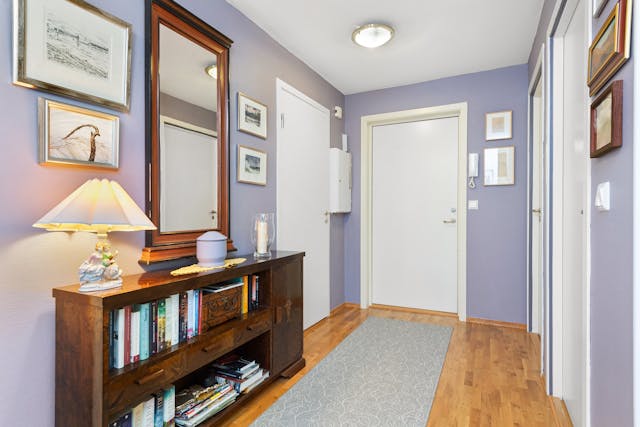
Where and Why to Use Console Tables at Home
Entryways: Small Piece, Big First Impression
In an entryway, a console table becomes the “hello” of your home. It catches keys and mail, frames a mirror or artwork, and gives guests an instant sense of your style. That’s important because psychological research shows people start forming first impressions in as little as 100 milliseconds—essentially a single glance (Willis & Todorov, 2006; Association for Psychological Science). When your console table anchors a tidy, well-lit vignette instead of a pile of clutter, the whole home feels more considered from the very first step inside.
Recent renovation data also shows how much people care about improving their spaces overall: in 2024, 54% of homeowners undertook renovation projects, and 54% also completed decorating projects. (Houzz, 2024) An entryway console is an achievable, high-impact upgrade that fits into that broader desire to make homes more functional and beautiful without necessarily doing a full remodel.
Behind Sofas and in Open-Plan Spaces
Behind a sofa, console tables help “finish” a floating seating area and make the back of the sofa look intentional instead of bare. They can hold a lamp at reading height, a tray for drinks, or a few sculptural pieces while still keeping the floor clear. In open-plan living rooms, placing a console behind the sofa subtly defines zones, acting like a visual divider between lounge and dining or circulation space without needing a wall or bulky storage piece.
Hallways, Dining Rooms and Bedrooms
In a narrow hallway, a slim console table adds personality and a landing spot for mail or a small lamp without shrinking the walkway. In a dining room, it can double as a compact buffet for serving dishes or a small bar area on special occasions. In bedrooms, console tables can stand in for a dressing table or a light desk, especially when paired with a small stool that tucks underneath. The key is to prioritize traffic flow and choose the right depth so the table supports daily life rather than getting in the way.
How to Choose the Right Console Table
Measuring for Size and Traffic Flow
Before you fall in love with a design, measure your space carefully. Check the total wall length you have available and how much depth you can spare while still walking comfortably. In most homes, leaving at least 36 inches (about 91 cm) of clear walkway in front of the console table feels comfortable for everyday movement. If your hallway or entry is tighter, err on the side of a shallower table rather than compromising how it feels to pass by with a bag, coat, or kids in tow.
Storage vs. Minimal Surfaces
Some console tables come with drawers, doors, or shelves; others are essentially a clean slab on slender legs. If you tend to accumulate keys, sunglasses, mailing supplies, and random odds and ends, a console with drawers or closed storage is your friend. In minimalist spaces or very small rooms, an open-frame console table keeps the look light and airy, especially if you plan to style the lower area with baskets or stools. Think about how much “visual quiet” you want versus how much you realistically need to hide.
Matching Style to Your Existing Decor
To make console tables feel like they belong, focus on three things: color, material, and line. A white stone or light oak console works beautifully against darker walls; a rich wood or black metal console can ground pale walls. Material, like sintered stone or metal, can subtly echo finishes from nearby furniture, lighting, or hardware. Finally, consider whether your home leans toward straight-lined modern pieces or has more curves and carved details; choose a console that repeats those shapes so it feels like part of the same story rather than a random extra.
Best Console Tables to Buy Now (Top 5 Editor’s Picks)
POVISON 39″ Modern Entryway Table with Storage — Best Small Entryway Console with Hidden Storage
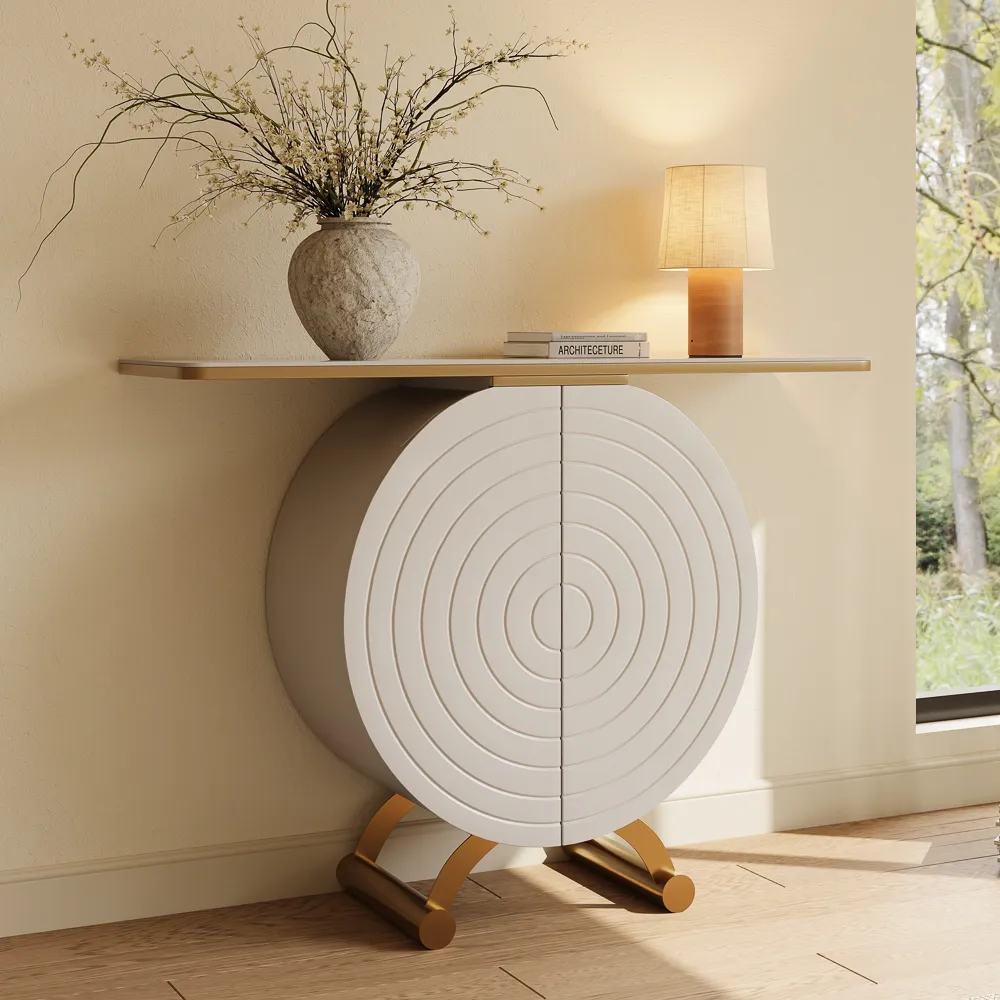
Price: $999
Best For: Compact entryways that still need closed storage.
Why We Love It
This white-and-gold console table packs a lot into a small footprint, combining a luxurious sintered stone top with a base that offers storage without looking bulky. It feels elevated enough for a formal foyer but is slim and simple enough to work in apartments and townhomes, too. The white finish keeps it bright, while the golden base adds just enough glam.
Features
The 39″ Modern Entryway Table with Storage is designed for hallways and foyers, with an overall size of 47.24 x 13.78 x 34.84 inches, giving you a generous surface for a lamp and catchall tray without cutting into your walkway. Engineered wood keeps it stable, while the sintered stone top is resistant to heat and everyday scratches, making it easier to live with than marble. Picture coming home with your hands full: you can drop keys and mail on top, stash stray items in the storage below, and still have the entry looking clean when guests arrive.
POVISON 47″ Modern Sintered Stone Console Table — Best Sculptural Statement Console
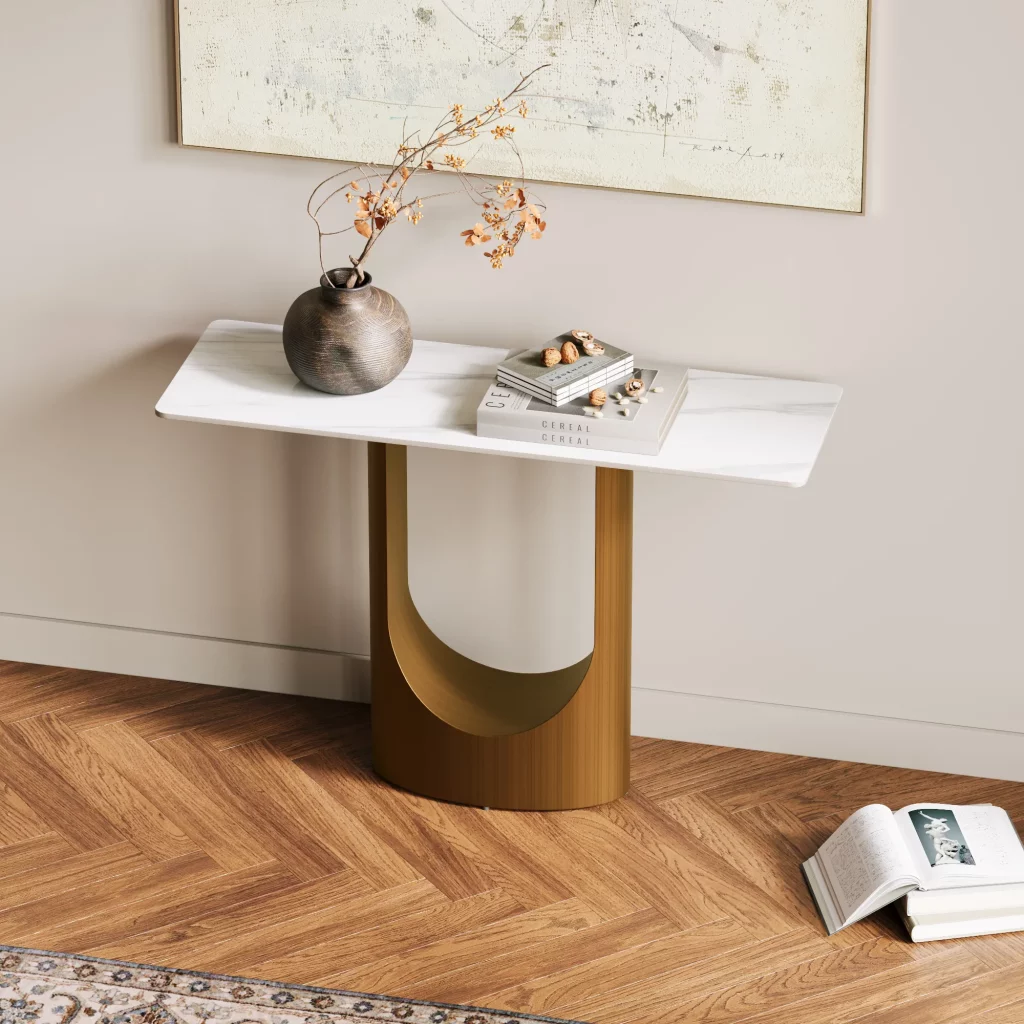
Price: $599
Best For: Design-forward entryways or living rooms that need a focal point.
Why We Love It
This console combines a glossy white sintered stone top with a bronze curved base, creating a sculptural profile that immediately draws the eye. It’s ideal if you want your console table to look high-end and architectural rather than purely functional. Multiple color options on the base and top give flexibility to coordinate with your existing finishes.
Features
The 47″ Modern Sintered Stone Console Table measures 47.24 x 15.75 x 31.5 inches, offering a slightly deeper surface that feels substantial in larger entryways or behind a sofa. The sintered stone tabletop is durable and easy to wipe clean, while the bronze base introduces warmth and curves. Imagine styling it with an oversized art print and a single tall vase; the curved base keeps the whole composition from feeling too rigid, and the console itself almost reads like a piece of sculpture in the room.
West Elm Yamazaki Tower Narrow Entryway Console Table (24″) — Best Ultra-Narrow Console for Tight Spaces
Price: $95
Best For: Very tight entryways, studio apartments and small hallways.
Why We Love It
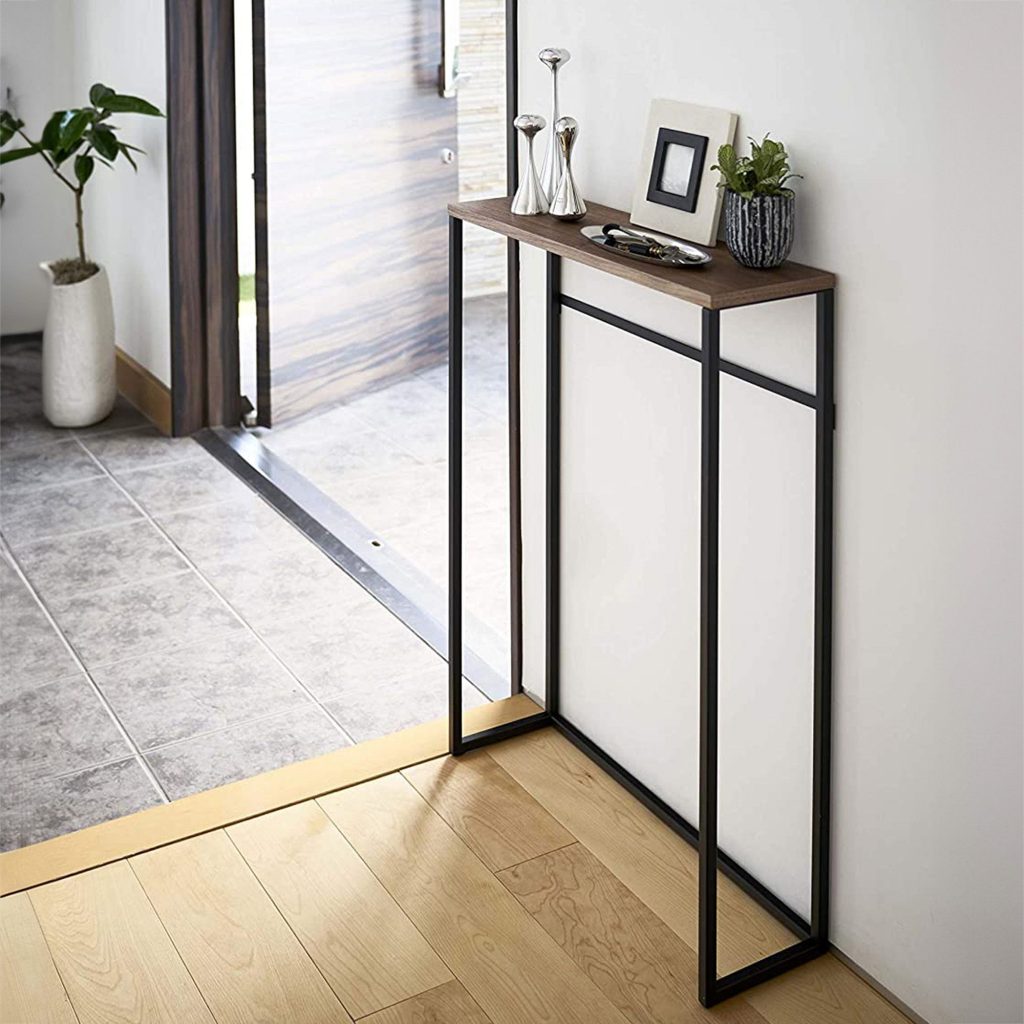
Designed in Japan, this console is made specifically for small spaces. At just 24 inches wide, it slides into corners, beside doors, or along short walls where a standard console would feel oversized. Integrated hooks and lower storage help you make use of vertical space when you can’t spare much floor.
Features
The Yamazaki Tower Narrow Entryway Console Table is tall and slim, with a metal frame and simple top that keeps the silhouette light. Built-in hooks on the side can hold umbrellas, small bags or dog leashes, while the bottom area can corral shoes or a small basket. At this size and price, it’s an excellent starter console for renters or anyone who wants function without committing to a big piece of furniture. Styled with a small tray and a wall-mounted mirror, it still delivers that “finished entry” feeling even in very compact spaces.
West Elm Profile Narrow Console Table (22″) — Best Modern Metal Console Behind a Sofa
Price: $299
Best For: Modern living rooms and behind-the-sofa styling.
Why We Love It
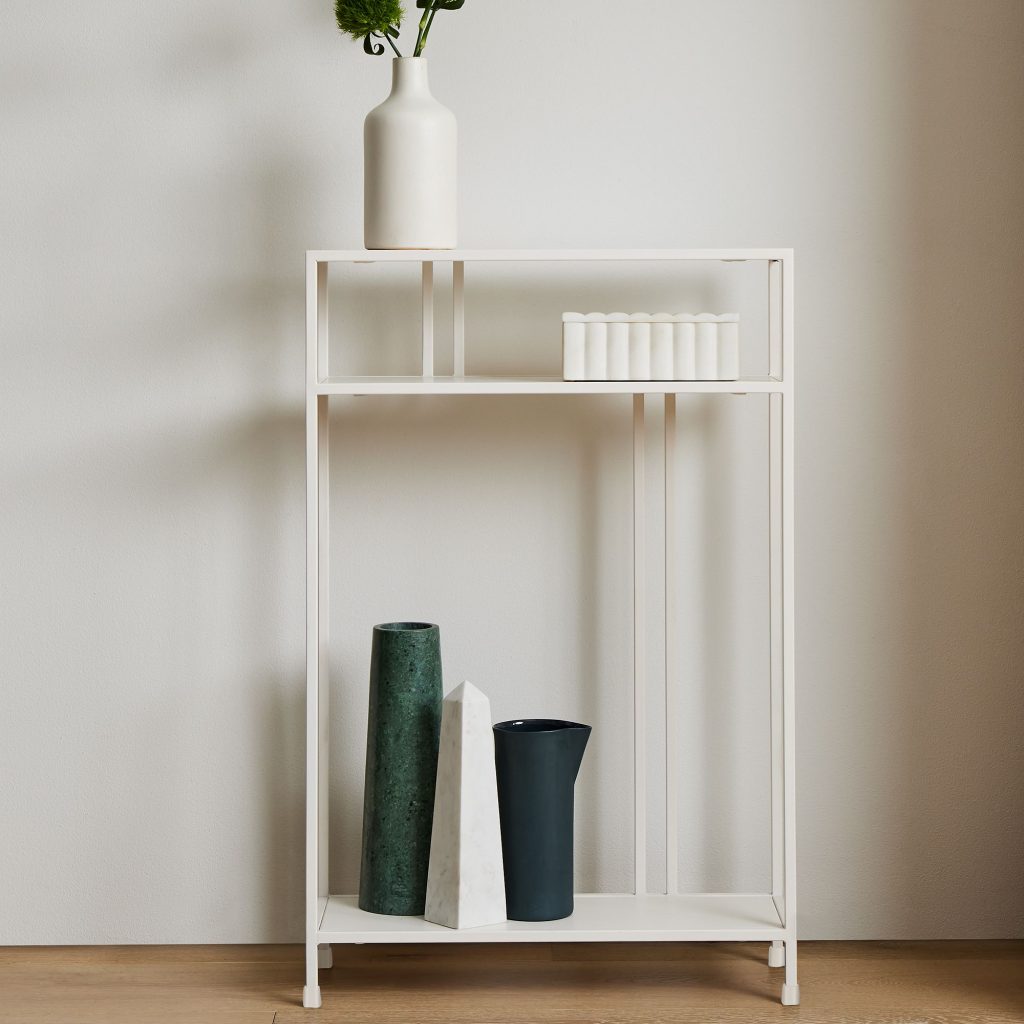
The Profile Narrow Console Table has a slim metal frame with staggered lines that feel graphic but not overpowering. It’s narrow enough to sit behind many sofas without eating up space, and the simple silhouette suits modern, industrial, and minimalist interiors. Contract-grade construction also makes it a solid pick for high-traffic homes.
Features
At 22 inches deep and built in durable metal, this console can hold lamps, books and decor while visually receding into the background. The open design allows light to pass through, which is especially useful in apartments where you don’t want to block sightlines. Picture it behind a sofa with a pair of lamps and a stack of books: you can still see across the room, but the back of the sofa suddenly looks intentional rather than bare. Because it comes in finishes like dark bronze, it easily ties into existing hardware and lighting.
Pottery Barn Raymond Reclaimed Wood Console Table (72″) — Best Investment Console for Large Spaces
Price: $1,899
Best For: Large entryways, great rooms and long hallways.
Why We Love It
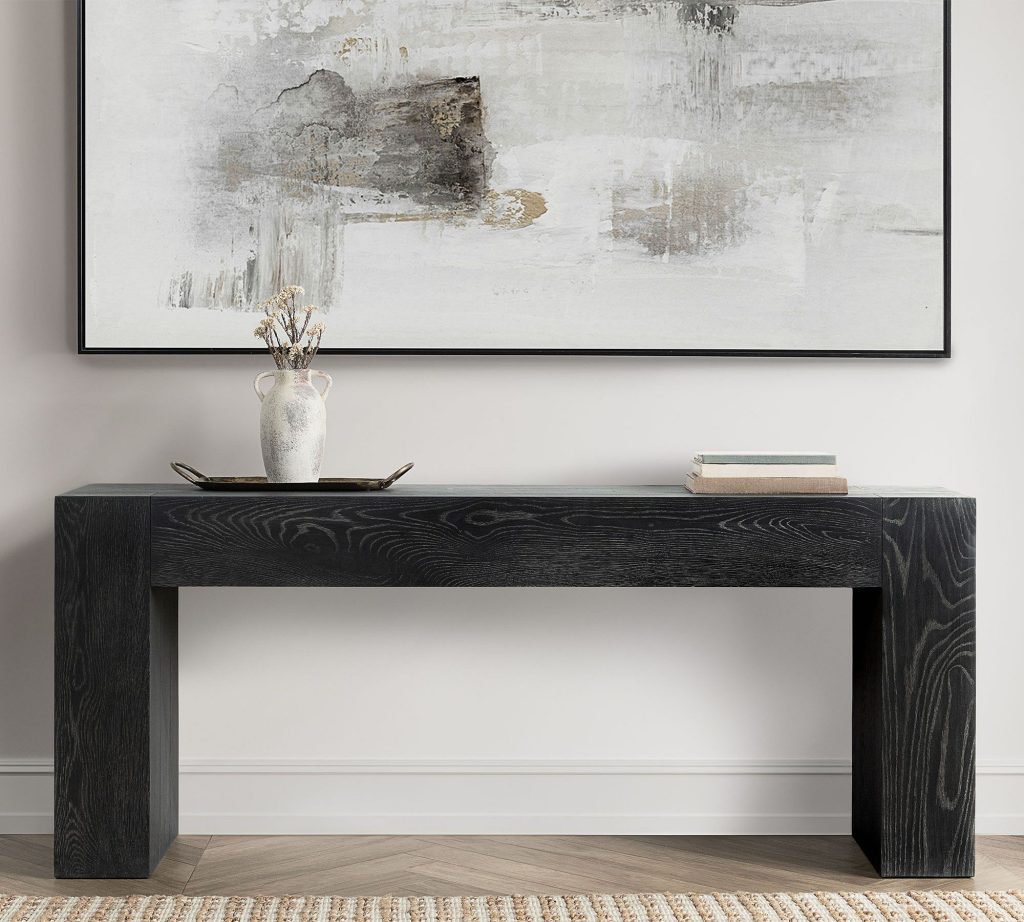
The Raymond Reclaimed Wood Console Table is a substantial, 72-inch-long piece crafted from reclaimed oak, which instantly adds character and warmth. It’s an investment console that can anchor a big wall, sit behind a long sofa, or serve as a buffet-style surface for entertaining. The reclaimed wood construction adds unique grain and patina to every piece.
Features
This console is crafted from kiln-dried reclaimed oak, a durable hardwood with a beautiful open grain. Its length makes it ideal for larger spaces where smaller console tables would feel lost. The thick top and sturdy legs create a grounded presence, perfect for layering oversized art, table lamps and large vases. Because it uses reclaimed wood, it also appeals to buyers who care about sustainability and prefer furniture with a more organic, lived-in look. Styled with large baskets underneath, it can also provide serious storage without resorting to a bulky cabinet.
How to Style a Console Table Step by Step
Anchor the Wall Above the Console
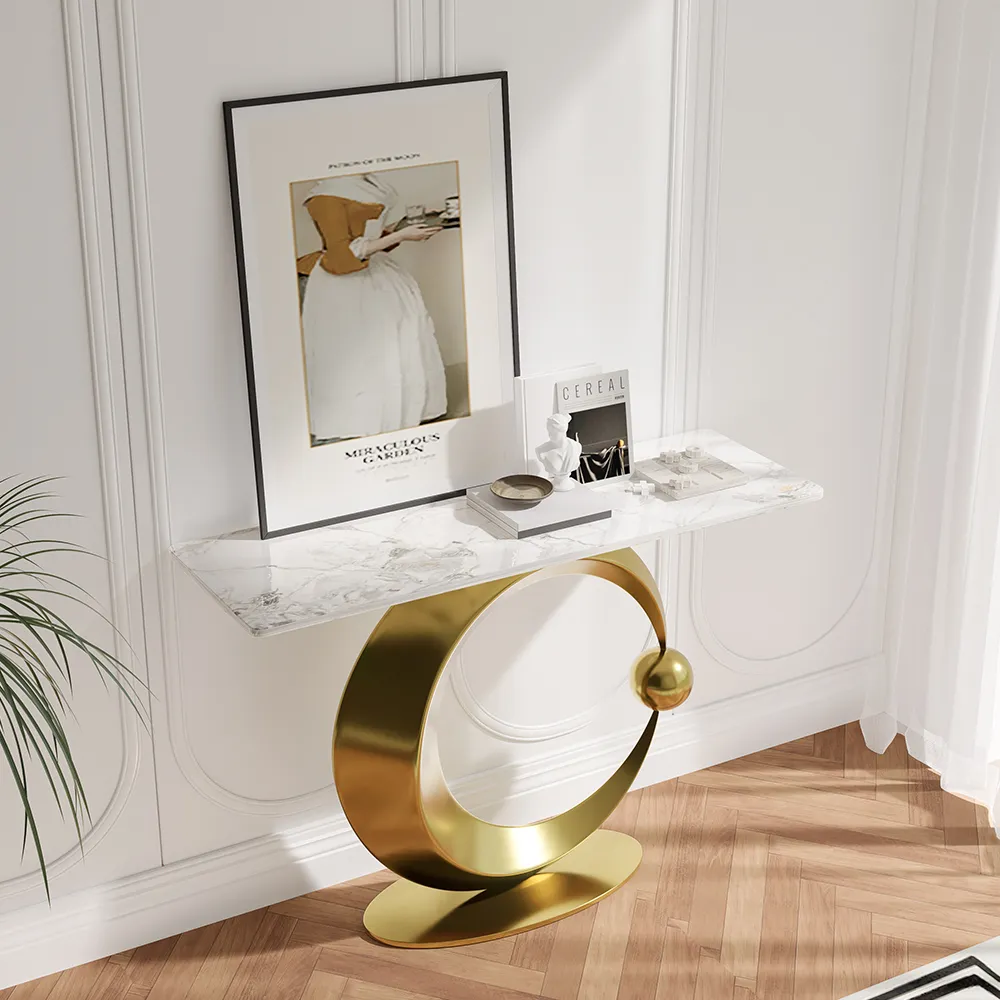
Start by choosing an anchor for the wall above your console table: a mirror, a single large piece of art, or a tight grouping of smaller frames. As a rule of thumb, you want the width of that piece to be roughly half to three-quarters of the console’s length so it feels proportional. Hang it so the center is near eye level, then let everything on the console play off that focal point. This not only centers the arrangement visually but makes the entire wall feel intentional rather than random.
Build Layers on the Surface
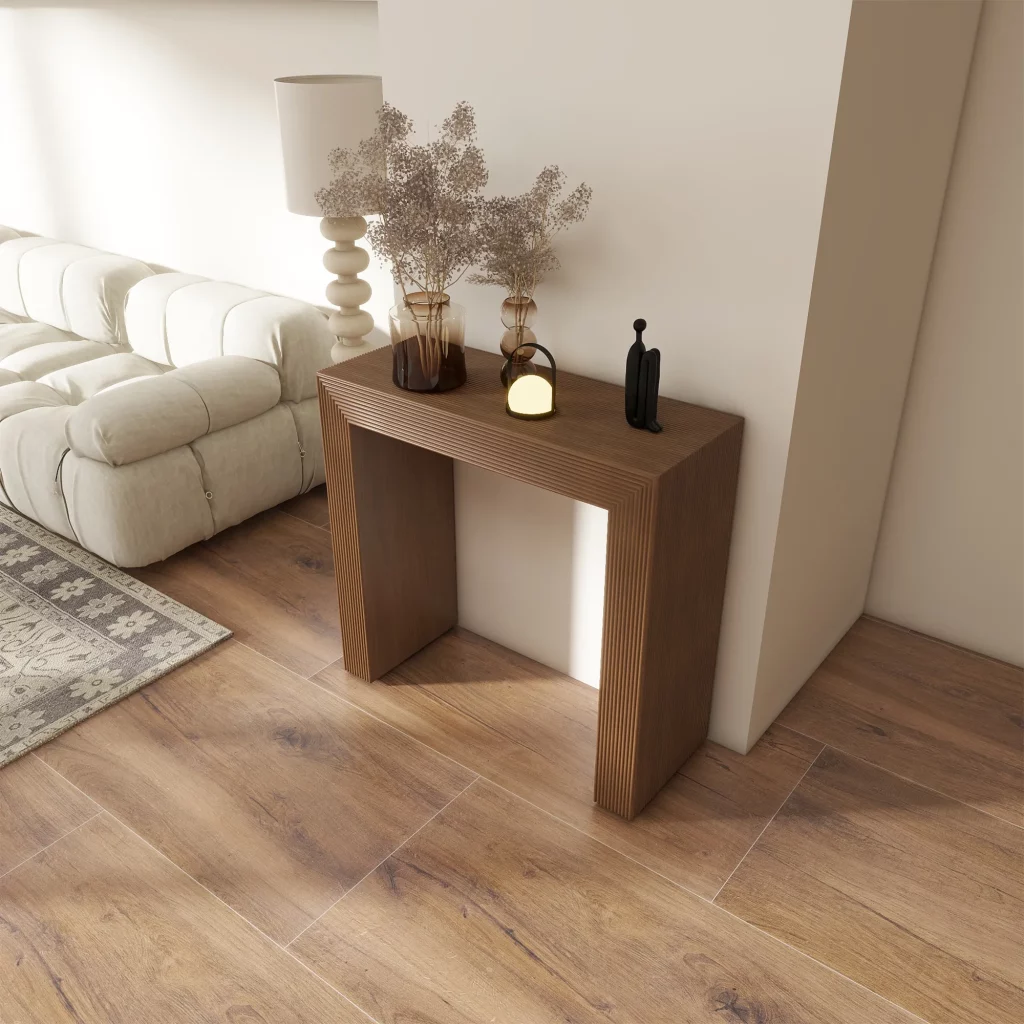
Once the wall anchor is in place, layer decor on the tabletop itself. Think in terms of height, shape and balance rather than individual objects. You might pair a table lamp with a stack of books and a small decorative object, or a tall vase with greenery balanced by a lower bowl or tray. This mix of tall and low, solid and airy items creates dimension and keeps the eye moving across the surface.
- Formula ideas: lamp + books + sculptural object; vase with branches + candle + catchall tray; paired lamps + centered artwork + simple bowl.
Use the Space Below
The space beneath console tables is prime real estate, especially in small homes. Baskets can hide shoes, dog toys or scarves; upholstered cubes or stools can act as overflow seating that tucks away when not in use. Try to leave a visual gap between the bottom of the console and whatever sits on the floor so it doesn’t feel crammed. In larger rooms, a single substantial object—like a big ceramic pot or a woven trunk—can ground the composition without adding visual noise.
Seasonal Updates and Personal Touches
Once the basic layout is done, you can refresh decor seasonally without rethinking the whole setup. Swap in fresh flowers or bright ceramics in spring, lighter greenery in summer, and textured elements like pinecones or candles in winter. Personal items—travel souvenirs, family photos, a favorite book—prevent console tables from looking like staged furniture and instead make them feel like a snapshot of your life at this moment.
Simple Console Table Styling Tweaks for a More Polished Look
One of the most common mistakes with console tables is using decor that’s either too tiny or too busy. A scattering of very small objects—think dozens of mini frames, candles and trinkets—makes the surface feel cluttered yet strangely underwhelming. Instead, edit down to fewer but larger pieces: one or two taller items, a stack of books, and a single small object or candle often look more sophisticated than a dozen unrelated things.
Another frequent issue is ignoring the wall and floor around the console table. A console floating alone on a blank wall, with nothing above or below it, can look like it’s “stuck on” rather than part of the room. The fix is simple: add a wall anchor (mirror, art or sconces) and something to visually ground the bottom, like baskets or stools. That way, the console reads as part of a complete vertical composition rather than a lonely table against an empty wall.
Conclusion: Making Console Tables Work for Real Life
Console tables are one of the most versatile pieces you can add to a home: they organize the everyday mess, frame your entryway or sofa, and offer a place to express your style in a relatively small footprint. By understanding what a console table is, choosing the right size and function for your space, and following a few simple steps for how to style a console table, you can turn narrow, awkward spots into some of the most polished corners of your home. Start with one console in your entry or living room, get the styling right, and you might find yourself planning the next one for your hallway or bedroom.
FAQs About Console Tables
How much weight can a typical console table hold?
Most console tables are designed for decor, not heavy loads, so they comfortably hold items like lamps, books and ceramics. Always check the manufacturer’s specifications, but as a rule, avoid placing extremely heavy objects, large aquariums or stone sculptures on top unless the table is specifically rated for that kind of weight.
Are console tables safe in homes with kids and pets?
Yes, as long as you choose a stable design and style them thoughtfully. Look for sturdy frames, avoid very top-heavy decor, and skip fragile items at the front edge. Wall-anchoring taller, lighter tables and choosing rounded corners can also help reduce bumps and spills in busy households.
How do I keep a console table from becoming a clutter magnet?
Give every everyday item a designated spot—a bowl for keys, a tray for mail, a small box for chargers—and commit to keeping everything else decorative. Regularly edit the surface and clear anything that doesn’t belong. The more intentional the layout feels, the less likely you are to drop random clutter there.
What’s the best way to clean console table surfaces?
It depends on the material. Wood usually needs a soft, slightly damp cloth and occasional polishing; glass benefits from streak-free cleaner; metal or stone may require specific non-abrasive products. Always follow the care instructions from the manufacturer to avoid scratching or dulling the finish over time.


