 By Jenny Smith
Ever brought home a “standard” sofa and realized it’s way too big for your living room—or so small it feels like a bench? You’re not alone. With so many shapes and styles, standard sofa size can get confusing fast. In this guide, we’ll break down what the standard size of a sofa actually is, explain sofas’ standard sizes for loveseats, 3-seaters, sectionals, chaise sofas, and sofa beds, and show you how to choose the right size for your room and body.
What Is the Standard Size of a Sofa?
When people search “what is standard size of sofa”, they’re usually talking about a classic 3-seater. A widely used reference from home design publisher The Spruce gives a standard three-seat sofa at about 90 inches wide and 38 inches deep (The Spruce, 2024). In practice, heights vary by design, but many standard sofas sit roughly 30–36 inches high. This is the baseline most floor plans and living-room layouts are built around.
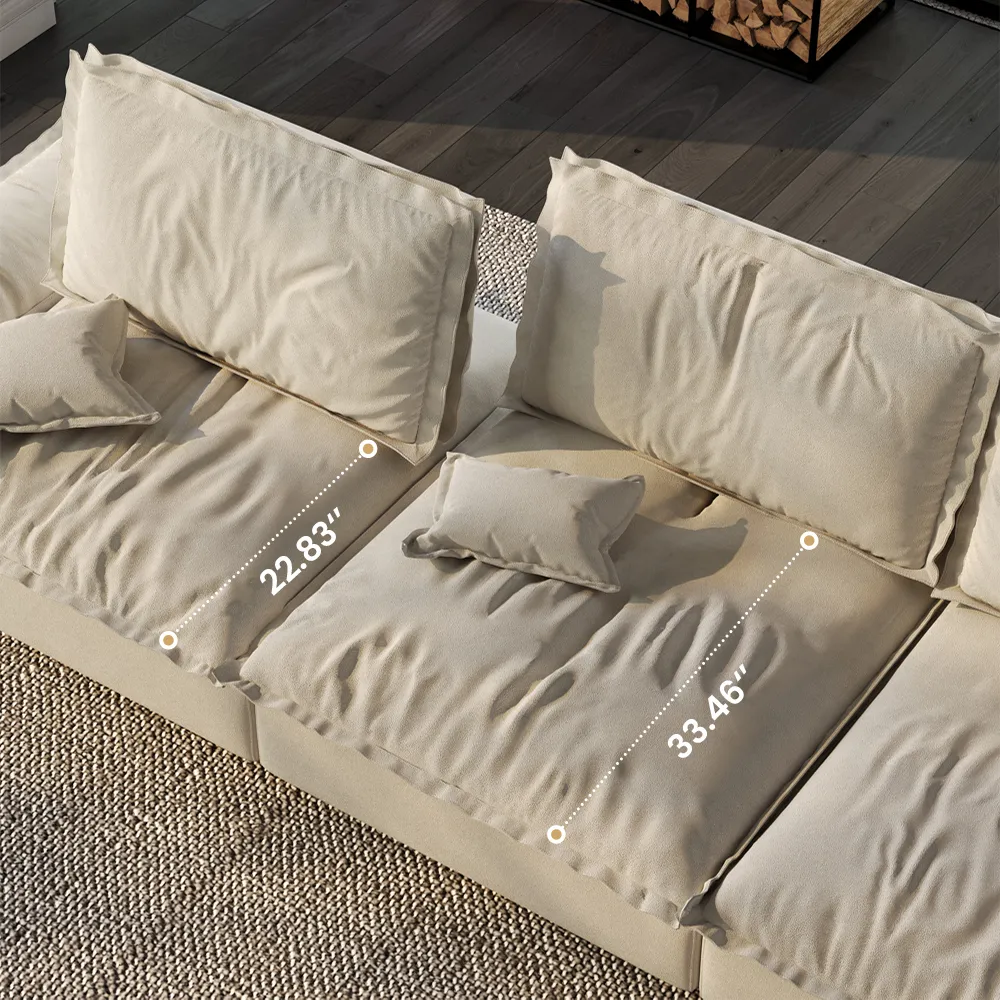
For comfort, the critical dimension is the seat depth rather than the outside depth. Architectural Digest notes that a standard sofa seat is typically around 20–22 inches deep, while “deep” sofas stretch to 23–27 inches. (Architectural Digest, 2025). So when you see “standard sofa size,” think roughly 90″ W × 38″ D overall, with a 20–22″ seat depth as a comfortable, all-rounder profile.
Standard 2-Seater (Loveseat) Sofa Dimensions
Using the same reference set, a standard loveseat is typically listed at about 60 inches wide and 38 inches deep (The Spruce, 2024). That footprint comfortably seats two adults and works well in small living rooms, studio apartments, or as an accent piece in a bedroom or home office.
Compared with a 3-seater, you’re sacrificing some length, but the depth and seat height are often very similar, so comfort doesn’t necessarily drop—only the number of seats. In a compact apartment, for example, pairing a 60-inch loveseat with a small black coffee table still leaves clear walkways while feeling cozy enough for two people to watch a movie side-by-side.
| Loveseat size band | Typical overall width* | Seats comfortably | Best for |
|---|---|---|---|
| Compact loveseat | 48″–55″ | 1–2 people | Very small living rooms, tight apartments, end-of-bed seating |
| Standard loveseat | 56″–62″ | 2 people | Small to medium living rooms, main sofa in studios |
| Large loveseat / loveseat sofa | 63″–72″ | 2–3 people (cozy) | Rooms where you want more sprawl without a full 3-seater |
Standard 3-Seater Sofa Dimensions
Because so many planning guides and design articles use it as a reference, the 3-seater is effectively the “standard sofa size”. The Spruce’s guideline of 90 inches wide by 38 inches deep gives each of three sitters around 24–30 inches of personal space, which is enough for relaxed everyday seating without feeling squeezed. (The Spruce, 2024).
Design details change how usable that space feels. Slim, straight arms and a more upright back maximize seat width within the same overall 90-inch length, while chunky rolled arms or thick cushions reduce the sitting area. When customers tell us they “need a standard 3-seater,” we always double-check overall width and inside seat width so they know how much real seating they’re getting.
Sofas’ Standard Sizes for Sectionals, Chaise & Sofa Beds
Once you move into sectionals and sofa beds, sofas’ standard sizes become more of a range than a single number, but they still relate back to that same 3-seater baseline. Many L-shaped sectionals for average living rooms are built from a 3-seat base on one side and a shorter return on the other, so it’s very common to see layouts where the long side is around one standard sofa length (about 9 feet) and the short side is closer to 5–6 feet. That gives you room to stretch out without needing an oversized room.
For chaise sofas, the main body often follows standard sofa length (around 80–90 inches), with the chaise portion extending the depth by roughly one extra seat length so one person can fully recline. Sofa beds usually mirror standard sofa widths when closed, but when open, the sleeping surface roughly follows standard mattress conventions—many designs aim to approximate a full or queen mattress length so adults can sleep comfortably, even though the exact numbers vary by mechanism and region.
Key Sofa Measurements You Must Understand
Beyond labels like “2-seater” or “sectional,” the real comfort and fit come from a few core measurements. Once you understand these, choosing the right standard sofa size becomes much easier—and you’ll read product pages like a pro.
Overall Width, Depth, and Height
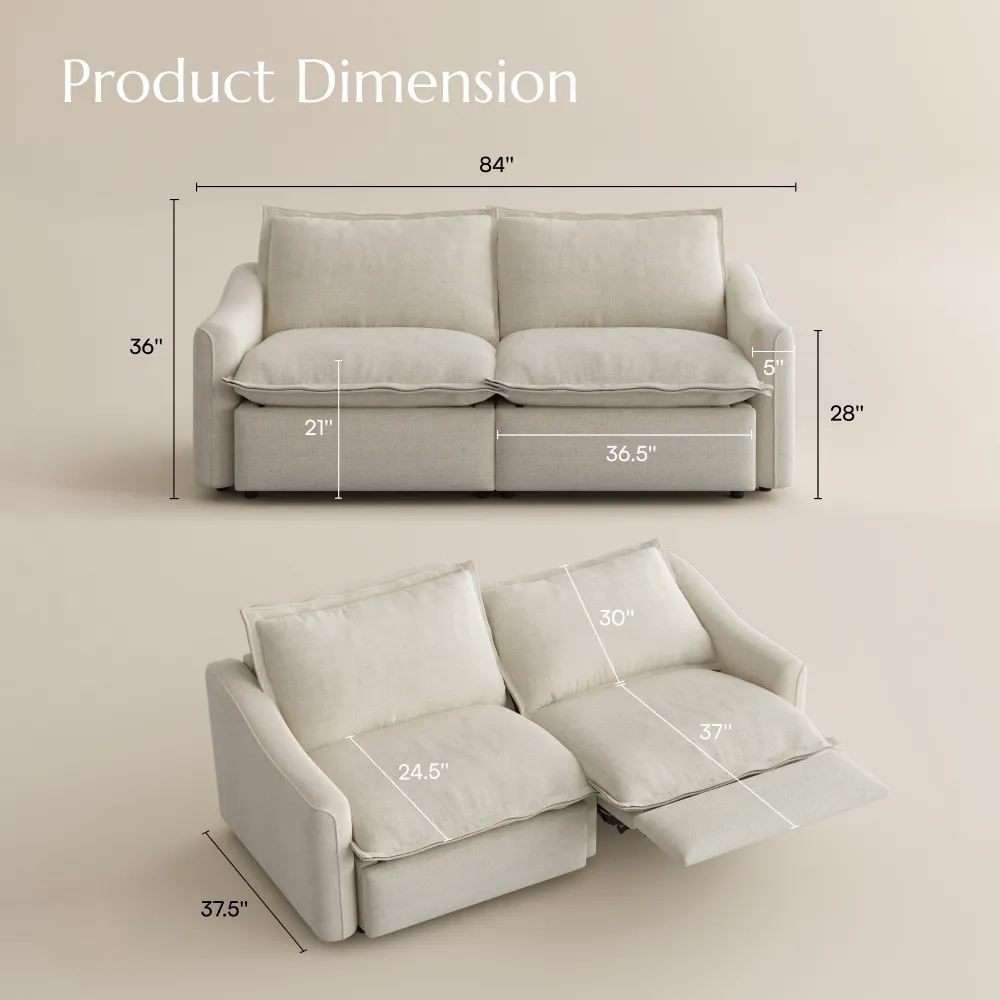
Overall width is the full side-to-side outside measurement, including arms. This is what determines whether the sofa overwhelms your wall or fits neatly between two windows. Overall depth (front of the arms to the very back) tells you how much floor space the sofa will occupy, and whether it will cramp the walkway behind. Overall height affects how tall it feels in the room and whether it will block windowsills or wall art.
Seat Width, Seat Depth, and Seat Height
Seat width is the usable sitting space between the arms—it’s what really tells you how many people can sit comfortably. Seat depth (front of the cushion to the back cushion) greatly affects how you sit: a deeper seat (22″–24″+) suits lounging, curling up, or cross-legged sitting, while a shallower seat (around 20″) keeps you upright and is easier for shorter people.
Seat height, typically around 17″–19″ on many standard sofas, determines how easy it is to stand up. If you like to lounge, a slightly lower seat can feel relaxed; if you have older family members, a slightly higher, firmer seat will be more supportive for getting on and off the sofa.
Back Height and Arm Style
Back height (from the floor to the top of the back) affects how supported you feel and how the sofa reads visually in the room. A taller back gives more support but can look heavier; a lower-profile back feels modern and makes small rooms feel more open.
Arm style changes both comfort and usable length. Low, wide arms are great for lying down and double as mini side tables, while narrow arms maximize seat width. High, structured arms are good if you like to lean into the corners to read or scroll.
How to Measure Your Room for a Standard Sofa Size
Most sizing disasters come from skipping this step. Designers consistently warn that failing to measure room and entry dimensions is one of the biggest mistakes homeowners make when buying a sofa. (Good Housekeeping) Taking 10–15 minutes with a tape measure (and maybe some painter’s tape on the floor) can save you weeks of regret.
Measure Wall Length, Floor Area, and Distance to TV
Start with the wall where the sofa will live. Measure the full wall length, then decide how much of it you want the sofa to occupy. A good rule of thumb: aim for the sofa to be roughly ½ to ⅔ of that wall so it feels anchored but not wall-to-wall.
Next, measure the distance from that wall to the TV stand or media console. For comfortable viewing and circulation, you usually want at least 7–9 feet between the TV and where your eyes will be when seated. For context, a standard living room is often around 18′ × 12′ (216 square feet), which nicely accommodates a standard 3-seater plus chairs without feeling cramped.
Allow Space for Walkways and the Coffee Table
Then, map out walkways. Keep at least 30–36 inches of clear path behind and around the sofa so people can move easily without bumping knees. Place your imaginary coffee table so there’s enough space to walk in front too. Many designers suggest leaving about 16–18 inches between the edge of the sofa and the coffee table—far enough to walk through, close enough to reach drinks without leaning awkwardly.
When I “test-drive” a layout, I like to lay down tape for both sofa and coffee table and actually walk the room—if it feels tight even without furniture, it will definitely feel cramped once everything arrives.
Check Doorways, Hallways, and Stairs for Delivery
Finally, trace the path from your front door to the living room. Measure door widths, hallway widths, and stair turn clearances. A standard sofa may not fit through a narrow 28″ door or a tight staircase turn, even if it fits the room perfectly. Compare your tightest opening to the sofa’s height and depth (whichever will need to pass through first). Many people only realize there’s a problem when the delivery team is standing outside with a sofa that won’t turn the corner.
Matching Sofa Size to Different Room Sizes
Thinking in terms of room size can make choosing a standard sofa size much more intuitive. One useful benchmark: many living rooms fall somewhere between 130 and 420 square feet, with “average” around 216 square feet. (Angi) Use those ranges as a guide and scale your sofa up or down accordingly.
Small Living Rooms and Apartments
In small rooms (around 130 square feet or less), a loveseat or apartment-size 3-seater—think 60″–75″ wide—usually works best. Pair it with a round or narrow coffee table and maybe a slim accent chair. In a compact apartment, a 70-inch sofa with slim arms can feel more generous than a bulky 80-inch design with huge cushions.
Medium-Sized Family Living Rooms
For medium spaces (around 12′ × 18′), a standard 3-seater in the 80″–90″ range is usually ideal, sometimes with one or two accent chairs. This layout offers comfortable seating for family movie nights without making the room feel crowded. If you host often, you can opt for a slightly deeper sofa for lounging and use lighter, movable chairs to flex the seating.
Large or Open-Plan Spaces
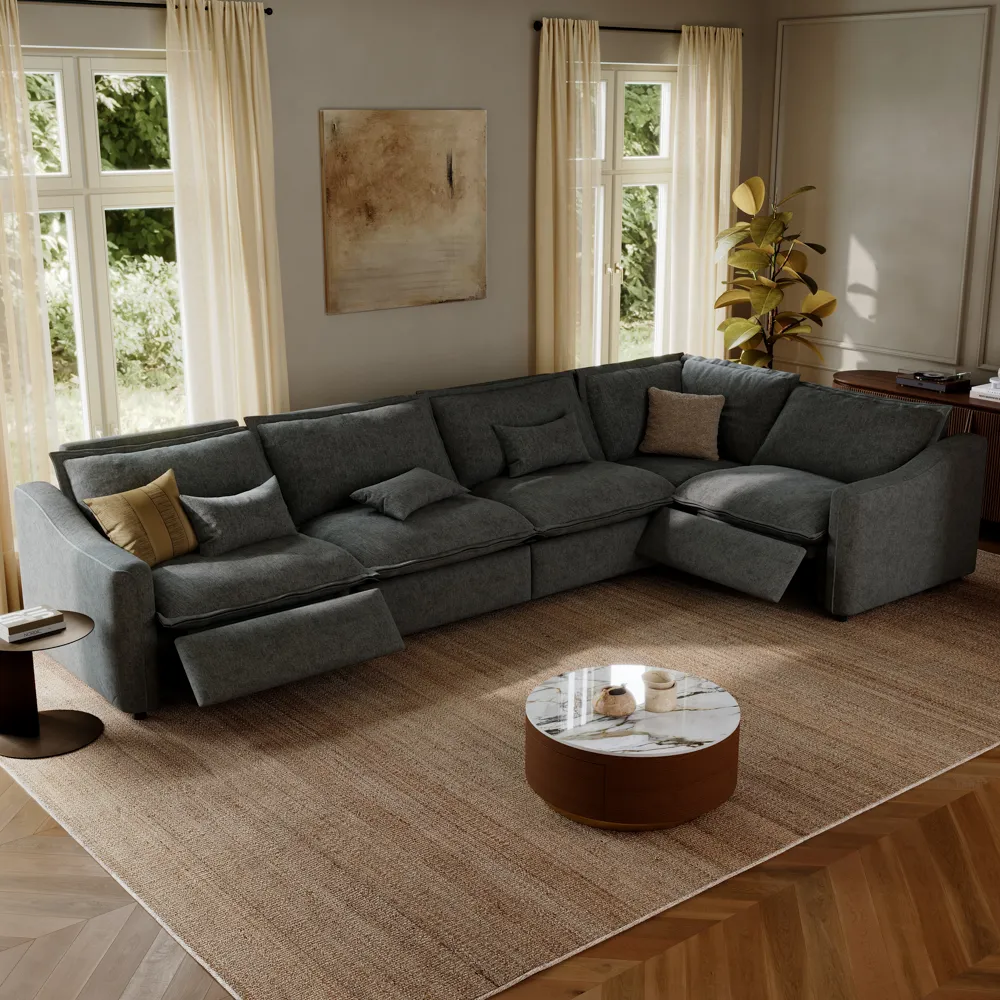
In larger or open-plan rooms (300+ square feet), a single standard sofa often looks lost. This is where sectionals, chaise sofas, or a pair of 3-seaters shine. An L-shaped sectional, for example, helps define a conversation zone within a big open space. Just be sure that the long side doesn’t stretch wall-to-wall—leave breathing room for side tables or floor lamps so the room still feels airy.
Comfort First: Getting Depth, Height, and Proportions Right
Even the “perfect” standard size won’t feel right if the proportions don’t suit your body and habits. Think about how you actually sit: do you curl up, lie down, sit upright to work on a laptop, or all of the above?
Choosing the Right Seat Depth and Height for Your Body
If you love to lounge or sit cross-legged, look for a seat depth around 22″–24″+ and perhaps slightly lower seat height. If you prefer upright sitting or have shorter legs, a shallower depth (about 20″) and average seat height (17″–19″) will keep your feet flat on the floor and your back supported. (Source: Sierra Living Concepts)
A quick test in-store: sit all the way back against the cushion. If your feet dangle or you have to slouch to touch the floor, the seat may be too deep or too high.
Back Support and Head Support
If you spend long evenings on the sofa, pay attention to back height and cushion firmness. Taller backs or added headrests are great if you like to lean back fully to watch TV. Lower backs feel more open and modern but may need extra cushions for neck support.
For families who often nap on the sofa, a supportive but not rock-hard back cushion is key—you want to sink in slightly, but still feel your spine is aligned.
Arm Height and Shape for Everyday Use
Do you often rest your head on the arm while lying down? Then slightly higher, padded arms will feel better. If you mostly perch on the edge or sit upright, lower, slimmer arms may be more comfortable and make the sofa feel less bulky.
Square, structured arms tend to suit more contemporary spaces; rounded arms feel softer and traditional. Since arms affect both comfort and perceived size, treat them as part of the sizing decision, not just a style detail.
Conclusion
There isn’t one magic standard sofa size, but there are reliable ranges that make shopping much less confusing. Once you understand overall width, seat depth, and how sofas’ standard sizes relate to your room dimensions, you can confidently choose a 2-seater, 3-seater, sectional, or sofa bed that fits both your space and your lifestyle. Measure carefully, think about comfort first, and use simple proportion rules to keep your layout balanced—and your next sofa should feel “just right” from day one.
Q&A: Standard Sofa Size FAQs
1. What is the standard size of a 3-seater sofa?
A classic 3-seater usually falls between 80 and 90 inches wide, about 35–38 inches deep, and 30–36 inches high. This size comfortably seats three adults and works well in most medium-sized living rooms. Always check seat width, not just overall width, to see how much usable sitting space you get.
2. What is the standard size of a 2-seater sofa?
A standard 2-seater or loveseat is typically 52–60 inches wide, with a depth around 30–40 inches and height around 30–40 inches. This size is ideal for small living rooms, studio apartments, or as a secondary seating piece in a bedroom or home office.
3. What is a standard sofa depth for comfortable seating?
For most people, a seat depth of about 20–22 inches is a good all-rounder: deep enough to relax, but shallow enough to keep your feet on the floor. If you love to lounge or are taller, you might prefer 22–24 inches or more; if you’re shorter or sit very upright, go a bit shallower.
4. What size sofa is best for a small living room?
In a small living room (around 130 square feet or less), aim for a loveseat or compact 3-seater between 60 and 75 inches wide. Choose slimmer arms and a lower profile to keep the room feeling open. Pair it with a small round or narrow coffee table so walkways stay clear and the space doesn’t feel cramped.
5. How much space should I leave between sofa and coffee table?
Most interior designers recommend leaving about 16–18 inches between the front edge of your sofa and the coffee table. This gives you enough room to walk through while keeping drinks, books, and remotes within easy reach. If your household includes kids or mobility issues, leaning toward the wider end of that range is usually more comfortable.


