 By Jenny Smith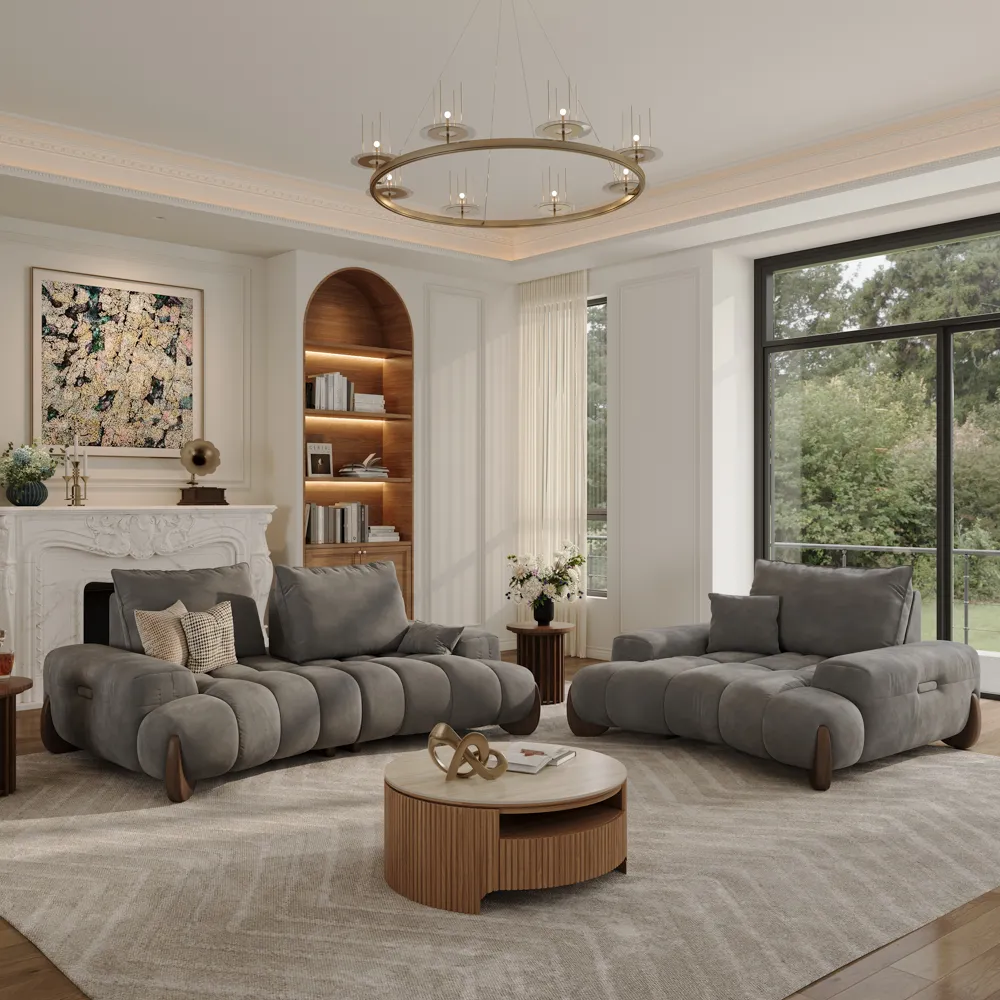
A deep seated sofa can feel like a personal lounge zone: space to curl up, tuck your legs under you, or stretch out with a laptop and a throw. But if the depth, height, or cushions are wrong, that same sofa can swallow you whole or strain your back. This guide breaks down what a deep seated sofa actually is, who it suits, and how to choose the right size, style, and comfort level for your home.
What Is a Deep Seat Sofa?
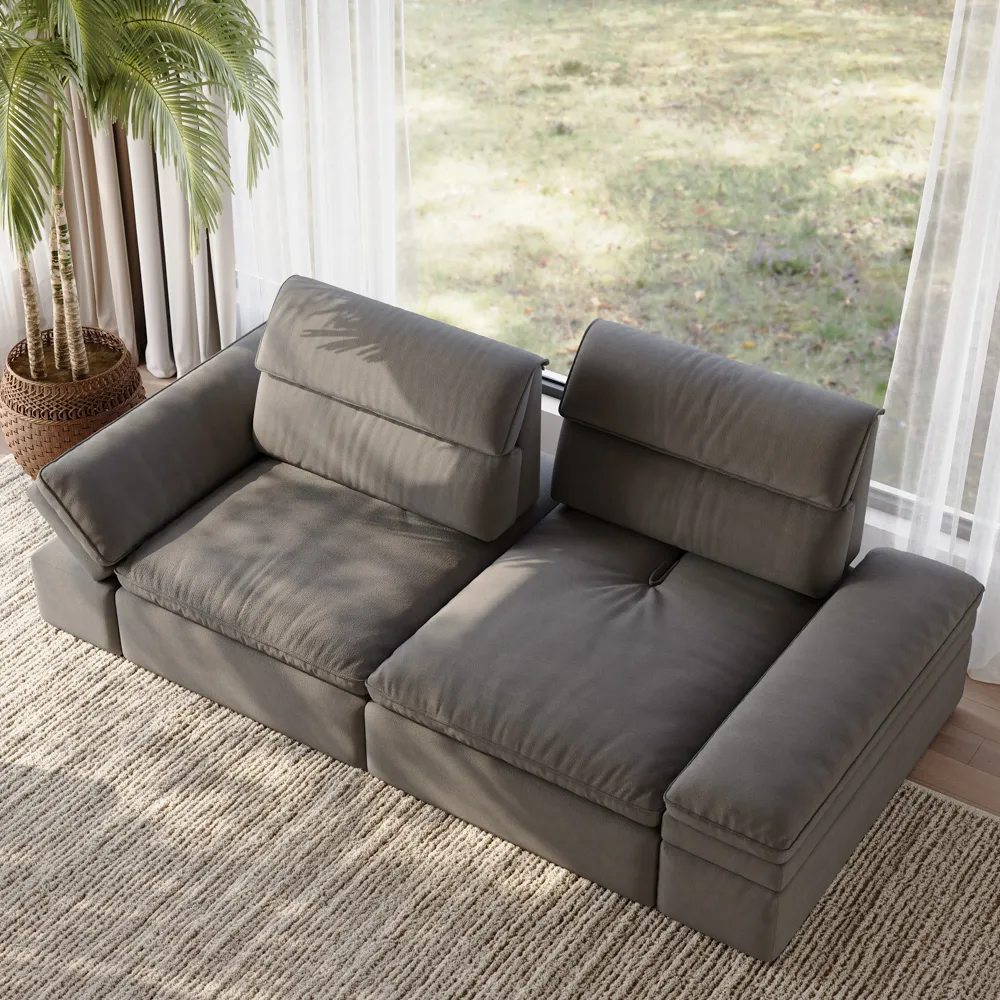
A deep seated sofa is designed for lounging rather than perched, upright sitting. The key difference is seat depth: there’s more space from the front of the cushion to the back. That extra depth lets you sit cross-legged, recline with a pillow behind you, or share the sofa more casually with pets and family.
Basic Definition: Deep Seated vs. Standard Sofas
In most design guides, a standard sofa has a seat depth of about 20–22 inches, while deep seated sofas typically range from roughly 23–27 inches or more. (Architectural Digest) That extra inch or five may not sound like much, but it completely changes how you sit: standard depth supports an upright, feet-on-the-floor posture; deep seat sofas are made for leaning back, curling up, and sinking in. If you often feel “pushed forward” on your current couch, you’re probably ready for more depth.
Deep Seated Sofa vs. Other Lounge Options
A deep seated sofa isn’t your only choice for “slouchy” comfort, but it combines the best traits of several pieces. Compared with a classic sectional, it gives you lounge-level comfort without dominating the room. Versus a daybed, it looks more tailored and supportive for everyday use. And unlike a recliner, it’s comfortable no matter where you land, not just in one dedicated seat. If you want something that feels like a cloud but still looks like a sofa, a deep seat design often hits the sweet spot.
| Seating option | Overall footprint | How you can sit / lounge | Visual impact in a room |
| Deep seated sofa | Medium to large, simple rectangle | Sit upright, curl up, lie sideways, share space | Looks tailored but relaxed |
| Sectional sofa | Large, often L- or U-shaped | Multiple lounging spots, corner nest, shared TV viewing | Feels dominant and very casual |
| Daybed | Long and narrow | Lie down or perch, limited true “sofa” seating | Reads more like a bed than a sofa |
| Recliner chair | Compact when closed, extends when open | Lean back in one dedicated seat with leg support | Bulky when reclined, can skew traditional |
Who Is a Deep Seated Sofa Really For?
For those who enjoy lounging, such as tall individuals whose knees dangle over standard seats, couples who watch lengthy films together, and family who pile on for gaming or weekend naps, deep-seated sofas are perfect. You’ll value the additional depth if you usually stand sideways with your feet raised. Additionally, they work well in casual settings like TV rooms and dens where “formal” posture isn’t the main objective. If you’re still unsure whether this style fits your habits, you can explore why you might choose a deep couch for your home in more detail.
However, not everyone is a good fit for deep sitting. It may be more difficult for very little users, elderly people, or anyone with mobility problems to sit and get up from a low, deep sofa. Instead of choosing the deepest choice, think about a moderate “in-between” depth and utilize additional pillows to adjust support if you or your visitors want to sit straight with both feet flat on the floor.
Essential Dimensions & Comfort Features to Check
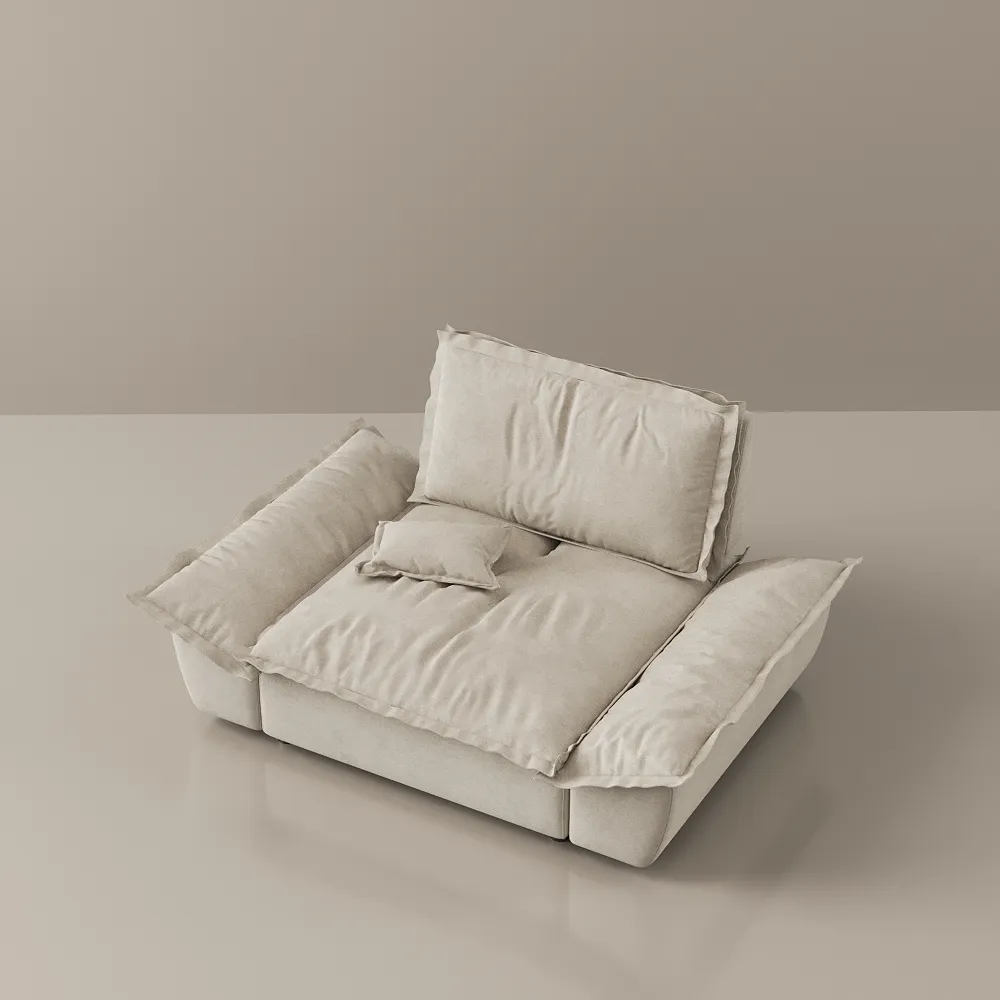
Seat depth is important, but it’s not the only number to watch. The comfort of a deep seated sofa depends on how depth works with seat height, back height, arm design, and the overall footprint in your room. A sofa can be deep but still feel awkward if it’s too low, too high, or has arms that get in the way of your favorite lounging positions.
The Five Key Measurements (Not Just Seat Depth)
Use this quick checklist when comparing sofas online or in store:
- Seat depth: For deep seated sofas, look for 23–27 inches or more from front edge to back cushion.
- Seat height: 17–19 inches from floor suits most adults; too low can strain knees when standing.
- Back height: Higher backs or tall loose pillows give better head and shoulder support for lounging.
- Arm height & width: Lower, wider arms are more comfortable for leaning and perching with a laptop.
- Overall depth (footprint): Make sure the full depth fits your room with space left for walking paths.
Cushion Construction: Support vs. Sink-In Feel
The cushions on two deep sofas may make them feel very different. Although they may require regular fluffing, softer down-blend or fiber-wrapped cushions produce a cloud-like, sink-in experience. Your hips won’t sink too low if you use firmer high-density foam or foam with a soft top layer and a supportive core. Select a deep-seated sofa with medium-firm cushions and add throw pillows to increase coziness if you’re concerned about your posture.
Back Support & Pillow Strategy
Deep-seated couches either succeed or fail based on their back support. You need the proper combination of pillows to provide you with support because you are farther away from the backrest. Choose a sofa that has room for one or two lumbar pillows per person in addition to ample back cushions. Layering a lumbar pillow behind the lower back and a larger pillow behind the shoulders allows shorter users to recline gently rather than slouch. Consider the cushions as movable ergonomics and the sofa frame as your foundation.
Matching Your Deep Seated Sofa to Your Room
Whether you live in a small apartment or a larger home, a deep seated sofa changes how you use the room. Its footprint, depth, and visual weight can make a space feel cozy and enveloping—or cramped and hard to navigate. Planning ahead ensures your sofa supports the way you actually live, not just how the room looks in a mood board.
Measuring Your Space & Planning Traffic Flow
Start by measuring wall-to-wall dimensions, then tape out the sofa’s length and depth on the floor, including any chaise. Leave at least 30–36 inches for walkways between the front of the sofa and a coffee table or opposing furniture. In many U.S. homes, living rooms fall in the 300–400 square foot range, with smaller city spaces closer to 200–300 square feet, so every inch of depth matters. (RUSHDA HAKIM) If the tape outline feels too tight to walk around, choose a slightly shallower model or a shorter length.
Best Room Types for Deep Seated Sofas (Without Overlapping Functions)
Deep-seated couches are most effective in areas intended for lounging. A deep sofa can serve as the focal point of a laid-back family room or den for weekend naps and movie evenings. A deep sofa facing the dining area gently defines the living area in open-plan living-dining arrangements. If you add a mattress topper and full-sized bedding at night, a deep couch in a studio apartment can be used as a daybed. Additionally, a deep couch or chair-and-a-half allows you to relax without taking up too much space in a home office or reading nook.
For a larger family room used for upright sitting, legs-out lounging, and occasional overnight stays, the Mila Power Sofa Bed avoids committing to one permanently extra-deep position. Its seating depth adjusts from 31 to 59 inches, while the 105°–180° power system shifts from everyday seating to a daybed-like or sleep-ready surface. Measure the fully extended footprint before positioning a coffee table or main walkway.
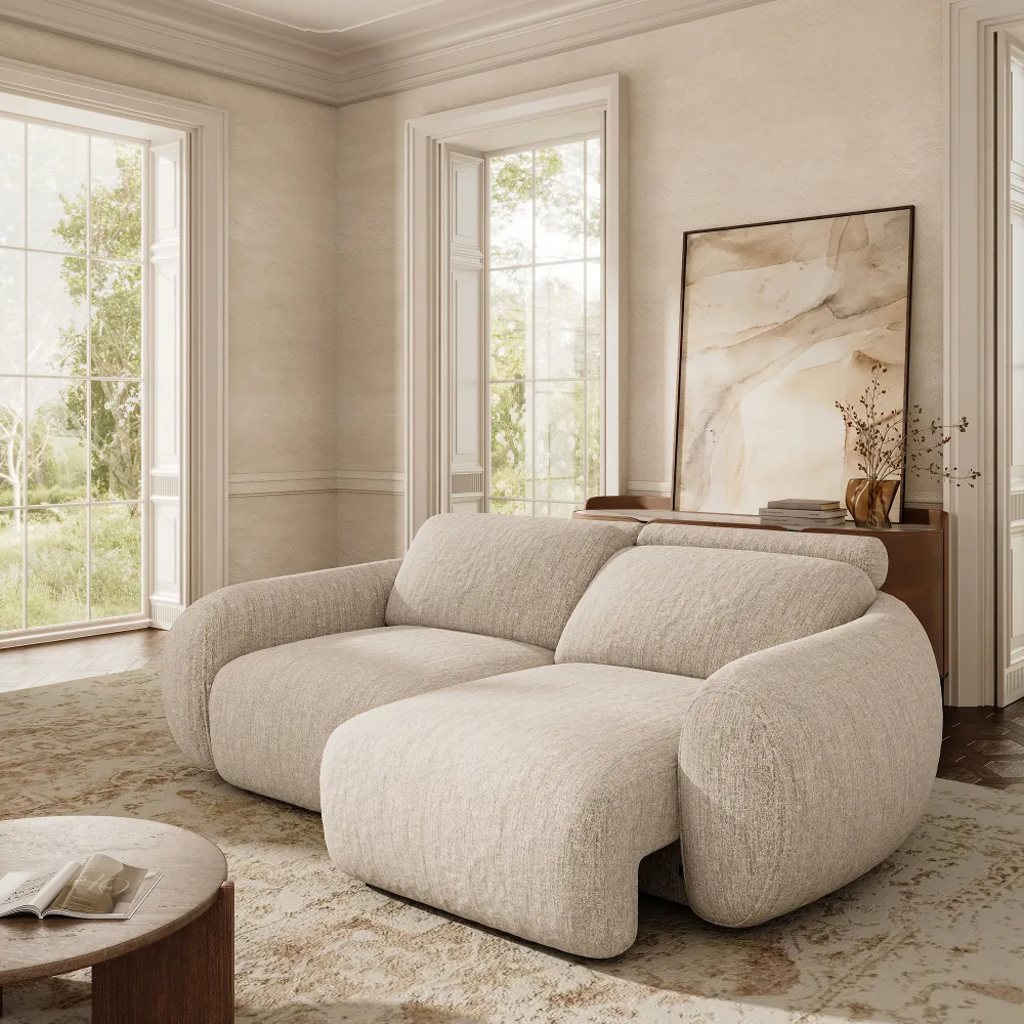
POVISON Mila Power Sofa Bed
Power sofa bed for larger living rooms, offering adjustable extra-deep seating for lounging, stretching out, and occasional overnight use.
Style, Fabric & Color Choices for a Deep Seated Sofa
Because deep seated sofas visually dominate a space, style choices matter more than you think. Clean-lined, modern silhouettes will keep a large piece from feeling bulky, while rolled arms and overstuffed cushions lean more traditional and cozy. If your room already has ornate details, choose a simple frame so the depth reads as intentional comfort rather than clutter.
The sofa’s perceived size is also influenced by its fabric and color. Neutral performance fabrics like oatmeal, sand, or warm gray make a deep sofa adaptable and family-friendly, especially if you eat or work on it every day. Lighter hues open up small spaces but have stain-resistant surfaces, while darker hues feel cocoon-like but reveal lint and pet hair. Instead than settling on a striking color for the entire major item, approach the sofa as a long-term base and experiment with trends using pillows and throws.
Buying Checklist (Online or In-Store)
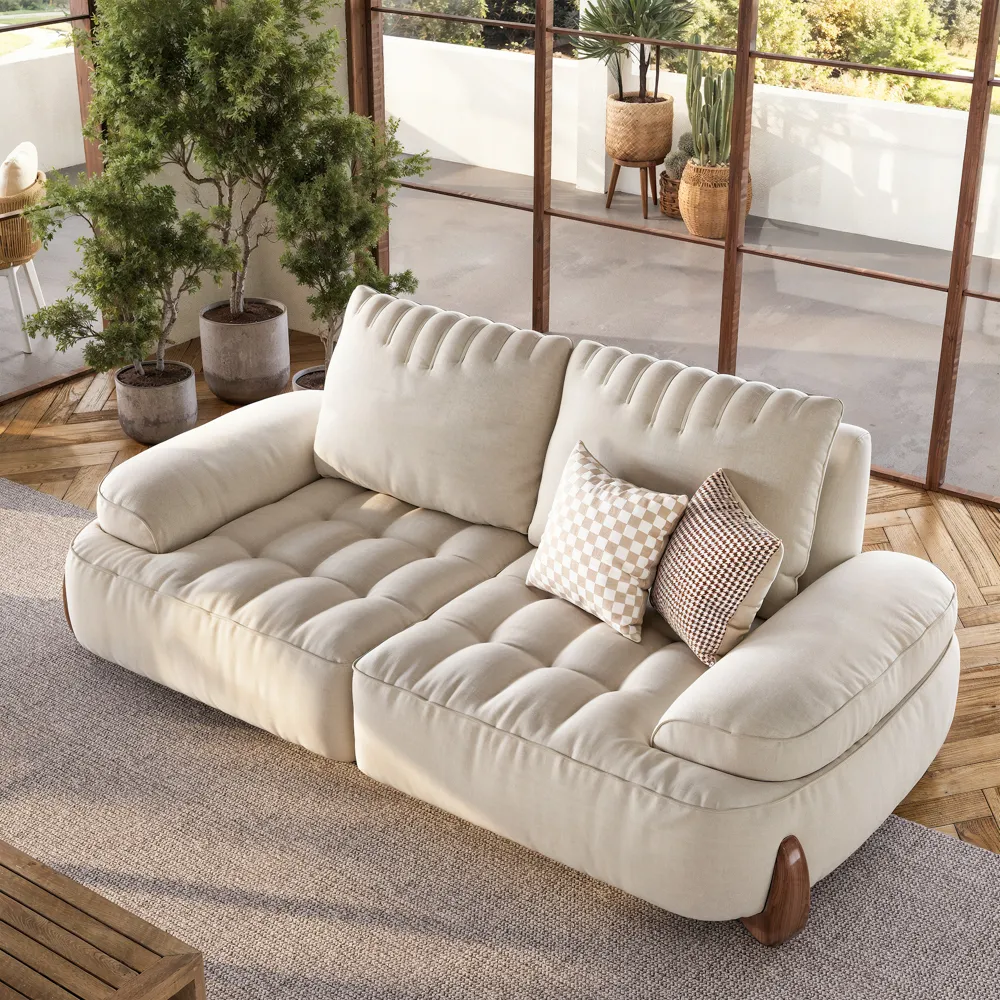
A little structure makes sofa shopping less overwhelming, especially when you can’t sit on every option in person. Whether you’re browsing online or visiting a showroom, follow the same mental checklist: size, comfort, construction, and practical details like delivery and returns.
Pre-Purchase Checklist
Start by comparing your taped floor design with the following important measurements: length, overall depth, seat height, and seat depth. Next, evaluate if the depth and arm style support your typical lounging postures, such as sitting cross-legged, working with a laptop, or sideways with legs up. Lastly, have a check at the product specifics for cushion fill, fabric type, warranty terms, and frame material (solid wood or metal is ideal); these indicators tell you how the sofa will mature over years, not just months.
Final Comfort & Quality Checks on Delivery
Don’t simply open the box and hope for the best when your deep-seated sofa arrives. During the first 24 to 48 hours, examine the seams and pipes, listen for squeaks or wobbles when you sit at each corner, and take note of any strong chemical odor that doesn’t go away with ventilation. To measure pressure points and support, spend at least ten to fifteen minutes sitting in your natural positions. Get in touch with the shop right away if something seems strange—too low, too squishy, or obviously flawed—so you can still return or exchange it.
Conclusion: Choosing a Deep Seated Sofa You’ll Truly Live On
A great deep-seated sofa is more than just a picture from a catalog; it feels like it was made to fit your body and your space. You’re much more likely to end up with a piece you’ll genuinely live on for years if you know what constitutes a deep seat sofa in terms of numbers, measure your area accurately, and pay attention to cushion construction and support. Consider it an investment in long-term comfort: if it’s done well, your living room becomes a place you truly want to spend time.
FAQs About Deep Seated Sofas
Are Deep Seated Sofas Good for Small Living Rooms?
They can work in small living rooms if you plan carefully. Choose a model with slimmer arms, a shorter overall length, and legs that lift it visually off the floor. Keep nearby pieces—coffee table, side tables—light and compact, and leave clear walking paths. If the taped outline leaves less than about 30 inches to walk around, go a bit shallower or shorter.
Can a Deep Seated Sofa Double as a Guest Bed?
Yes, a deep seated sofa can double as a casual guest bed, especially if the seat depth is at least 24–26 inches and the cushions are relatively even and supportive. To make it comfortable, add a foldable mattress topper, fitted sheet, and two pillows—one for head, one as a side support. It’s not a full replacement for a real bed, so if overnight guests are common, consider upgrading to a comfortable sleeper sofa for your room.


