 By Kelvin
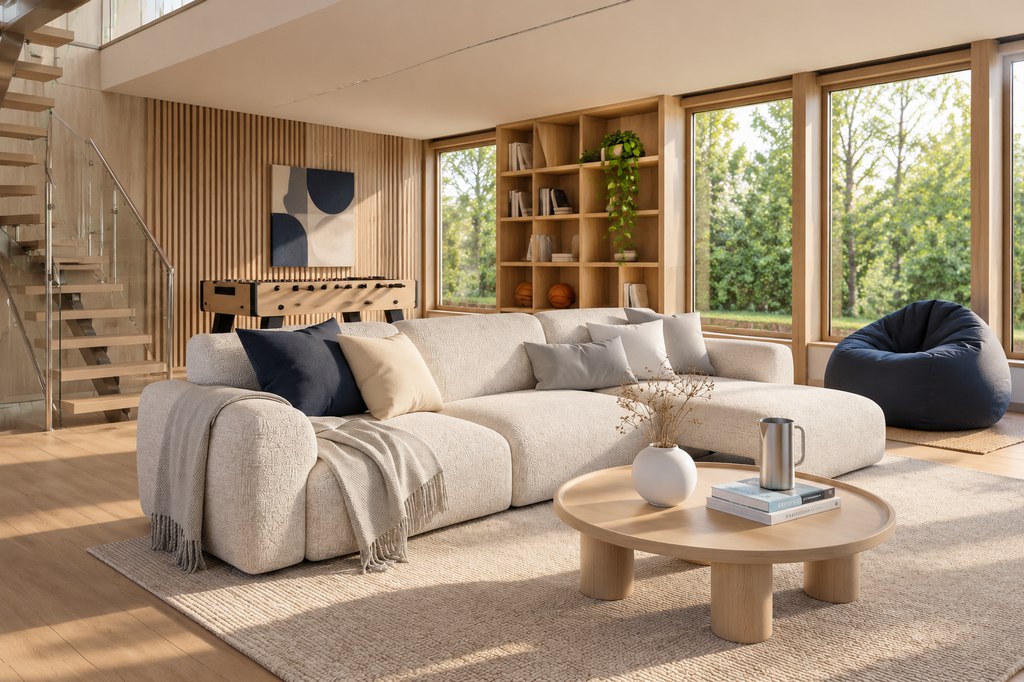
Teen hangout room ideas work best when the room is planned around what friends actually do together, not just a theme or color scheme. A functional setup needs comfortable seating for the usual group size, room for activities such as console gaming, movie nights, and board games, and storage that makes cleanup manageable. Start by identifying the room’s main social activities, then arrange the largest furniture pieces around them. The following ideas show how to balance conversation, entertainment, and everyday flexibility without filling every open area with furniture.
Table of Contents
Step 1: Plan the Room Around Different Activities
The best layout depends on how teenagers spend time together. Some groups prefer casual conversations, while others gather around a screen or a shared activity. Instead of creating separate rooms for every interest, use the main seating area as a foundation and adjust smaller furniture pieces to support different activities.
Create a Conversation Lounge for Friends
A conversation lounge should make it easy for everyone to see and talk to one another. Arrange a sofa with one or two accent chairs in a loose U-shape or facing layout rather than pointing every seat toward a television.
A rug can define the lounge area, while a side table gives everyone a convenient place for drinks. Keep the center relatively open if friends also use the room for music, dancing, or other casual activities. This arrangement works particularly well for a teen lounge room that prioritizes socializing over screen time.

Design a Casual Gaming Hangout
Gaming works best when each player has a clear view of the screen and can reach a controller without leaning across someone else. For console gaming, position the main sofa opposite the screen and add a movable chair or pouf to accommodate another player.
Keep gaming equipment accessible for switching controllers and games, but route cables away from walking paths. A media console with enclosed storage can also prevent accessories from spreading across the room. For more detailed screen placement and seating considerations, these living room gaming setup ideas offer useful planning principles without requiring a dedicated gaming room.

Build a Comfortable Movie Night Lounge
For movie nights, arrange the main sofa toward the screen and keep secondary seats close enough to share a comfortable viewing angle. A sectional sofa can accommodate a larger group, but a standard sofa with movable ottomans may be easier to rearrange when the room also serves as a conversation area.
Avoid placing tall cabinets or oversized decorations where they block someone’s view. In a multipurpose room, the seating arrangement should support movie watching without making other activities difficult.

Set Up a Board Game and Group Activity Area
Board games need a shared surface that everyone can reach. Choose a coffee table with enough room for cards, snacks, and smaller games, then add movable poufs or chairs that can be pulled closer when needed.
When friends gather around a table for cards, snacks, or a shared laptop, a fixed low surface can be limiting. The Silva Lifting Top Round Coffee Table raises for closer access and includes two drawers for remotes and small accessories. Its rounded profile also makes it easier to navigate around than a sharp-cornered table in a busy seating area.

Silva Lifting Top Round Coffee Table
A rounded lift-top table brings snacks closer while hiding small game-night essentials.
👍 Best for: Board games and casual snacks
✨ Rounded tabletop profile
✨ Two storage drawers
✨ Lift-top surface for closer reach
Step 2: Arrange Seating for Different Group Sizes
The usual number of guests should guide the seating plan, but it should not determine every furniture purchase. Consider whether friends mostly watch movies, play games, or sit around talking. Different activities require different seating arrangements, and flexible secondary seats can prevent a room from feeling overcrowded between gatherings.
| Group Size | Suggested Seating | Layout Consideration |
| 2–3 friends | Loveseat + accent chair | Keep seats close enough for easy conversation. |
| 4–5 friends | Sofa or sectional + poufs | Provide several comfortable seats without crowding the center. |
| 6+ friends | Sectional + movable chairs | Add temporary seating while preserving open floor space. |
These are starting points, not fixed seating-capacity standards. Check the actual seating capacity of each sofa and consider how much room people need to sit comfortably.
For larger groups, a few movable chairs around the edges may work better than pushing a bigger sectional into the room. If board games are a regular activity, prioritize access to the shared table. If movie nights are more common, prioritize comfortable seats with clear screen views.

Step 3: Choose Furniture for Comfort and Flexibility
Once the main activities and guest count are clear, choose furniture according to its job rather than buying a matching set. The largest seat should support the room’s most common use, smaller pieces should provide flexible capacity, and tables or storage should keep shared items accessible without narrowing the main walking route.
Choose a Sofa That Adapts to Different Ways of Lounging
Start with the seat that will be used most often. A standard sofa works well for conversations and screen viewing, while a sectional can create a shared lounge area for a larger group. If the same sofa needs to support upright conversations and stretched-out movie watching, adjustable seat depth can provide another level of flexibility without adding a second large piece.
Group hangouts can shift from sitting upright for conversation to stretching out during a movie. The Aurora Power Sofa Bed lets users adjust seat depth from 27 to 45.5 inches with one-touch operation, creating a more upright or relaxed seating position. Its water- and scratch-resistant chenille also suits regular shared use. Check the extended footprint before positioning it near a coffee table or walkway.
The power sofa beds for more ways to live guide also explains how adjustable seating can accommodate different everyday routines.

Aurora Power Sofa Bed
Stepless power adjustment supports upright conversations, deeper lounging, and occasional sleepovers.
👍 Best for: Flexible movie-night seating
✨ Three one-touch comfort modes
✨ Adjustable 27–45.5-inch seat depth
✨ Water- and scratch-resistant chenille
Add Flexible Seating for Extra Friends
Accent chairs are useful when the room needs regular additional seating. They provide more structured back support than floor cushions and can be positioned to face the sofa or screen.
Poufs and upholstered ottomans offer another option when the number of guests changes from one gathering to another. They are easier to move and can serve as occasional seats, footrests, or additional surfaces. However, check their height and stability before relying on them for longer movie nights.

Use Coffee Tables and Media Consoles for Everyday Storage
Coffee tables should provide a surface that people can reach without blocking their knees or the main walkway. Drawers and hidden compartments can keep controllers, remotes, and small game accessories nearby but out of sight.
A media console should accommodate connected equipment while providing enough room for cables and ventilation. For a shared gaming and movie area, the Delven Verse Mid-Century Modern Media Console combines three enclosed cabinets, removable shelves, and multiple cable openings. Rear ventilation also helps accommodate connected components. Check each device’s dimensions and ventilation requirements before assigning it a compartment.

Delven Verse Media Console
A deep, vented media cabinet keeps shared consoles organized and connected.
👍 Best for: Shared gaming and movie equipment
✨ Three enclosed cabinets
✨ Removable interior shelves
✨ Multiple cable openings and rear vents
Step 4: Keep the Room Flexible and Easy to Reset
A flexible room needs to work when activities change, not just when everything is arranged for one occasion. Before adding more furniture, identify the routes people use to enter, leave, and reach the main seating area. Then check how larger pieces behave when extended, opened, or moved.
Leave Room for Activities to Change
Keep a clear route from the door to the seating area, and avoid placing movable chairs where they must be shifted every time someone walks through. If the room serves several purposes, define zones with rugs, furniture orientation, or lighting instead of using bulky dividers.
For teen basement hangout ideas, also consider stair access, ceiling height, natural light, and the placement of electrical outlets. A basement family room layout should leave enough space to move between the stairs, entertainment area, and other activities without navigating around oversized furniture.
Make Post-Hangout Cleanup Easier
Storage should be close to where items are used. A media console can hold gaming equipment, while coffee table drawers or nearby cabinets can organize smaller accessories.
A simple after-hangout reset can include:
- Returning controllers, charging accessories, and game equipment to their storage spaces.
- Putting board games, cards, and small items away.
- Returning cushions and throws to the sofa.
- Clearing snacks and drinks from tables.
- Moving loose seating back to its usual position.
These small habits make the room easier to share and help prevent everyday clutter from taking over the seating area.

Step 5: Personalize the Room Without Overdoing the Decor
A teen hangout room should reflect the interests of the people using it, but every large furniture piece does not need to follow the same theme. Keep foundational furniture relatively adaptable, then introduce personality through wall art, throw pillows, rugs, posters, and accent lighting.
For example, a neutral sofa can work with colorful gaming posters today and a more understated gallery wall later. A few coordinated colors can also help different activity areas feel connected without making the room look overly themed.
Involve teenagers in choosing the artwork, accessories, and accent colors. Their interests may change over time, so removable decorations are often easier to update than expensive furniture tied to one specific hobby.
Conclusion
The strongest teen hangout room ideas start with how friends use the space: how many people usually visit, whether they gather around a screen or a table, and how much room they need to move between activities. Build the layout around comfortable primary seating, then add movable chairs and storage where they solve a real problem. A flexible sofa, accessible media storage, and a table suited to shared use can support more than one routine. Keep larger furniture adaptable and let smaller decor choices carry the room’s personality.

Find Furniture for Your Teen Hangout Room
Explore sofas, coffee tables, media consoles, and flexible furniture for a space made for gaming, movies, and spending time with friends.
Questions About Teen Hangout Rooms
Can a Teen Hangout Room Work Without a TV?
Yes. A teen hangout room can focus on conversation, music, crafts, reading, or board games instead of screens. Use seating that faces inward, a reachable shared table, and storage for activity supplies. If gaming or movies are occasional activities, keep the setup flexible rather than dedicating the entire room to electronics.
How Can Siblings Share One Hangout Room When Their Interests Differ?
Create one shared seating area and separate smaller spots for individual interests, such as a reading chair, music corner, or compact gaming station. Personal baskets or drawers can keep each sibling’s belongings organized. This approach makes shared surfaces easier to use without forcing everyone to participate in the same activity.
What Are Comfortable Alternatives to Bean Bags for Teen Seating?
Accent chairs provide firmer back support for longer conversations and movie nights. Upholstered ottomans and poufs are easier to move and can serve as occasional seats, but check their height and stability before using them regularly. A combination of supportive chairs and flexible seating works well for groups with changing needs.
How Can You Protect Sofas and Tables During Snack-Heavy Hangouts?
Use washable throws on frequently used seating, coasters or trays for drinks, and stable side tables near the sofa. Clean spills according to the upholstery and tabletop care instructions rather than applying a general cleaner. Keep food and drinks away from electrical components and moving furniture mechanisms.
What Should You Measure Before Buying Furniture for a Teen Basement Hangout Room?
Measure the room’s length and width, doorways, stair turns, ceiling height, and the route from the stairs to the furniture’s final position. Also check the sofa’s maximum extended depth and the space needed to open cabinet doors or drawers. Confirm outlet locations before finalizing the layout.


