 By Kelvin
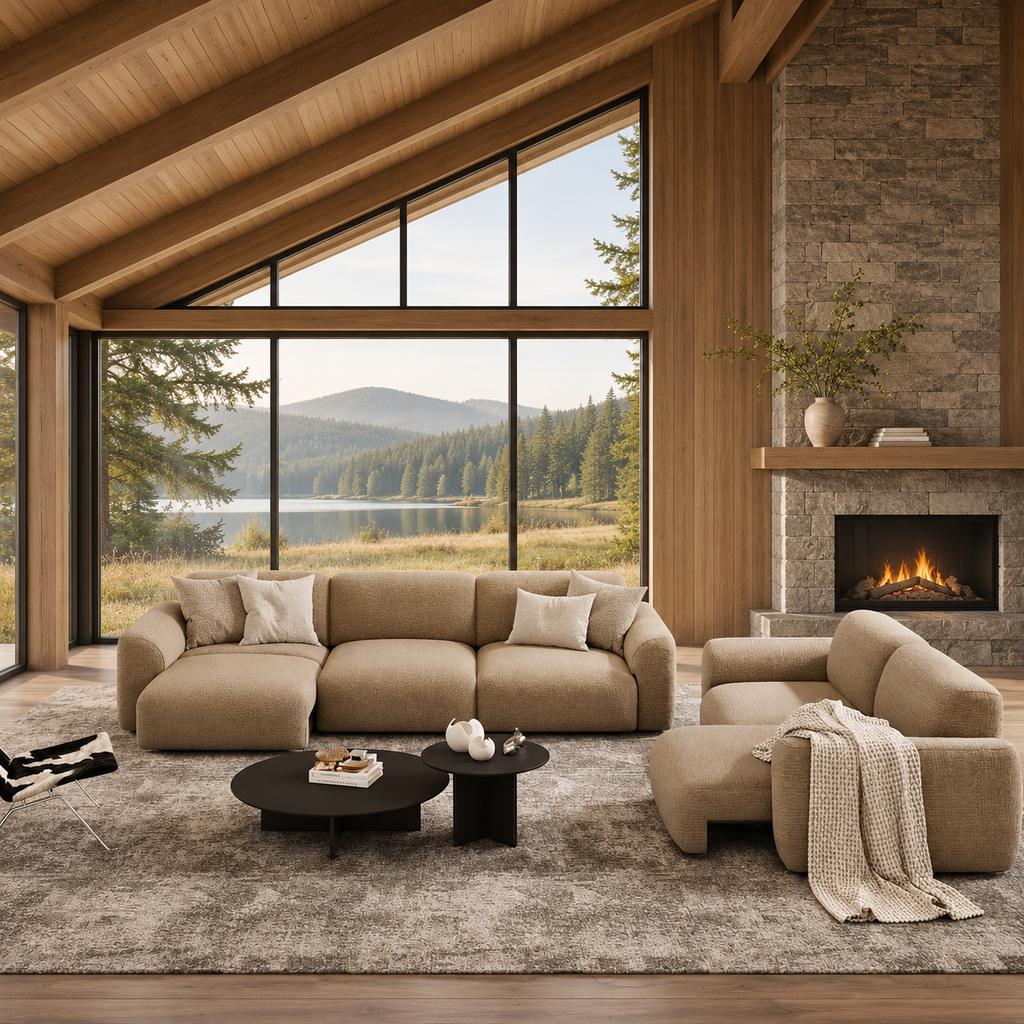
A cabin living room should feel connected to its natural surroundings while still working for everyday life. The right furniture arrangement can make room for relaxing by the fireplace, enjoying mountain views, gathering with family, or accommodating overnight guests without overcrowding the space. Whether you have a traditional log cabin, a compact weekend retreat, or a modern A-frame, these cabin living room ideas combine warm materials, practical furniture combinations, and flexible layouts to help you create a comfortable space that feels natural rather than overly rustic.
Table of Contents
Cabin Style Starts With Material Balance
A cozy cabin living room doesn’t need to be filled with dark wood, heavy furniture, and rustic decorations. The most inviting spaces balance natural architectural features with lighter upholstery, layered textures, and comfortable lighting. This approach works particularly well when the cabin already has prominent timber walls, exposed beams, or a stone fireplace.
Balance Natural Wood With Lighter Furniture
Wooden walls, exposed ceiling beams, and timber floors give a log cabin its character. However, using dark wood for every major furniture piece can make the room feel visually heavy.
Instead, introduce contrast through:
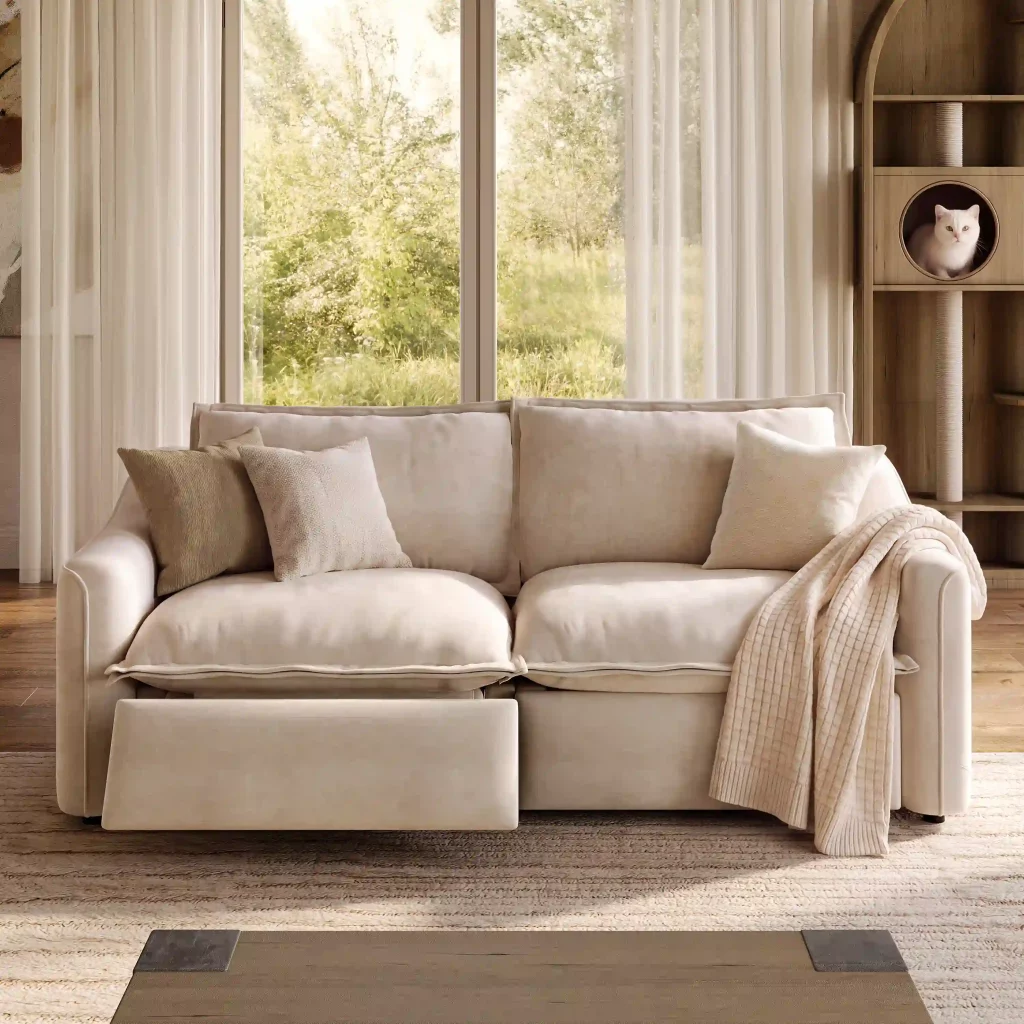
- Cream or beige sofas against dark timber walls.
- Light oak or walnut tables to complement existing wood tones.
- Neutral area rugs to soften darker floors.
- Green or muted earth-tone accents that connect the interior with the surrounding landscape.
For modern cabin living room ideas, clean-lined furniture and restrained decoration can preserve the warmth of traditional materials without making the room feel dated.
Layer Textures for Everyday Comfort
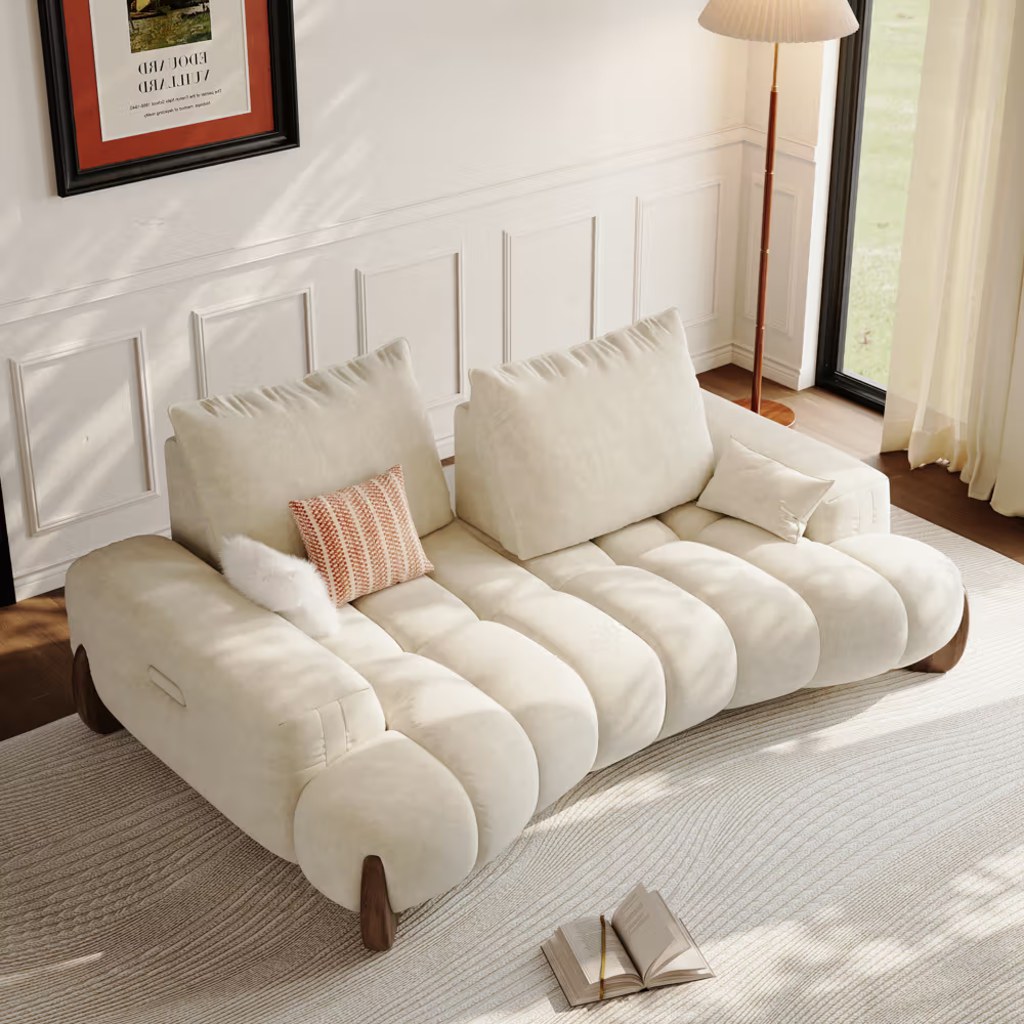
Cabin living rooms often combine hard surfaces such as stone, wood, and metal. Soft materials help balance these finishes and make seating areas more inviting.
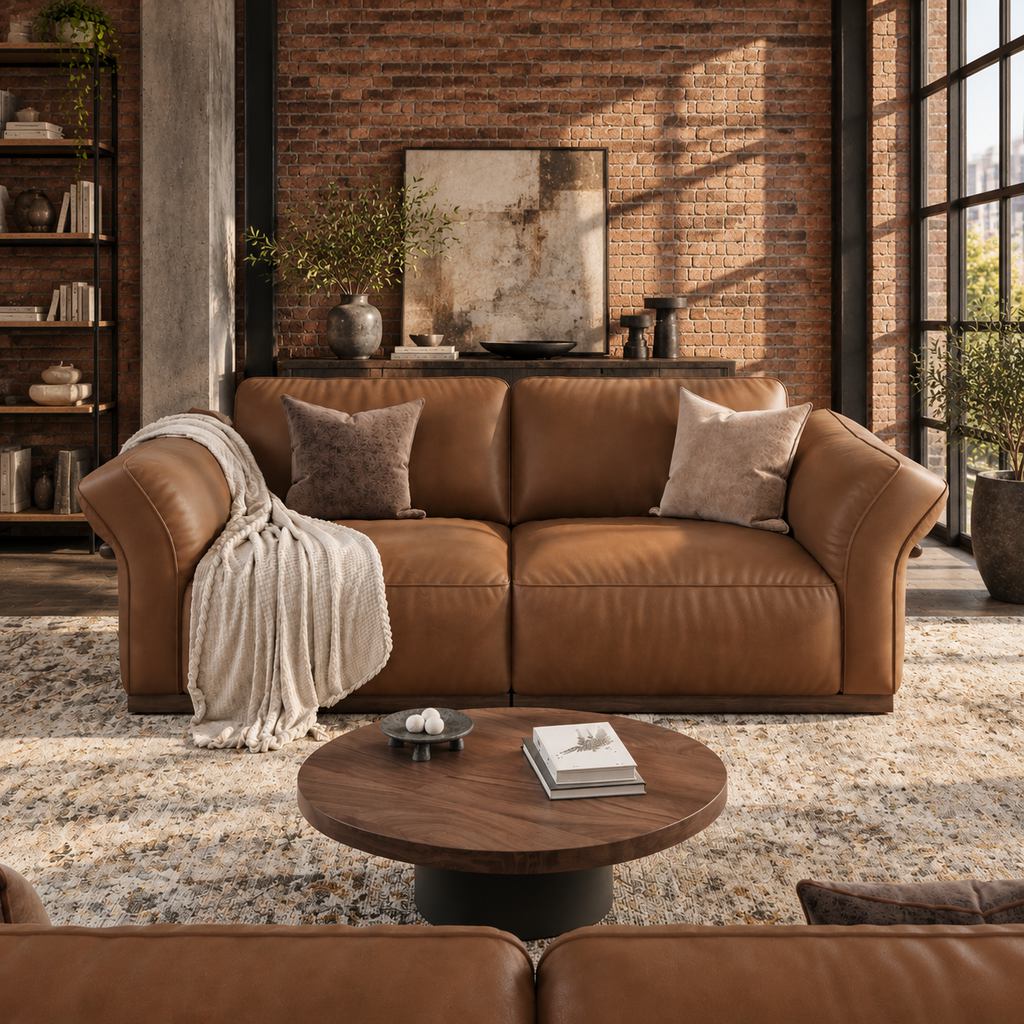
Consider combining a leather sofa with wool throws, textured cushions, and a woven rug. If the room already has substantial leather furniture, linen curtains and softer upholstery can introduce contrast without competing with the natural materials.
Use Lighting to Soften the Space
Cabins surrounded by trees may receive less natural light, particularly during winter. Rather than relying on one overhead fixture, layer different light sources.
- Use floor lamps beside sofas or reading chairs.
- Add table lamps to darker corners.
- Choose warm-white bulbs for a relaxed evening atmosphere.
- Keep window treatments light enough to preserve available daylight.
The goal is to make the room comfortable after sunset without losing the natural character of the space.
Arrange Furniture Around the Cabin’s Main Focal Point
A cabin living room often has several competing focal points: a fireplace, large windows, and sometimes a television. The most practical arrangement starts by deciding which feature matters most to your everyday routine. Then position the main sofa and secondary seating around that feature while keeping entrances and walking routes accessible.
| Main focal point | Furniture arrangement | What to consider |
| Fireplace | Sofa and chairs arranged toward the fireplace | Maintain required fire clearances |
| Scenic windows | Seating positioned to enjoy the view | Avoid blocking windows with tall furniture |
| Television | Main sofa oriented toward the screen | Balance viewing comfort with conversation |
| Fireplace and TV | Main sofa favors the primary activity; flexible chairs serve the other | Avoid forcing every seat toward both features |
If your cabin has both a fireplace and a television, they don’t necessarily need equal attention. A household that watches movies regularly may orient the main sofa toward the screen, while a movable accent chair can turn toward the fireplace when guests visit. These decisions are similar to those involved in arranging a living room with both a fireplace and TV.
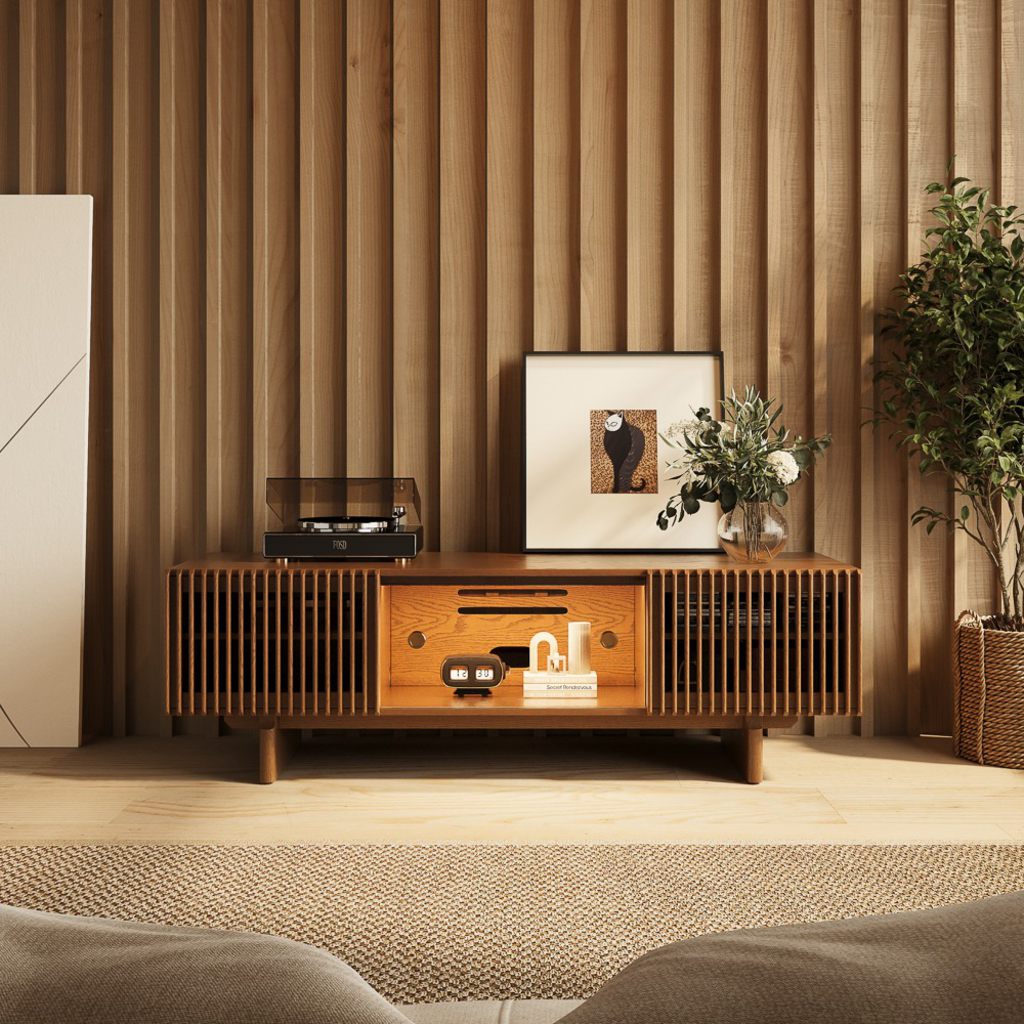
For a television-focused cabin, the media console should also fit the wall without overwhelming the natural materials. The Delven Verse Media Console combines a walnut finish with slatted doors, adjustable shelves, and cable openings to keep entertainment equipment organized. Its wider profile suits a dedicated media wall better than a particularly small cabin.
Delven Verse Media Console
Walnut styling gives a dedicated media wall a quieter, cohesive focal point.
👍 Best for: TV-focused cabins with media equipment
✨ Slatted doors pass IR signals
✨ Adjustable, removable shelves
✨ Rear cable openings
Five Layout Ideas for Different Cabin Spaces
The best layout depends on the cabin’s floor plan, not simply its decorating style. A compact log cabin needs a different furniture combination from an open-plan great room, while an A-frame has architectural limitations that affect furniture height and placement. These five settings offer practical starting points for different spaces.
1. Small Cabin Living Room With Compact Seating
In a small cabin, prioritize comfortable seating without filling the center of the room. A compact sofa against the longest usable wall can create the main seating area, while one movable accent chair provides an additional place to sit.
A round coffee table can make it easier to move around the seating group, particularly when the entrance is close to the living area. Avoid adding a large sectional simply to maximize seating if it blocks access to the kitchen, stairs, or exterior door.
For small cabin living room ideas, a few appropriately scaled pieces usually work better than several oversized furniture items.
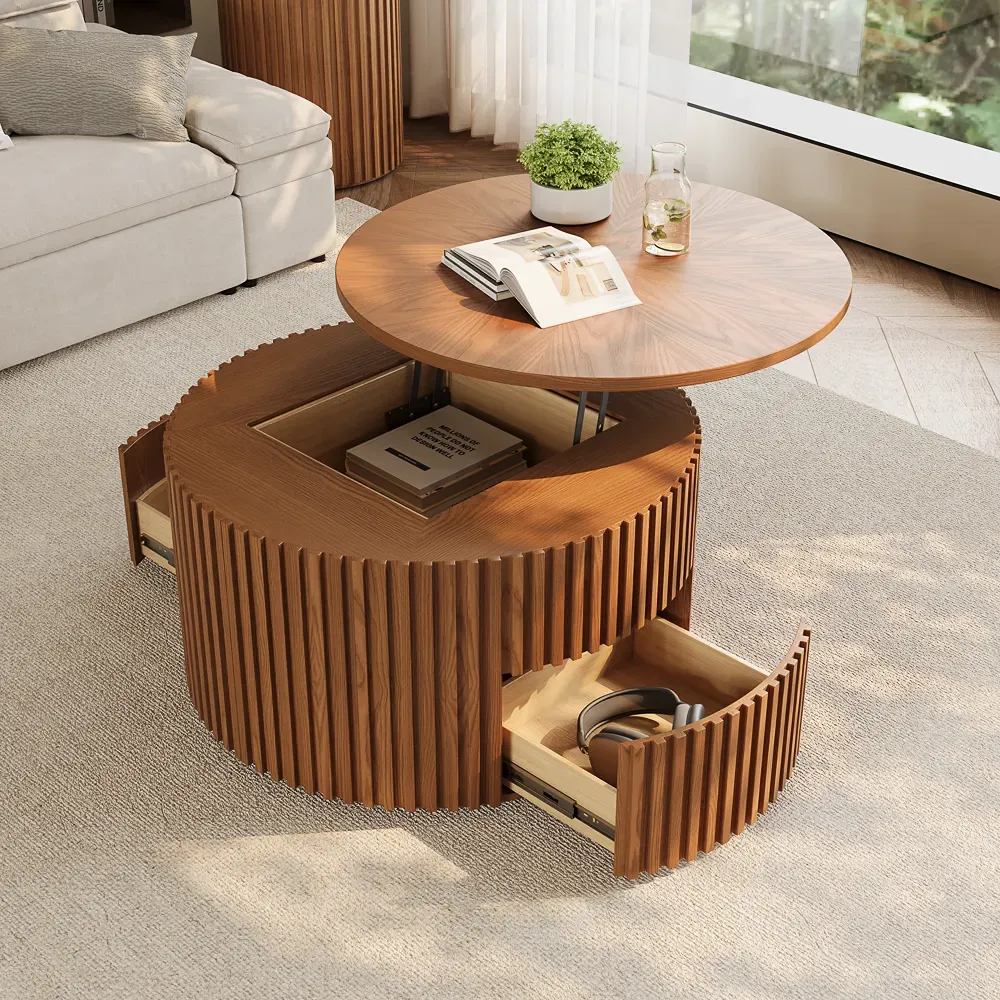
When choosing the table, consider the Silva Lifting Top Round Coffee Table. Its rounded profile makes it easier to navigate around the seating area, while the lift-top surface and two drawers provide space for snacks, books, and everyday essentials. We recommend considering it when a small cabin needs a table that can support more than one activity.
Silva Lifting Top Round Coffee Table
Rounded center table supports daily tasks without adding a separate work surface.
👍 Best for: Compact cabins needing flexible table space
✨ Lift top rises to 23.2 inches
✨ Two drawers plus hidden storage
✨ No assembly required
2. Log Cabin Living Room With Light Upholstery
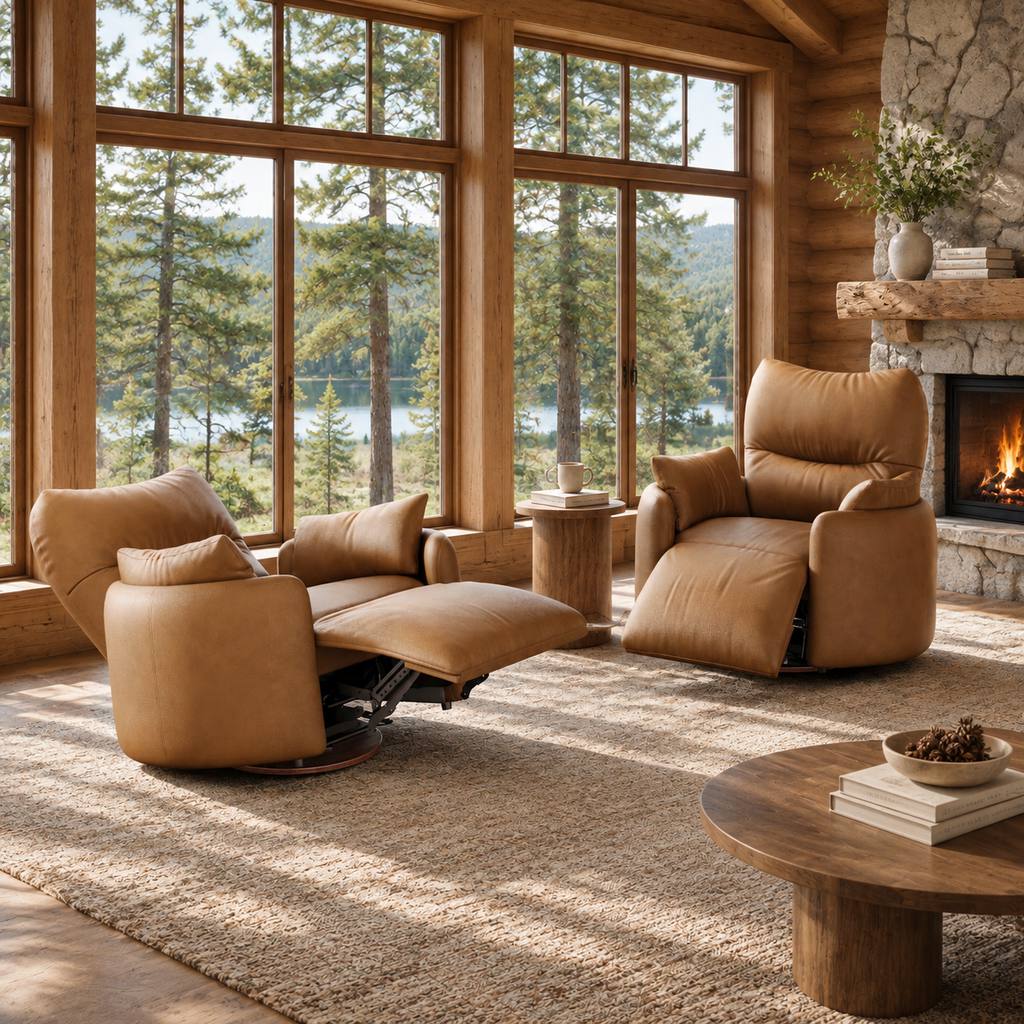
Traditional log cabins often have prominent wooden walls, ceilings, and floors. Instead of trying to match every furniture piece to the timber, use upholstery to introduce contrast.
A cream or light beige sofa can stand out against darker logs, while a brown leather accent chair and walnut coffee table maintain a connection with the natural surroundings. A textured rug can help define the seating area without adding another strong pattern.
For small log cabin living room ideas, keep the number of decorative objects limited. Let the wood grain and architectural details remain visible rather than covering every surface with rustic accessories.
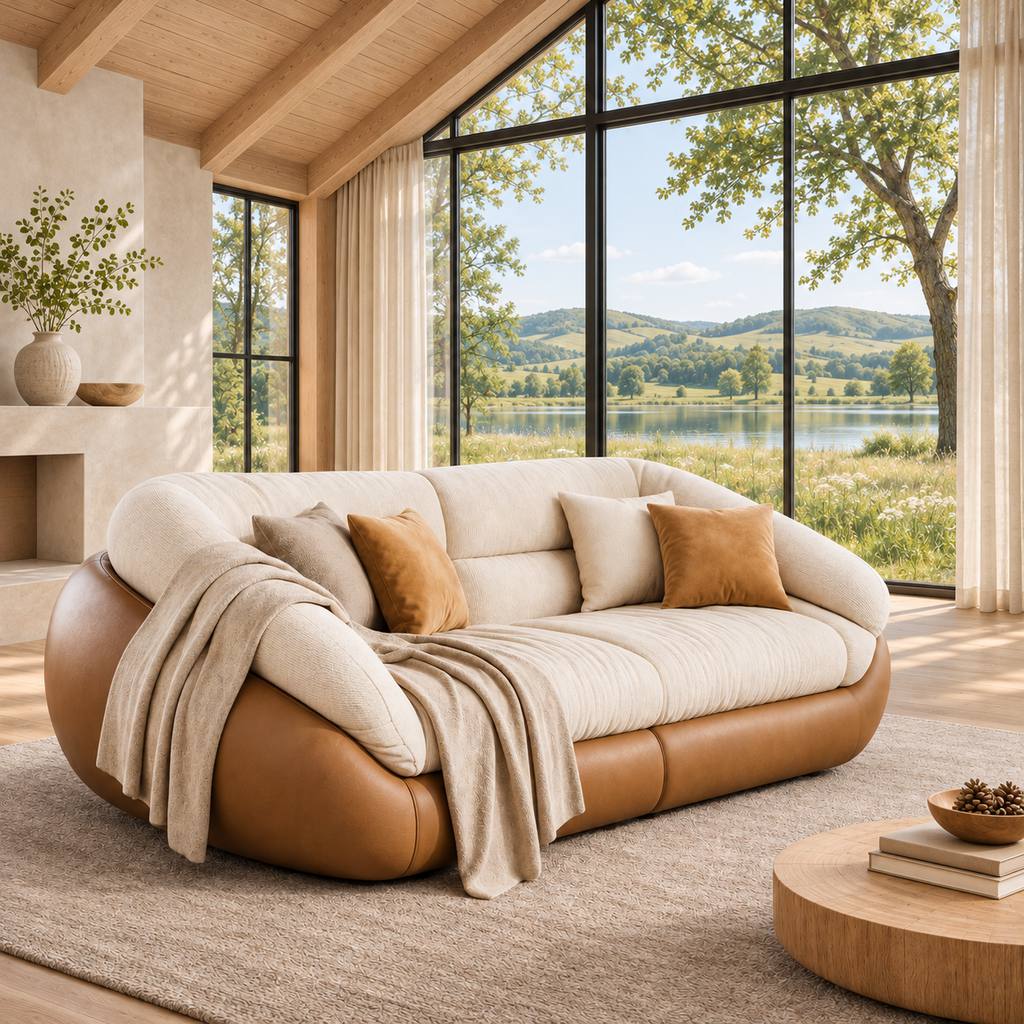
3. A-Frame Cabin Living Room With Low-Profile Furniture
An A-frame cabin has sloping ceilings that gradually reduce the usable wall height. This makes furniture placement especially important.
Position low-profile sofas, benches, or storage pieces beneath the sloped sections where taller furniture would not fit comfortably. Reserve full-height walls for bookcases, media consoles, and other storage that requires more vertical space.
If the cabin has a large triangular window, avoid placing tall furniture directly in front of it. A low sofa can preserve the view while keeping the main seating area comfortable.
4. Cabin Living Room With a Cozy Reading Nook
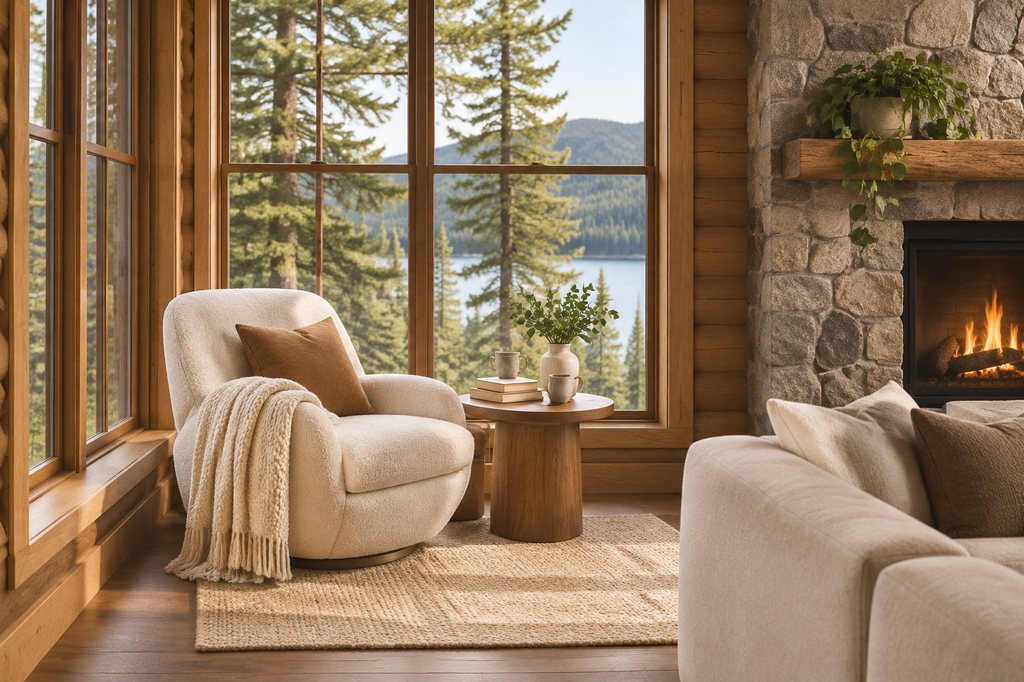
A window-side corner can become a useful reading area without requiring a separate room. Place a supportive accent chair near the window, add a small side table for books and drinks, and position a floor lamp where it provides enough light after sunset.
This arrangement works particularly well in a cabin where one person wants to read while others watch a movie or gather around the fireplace.
Keep the chair slightly outside the main seating arrangement so the reading area feels distinct without blocking the walkway.
5. Open-Plan Cabin Living Room With Defined Seating Zones
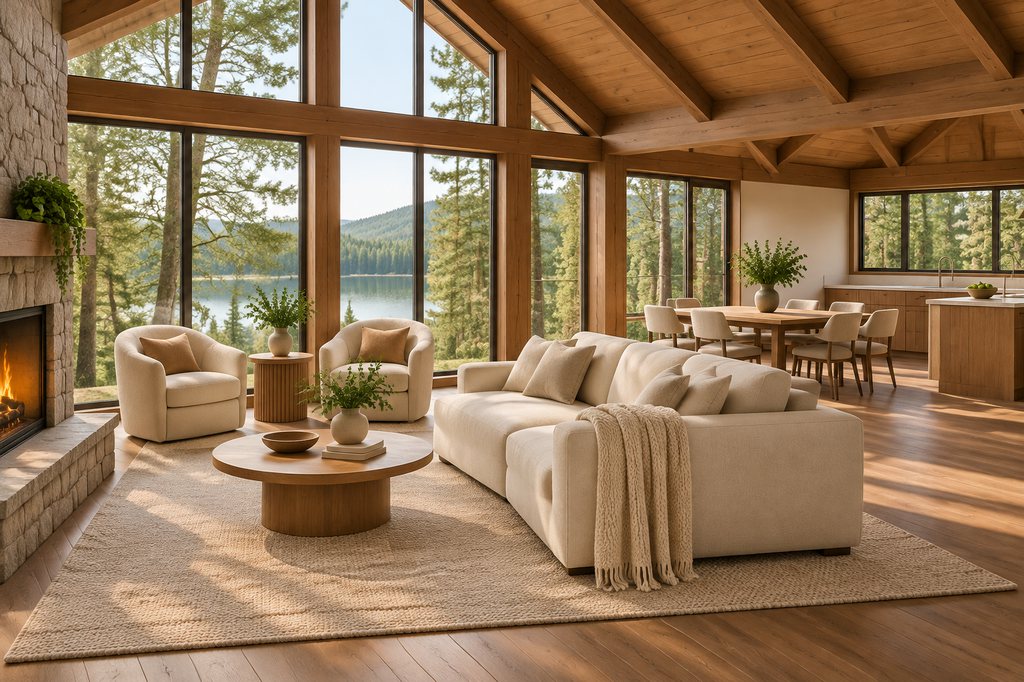
Larger cabins often combine the living room, dining area, and kitchen in one open space. Without clear boundaries, furniture can feel scattered or make the room difficult to navigate.
Use an area rug to define the main seating group. Position the sofa with its back toward the dining area if this helps establish a natural division, while leaving enough space to move between the two zones.
A pair of accent chairs can create a secondary conversation area near the windows. Keep furniture heights relatively consistent where possible so the open space maintains a connected appearance.
Power Sofa Bed: A Flexible Alternative
A cabin may serve different purposes throughout the year. During a quiet weekday visit, the living room might be used mainly for reading and relaxing. On a holiday weekend, it may need to accommodate additional family members, movie nights, and overnight guests.
Instead of adding furniture for every occasional activity, prioritize pieces that support more than one regular need.
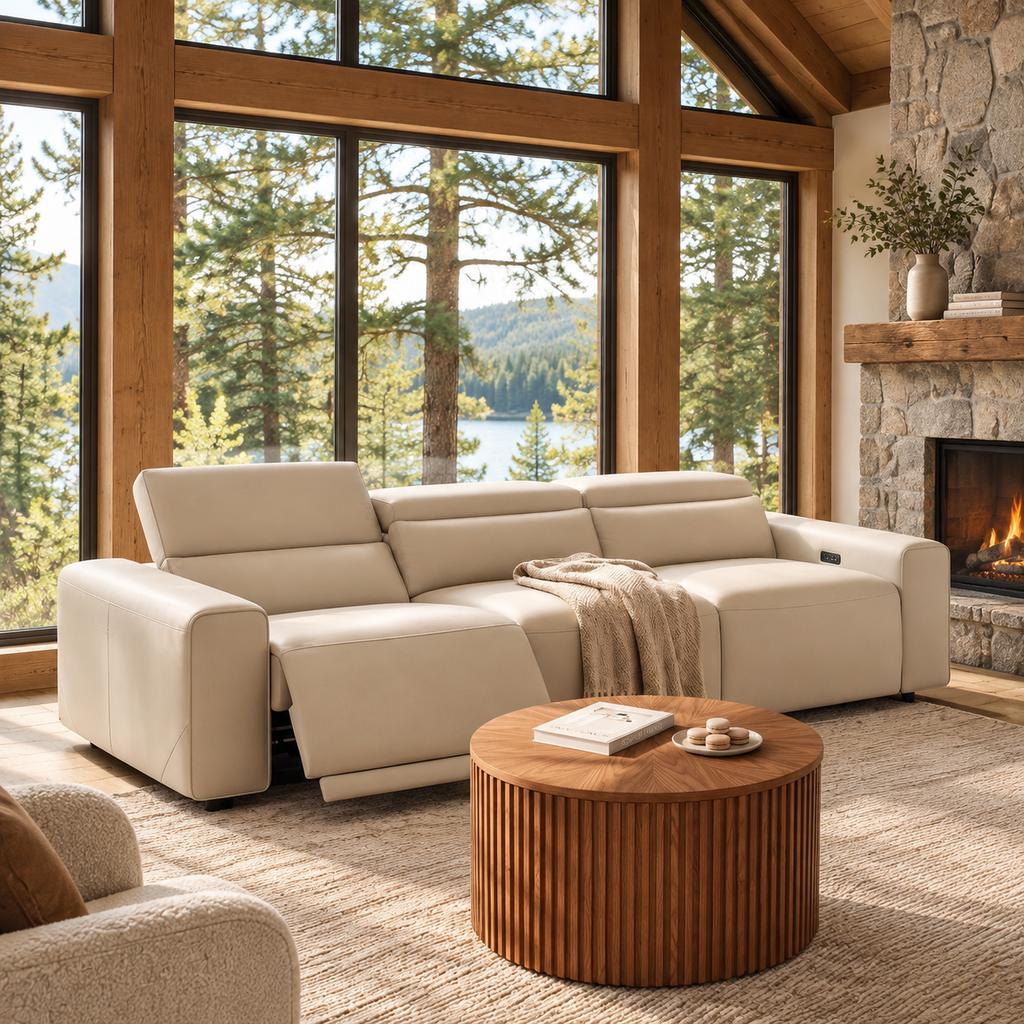
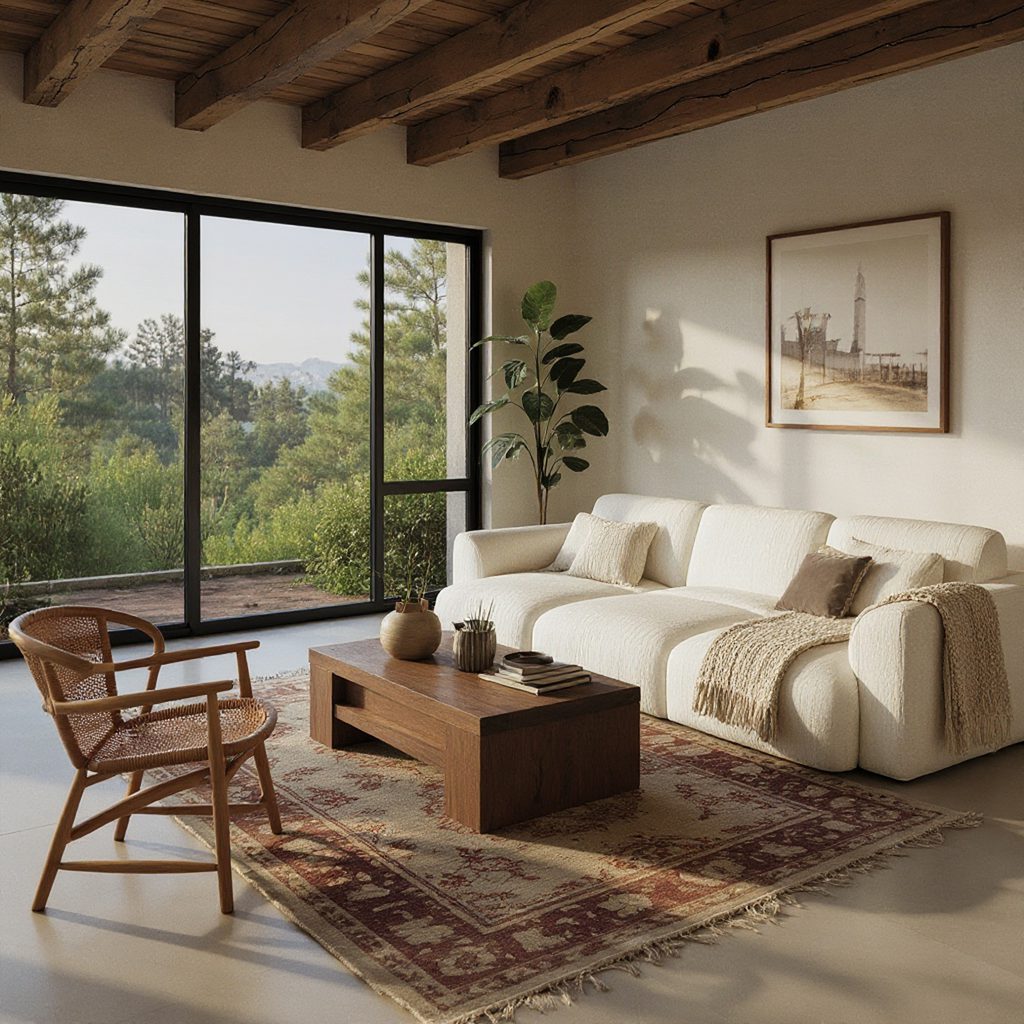
When a cabin hosts friends only on some weekends, a separate guest bed can occupy floor space the rest of the year. The Aurora Power Sofa Bed adjusts its seat depth from 27 to 45.5 inches with powered controls, creating a deeper lounge and an expanded sleep surface when needed. Its white chenille adds a lighter counterpoint to dark timber.
Aurora Power Sofa Bed
Flexible seating adds occasional sleep space without a permanently open guest bed.
👍 Best for: Cabin living rooms with occasional guests
✨ Stepless powered seat-depth adjustment
✨ Water- and scratch-resistant chenille
✨ Three-year motor replacement coverage
A few other furniture decisions can also improve everyday flexibility:
- Coffee tables: Choose a lift-top or storage design if the living room also serves as a casual work or dining area.
- Accent chairs: Movable chairs can shift between conversation, reading, and fireplace seating.
- Media consoles: Choose storage based on the actual equipment you own rather than buying a large cabinet simply to fill a wall.
- Sofas: Compare the regular seating footprint with the full extended configuration before choosing powered or convertible seating.
The important distinction is between furniture that genuinely supports multiple activities and furniture that simply adds another feature. A multifunctional piece is useful only when its additional function fits the way the cabin is used.
Check Furniture Fit Before Choosing Your Cabin Setup
Even attractive cabin living room decor can become inconvenient when furniture blocks a doorway, covers a window, or leaves too little room to move around. Before ordering, measure the actual furniture footprint and account for how each piece will be used.
Use this checklist:
- Room dimensions: Measure the usable floor area, including alcoves and sloped sections.
- Entryways: Check door widths, stair access, and the route for moving large furniture into the cabin.
- Walkways: Keep the main route between the entrance, kitchen, and other rooms clear.
- Fireplace clearance: Follow the fireplace manufacturer’s safety instructions before positioning upholstered furniture, rugs, or wood furniture nearby.
- Window access: Make sure curtains, blinds, and window openings remain accessible.
- Furniture extension: Measure sofas and lift-top tables in their open positions, not just their standard configurations.
- Power access: Confirm that electrical furniture can reach an appropriate outlet without placing cords across walking routes.
For the coffee table, a useful starting point is to leave approximately 14–18 inches between the sofa and table. Main walking routes may need around 24–30 inches, depending on the room and furniture arrangement. You can also compare coffee table dimensions for small living rooms before settling on a size.
These measurements are practical references rather than fixed rules. The final arrangement should allow people to sit, stand, reach the table, and move through the room without constantly shifting furniture.
Conclusion
The most successful cabin living room ideas balance natural materials, comfortable seating, and the practical needs of the people using the space. Start with the room’s focal point, choose furniture that fits its actual dimensions, and use lighting and textiles to soften heavier architectural features. For cabins that occasionally accommodate overnight guests, flexible seating can also reduce the need for permanently dedicated furniture. Whether your space is a small log cabin or an open-plan retreat, the goal is a living room that feels comfortable and works naturally throughout the year.
Find the Right Living Room Furniture
Explore furniture designed for different room sizes, layouts, and everyday needs.
FAQ: Cabin Living Room Furniture and Layout Questions
What rug size works best in a cabin living room?
Choose a rug large enough to connect the main seating pieces. In many arrangements, placing the front legs of the sofa and accent chairs on the rug creates a more unified area. Measure the complete seating group first rather than choosing a rug based only on the room’s overall dimensions.
How much space should I leave between a sofa and coffee table?
A gap of approximately 14–18 inches usually provides comfortable access to drinks and other items while leaving room for your knees. If the space also serves as a main walkway, increase the clearance where possible. Always test the arrangement with drawers and reclining or extending furniture fully open.
Is a sectional sofa too large for a small cabin living room?
Not necessarily. A compact sectional can work when the room has a suitable corner and enough clearance for its extended side. However, if it blocks an entrance or divides the room awkwardly, a smaller sofa paired with a movable accent chair may offer more flexibility.
Is leather or fabric better for a cabin living room?
Leather is easy to wipe clean and complements timber and stone, while fabric offers a softer feel and more texture options. For cabins with pets or frequent outdoor use, compare the upholstery’s cleaning instructions, scratch resistance, and maintenance needs before choosing based on appearance alone.
When does a power sofa bed make sense in a cabin?
A power sofa bed makes sense when overnight guests visit regularly enough to justify a flexible sleep surface, but not often enough to require a permanently dedicated guest bed. Check its full extension clearance, outlet access, and upholstery requirements. Power sofa beds for more ways to live can help clarify which features matter for your routine.


[…] guests. That makes flexibility more useful than matching every piece to a lodge theme. For modern cabin living room furniture, warm wood and leather connect easily with timber, stone, and natural views, while the strongest […]