 By Stephanie
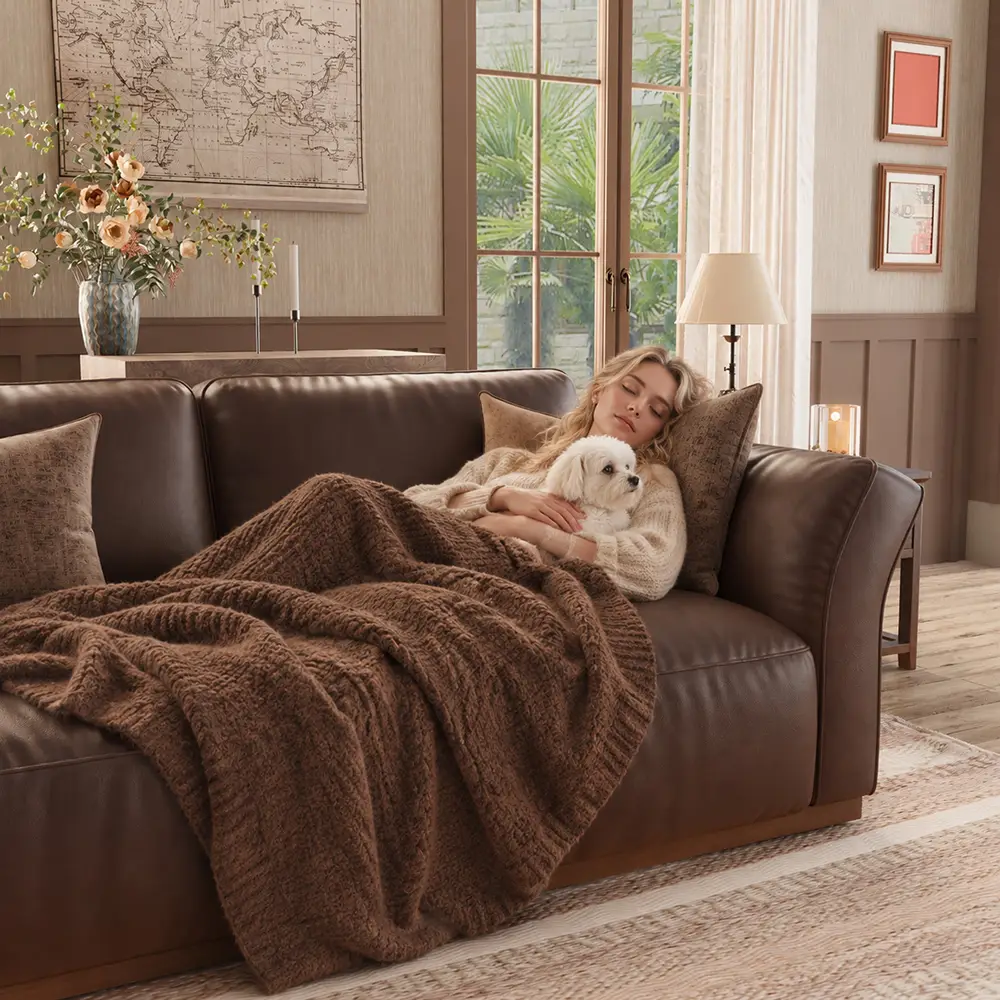
Choosing a leather sofa takes more than picking a color or looking for a premium leather label. Two couches can look nearly identical online but differ significantly in comfort, construction, and everyday durability. If you’re wondering how to choose the right leather sofa, the key is knowing what to check beyond upholstery. From leather quality and frame construction to seat comfort and room fit, these seven buying checks will help you compare options, understand what you’re paying for, and choose a couch that suits the way you actually live.
Table of Contents
What Should You Check Before Buying a Leather Sofa?
Use this seven-point checklist to identify which leather sofas deserve a closer look. It covers what to look for when buying a leather couch, including the details that product photos rarely reveal. Each check helps you spot a potential mismatch or a specification that needs confirmation before ordering.
| Buying Check | What to Look For |
| 1. Leather quality | Leather grade, surface finish, and care requirements |
| 2. Leather coverage | Which panels use real leather versus other materials |
| 3. Frame construction | Frame materials, reinforced joints, and structural details |
| 4. Suspension and cushions | Seat support system, filling, and shape recovery |
| 5. Comfort and dimensions | Usable seat depth, seat height, and back support |
| 6. Sofa type and room fit | Seating arrangement, adjustable features, and available space |
| 7. Purchase value | Construction details, delivery costs, returns, and warranty coverage |
How Do You Choose the Right Leather Quality?
Start by checking both the leather grade and the surface finish. Full-grain leather retains the natural grain, while other top-grain leathers may have corrected or treated surfaces. A protected finish is a separate characteristic, not another leather grade.
When comparing options, focus on what the leather needs to handle:
- For everyday family use: Ask whether the leather has a protective finish and what cleaning methods are approved. A pigmented finish can make common spills easier to manage, but no genuine leather is completely scratch-proof.
- For a natural, lived-in appearance: Consider how the leather may develop a patina, creases, and visible marks with use. Choose this finish if those changes appeal to you rather than expecting the surface to remain uniform.
- When two sofas both use top-grain leather: Compare their finishes, surface feel, and care requirements. The same leather grade doesn’t guarantee the same everyday performance.
The best leather for a sofa based on daily use depends on balancing these material differences with your cleaning habits.
Before purchasing, also confirm which panels are upholstered in real leather. Some sofas use leather on seating surfaces and matching synthetic upholstery elsewhere. This isn’t automatically a problem, but the construction should be clearly disclosed.

How Can You Tell If a Leather Sofa Is Well Made?
Knowing how to choose the right leather sofa requires checking what’s under the upholstery. Frame joints keep the structure stable, suspension spreads weight, and cushion construction affects how the seat supports you. Product pages may not reveal all three, so use the checks below to separate stated specifications from things that still need confirmation.
Check the Frame and Joints
Check whether the frame is made from kiln-dried hardwood, furniture-grade plywood, or another clearly identified material. Both hardwood and properly engineered plywood can provide reliable support when well constructed.
Look for information about reinforced corners and frame joints. If the listing only says “sturdy construction,” ask the retailer what materials and joining methods are used.
In a showroom, apply normal pressure to the armrests and sit in different positions. Notice any unusual movement or persistent creaking. These signs may warrant further inspection, although they cannot establish long-term durability on their own.
Check the Seat Suspension
Suspension supports the cushions and distributes weight across the seating area. Common designs include sinuous springs and elastic webbing, but neither system should be judged by its name alone.
Ask which support system is installed and whether the manufacturer provides construction details.
When testing the sofa, sit in the center and near the ends. The support should feel reasonably consistent without excessive dipping. A seat that noticeably collapses in one area deserves further investigation before buying.
Check Cushion Support and Recovery
Cushion filling affects both immediate comfort and how the seat maintains its shape. Foam provides structured support, while down or fiber layers can create a softer surface. Some sofas combine these materials to balance softness and stability.
Press the seat cushion, release it, and observe how it recovers. Sit for several minutes rather than judging the first impression.
When shopping online, check whether the listing identifies the cushion layers and foam specifications. Density and firmness aren’t interchangeable, so a “high-density foam” claim without construction details isn’t enough to predict comfort.
How to Check Leather Sofa Comfort and Room Fit
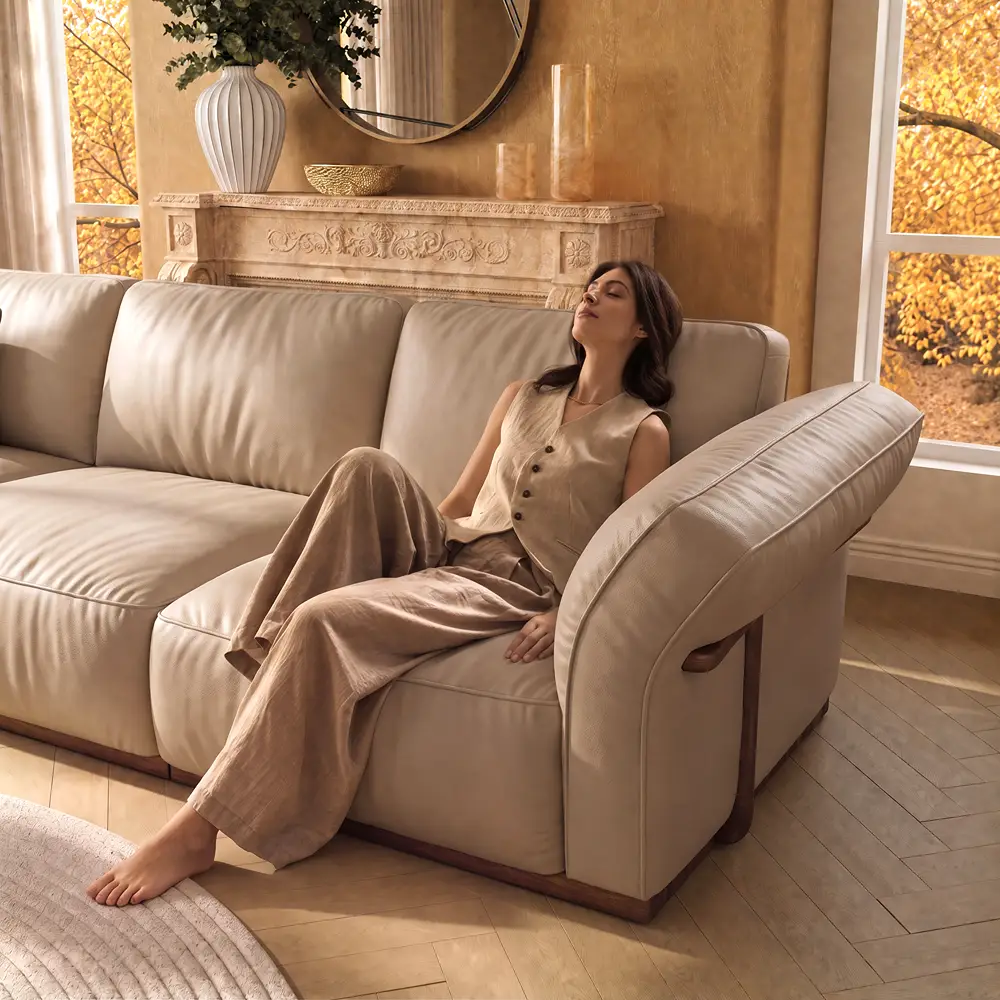
A leather sofa can have excellent materials and still feel wrong if the seat is too deep, the back doesn’t support your posture, or the furniture overwhelms the room.
Check comfort and dimensions separately before deciding.
- Test how the sofa fits your body.
For upright sitting, your back should reach the backrest while your feet rest comfortably on the floor. The front edge of the cushion shouldn’t press uncomfortably behind your knees.
For lounging, check whether you can stretch out or curl up without constantly rearranging pillows.
Ask for the usable seat depth, measured from the front of the seat to the front of the back cushion. If that measurement isn’t listed, check it in person with the back cushions in place. Overall sofa depth doesn’t tell you how much room you’ll actually have to sit.
If you’re comparing different upholstery and support combinations, what makes leather couches comfortable for everyday use goes beyond the softness of the leather itself.
- Measure the room and delivery route.
Mark the sofa’s footprint on the floor with painter’s tape. Check whether people can walk between the sofa, coffee table, and nearby doorways without squeezing through.
Aim for approximately 30–36 inches in main walking paths where the layout allows. Measure the tightest doorways, hallways, stair turns, and elevators along the delivery route, including the sofa’s packaged dimensions.
For reclining models, check the fully extended footprint as well.
Which Leather Sofa Type Works Best for Your Daily Routine?
Different sofa designs solve different problems. Decide how the room is used most often before paying for additional seating or mechanisms.
Fixed leather sofa: Suits living rooms used mainly for conversation, reading, and upright sitting. A straightforward configuration can work well when the room layout rarely changes.
Modular or sectional leather sofa: Provides more connected seating for families who gather together. Check the configuration, individual module dimensions, and whether sections can be rearranged.
Reclining leather sofa: Works for people who regularly watch TV or prefer adjustable leg and back support. Check whether headrest and footrest adjustments operate together or independently, and allow enough room for the mechanism.
Leather sofa bed: Makes sense when the living room occasionally doubles as guest accommodation. Confirm the sleeping dimensions, mattress or cushion construction, and how easily the bed opens.
Choose the type that solves your most frequent seating problem, not the one with the longest feature list.
How Do You Compare Two Leather Sofas Before Buying?
Two leather sofas can cost about the same but feel very different in everyday use. A firmer, shallower seat may be more comfortable for sitting upright and chatting, while a deeper seat with softer cushioning gives you more freedom to stretch out, curl up, or change positions during a long movie night.
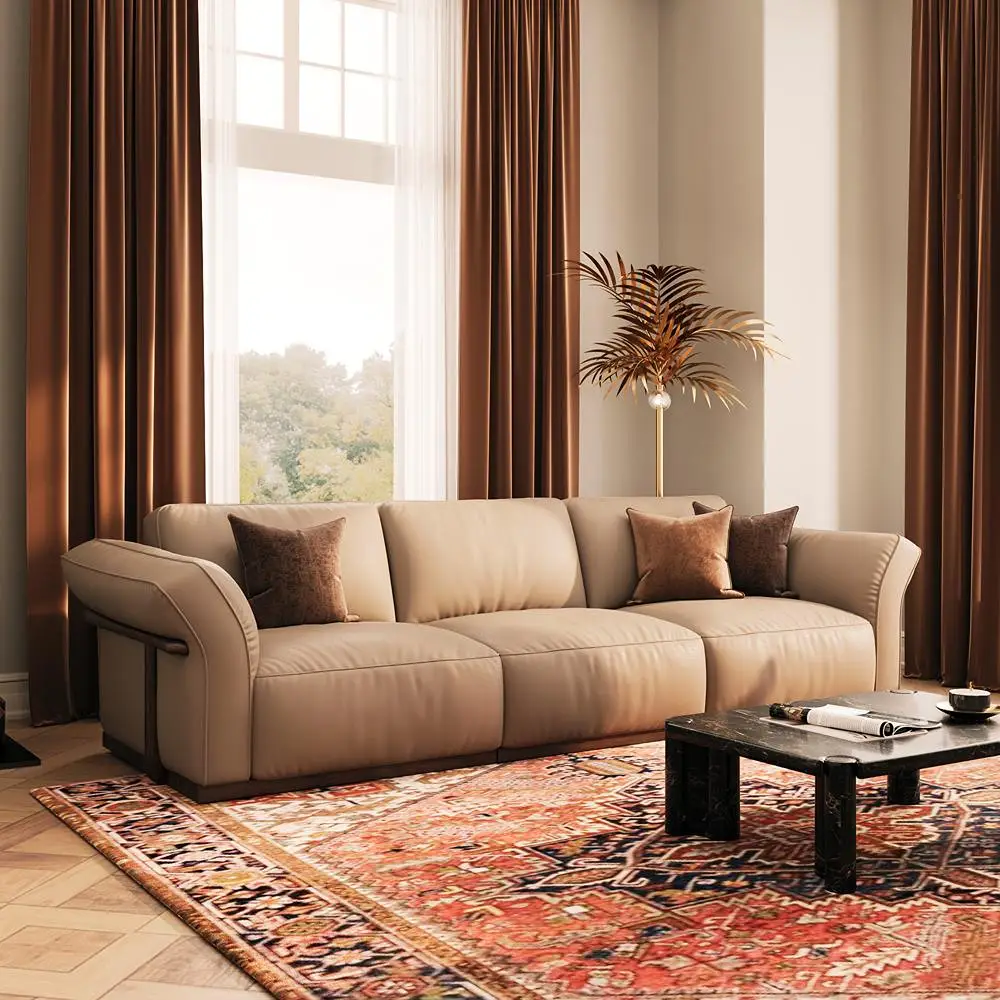
For households that spend more time lounging than sitting formally, the Cronus Genuine Leather Modular Sofa brings these comfort features together. Its 26-inch seat depth gives you room to sit cross-legged or tuck your legs up, while premium down cushioning and supple, pebbled top-grain leather create a softer, more inviting seat. The modular design also allows families to arrange the seating around how they spend time together.

Cronus Genuine Leather Modular Sofa
Worth considering if you prefer stretching out over sitting upright, and have room for a more relaxed seating setup.
Before making your decision, compare the remaining options in three ways:
- Comfort and fit: Which sofa better supports your usual sitting position without crowding the room?
- Verified quality: Are the leather finish, frame materials, and cushion construction clearly documented?
- Total value: Does the price difference reflect features you’ll actually use? Include delivery, assembly, and applicable return costs.
If important specifications are missing, request clarification before ordering. The better purchase is the one that meets your priorities with fewer compromises, not necessarily the one with the highest leather grade.
Conclusion
Knowing how to choose the right leather sofa is ultimately about eliminating the wrong options before comparing finishes or prices. A sofa that fails your seat-fit test or can’t pass through the delivery route is not the right purchase, regardless of leather grade. For the remaining choices, look for construction details you can verify and a surface finish suited to your routine. If a key specification is missing, ask before ordering. That leaves you comparing sofas that will work in your home, rather than sofas that only look convincing online.
Find a Leather Sofa That Fits Your Life
Explore leather sofas with the comfort, quality, and features that matter most to you.
FAQ
Are wrinkles on a new leather sofa normal?
Yes. Natural leather can show wrinkles and slight variations, especially where cushions bend or compress. However, unusually loose upholstery, uneven seams, or deep folds accompanied by sagging may indicate a fitting or support problem. Photograph noticeable issues when the sofa arrives and contact the seller if they appear inconsistent with the product description.
Should a leather sofa match its swatch exactly?
Not necessarily. Genuine leather can vary slightly in color and grain between hides, and a small swatch may not show every natural variation. Compare samples in daylight and evening lighting before choosing. If precise color matching matters, ask the retailer about acceptable variation and whether different furniture pieces come from matching leather batches.
Can you put a leather sofa next to a sunny window?
Yes, but avoid prolonged direct sunlight, which can contribute to fading, discoloration, and drying. Use curtains, blinds, or UV-filtering window treatments to reduce exposure. The risk depends on the leather finish and amount of sunlight. Check the manufacturer’s placement and care recommendations before positioning the sofa beside a bright window.
How much clearance does a reclining leather sofa need?
Clearance varies by mechanism. Wall-hugging recliners generally require less space behind the backrest than conventional designs, but they still need room for their moving parts. Check the manufacturer’s wall-clearance requirement and fully extended dimensions. Measure the space in front of the sofa as well, particularly if a coffee table sits nearby.
Are Attached Seat Cushions a Problem on a Leather Sofa?
Not necessarily. Attached cushions can give a sofa a tidy appearance, but they may make it harder to clean underneath or replace a worn insert. For households with pets or frequent spills, ask how debris can be removed around the seat seams and whether cushion repairs are possible without reupholstering the entire seat.


